
CIVIL SOCIETY WHAT IS CIVIL SOCIETY UNITED NATIONS
- Slides: 21
CIVIL SOCIETY
WHAT IS CIVIL SOCIETY?
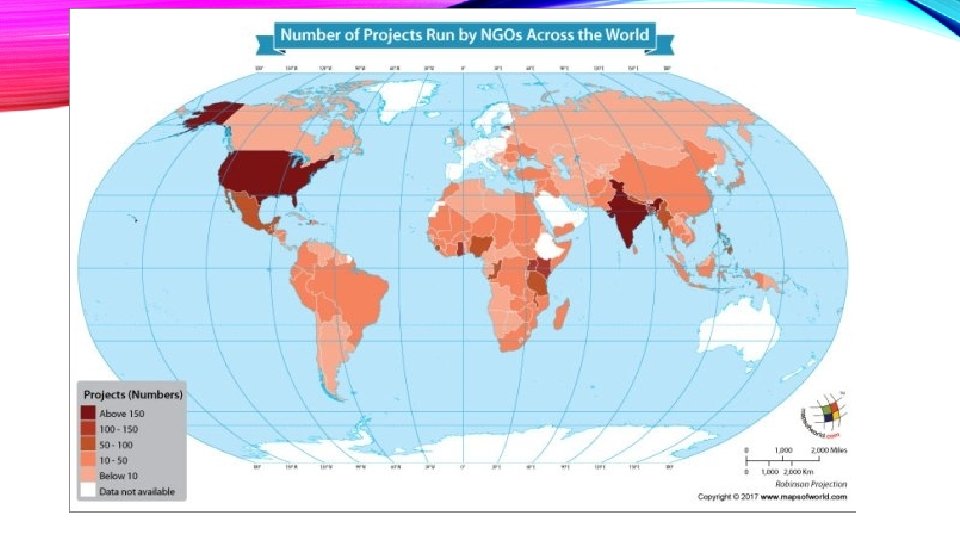
UNITED NATIONS DEVELOPMENT PROGRAM • ‘Civil society is an arena of voluntary collective actions around shared interests, purposes and values distinct from families, state and profit seeking institutions. The term civil society includes the full range of formal and informal organizations that are outside the state and the market – including social movements, volunteer involving organizations, mass-based membership organizations, faith-based groups, NGOs, and community-based organizations, as well as communities and citizens acting individually and collectively.
‘WHAT IS CIVIL SOCIETY? ’, LONDON SCHOOL OF ECONOMICS • Civil society is the arena of uncoerced collective action around shared interests, purposes and values. In theory, its institutional forms are distinct from those of the state, family and market, though in practice, the boundaries between state, civil society, family and market are often complex, blurred and negotiated. Civil society commonly embraces a diversity of spaces, actors and institutional forms, varying in their degree of formality, autonomy and power.
CIVIL SOCIETY: DEFINITIONS AND APPROACHES’, JOHN KEANE • ‘Civil society is a realm of social life – market exchanges, charitable groups, clubs and voluntary associations, independent churches and publishing houses – institutionally separated from territorial state institutions.
‘ASSESSING THE STATE OF CIVIL SOCIETY: A TOOLKIT FOR THE CIVICUS CIVIL SOCIETY INDEX (CSI)’ • CIVICUS Civil society is the arena – outside of the family, the state, and the market – which is created by individual and collective actions, organizations and institutions to advance shared interests.
JOHNS HOPKINS UNIVERSITY CENTER FOR CIVIL SOCIETY STUDIES A civil society organization is an entity that is: • Organized, i. e. , institutionalized to some extent. • Private, i. e. , institutionally separate from government. • Non-profit-distributing, i. e. , not returning profits generated to their owners or directors. • Self-governing, i. e. , equipped to control their own activities. • Voluntary, i. e. , involving some meaningful degree of voluntary participation.
‘THE KENYAN CSO STANDARDS’ Civil society organizations: • Are driven by values that reflect a desire to improve lives; • Contain elements of voluntarism (i. e. free choice of association, voluntary contributions of time and money); • Have private and independent governance; • Are not for profit (i. e. do not distribute profit to staff and/or shareholders); • Have clearly stated and defined public purposes for which they are accountable; • Are formally constituted under the law and have an accepted identity in line with the culture and traditions prevailing in the country.
WHAT CONDITIONS ARE NECESSARY FOR A HEALTHY CIVIL SOCIETY?
HOW DOES CIVIL SOCIETY IMPACT DEMOCRACY?
TYPES OF CIVIL SOCIETY
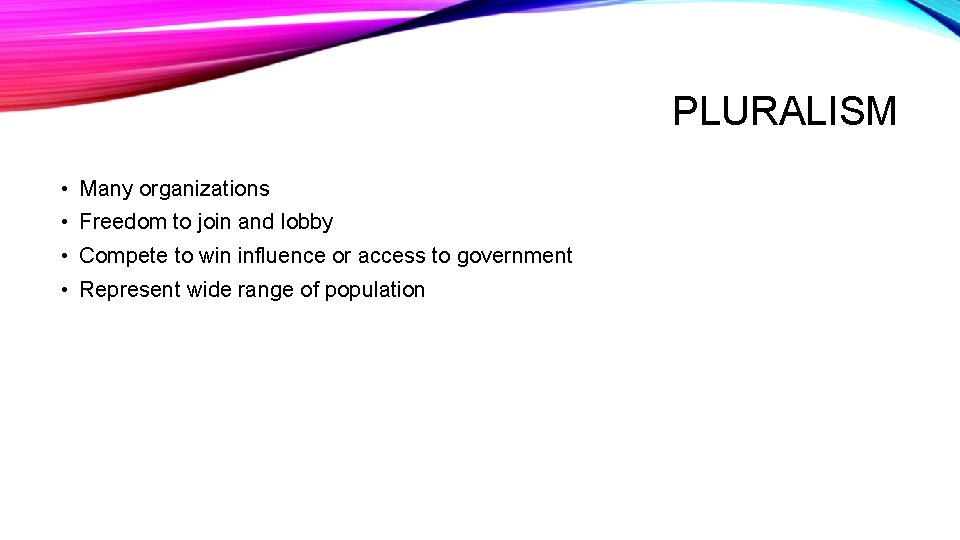
PLURALISM • Many organizations • Freedom to join and lobby • Compete to win influence or access to government • Represent wide range of population
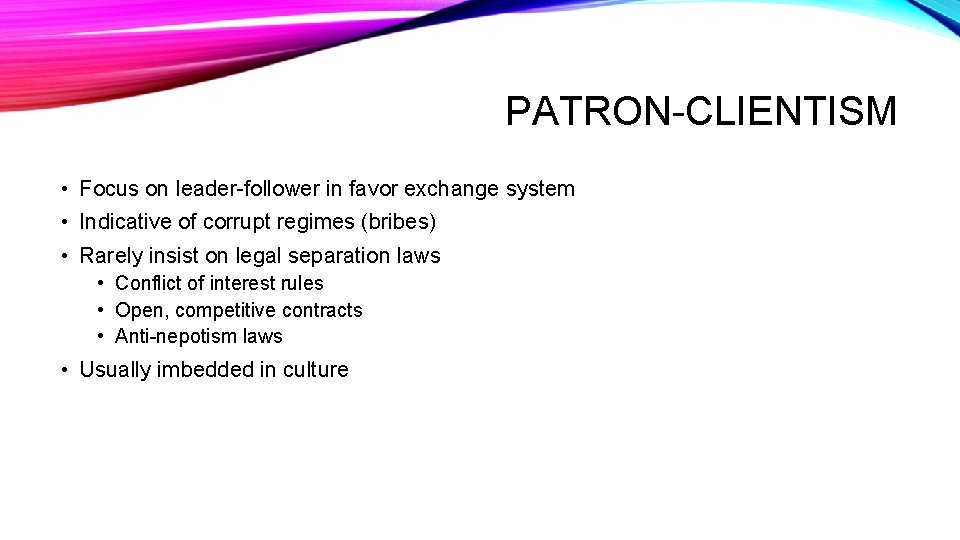
PATRON-CLIENTISM • Focus on leader-follower in favor exchange system • Indicative of corrupt regimes (bribes) • Rarely insist on legal separation laws • Conflict of interest rules • Open, competitive contracts • Anti-nepotism laws • Usually imbedded in culture
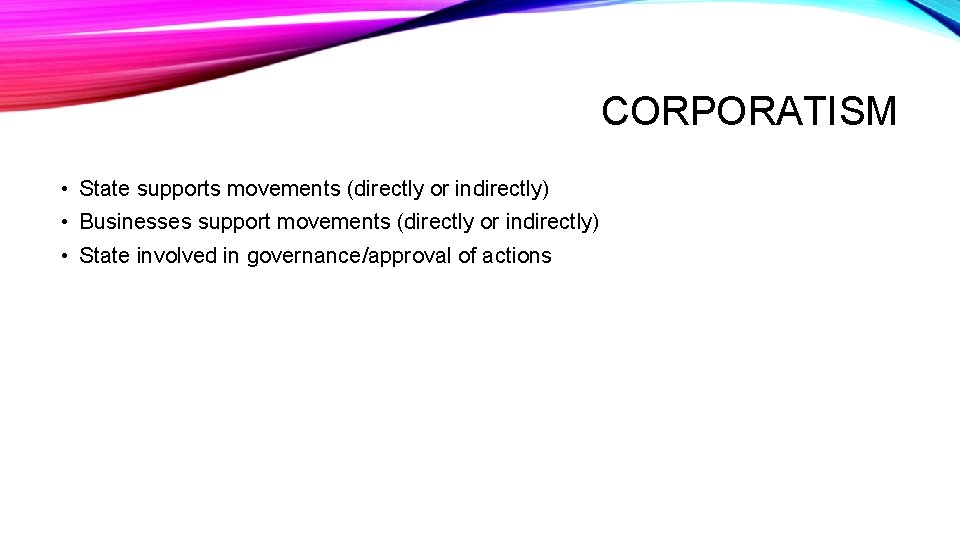
CORPORATISM • State supports movements (directly or indirectly) • Businesses support movements (directly or indirectly) • State involved in governance/approval of actions
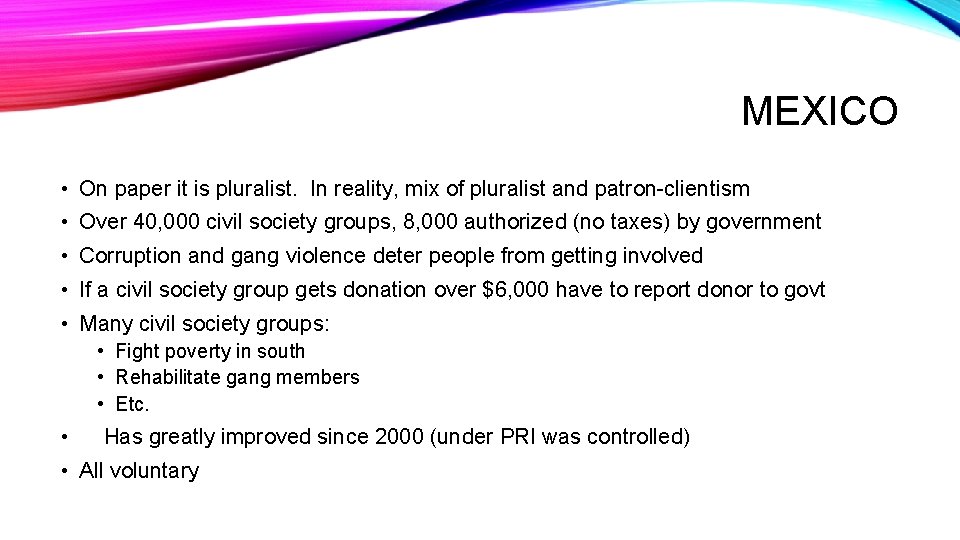
MEXICO • On paper it is pluralist. In reality, mix of pluralist and patron-clientism • Over 40, 000 civil society groups, 8, 000 authorized (no taxes) by government • Corruption and gang violence deter people from getting involved • If a civil society group gets donation over $6, 000 have to report donor to govt • Many civil society groups: • Fight poverty in south • Rehabilitate gang members • Etc. • Has greatly improved since 2000 (under PRI was controlled) • All voluntary
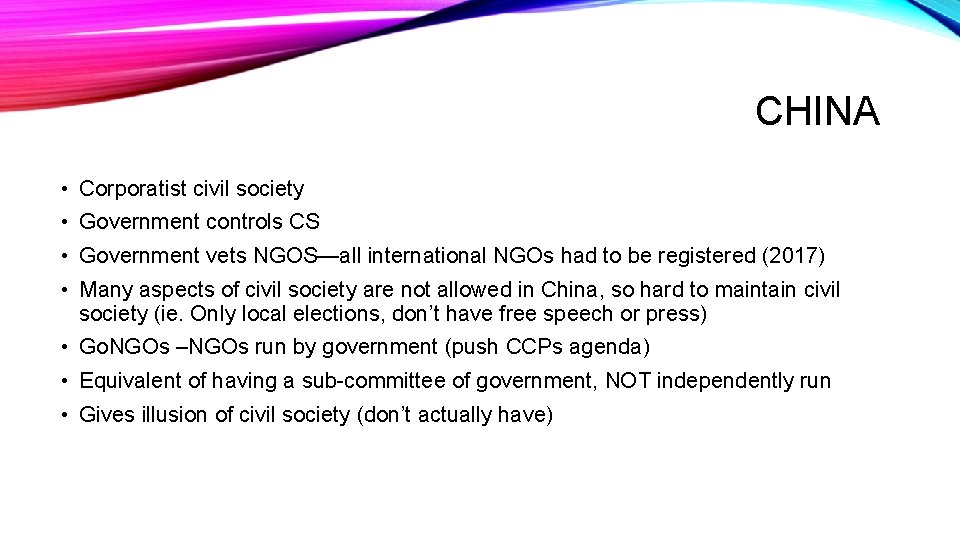
CHINA • Corporatist civil society • Government controls CS • Government vets NGOS—all international NGOs had to be registered (2017) • Many aspects of civil society are not allowed in China, so hard to maintain civil society (ie. Only local elections, don’t have free speech or press) • Go. NGOs –NGOs run by government (push CCPs agenda) • Equivalent of having a sub-committee of government, NOT independently run • Gives illusion of civil society (don’t actually have)
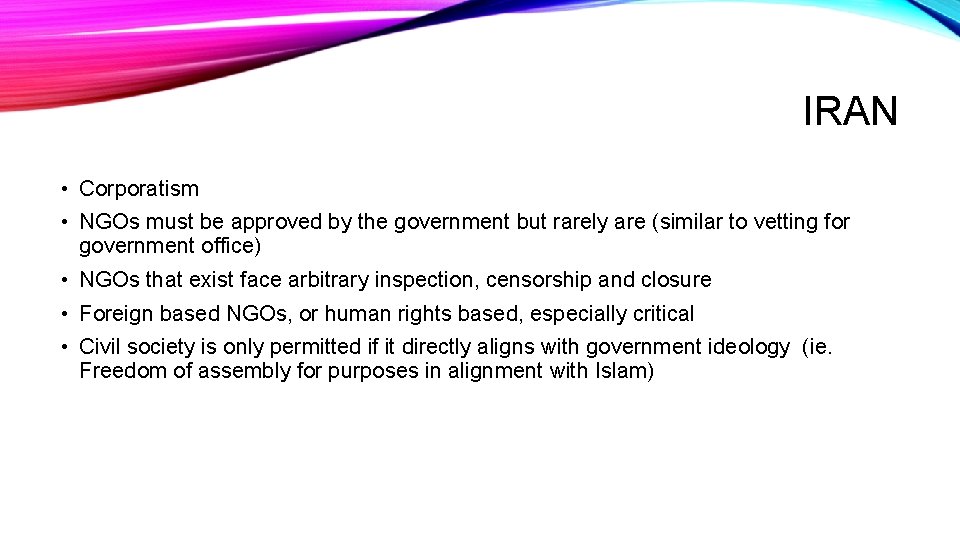
IRAN • Corporatism • NGOs must be approved by the government but rarely are (similar to vetting for government office) • NGOs that exist face arbitrary inspection, censorship and closure • Foreign based NGOs, or human rights based, especially critical • Civil society is only permitted if it directly aligns with government ideology (ie. Freedom of assembly for purposes in alignment with Islam)
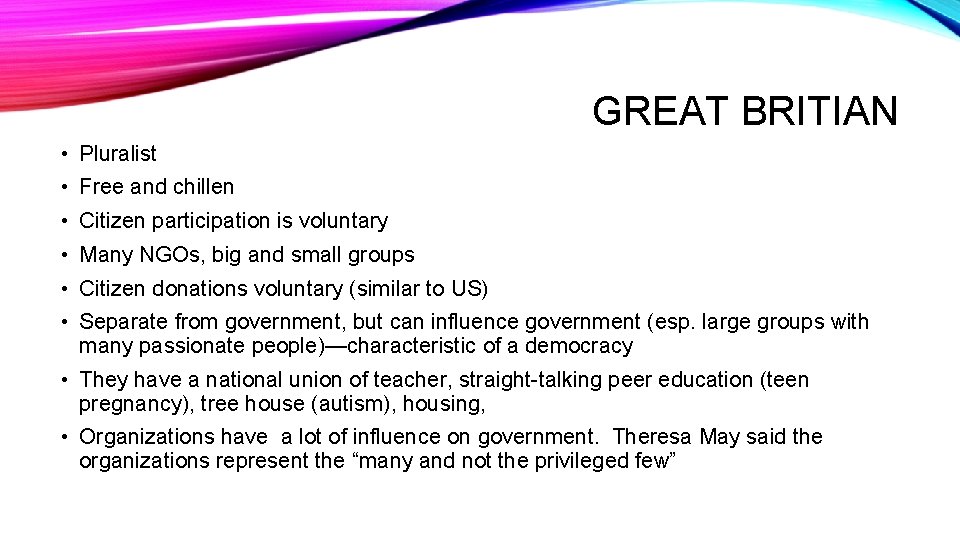
GREAT BRITIAN • Pluralist • Free and chillen • Citizen participation is voluntary • Many NGOs, big and small groups • Citizen donations voluntary (similar to US) • Separate from government, but can influence government (esp. large groups with many passionate people)—characteristic of a democracy • They have a national union of teacher, straight-talking peer education (teen pregnancy), tree house (autism), housing, • Organizations have a lot of influence on government. Theresa May said the organizations represent the “many and not the privileged few”
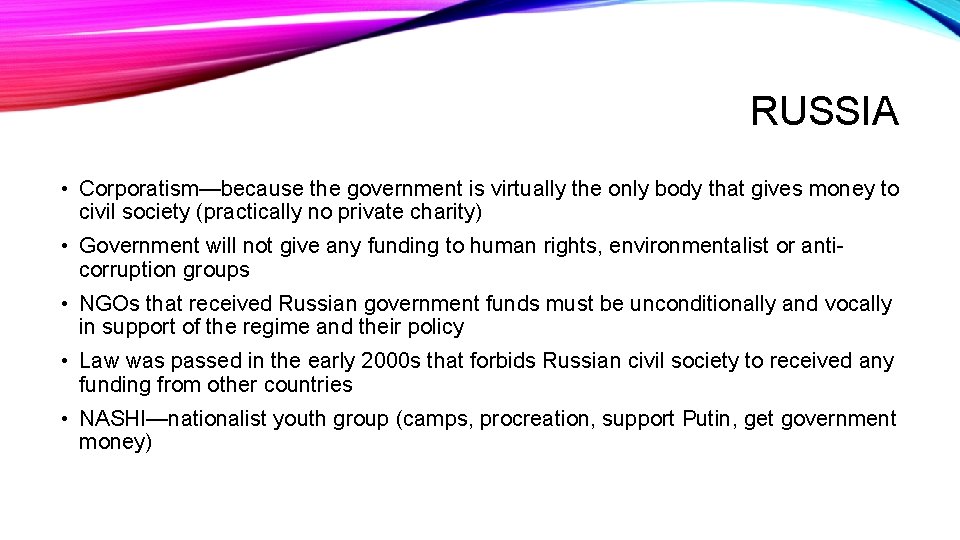
RUSSIA • Corporatism—because the government is virtually the only body that gives money to civil society (practically no private charity) • Government will not give any funding to human rights, environmentalist or anticorruption groups • NGOs that received Russian government funds must be unconditionally and vocally in support of the regime and their policy • Law was passed in the early 2000 s that forbids Russian civil society to received any funding from other countries • NASHI—nationalist youth group (camps, procreation, support Putin, get government money)
NIGERIA • Pluralism on paper, some patron clientism (blurred definition of civil society) • Not required to registered with the government but if they want to be legally recognized have limited taxing and receive foreign funds they have to register • President can prohibit civil societies it activities are considered dangerous or connected to the LGBTQ community same-sex marriage illegal • Issues with defining civil society, allowing militant groups to be considered civil society • Government is currently trying to regulate activities of civil societies with several proposed laws. This is because government believes many civil societies exist for sole purpose of collecting money from foreign donors that goes back to founders and owners.