
Civil Rights Movement Civil Rights Movement Movement to
- Slides: 23
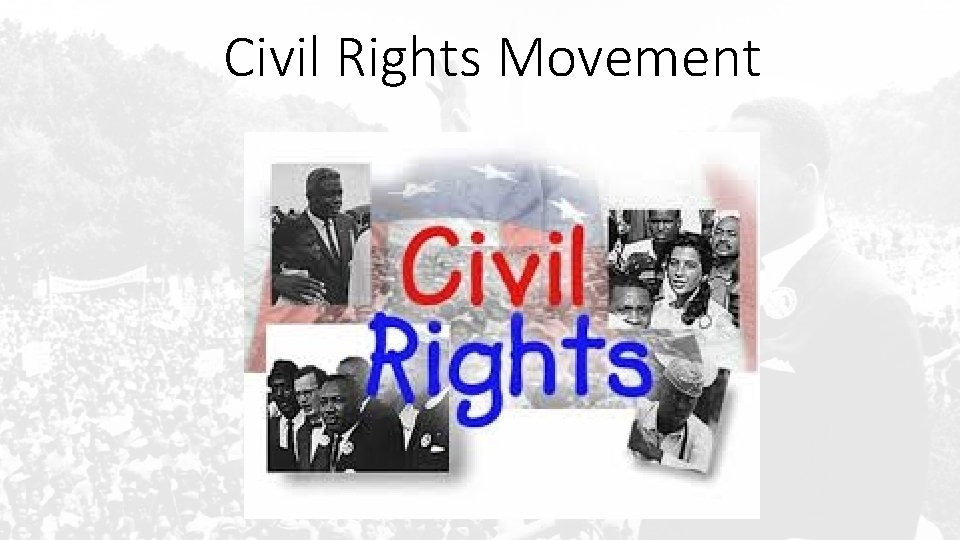
Civil Rights Movement
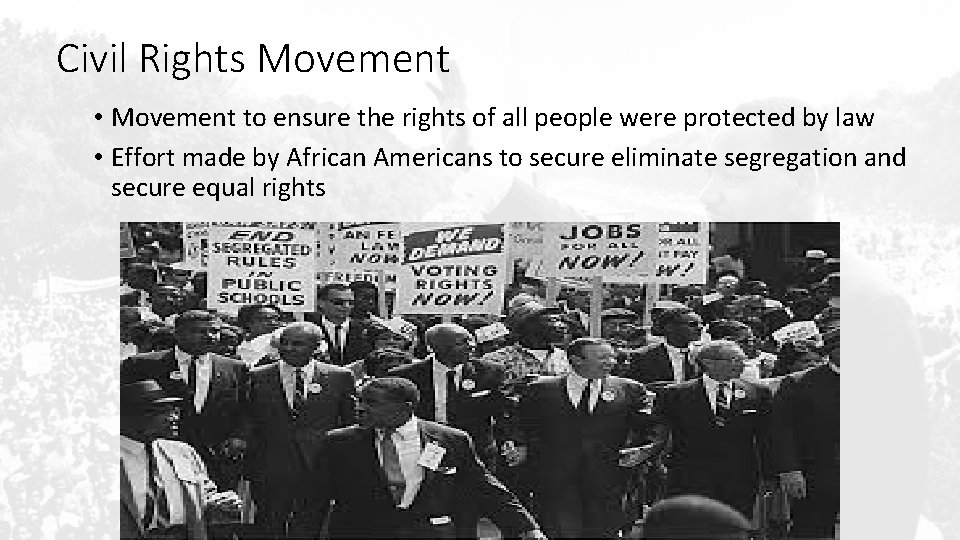
Civil Rights Movement • Movement to ensure the rights of all people were protected by law • Effort made by African Americans to secure eliminate segregation and secure equal rights
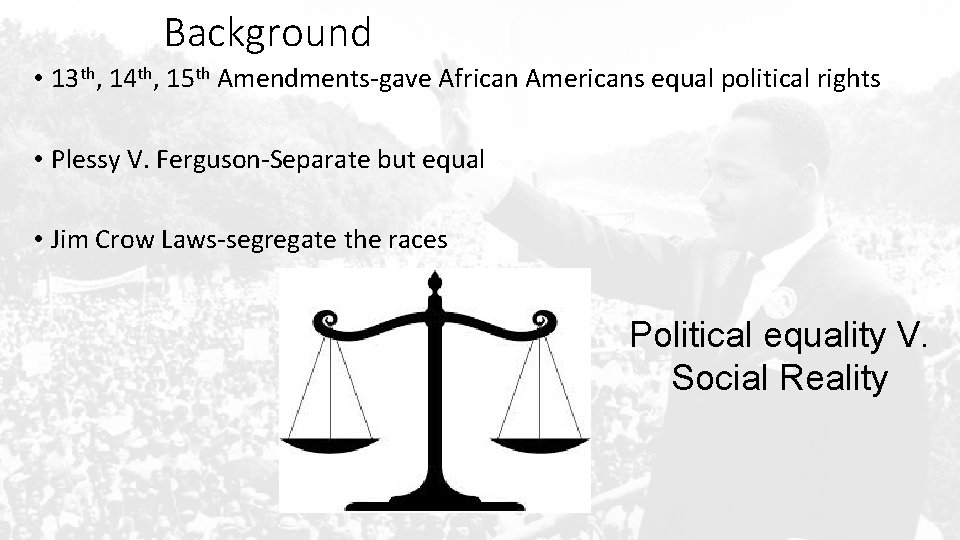
Background • 13 th, 14 th, 15 th Amendments-gave African Americans equal political rights • Plessy V. Ferguson-Separate but equal • Jim Crow Laws-segregate the races Political equality V. Social Reality
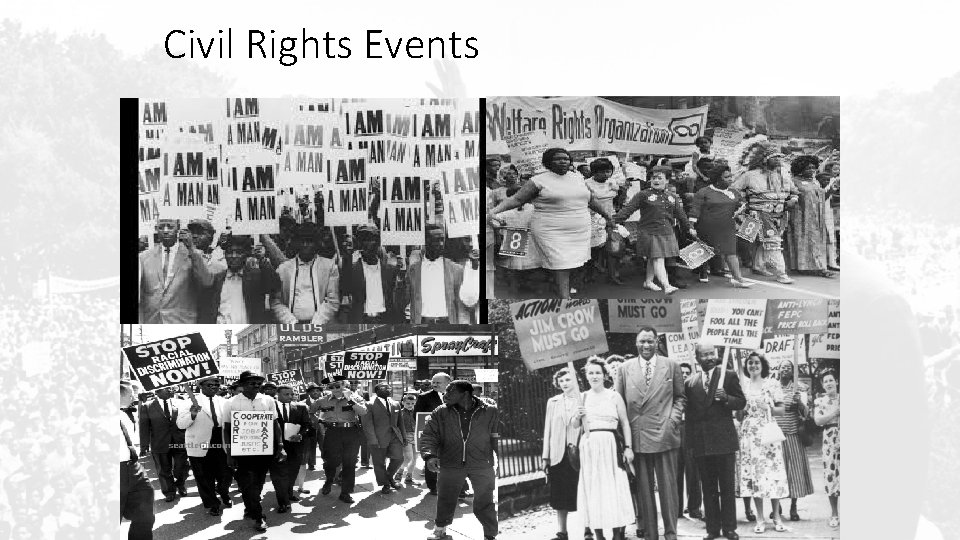
Civil Rights Events
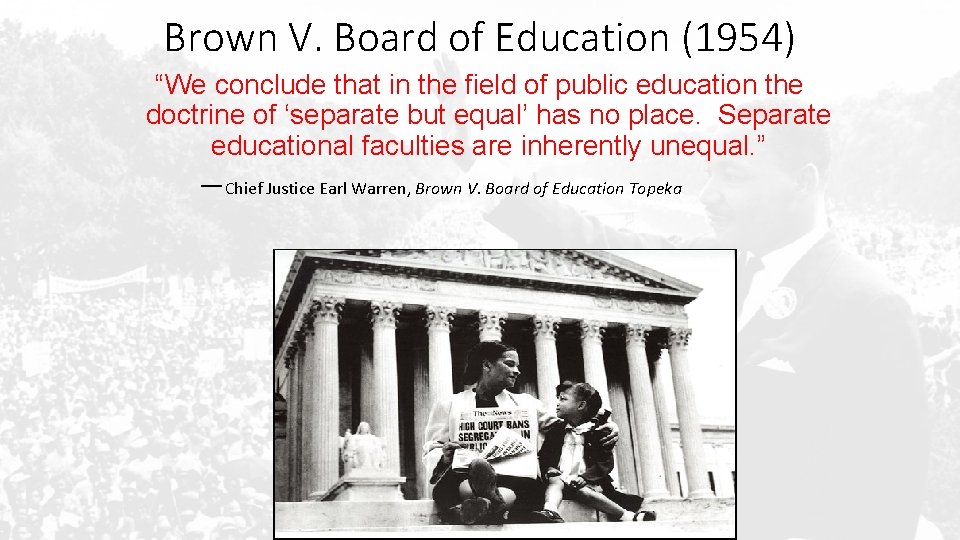
Brown V. Board of Education (1954) “We conclude that in the field of public education the doctrine of ‘separate but equal’ has no place. Separate educational faculties are inherently unequal. ” —Chief Justice Earl Warren, Brown V. Board of Education Topeka
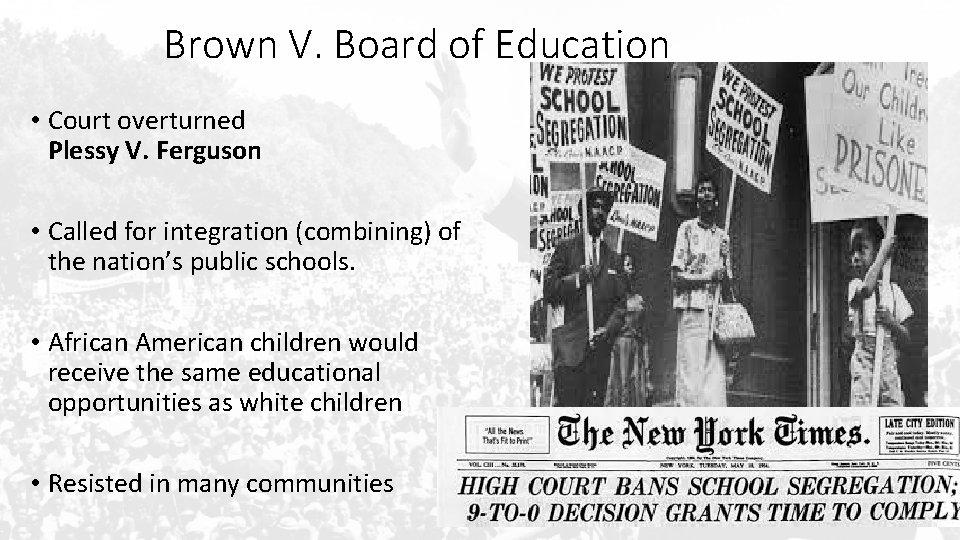
Brown V. Board of Education • Court overturned Plessy V. Ferguson • Called for integration (combining) of the nation’s public schools. • African American children would receive the same educational opportunities as white children • Resisted in many communities
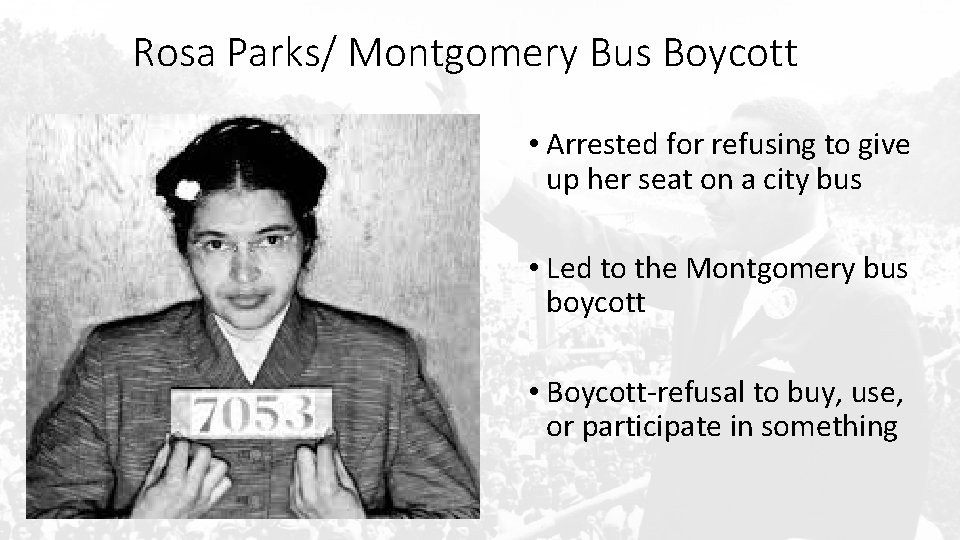
Rosa Parks/ Montgomery Bus Boycott • Arrested for refusing to give up her seat on a city bus • Led to the Montgomery bus boycott • Boycott-refusal to buy, use, or participate in something
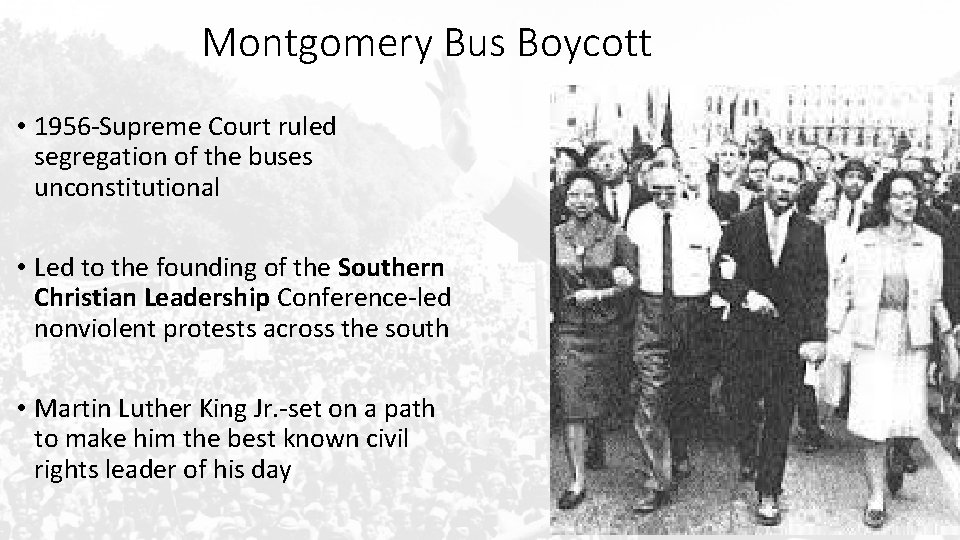
Montgomery Bus Boycott • 1956 -Supreme Court ruled segregation of the buses unconstitutional • Led to the founding of the Southern Christian Leadership Conference-led nonviolent protests across the south • Martin Luther King Jr. -set on a path to make him the best known civil rights leader of his day
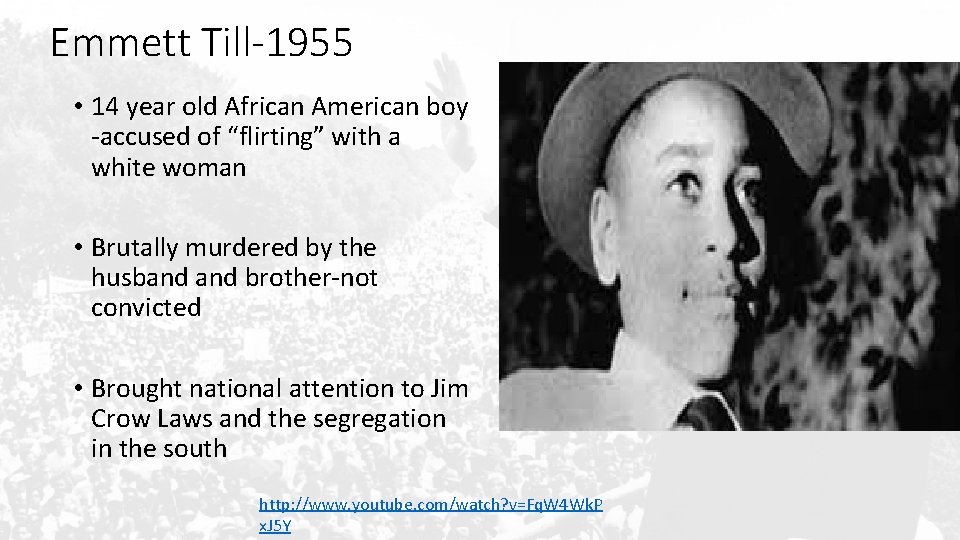
Emmett Till-1955 • 14 year old African American boy -accused of “flirting” with a white woman • Brutally murdered by the husband brother-not convicted • Brought national attention to Jim Crow Laws and the segregation in the south http: //www. youtube. com/watch? v=Fq. W 4 Wk. P x. J 5 Y
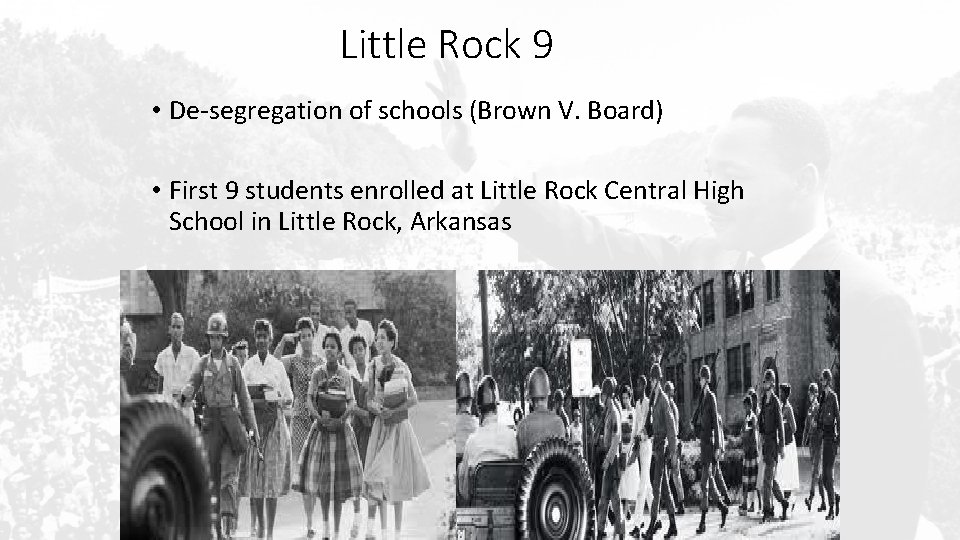
Little Rock 9 • De-segregation of schools (Brown V. Board) • First 9 students enrolled at Little Rock Central High School in Little Rock, Arkansas
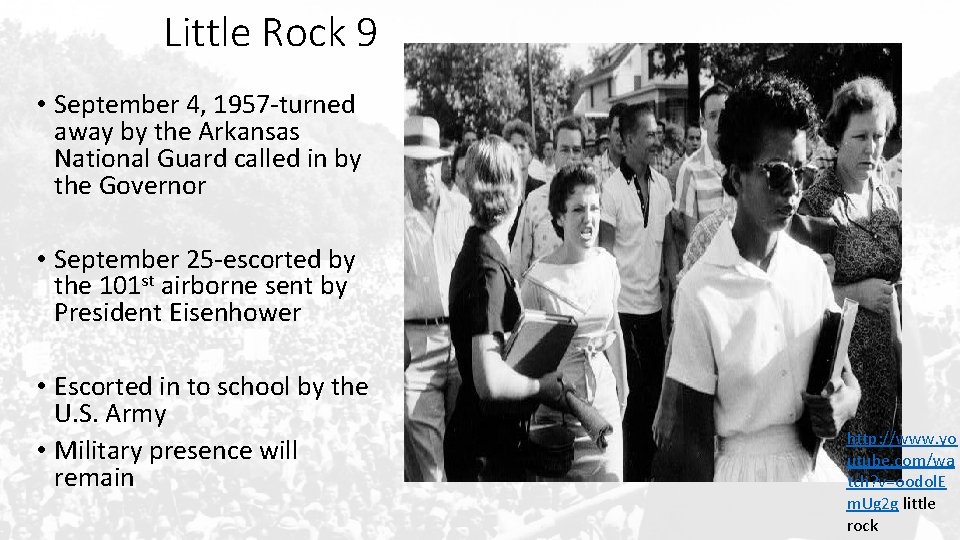
Little Rock 9 • September 4, 1957 -turned away by the Arkansas National Guard called in by the Governor • September 25 -escorted by the 101 st airborne sent by President Eisenhower • Escorted in to school by the U. S. Army • Military presence will remain http: //www. yo utube. com/wa tch? v=oodol. E m. Ug 2 g little rock
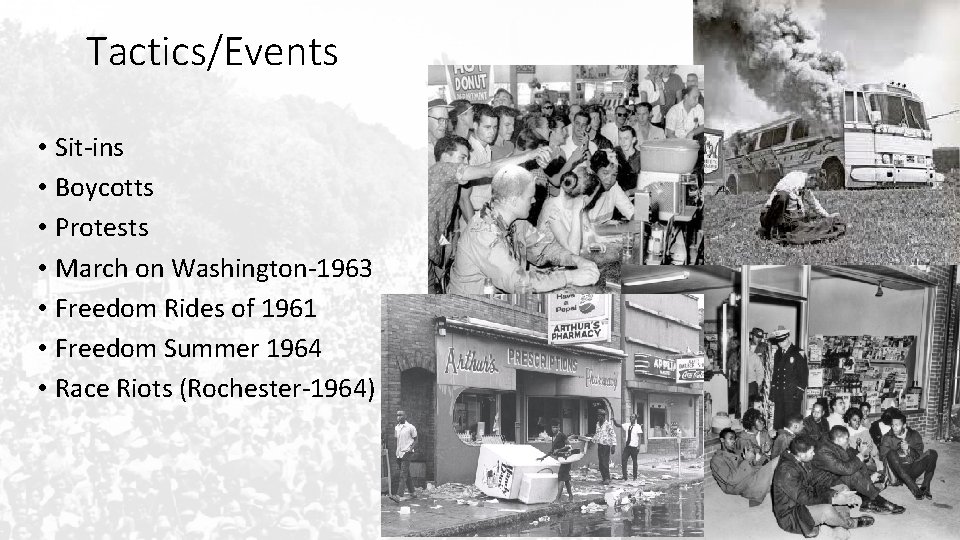
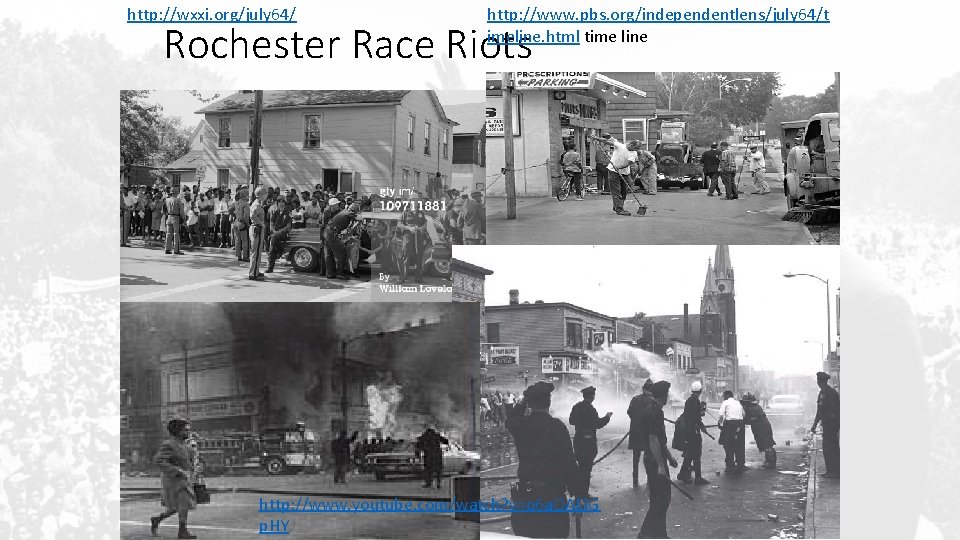
Tactics/Events • Sit-ins • Boycotts • Protests • March on Washington-1963 • Freedom Rides of 1961 • Freedom Summer 1964 • Race Riots (Rochester-1964)
http: //wxxi. org/july 64/ http: //www. pbs. org/independentlens/july 64/t imeline. html time line Rochester Race Riots http: //www. youtube. com/watch? v=o 6 a. QAEi. G p. HY
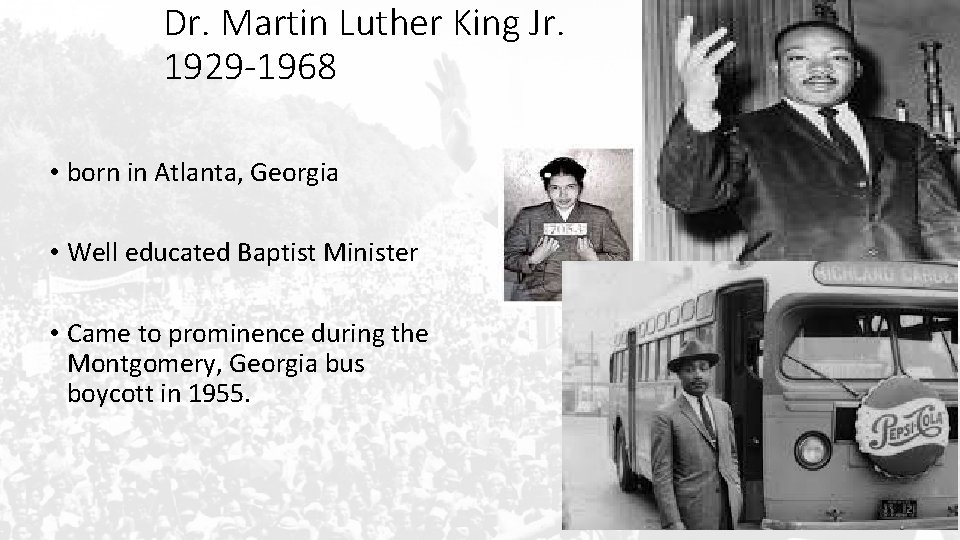
Dr. Martin Luther King Jr. 1929 -1968 • born in Atlanta, Georgia • Well educated Baptist Minister • Came to prominence during the Montgomery, Georgia bus boycott in 1955.
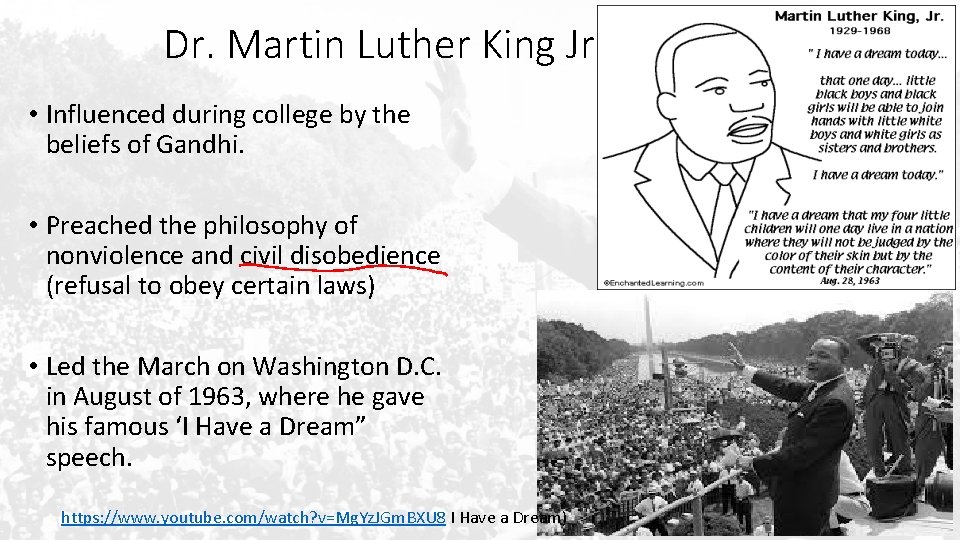
Dr. Martin Luther King Jr. • Influenced during college by the beliefs of Gandhi. • Preached the philosophy of nonviolence and civil disobedience (refusal to obey certain laws) • Led the March on Washington D. C. in August of 1963, where he gave his famous ‘I Have a Dream” speech. https: //www. youtube. com/watch? v=Mg. Yz. JGm. BXU 8 I Have a Dream)
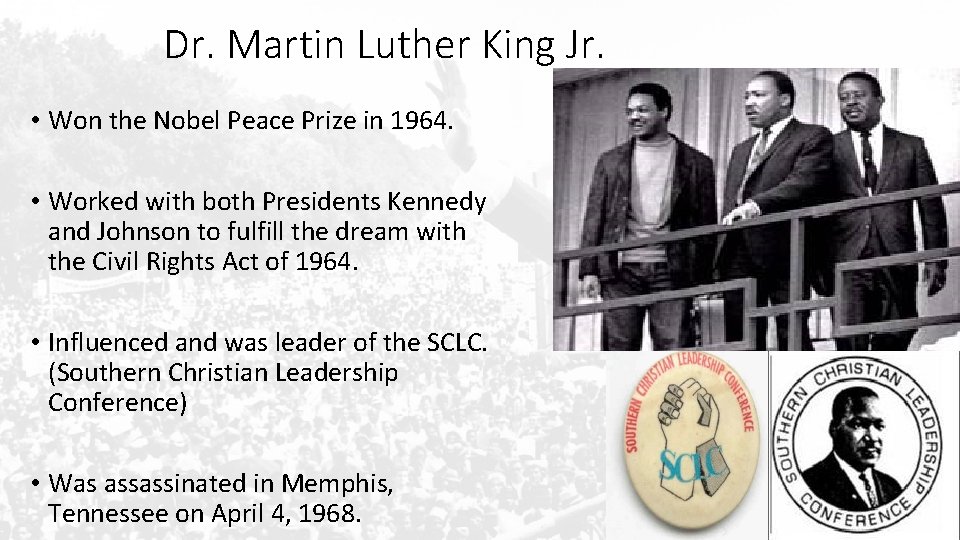
Dr. Martin Luther King Jr. • Won the Nobel Peace Prize in 1964. • Worked with both Presidents Kennedy and Johnson to fulfill the dream with the Civil Rights Act of 1964. • Influenced and was leader of the SCLC. (Southern Christian Leadership Conference) • Was assassinated in Memphis, Tennessee on April 4, 1968.
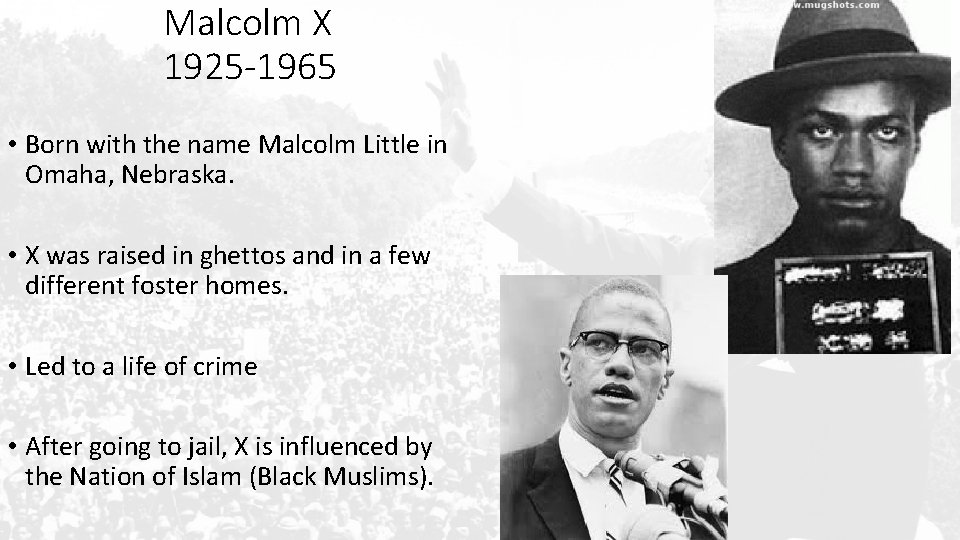
Malcolm X 1925 -1965 • Born with the name Malcolm Little in Omaha, Nebraska. • X was raised in ghettos and in a few different foster homes. • Led to a life of crime • After going to jail, X is influenced by the Nation of Islam (Black Muslims).
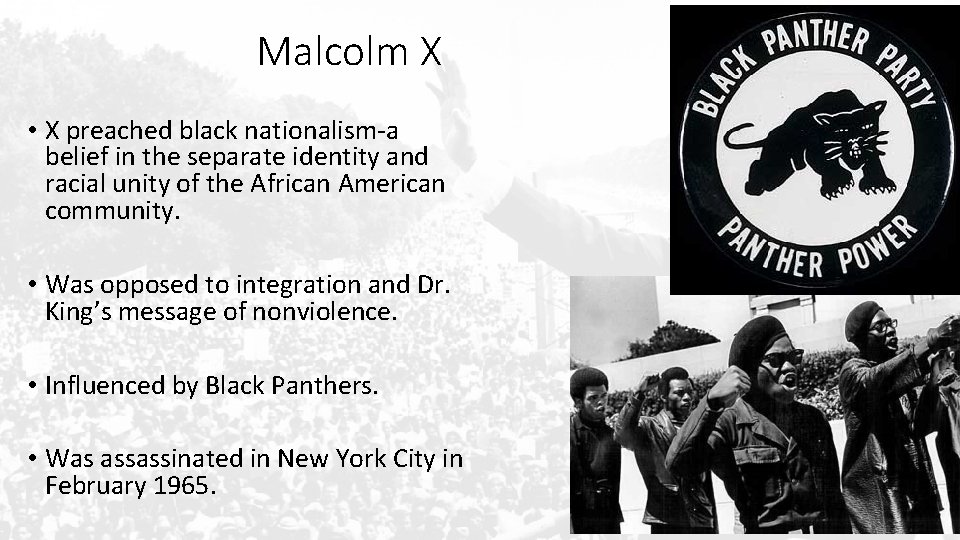
Malcolm X • X preached black nationalism-a belief in the separate identity and racial unity of the African American community. • Was opposed to integration and Dr. King’s message of nonviolence. • Influenced by Black Panthers. • Was assassinated in New York City in February 1965.
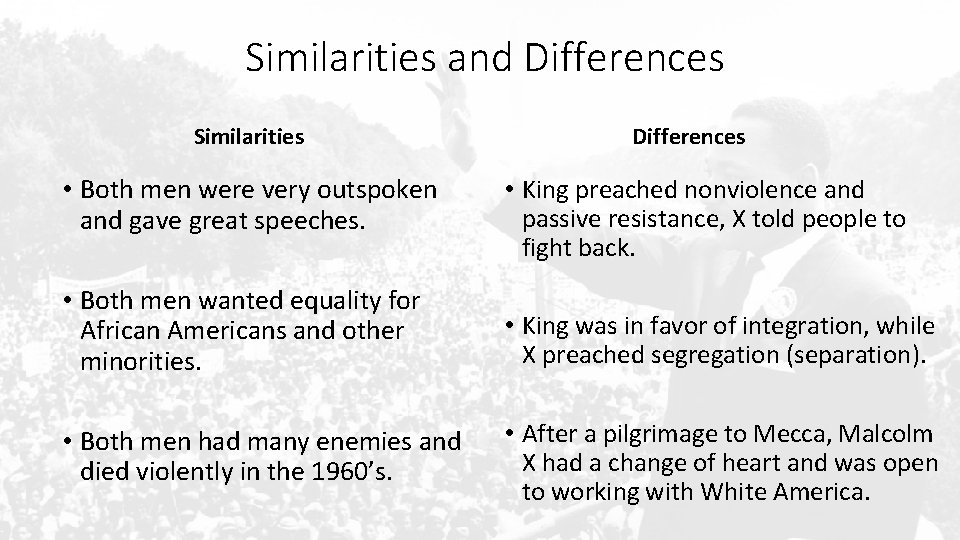
Similarities and Differences Similarities Differences • Both men were very outspoken and gave great speeches. • King preached nonviolence and passive resistance, X told people to fight back. • Both men wanted equality for African Americans and other minorities. • King was in favor of integration, while X preached segregation (separation). • Both men had many enemies and died violently in the 1960’s. • After a pilgrimage to Mecca, Malcolm X had a change of heart and was open to working with White America.
In their own words… • https: //www. youtube. com/watch? v=h 4 Pq. LKWuwy. U
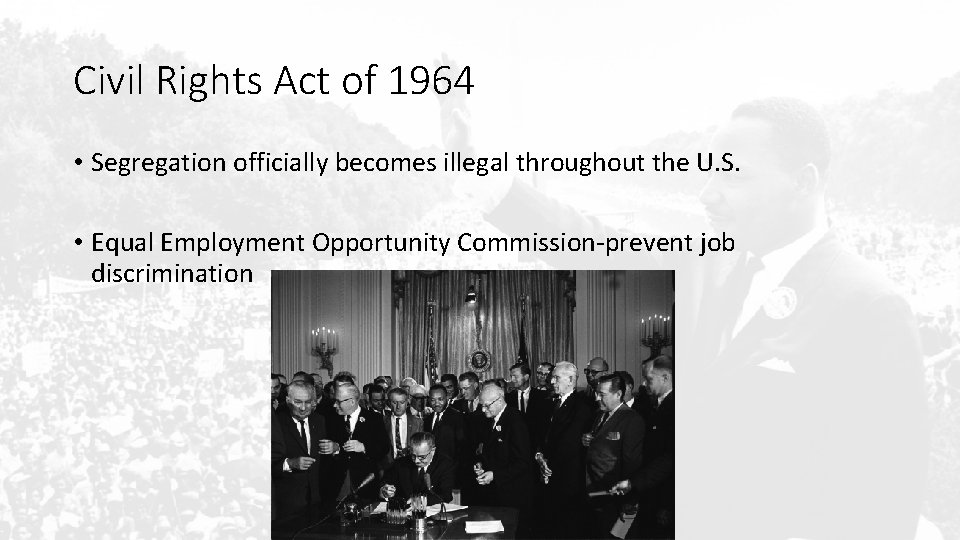
Civil Rights Act of 1964 • Segregation officially becomes illegal throughout the U. S. • Equal Employment Opportunity Commission-prevent job discrimination
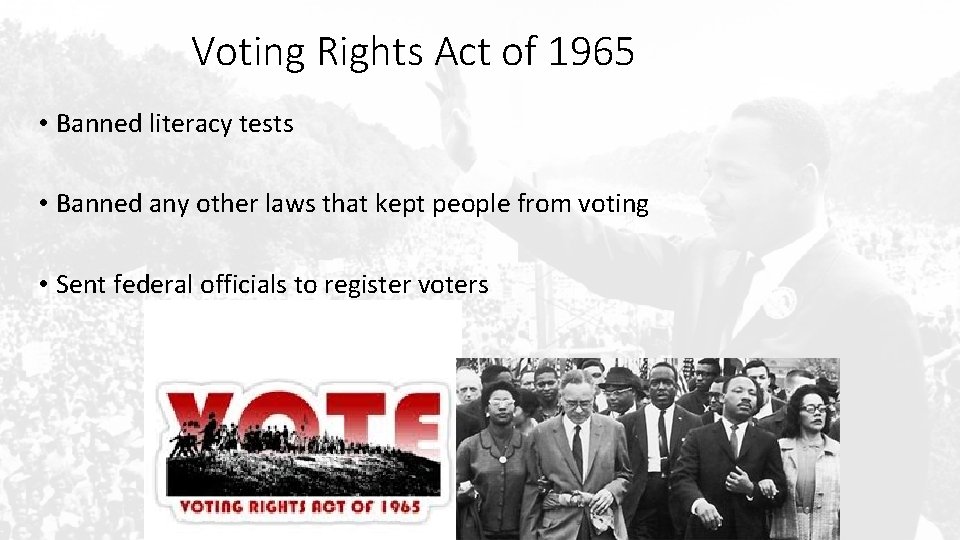
Voting Rights Act of 1965 • Banned literacy tests • Banned any other laws that kept people from voting • Sent federal officials to register voters
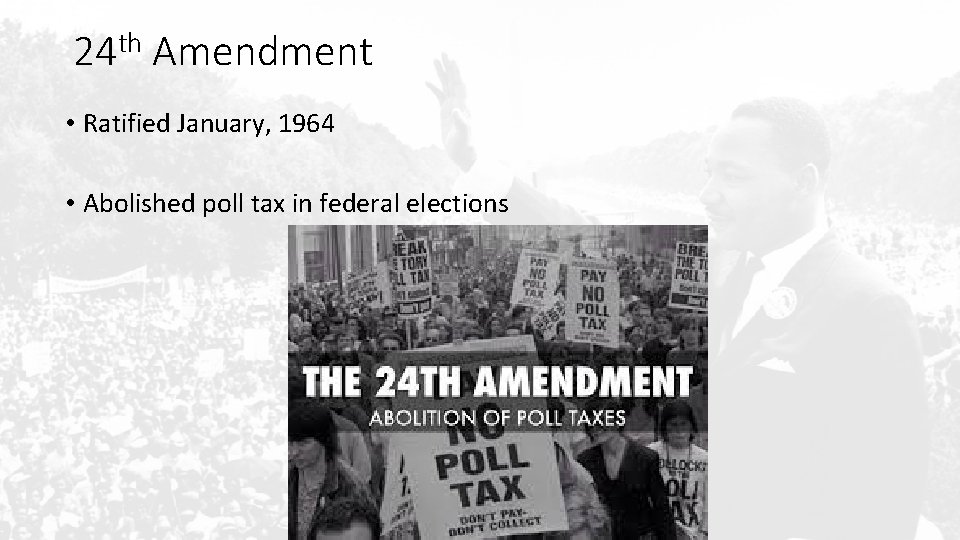
24 th Amendment • Ratified January, 1964 • Abolished poll tax in federal elections