
Civil Rights and Responsibilities Citizenship A citizen is
Civil Rights and Responsibilities
Citizenship �A citizen is an individual with certain rights and duties under a government and who, by birth or by choice, owes allegiance to that government. �Another word for allegiance is loyalty.
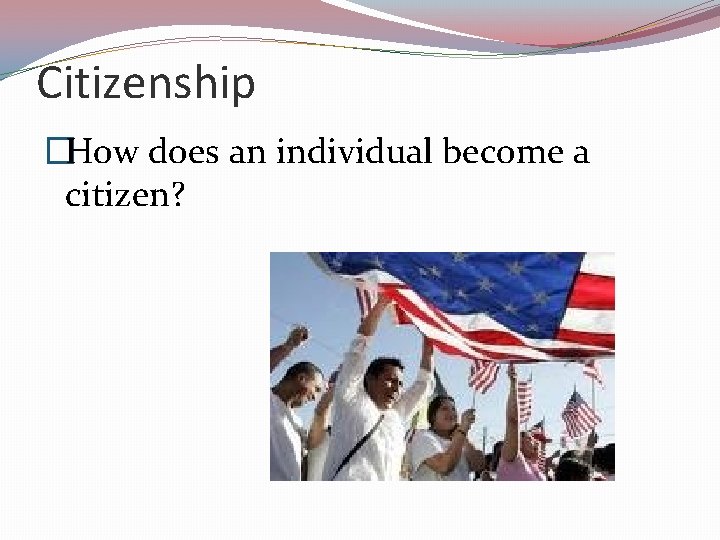
Citizenship �How does an individual become a citizen?
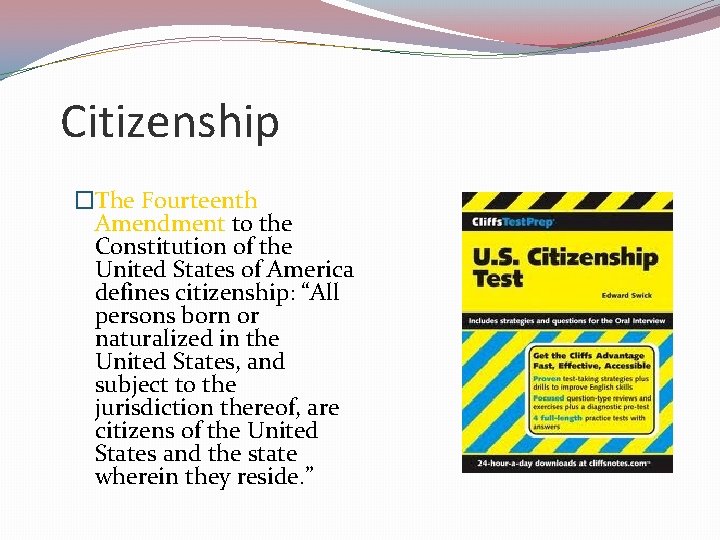
Citizenship �The Fourteenth Amendment to the Constitution of the United States of America defines citizenship: “All persons born or naturalized in the United States, and subject to the jurisdiction thereof, are citizens of the United States and the state wherein they reside. ”
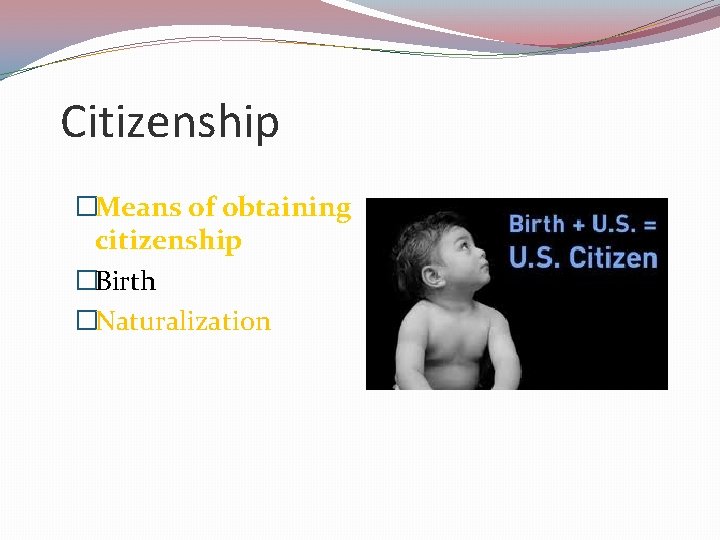
Citizenship �Means of obtaining citizenship �Birth �Naturalization
Citizenship �By birth -- you can become a citizen of the United States by being born to individuals who are already American citizens, or by being born on American soil
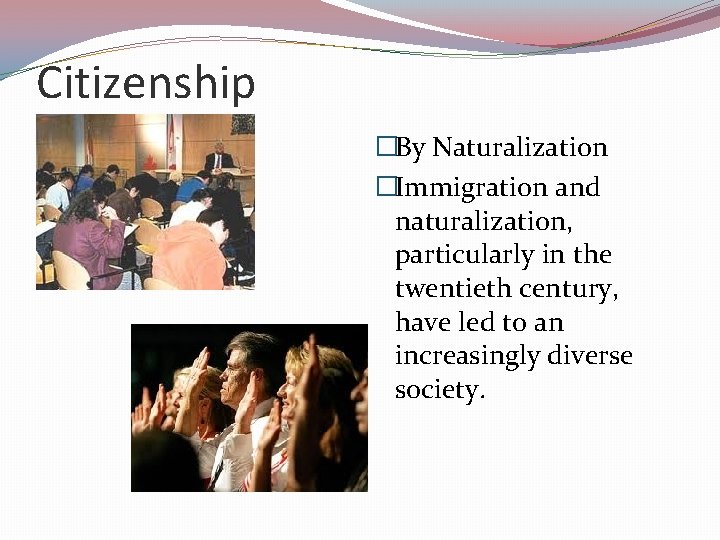
Citizenship �By Naturalization �Immigration and naturalization, particularly in the twentieth century, have led to an increasingly diverse society.
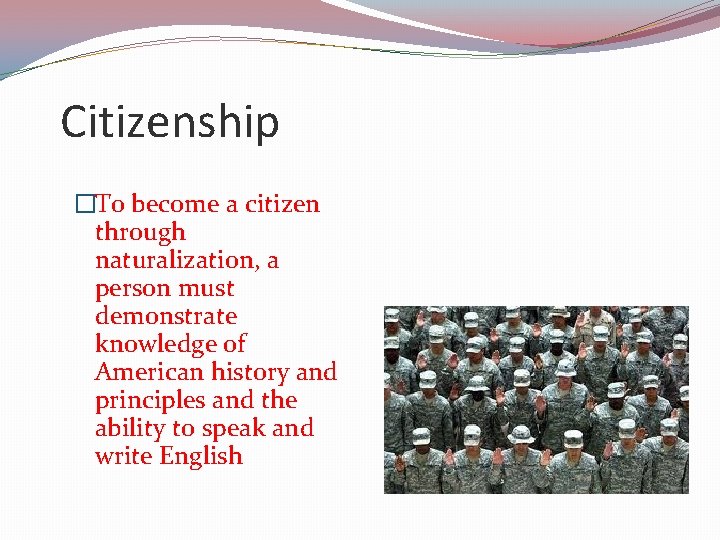
Citizenship �To become a citizen through naturalization, a person must demonstrate knowledge of American history and principles and the ability to speak and write English
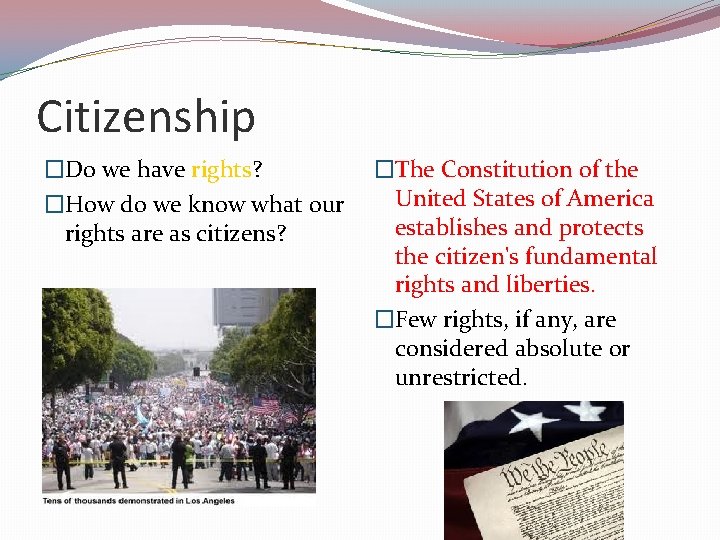
Citizenship �Do we have rights? �How do we know what our rights are as citizens? �The Constitution of the United States of America establishes and protects the citizen's fundamental rights and liberties. �Few rights, if any, are considered absolute or unrestricted.
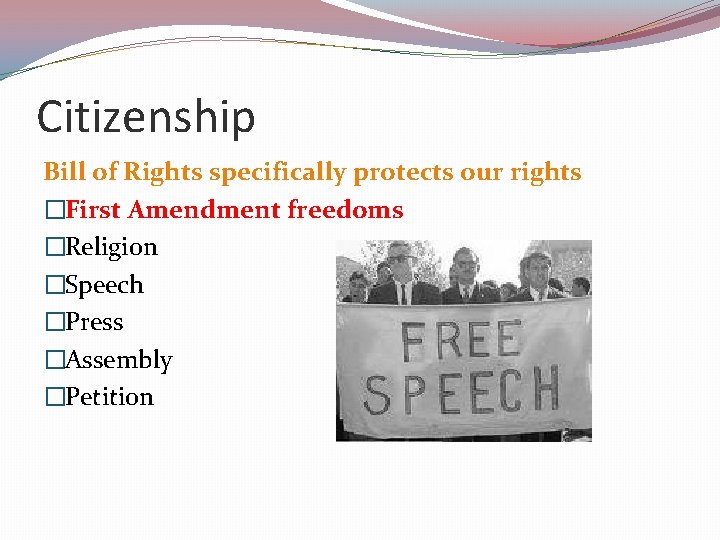
Citizenship Bill of Rights specifically protects our rights �First Amendment freedoms �Religion �Speech �Press �Assembly �Petition
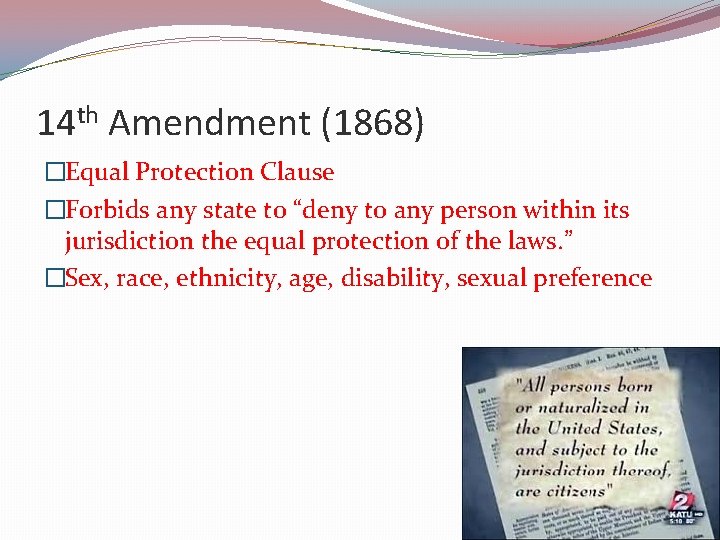
14 th Amendment (1868) �Equal Protection Clause �Forbids any state to “deny to any person within its jurisdiction the equal protection of the laws. ” �Sex, race, ethnicity, age, disability, sexual preference
Citizenship �Responsibilities �For government to be effective, citizens must fulfill their civic duties.
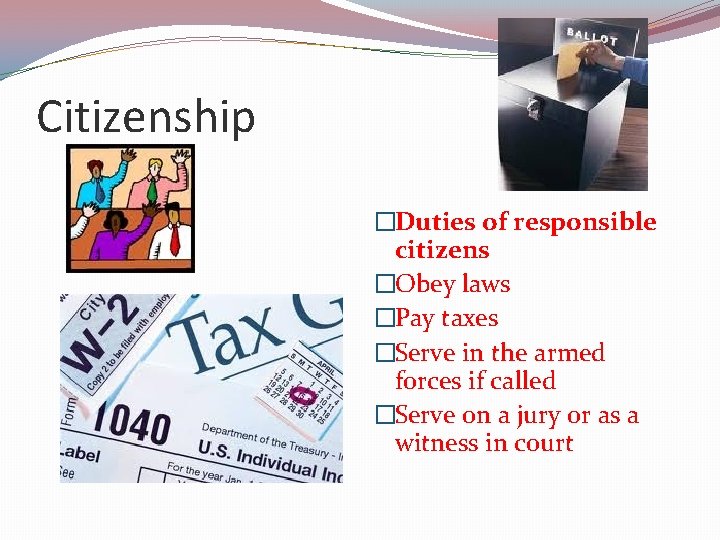
Citizenship �Duties of responsible citizens �Obey laws �Pay taxes �Serve in the armed forces if called �Serve on a jury or as a witness in court
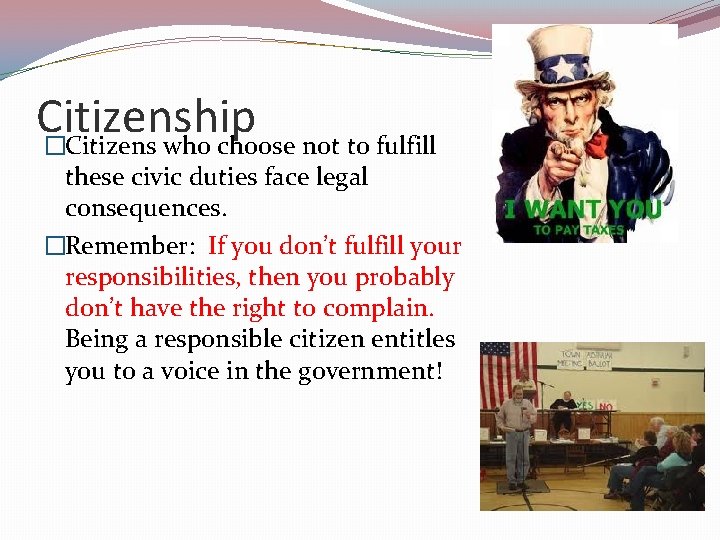
Citizenship �Citizens who choose not to fulfill these civic duties face legal consequences. �Remember: If you don’t fulfill your responsibilities, then you probably don’t have the right to complain. Being a responsible citizen entitles you to a voice in the government!
Citizenship �A basic responsibility of citizenship is to contribute to the common good.
Citizenship �Responsibilities of citizens �Register and vote �Hold elective office �Influence government by communicating with government officials �Serve in voluntary, appointed positions �Participate in political campaigns �Keep informed regarding current issues �Respect others' rights to an equal voice in government
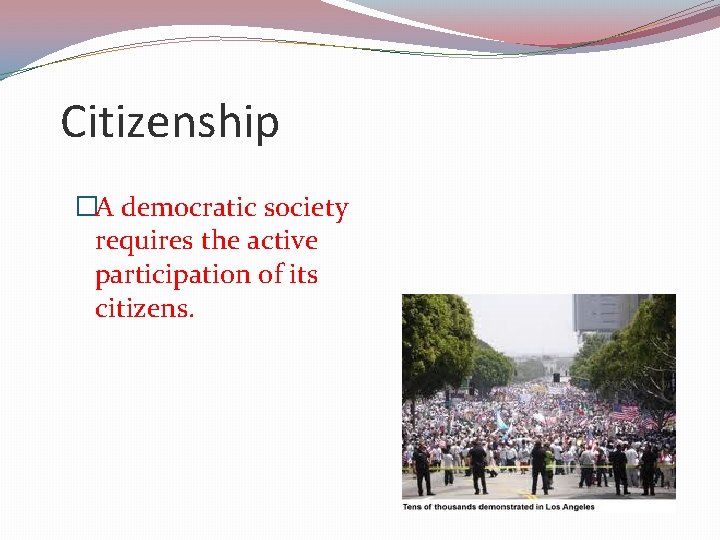
Citizenship �A democratic society requires the active participation of its citizens.
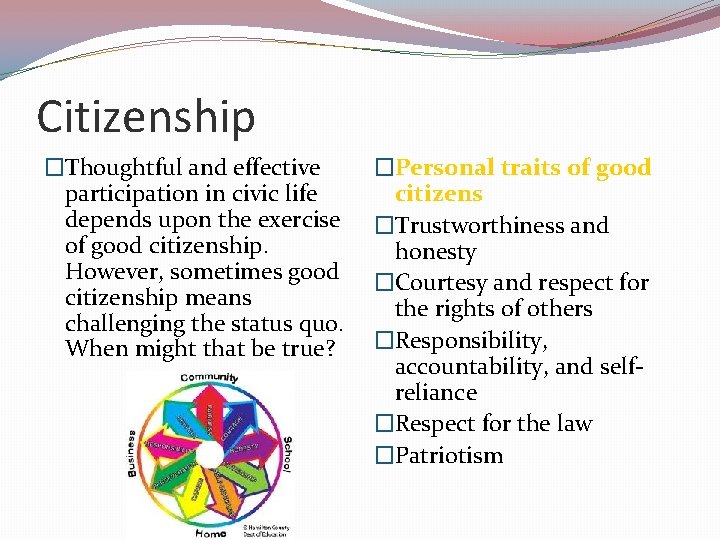
Citizenship �Thoughtful and effective participation in civic life depends upon the exercise of good citizenship. However, sometimes good citizenship means challenging the status quo. When might that be true? �Personal traits of good citizens �Trustworthiness and honesty �Courtesy and respect for the rights of others �Responsibility, accountability, and selfreliance �Respect for the law �Patriotism
The Civil Rights Movement Why Did the Civil Rights Movement Take Off After 1945? �Black equality became a significant political issue for the Democratic Party �WWII had been fought against racism abroad— hard to keep harboring it at home �Black veterans came home dedicated to change �Increasing number of White Americans condemned segregation �Discrimination in the United States hurt our propaganda battle against the Communists
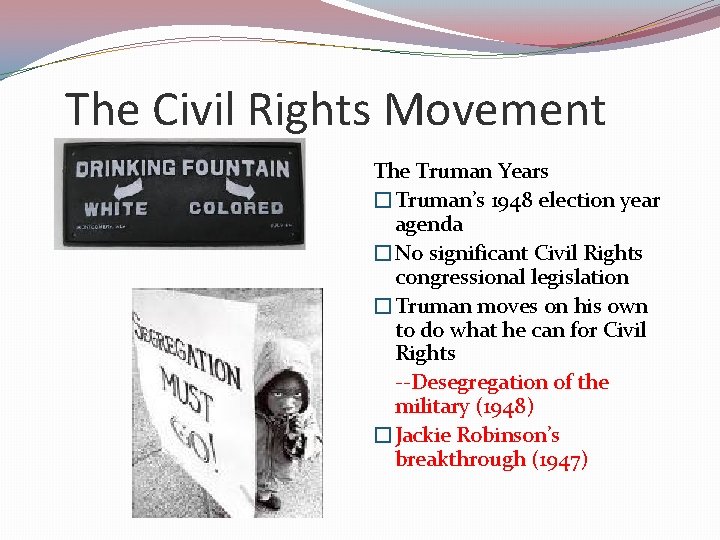
The Civil Rights Movement The Truman Years �Truman’s 1948 election year agenda �No significant Civil Rights congressional legislation �Truman moves on his own to do what he can for Civil Rights --Desegregation of the military (1948) �Jackie Robinson’s breakthrough (1947)
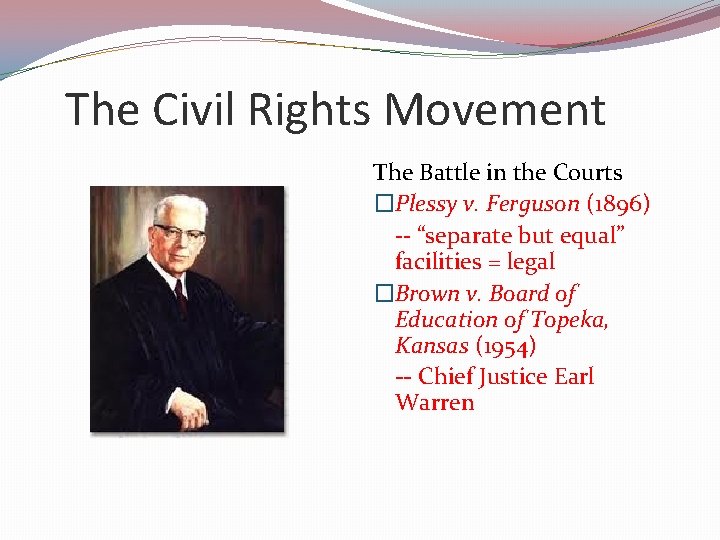
The Civil Rights Movement The Battle in the Courts �Plessy v. Ferguson (1896) -- “separate but equal” facilities = legal �Brown v. Board of Education of Topeka, Kansas (1954) -- Chief Justice Earl Warren
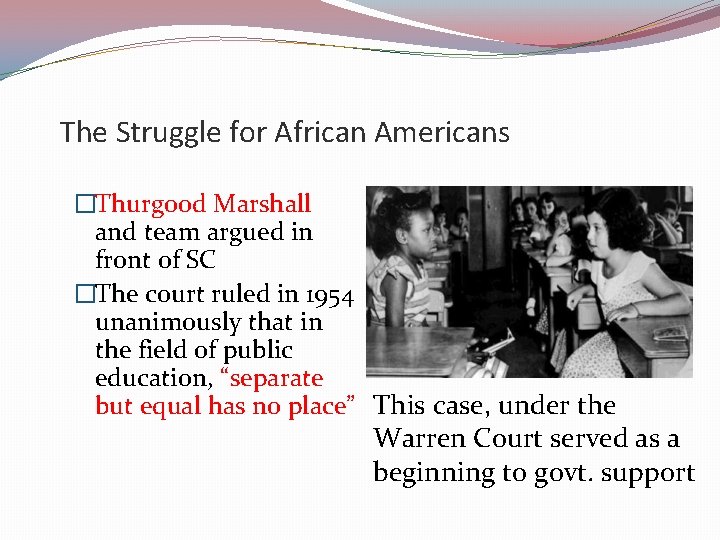
The Struggle for African Americans �Thurgood Marshall and team argued in front of SC �The court ruled in 1954 unanimously that in the field of public education, “separate but equal has no place” This case, under the Warren Court served as a beginning to govt. support
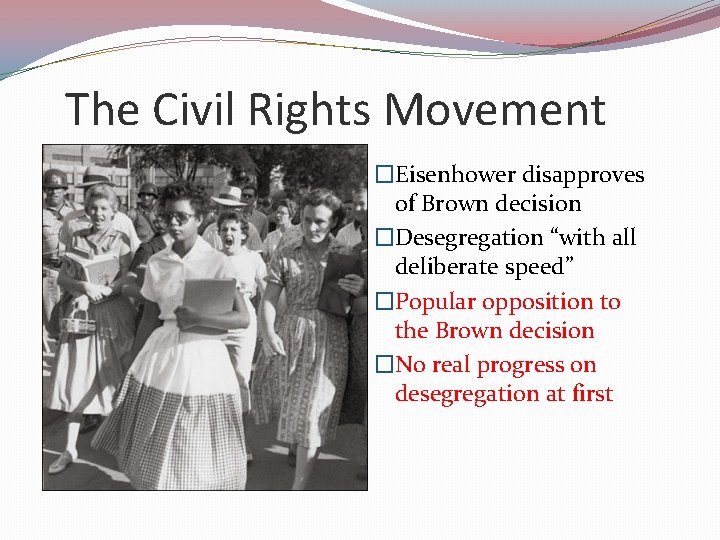
The Civil Rights Movement �Eisenhower disapproves of Brown decision �Desegregation “with all deliberate speed” �Popular opposition to the Brown decision �No real progress on desegregation at first
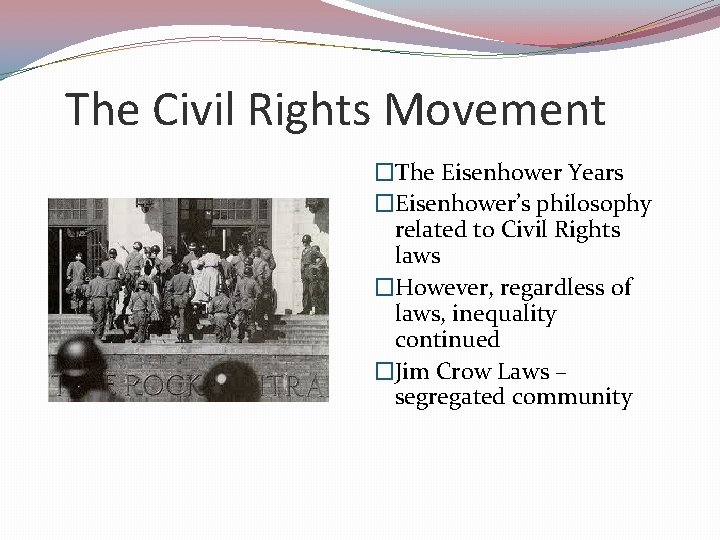
The Civil Rights Movement �The Eisenhower Years �Eisenhower’s philosophy related to Civil Rights laws �However, regardless of laws, inequality continued �Jim Crow Laws – segregated community
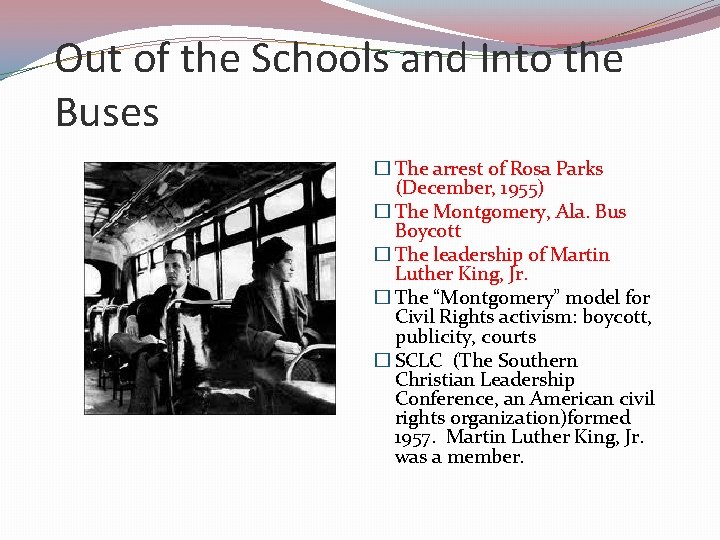
Out of the Schools and Into the Buses � The arrest of Rosa Parks (December, 1955) � The Montgomery, Ala. Bus Boycott � The leadership of Martin Luther King, Jr. � The “Montgomery” model for Civil Rights activism: boycott, publicity, courts � SCLC (The Southern Christian Leadership Conference, an American civil rights organization)formed 1957. Martin Luther King, Jr. was a member.
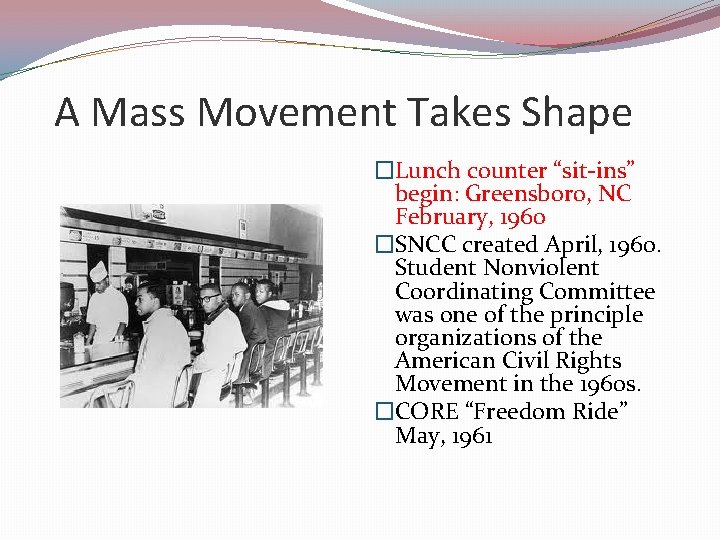
A Mass Movement Takes Shape �Lunch counter “sit-ins” begin: Greensboro, NC February, 1960 �SNCC created April, 1960. Student Nonviolent Coordinating Committee was one of the principle organizations of the American Civil Rights Movement in the 1960 s. �CORE “Freedom Ride” May, 1961
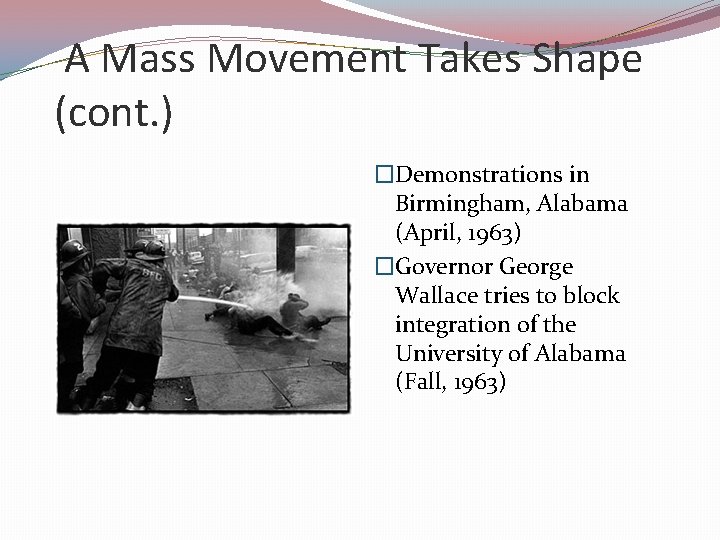
A Mass Movement Takes Shape (cont. ) �Demonstrations in Birmingham, Alabama (April, 1963) �Governor George Wallace tries to block integration of the University of Alabama (Fall, 1963)
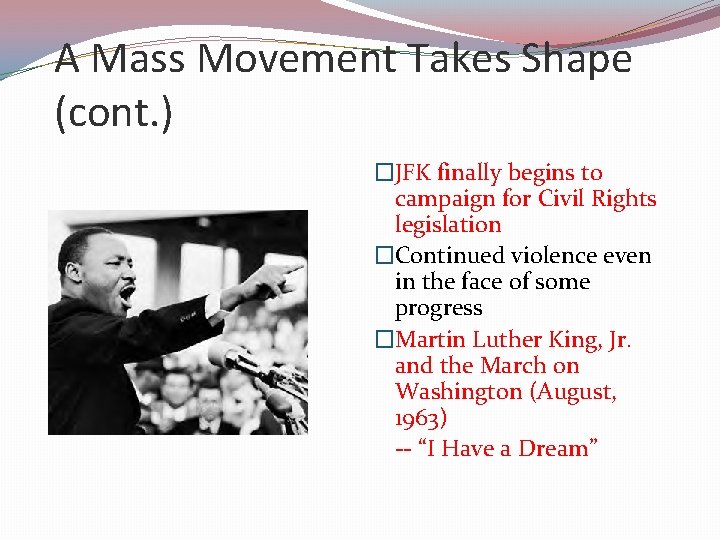
A Mass Movement Takes Shape (cont. ) �JFK finally begins to campaign for Civil Rights legislation �Continued violence even in the face of some progress �Martin Luther King, Jr. and the March on Washington (August, 1963) -- “I Have a Dream”
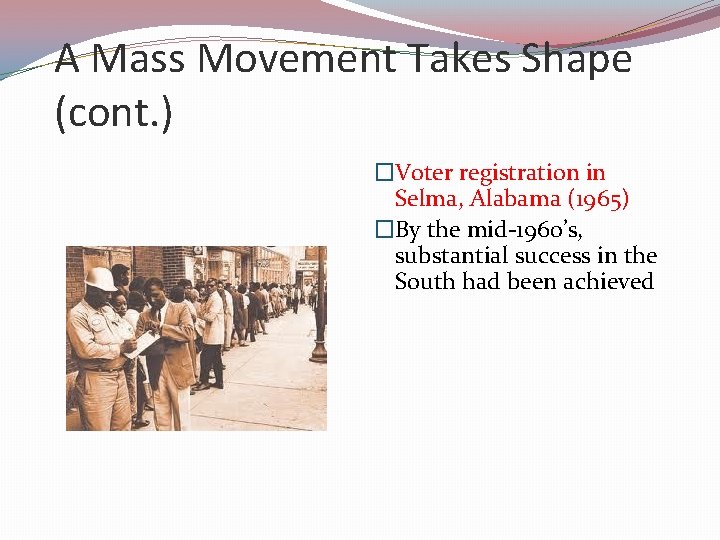
A Mass Movement Takes Shape (cont. ) �Voter registration in Selma, Alabama (1965) �By the mid-1960’s, substantial success in the South had been achieved
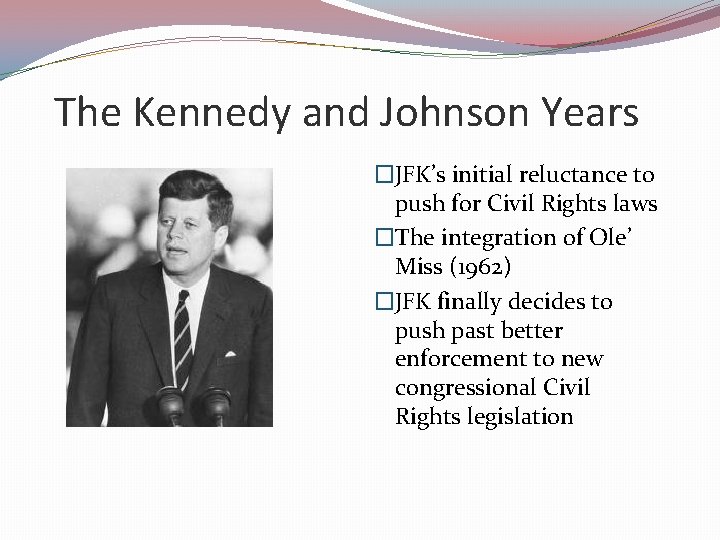
The Kennedy and Johnson Years �JFK’s initial reluctance to push for Civil Rights laws �The integration of Ole’ Miss (1962) �JFK finally decides to push past better enforcement to new congressional Civil Rights legislation
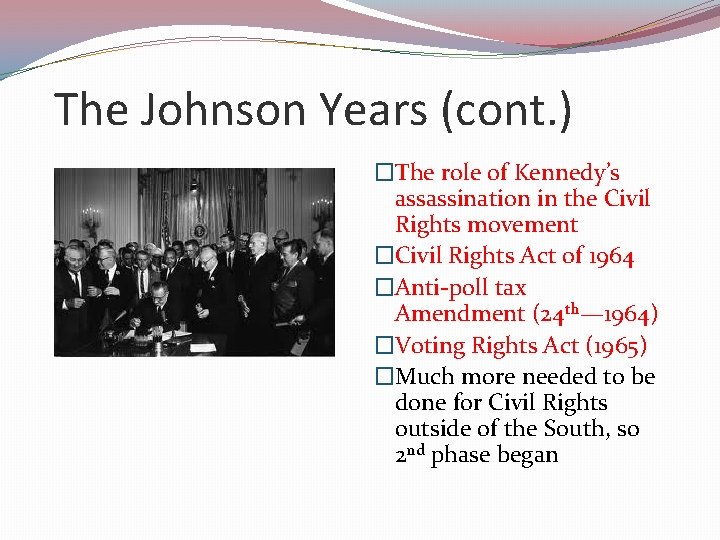
The Johnson Years (cont. ) �The role of Kennedy’s assassination in the Civil Rights movement �Civil Rights Act of 1964 �Anti-poll tax Amendment (24 th— 1964) �Voting Rights Act (1965) �Much more needed to be done for Civil Rights outside of the South, so 2 nd phase began
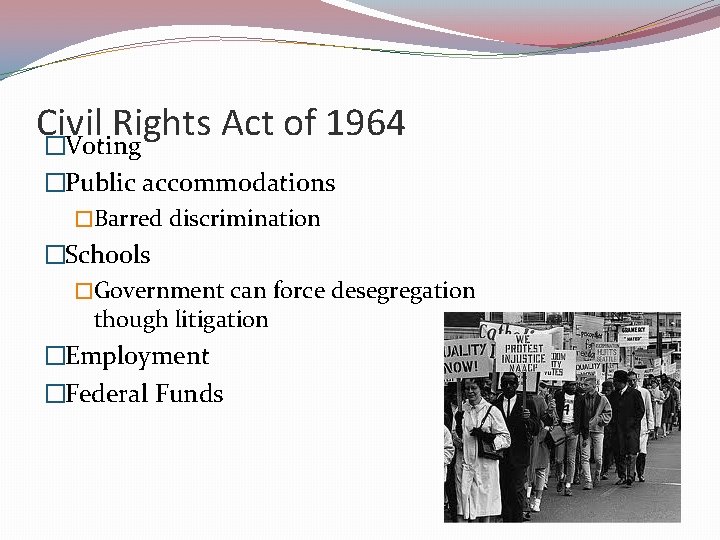
Civil Rights Act of 1964 �Voting �Public accommodations �Barred discrimination �Schools �Government can force desegregation though litigation �Employment �Federal Funds
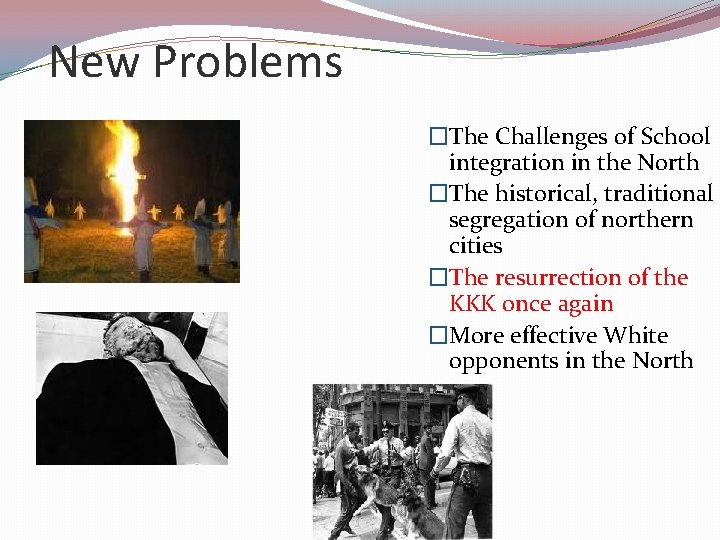
New Problems �The Challenges of School integration in the North �The historical, traditional segregation of northern cities �The resurrection of the KKK once again �More effective White opponents in the North
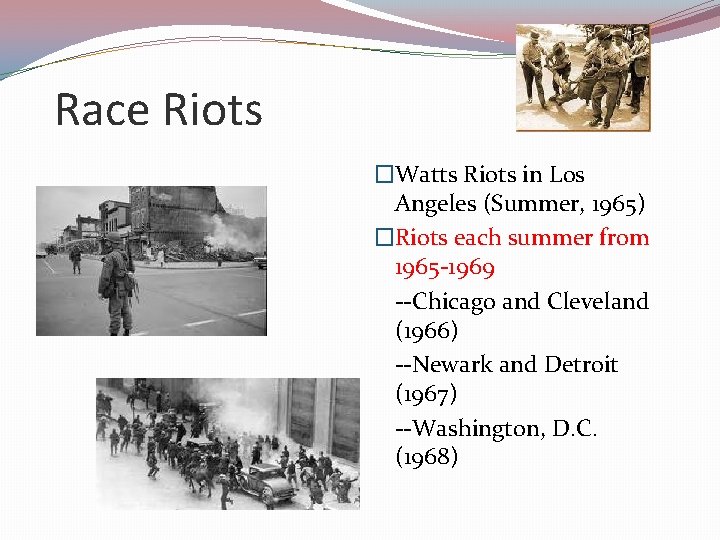
Race Riots �Watts Riots in Los Angeles (Summer, 1965) �Riots each summer from 1965 -1969 --Chicago and Cleveland (1966) --Newark and Detroit (1967) --Washington, D. C. (1968)
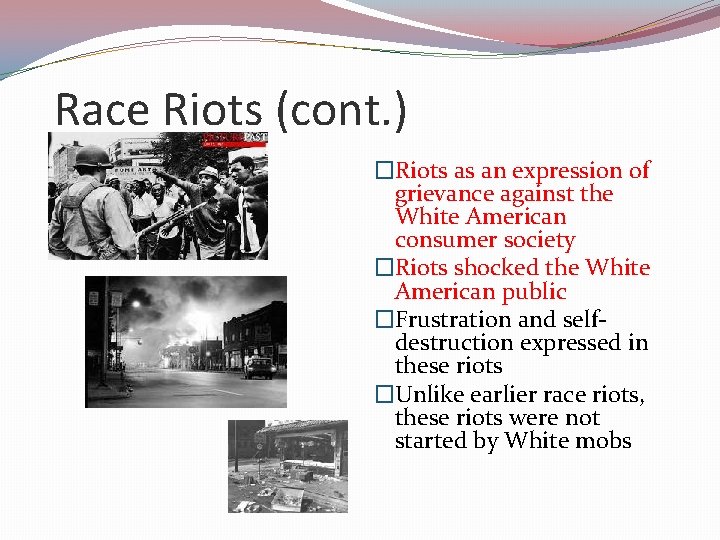
Race Riots (cont. ) �Riots as an expression of grievance against the White American consumer society �Riots shocked the White American public �Frustration and selfdestruction expressed in these riots �Unlike earlier race riots, these riots were not started by White mobs
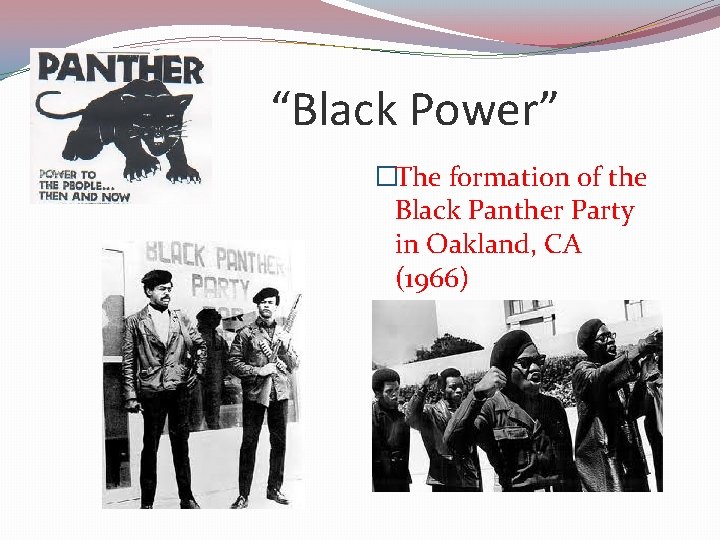
“Black Power” �The formation of the Black Panther Party in Oakland, CA (1966)
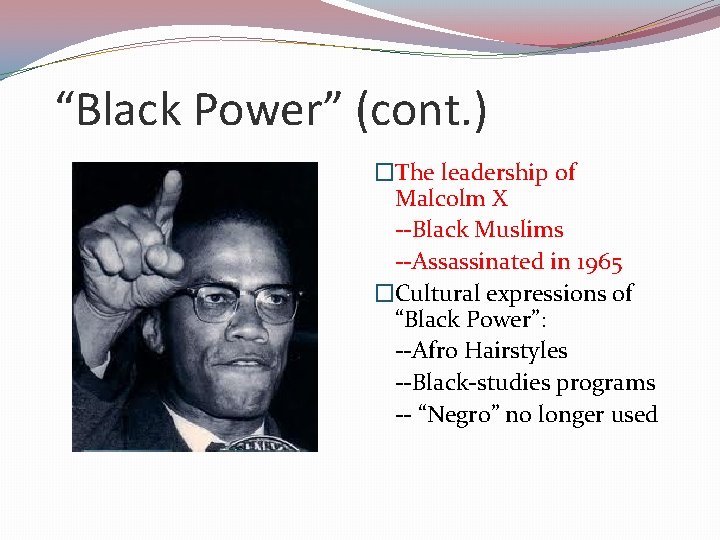
“Black Power” (cont. ) �The leadership of Malcolm X --Black Muslims --Assassinated in 1965 �Cultural expressions of “Black Power”: --Afro Hairstyles --Black-studies programs -- “Negro” no longer used
The Continuing Efforts �Affirmative Action: programs for minorities supported by government as a means of providing equality �To “undo” the wrongs of past �Ex. Forced hiring of minorities �Ex. Accepting minority students over whites, regardless to qualification �Ex. “Busing” �Ex. More funding for minorities from govt.
The Affirmative Action Debate �In the early 90’s legislation tried to help empower the programs �The public was turning against it � 1991 law vetoed by Bush Sr. , law softened �Clinton’s attitude: “mend it, not end it”
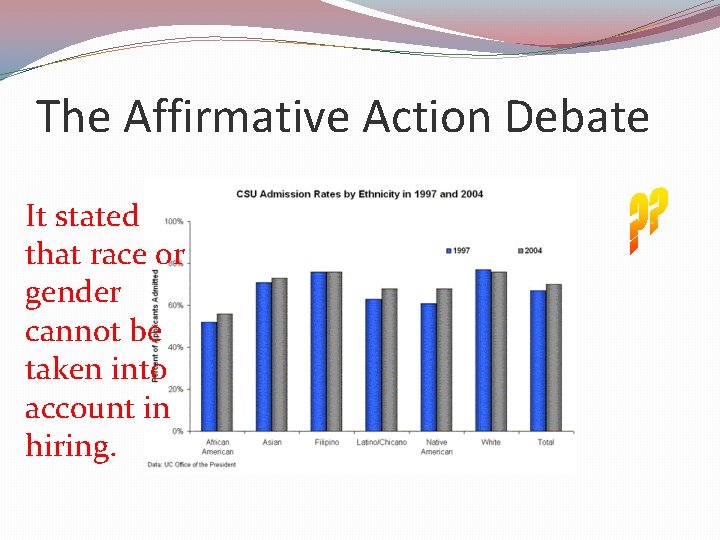
The Affirmative Action Debate It stated that race or gender cannot be taken into account in hiring.
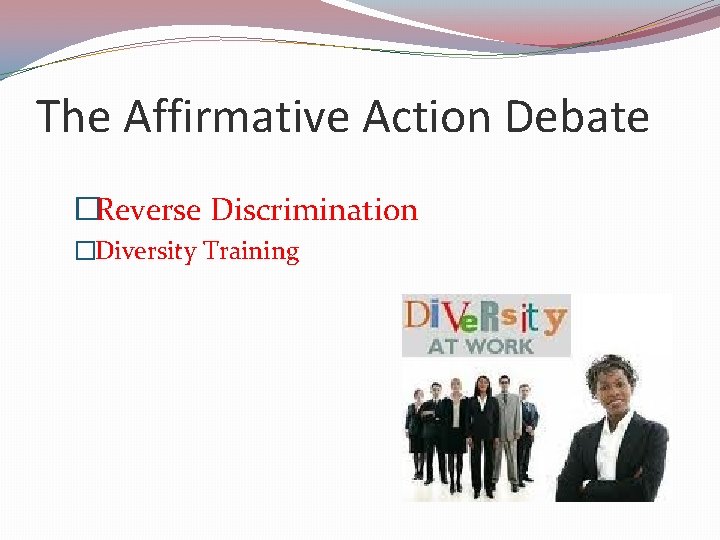
The Affirmative Action Debate �Reverse Discrimination �Diversity Training
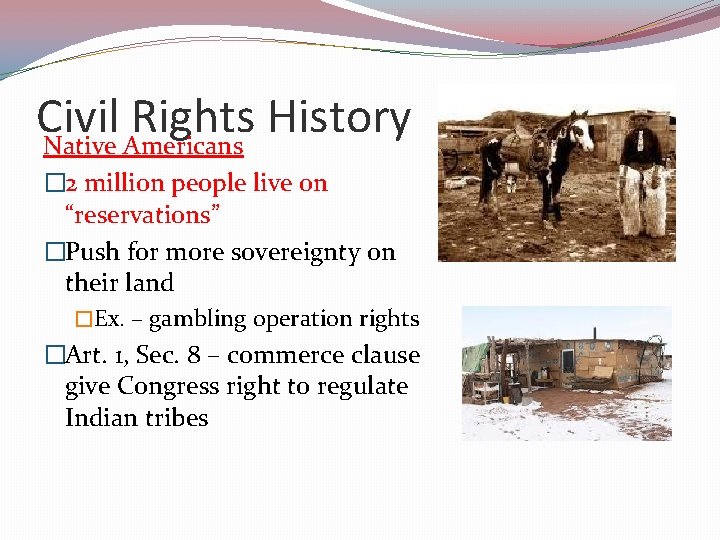
Civil Rights History Native Americans � 2 million people live on “reservations” �Push for more sovereignty on their land �Ex. – gambling operation rights �Art. 1, Sec. 8 – commerce clause give Congress right to regulate Indian tribes
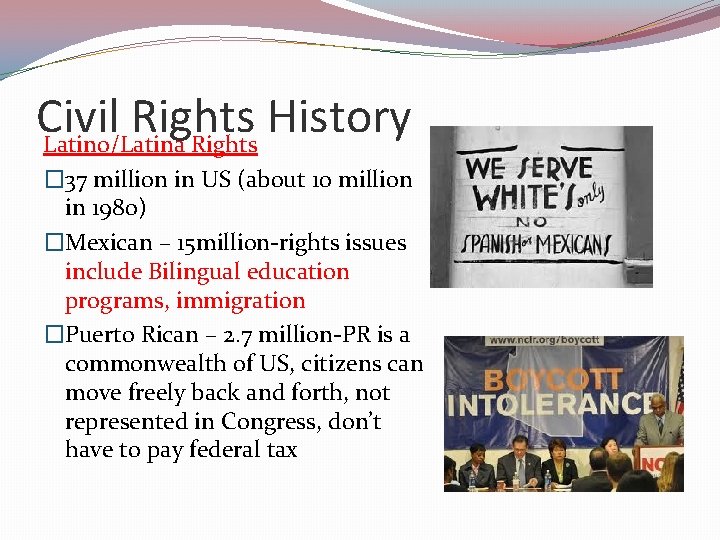
Civil Rights History Latino/Latina Rights � 37 million in US (about 10 million in 1980) �Mexican – 15 million-rights issues include Bilingual education programs, immigration �Puerto Rican – 2. 7 million-PR is a commonwealth of US, citizens can move freely back and forth, not represented in Congress, don’t have to pay federal tax
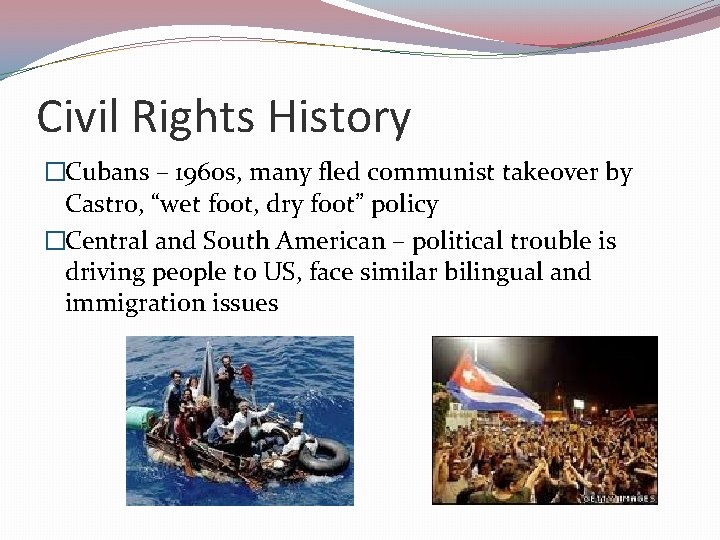
Civil Rights History �Cubans – 1960 s, many fled communist takeover by Castro, “wet foot, dry foot” policy �Central and South American – political trouble is driving people to US, face similar bilingual and immigration issues
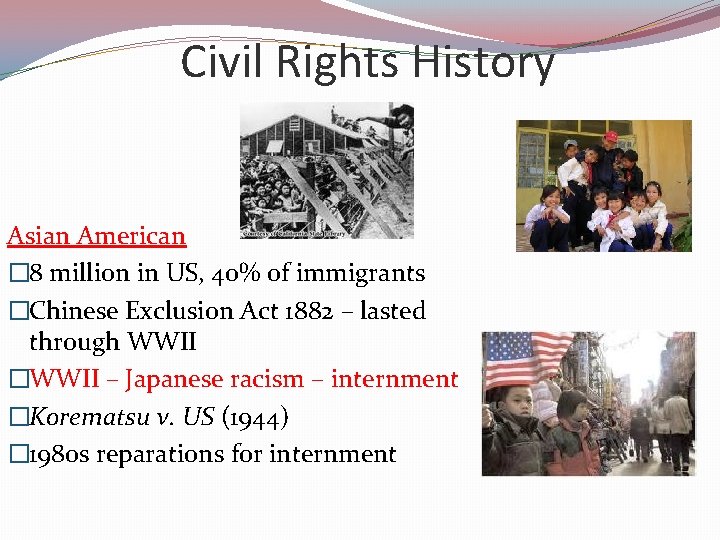
Civil Rights History Asian American � 8 million in US, 40% of immigrants �Chinese Exclusion Act 1882 – lasted through WWII �WWII – Japanese racism – internment �Korematsu v. US (1944) � 1980 s reparations for internment
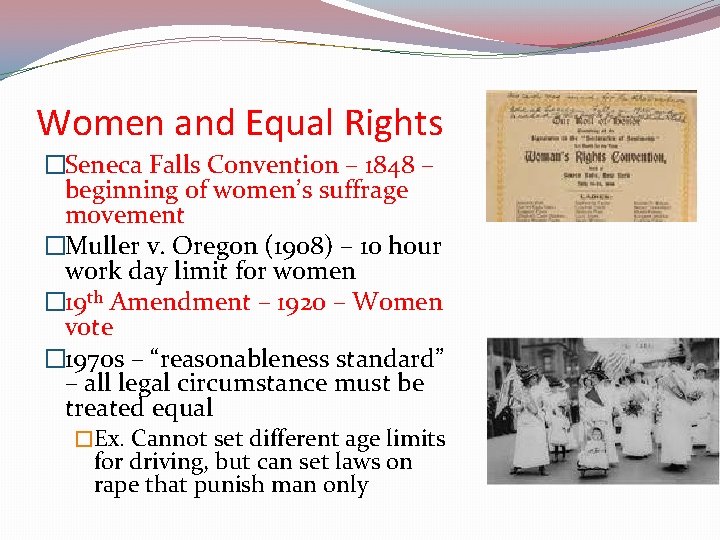
Women and Equal Rights �Seneca Falls Convention – 1848 – beginning of women’s suffrage movement �Muller v. Oregon (1908) – 10 hour work day limit for women � 19 th Amendment – 1920 – Women vote � 1970 s – “reasonableness standard” – all legal circumstance must be treated equal �Ex. Cannot set different age limits for driving, but can set laws on rape that punish man only
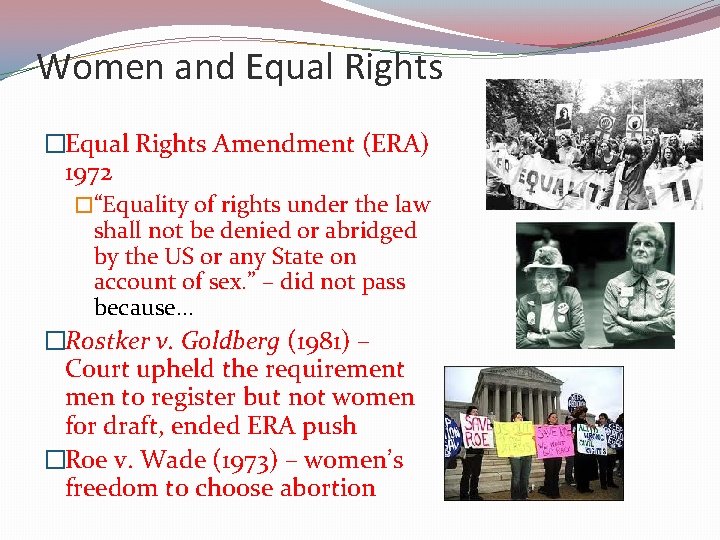
Women and Equal Rights �Equal Rights Amendment (ERA) 1972 �“Equality of rights under the law shall not be denied or abridged by the US or any State on account of sex. ” – did not pass because… �Rostker v. Goldberg (1981) – Court upheld the requirement men to register but not women for draft, ended ERA push �Roe v. Wade (1973) – women’s freedom to choose abortion
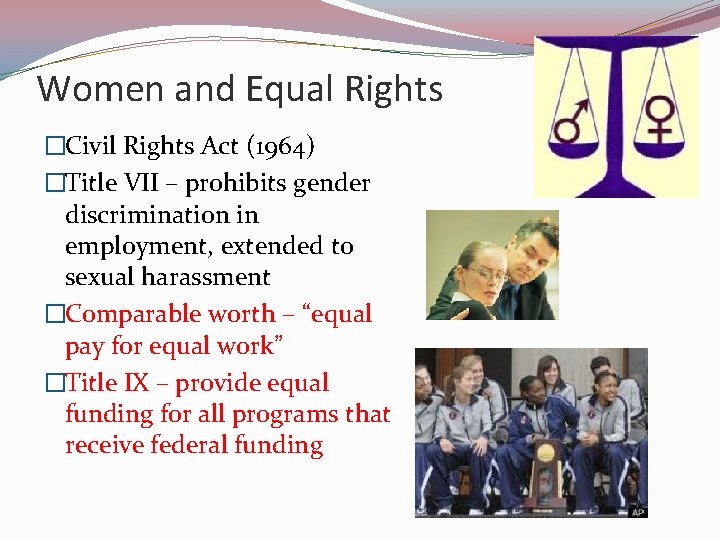
Women and Equal Rights �Civil Rights Act (1964) �Title VII – prohibits gender discrimination in employment, extended to sexual harassment �Comparable worth – “equal pay for equal work” �Title IX – provide equal funding for all programs that receive federal funding
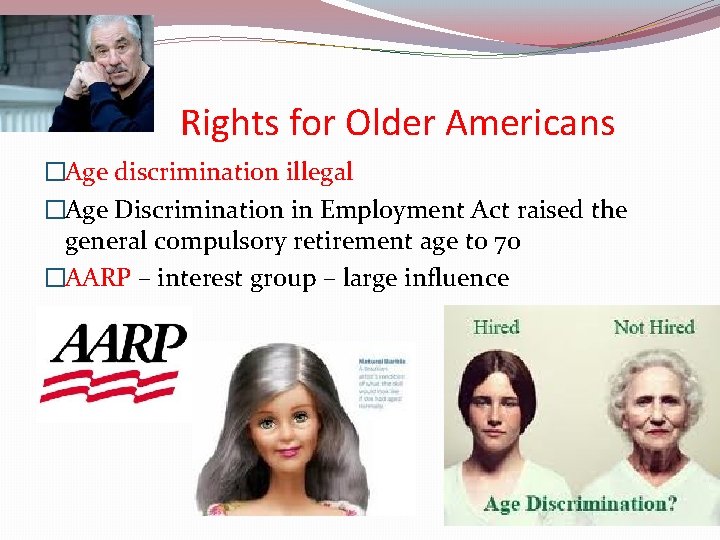
Rights for Older Americans �Age discrimination illegal �Age Discrimination in Employment Act raised the general compulsory retirement age to 70 �AARP – interest group – large influence
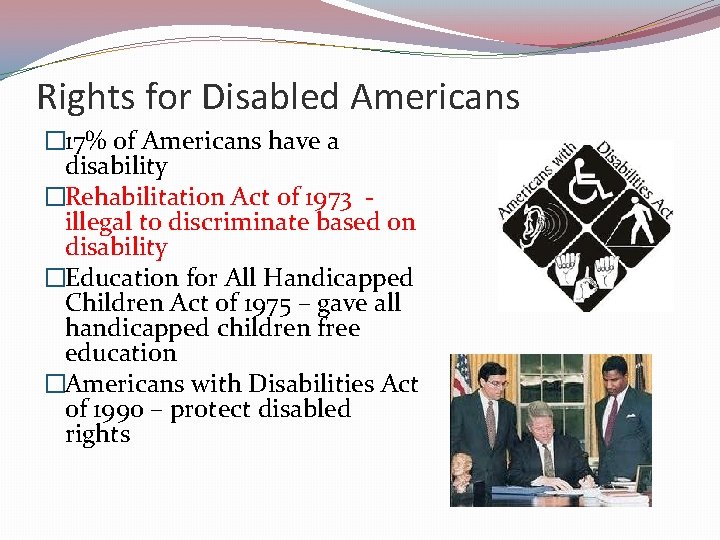
Rights for Disabled Americans � 17% of Americans have a disability �Rehabilitation Act of 1973 illegal to discriminate based on disability �Education for All Handicapped Children Act of 1975 – gave all handicapped children free education �Americans with Disabilities Act of 1990 – protect disabled rights
Civil Rights summary �Constant pursuit of equality �Civil Rights for minority groups will constantly be changing �New groups find their voice �EVERYONE will be a part of some minority group during their lifetime
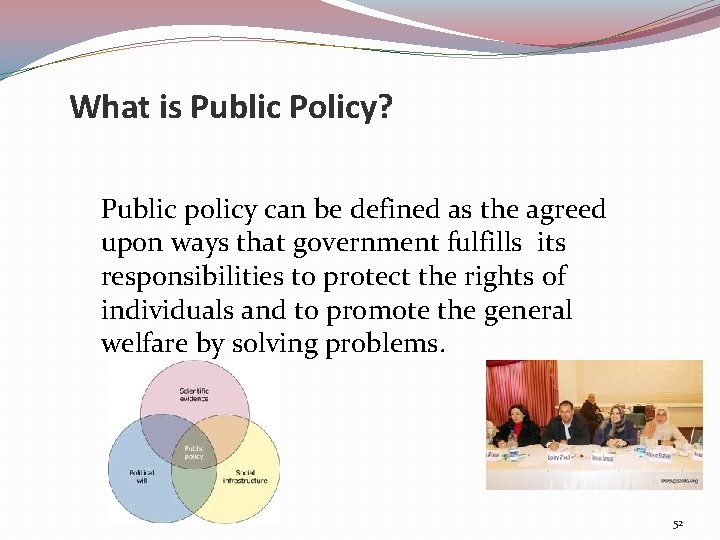
What is Public Policy? Public policy can be defined as the agreed upon ways that government fulfills its responsibilities to protect the rights of individuals and to promote the general welfare by solving problems. 52
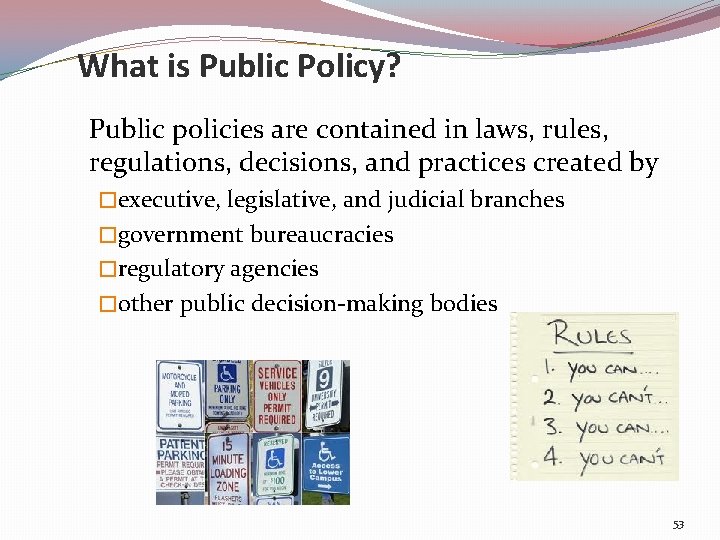
What is Public Policy? Public policies are contained in laws, rules, regulations, decisions, and practices created by �executive, legislative, and judicial branches �government bureaucracies �regulatory agencies �other public decision-making bodies 53
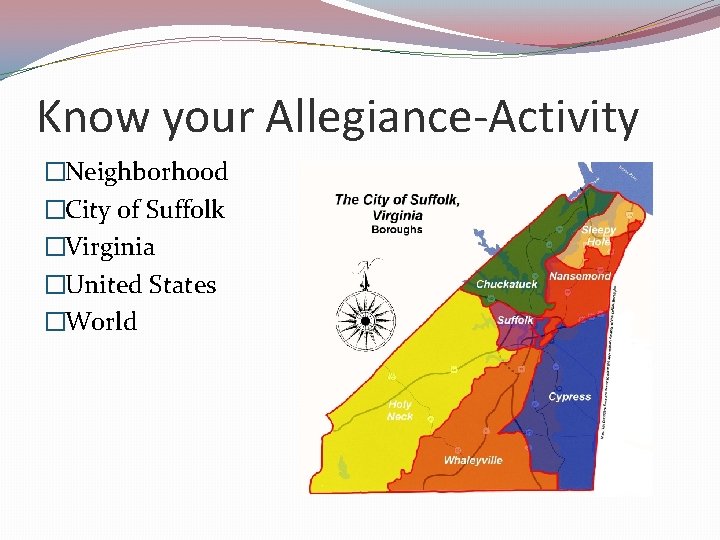
Know your Allegiance-Activity �Neighborhood �City of Suffolk �Virginia �United States �World
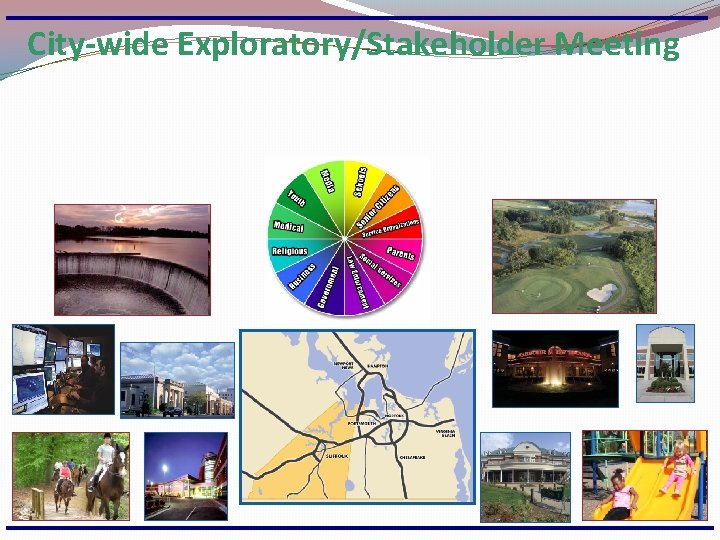
City-wide Exploratory/Stakeholder Meeting
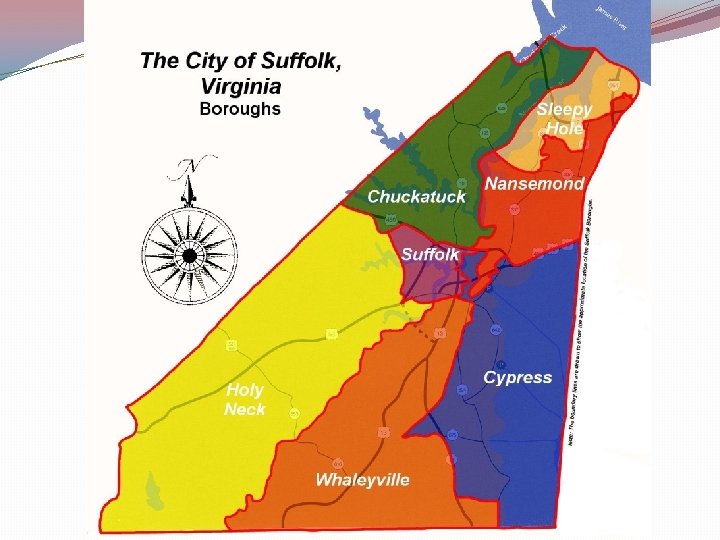
Suffolk’s History Suffolk was founded by English colonists in 1742 as a port town on the Nansemond River in the Virginia Colony. Early in its history, Suffolk became a land transportation gateway to the areas east of it in South Hampton Roads. Long surrounded by Nansemond County, Suffolk progressively became an incorporated town in 1808 and an independent city in 1906. In 1974, it combined by mutual agreement with the former county, which had become an independent city (City of Nansemond) 18 months earlier. It included the former outlying unincorporated towns of Holland Whaleyville. The newly consolidated cities assumed the name of Suffolk, creating the largest city in geographic area in Virginia. Peanuts grown in the surrounding areas became a major industry for Suffolk. Notably, Planters' Peanuts was established in Suffolk beginning in 1912. Suffolk was the 'birthplace' of Mr. Peanut, the mascot of Planters' Peanuts. In modern times, Suffolk remains a major peanut processing center and railroad and highway transportation hub. It hosts a diverse combination of industrial, manufacturing, distribution, retail, and hospitality businesses, as well as active farming. Suffolk experienced a boom in its high tech economy given the presence of the U. S. Joint Forces Command (JFCOM) facility located in northern Suffolk.
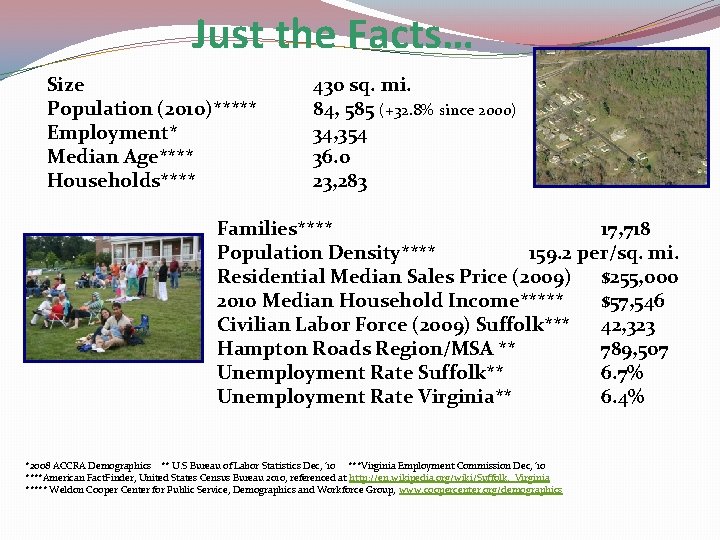
Just the Facts… Size Population (2010)***** Employment* Median Age**** Households**** 430 sq. mi. 84, 585 (+32. 8% since 2000) 34, 354 36. 0 23, 283 Families**** 17, 718 Population Density**** 159. 2 per/sq. mi. Residential Median Sales Price (2009) $255, 000 2010 Median Household Income***** $57, 546 Civilian Labor Force (2009) Suffolk*** 42, 323 Hampton Roads Region/MSA ** 789, 507 Unemployment Rate Suffolk** 6. 7% Unemployment Rate Virginia** 6. 4% *2008 ACCRA Demographics ** U. S Bureau of Labor Statistics Dec, ‘ 10 ***Virginia Employment Commission Dec, ‘ 10 ****American Fact. Finder, United States Census Bureau 2010, referenced at http: //en. wikipedia. org/wiki/Suffolk, _Virginia ***** Weldon Cooper Center for Public Service, Demographics and Workforce Group, www. coopercenter. org/demographics
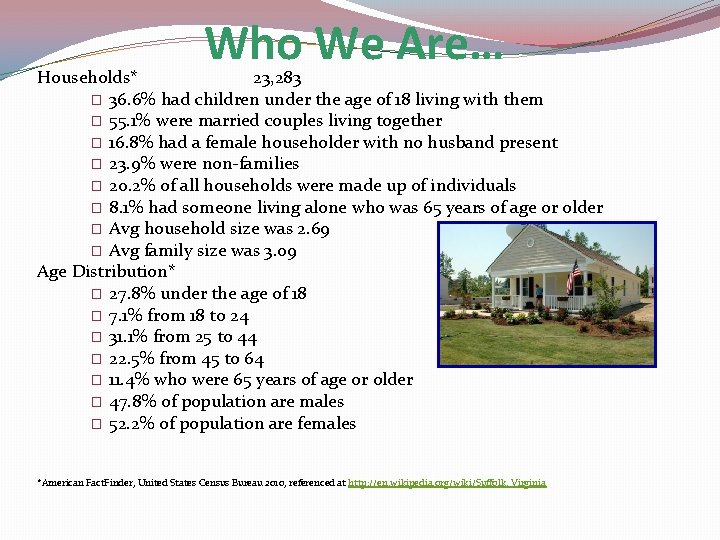
Who We Are… Households* 23, 283 � 36. 6% had children under the age of 18 living with them � 55. 1% were married couples living together � 16. 8% had a female householder with no husband present � 23. 9% were non-families � 20. 2% of all households were made up of individuals � 8. 1% had someone living alone who was 65 years of age or older � Avg household size was 2. 69 � Avg family size was 3. 09 Age Distribution* � 27. 8% under the age of 18 � 7. 1% from 18 to 24 � 31. 1% from 25 to 44 � 22. 5% from 45 to 64 � 11. 4% who were 65 years of age or older � 47. 8% of population are males � 52. 2% of population are females *American Fact. Finder, United States Census Bureau 2010, referenced at http: //en. wikipedia. org/wiki/Suffolk, Virginia
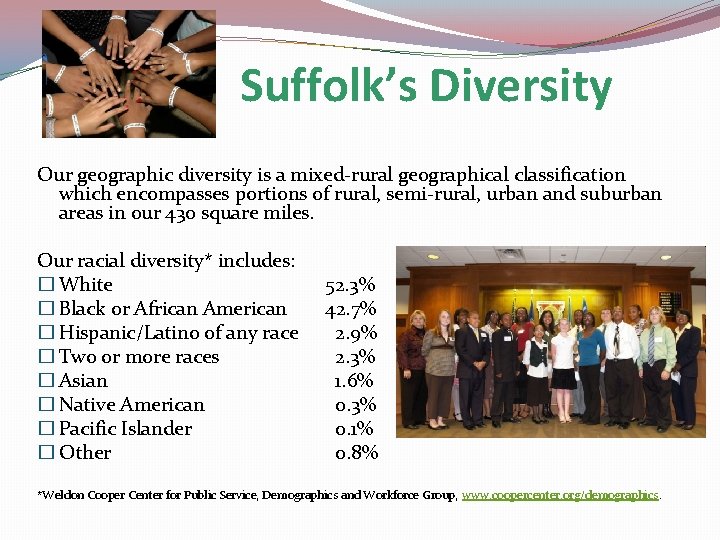
Suffolk’s Diversity Our geographic diversity is a mixed-rural geographical classification which encompasses portions of rural, semi-rural, urban and suburban areas in our 430 square miles. Our racial diversity* includes: � White � Black or African American � Hispanic/Latino of any race � Two or more races � Asian � Native American � Pacific Islander � Other 52. 3% 42. 7% 2. 9% 2. 3% 1. 6% 0. 3% 0. 1% 0. 8% *Weldon Cooper Center for Public Service, Demographics and Workforce Group, www. coopercenter. org/demographics.
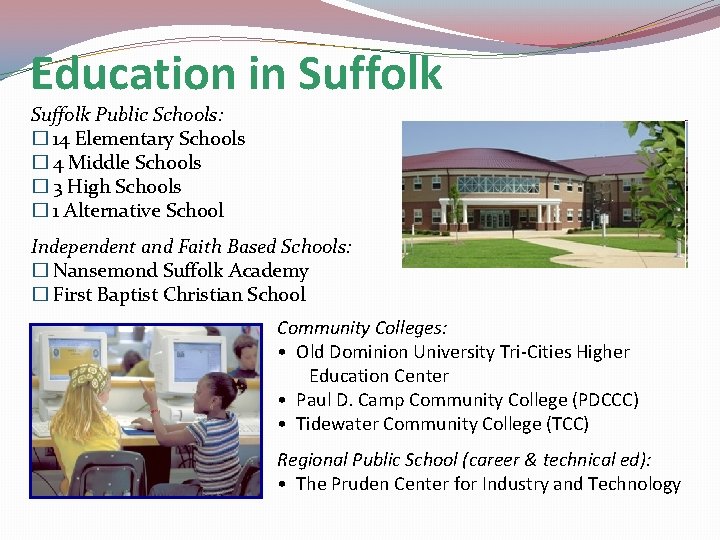
Education in Suffolk Public Schools: � 14 Elementary Schools � 4 Middle Schools � 3 High Schools � 1 Alternative School Independent and Faith Based Schools: � Nansemond Suffolk Academy � First Baptist Christian School Community Colleges: • Old Dominion University Tri-Cities Higher Education Center • Paul D. Camp Community College (PDCCC) • Tidewater Community College (TCC) Regional Public School (career & technical ed): • The Pruden Center for Industry and Technology
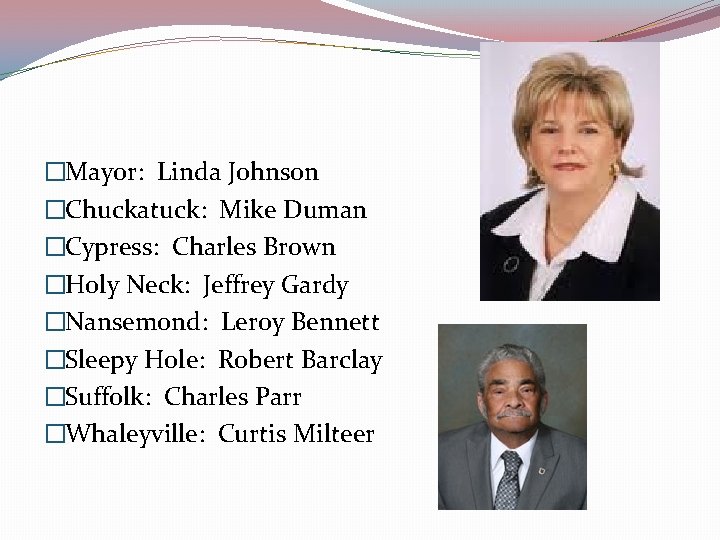
�Mayor: Linda Johnson �Chuckatuck: Mike Duman �Cypress: Charles Brown �Holy Neck: Jeffrey Gardy �Nansemond: Leroy Bennett �Sleepy Hole: Robert Barclay �Suffolk: Charles Parr �Whaleyville: Curtis Milteer
- Slides: 62