
Civil Preparedness Section Prparation du Secteur civil Resilience

- Slides: 27
Civil Preparedness Section Préparation du Secteur civil Resilience and Enablement Khan Jahier Enablement and Resilience Section Defence Policy and Planning Division NATO International Staff NATO UNCLASSIFIED 1
Civil Preparedness Section Préparation du Secteur civil q q q The new strategic reality Threats from East and South Instability is the new strategic reality Need for long-term adaptation
Civil Preparedness Section Préparation du Secteur civil q q q Key messages Security environment is changing Need to reinvest in civil preparedness Resilience is a shared responsibility
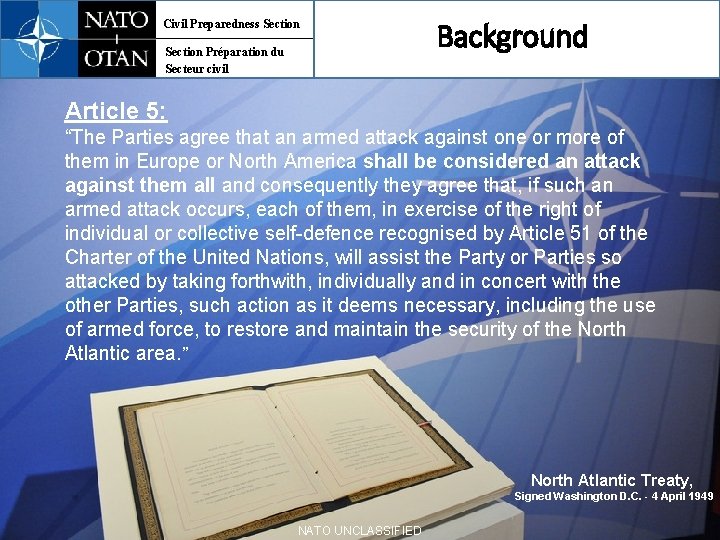
Civil Preparedness Section Préparation du Secteur civil Background Article 5: “The Parties agree that an armed attack against one or more of them in Europe or North America shall be considered an attack against them all and consequently they agree that, if such an armed attack occurs, each of them, in exercise of the right of individual or collective self-defence recognised by Article 51 of the Charter of the United Nations, will assist the Party or Parties so attacked by taking forthwith, individually and in concert with the other Parties, such action as it deems necessary, including the use of armed force, to restore and maintain the security of the North Atlantic area. ” North Atlantic Treaty, Signed Washington D. C. - 4 April 1949 NATO UNCLASSIFIED
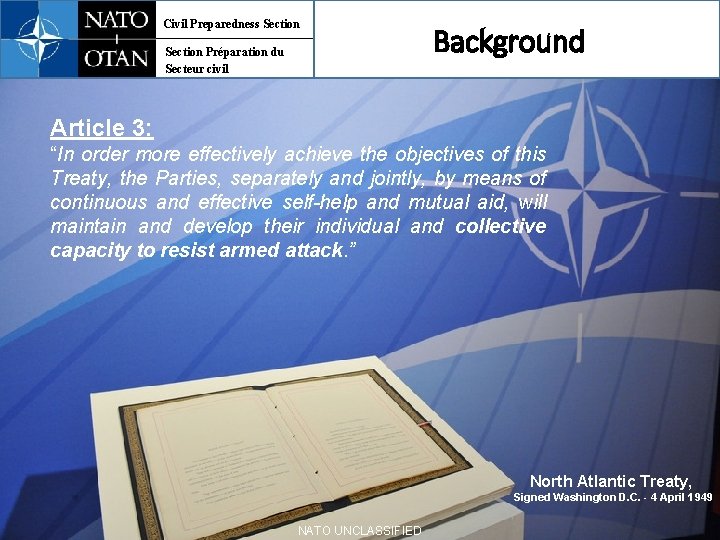
Civil Preparedness Section Préparation du Secteur civil Background Article 3: “In order more effectively achieve the objectives of this Treaty, the Parties, separately and jointly, by means of continuous and effective self-help and mutual aid, will maintain and develop their individual and collective capacity to resist armed attack. ” North Atlantic Treaty, Signed Washington D. C. - 4 April 1949 NATO UNCLASSIFIED
Civil Preparedness Section Préparation du Secteur civil q q q Three Core Functions of Civil Preparedness Continuity of government Continuity of essential services to the population Civil support to military operations NATO UNCLASSIFIED
Civil Preparedness Section Préparation du Secteur civil Civil Preparedness in NATO National and NATO military forces need to be adequately supported with civilian resources and infrastructure at all times NATO UNCLASSIFIED
Civil Preparedness Section Préparation du Secteur civil Civil Preparedness in NATO Helps nations reduce their vulnerabilities, and improves their resilience, including against hybrid attacks NATO UNCLASSIFIED
Civil Preparedness Section Préparation du Secteur civil q q q but…. without civil preparedness Forces cannot deploy Continuity of government at risk Civilian population fearful 9
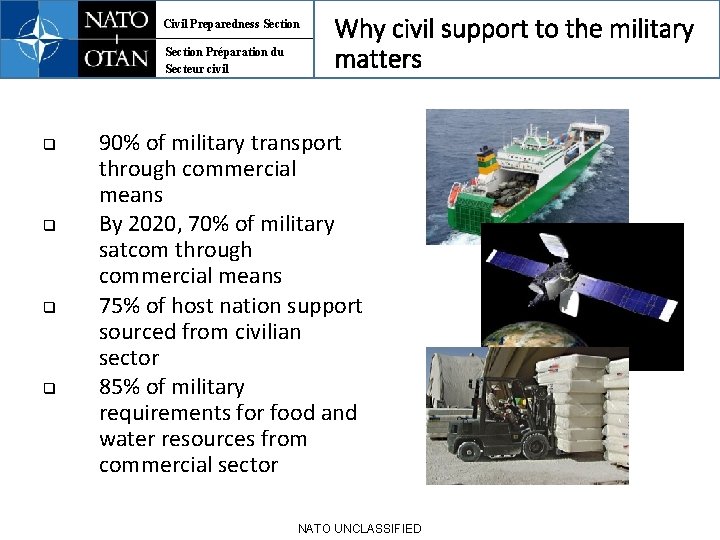
Civil Preparedness Section Préparation du Secteur civil q q Why civil support to the military matters 90% of military transport through commercial means By 2020, 70% of military satcom through commercial means 75% of host nation support sourced from civilian sector 85% of military requirements for food and water resources from commercial sector NATO UNCLASSIFIED
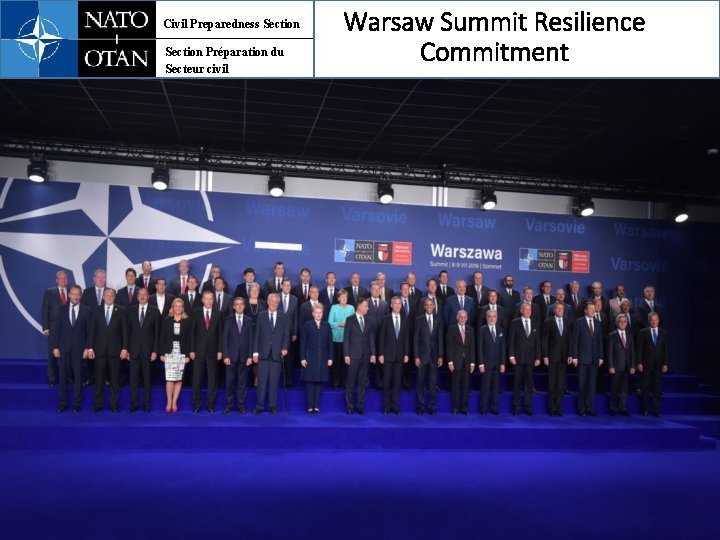
Civil Preparedness Section Préparation du Secteur civil Warsaw Summit Resilience Commitment
Civil Preparedness Section Préparation du Secteur civil Warsaw Summit Resilience Commitment July 2016 ”…we are today making a commitment to enhance resilience against the full spectrum of threats, including hybrid threats, from any direction. ” ”…we will strive to achieve the agreed requirements for national resilience. We will strengthen continuity of government, continuity of essential services, and security of civilian critical infrastructure; and we will work to ensure that our national and NATO military forces can at all times be supported with civilian resources, including energy, transportation, and communications. 12
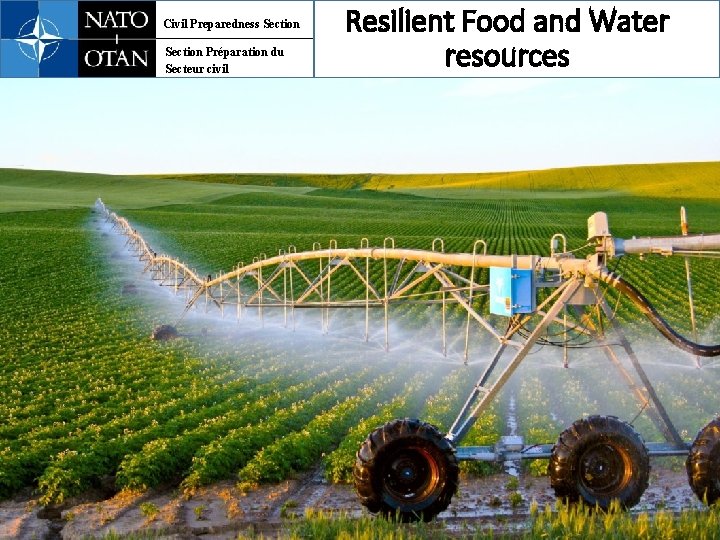
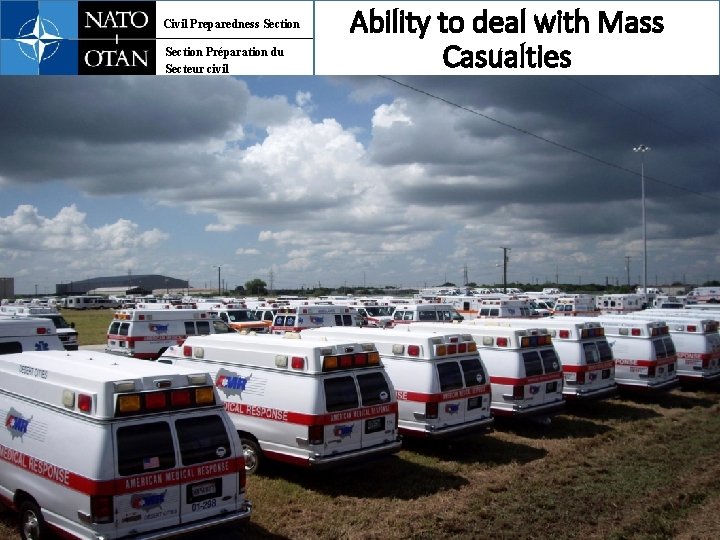
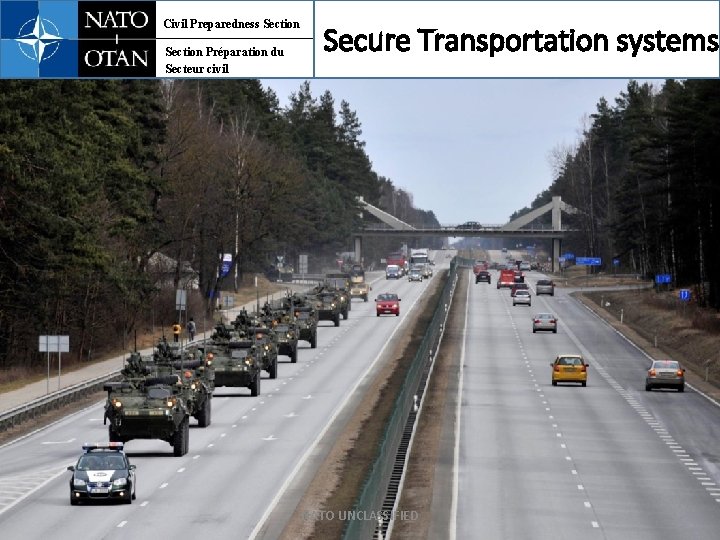
Civil Preparedness Section Préparation du Secteur civil Resilience Baseline Requirements Agreed seven baseline requirements: 1) 2) 3) 4) 5) 6) 7) assured continuity of government and critical government services resilient energy supplies ability to deal effectively with uncontrolled movement of people resilient food and water resources ability to deal with mass casualties resilient civil communications systems resilient civil transportation systems. NATO UNCLASSIFIED
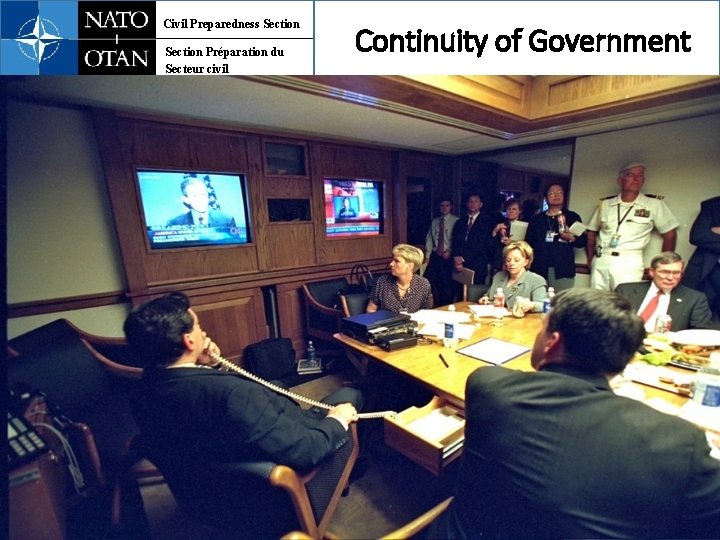
Civil Preparedness Section Préparation du Secteur civil Continuity of Government
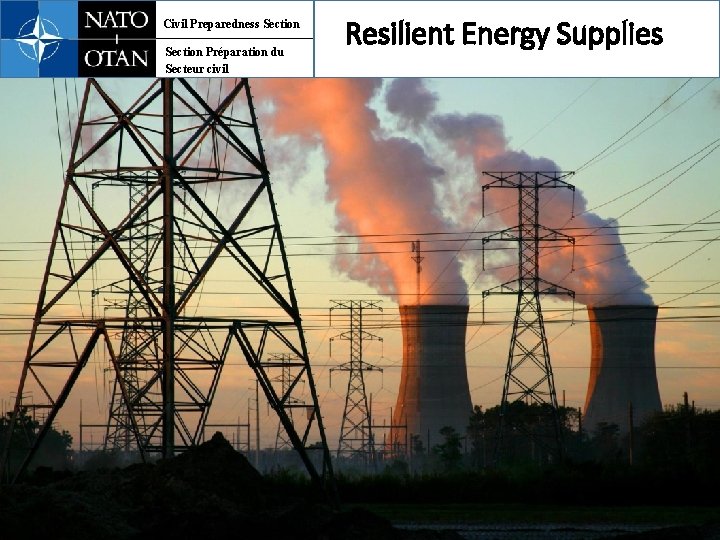
Civil Preparedness Section Préparation du Secteur civil Resilient Energy Supplies
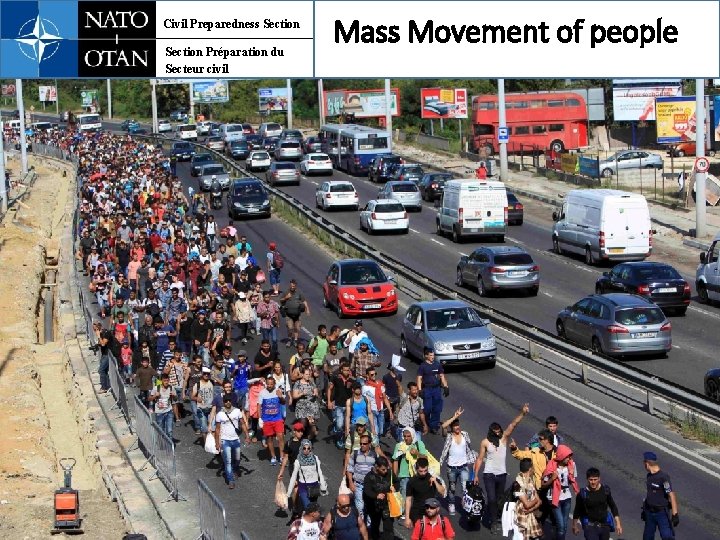
Civil Preparedness Section Préparation du Secteur civil Mass Movement of people
Civil Preparedness Section Préparation du Secteur civil Resilient Food and Water resources
Civil Preparedness Section Préparation du Secteur civil Ability to deal with Mass Casualties
Civil Preparedness Section Préparation du Secteur civil Secure Communications NATO UNCLASSIFIED
Civil Preparedness Section Préparation du Secteur civil Secure Transportation systems NATO UNCLASSIFIED
Civil Preparedness Section Préparation du Secteur civil Interdependencies between seven baseline sectors Cascading effects: an attack on one area may cause unforeseen consequences in other sectors NATO UNCLASSIFIED
Civil Preparedness Section NATO Tools Section Préparation du Secteur civil q q q Resilience Advisory Support Teams Counter Hybrid Support Teams Planning guidance (e. g. Population Movement, Mass Casualty Planning, Priority Allocation Systems for Communications) q q Assessment through the NATO Defence Planning Process NATO Crisis Response System Euro Atlantic Disaster Response Coordination Centre Training and exercises NATO UNCLASSIFIED 22
Civil Preparedness Section Préparation du Secteur civil Euro-Atlantic Disaster Response Coordination Centre (EADRCC) q Created in 1998 to coordinate international assistance in case of natural and man made disasters ØOperational 24/7 ØActs as a clearing house mechanism, coordinating requests and offers of assistance from all Allies and partners (70 countries) q In 2001, EADRCC has been given an additional coordinating role for response to terrorist attacks involving CBRN agents ØMaintains a inventory of CBRN assets/resources potentially available from Allied nations to assist response and protection of the population. q In 2013, EADRCC became a full member of the Inter-Agency Committee for Radiological Emergencies q Liaison arrangements: ØNMAs; ØEU Emergency Response Coordination Center; ØUN-OCHA; ØInternational Atomic Emergency Agency.
Civil Preparedness Section Préparation du Secteur civil q q q Partners in resilience European Union Private Sector Partner Nations NATO UNCLASSIFIED
Civil Preparedness Section Conclusions Section Préparation du Secteur civil Why focus on building resilience? q q q Important deterrent effect Can prevent low-level attacks and minimise impact of hybrid incidents Builds long term advantage against other potential adversaries and emerging threats NATO UNCLASSIFIED
Civil Preparedness Section Préparation du Secteur civil Questions? NATO UNCLASSIFIED
Civil Preparedness Section Préparation du Secteur civil Resilience and Enablement Khan Jahier Enablement and Resilience Section Defence Policy and Planning Division NATO International Staff NATO UNCLASSIFIED 27