
Civil Liberties and Civil Rights Civil Liberties vs
Civil Liberties and Civil Rights
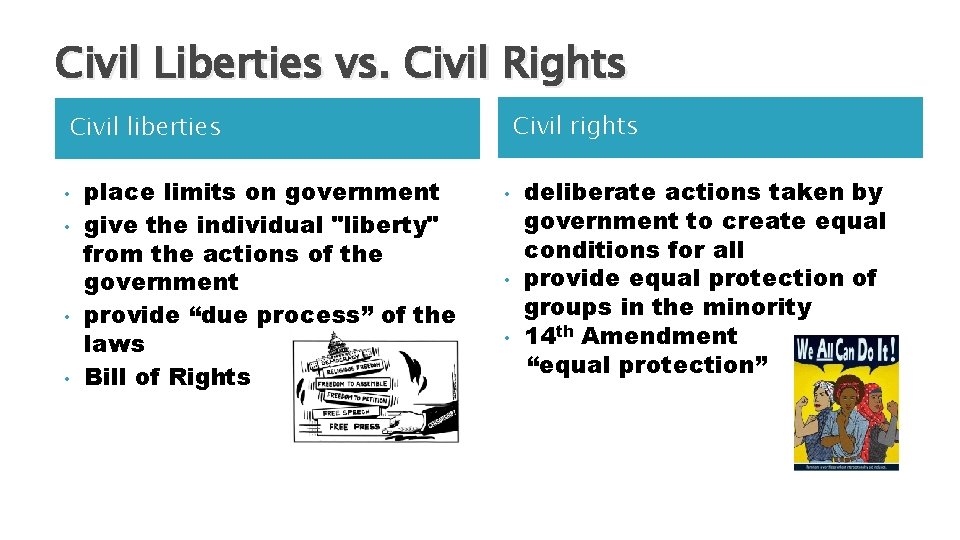
Civil Liberties vs. Civil Rights Civil rights Civil liberties • • place limits on government give the individual "liberty" from the actions of the government provide “due process” of the laws Bill of Rights • • • deliberate actions taken by government to create equal conditions for all provide equal protection of groups in the minority 14 th Amendment “equal protection”
How do the 1 st and 14 th Amendments overlap? The Bill of Rights Amendments originally applied to the national government Through a case by case basis, the courts required the states to also follow most of the provisions of amendments 1 -8 This process is called selective incorporation Complementary A group facing discrimination due to expressing an unpopular or extreme viewpoint, or in a religious minority, is guaranteed equal protection under the 14 th amendment This has led to great conflicts regarding which groups deserve civil rights protection Controversial
What influenced establishment of American civil liberties? • The Age of Enlightenment 1650 s-1780 s ◦ Challenged the authority of the Catholic Church ◦ Idea of reforming society with toleration, science and skepticism ◦ Idea of natural rights—all humans are born with these life liberty property ◦ Idea of the social contract—people need protections and agree to give up certain freedoms for that protection. What is the best form of protection? absolute monarchy (Hobbes) Constitutional monarchy or republic (Locke) Limited government with the consent of the governed (Locke) Democracy or whatever is decided directly by the people (Rousseau)
What influenced establishment of American civil liberties? • Early British documents ◦ Magna Carta ◦ English Bill of Rights ◦ Petition of Right • State documents ◦ Virginia Declaration of Rights (George Mason) ◦ Massachusetts Body of Liberties • General mistrust of strong national government based on the former colonial relationship with Britain
Definitions simplified Civil Liberties Rights that need protection from the government having too much control Bill of Rights Amendments 1 through 10 of the US Constitution Incorporation use of the 14 th amendment in case decisions to make the Bill of Rights apply to actions of the states Civil Rights that need protection by the government supporting a specific group Due process a legal understanding that you are owed certain rights from the government Equal protection a constitutional guarantee that no person or class of persons shall be denied the same protection of the laws that is enjoyed by other persons or other classes of people
Episode Two: It’s a Free Country (0 -2: 13, 5: 00 -11: 30)
The Bill Of Rights: 1 st Amendment First Amendment rights include: ◦ Freedom of Expression Freedom of of to to speech the press assemble peaceably petition the government for a redress of grievances ◦ Freedom of Religion Establishment clause Free exercise clause
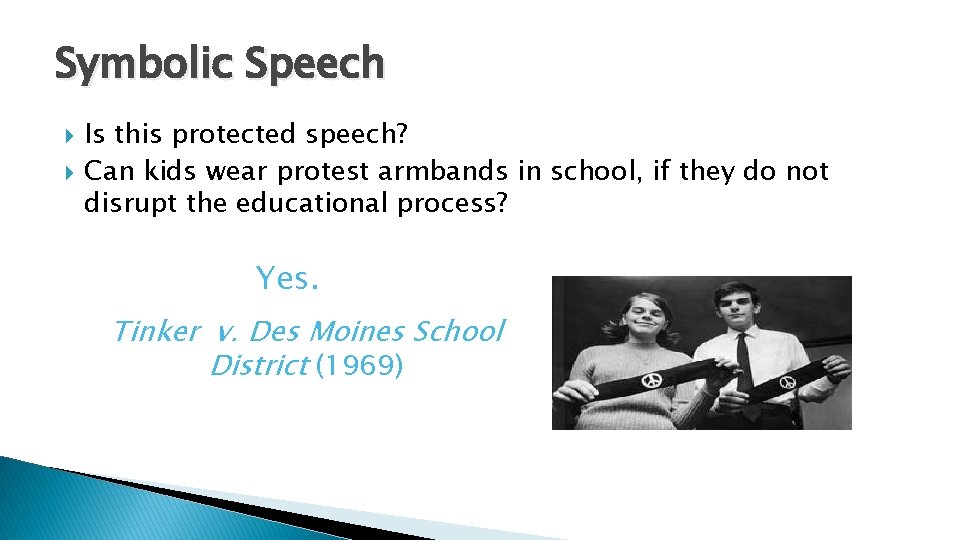
Symbolic Speech Is this protected speech? Can kids wear protest armbands in school, if they do not disrupt the educational process? Yes. Tinker v. Des Moines School District (1969)
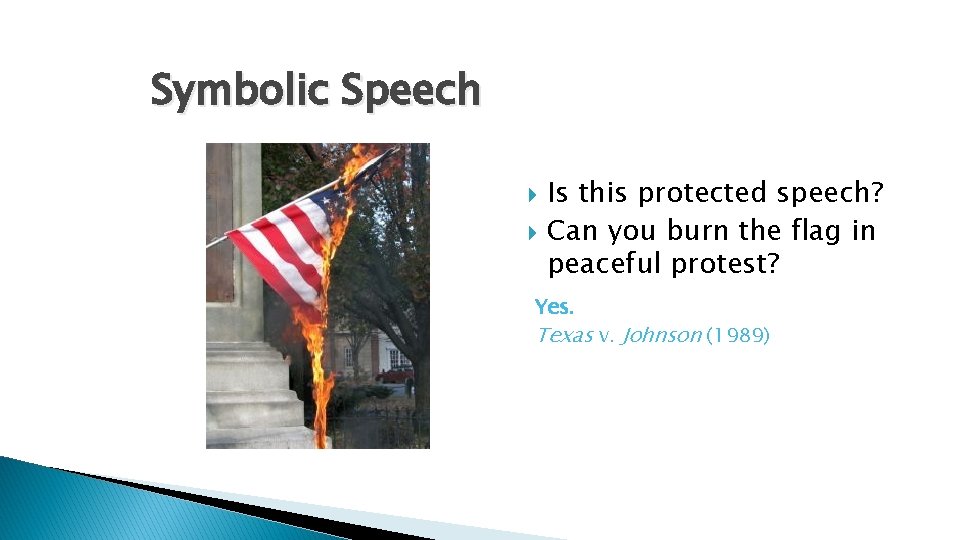
Symbolic Speech Is this protected speech? Can you burn the flag in peaceful protest? Yes. Texas v. Johnson (1989)
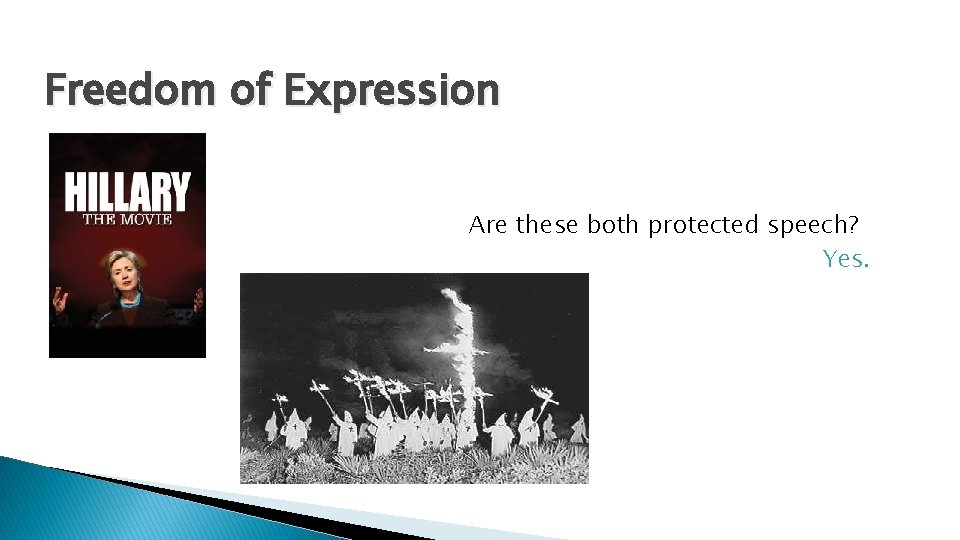
Freedom of Expression Are these both protected speech? Yes.
Freedom of Expression When is speech NOT protected? Schenck v. United States (1919) – not if it demonstrates a “clear and present danger” Gitlow v. New York (1925) – not if it “advocated the violent overthrow of the government” Brandenburg v. Ohio (1969) – not if the speaker caused “incitement to imminent lawlessness” “fighting words”--words which would likely make the person to whom they are addressed commit an act of violence (intended to cause the hearer to react toward the speaker)
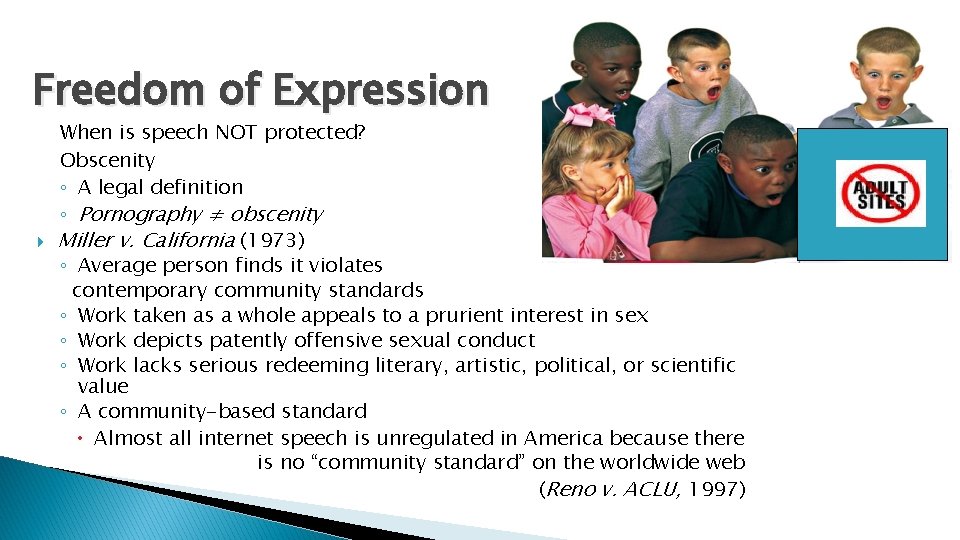
Freedom of Expression When is speech NOT protected? Obscenity ◦ A legal definition ◦ Pornography ≠ obscenity Miller v. California (1973) ◦ Average person finds it violates contemporary community standards ◦ Work taken as a whole appeals to a prurient interest in sex ◦ Work depicts patently offensive sexual conduct ◦ Work lacks serious redeeming literary, artistic, political, or scientific value ◦ A community-based standard Almost all internet speech is unregulated in America because there is no “community standard” on the worldwide web (Reno v. ACLU, 1997)
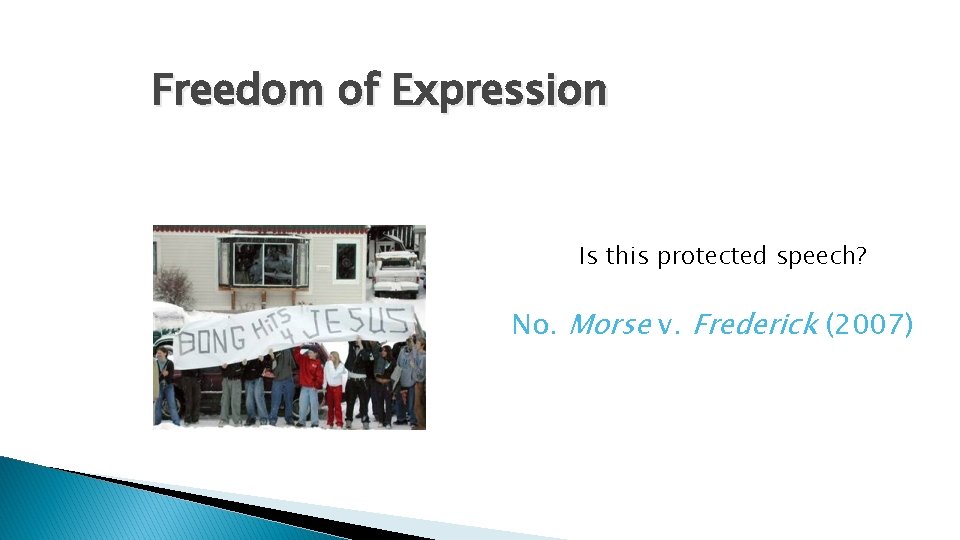
Freedom of Expression Is this protected speech? No. Morse v. Frederick (2007)
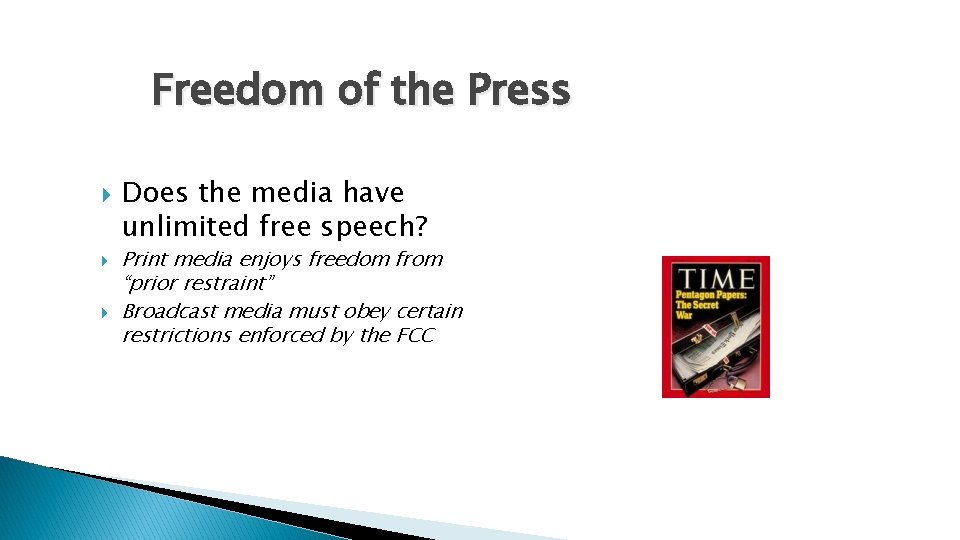
Freedom of the Press Does the media have unlimited free speech? Print media enjoys freedom from “prior restraint” Broadcast media must obey certain restrictions enforced by the FCC
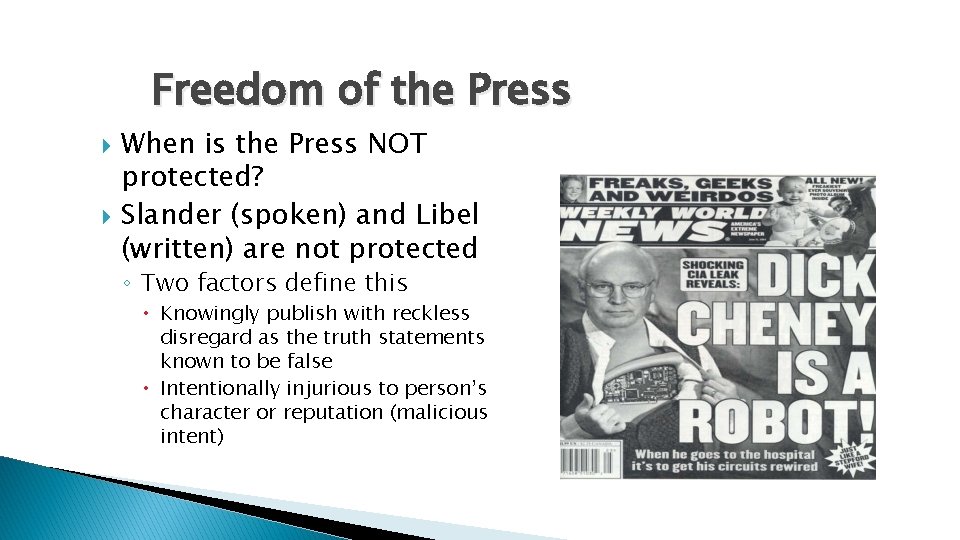
Freedom of the Press When is the Press NOT protected? Slander (spoken) and Libel (written) are not protected ◦ Two factors define this Knowingly publish with reckless disregard as the truth statements known to be false Intentionally injurious to person’s character or reputation (malicious intent)
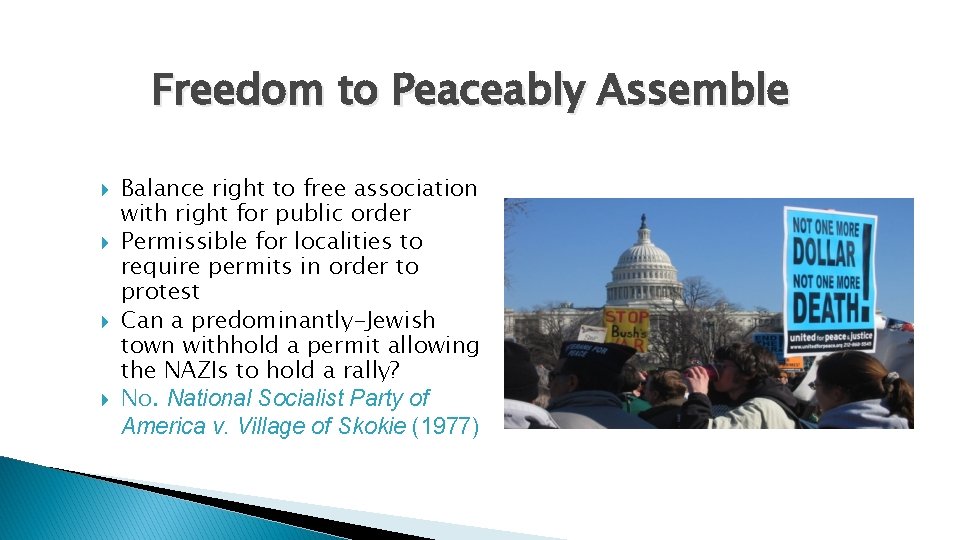
Freedom to Peaceably Assemble Balance right to free association with right for public order Permissible for localities to require permits in order to protest Can a predominantly-Jewish town withhold a permit allowing the NAZIs to hold a rally? No. National Socialist Party of America v. Village of Skokie (1977)
1 st Amendment: Freedom of Religion Two clauses ◦ Establishment Clause ◦ Free Exercise Clause
Religious Freedom • • Establishment Clause Can public school funding be used to supplement private (mainly Catholic) school teachers’ salaries? No. Lemon v. Kurtzman (1971) ◦ Aid must be secular in intent ◦ Its primary effect can neither enhance nor inhibit religion ◦ Government must avoid “excessive entanglement” with religion
Religious Freedom Does the government assist religious schools with tax dollars today? Yes. Courts have ruled that it is ok for tax dollars to be spent on: school lunch, transportation, speech/hearing support, standardized tests, computer purchases and internet access, vouchers; subject to Lemon test restrictions
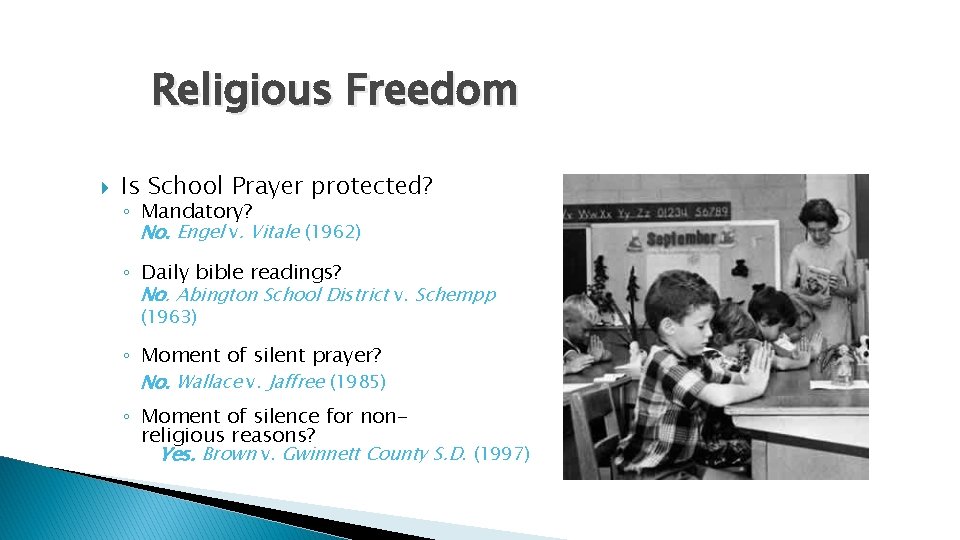
Religious Freedom Is School Prayer protected? ◦ Mandatory? No. Engel v. Vitale (1962) ◦ Daily bible readings? No. Abington School District v. Schempp (1963) ◦ Moment of silent prayer? No. Wallace v. Jaffree (1985) ◦ Moment of silence for nonreligious reasons? Yes. Brown v. Gwinnett County S. D. (1997)
Religious Freedom Permissible to have school functions (like graduation) in a church, with religious icons on display? No. Elmbrook School District v. John Doe (2015)
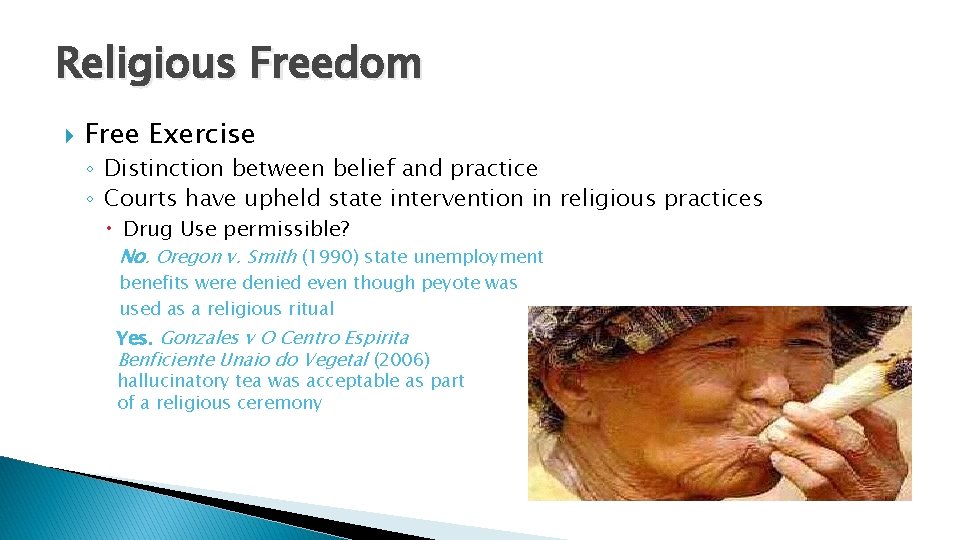
Religious Freedom Free Exercise ◦ Distinction between belief and practice ◦ Courts have upheld state intervention in religious practices Drug Use permissible? No. Oregon v. Smith (1990) state unemployment benefits were denied even though peyote was used as a religious ritual Yes. Gonzales v O Centro Espirita Benficiente Unaio do Vegetal (2006) hallucinatory tea was acceptable as part of a religious ceremony
Religious Freedom Free Exercise ◦ Is animal sacrifice permissible? Yes. Church of the Lukumi Babalu Aye (Santeria) v. City of Hialeah (1993)
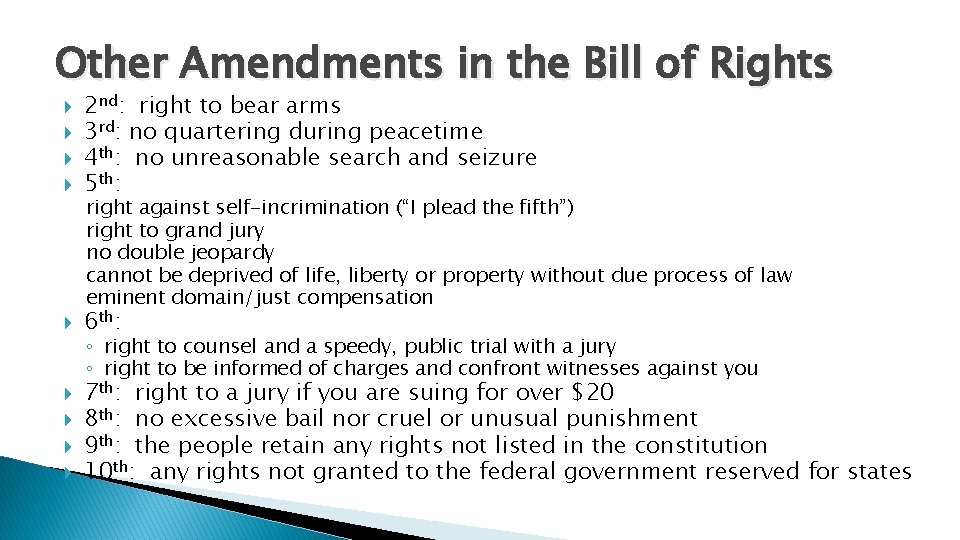
Other Amendments in the Bill of Rights 2 nd: right to bear arms 3 rd: no quartering during peacetime 4 th: no unreasonable search and seizure 5 th: 6 th: right against self-incrimination (“I plead the fifth”) right to grand jury no double jeopardy cannot be deprived of life, liberty or property without due process of law eminent domain/just compensation ◦ right to counsel and a speedy, public trial with a jury ◦ right to be informed of charges and confront witnesses against you 7 th: right to a jury if you are suing for over $20 8 th: no excessive bail nor cruel or unusual punishment 9 th: the people retain any rights not listed in the constitution 10 th: any rights not granted to the federal government reserved for states
Let’s try a Friendly Controversy activity Legal Model ◦ Your group will critically examine how a free speech decision affected government policy ◦ Google the assigned landmark Supreme Court case ◦ What were the arguments of this case? ◦ Compare the majority opinion with the minority (dissenting) opinion and provide a quote from each that you felt was significant ◦ Did the decision expand or restrict civil liberties? How? ◦ Only one person from the group needs to present.
Friendly Controversy: Legal Model The Cases Mapp v. Ohio (1961) Engel v. Vitale (1962) Tinker v. Des Moines (1969) Hazelwood School District v. Kuhlmeier (1988) Buckley v. Valeo (1976) Morse v. Frederick (2007) Citizens United v. FEC (2010) National Socialist Party of America v. Village of Skokie (1977)
Civil Rights
Connecting Civil Liberties and Civil Rights… How do the 1 st and 14 th Amendments overlap? The Bill of Rights Amendments originally applied to the national government Through a case by case basis, the courts required the states to also follow most of the provisions of amendments 1 -8 This process is called selective incorporation Complementary A group facing discrimination due to expressing an unpopular or extreme viewpoint, or in a religious minority, is guaranteed equal protection under the 14 th amendment This has led to great conflicts regarding which groups deserve civil rights protection Controversial
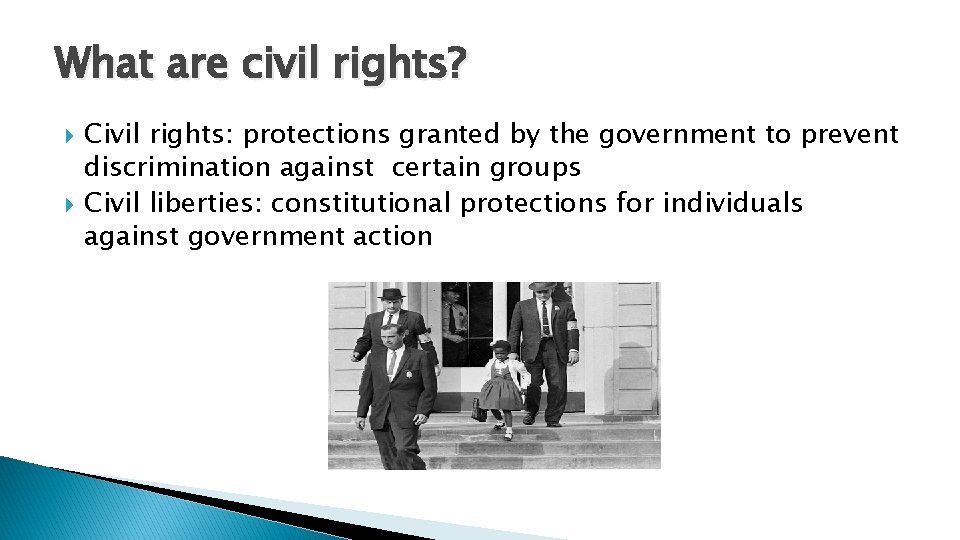
What are civil rights? Civil rights: protections granted by the government to prevent discrimination against certain groups Civil liberties: constitutional protections for individuals against government action
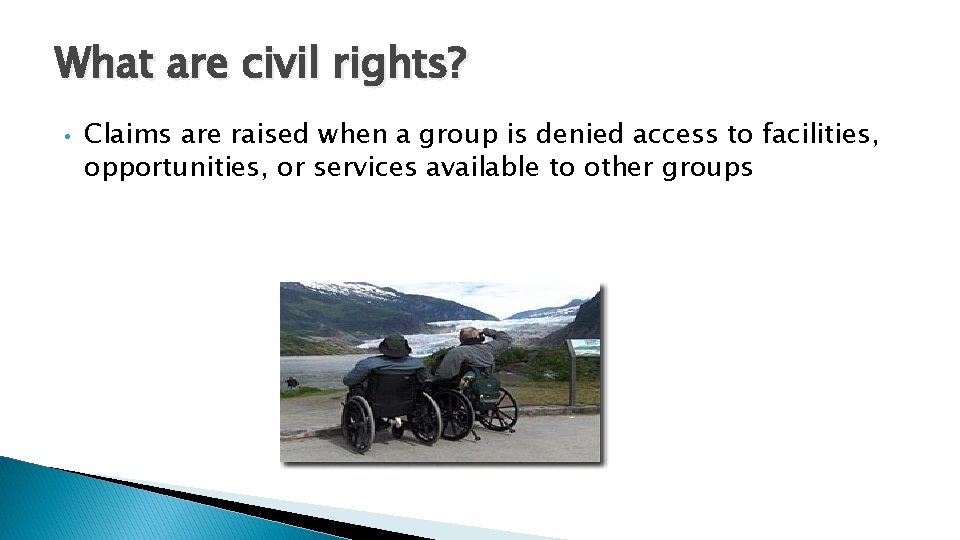
What are civil rights? • Claims are raised when a group is denied access to facilities, opportunities, or services available to other groups
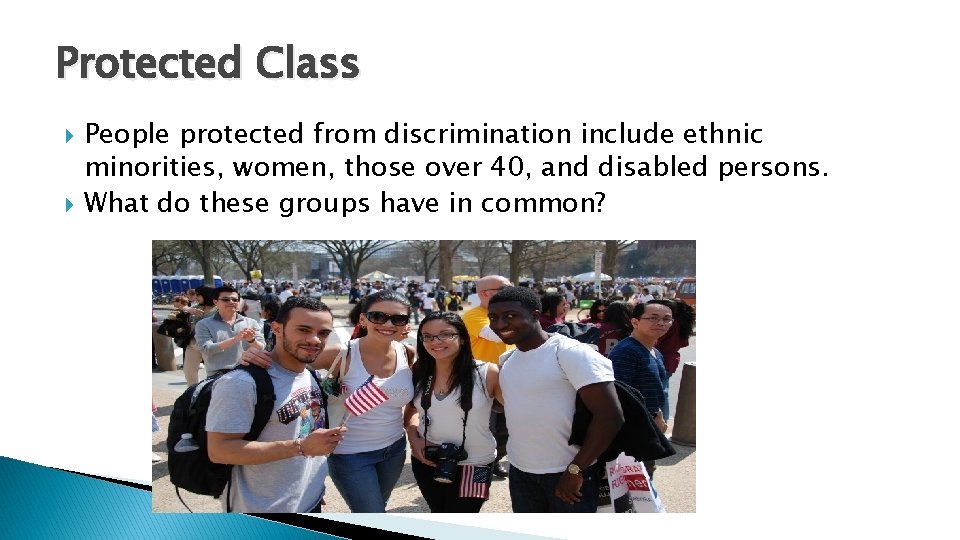
Protected Class People protected from discrimination include ethnic minorities, women, those over 40, and disabled persons. What do these groups have in common?
Separate but Equal NAACP strategy went through a series of stages: Step 1: 1938 -48 Supreme Court ruled “for education to be equal, it must be equally available. ” (Gaines and Sipuel cases) Step 2: 1950 Supreme Court ruled “racial barriers created unequal educational opportunities. ” (Sweatt and Mc. Laurin cases) Step 3: 1954 Supreme Court ruled that “separate educational facilities are inherently unequal. ” (Brown)
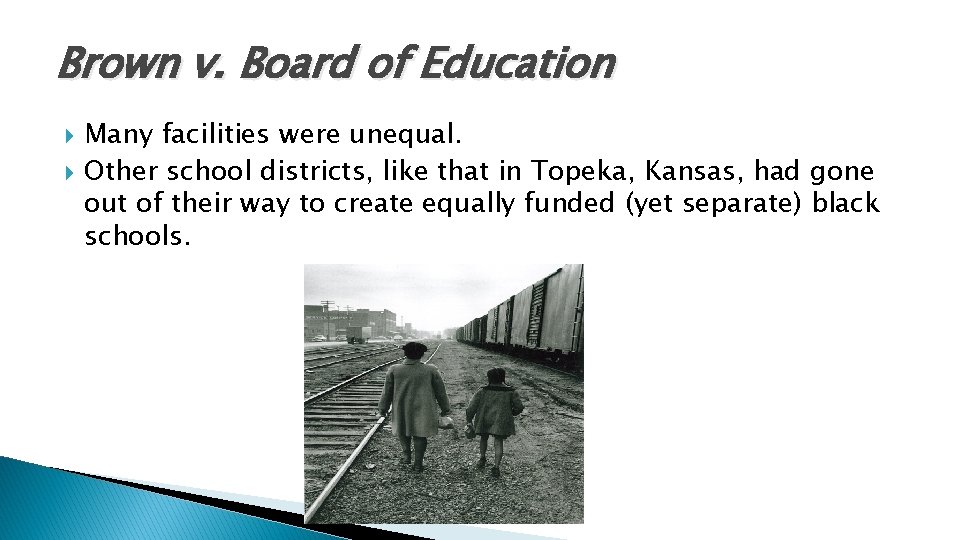
Brown v. Board of Education Many facilities were unequal. Other school districts, like that in Topeka, Kansas, had gone out of their way to create equally funded (yet separate) black schools.
Brown v. Board of Education (1954) Unanimous Supreme Court opinion which overturned Plessy v. Ferguson (1896) Segregation is detrimental, creating sense of inferiority in African American students The Court relied on a psychological study of young children Chief Justice Earl Warren sought a unanimous opinion Violent backlash from many Southern politicians and citizens
Desegregation mandated by the court, yet still ignored by many • • • The Southern Manifesto (1954) Non-violent civil disobedience from SCLC and SNCC The Montgomery Bus Boycott (1955 -56) The Little Rock Nine (1957) The Freedom Riders and sit-ins at lunch counters (1961) “Bombing”ham, Alabama—Chief Bull Connor, German Shepherds, and fire hoses vs. the Children’s Crusade (1963) The March on Washington (1963) Still no widespread compliance Leads to the “Long, Hot Summers”—periods of violent protests and rise of the Black Panthers, Malcolm X and the Nation of Islam (1964 -1968)
What changed? • • • Public opinion starts to shift as television becomes common in every household Violent segregationist reaction is now vividly portrayed More young, college-educated people lead the shift in opinion President Kennedy is killed (1963); worldwide shock Midterm elections in 1964 lead to an overwhelmingly liberal majority in Congress President LBJ gives segregationists in Congress “the Johnson treatment”
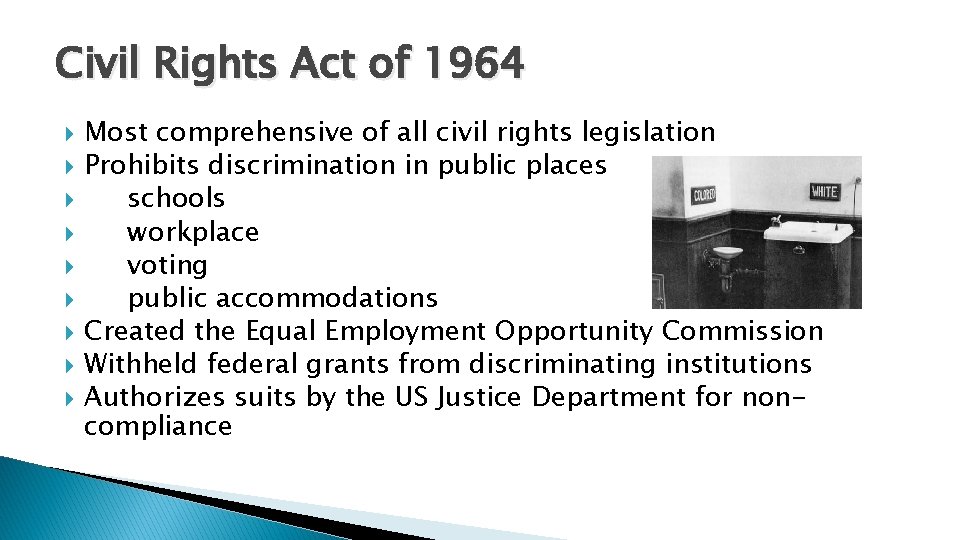
Civil Rights Act of 1964 Most comprehensive of all civil rights legislation Prohibits discrimination in public places schools workplace voting public accommodations Created the Equal Employment Opportunity Commission Withheld federal grants from discriminating institutions Authorizes suits by the US Justice Department for noncompliance
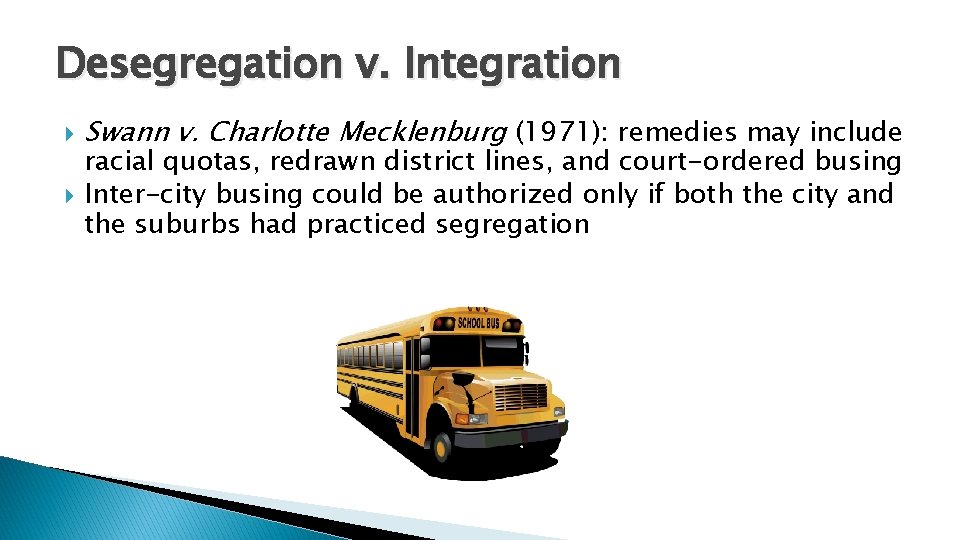
Desegregation v. Integration Swann v. Charlotte Mecklenburg (1971): remedies may include racial quotas, redrawn district lines, and court-ordered busing Inter-city busing could be authorized only if both the city and the suburbs had practiced segregation
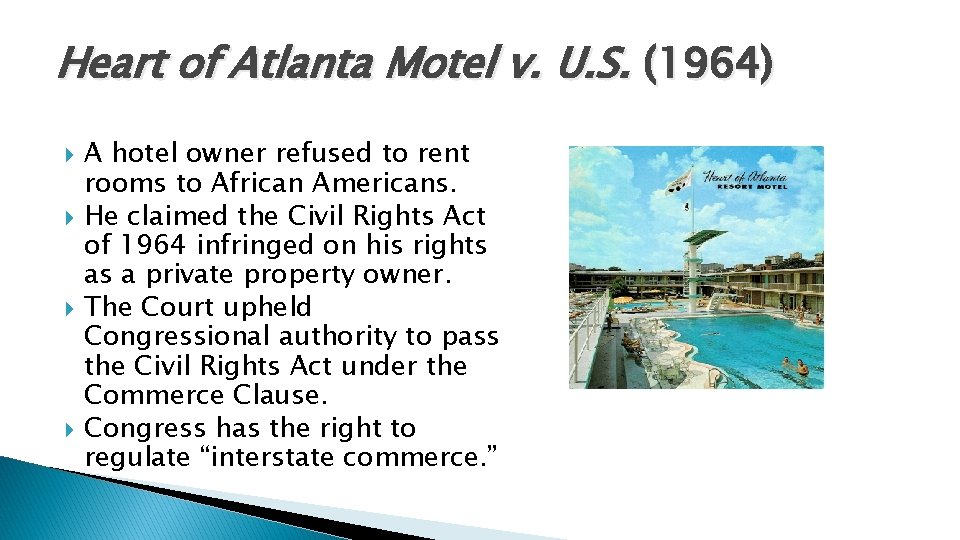
Heart of Atlanta Motel v. U. S. (1964) A hotel owner refused to rent rooms to African Americans. He claimed the Civil Rights Act of 1964 infringed on his rights as a private property owner. The Court upheld Congressional authority to pass the Civil Rights Act under the Commerce Clause. Congress has the right to regulate “interstate commerce. ”
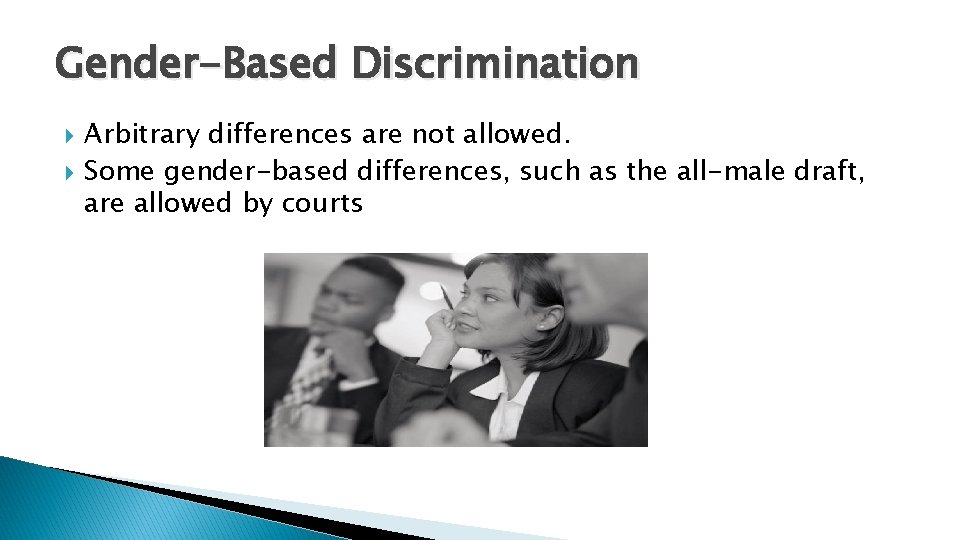
Gender-Based Discrimination Arbitrary differences are not allowed. Some gender-based differences, such as the all-male draft, are allowed by courts
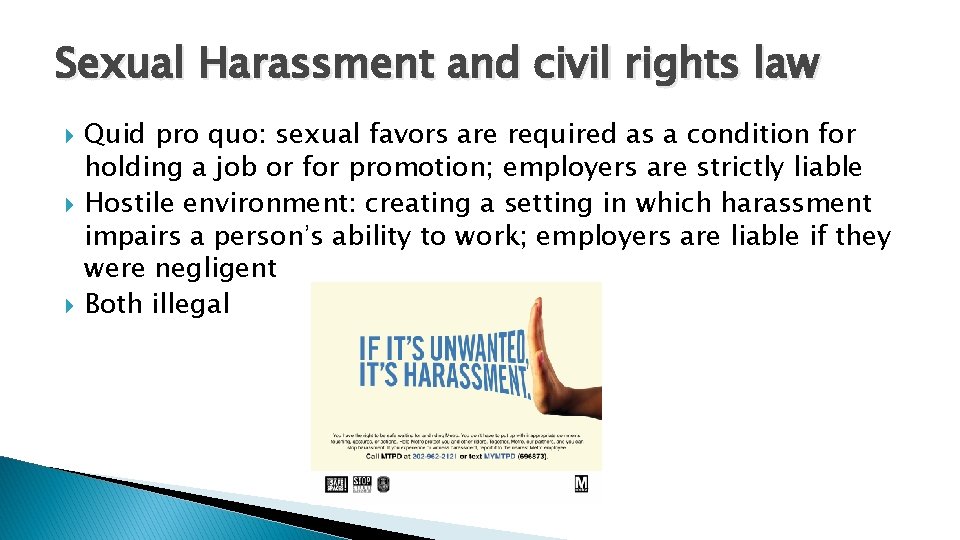
Sexual Harassment and civil rights law Quid pro quo: sexual favors are required as a condition for holding a job or for promotion; employers are strictly liable Hostile environment: creating a setting in which harassment impairs a person’s ability to work; employers are liable if they were negligent Both illegal
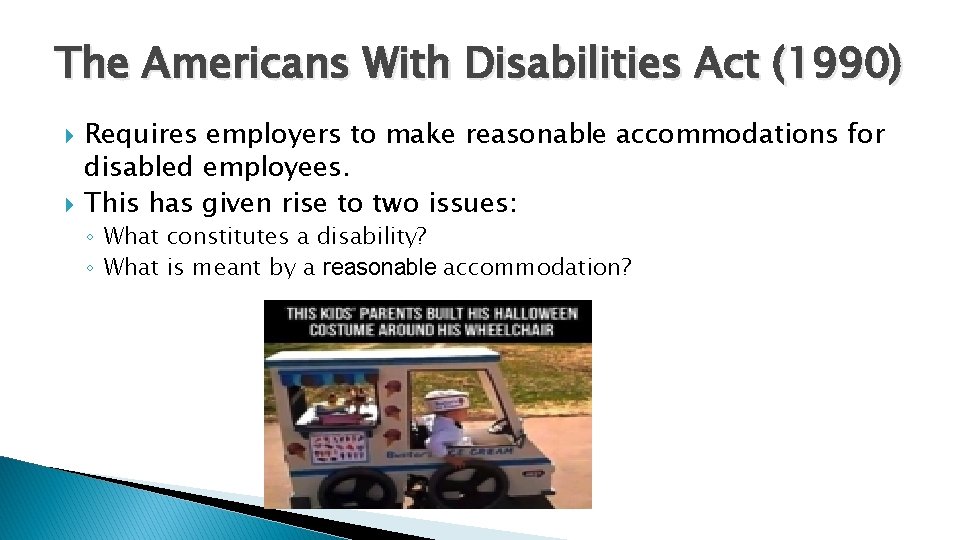
The Americans With Disabilities Act (1990) Requires employers to make reasonable accommodations for disabled employees. This has given rise to two issues: ◦ What constitutes a disability? ◦ What is meant by a reasonable accommodation?
Let’s take a look at some famous civil rights documents SKIM the document assigned to your group and answer the following: How does the document contribute or refer to ◦ an intentional government action? ◦ equal protection of a particular group?
Video Clip Episode Three: Created Equal (35: 00 to 40: 00)
Let’s try another Friendly Controversy Opposite Point of View ◦ Your group will Google a recent civil rights case ◦ Discuss whether you agree or disagree with the Court’s decision ◦ Then prepare a short defense of the OPPOSITE point of view from the one you agree with or support ◦ Explain how it connects the 1 st Amendment with the 14 th Amendment ◦ Only one person from the group needs to present
Friendly Controversy: Opposite Point of View The Cases Obergefell v. Hodges (2015) Snyder v. Phelps (2010) Burwell v. Hobby Lobby Stores, Inc. (2014) Korematsu v. United States (1944) Loving v. Virginia (1967) Regents of the University of California v. Bakke (1978) Craig and Mullins v. Masterpiece Cakeshop (2014) Shelby County v. Holder (2013)
Jon Stewart interviews Congressman John Lewis http: //thedailyshow. cc. com/extended-interviews/t 0 qi 1 l/john -lewis-extended-interview
- Slides: 48