
Civil Commitment Dubious Solution to a Serious Problem

Civil Commitment: Dubious Solution to a Serious Problem? Raymond Knight, Ph. D. 1
Overview of the Presentation I. History of the civil commitment of sex offenders in the US II. Current status of SO civil commitment in the USA III. History and process of commitment in MA IV. Pros and cons of commitment

Part I HISTORY OF CIVIL COMMITMENT
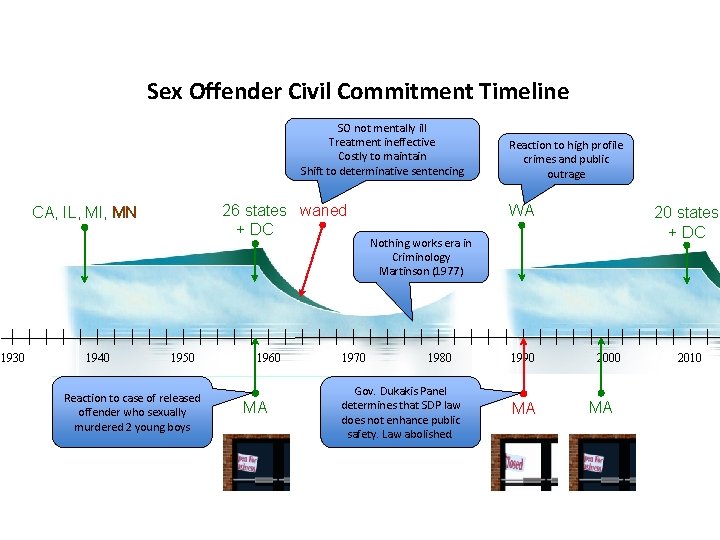
Sex Offender Civil Commitment Timeline SO not mentally ill Treatment ineffective Costly to maintain Shift to determinative sentencing 26 states waned + DC CA, IL, MI, MN 1930 1940 1950 Reaction to case of released offender who sexually murdered 2 young boys 1960 MA 1970 Reaction to high profile crimes and public outrage WA 20 states + DC Nothing works era in Criminology Martinson (1977) 1980 Gov. Dukakis Panel determines that SDP law does not enhance public safety. Law abolished. 1990 MA 2000 MA 2010

Part II CURRENT CIVIL COMMITMENT IN USA
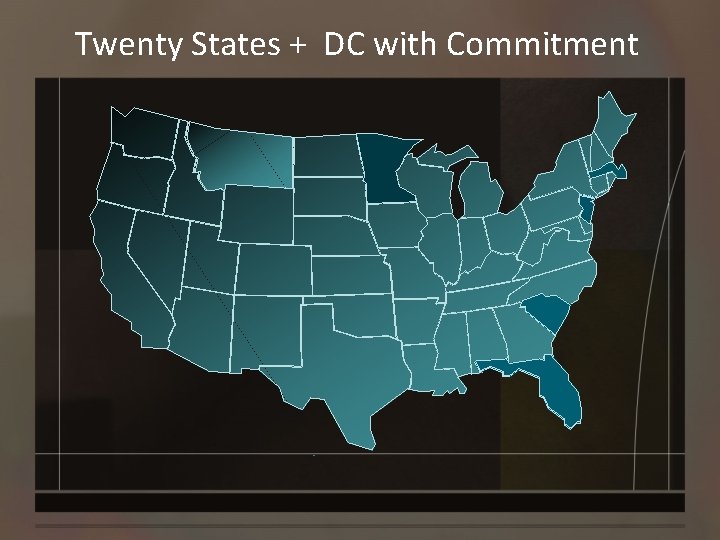
Twenty States + DC with Commitment
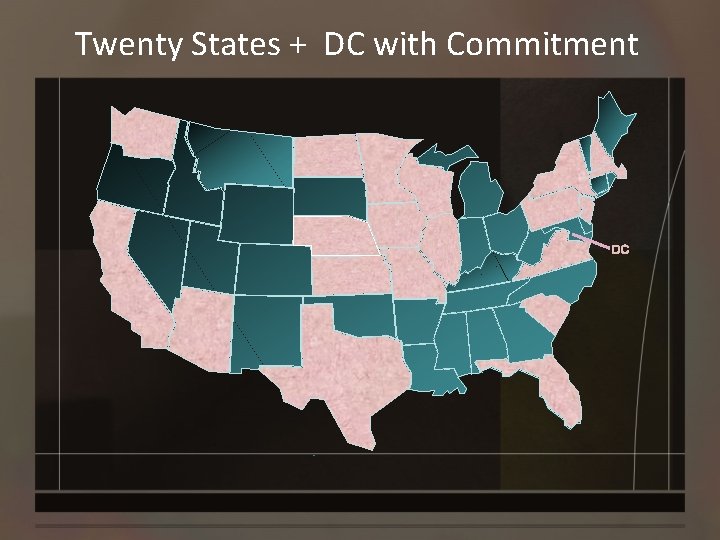
Twenty States + DC with Commitment
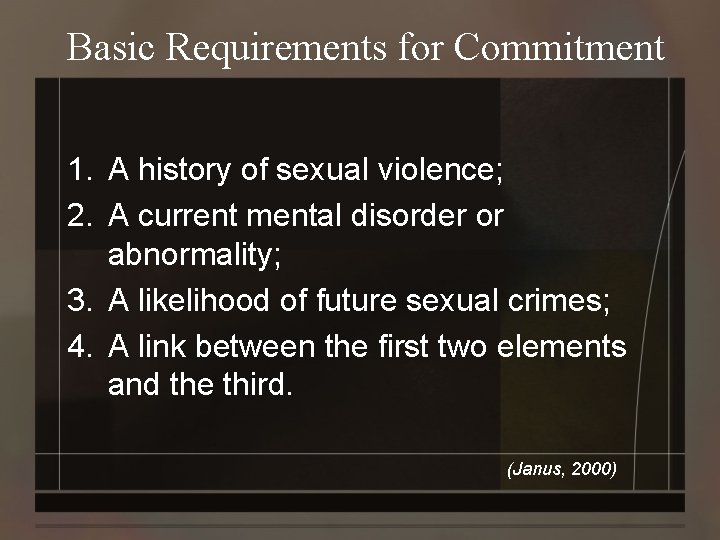
Basic Requirements for Commitment 1. A history of sexual violence; 2. A current mental disorder or abnormality; 3. A likelihood of future sexual crimes; 4. A link between the first two elements and the third. (Janus, 2000)
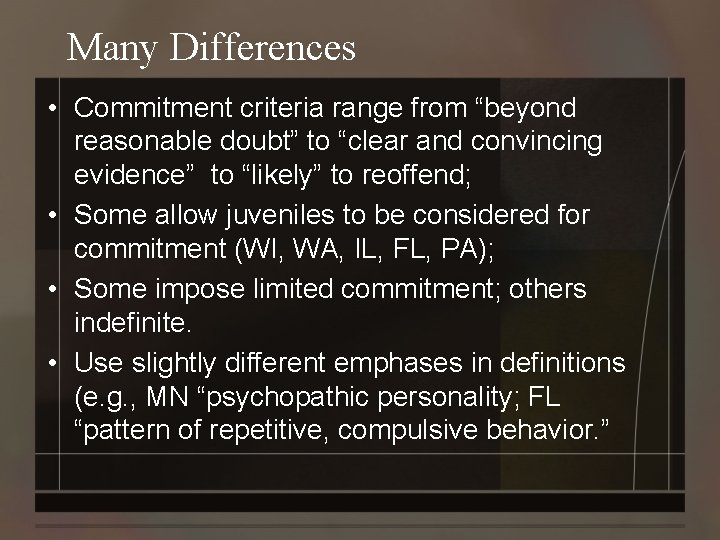
Many Differences • Commitment criteria range from “beyond reasonable doubt” to “clear and convincing evidence” to “likely” to reoffend; • Some allow juveniles to be considered for commitment (WI, WA, IL, FL, PA); • Some impose limited commitment; others indefinite. • Use slightly different emphases in definitions (e. g. , MN “psychopathic personality; FL “pattern of repetitive, compulsive behavior. ”
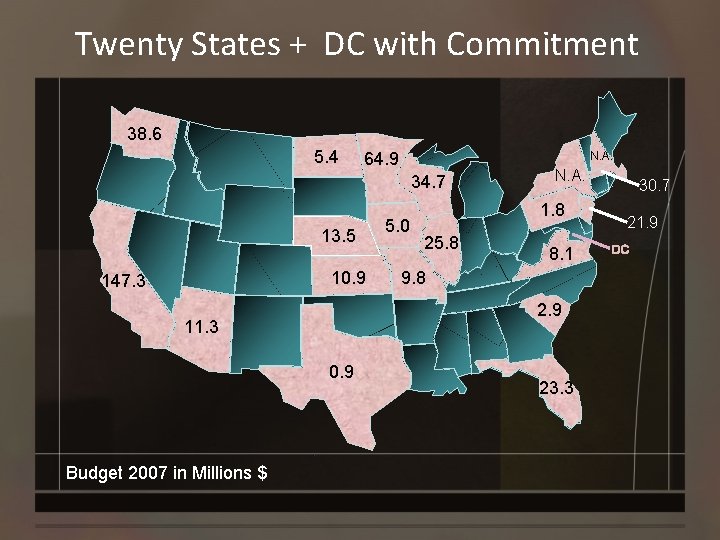
Twenty States + DC with Commitment 38. 6 5. 4 64. 9 N. A. 34. 7 13. 5 10. 9 147. 3 1. 8 25. 8 8. 1 9. 8 2. 9 11. 3 0. 9 Budget 2007 in Millions $ 5. 0 N. A. 23. 3 30. 7 21. 9
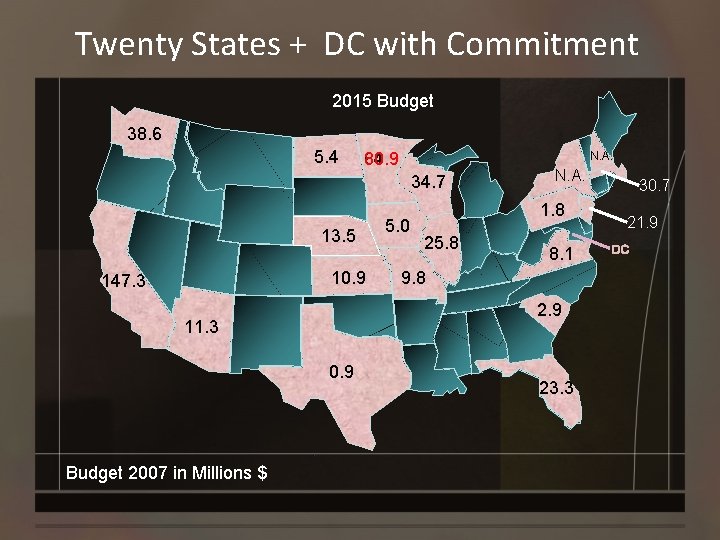
Twenty States + DC with Commitment 2015 Budget 38. 6 5. 4 64. 9 80. 9 N. A. 34. 7 13. 5 10. 9 147. 3 1. 8 25. 8 8. 1 9. 8 2. 9 11. 3 0. 9 Budget 2007 in Millions $ 5. 0 N. A. 23. 3 30. 7 21. 9
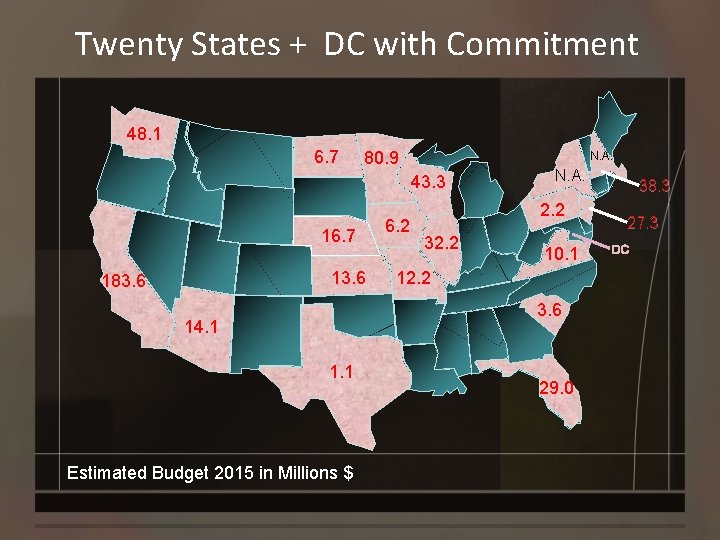
Twenty States + DC with Commitment 48. 1 6. 7 80. 9 N. A. 43. 3 16. 7 13. 6 183. 6 6. 2 N. A. 2. 2 32. 2 10. 1 12. 2 3. 6 14. 1 1. 1 Estimated Budget 2015 in Millions $ 29. 0 38. 3 27. 3
Costs • • Funding for screening; Evaluation; Trials and appeals; Incarceration/confinement costs; Treatment while incarcerated; Release programs; Community training programs; Post-release supervision.
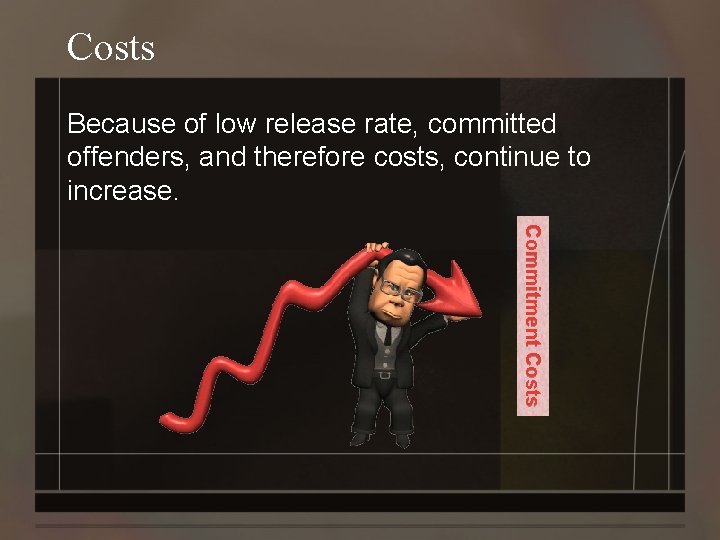
Costs Because of low release rate, committed offenders, and therefore costs, continue to increase. Commitment Costs
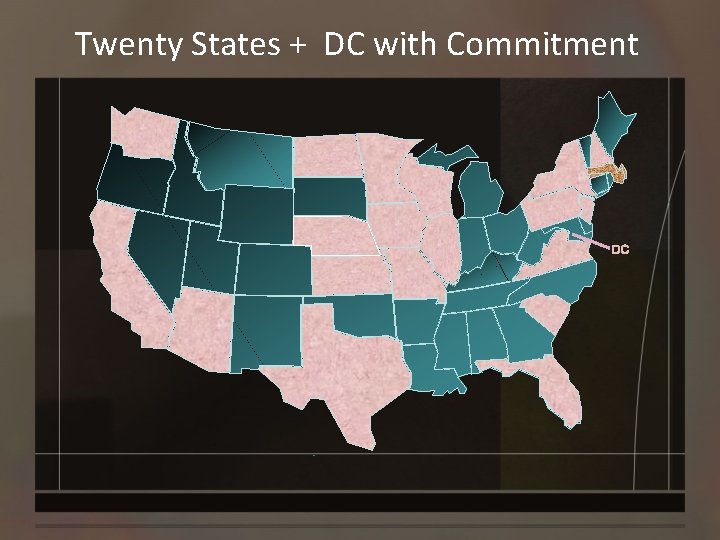
Twenty States + DC with Commitment
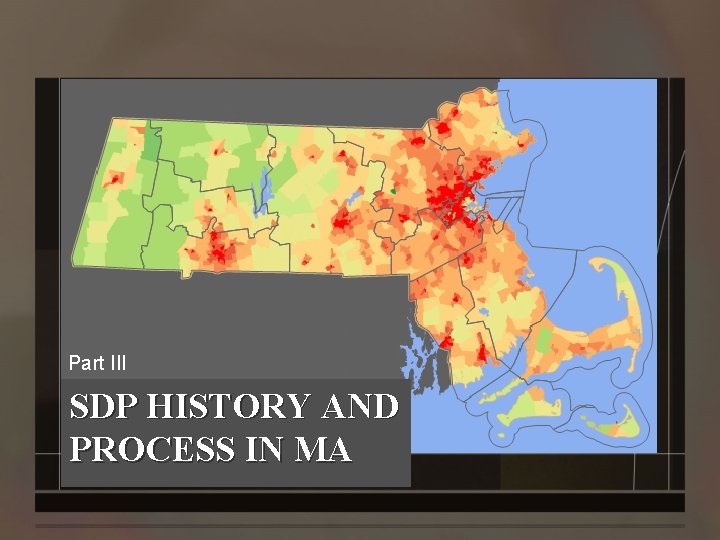
Part III SDP HISTORY AND PROCESS IN MA
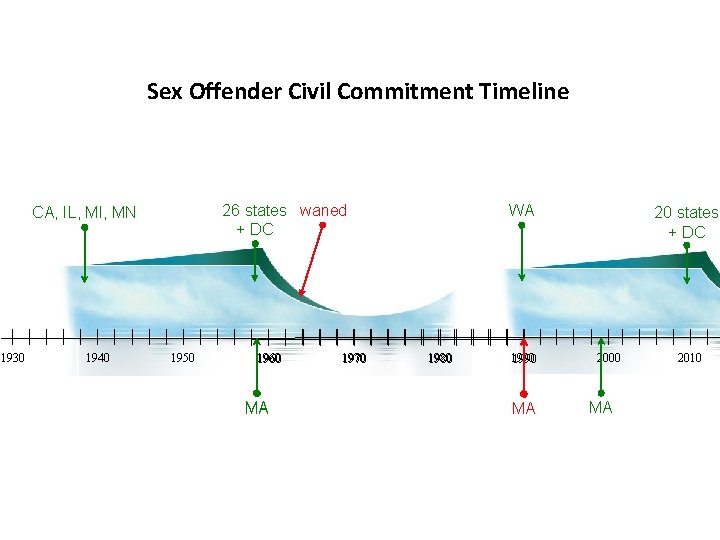
Sex Offender Civil Commitment Timeline 26 states waned + DC CA, IL, MI, MN 1930 1940 1950 1960 MA 1970 WA 1980 1990 MA 20 states + DC 2000 MA 2010
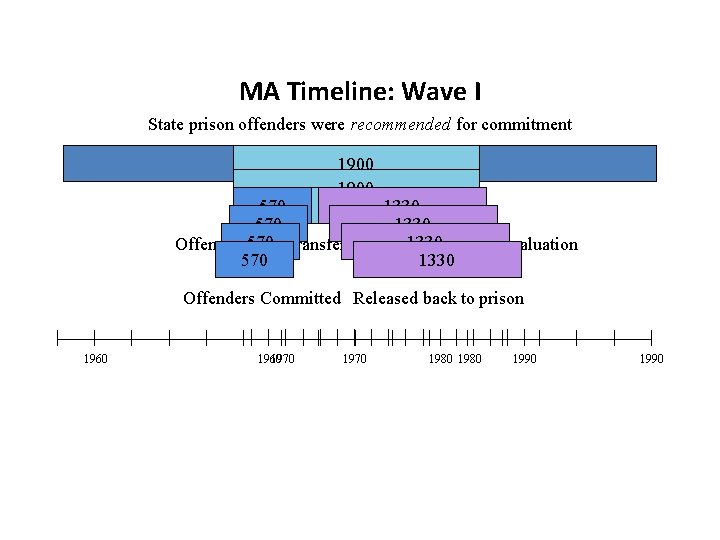
MA Timeline: Wave I State prison offenders were recommended for commitment 1900 5000 1900 570 1900 1330 570 1330 for a full evaluation Offenders 570 were transferred to MTC 570 1330 Offenders Committed Released back to prison 1960 1970 1980 1990
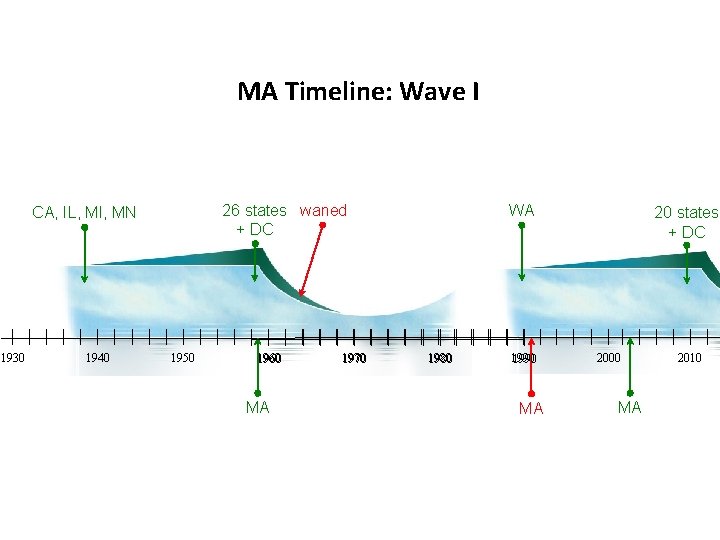
MA Timeline: Wave I 26 states waned + DC CA, IL, MI, MN 1930 1940 1950 1960 MA 1970 WA 1980 1990 MA 20 states + DC 2000 MA 2010
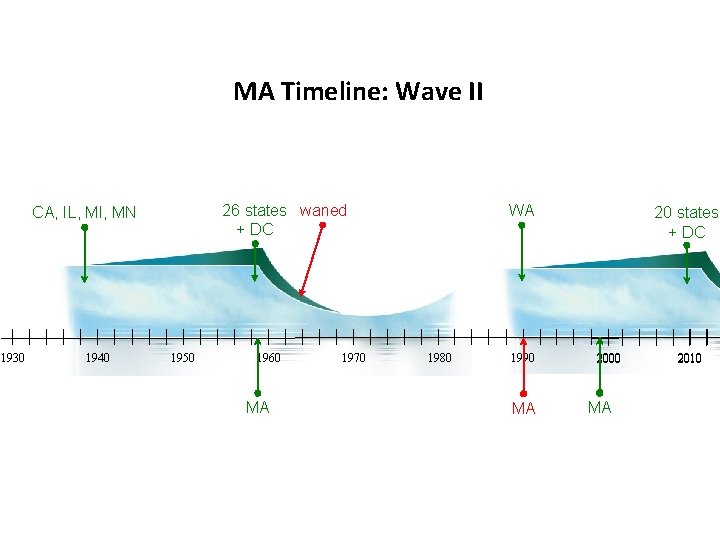
MA Timeline: Wave II 26 states waned + DC CA, IL, MI, MN 1930 1940 1950 1960 MA 1970 WA 1980 1990 MA 20 states + DC 2000 MA 2010
MA Timeline: Wave II 2000 MA 2010
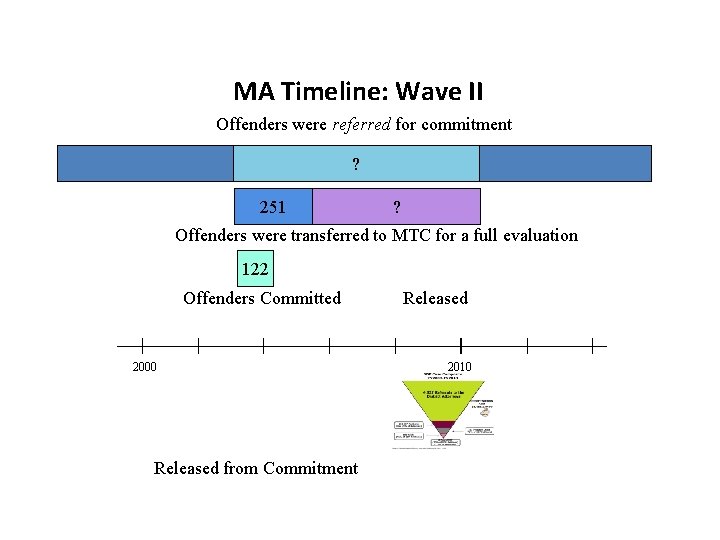
MA Timeline: Wave II Offenders were referred for commitment ? ? 251 ? Offenders were transferred to MTC for a full evaluation 122 Offenders Committed 2000 Released from Commitment Released 2010
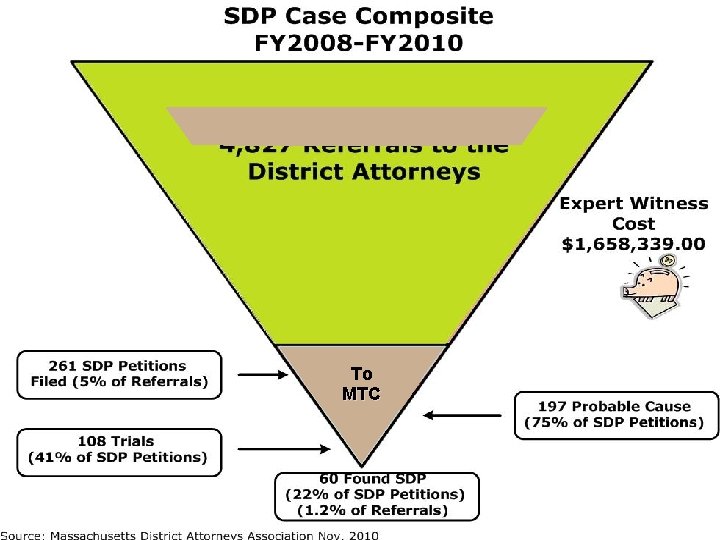
To MTC
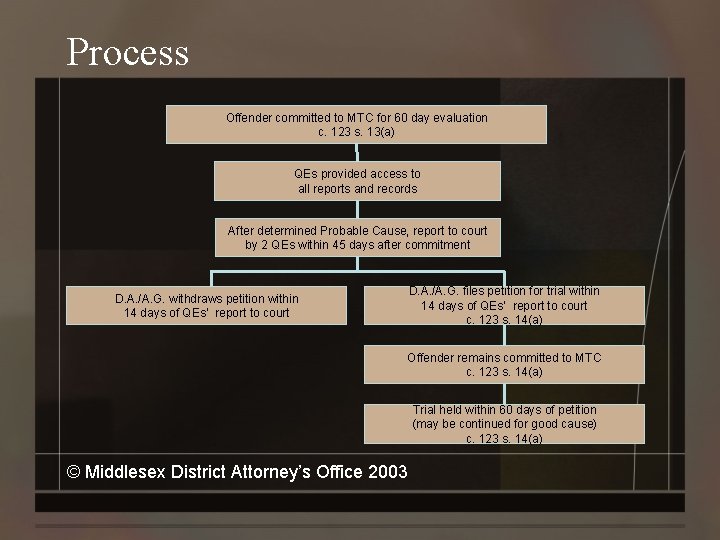
Process Offender committed to MTC for 60 day evaluation c. 123 s. 13(a) QEs provided access to all reports and records After determined Probable Cause, report to court by 2 QEs within 45 days after commitment D. A. /A. G. files petition for trial within 14 days of QEs’ report to court c. 123 s. 14(a) D. A. /A. G. withdraws petition within 14 days of QEs’ report to court Offender remains committed to MTC c. 123 s. 14(a) Trial held within 60 days of petition (may be continued for good cause) c. 123 s. 14(a) © Middlesex District Attorney’s Office 2003
Process (cont. ) Trial held within 60 days of petition (may be continued for good cause) c. 123 s. 14(a) © Middlesex District Attorney’s Office 2003
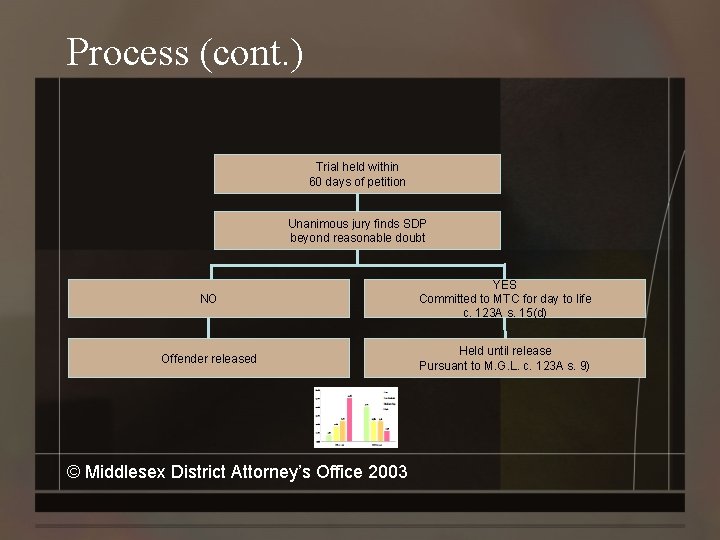
Process (cont. ) Trial held within 60 days of petition Unanimous jury finds SDP beyond reasonable doubt NO YES Committed to MTC for day to life c. 123 A s. 15(d) Offender released Held until release Pursuant to M. G. L. c. 123 A s. 9) © Middlesex District Attorney’s Office 2003
Static-99 R Scores
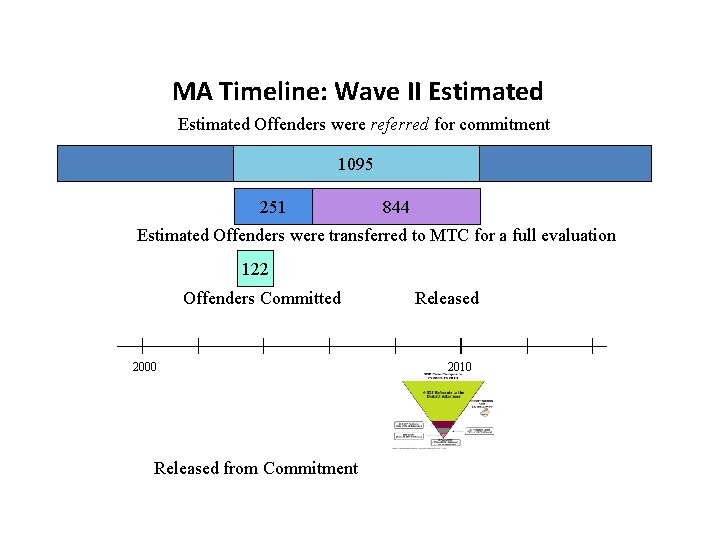
MA Timeline: Wave II Estimated Offenders were referred for commitment 20, 270 1095 251 844 Estimated Offenders were transferred to MTC for a full evaluation 122 Offenders Committed 2000 Released from Commitment Released 2010

Part IV PROS AND CONS OF COMMITMENT
Pros of Commitment State is provided with a mechanism to protect public from a dangerous offender who poses an immediate threat. Solution has “intuitive simplicity, ” if it is really possible to identify the most serious offenders.
Cons of Commitment: Definitional • Typically used mental disorders (paraphilias, personality disorders, and impulse disorders) are dimensional, not categorical, and empirical bases for traditional cutoffs are limited. • Links of specific mental disorders to the prediction and/or frequency of sexual coercion are often tentative.
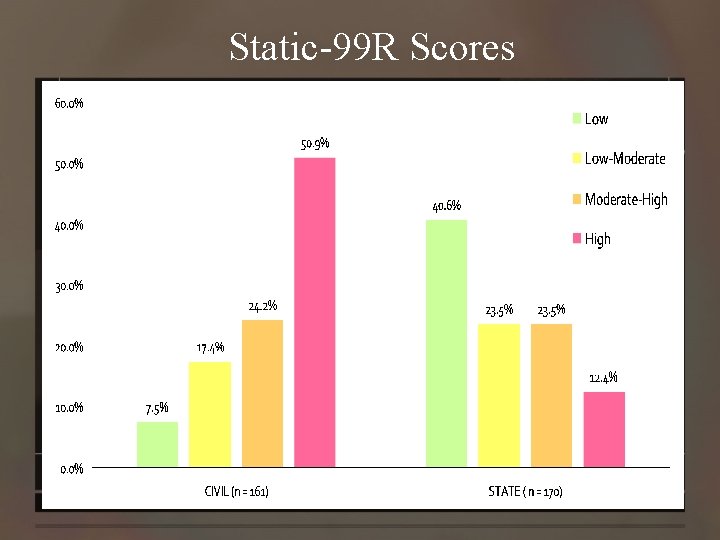
Cons of Commitment: Definitional • Criteria for the projected likelihood of sexual recidivism are vague, and hard to justify empirically. • For example – 2 to 25 year follow-up recidivism rate of high category in Static 99 R (6 or greater) for those committed to MTC was 34. 9%.
Cons of Commitment: Prediction • Supreme Court approval of civil commitment was predicated on high prediction efficacy of actuarials. • Although the predictive potency of current empirical actuarials is adequate for differentiating among offenders for treatment and management, even if done under optimal conditions (mechanically applied), they are inadequate to the task of indeterminate commitment, because of the high cost of false positives and the low baserate of SDV.
Cons of Commitment: Prediction • So, in optimal predictive practice, recidivism prediction is suboptimal for commitment prediction. • BUT, SDP decisions are adjusted, first by QEs and then by a jury of non-experts, thereby reducing predictive efficacy. • Thus, the representation of low-risk committed offenders among committed.
Cons of Commitment: Treatment • Catch 22 – without participating in treatment offenders cannot demonstrate they have learned from past transgressions so that they can be judged fit for release. • BUT, participating in treatment they incriminate themselves. • Moreover, it is hard to judge improvement during incarceration.

Alternatives to Commitment
Alternative to Commitment • SDP status increases criminal sentence, which includes treatment; • Lifetime probation (e. g. , Arizona); • Outpatient commitment program (e. g. , Texas).
- Slides: 37