
Civil Air Patrol Propeller Damage Prevention CITIZENS SERVING
- Slides: 13
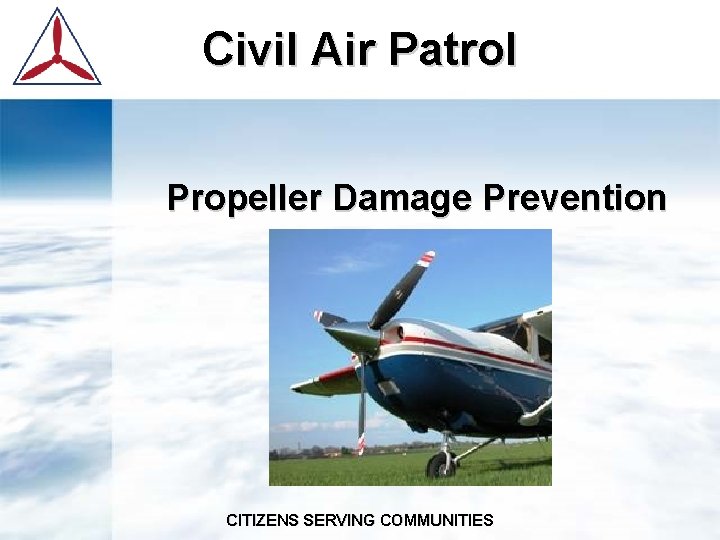
Civil Air Patrol Propeller Damage Prevention CITIZENS SERVING COMMUNITIES
Propeller Damage Prevention Overview Q Prop Strike Definition Q Preflight Inspection Q Surface Conditions Q Soft Taxi Ways & Runways Q Airfield Lighting Q Apron Familiarity Q Post Flight Inspection CITIZENS SERVING COMMUNITIES
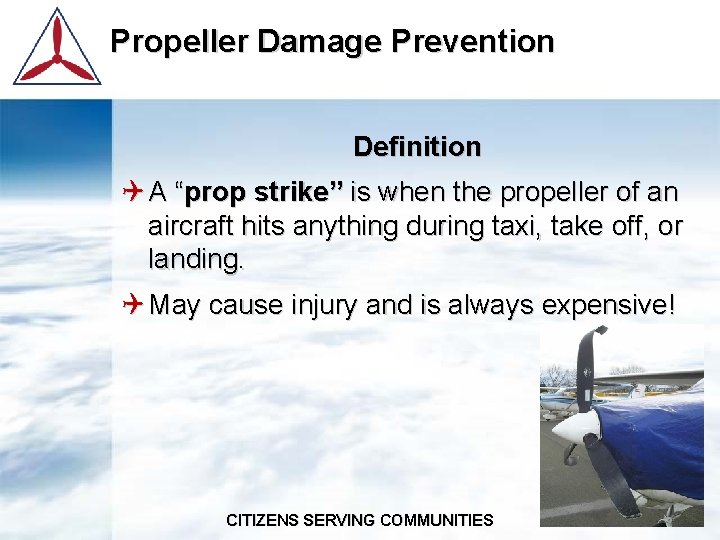
Propeller Damage Prevention Definition Q A “prop strike” is when the propeller of an aircraft hits anything during taxi, take off, or landing. Q May cause injury and is always expensive! CITIZENS SERVING COMMUNITIES
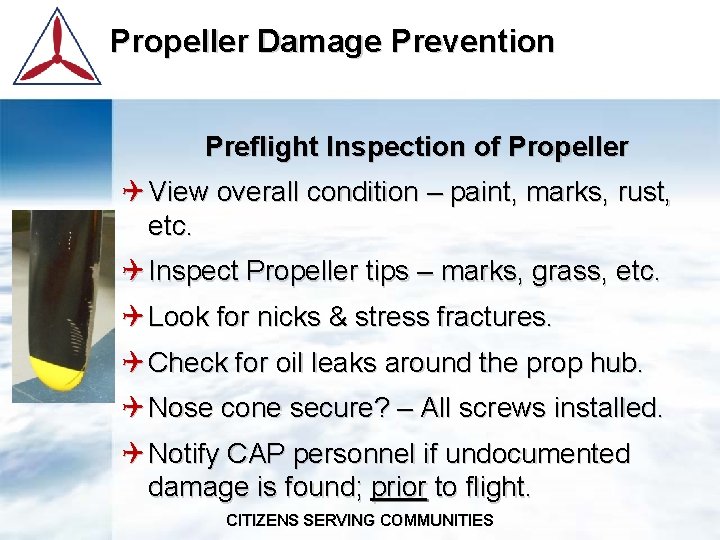
Propeller Damage Prevention Preflight Inspection of Propeller Q View overall condition – paint, marks, rust, etc. Q Inspect Propeller tips – marks, grass, etc. Q Look for nicks & stress fractures. Q Check for oil leaks around the prop hub. Q Nose cone secure? – All screws installed. Q Notify CAP personnel if undocumented damage is found; prior to flight. CITIZENS SERVING COMMUNITIES
Propeller Damage Prevention Surface Conditions Q Departing the prepared surface – Avoid it! Q A major contributor to prop strikes. Q Be aware and prepared! Q Standing water – Hydroplane hazard. Q Ice – May slide off prepared surface. Q High winds – Directional control issue. CITIZENS SERVING COMMUNITIES
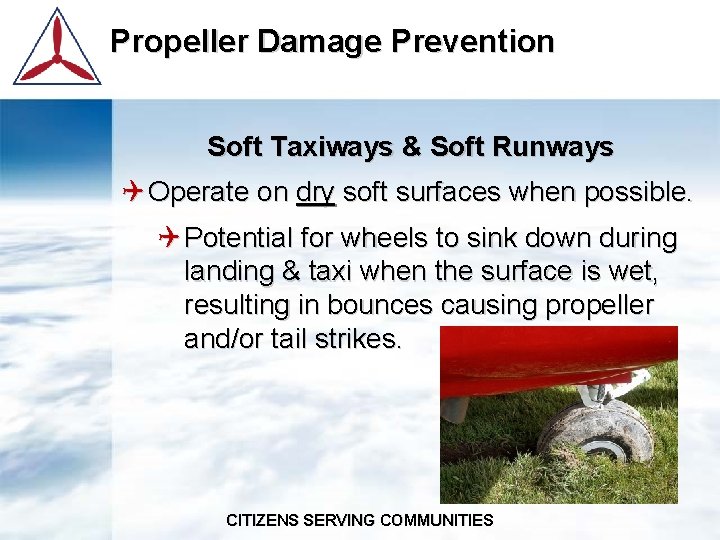
Propeller Damage Prevention Soft Taxiways & Soft Runways Q Operate on dry soft surfaces when possible. Q Potential for wheels to sink down during landing & taxi when the surface is wet, resulting in bounces causing propeller and/or tail strikes. CITIZENS SERVING COMMUNITIES
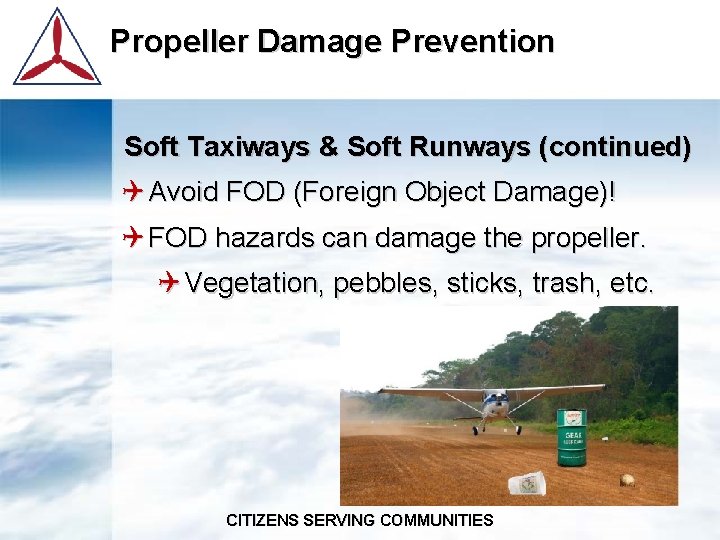
Propeller Damage Prevention Soft Taxiways & Soft Runways (continued) Q Avoid FOD (Foreign Object Damage)! Q FOD hazards can damage the propeller. Q Vegetation, pebbles, sticks, trash, etc. CITIZENS SERVING COMMUNITIES
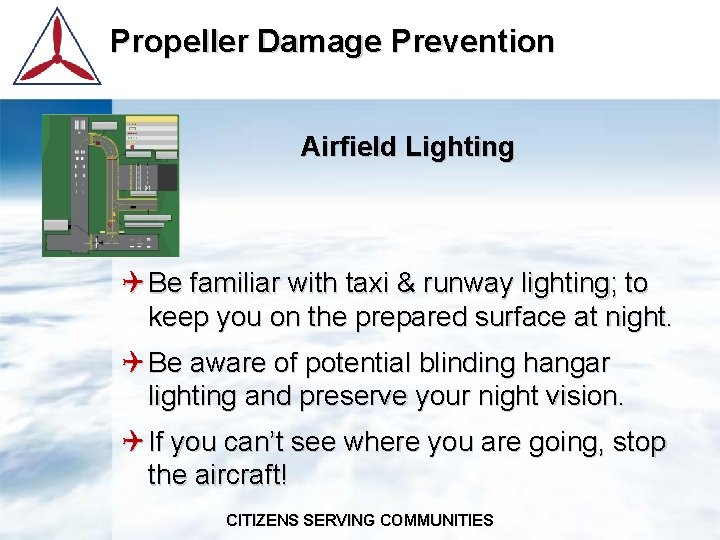
Propeller Damage Prevention Airfield Lighting Q Be familiar with taxi & runway lighting; to keep you on the prepared surface at night. Q Be aware of potential blinding hangar lighting and preserve your night vision. Q If you can’t see where you are going, stop the aircraft! CITIZENS SERVING COMMUNITIES
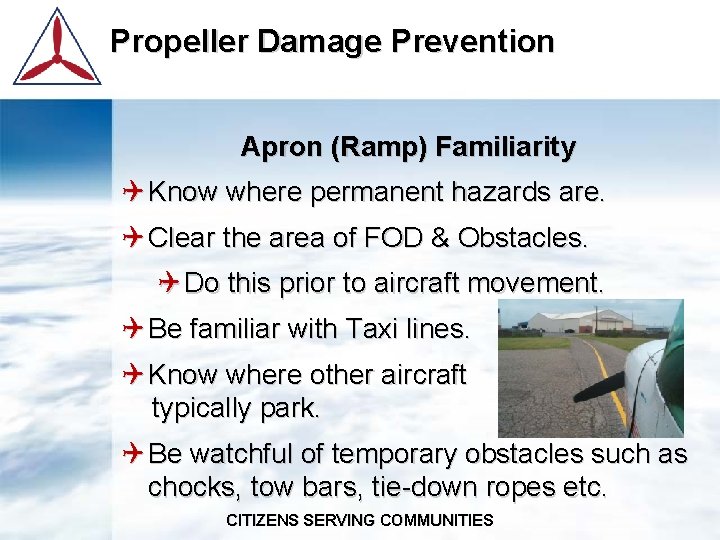
Propeller Damage Prevention Apron (Ramp) Familiarity Q Know where permanent hazards are. Q Clear the area of FOD & Obstacles. Q Do this prior to aircraft movement. Q Be familiar with Taxi lines. Q Know where other aircraft typically park. Q Be watchful of temporary obstacles such as chocks, tow bars, tie-down ropes etc. CITIZENS SERVING COMMUNITIES
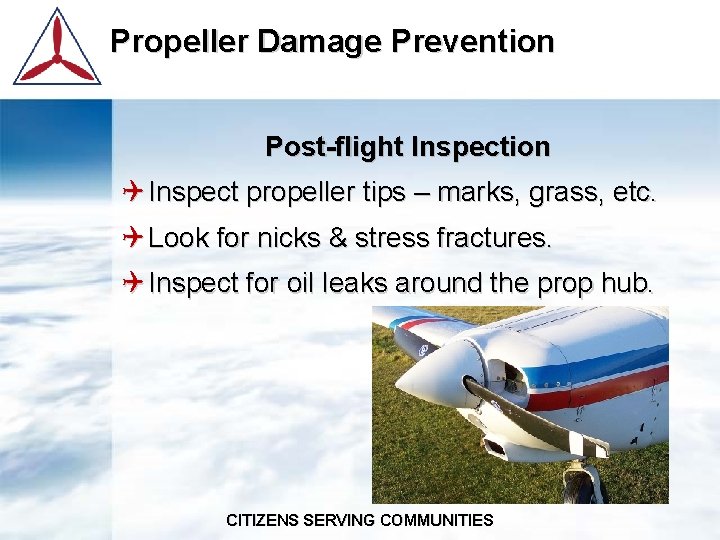
Propeller Damage Prevention Post-flight Inspection Q Inspect propeller tips – marks, grass, etc. Q Look for nicks & stress fractures. Q Inspect for oil leaks around the prop hub. CITIZENS SERVING COMMUNITIES
Propeller Damage Prevention Summary Q Prop Strike Definition Q Preflight Inspection Q Surface Conditions Q Soft Taxi Ways & Runways Q Airfield Lighting Q Apron Familiarity Q Post Flight Inspection CITIZENS SERVING COMMUNITIES
Propeller Damage Prevention Questions Please be sure to utilize the local expertise in your chain of command to help with aviation related questions; your Unit, Wing, and Region Stan/Eval Officers (DOV) are a wealth of knowledge and are ready to assist. CITIZENS SERVING COMMUNITIES
Propeller Damage Prevention Acknowledgments Many thanks to the following for their input into this presentation: Colonel Michael Jay Murrell – Deputy Chief of Staff for Operations Colonel Carlton Sumner – National Stan/Eval Officer Col Alex Kay – National Chief of Safety Mr. John Desmarais, Sr. – Director of Operations, CAP National Headquarters Joe Piccotti – Chief of Aircraft Operations, CAP National Headquarters Mr. Axel Kreimeier – National Safety Team Liaison, CAP National Headquarters Ms. Sylvia Wrigley – World Renowned Pilot & Aviation Author And, all of those who supported this effort to enhance the safety of flight ops. CITIZENS SERVING COMMUNITIES