
Civics Unit 7 1 Comparing Economic Systems Warm

- Slides: 29
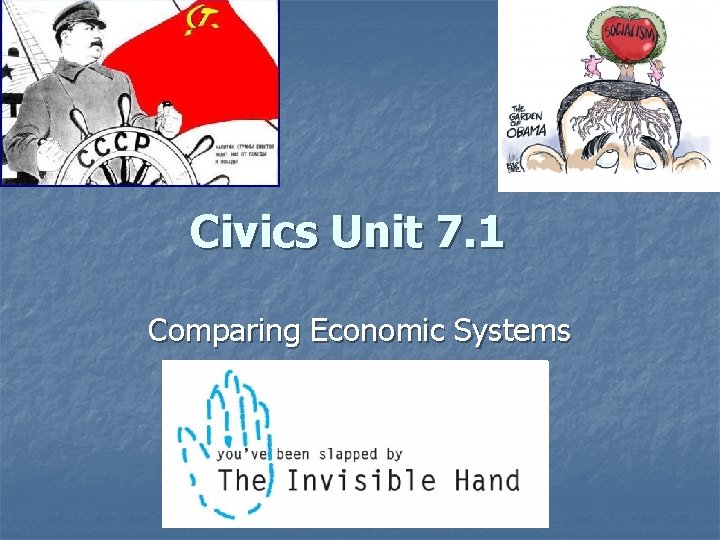
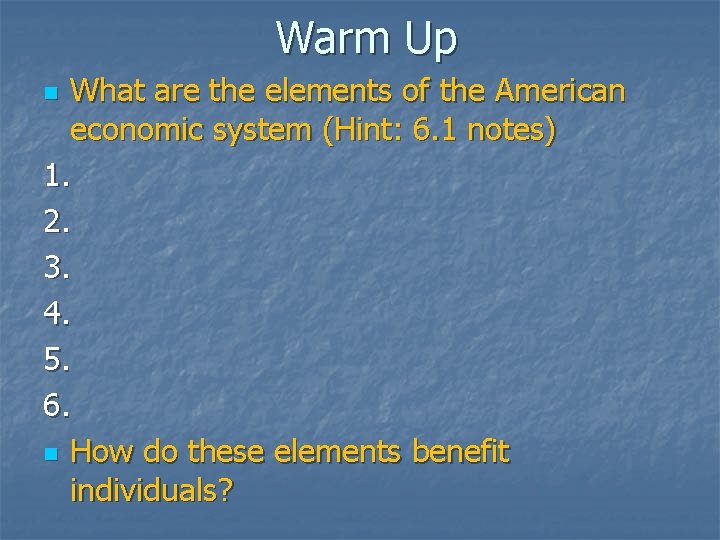
Civics Unit 7. 1 Comparing Economic Systems
Warm Up What are the elements of the American economic system (Hint: 6. 1 notes) 1. 2. 3. 4. 5. 6. n How do these elements benefit individuals? n
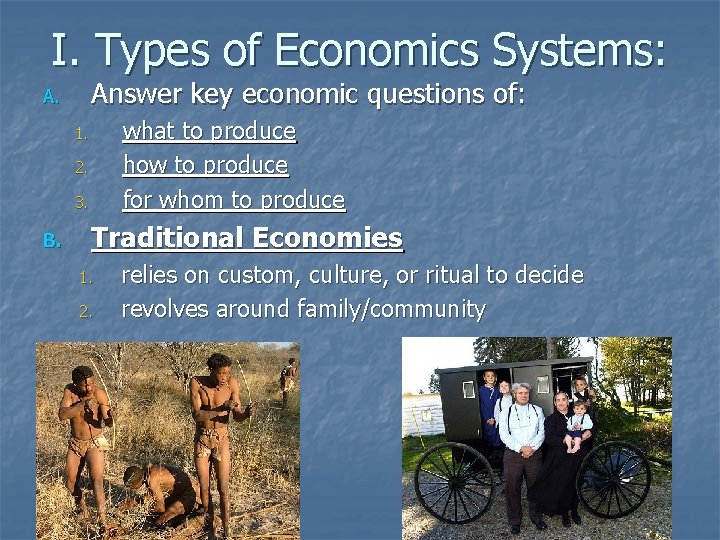
I. Types of Economics Systems: Answer key economic questions of: A. what to produce how to produce for whom to produce 1. 2. 3. B. Traditional Economies 1. 2. relies on custom, culture, or ritual to decide revolves around family/community
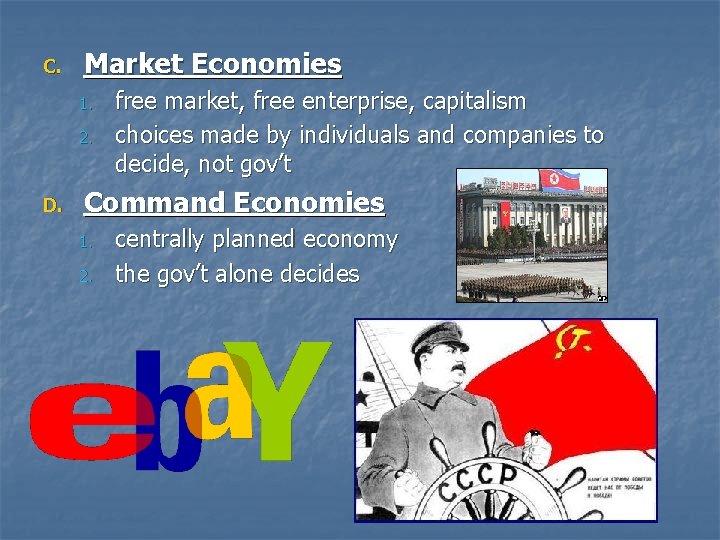
C. Market Economies 1. 2. D. free market, free enterprise, capitalism choices made by individuals and companies to decide, not gov’t Command Economies 1. 2. centrally planned economy the gov’t alone decides
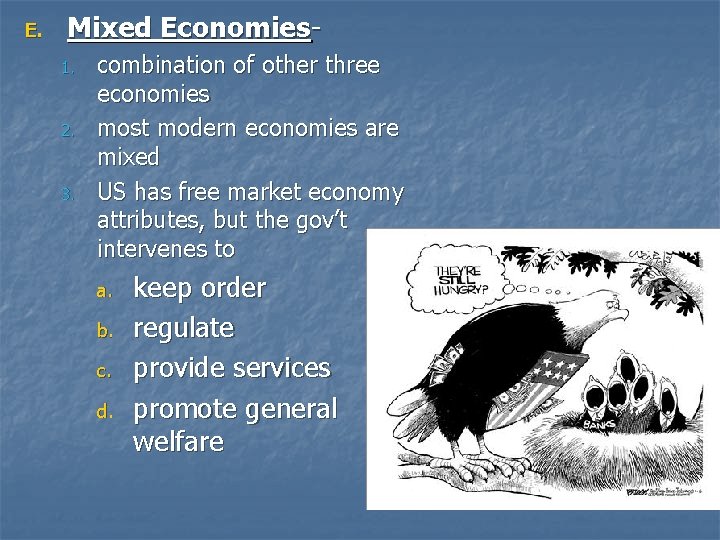
E. Mixed Economies 1. 2. 3. combination of other three economies most modern economies are mixed US has free market economy attributes, but the gov’t intervenes to a. b. c. d. keep order regulate provide services promote general welfare
Interpret: Explain each quote in your own words n From each according to his abilities, to each according to his needs. n It is not from the [goodness] of the butcher or the baker that we expect our dinner, but from their regard to their own interest
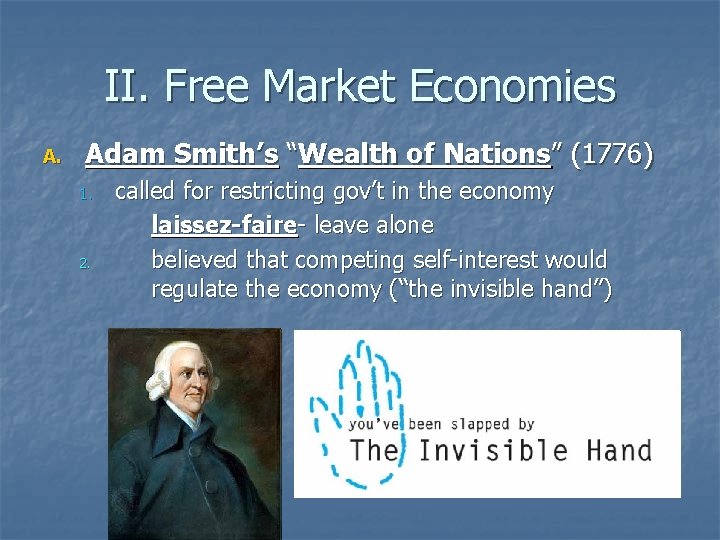
II. Free Market Economies A. Adam Smith’s “Wealth of Nations” (1776) 1. 2. called for restricting gov’t in the economy laissez-faire- leave alone believed that competing self-interest would regulate the economy (“the invisible hand”)
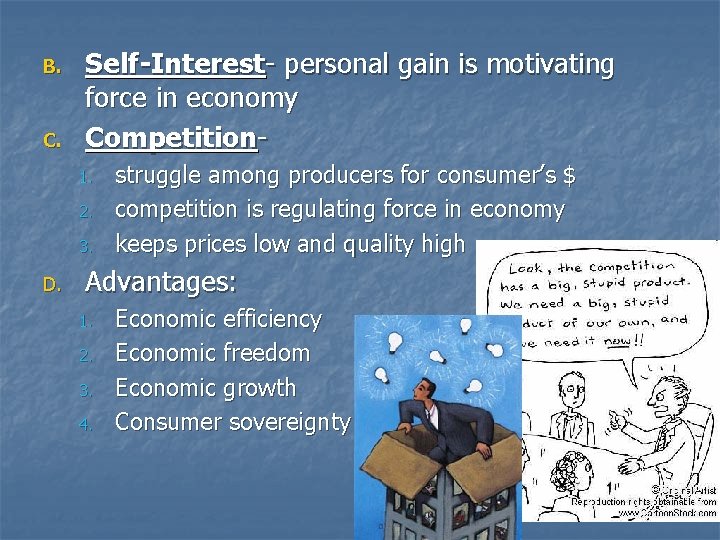
B. C. Self-Interest- personal gain is motivating force in economy Competition 1. 2. 3. D. struggle among producers for consumer’s $ competition is regulating force in economy keeps prices low and quality high Advantages: 1. 2. 3. 4. Economic efficiency Economic freedom Economic growth Consumer sovereignty
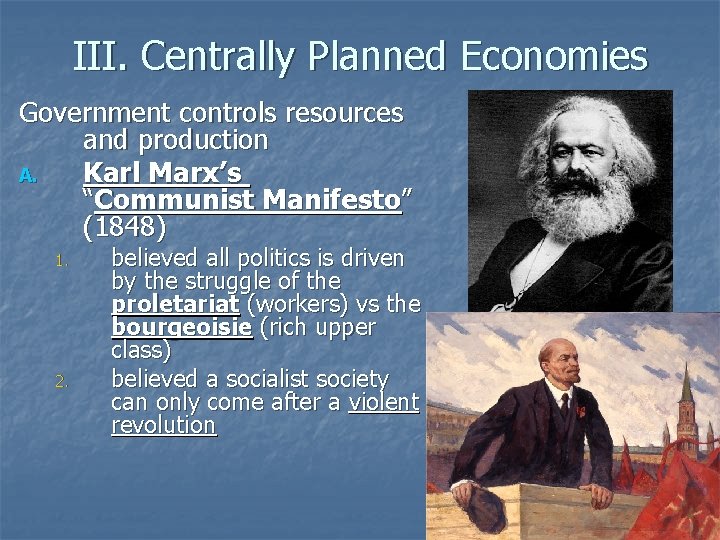
III. Centrally Planned Economies Government controls resources and production A. Karl Marx’s “Communist Manifesto” (1848) 1. 2. believed all politics is driven by the struggle of the proletariat (workers) vs the bourgeoisie (rich upper class) believed a socialist society can only come after a violent revolution
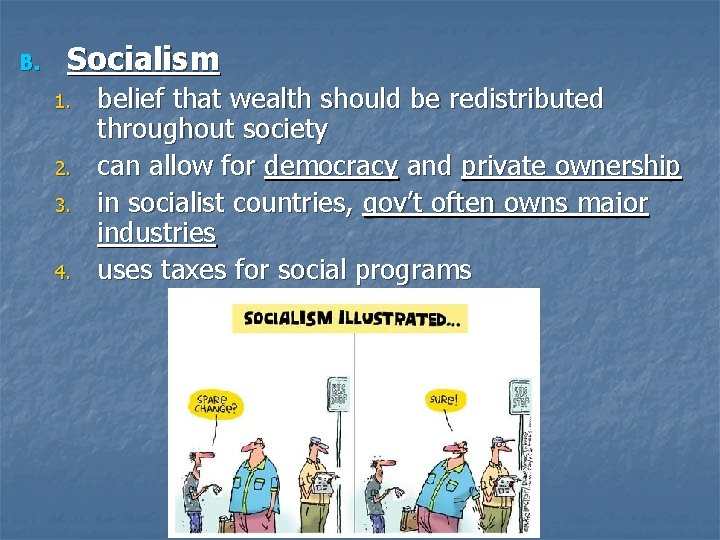
B. Socialism 1. 2. 3. 4. belief that wealth should be redistributed throughout society can allow for democracy and private ownership in socialist countries, gov’t often owns major industries uses taxes for social programs
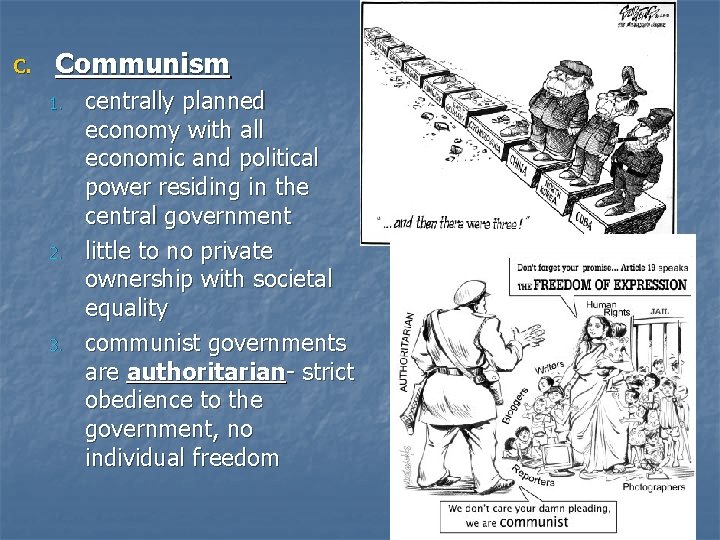
C. Communism 1. 2. 3. centrally planned economy with all economic and political power residing in the central government little to no private ownership with societal equality communist governments are authoritarian- strict obedience to the government, no individual freedom
The Capitalist Manifesto n With your partner… n Write a 5 –point capitalist response to Marx’s 10 tenets n WWASD (What would Adam Smith do? )
Exit Ticket 1. 2. Why is the United States a mixed economy? Of the four types of economies studied, which do you think is the best?
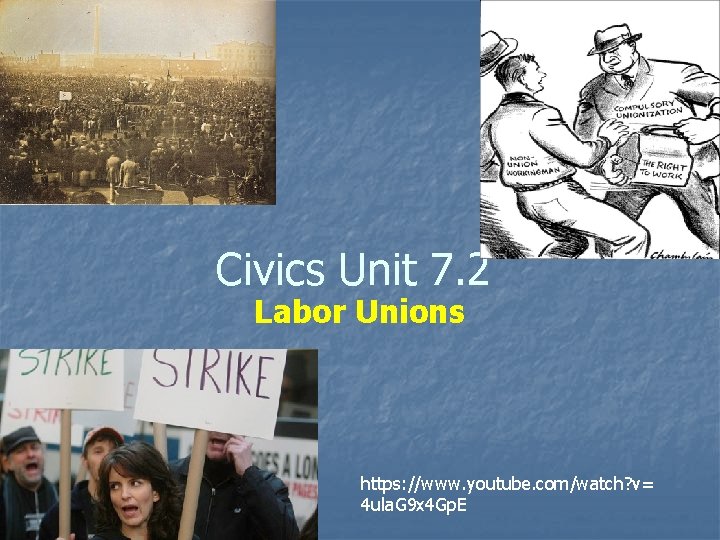
Civics Unit 7. 2 Labor Unions https: //www. youtube. com/watch? v= 4 ula. G 9 x 4 Gp. E
Warm Up n Please take notes as you watch the video on the Triangle Shirtwaist Factory Fire What happened? n Why were Americans shocked by the events on that day? n What reforms did it bring to laborers in the United States n
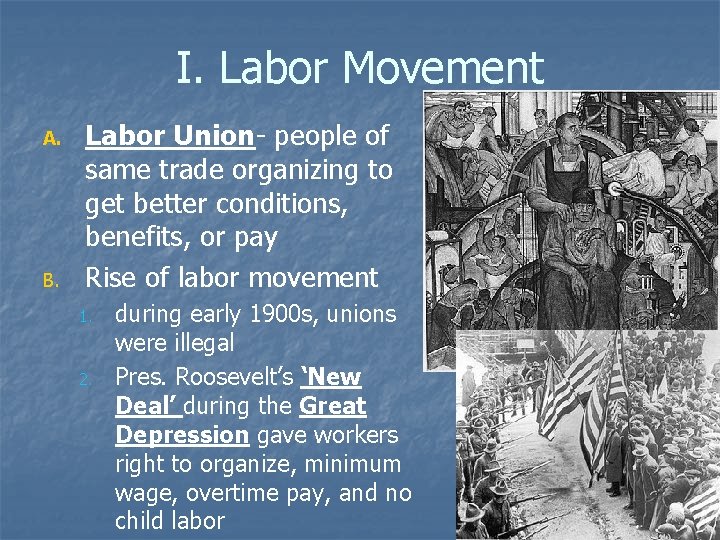
I. Labor Movement A. B. Labor Union- people of same trade organizing to get better conditions, benefits, or pay Rise of labor movement 1. 2. during early 1900 s, unions were illegal Pres. Roosevelt’s ‘New Deal’ during the Great Depression gave workers right to organize, minimum wage, overtime pay, and no child labor
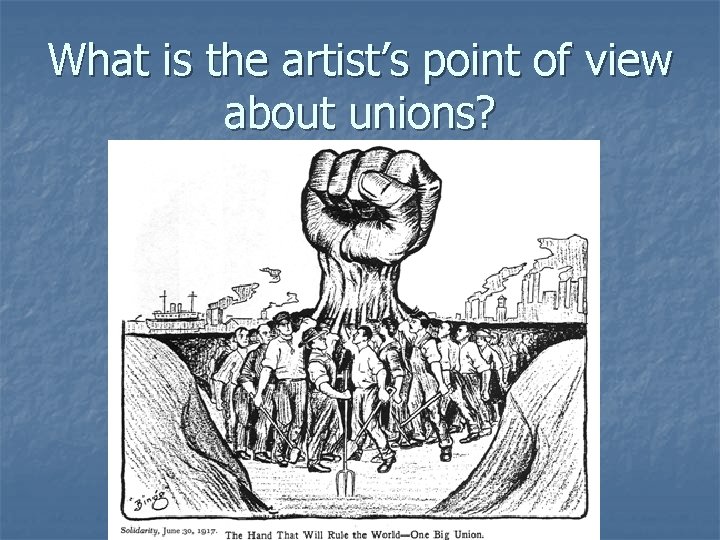
What is the artist’s point of view about unions?
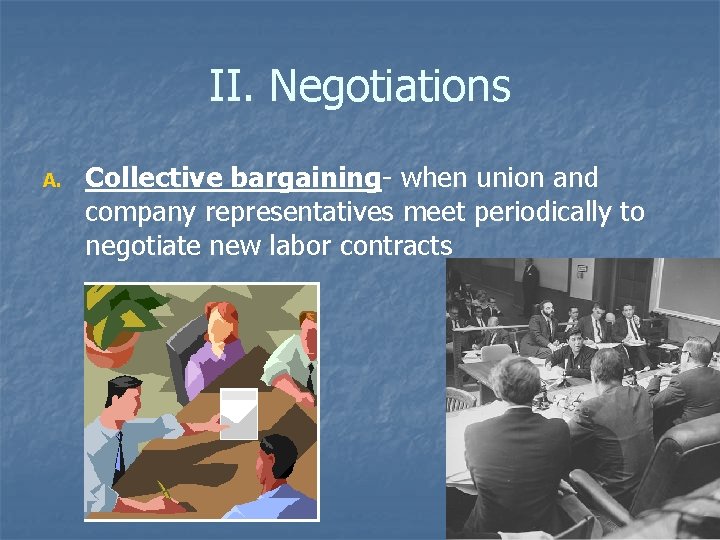
II. Negotiations A. Collective bargaining- when union and company representatives meet periodically to negotiate new labor contracts
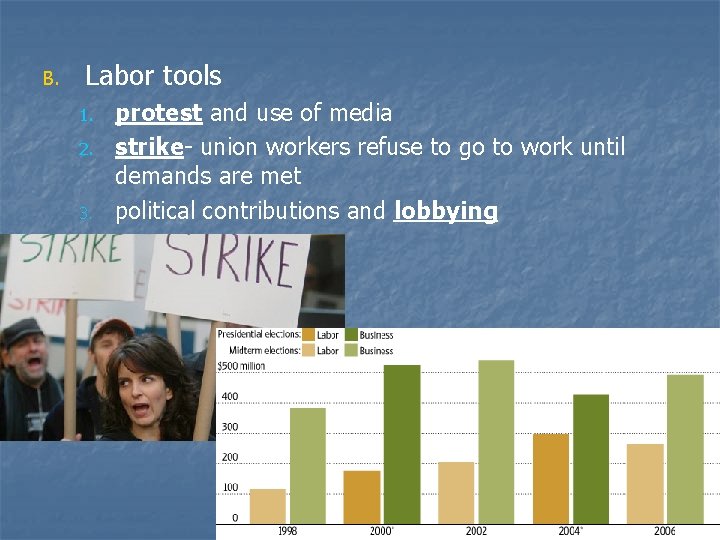
B. Labor tools 1. 2. 3. protest and use of media strike- union workers refuse to go to work until demands are met political contributions and lobbying
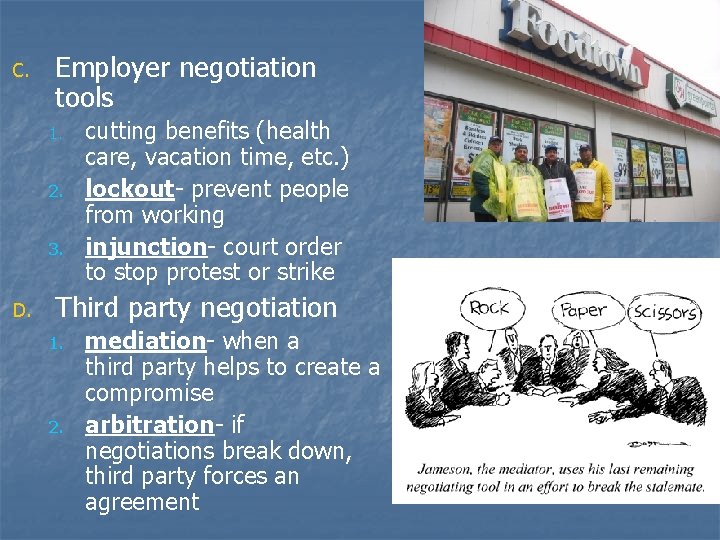
C. Employer negotiation tools 1. 2. 3. D. cutting benefits (health care, vacation time, etc. ) lockout- prevent people from working injunction- court order to stop protest or strike Third party negotiation 1. 2. mediation- when a third party helps to create a compromise arbitration- if negotiations break down, third party forces an agreement
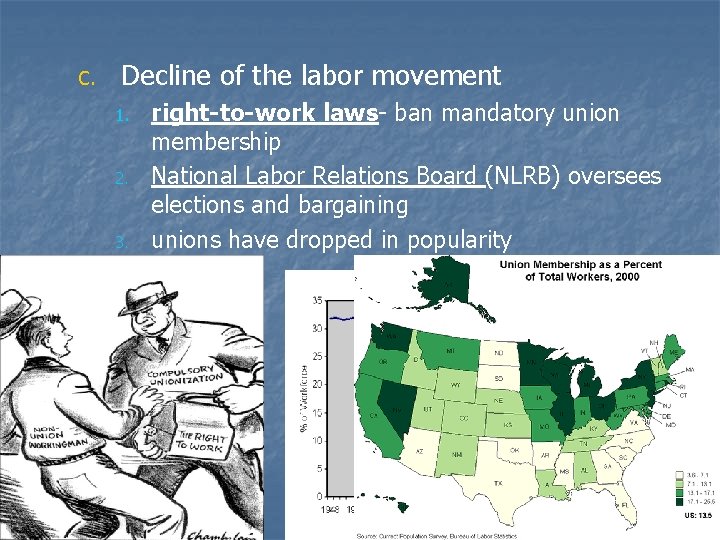
C. Decline of the labor movement 1. 2. 3. right-to-work laws- ban mandatory union membership National Labor Relations Board (NLRB) oversees elections and bargaining unions have dropped in popularity
Close 1. What is a labor union? 2. What is collective bargaining? 3. What gov’t agency run by the President oversees unions?
Monopoly n n n Round Three Please play for 20 minutes At the end of the round please complete third column of your graphic organizer for communism
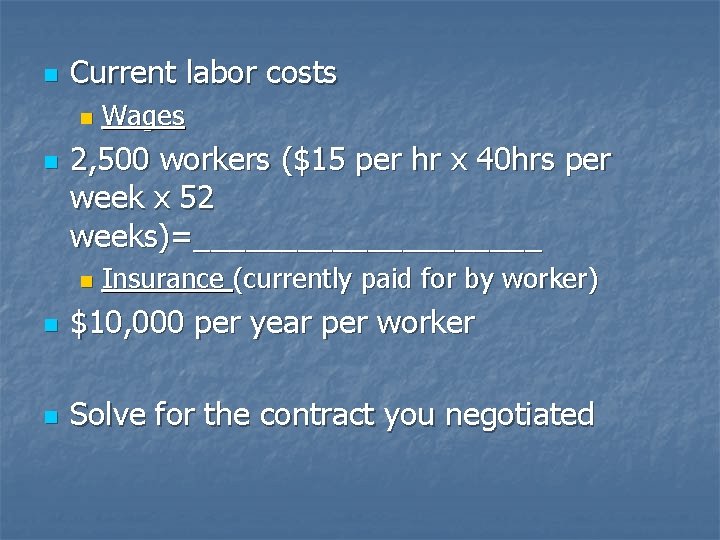
n Current labor costs n n Wages 2, 500 workers ($15 per hr x 40 hrs per week x 52 weeks)=__________ n Insurance (currently paid for by worker) n $10, 000 per year per worker n Solve for the contract you negotiated
Collective Bargaining Activity n Your Team (Management OR Labor) needs to come up with a plan for negotiation. n Decide what you must have and what you might be able to give up
Collective Bargaining n You have 4 minutes to come to a compromise. If you cannot, arbitration will take place. n Wages n Hours n Overtime n Benefits
What is a strike? a. b. c. d. All workers in a union refuse to go to work Unions encourage the public not to buy the goods produced by their employers The company that employs union workers refuses to let them work A court mandates that unionized employees must go back to work because they provide a vital service
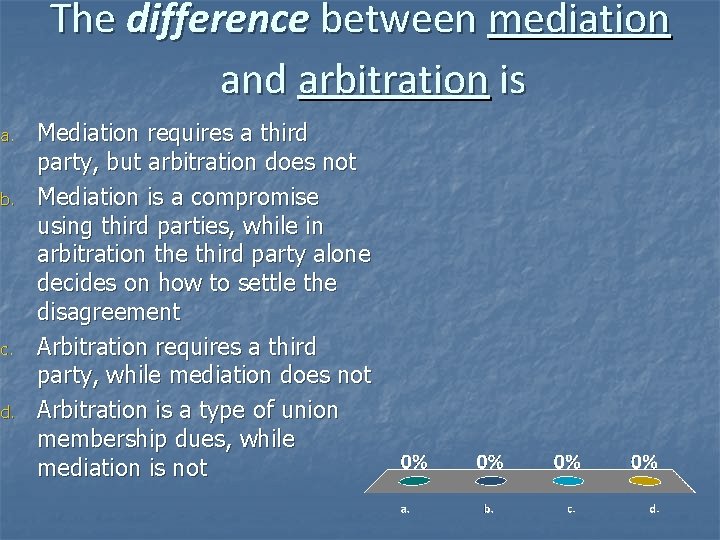
The difference between mediation and arbitration is a. b. c. d. Mediation requires a third party, but arbitration does not Mediation is a compromise using third parties, while in arbitration the third party alone decides on how to settle the disagreement Arbitration requires a third party, while mediation does not Arbitration is a type of union membership dues, while mediation is not