
CITY OF SIOUX FALLS SOUTH DAKOTA Future Water
- Slides: 21
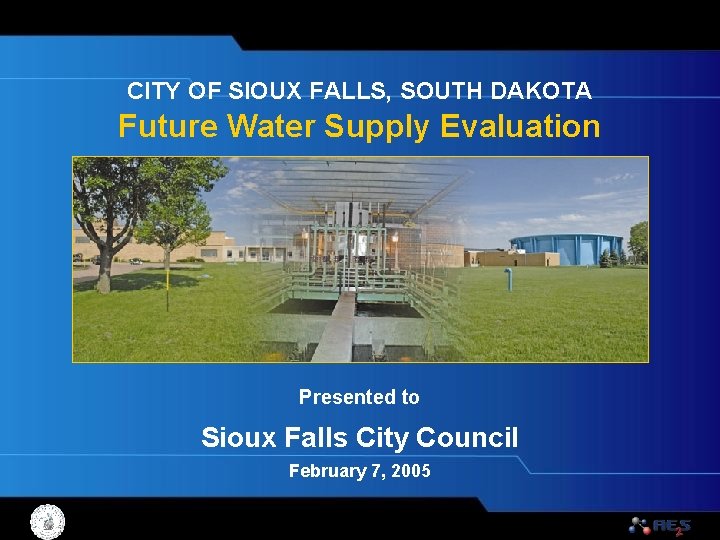
CITY OF SIOUX FALLS, SOUTH DAKOTA Future Water Supply Evaluation Presented to Sioux Falls City Council February 7, 2005
Outline Future Water Supply Evaluation • • • Overview of the Challenges Basis of Evaluation Summary of Alternatives Comparison of Alternatives Conclusions and Recommendations
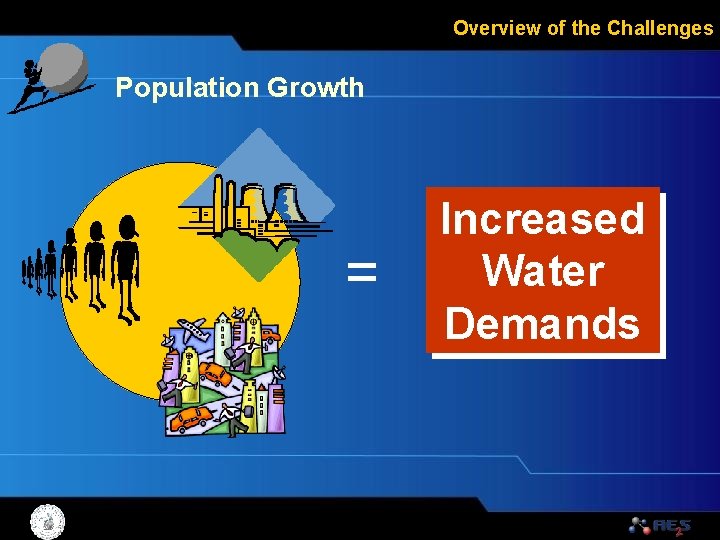
Overview of the Challenges Population Growth = Increased Water Demands
Overview of the Challenges Susceptibility of Water Supplies to Dry Climate Conditions
Overview of the Challenges Projected Water Supply Shortfalls 2012
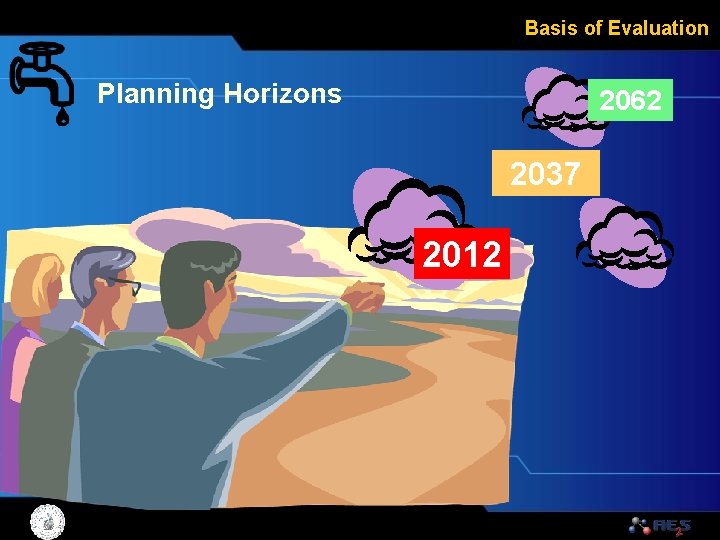
Basis of Evaluation Planning Horizons 2062 2037 2012
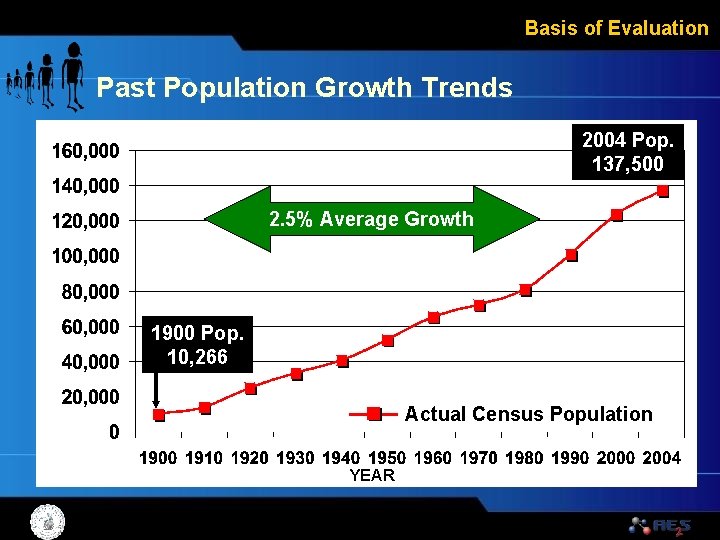
Basis of Evaluation Past Population Growth Trends 2004 Pop. 137, 500 2. 5% Average Growth 1900 Pop. 10, 266 Actual Census Population YEAR
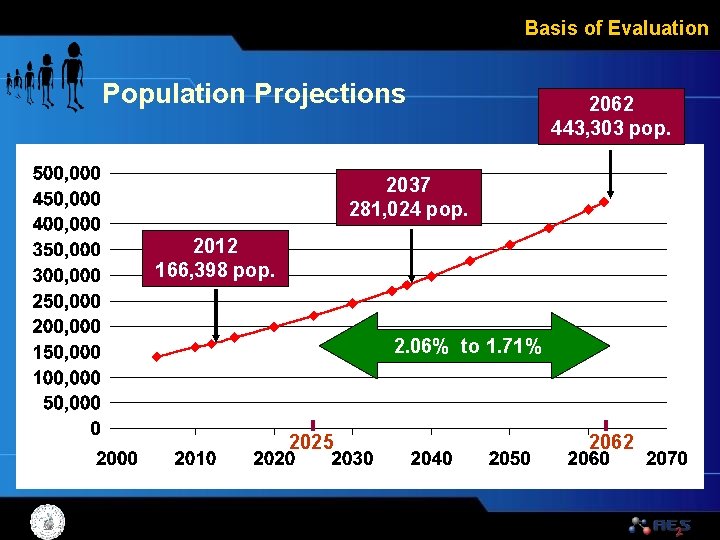
Basis of Evaluation Population Projections 2062 443, 303 pop. 2037 281, 024 pop. 2012 166, 398 pop. 2. 06% to 1. 71% 2025 2062
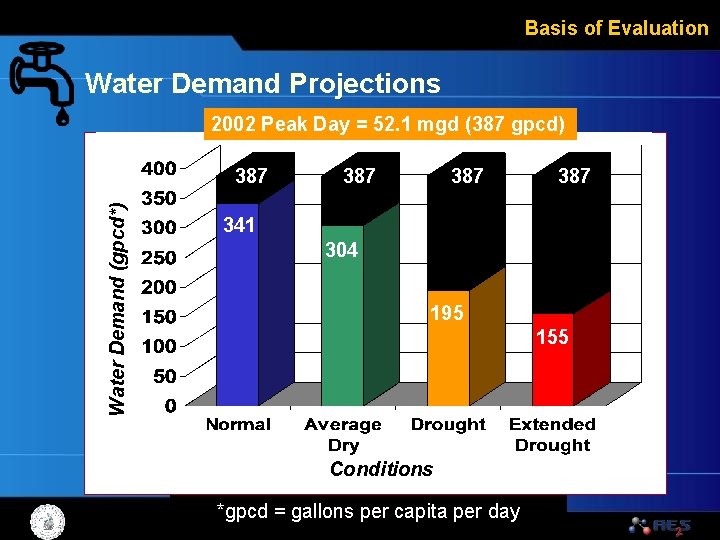
Basis of Evaluation Water Demand Projections 2002 Peak Day = 52. 1 mgd (387 gpcd) Water Demand (gpcd*) 387 387 341 304 195 155 Conditions *gpcd = gallons per capita per day
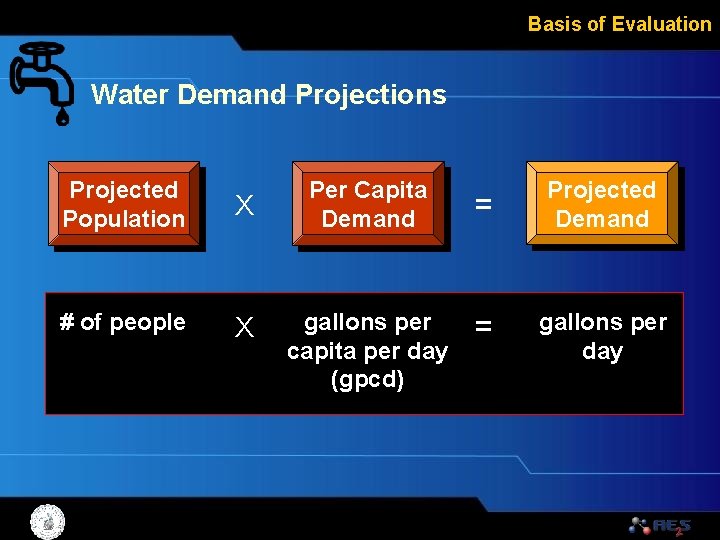
Basis of Evaluation Water Demand Projections Projected Population X # of people X Per Capita Demand = Projected Demand gallons per capita per day (gpcd) = gallons per day
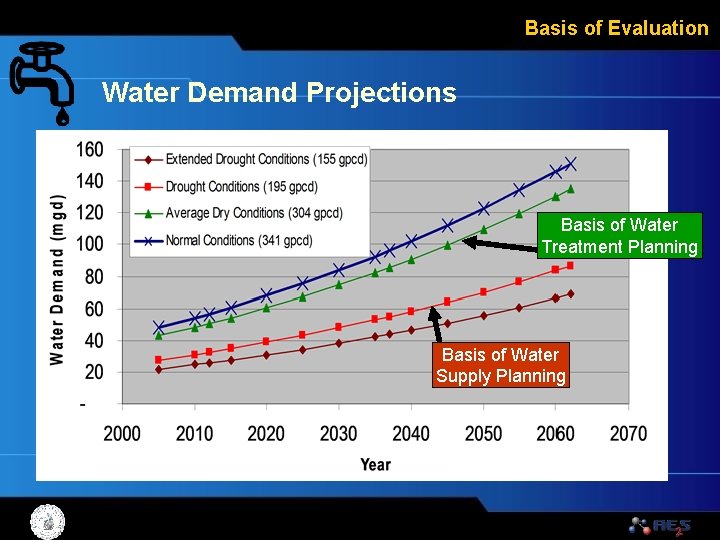
Basis of Evaluation Water Demand Projections Basis of Water Treatment Planning Basis of Water Supply Planning
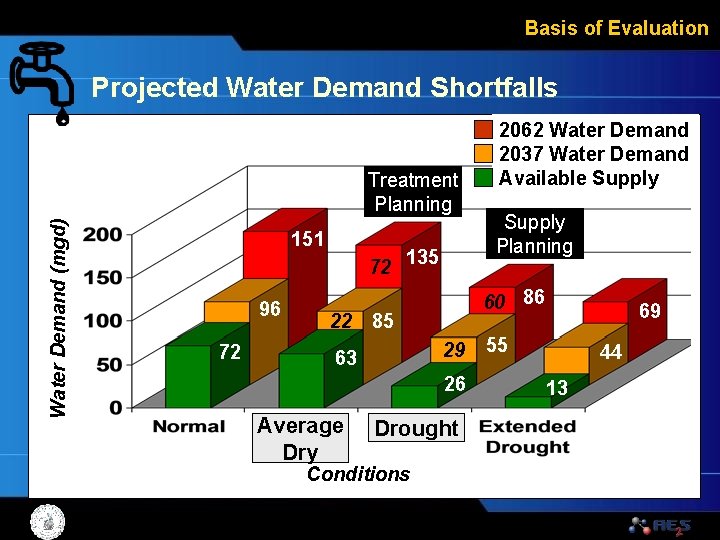
Basis of Evaluation Projected Water Demand Shortfalls Water Demand (mgd) Treatment Planning 151 72 96 72 22 135 29 26 Average Dry Drought Conditions Supply Planning 60 86 85 63 2062 Water Demand 2037 Water Demand Available Supply 55 69 44 13
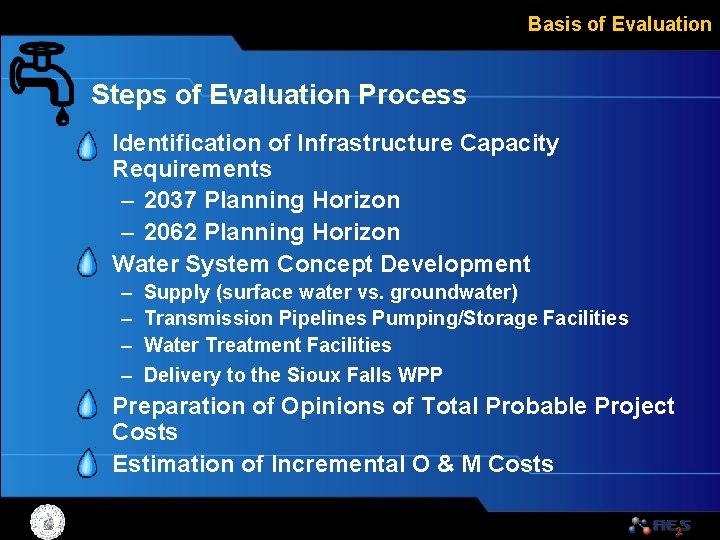
Basis of Evaluation Steps of Evaluation Process • Identification of Infrastructure Capacity Requirements – 2037 Planning Horizon – 2062 Planning Horizon • Water System Concept Development – Supply (surface water vs. groundwater) – Transmission Pipelines Pumping/Storage Facilities – Water Treatment Facilities – Delivery to the Sioux Falls WPP • Preparation of Opinions of Total Probable Project Costs • Estimation of Incremental O & M Costs
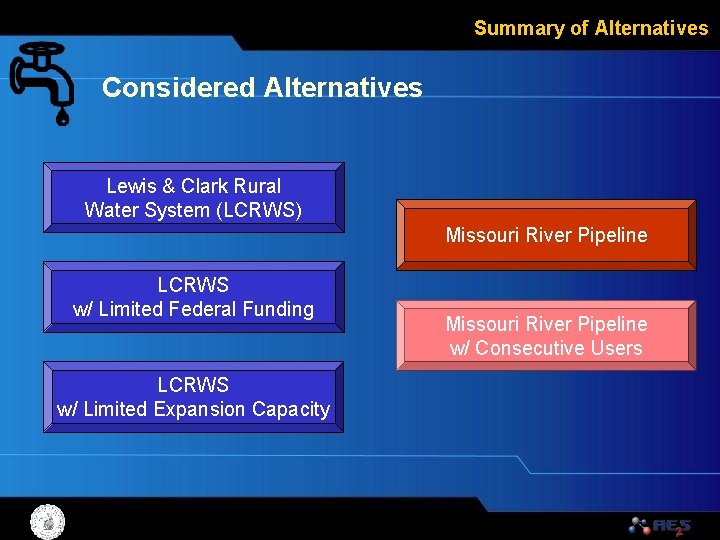
Summary of Alternatives Considered Alternatives Lewis & Clark Rural Water System (LCRWS) Missouri River Pipeline LCRWS w/ Limited Federal Funding LCRWS w/ Limited Expansion Capacity Missouri River Pipeline w/ Consecutive Users
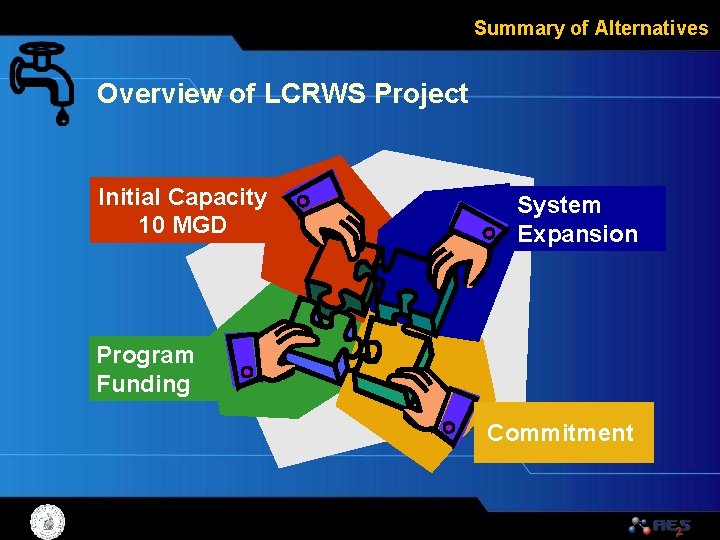
Summary of Alternatives Overview of LCRWS Project Initial Capacity 10 MGD System Expansion Program Funding Commitment
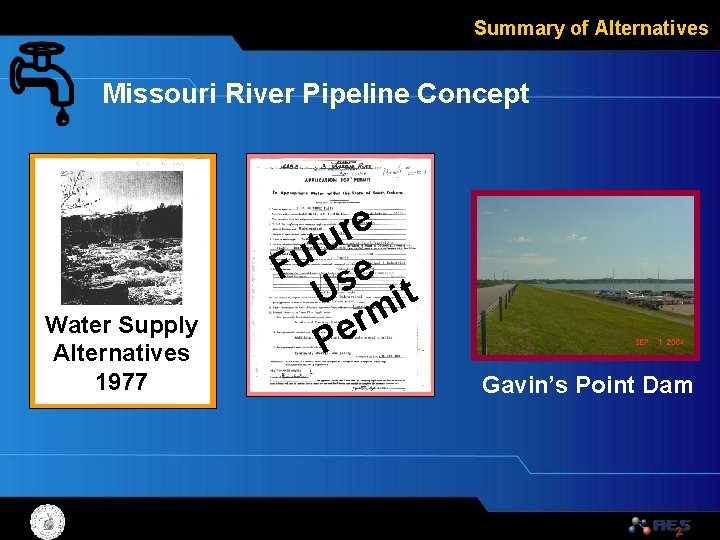
Summary of Alternatives Missouri River Pipeline Concept Water Supply Alternatives 1977 e r u t Fu se t U i m r Pe Gavin’s Point Dam
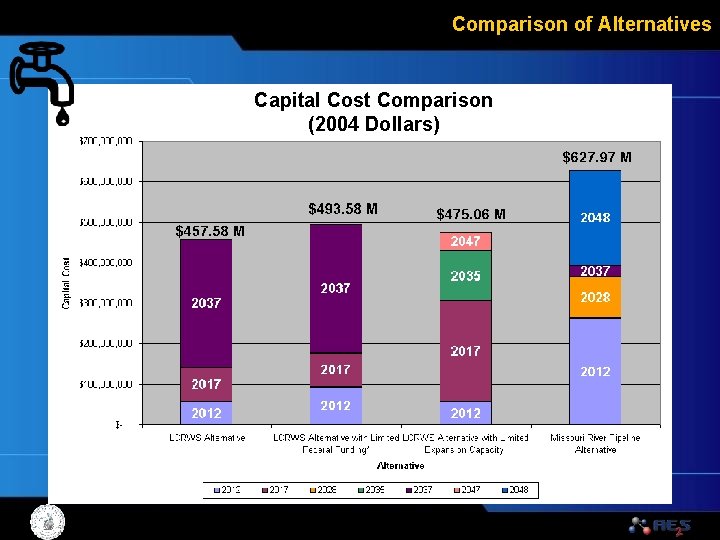
Comparison of Alternatives Capital Cost Comparison (2004 Dollars)
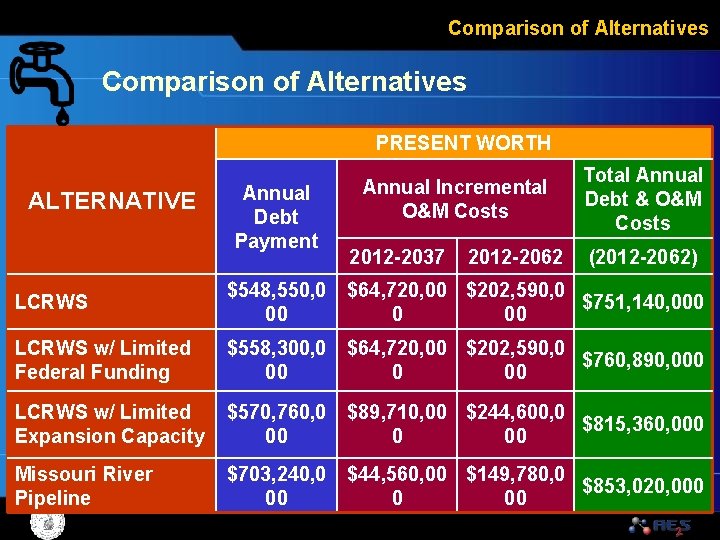
Comparison of Alternatives PRESENT WORTH ALTERNATIVE Annual Debt Payment Annual Incremental O&M Costs 2012 -2037 2012 -2062 Total Annual Debt & O&M Costs (2012 -2062) LCRWS $548, 550, 0 00 $64, 720, 00 $202, 590, 0 $751, 140, 000 0 00 LCRWS w/ Limited Federal Funding $558, 300, 0 00 $64, 720, 00 $202, 590, 0 $760, 890, 000 0 00 LCRWS w/ Limited Expansion Capacity $570, 760, 0 00 $89, 710, 00 $244, 600, 0 $815, 360, 000 0 00 Missouri River Pipeline $703, 240, 0 00 $44, 560, 00 $149, 780, 0 $853, 020, 000 0 00
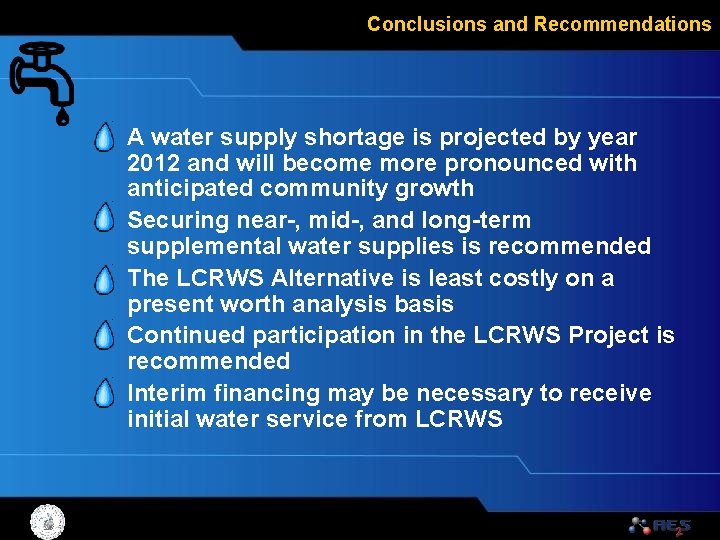
Conclusions and Recommendations • A water supply shortage is projected by year 2012 and will become more pronounced with anticipated community growth • Securing near-, mid-, and long-term supplemental water supplies is recommended • The LCRWS Alternative is least costly on a present worth analysis basis • Continued participation in the LCRWS Project is recommended • Interim financing may be necessary to receive initial water service from LCRWS
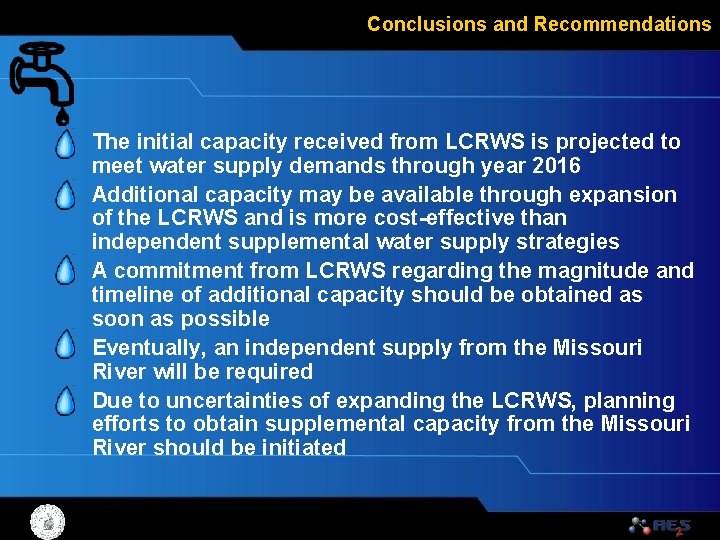
Conclusions and Recommendations • The initial capacity received from LCRWS is projected to meet water supply demands through year 2016 • Additional capacity may be available through expansion of the LCRWS and is more cost-effective than independent supplemental water supply strategies • A commitment from LCRWS regarding the magnitude and timeline of additional capacity should be obtained as soon as possible • Eventually, an independent supply from the Missouri River will be required • Due to uncertainties of expanding the LCRWS, planning efforts to obtain supplemental capacity from the Missouri River should be initiated
Questions?