
City of Federal Way Surface Water Management Program

- Slides: 19
City of Federal Way Surface Water Management Program Presentation October 20/21, 2005 Paul Bucich, P. E. , Surface Water Manager
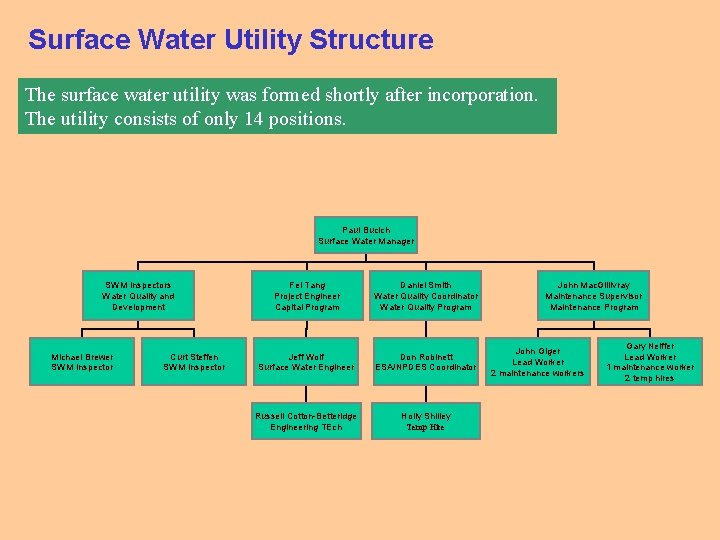
Surface Water Utility Structure The surface water utility was formed shortly after incorporation. The utility consists of only 14 positions. Paul Bucich Surface Water Manager SWM Inspectors Water Quality and Development Michael Brewer SWM Inspector Curt Steffen SWM Inspector Fei Tang Project Engineer Capital Program Daniel Smith Water Quality Coordinator Water Quality Program Jeff Wolf Surface Water Engineer Don Robinett ESA/NPDES Coordinator Russell Cotton-Betteridge Engineering TEch Holly Shilley Temp Hire John Mac. Gillivray Maintenance Supervisor Maintenance Program John Giger Lead Worker 2 maintenance workers Gary Neiffer Lead Worker 1 maintenance worker 2 temp hires
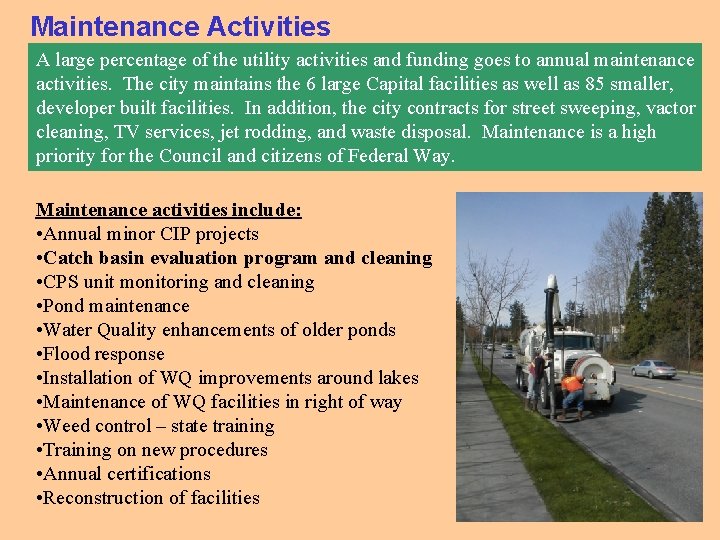
Maintenance Activities A large percentage of the utility activities and funding goes to annual maintenance activities. The city maintains the 6 large Capital facilities as well as 85 smaller, developer built facilities. In addition, the city contracts for street sweeping, vactor cleaning, TV services, jet rodding, and waste disposal. Maintenance is a high priority for the Council and citizens of Federal Way. Maintenance activities include: • Annual minor CIP projects • Catch basin evaluation program and cleaning • CPS unit monitoring and cleaning • Pond maintenance • Water Quality enhancements of older ponds • Flood response • Installation of WQ improvements around lakes • Maintenance of WQ facilities in right of way • Weed control – state training • Training on new procedures • Annual certifications • Reconstruction of facilities
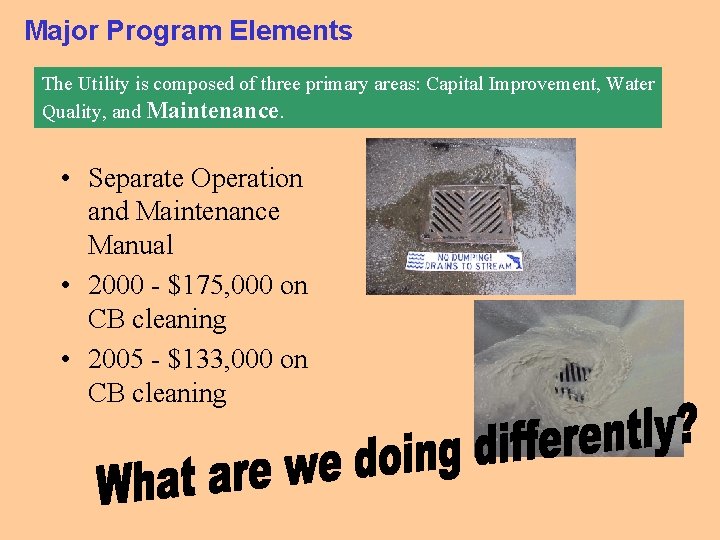
Major Program Elements The Utility is composed of three primary areas: Capital Improvement, Water Quality, and Maintenance. • Separate Operation and Maintenance Manual • 2000 - $175, 000 on CB cleaning • 2005 - $133, 000 on CB cleaning
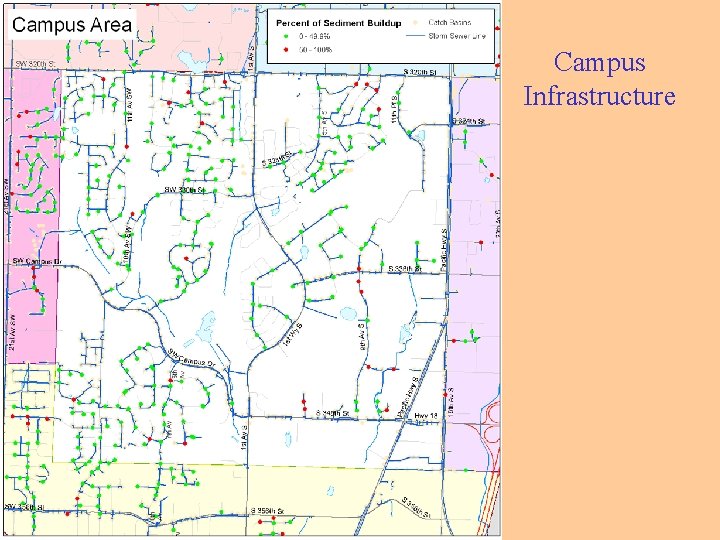
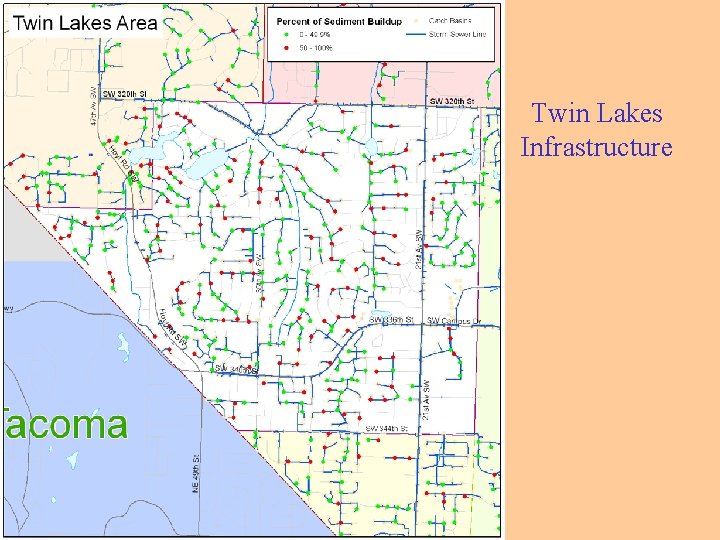
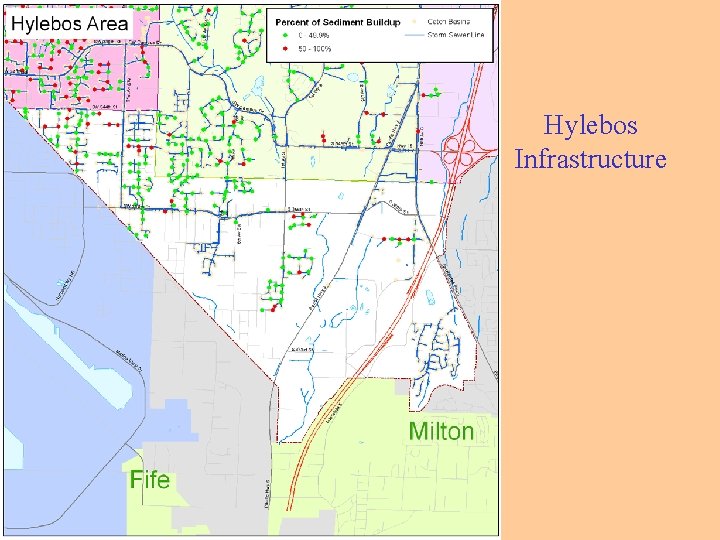
Evaluation Program Evaluation was initiated as a means to determine if we were wisely spending our limited utility tax dollars. • • Started in 2002 Means to reduce annual expenditures Are we cleaning “clean” structures? Determine frequency for cleaning Find “special structures” Manage increasing infrastructure assets and costs NPDES Permit requirement to maintain infrastructure – Pierce County Maintenance Manual, Page 26 – sediment removal @ 60%
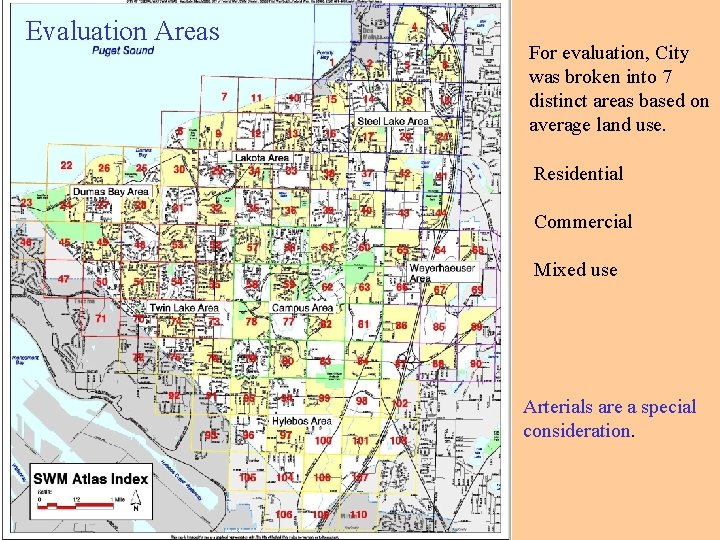
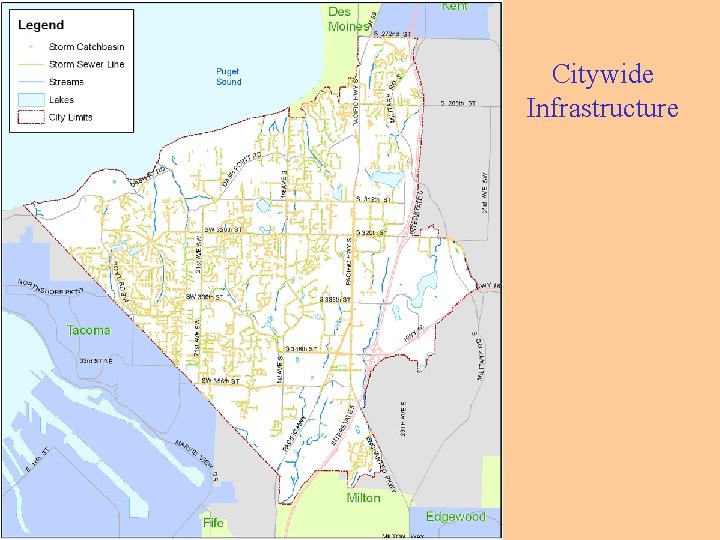
Evaluation Areas For evaluation, City was broken into 7 distinct areas based on average land use. Residential Commercial Mixed use Arterials are a special consideration.
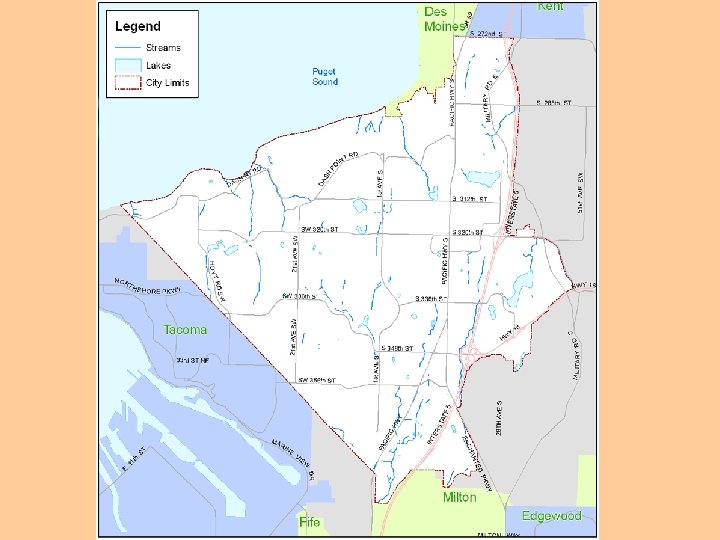
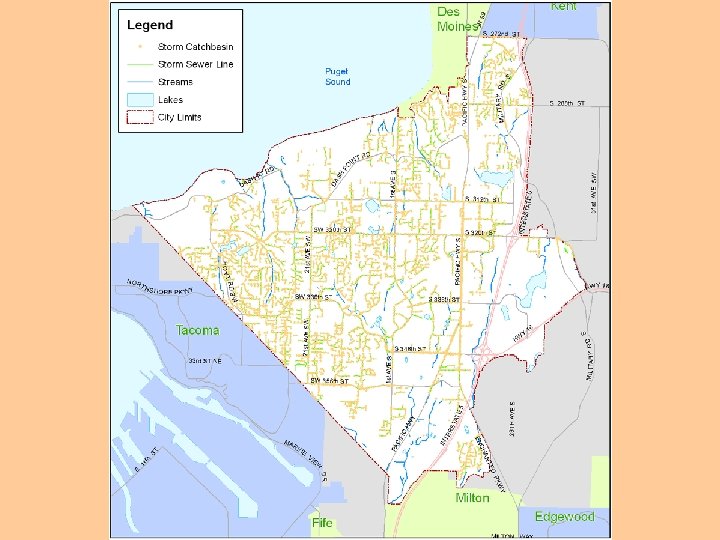
Citywide Infrastructure
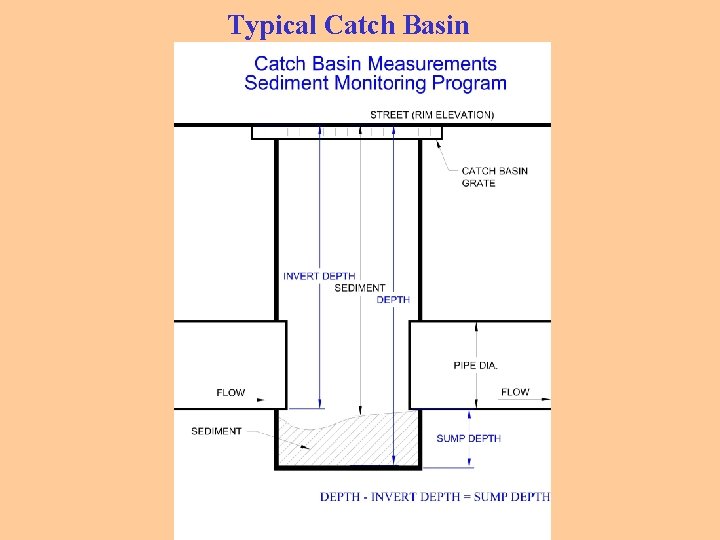
Typical Catch Basin
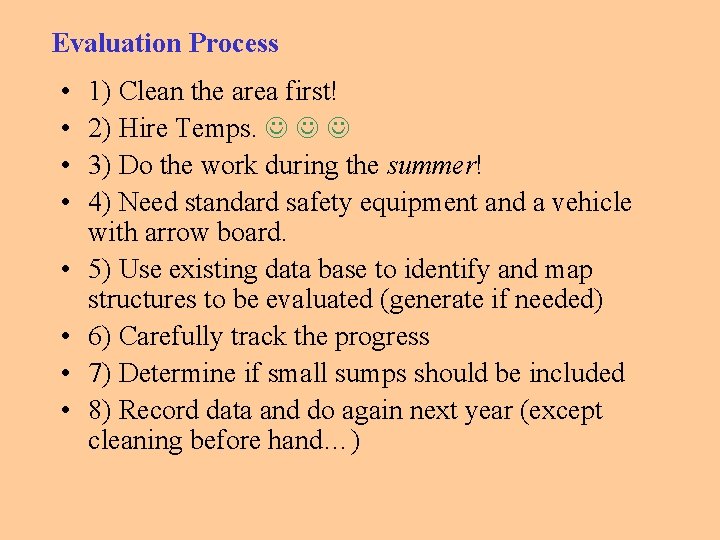
Evaluation Process • • 1) Clean the area first! 2) Hire Temps. 3) Do the work during the summer! 4) Need standard safety equipment and a vehicle with arrow board. 5) Use existing data base to identify and map structures to be evaluated (generate if needed) 6) Carefully track the progress 7) Determine if small sumps should be included 8) Record data and do again next year (except cleaning before hand…)
Data sheets • If everything goes according to plan, should have spread sheets filled with data like this:
Campus Infrastructure
Twin Lakes Infrastructure
Hylebos Infrastructure
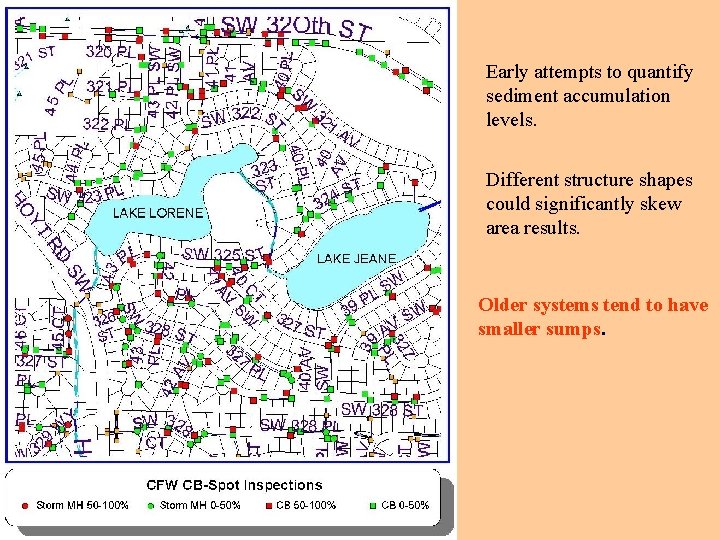
Early attempts to quantify sediment accumulation levels. Different structure shapes could significantly skew area results. Older systems tend to have smaller sumps.
Conclusions • Sediment accumulations vary significantly by land use • Residential areas do not need cleaned annually if system (including pipes) are cleaned once • Industrial areas need more attention (Doh!) • Arterials are to be cleaned annually • Significant cost savings can be achieved by knowing your system needs • NPDES permits require proper maintenance schedules
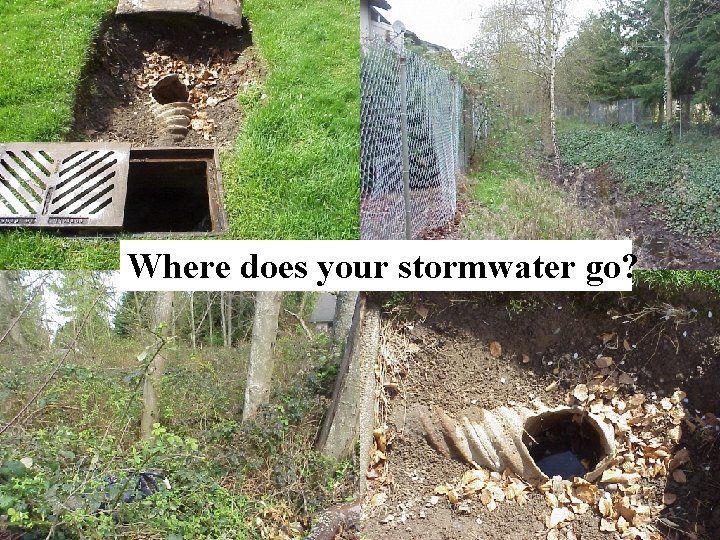
Where does your stormwater go?