
Citizenship and Government in Ancient Greece Citizenry Who
- Slides: 4
Citizenship and Government in Ancient Greece
Citizenry • Who were and were not citizens in the Greek world? How were citizens organized? Explain the terms phyle, phratry, demos and atimia. • What are some of the basic characteristics of citizen life in Sparta? Explain the terms agoge, syssita and kleros. • What does xenia mean and why was it so important in Greek society? • Describe the political status of each of the following groups: women, slaves, serfs, helots, perioikoi and metics.
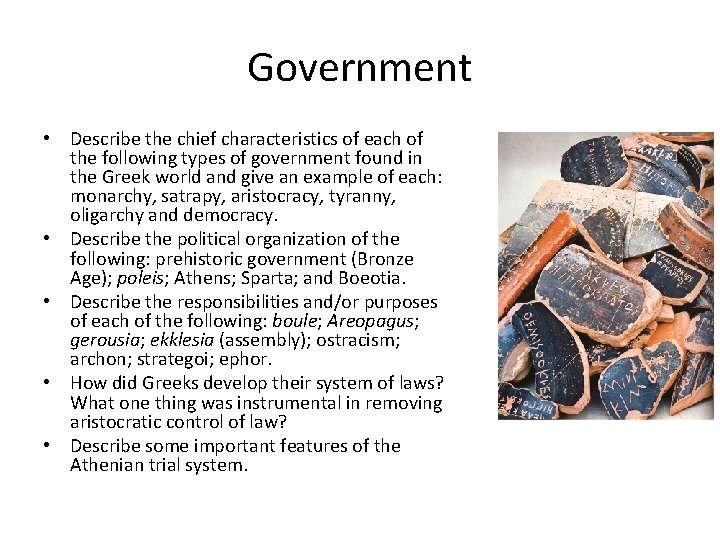
Government • Describe the chief characteristics of each of the following types of government found in the Greek world and give an example of each: monarchy, satrapy, aristocracy, tyranny, oligarchy and democracy. • Describe the political organization of the following: prehistoric government (Bronze Age); poleis; Athens; Sparta; and Boeotia. • Describe the responsibilities and/or purposes of each of the following: boule; Areopagus; gerousia; ekklesia (assembly); ostracism; archon; strategoi; ephor. • How did Greeks develop their system of laws? What one thing was instrumental in removing aristocratic control of law? • Describe some important features of the Athenian trial system.
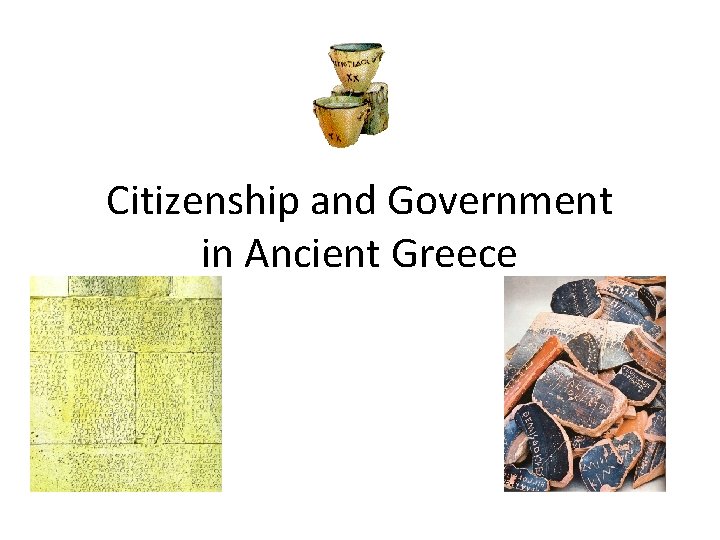
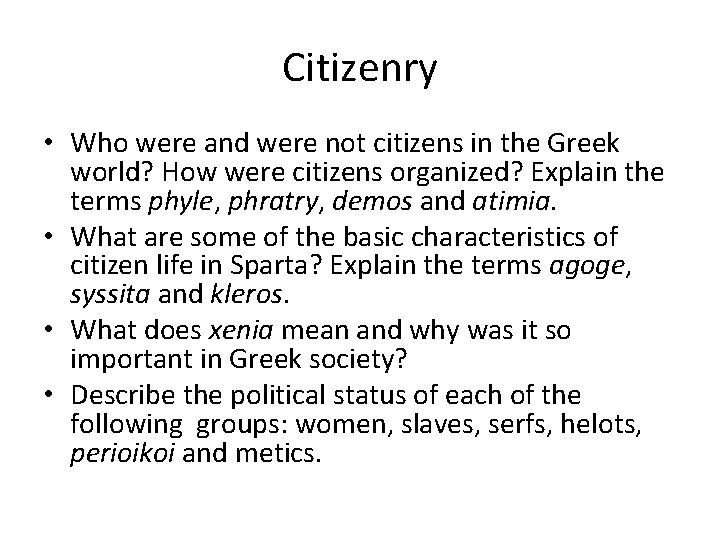
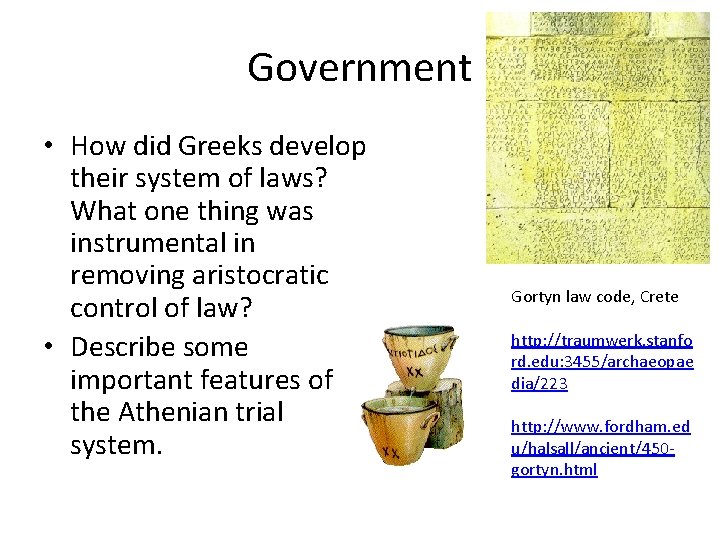
Government • How did Greeks develop their system of laws? What one thing was instrumental in removing aristocratic control of law? • Describe some important features of the Athenian trial system. Gortyn law code, Crete http: //traumwerk. stanfo rd. edu: 3455/archaeopae dia/223 http: //www. fordham. ed u/halsall/ancient/450 gortyn. html