
CITES Convention on International Trade in Endangered Species
- Slides: 31
CITES Convention on International Trade in Endangered Species of Wild Fauna & Flora • Concluded 1973 in Washington DC • Entered into force 1975 • 183 Parties – EU: 28 parties (15%) [27 after Brexit? ? ]
Objective Ensuring international cooperation of Parties to prevent international trade in wild animals and plants from threatening their survival
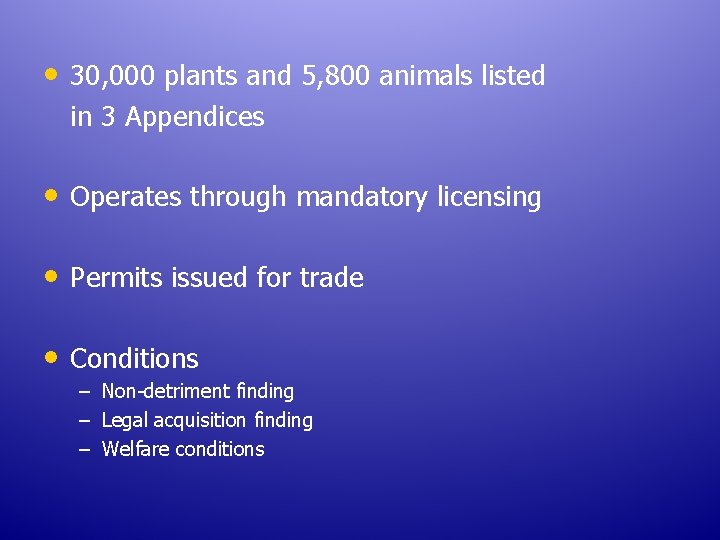
• 30, 000 plants and 5, 800 animals listed in 3 Appendices • Operates through mandatory licensing • Permits issued for trade • Conditions – Non-detriment finding – Legal acquisition finding – Welfare conditions
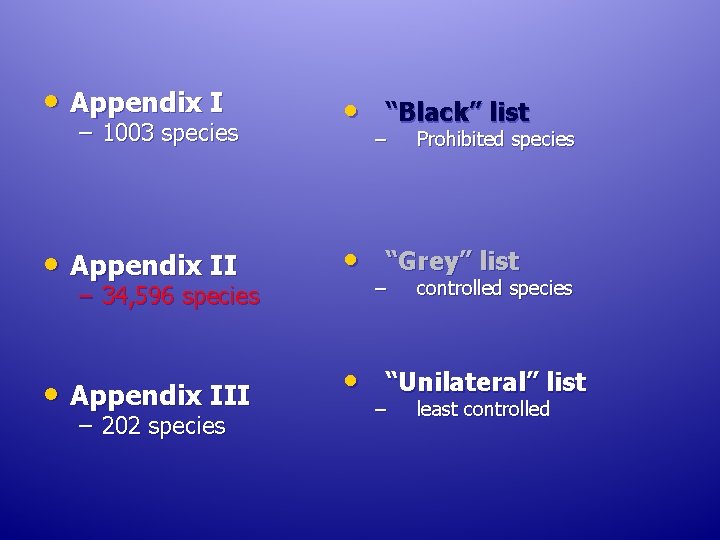
• Appendix I – 1003 species • “Black” list – Prohibited species • Appendix II • “Grey” list • Appendix III • “Unilateral” list – 34, 596 species – 202 species – – controlled species least controlled
Appendix I • All species threatened with extinction which are or may be affected by trade • Only exceptional trade allowed • No commercial trade • Strictest conditions for permits
Appendix II • All species not necessarily threatened with extinction but may become so if trade is not subject to strict regulation • Commercial trade allowed • Permit conditions less strict
Appendix III • Species listed unilaterally by countries who want international assistance to control trade • Permit conditions weakest
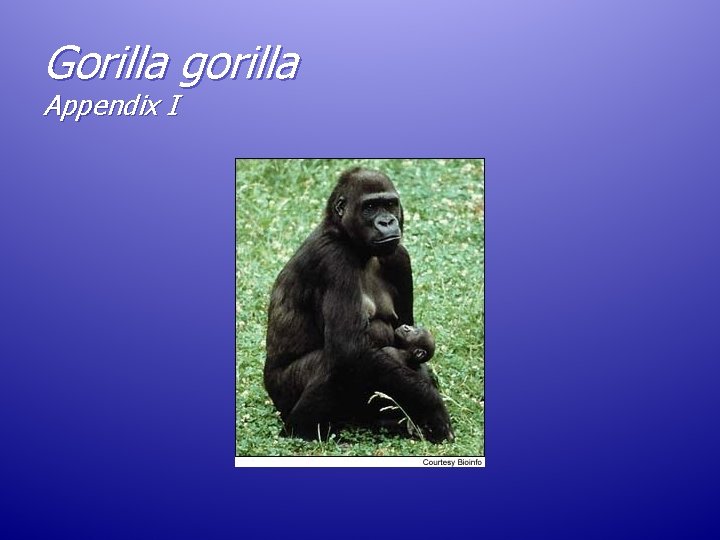
Gorilla gorilla Appendix I
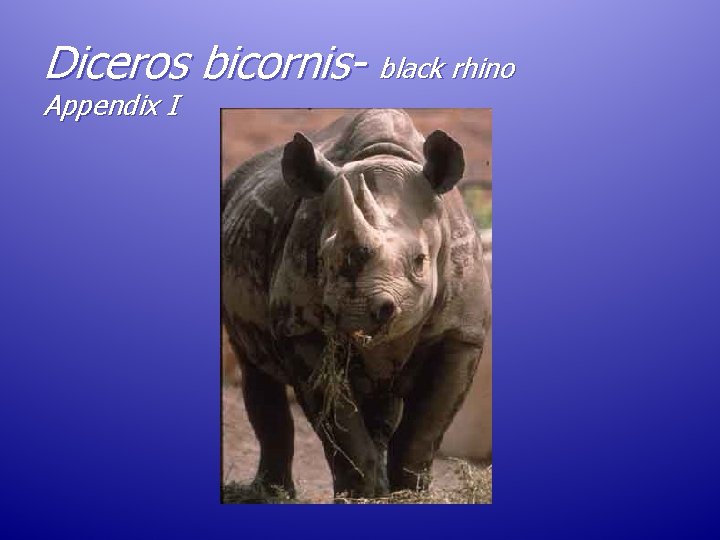
Diceros bicornis- black rhino Appendix I
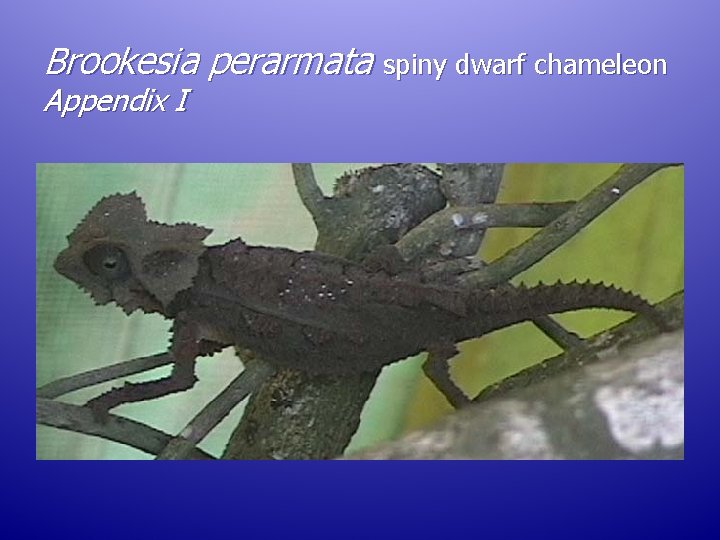
Brookesia perarmata spiny dwarf chameleon Appendix I
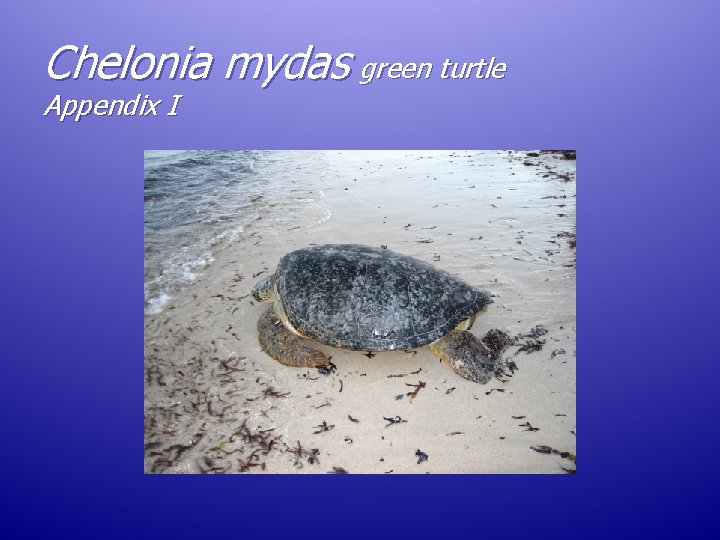
Chelonia mydas green turtle Appendix I
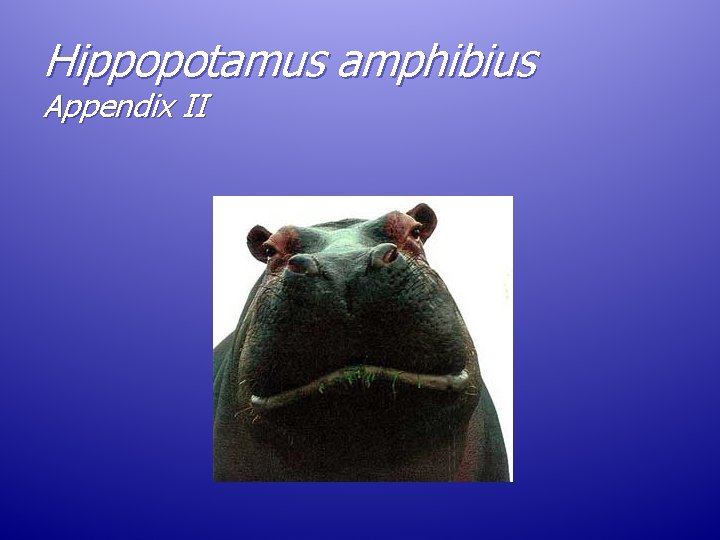
Hippopotamus amphibius Appendix II
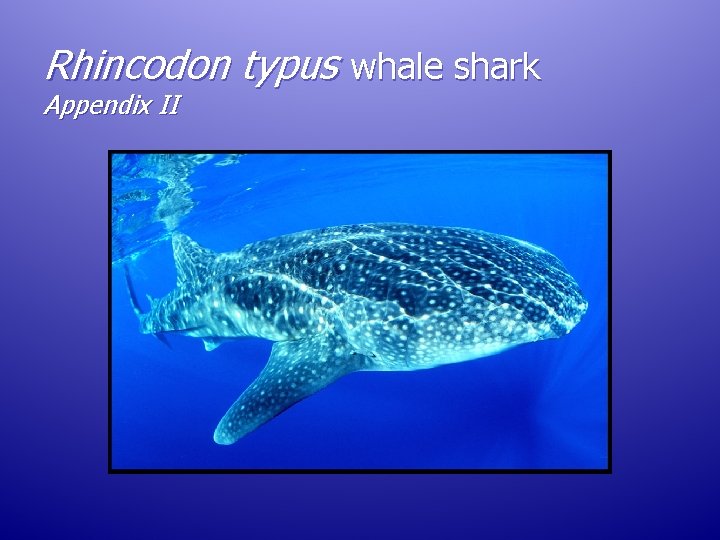
Rhincodon typus whale shark Appendix II
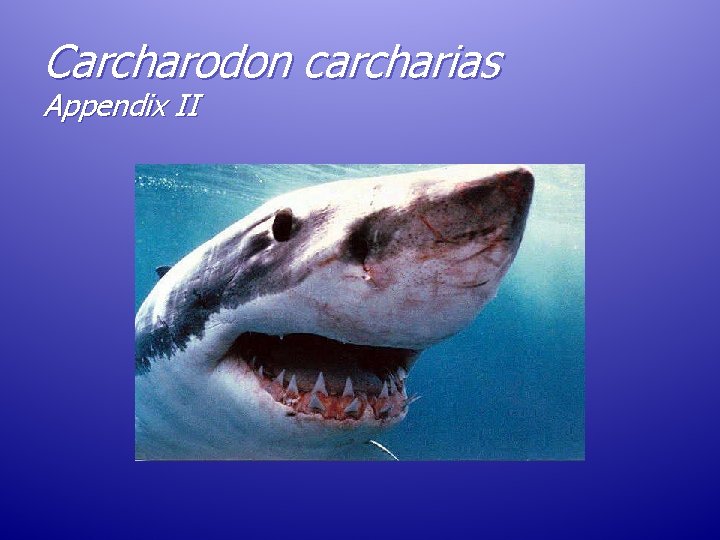
Carcharodon carcharias Appendix II
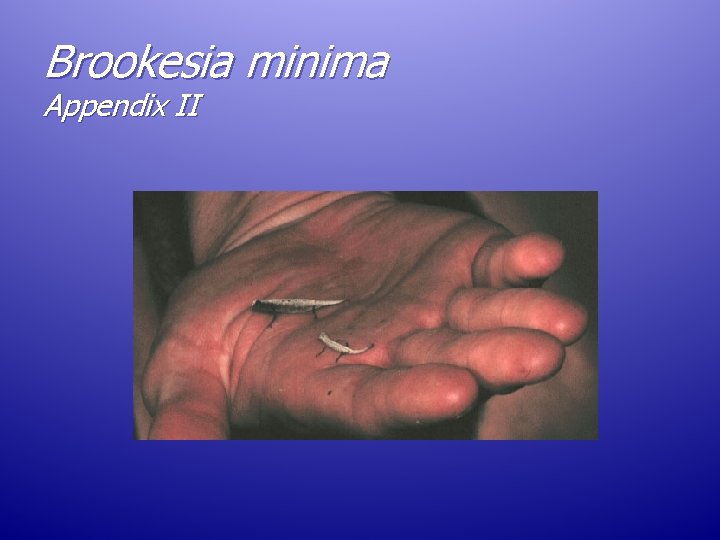
Brookesia minima Appendix II
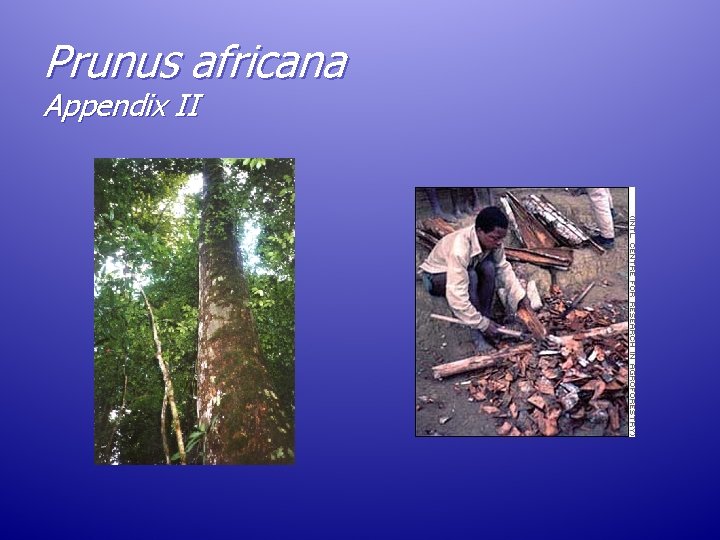
Prunus africana Appendix II
Legal framework – two levels • The Convention – – – Basic framework & rules to implement CITES Binding on Parties Includes Appendices • Resolutions & Decisions – Recommendations to guide implementation, ensure enforcement & compliance – Allow evolution of CITES rules
Recommendations • Resolutions – – – Long-term Guide implementation over several years In effect until repealed by Co. P • Decisions – – – Short-term Instructions to Parties, Committees, Secretariat In effect until next Co. P (sometimes longer)
Party obligations - binding • Designate national Management & Scientific Authorities • Implement mandatory licensing • Prohibit & penalise trade violating CITES • Confiscate specimens illegally traded or possessed • Submit annual and biennial reports
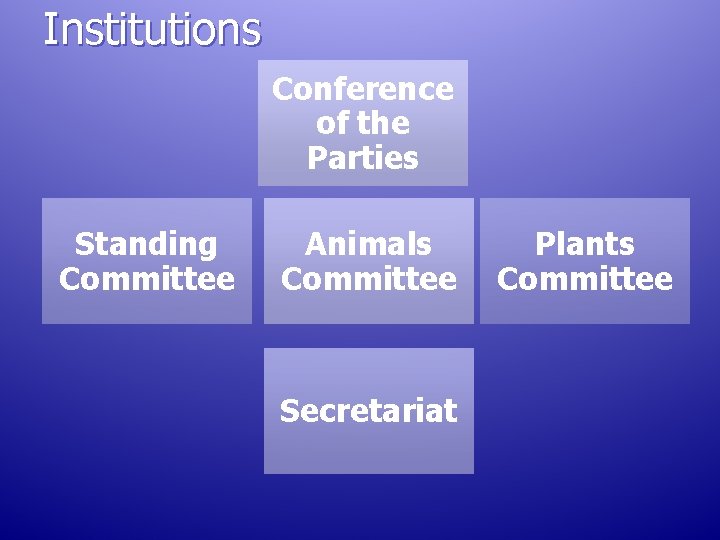
Institutions Conference of the Parties Standing Committee Animals Committee Secretariat Plants Committee
Institutions • Conference of the Parties – supreme governing body • Standing Committee – executive body • Technical committees –advisory bodies – Animals Committee (biologists) – Plants Committee (botanists) • Secretariat –administrative body (UNEP(
Conference of the Parties (Co. P) • All Parties • Meets every 3 years • Decides Appendix I & II listings – Listing proposals • Agrees Resolutions & Decisions – Working documents
Standing Committee • 16 regional representatives from Management Authorities • Meets 2 x between Co. P meetings (& before and after Co. P) • Makes decisions between Co. Ps
Animals & Plants Committees • 11 members • Experts from Scientific Authorities • Meet 2 x between Co. Ps • Advise on scientific & technical issues
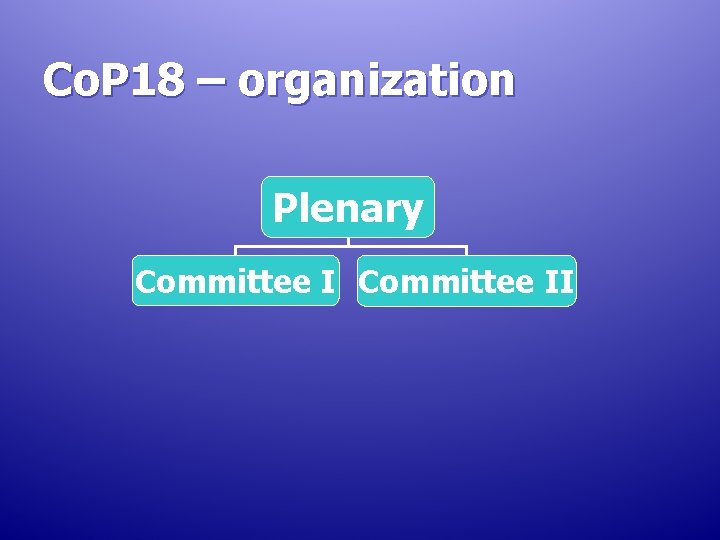
Co. P 18 – organization Plenary Committee II
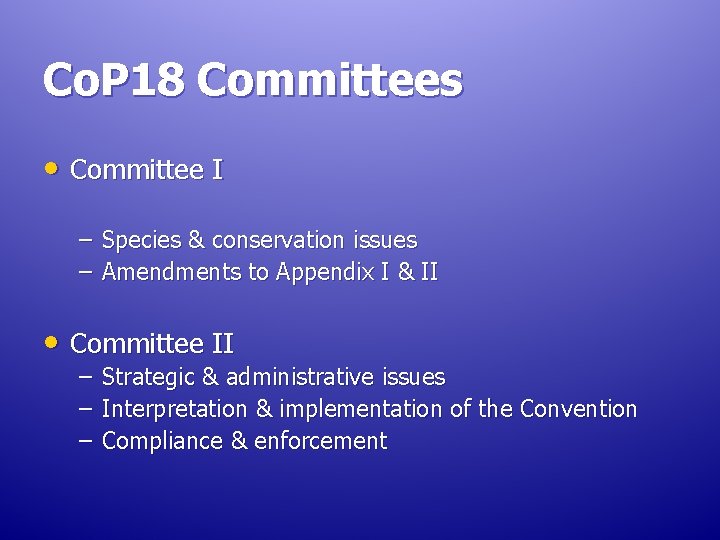
Co. P 18 Committees • Committee I – Species & conservation issues – Amendments to Appendix I & II • Committee II – Strategic & administrative issues – Interpretation & implementation of the Convention – Compliance & enforcement
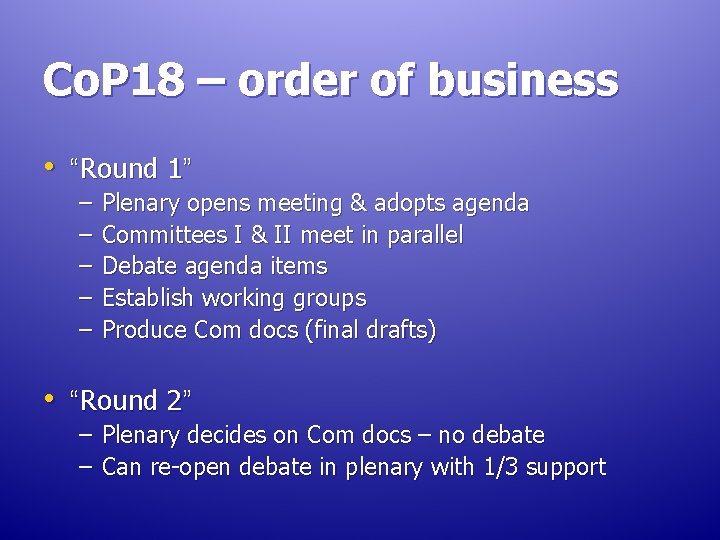
Co. P 18 – order of business • “Round 1” – – – Plenary opens meeting & adopts agenda Committees I & II meet in parallel Debate agenda items Establish working groups Produce Com docs (final drafts) • “Round 2” – – Plenary decides on Com docs – no debate Can re-open debate in plenary with 1/3 support
Participants • Parties delegations • Observers – Non-Parties – Inter-governmental organizations – Representatives of other treaties – Approved NGOs • Secretariat & UNEP
Voting • One Party, one vote • Only Parties with credentials can vote • Usually by show of hands • Any Party can call roll call vote • Any Party can request secret ballot – Seconded by 10 Parties – Shall not normally be used (transparency)
Voting • Amendments of App I & II Resolutions & Decisions – 2/3 majority of Parties present and voting • Yes & No votes; abstentions don’t count • Procedural issues – conduct of meeting – Simple majority
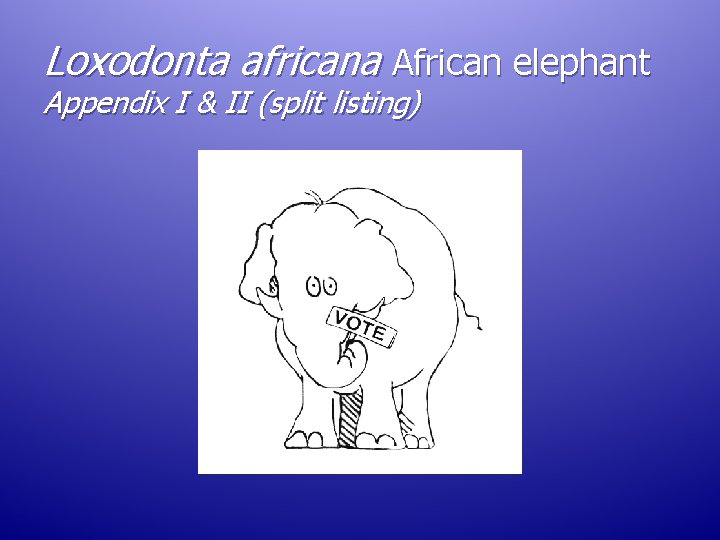
Loxodonta africana African elephant Appendix I & II (split listing)