
Cisternal Maturation Vesiclemediated transport Unifying principle governs all
- Slides: 20
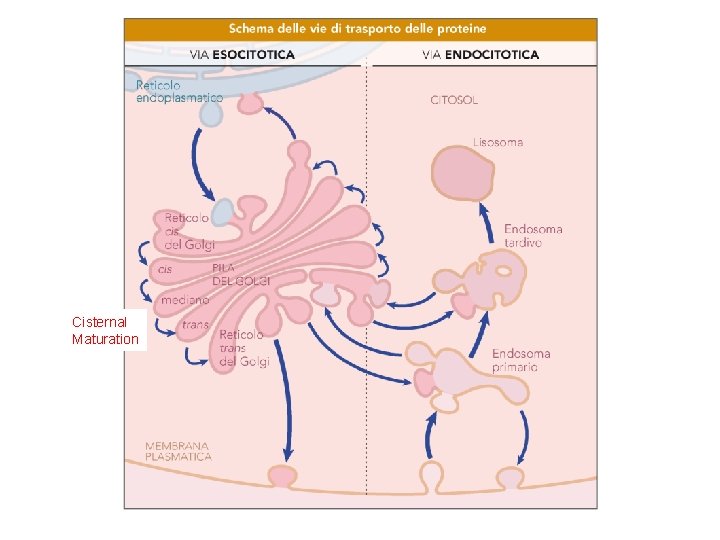
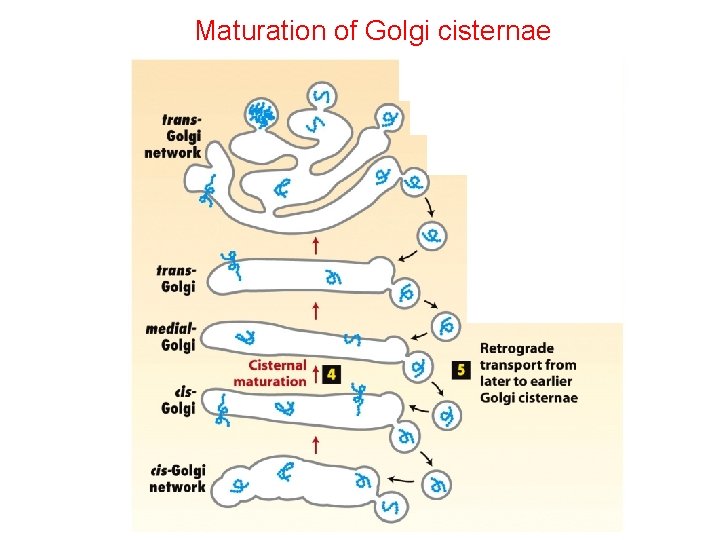
Cisternal Maturation
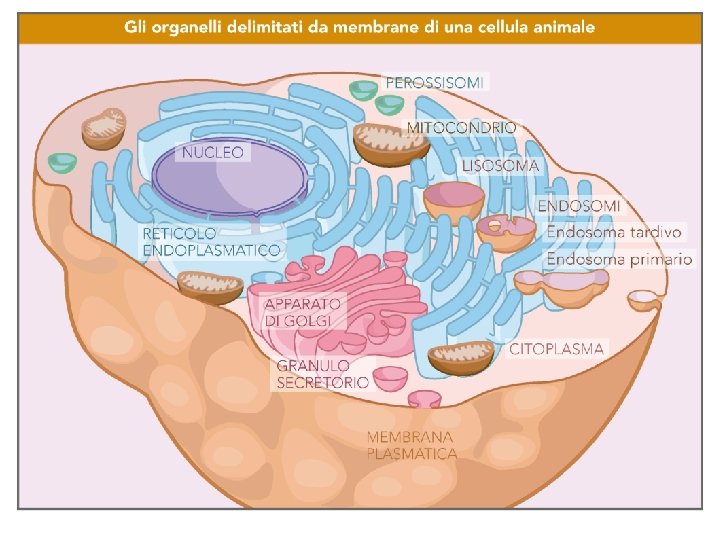
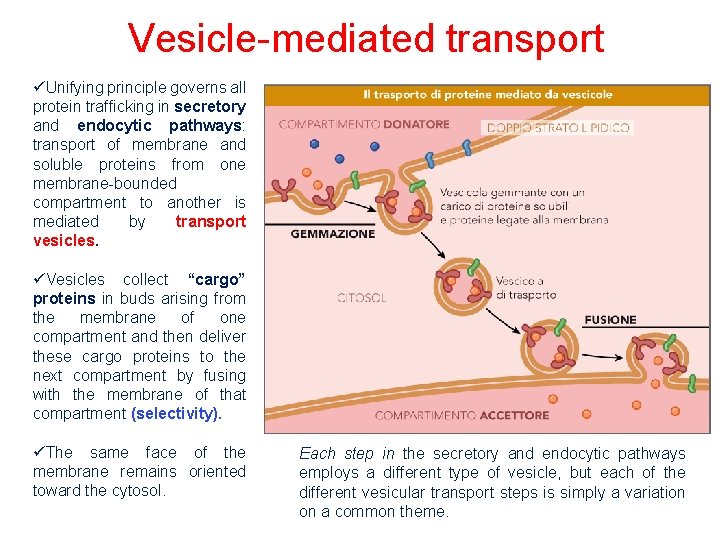
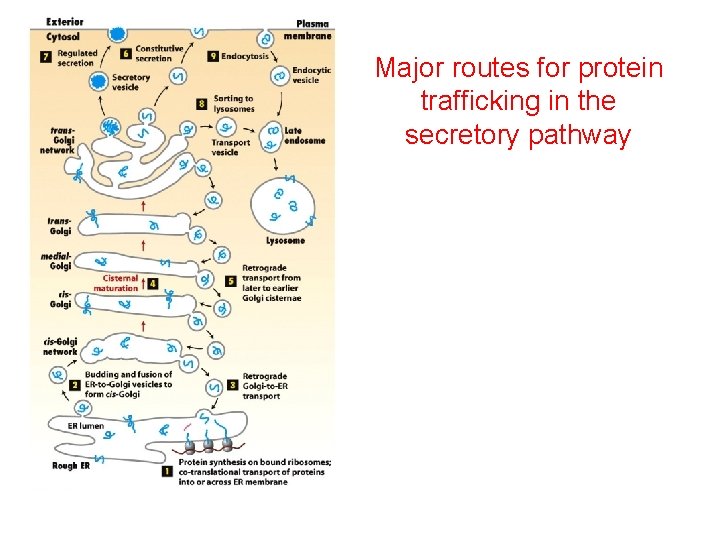
Vesicle-mediated transport üUnifying principle governs all protein trafficking in secretory and endocytic pathways: transport of membrane and soluble proteins from one membrane-bounded compartment to another is mediated by transport vesicles. üVesicles collect “cargo” proteins in buds arising from the membrane of one compartment and then deliver these cargo proteins to the next compartment by fusing with the membrane of that compartment (selectivity). üThe same face of the membrane remains oriented toward the cytosol. Each step in the secretory and endocytic pathways employs a different type of vesicle, but each of the different vesicular transport steps is simply a variation on a common theme.
Major routes for protein trafficking in the secretory pathway
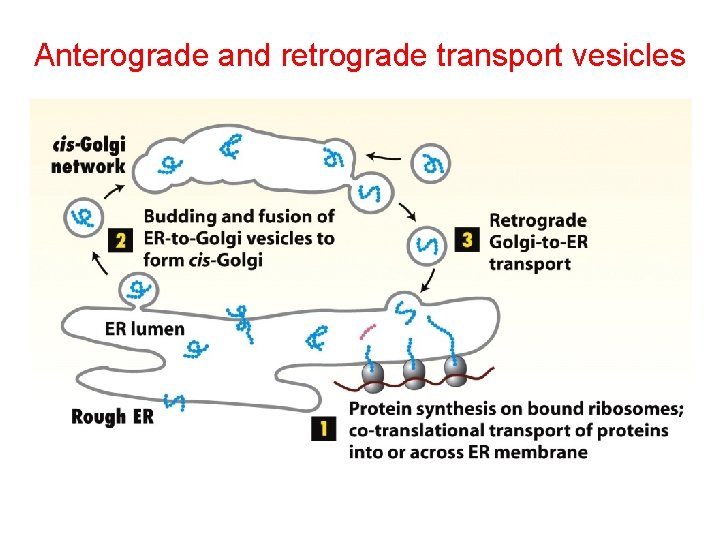
Anterograde and retrograde transport vesicles
Maturation of Golgi cisternae
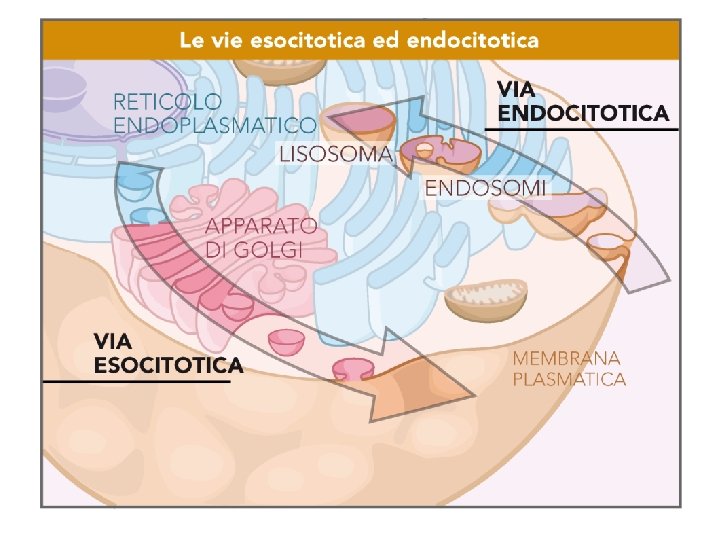
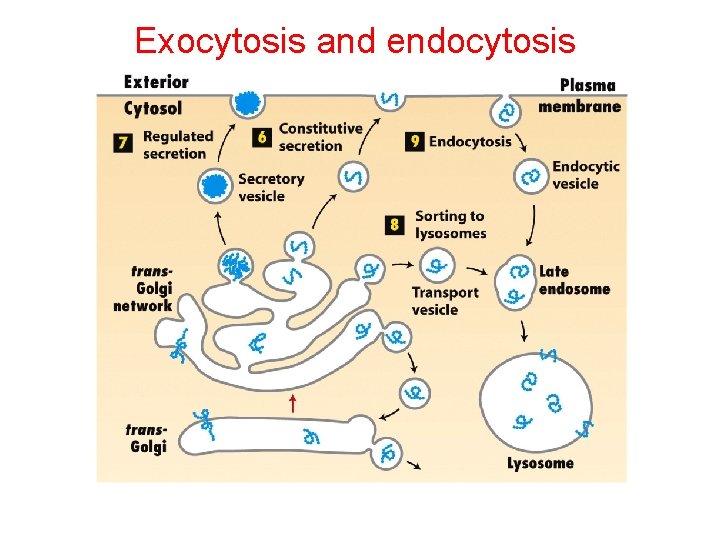
Exocytosis and endocytosis
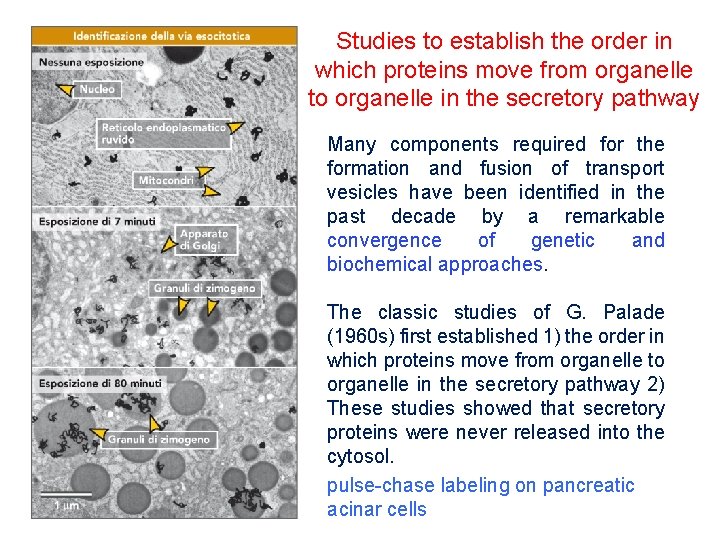
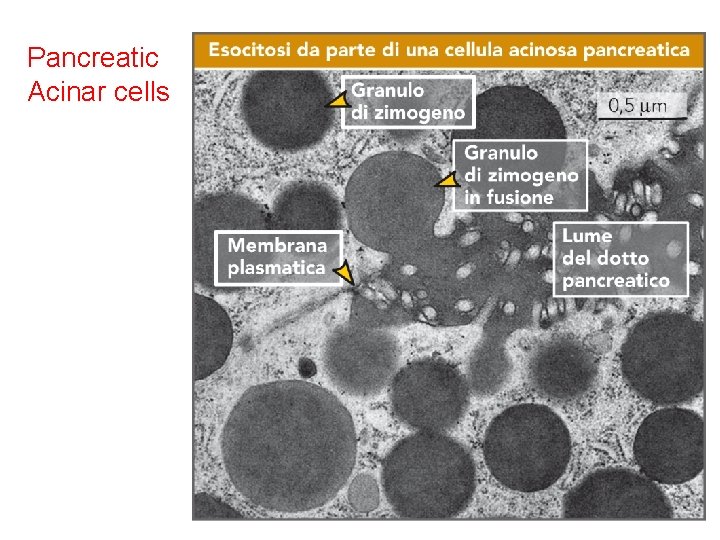
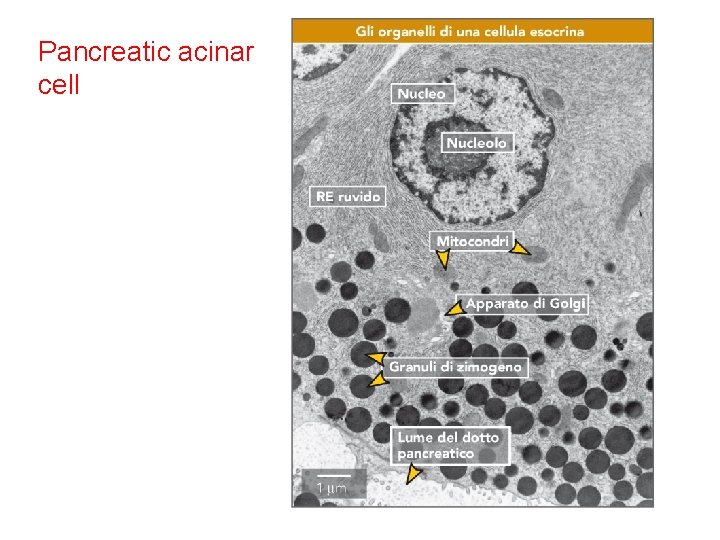
Studies to establish the order in which proteins move from organelle to organelle in the secretory pathway Many components required for the formation and fusion of transport vesicles have been identified in the past decade by a remarkable convergence of genetic and biochemical approaches. The classic studies of G. Palade (1960 s) first established 1) the order in which proteins move from organelle to organelle in the secretory pathway 2) These studies showed that secretory proteins were never released into the cytosol. pulse-chase labeling on pancreatic acinar cells
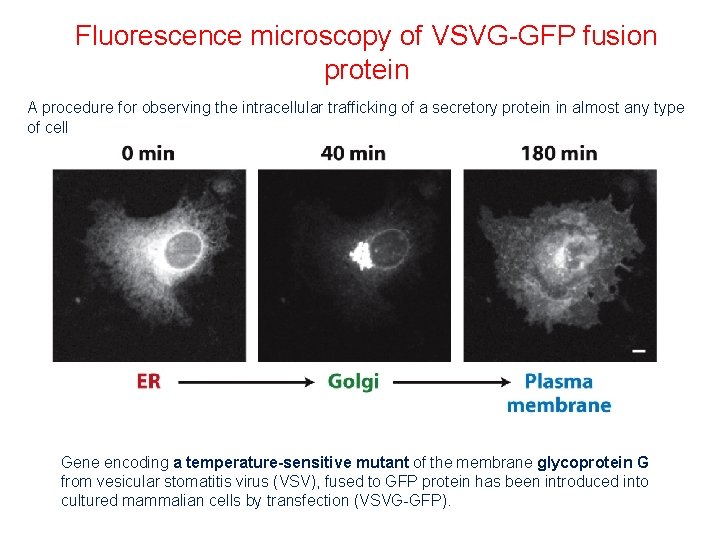
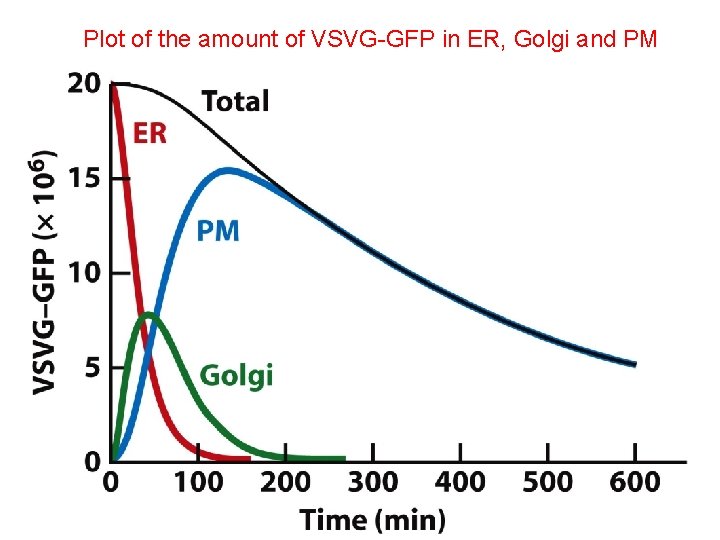
Fluorescence microscopy of VSVG-GFP fusion protein A procedure for observing the intracellular trafficking of a secretory protein in almost any type of cell Gene encoding a temperature-sensitive mutant of the membrane glycoprotein G from vesicular stomatitis virus (VSV), fused to GFP protein has been introduced into cultured mammalian cells by transfection (VSVG-GFP).
Plot of the amount of VSVG-GFP in ER, Golgi and PM
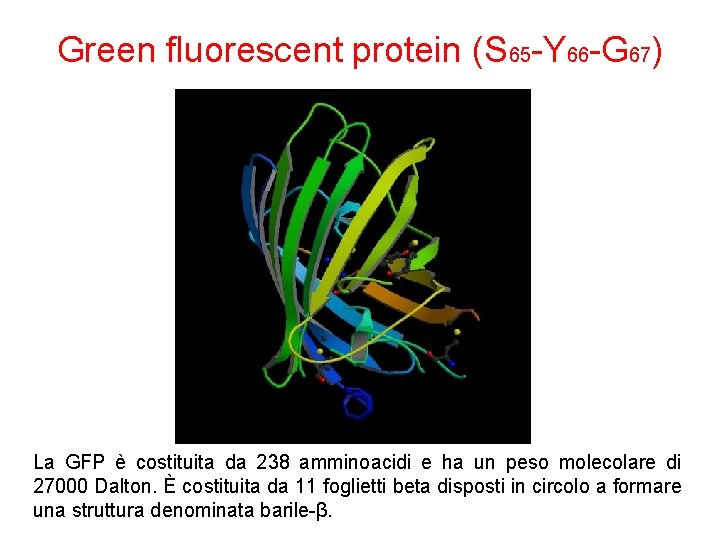
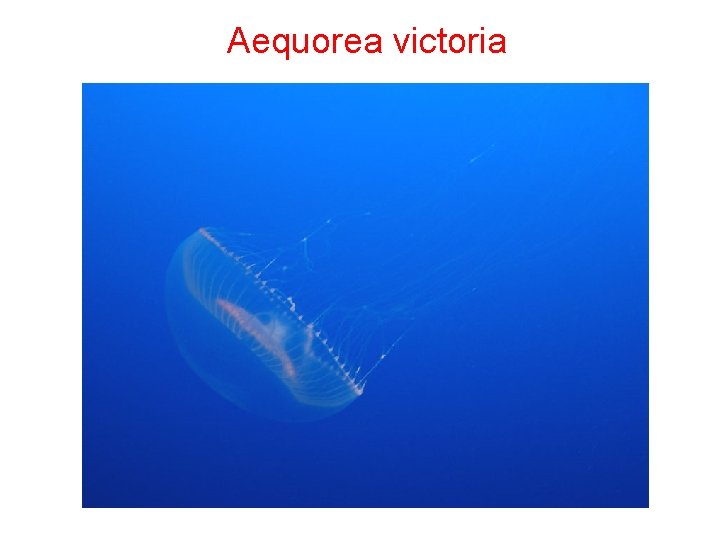
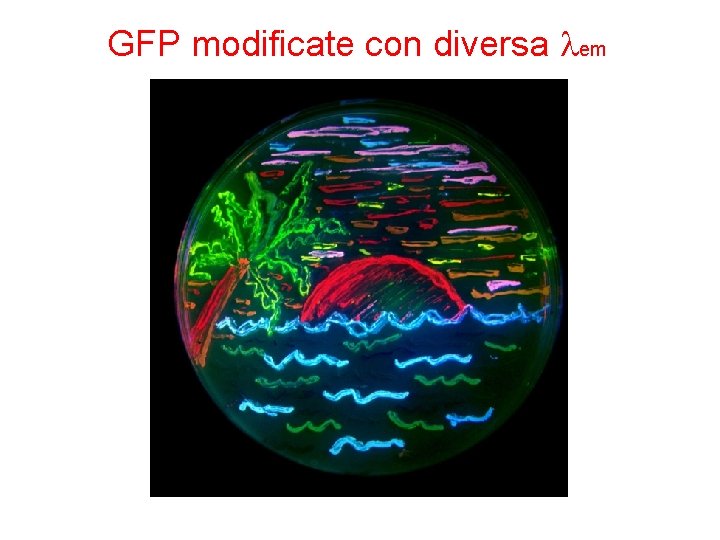
Green fluorescent protein (S 65 -Y 66 -G 67) La GFP è costituita da 238 amminoacidi e ha un peso molecolare di 27000 Dalton. È costituita da 11 foglietti beta disposti in circolo a formare una struttura denominata barile-β.
Aequorea victoria
GFP modificate con diversa lem
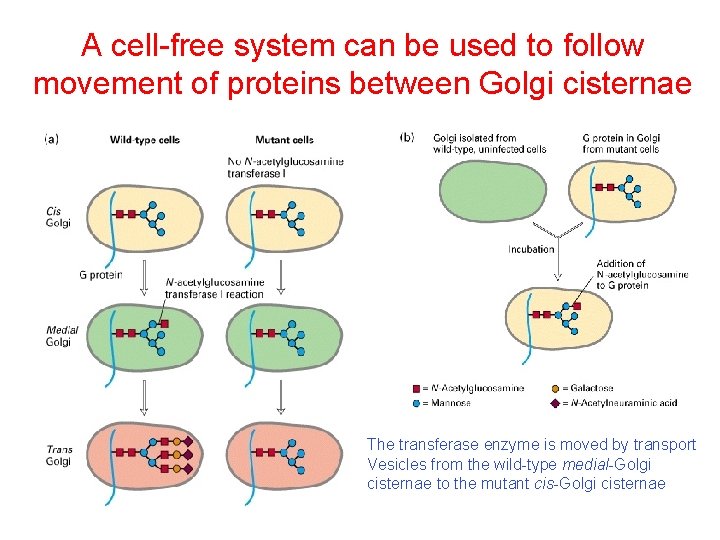
A cell-free system can be used to follow movement of proteins between Golgi cisternae The transferase enzyme is moved by transport Vesicles from the wild-type medial-Golgi cisternae to the mutant cis-Golgi cisternae
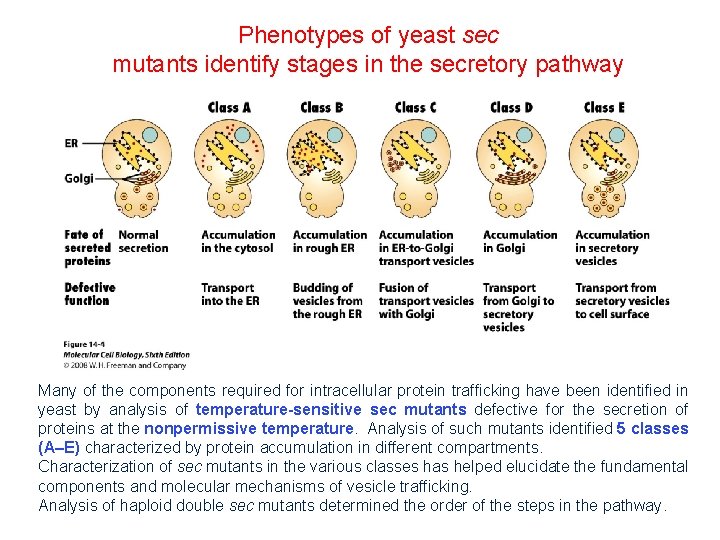
Phenotypes of yeast sec mutants identify stages in the secretory pathway Many of the components required for intracellular protein trafficking have been identified in yeast by analysis of temperature-sensitive sec mutants defective for the secretion of proteins at the nonpermissive temperature. Analysis of such mutants identified 5 classes (A–E) characterized by protein accumulation in different compartments. Characterization of sec mutants in the various classes has helped elucidate the fundamental components and molecular mechanisms of vesicle trafficking. Analysis of haploid double sec mutants determined the order of the steps in the pathway.
Pancreatic Acinar cells
Pancreatic acinar cell
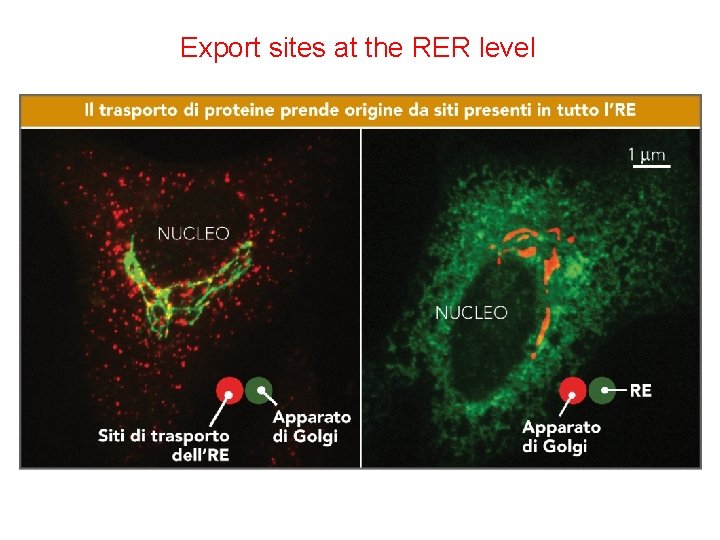
Export sites at the RER level
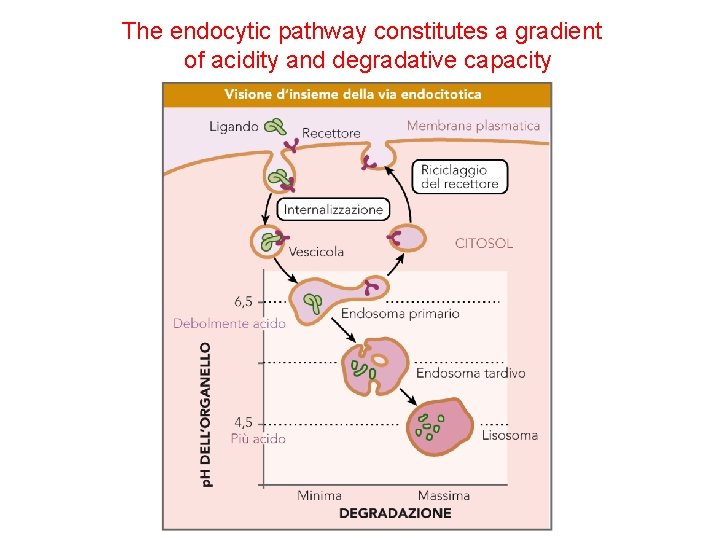
The endocytic pathway constitutes a gradient of acidity and degradative capacity