
CISM Peer Support Team Recognizing Symptoms of Post

- Slides: 23
CISM & Peer Support Team & Recognizing Symptoms of Post Traumatic Stress Disorder
Why we are here • Discuss the ECCFPD CISM & Peer Support Program • Identify available resources • Answer questions
What we will cover today • Introduce the ECCFPD Critical Incident Stress Management (CISM) Program • Introduce the Peer Support Team, SOP, Supporting Docs • Discuss the CISM Peer Support Statement of Understanding • Introduce the Death & Dying Checklist for the community • Introduce the CISM Team Brochure • Educate about Firefighter Suicide Prevention
What is CISM & Peer Support • Review SOP 13 -1
Resources • Peer Support Team – Peer Support Statement of Understanding • Death & Dying Checklist for the community • CISM Team Brochure • MHN- Your Employee Assistance Program – Brochure
Firefighter Suicide Prevention Recognizing Symptoms of Post Traumatic Stress Disorder
You Tube Video http: //youtu. be/u. P 1 OPCax 2 o. Q
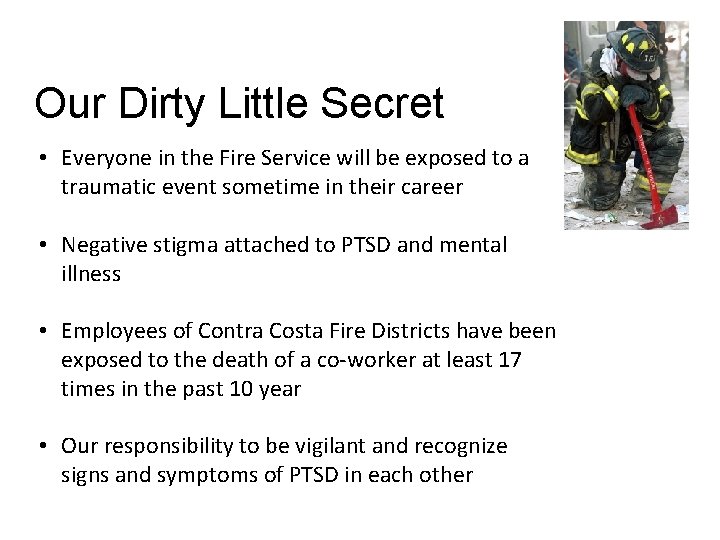
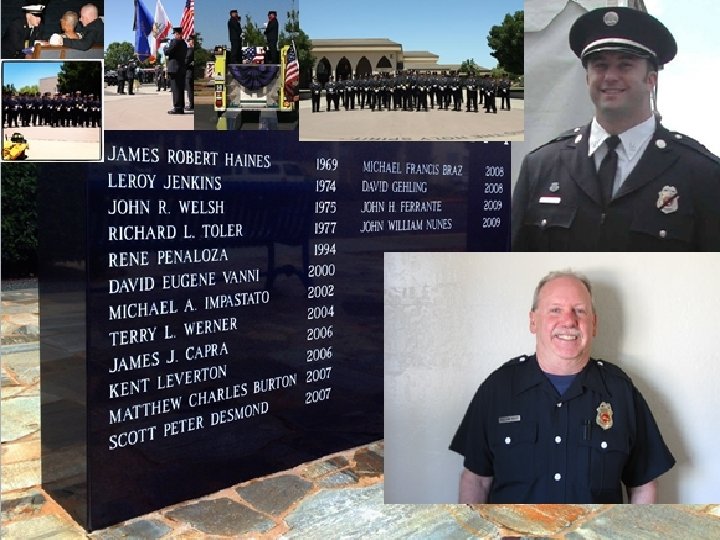
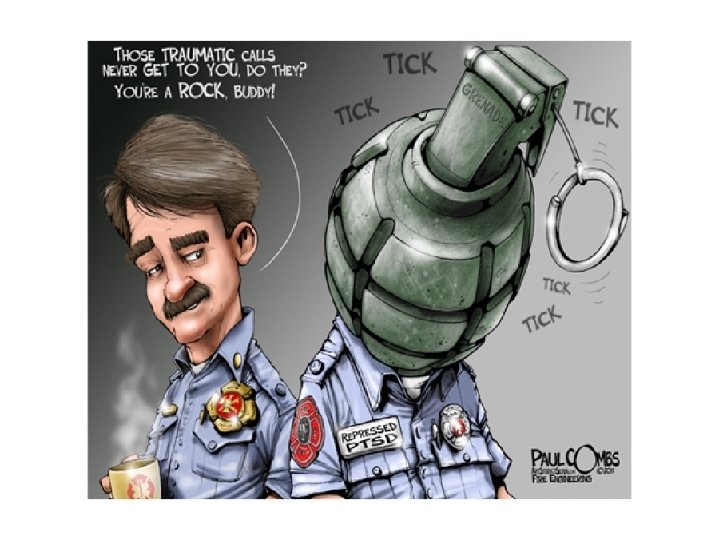
Our Dirty Little Secret • Everyone in the Fire Service will be exposed to a traumatic event sometime in their career • Negative stigma attached to PTSD and mental illness • Employees of Contra Costa Fire Districts have been exposed to the death of a co-worker at least 17 times in the past 10 year • Our responsibility to be vigilant and recognize signs and symptoms of PTSD in each other
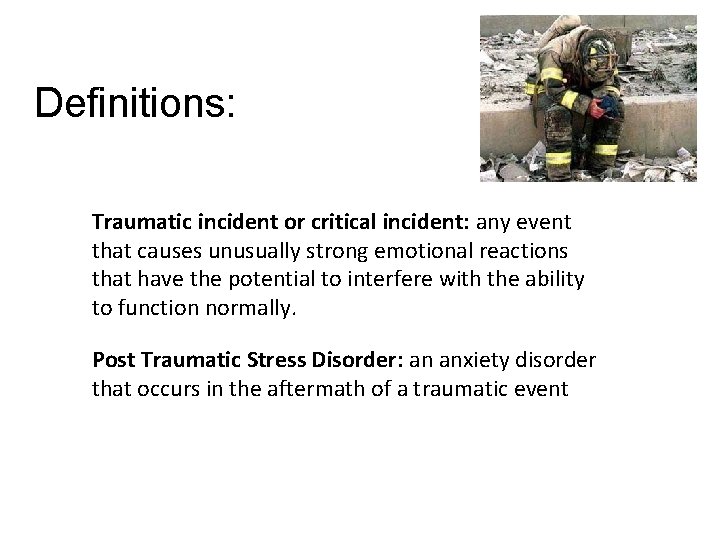
Definitions: Traumatic incident or critical incident: any event that causes unusually strong emotional reactions that have the potential to interfere with the ability to function normally. Post Traumatic Stress Disorder: an anxiety disorder that occurs in the aftermath of a traumatic event
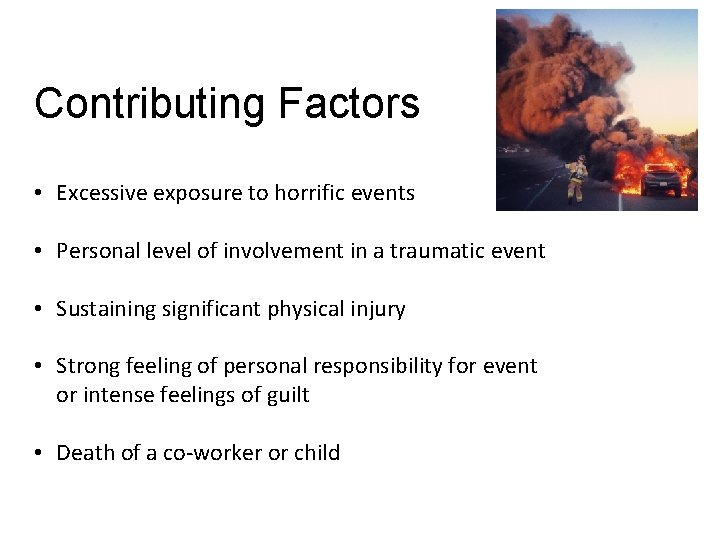
Contributing Factors • Excessive exposure to horrific events • Personal level of involvement in a traumatic event • Sustaining significant physical injury • Strong feeling of personal responsibility for event or intense feelings of guilt • Death of a co-worker or child
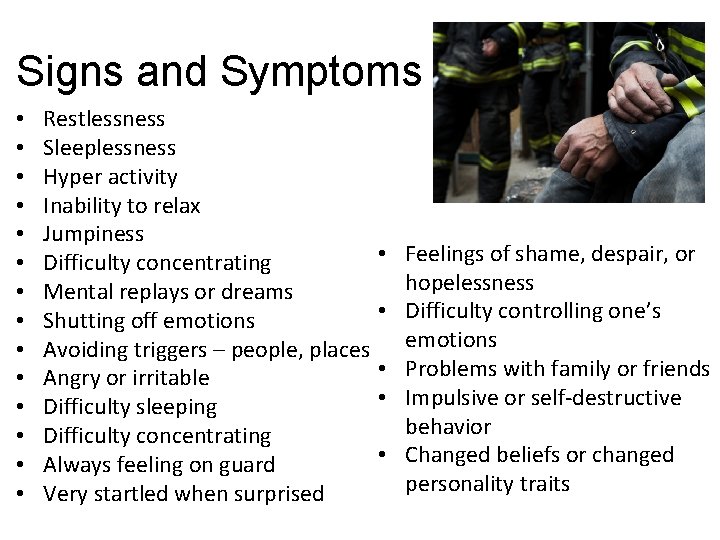
Signs and Symptoms • • • • Restlessness Sleeplessness Hyper activity Inability to relax Jumpiness Difficulty concentrating Mental replays or dreams Shutting off emotions Avoiding triggers – people, places Angry or irritable Difficulty sleeping Difficulty concentrating Always feeling on guard Very startled when surprised • Feelings of shame, despair, or hopelessness • Difficulty controlling one’s emotions • Problems with family or friends • Impulsive or self-destructive behavior • Changed beliefs or changed personality traits
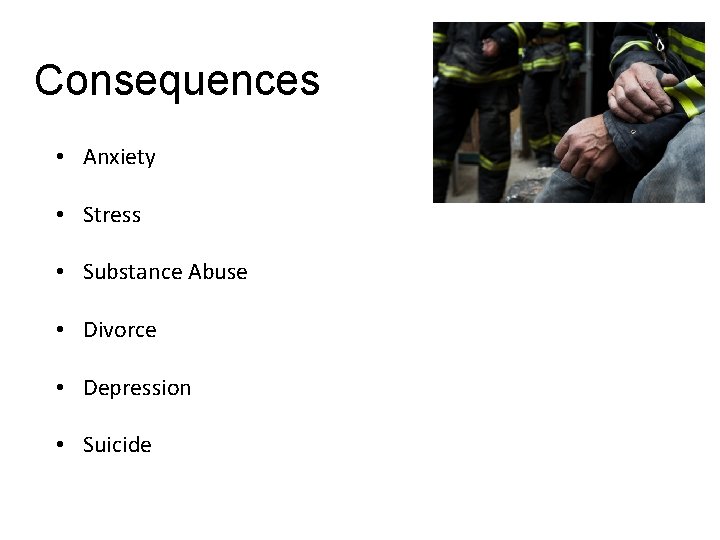
Consequences • Anxiety • Stress • Substance Abuse • Divorce • Depression • Suicide
Binge Drinking • Defined as being legally drunk (BAC > 0. 08%) • Common in the fire service - 58% of firefighters • 14 times more likely to drive drunk • 10% of firefighters drove drunk in the last 30 days • Working with a hang over • Self-destructive behavior • Almost 30% of suicides had alcohol in their system • Viewed as a socially acceptable behavior
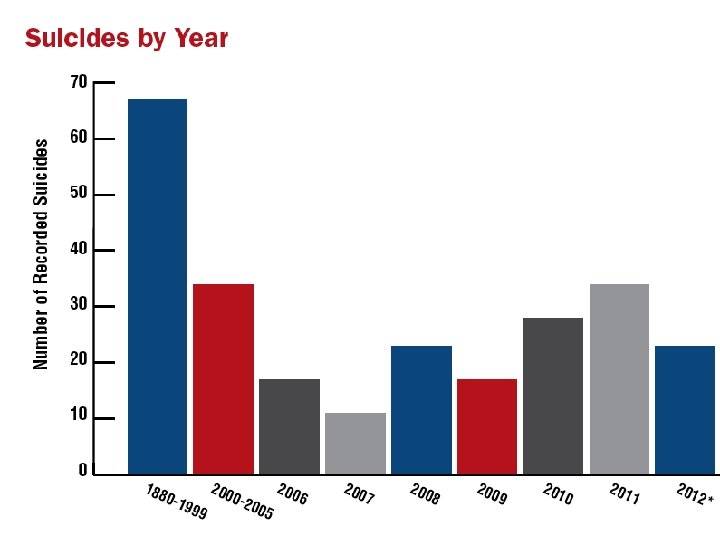
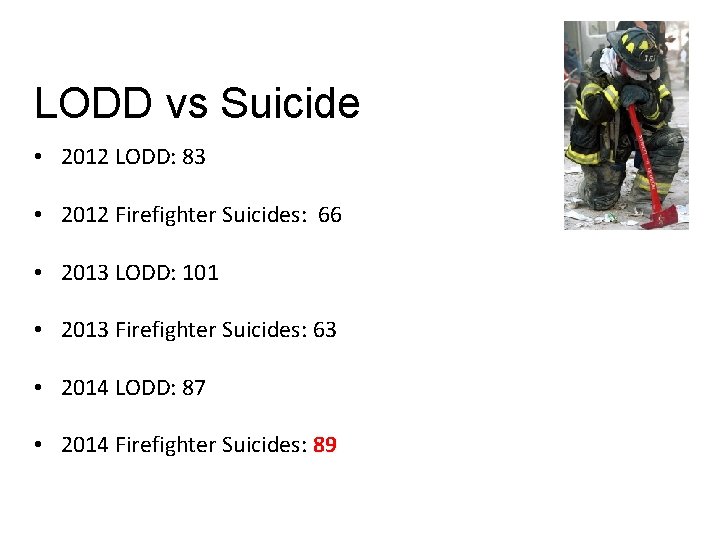
LODD vs Suicide • 2012 LODD: 83 • 2012 Firefighter Suicides: 66 • 2013 LODD: 101 • 2013 Firefighter Suicides: 63 • 2014 LODD: 87 • 2014 Firefighter Suicides: 89
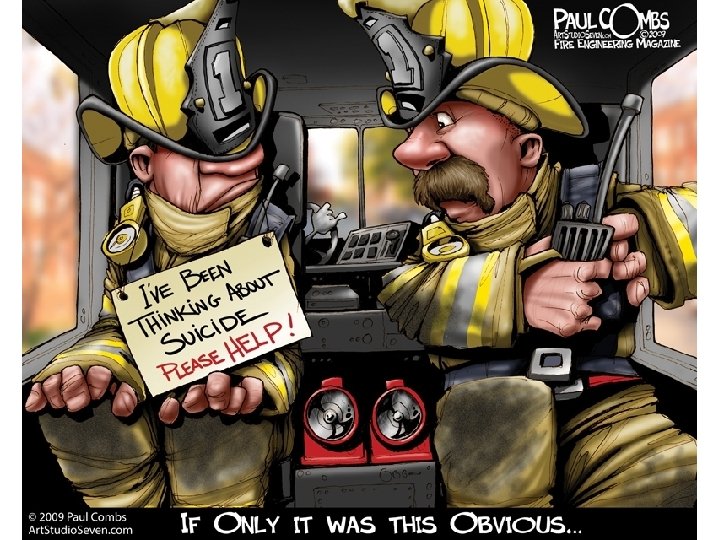
Warning Signs • • • Experiencing a change in sleeping habits Experiencing a change in eating habits Losing interest in most activities Performing poorly at work or in school Giving away prized possessions Writing a will (with other warning signs) Feeling excessive guilt or shame • Acting recklessly • Appearing depressed or sad most of the • time Talking or writing about death or suicide Withdrawing from family and friends • Feeling hopeless • Feeling helpless Feeling strong anger or rage • Feeling trapped Experiencing dramatic mood changes • Abusing drugs or alcohol Exhibiting a change in personality • Acting impulsively
Our Responsibility • Change our culture • Recognize warning signs and symptoms • Critical Incident Stress Debriefing • Reach out and talk it out • Know available resources
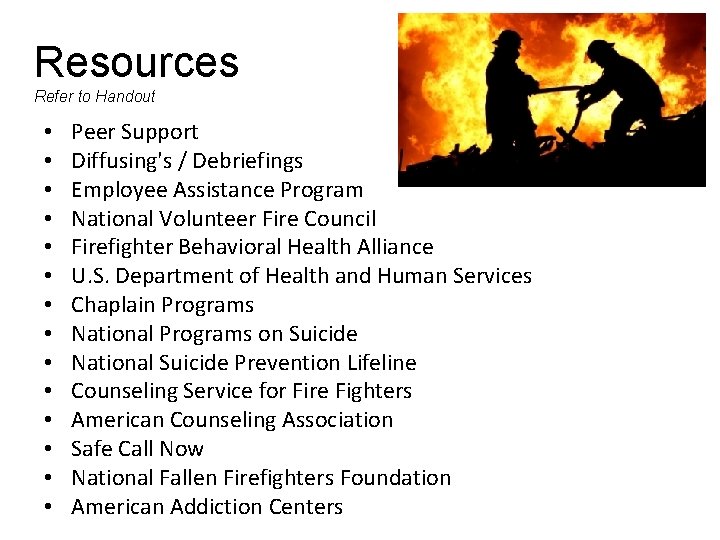
Resources Refer to Handout • • • • Peer Support Diffusing's / Debriefings Employee Assistance Program National Volunteer Fire Council Firefighter Behavioral Health Alliance U. S. Department of Health and Human Services Chaplain Programs National Programs on Suicide National Suicide Prevention Lifeline Counseling Service for Fire Fighters American Counseling Association Safe Call Now National Fallen Firefighters Foundation American Addiction Centers
Any Questions & Thank You