
CISC 667 Intro to Bioinformatics Fall 2005 Molecular
CISC 667 Intro to Bioinformatics (Fall 2005) Molecular Biology A Primer What is Life – Three kingdoms – The Cell thoery Central Dogma – Genetic code – Transcription – Translation CISC 667, F 05, Lec 2, Liao
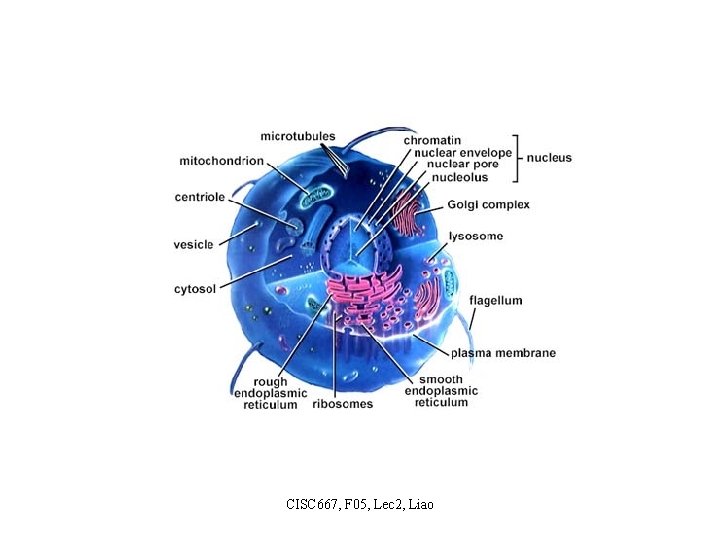
Organisms: three kindoms of life -- eukaryotes, eubacteria, and archea – Observation: a lot of living things – Why does Mother nature have this biodiversity? – Answers • Simple classification based on morphological features • Theory: evolution – mutations, natural selection, … – Tree of life • NCBI Taxonomy http: //www. ncbi. nlm. nih. gov/entrez/query. fcgi? db=Taxonomy Cell: the basic unit of life – – Every living thing is made of cells. Every cell comes from a pre-existing cell. CISC 667, F 05, Lec 2, Liao
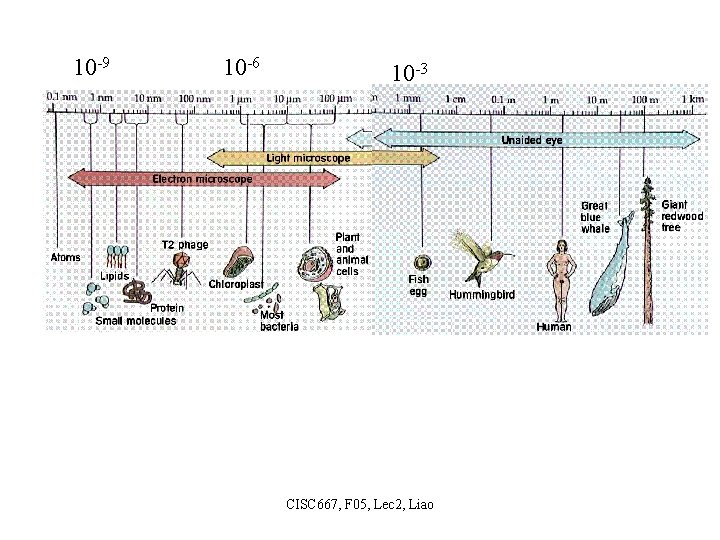
10 -9 10 -6 10 -3 CISC 667, F 05, Lec 2, Liao
CISC 667, F 05, Lec 2, Liao
Chromosome (DNA) > circular, also called plasmid when small (for bacteria) > linear (for eukaryotes) Genes: segments on DNA that contain the instructions for organism's structure and function Proteins: the workhorse for the cell. > establishment and maintenance of structure > transport. e. g. , hemoglobin, and integral transmembrane proteins > protection and defense. e. g. , immunoglobin G > Control and regulation. e. g. , receptors, and DNA binding proteins > Catalysis. e. g. , enzymes CISC 667, F 05, Lec 2, Liao
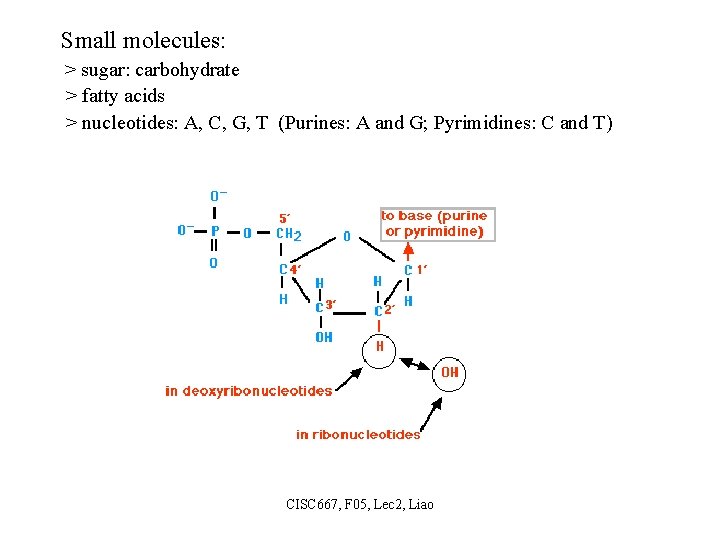
Small molecules: > sugar: carbohydrate > fatty acids > nucleotides: A, C, G, T (Purines: A and G; Pyrimidines: C and T) CISC 667, F 05, Lec 2, Liao
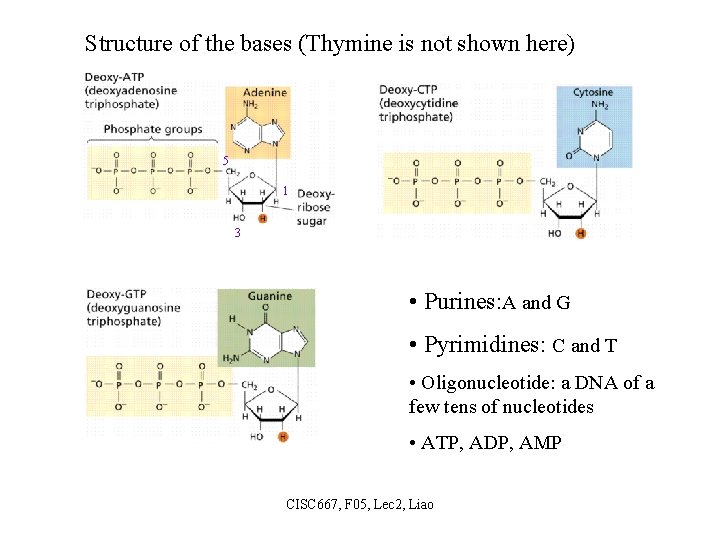
Structure of the bases (Thymine is not shown here) 5 1 3 • Purines: A and G • Pyrimidines: C and T • Oligonucleotide: a DNA of a few tens of nucleotides • ATP, ADP, AMP CISC 667, F 05, Lec 2, Liao
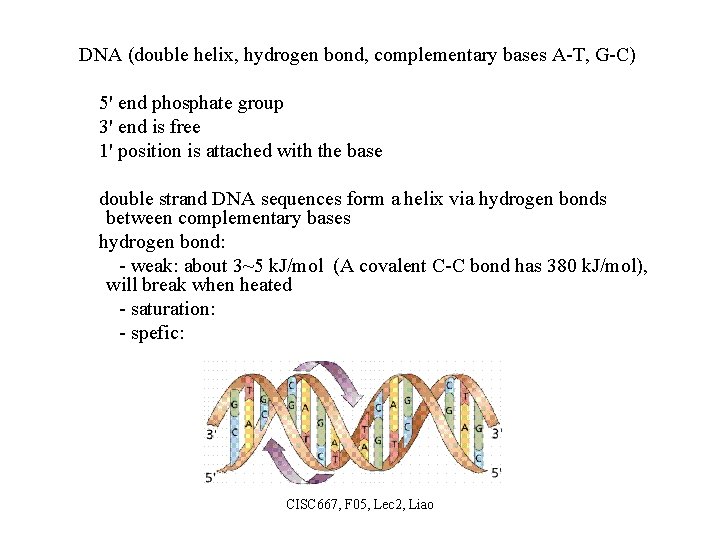
DNA (double helix, hydrogen bond, complementary bases A-T, G-C) 5' end phosphate group 3' end is free 1' position is attached with the base double strand DNA sequences form a helix via hydrogen bonds between complementary bases hydrogen bond: - weak: about 3~5 k. J/mol (A covalent C-C bond has 380 k. J/mol), will break when heated - saturation: - spefic: CISC 667, F 05, Lec 2, Liao
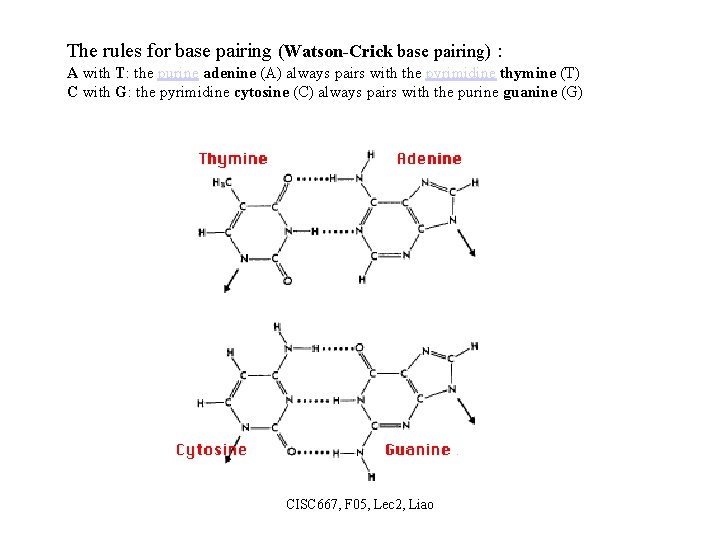
The rules for base pairing (Watson-Crick base pairing) : A with T: the purine adenine (A) always pairs with the pyrimidine thymine (T) C with G: the pyrimidine cytosine (C) always pairs with the purine guanine (G) CISC 667, F 05, Lec 2, Liao
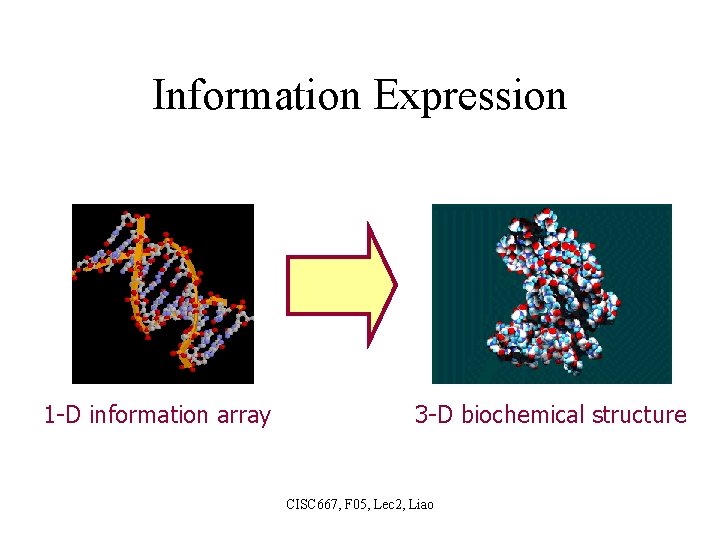
Information Expression 1 -D information array 3 -D biochemical structure CISC 667, F 05, Lec 2, Liao
CISC 667, F 05, Lec 2, Liao
CISC 667, F 05, Lec 2, Liao
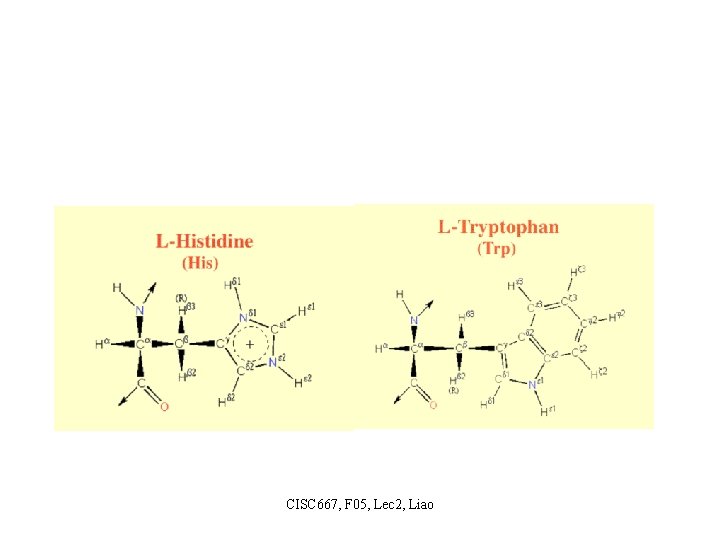
CISC 667, F 05, Lec 2, Liao
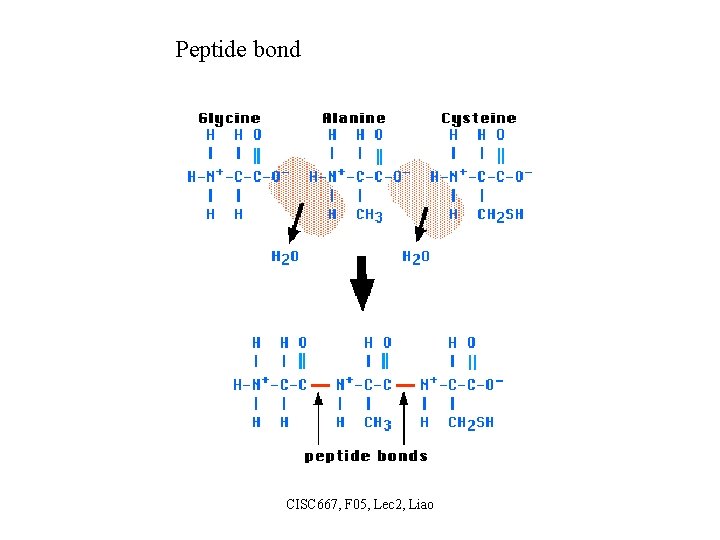
Peptide bond CISC 667, F 05, Lec 2, Liao
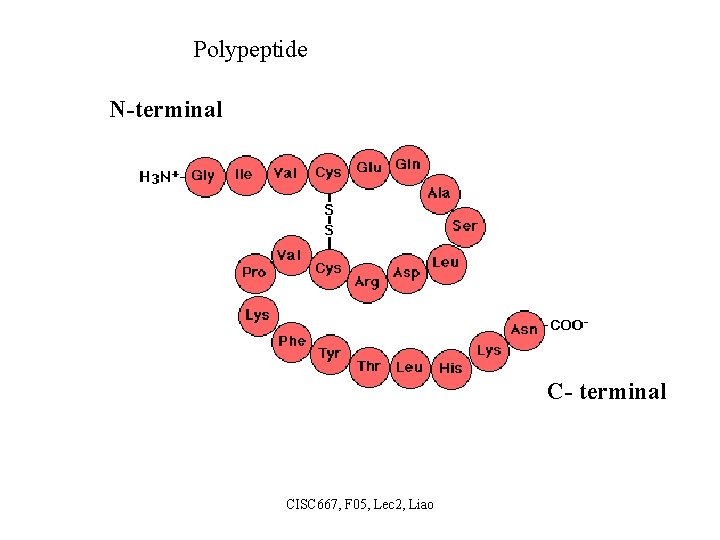
Polypeptide N-terminal C- terminal CISC 667, F 05, Lec 2, Liao
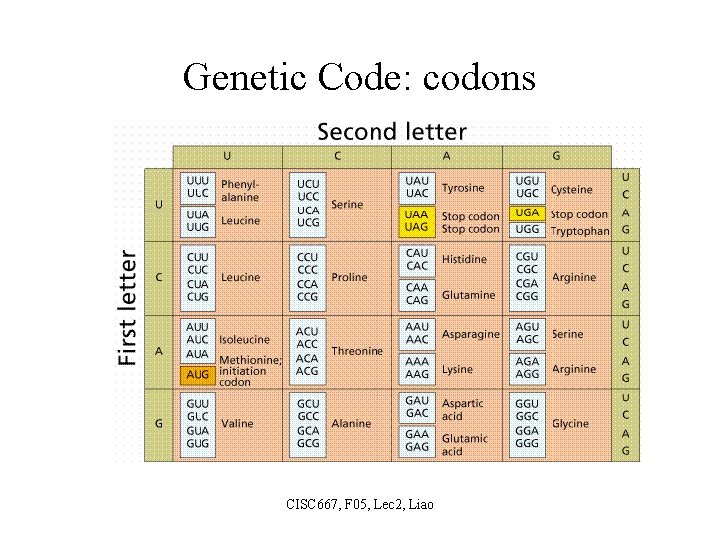
Genetic Code: codons CISC 667, F 05, Lec 2, Liao
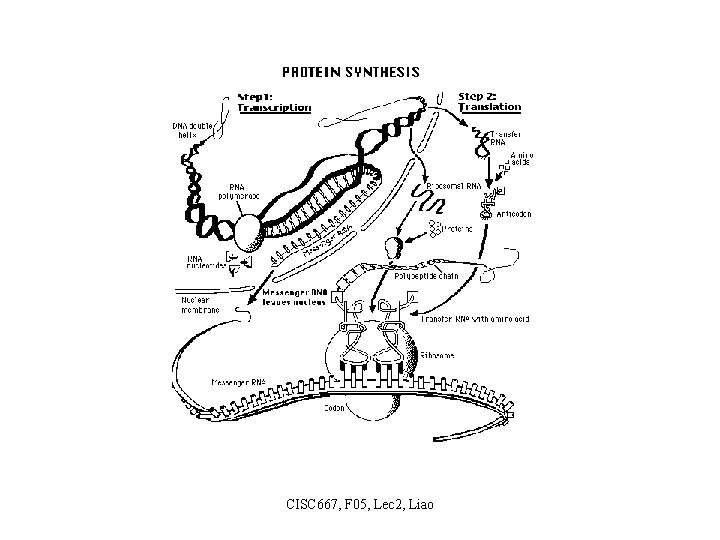
CISC 667, F 05, Lec 2, Liao
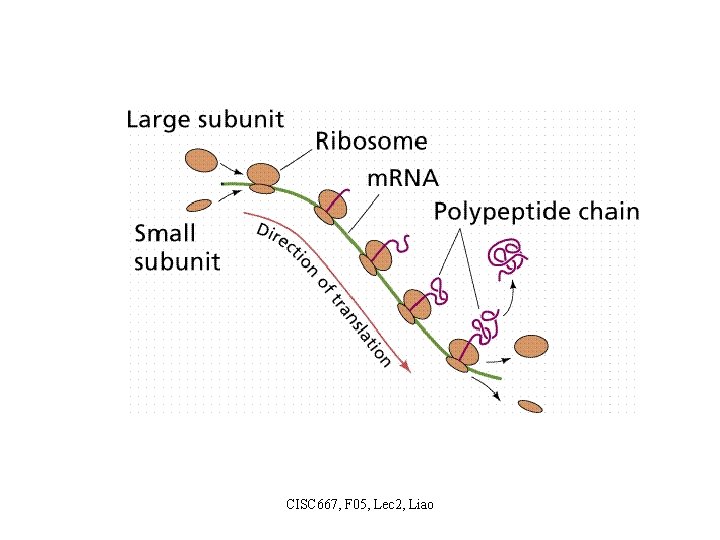
CISC 667, F 05, Lec 2, Liao
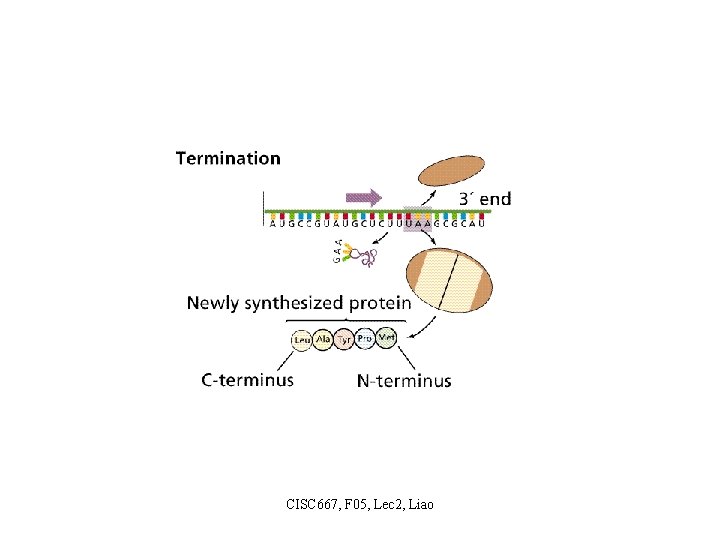
CISC 667, F 05, Lec 2, Liao
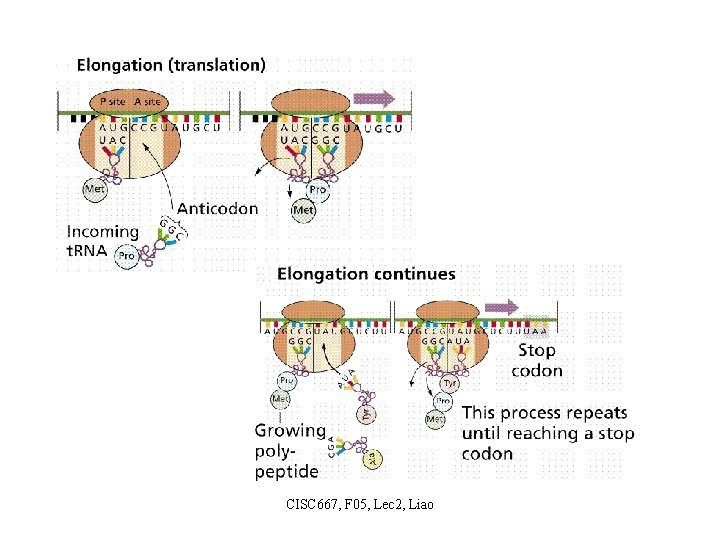
CISC 667, F 05, Lec 2, Liao
CISC 667, F 05, Lec 2, Liao
CISC 667, F 05, Lec 2, Liao
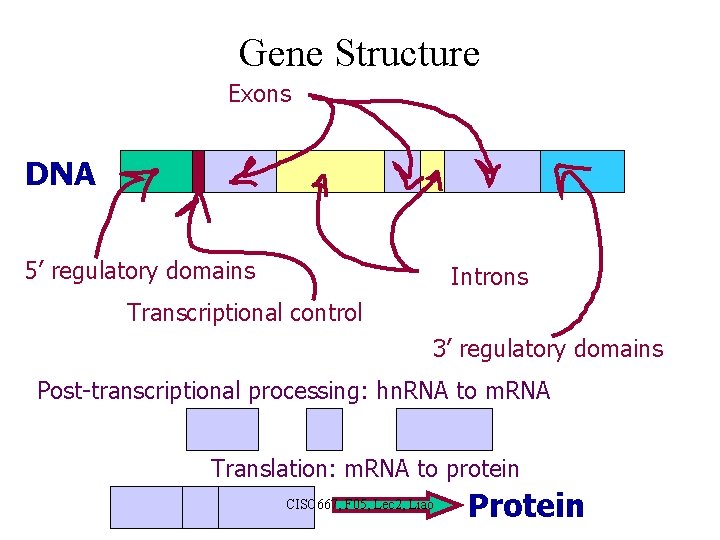
Gene Structure Exons DNA 5’ regulatory domains Introns Transcriptional control 3’ regulatory domains Post-transcriptional processing: hn. RNA to m. RNA Translation: m. RNA to protein CISC 667, F 05, Lec 2, Liao Protein
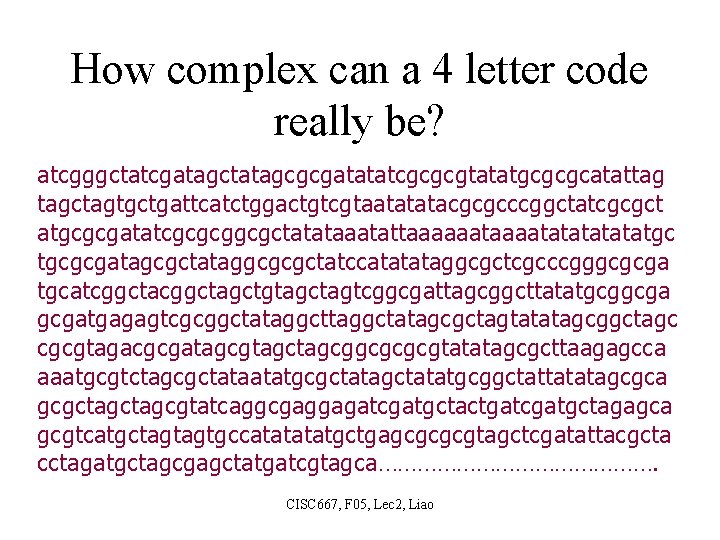
How complex can a 4 letter code really be? atcgggctatcgatagctatagcgcgatatatcgcgcgtatatgcgcgcatattag tagctagtgctgattcatctggactgtcgtaatatatacgcgcccggctatcgcgct atgcgcgatatcgcgcggcgctatataaatattaaaaaatatatatgc tgcgcgatagcgctataggcgcgctatccatatataggcgctcgcccgggcgcga tgcatcggctagctgtagctagtcggcgattagcggcttatatgcggcgatgagagtcgcggctataggctatagcgctagtatatagcggctagc cgcgtagacgcgatagcgtagcggcgcgcgtatatagcgcttaagagcca aaatgcgtctagcgctataatatgcgctatatgcggctattatatagcgca gcgctagcgtatcaggcgaggagatcgatgctactgatcgatgctagagca gcgtcatgctagtagtgccatatgctgagcgcgcgtagctcgatattacgcta cctagatgctagcgagctatgatcgtagca…………………. CISC 667, F 05, Lec 2, Liao
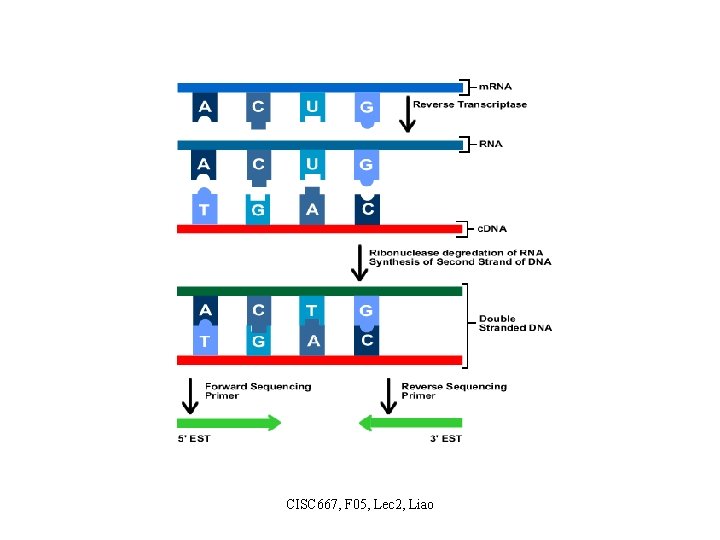
• Alternative splicing – Exception to the “One gene one protein” rule. • Codon usage – http: //www. kazusa. or. jp/codon/ • EST (expressed sequence tag) • Reverse translation and transcription • c. DNA CISC 667, F 05, Lec 2, Liao
Given a DNA sequence, we like to computationally – Identify genes, • introns, exons, alternative splicing sites, promoters, … – Determine the functions of the protein that a gene encodes – Identify functional signatures, e. g. , motifs – Determine the structure of proteins CISC 667, F 05, Lec 2, Liao
CISC 667, F 05, Lec 2, Liao
- Slides: 27