
CISC 1003 Exploring Robotics Lawrence Goetz What does
CISC 1003 Exploring Robotics Lawrence Goetz
What does a Robot mean to you?
What is a robot? – The word “robot” is a combination of the Czech words rabota, meaning “obligatory work” and robotnik, meaning “serf” (laborer). – Robots can do various repetitive, such as automobile assembly/inspection, as well as helpful tasks like driving a car. – Don’t limit yourself to what is currently possible mechanically or computationally as to what a robot can do. If you can imagine a robot doing something, one day a robot can do that. Perhaps you will be a designer of a futuristic robot!
Robot Has a power source Programmable actions & behaviors Senses it’s environment Change, operate, and interact with it’s environment • Autonomous • •
A Robot is an autonomous system which exists in the physical world. • An autonomous robot makes its own decisions. It is not controlled by a human. • Do not confuse a remote controlled robot, which is tele-operated by a human, to be an autonomous robot. • Robots in a computer are involved in a simulated world and are therefore not true robots.
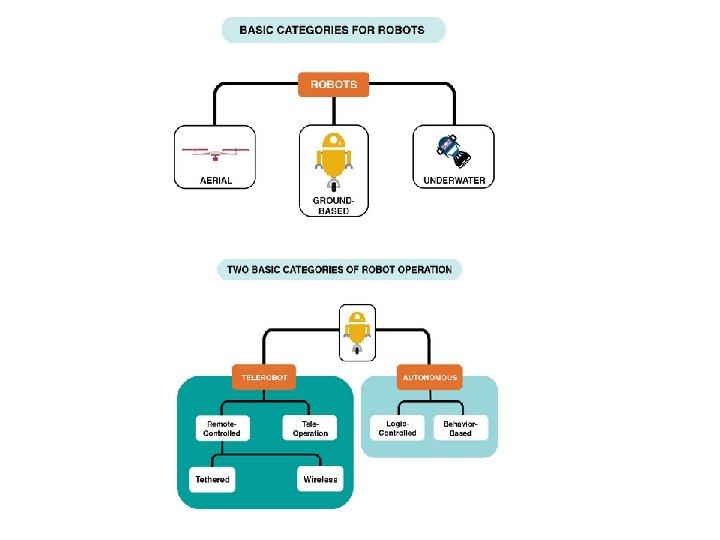
• Robots sense their environment via various sensors. If a person supplies a robot with information manually, then the robot is not fully autonomous. • Robots make their own decisions/actions and respond to sensory inputs and to achieve what is desired.
Robot Recap A robot is an autonomous system which • Exists in the physical world • Can sense its environment • Can act on it to ACHIEVE SOME GOALS.
Control Theory • Control theory is the mathematical study of the properties of automated control systems. • Basically there is a system that changes over time, and you can control some aspect of this system to get a desired result. • We will study this later in the term dealing with Feedback control.
Cybernetics • Implement biological system behavior principles in simple robots, using methods from control theory. • Cybernetics is the study and comparison of communication and control processes in biological and artificial systems.
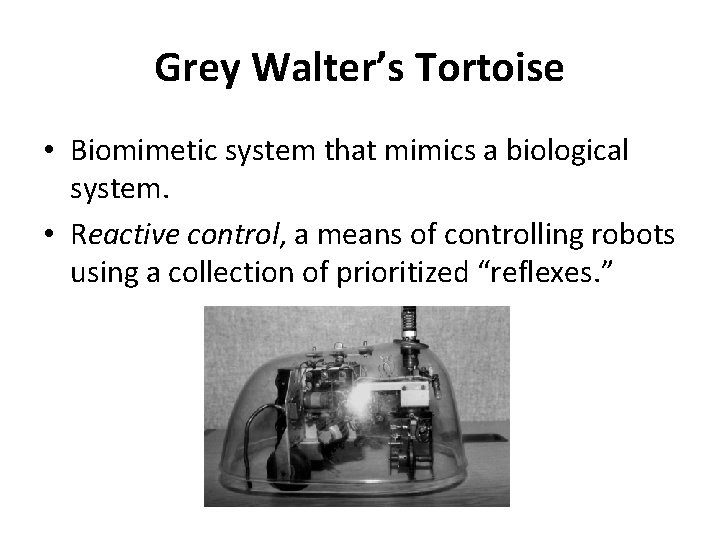
Grey Walter’s Tortoise • Biomimetic system that mimics a biological system. • Reactive control, a means of controlling robots using a collection of prioritized “reflexes. ”
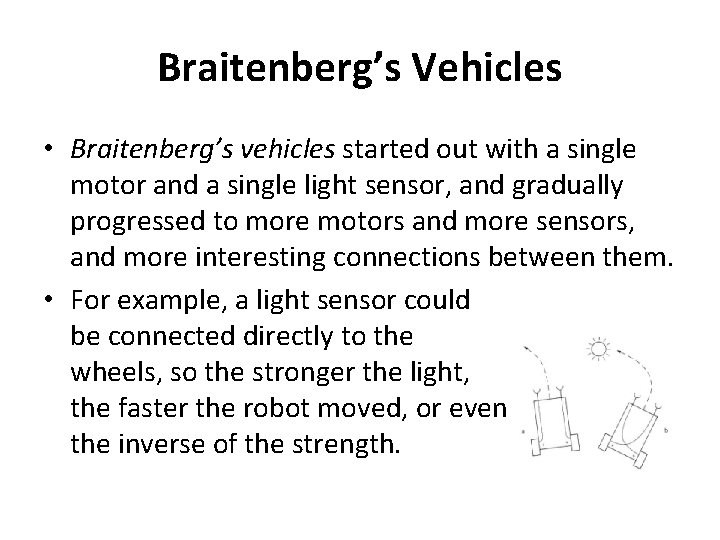
Braitenberg’s Vehicles • Braitenberg’s vehicles started out with a single motor and a single light sensor, and gradually progressed to more motors and more sensors, and more interesting connections between them. • For example, a light sensor could be connected directly to the wheels, so the stronger the light, the faster the robot moved, or even the inverse of the strength.
Artificial Intelligence • Intelligence in machines. • Early Examples: – Shakey – HILARE – CART
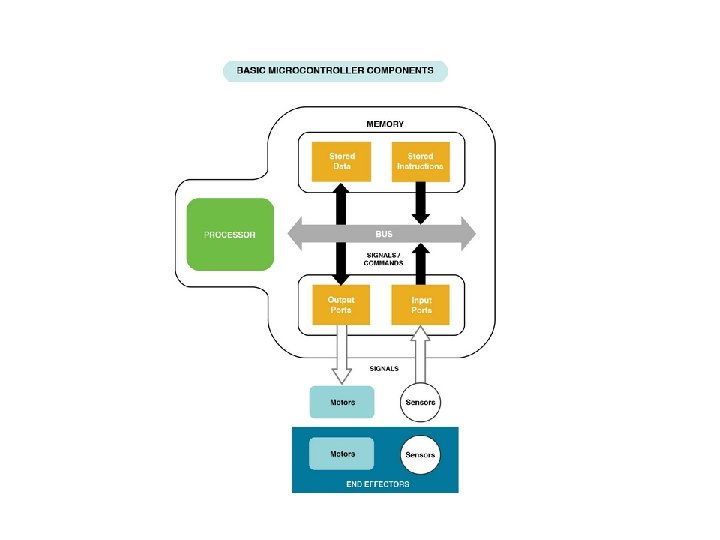
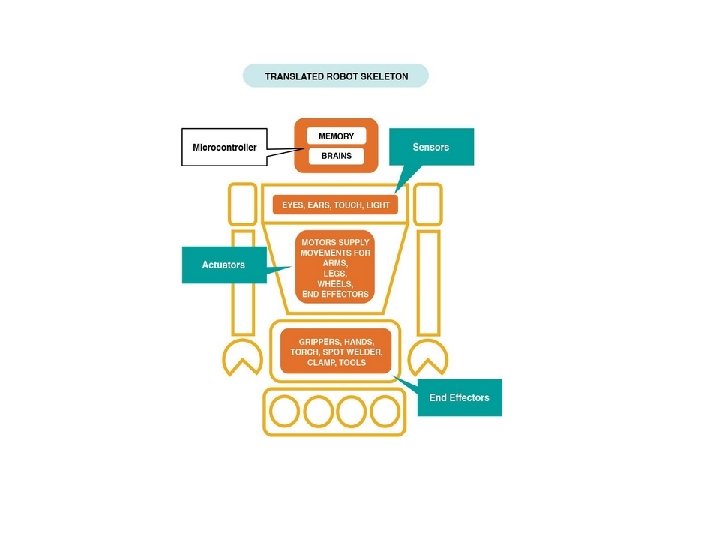
Robot Components • Embodiment refers to having a physical body. • Sensors supply the robot with information about it’s environment. • End-Effectors enable a robot to take action, to do physical things; such as an arm, hand. End-Effectors use underlying mechanisms, such as muscles and motors. These mechanisms are called actuators and which do the actual work for the robot. – Locomotion – Manipulation • Controllers take control the various parts of a robot. • Power source gives the robot energy.
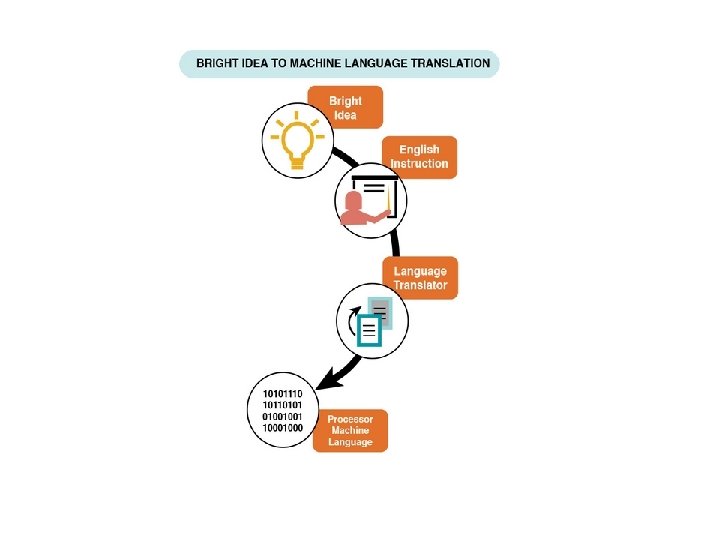
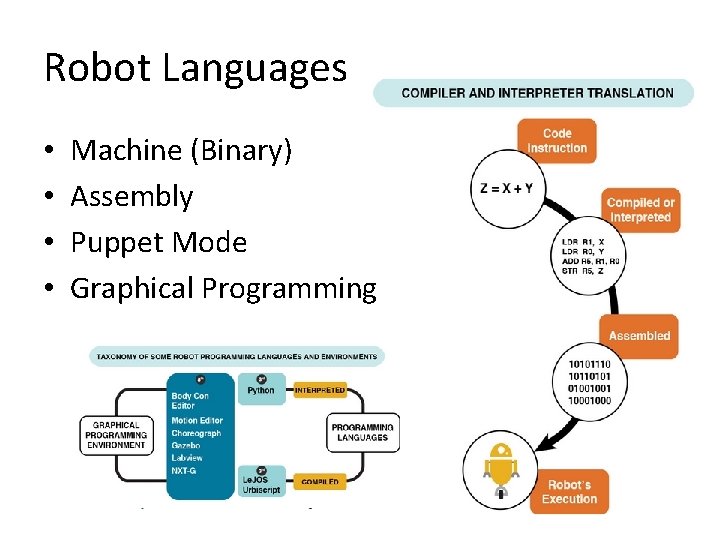
Robot Languages • • Machine (Binary) Assembly Puppet Mode Graphical Programming
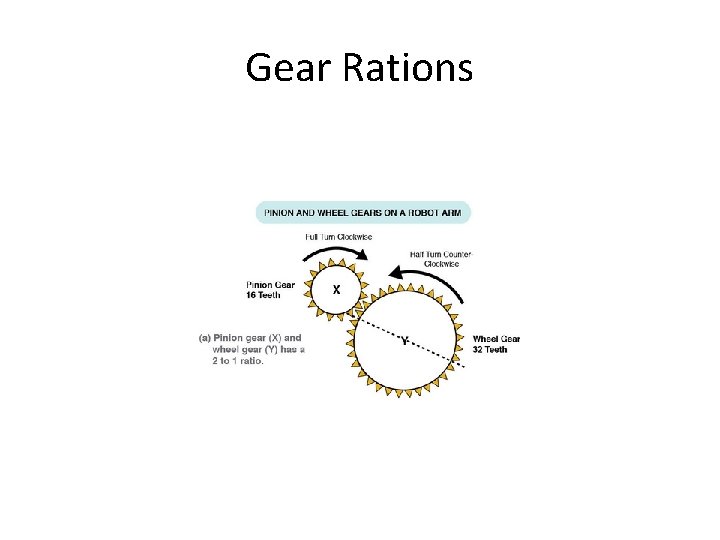
Gear Rations
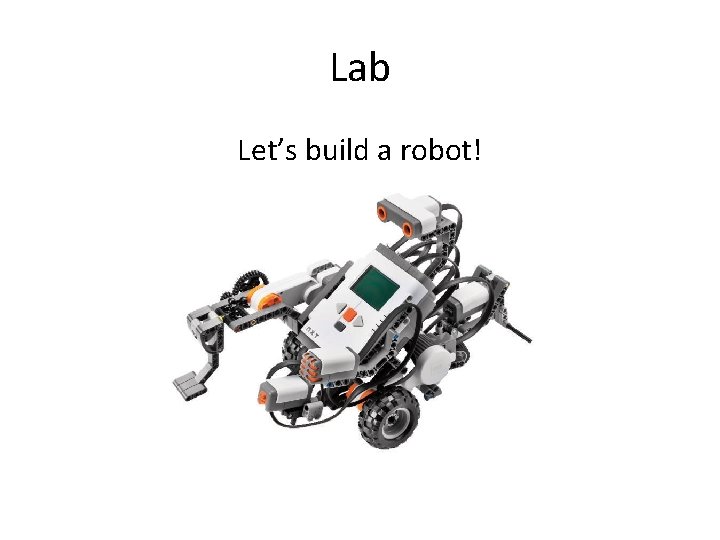
Lab Let’s build a robot!
- Slides: 20