
Circulatory System Transportation Definition I Tissue a large
- Slides: 50
Circulatory System Transportation
Definition I. Tissue: a large group of similar cells II. Organ: several tissues aimed towards one goal III. System: a group of organs which does a particular job. IV. Circulatory System: transports beneficial substances throughout an organism’s body. It also collects some waste products.
Three Organs I. Blood: A viscous organ which carries substances to and from cells via the heart. II. Blood Vessels: Organs through which blood travels, beginning and ending at the heart. III. Heart: Organ that pumps blood through the vessels and the body.
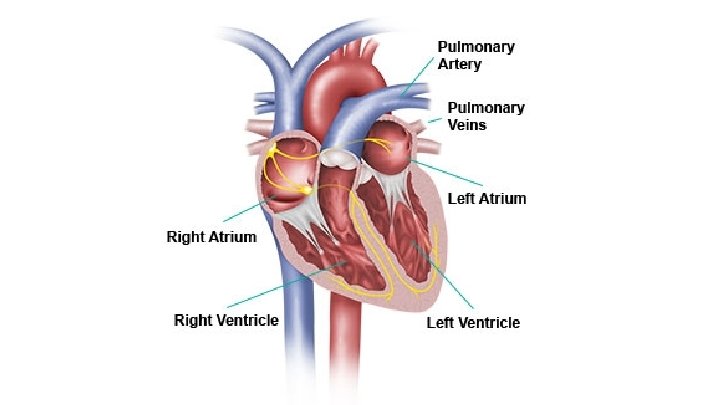
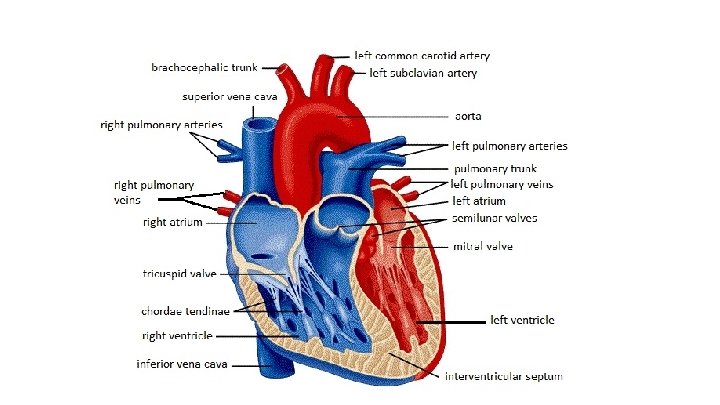
Heart I. A muscular organ. II. Unlike other muscles in that it does not become tired. Made of cardiac muscle. III. Four parts/divisions called chambers A. Two upper are known as atria. B. Two lower are known as ventricles.
IV. Valves A. Only function in one direction, B. Keep blood flowing in the correct direction through the four chambers. V. Cusps A. Flaps on valves which open to allow blood through but snap shut to keep blood from flowing backward. B. The snapping shut creates the sound of the heartbeat.
Parts of the Heart I. Aorta: artery which carries blood out of the heart to be taken to the rest of the body. II. Superior Vena Cava: vein which carries blood to the heart from the upper body. III. Inferior Vena Cava: vein that carries blood to the heart from the lower body. IV. Pulmonary Arteries: carry blood from the heart to the lungs.
Heart Facts I. In the center of your chest. II. Left part of heart is larger, which is why it seems that your heart is more to the left. III. About the size of your fist. IV. Needs to be taken care of-exercise and healthy eating-to avoid heart health issues.
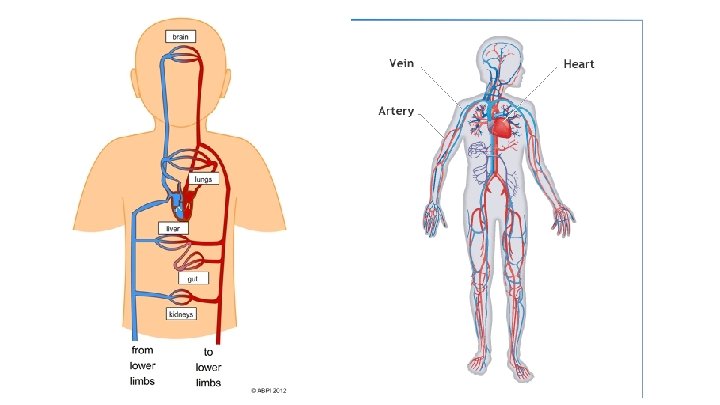
Circulation of Blood I. Blood passes through the heart twice to complete one full cycle. A. From right side of the heart to the lungs to pick up fresh oxygen, then to the left side of the heart, from where it travels throughout the body, delivering oxygen. B. Oxygen-depleted blood returns to the heart to repeat process.
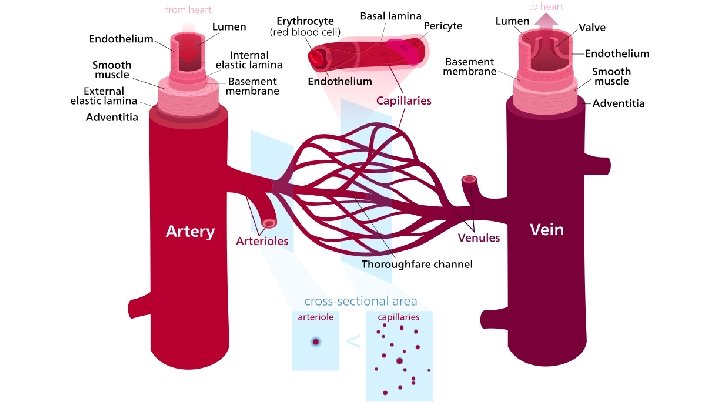
Blood Vessels I. Three types: arteries, capillaries, veins. A. Arteries carry oxygen rich blood away from the heart toward the rest of the body. B. Capillaries are tiny, smaller than the diameter of a hair, that connect arteries and veins. Also, oxygen, nutrients, and waste pass in and out of the bloodstream through capillary walls.
C. Veins carry oxygen depleted blood toward the heart from the rest of the body.
II. Arteries have four layers to their walls: an outer layer, smooth muscle layer, elastic fibrous tissue layer, and a thin tissue layer called endothelium. III. Capillaries have a single layer of endothelium.
IV. Veins have an outer layer, a smooth muscle layer, an elastic fibrous tissue layer, and a single layer of endothelium as well as valves.
Blood I. A moving organ made up of: red blood cells, white blood cells, platelets, and plasma. II. Composition: 55% plasma, 0. 45% white blood cells and platelets, 44. 55% red blood cells.
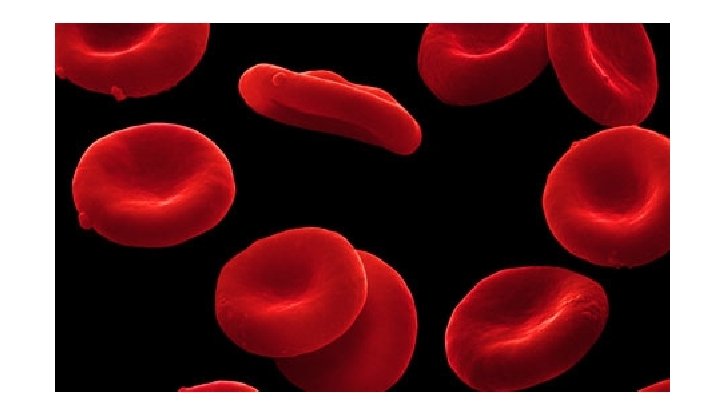
III. Red blood cells: responsible for carrying oxygen and carbon dioxide, A. transport oxygen from the lungs to the rest of the body, where it is used for energy. B. transport carbon dioxide from the body to the lungs, where it is expelled.
C. Disc-shaped cells containing a purple-red chemical called hemoglobin. Oxygen combines with the hemoglobin, forming oxyhemoglobin, which is bright red. As oxygen is delivered to the body, oxyhemoglobin turns back into hemoglobin.
D. Cells wear out every four months or so and are replaced by new red blood cells created in your bone marrow (middle part of the bone-center).
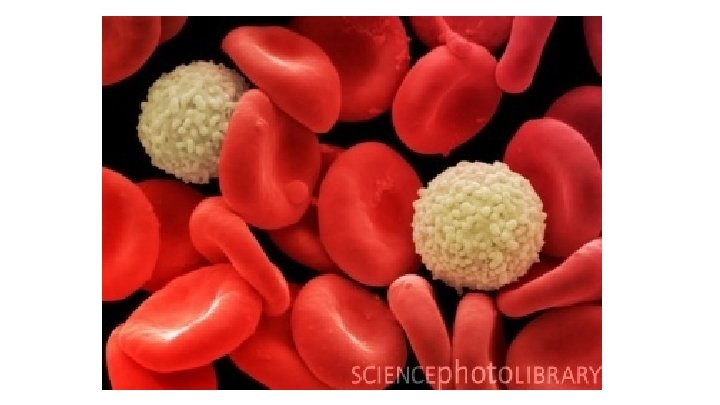
IV. White blood cells: aid the body in fighting off germs by attacking and destroying them. More are produced to aid in this process when you become ill. A. Larger than red blood cells.
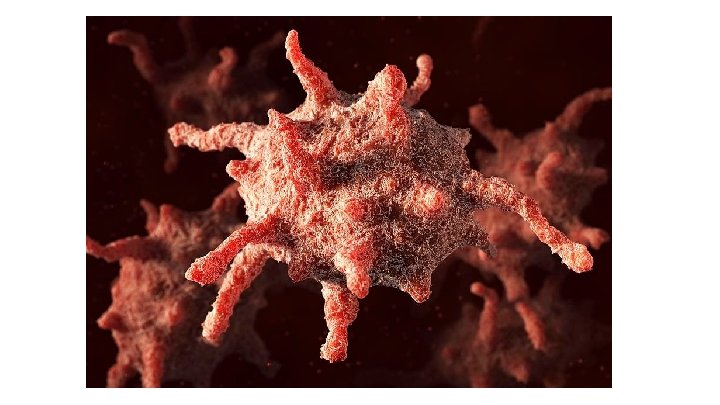
V. Platelets: blood cells that stop bleeding. They stick to the openings of damaged blood vessels in order to help close a wound, leading to the formation of a scab, which is created by platelets, fibers, and other blood cells. A. Tiny.
VI. Plasma: liquid part of the blood that carries the blood cells and other components of the blood, such as nutrients, oxygen, and waste, through the body. A. Created in the liver. B. Looks much like oil. Almost a yellow color.
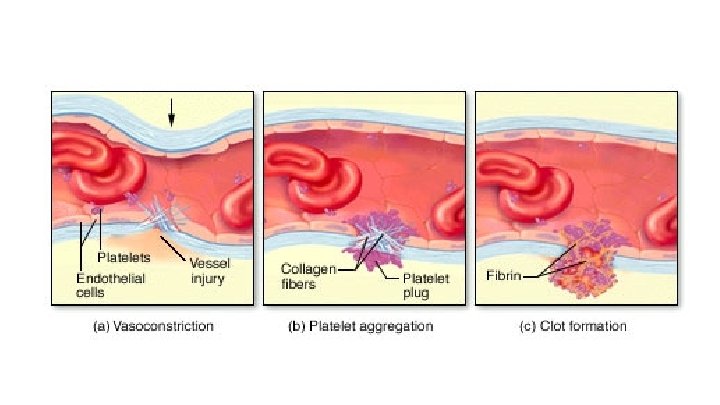
Blood Clotting I. Clot: the gel-like mass created when the blood from most minor cuts begins to congeal and harden into a scab. A. It is made up of sticky threads called fibrin, which form as a result of chemical reactions begun by platelets.
B. Keeps more blood from leaking out, preventing germs from entering wounds. C. Dissolves when the burst blood vessel repairs itself. i. Scab falls off. ii. Picking at scabs cause healing to take longer-blood vessel not yet repaired.
II. Process: A. Platelet plug forms, reducing bleeding at the site of the burst blood vessel. B. Chemical reactions cause the clot to grow when the proteins in platelets react and create fibrin, which is tougher and more durable than a platelet plug.
C. Anti-clotting process halts the growth of the clot so it remains localized to the site of the injury and does not spread through the body. D. Body slowly breaks down the blood clot as damage is repaired, and the clot is reabsorbed into the bloodstream as plasmid makes it usable again.
III. Detrimental clotting: when a blood clot forms abnormally, leading to serious medical problems, including heart attacks and strokes.
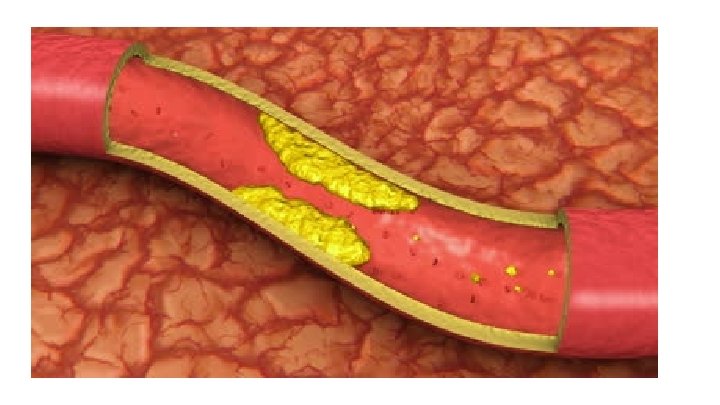
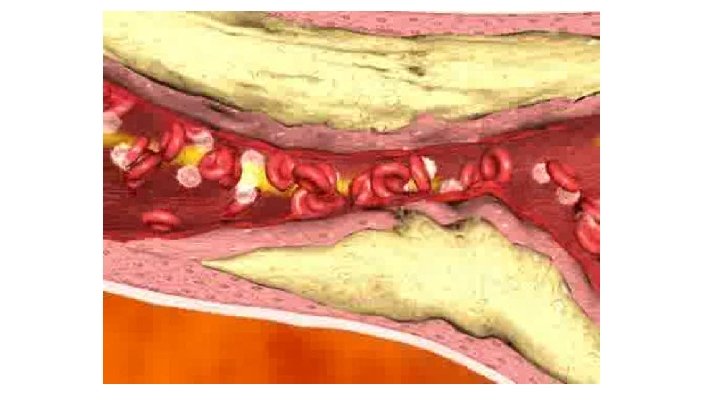
IV. This system is like a system of pipes that, when clogged, can be harmful. A. Fat, carried in the blood, can build up along the walls of arteries, restricting the passage of blood.
B. This leads to high blood pressure because the heart is forced to work harder to pump blood through the clogged arteries. C. A stroke occurs when an artery leading to the brain becomes completely blocked, starving brain cells of oxygen and causing them to die.
D. A heart attack occurs when the blocked artery is in the heart, causing some of the heart muscles to stop working.
Heart Disease I. Also called cardiovascular disease. A. Typically affects older people. B. May include high blood pressure, hardening of the arteries, heart attacks, strokes, and chest pain.
1. Hardening of the arteries, meaning they thicken and are not as flexible. 2. Buildup of plaque-cholesterol and fat-along the inside of arteries leads to narrowed passageways through which the blood travels.
3. Heart pain due to the heart not getting enough blood. 4. Stroke and/or heart attack.
Karl Landsteiner’s Blood Groups II. Discovered that red blood cells are covered in chemicals. One he called A, the other B. A. If the red blood cells had the first chemical, A, the blood became known as Type A blood. B. If the second chemical, B, was present, the blood was called Type B blood.
C. If there was a combination of chemicals A and B, the blood was called Type AB. D. If there were no chemicals present on the surface of the red blood cells, it was called Type O.
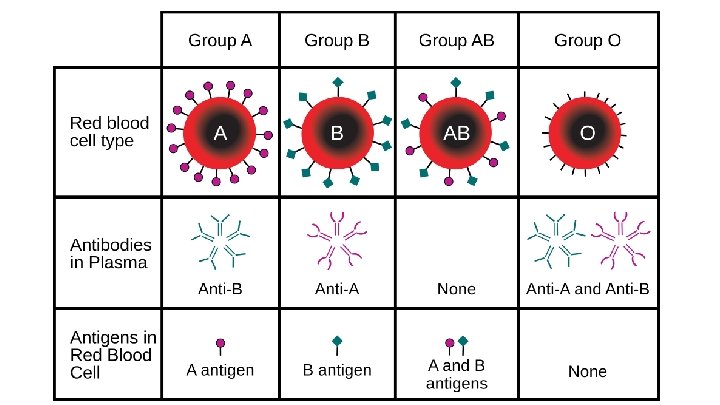
I. Four main blood groups. A. Each have different antigens on the surface of red blood cells and different antibodies in the plasma. i. Antigens- A chemical “label” on cells ii. Antibodies- neutralizes and destroys objects labeled with foreign antigens. A. The types of blood someone can receive depends on these two factors.
1. Group A: Can be given A and O blood types, as their antigen is A and their antibody anti-B. 2. Group B: Can be given B and O blood types, as their antigen is B and their antibody anti-A.
3. Group AB: Can be given all blood types, as their antigen is both A and B and they do not have an antibody. 4. Group O: Can be given only O blood types, as they do not have any antigen and have both anti-A and anti-B antibodies.
III. When two blood types that do not go together are mixed, clumping of blood cells in the blood vessels can occur. A. Can prove fatal.
Donating Blood I. Type A donated to Types A and AB. II. Type B donated to Types B and AB. III. Type AB donated to Type AB. IV. Type O donated to Types A, B, AB, and O.
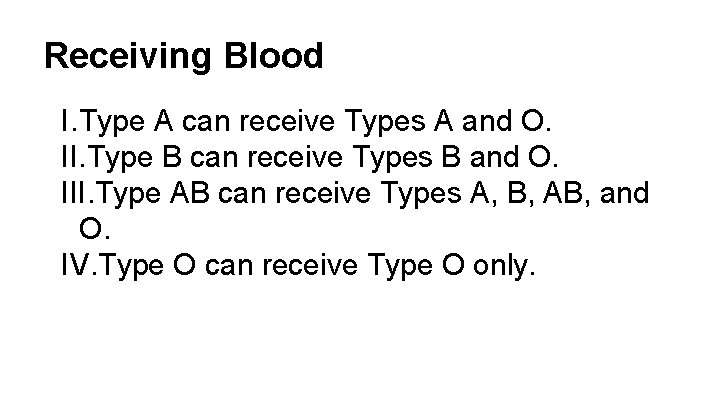
Receiving Blood I. Type A can receive Types A and O. II. Type B can receive Types B and O. III. Type AB can receive Types A, B, AB, and O. IV. Type O can receive Type O only.
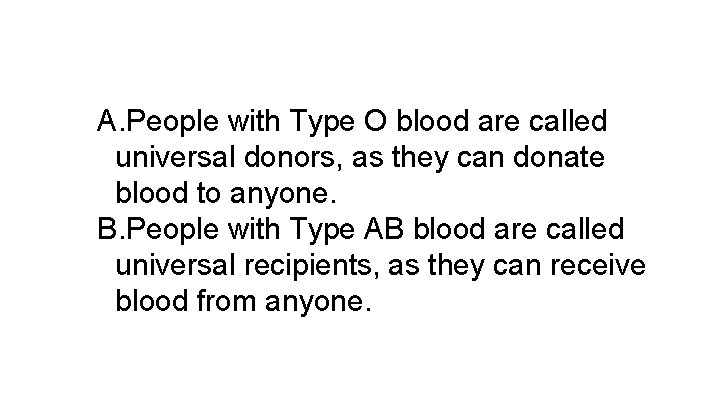
A. People with Type O blood are called universal donors, as they can donate blood to anyone. B. People with Type AB blood are called universal recipients, as they can receive blood from anyone.