
CIRCULATORY SYSTEM The Purpose of the Circulatory System
- Slides: 18
CIRCULATORY SYSTEM
The Purpose of the Circulatory System is to transport blood to all parts of the body so that gases, nutrients, and waste products are transported to and from the cells. The white blood cells within the circulatory system help to fight infection in the body.
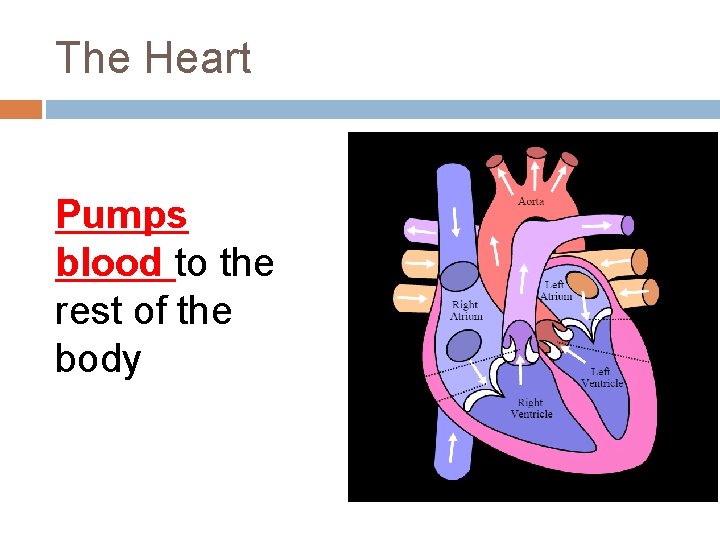
The Heart Pumps blood to the rest of the body
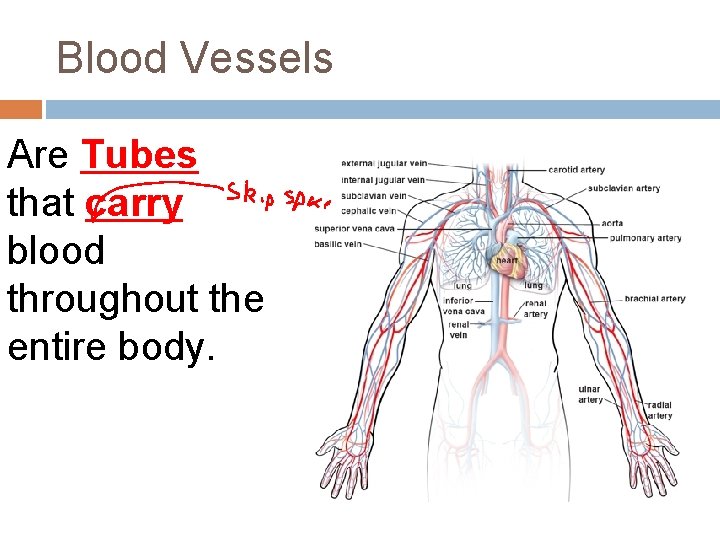
Blood Vessels Are Tubes that carry blood throughout the entire body.
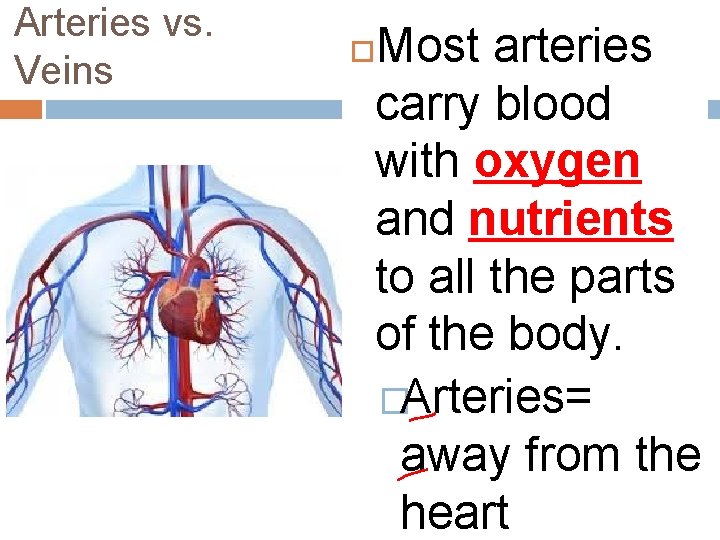
Arteries vs. Veins Most arteries carry blood with oxygen and nutrients to all the parts of the body. �Arteries= away from the heart
Most veins carry blood with waste products (for example carbon dioxide) from all the parts of the body back to the heart. �Veins= carry blood toward to the heart
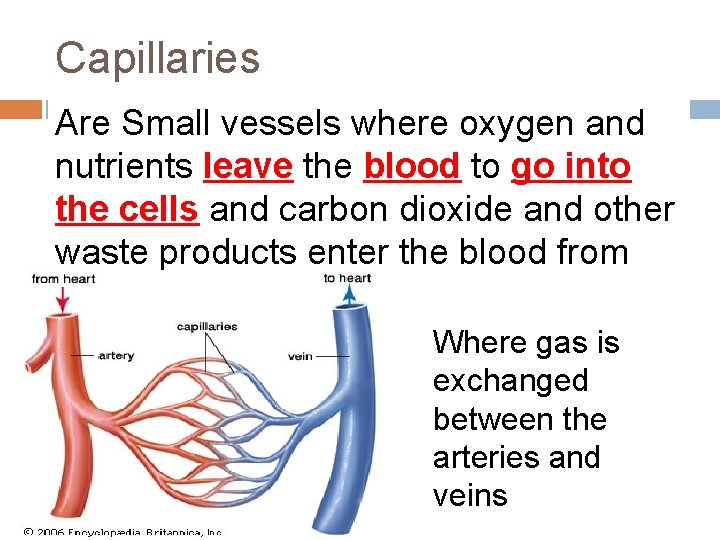
Capillaries Are Small vessels where oxygen and nutrients leave the blood to go into the cells and carbon dioxide and other waste products enter the blood from the cells. Where gas is exchanged between the arteries and veins
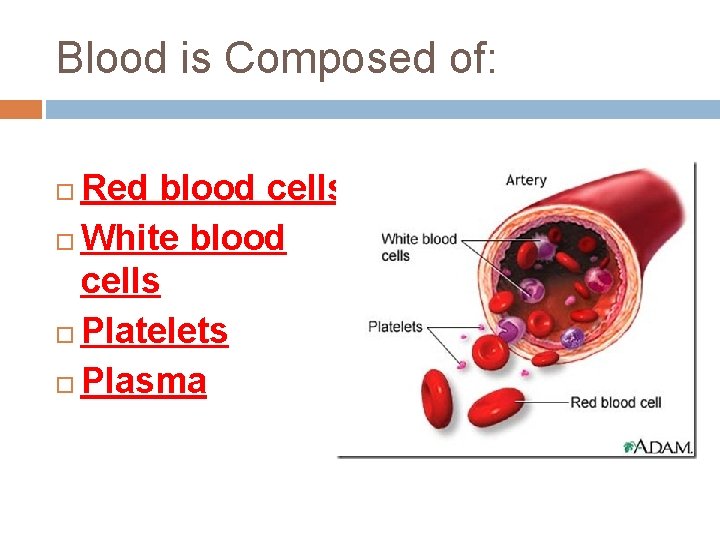
Blood is Composed of: Red blood cells White blood cells Platelets Plasma
NERVOUS SYSTEM
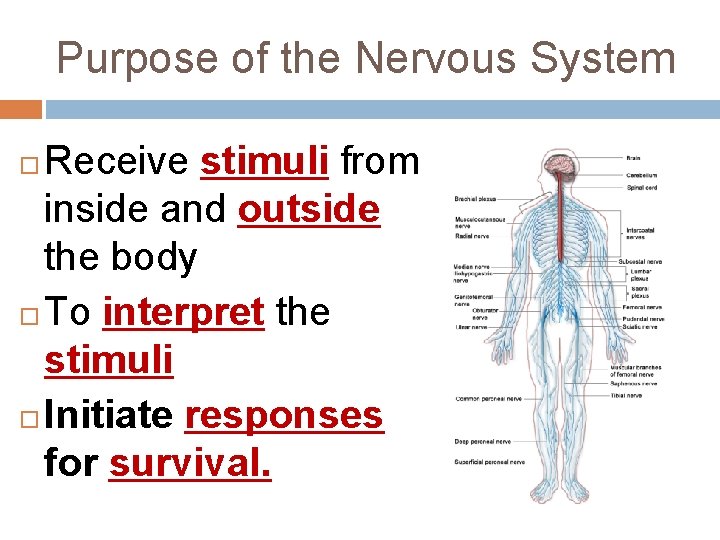
Purpose of the Nervous System Receive stimuli from inside and outside the body To interpret the stimuli Initiate responses for survival.
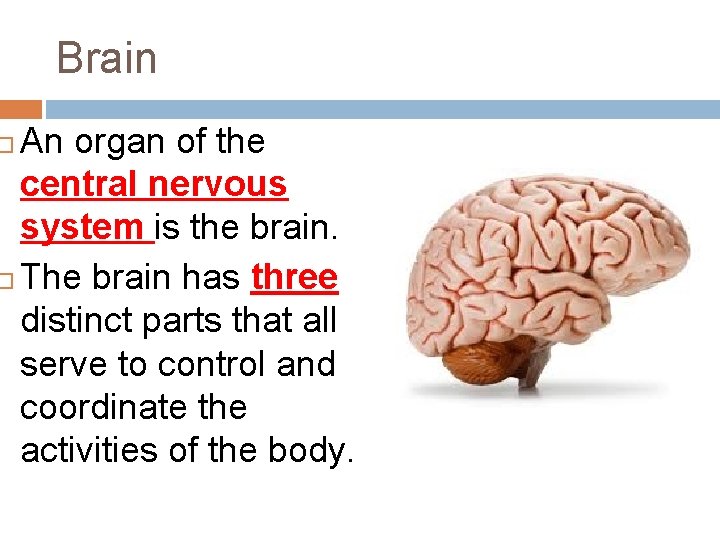
Brain An organ of the central nervous system is the brain. The brain has three distinct parts that all serve to control and coordinate the activities of the body.
Cerebrum Cerebellum Brain stem
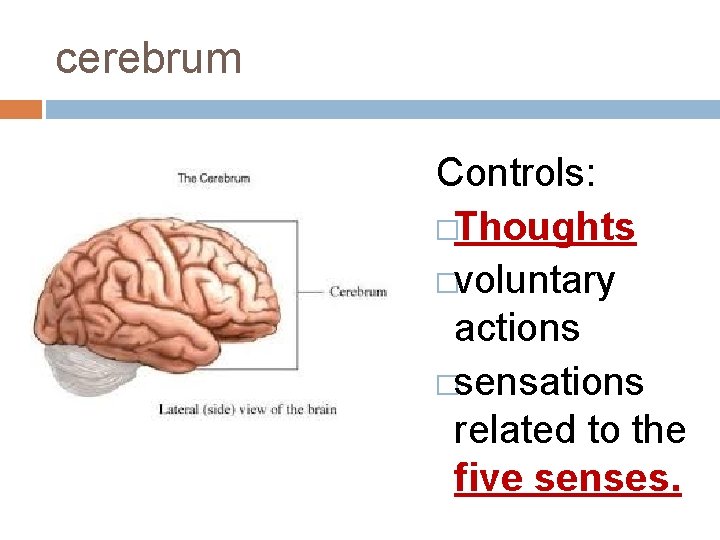
cerebrum Controls: �Thoughts �voluntary actions �sensations related to the five senses.
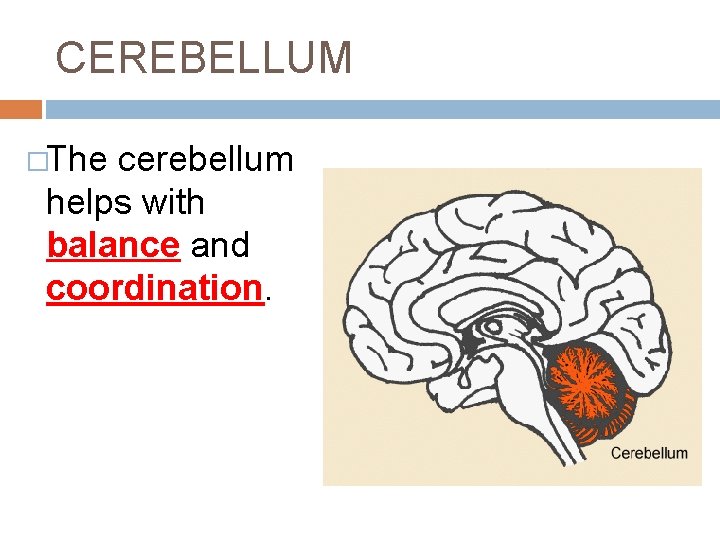
CEREBELLUM �The cerebellum helps with balance and coordination.
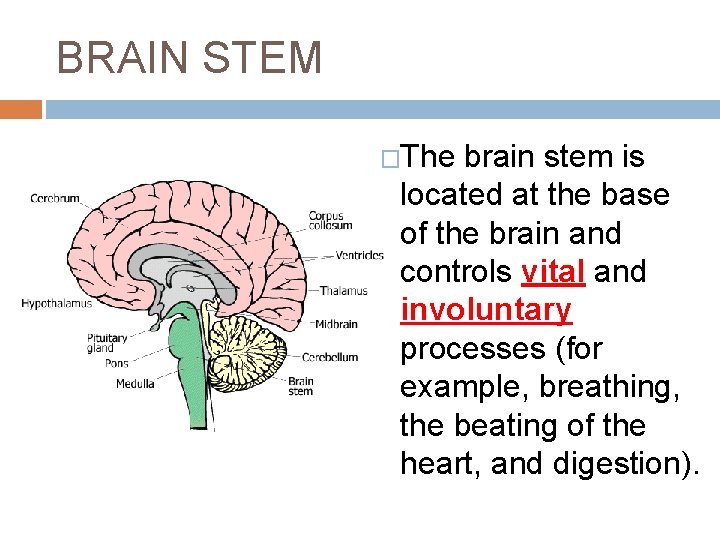
BRAIN STEM �The brain stem is located at the base of the brain and controls vital and involuntary processes (for example, breathing, the beating of the heart, and digestion).
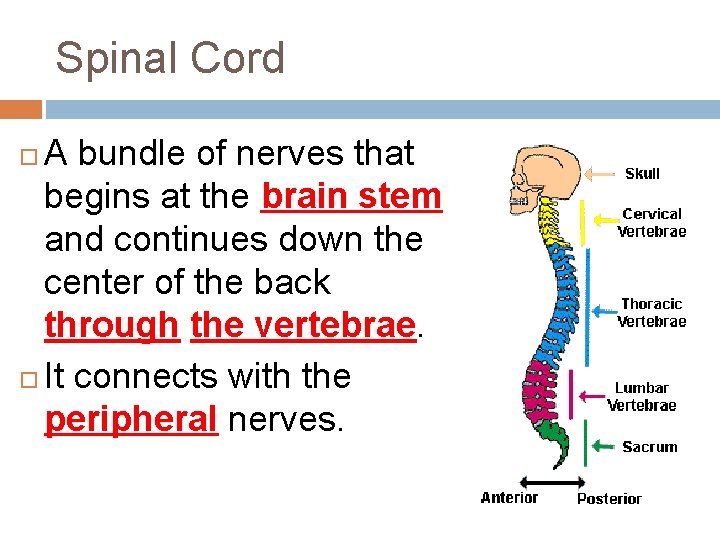
Spinal Cord A bundle of nerves that begins at the brain stem and continues down the center of the back through the vertebrae. It connects with the peripheral nerves.
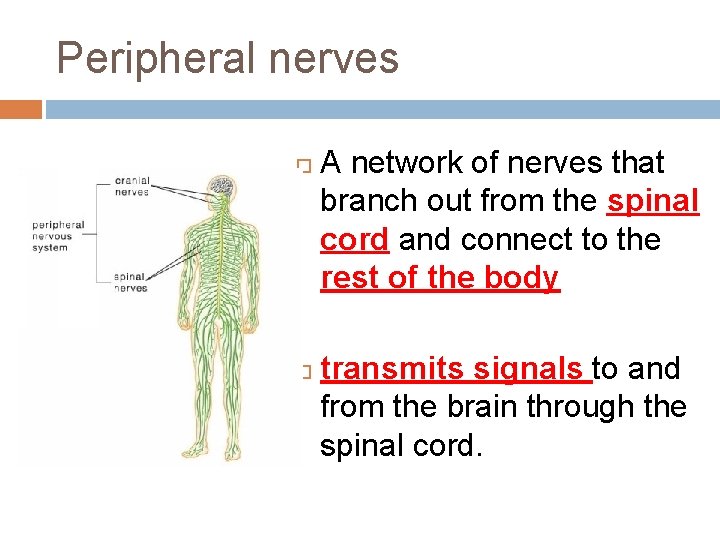
Peripheral nerves A network of nerves that branch out from the spinal cord and connect to the rest of the body transmits signals to and from the brain through the spinal cord.
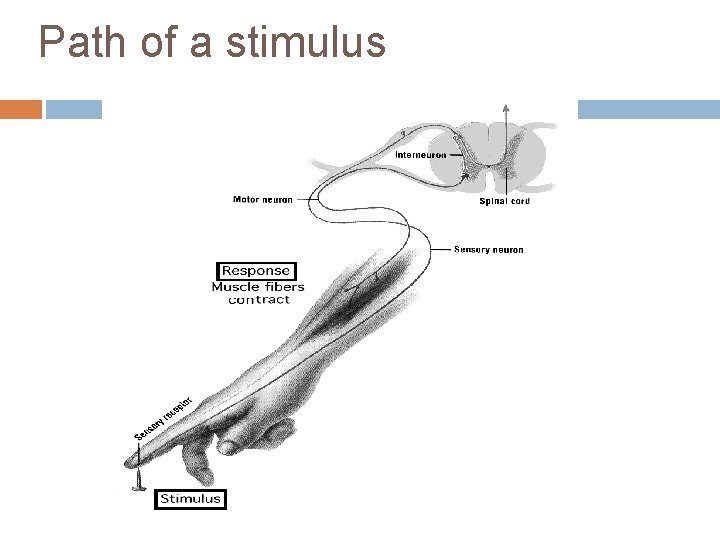
Path of a stimulus