
Circulatory System Students Learn About Components of blood
Circulatory System Students Learn About: • Components of blood • Structure and function of the heart, arteries, veins, capillaries • Pulmonary and systemic circulation • Blood pressure Students Learn To: • Analyse the movement of blood throughout the body and the influence of the circulatory and respiratory systems on movement efficiency and performance
Circulatory System Overview ▪ The circulatory system is seen to comprise of two (2) separate systems: ▪ Cardiovascular system ▪ Lymphatic system ▪ Cardiovascular system, which includes: ▪ ▪ Heart Arteries Veins and Capillaries ▪ The cardiovascular system is responsible for the movement of blood around the body. ▪ Blood carries: energy, hormones, nutrients, heat, gases, and much more through the body and has a large influence on movement efficiency and performance. This is because of its connection to the respiratory system and the exchange of gases in the body. ▪ The lymphatic system is responsible for the movement of lymph (collection of interstitial fluid) back to the cardiovascular system via the lymph; nodes, organs, and ducts. The main function of the lymph system is the cleaning of lymph by the immune system.
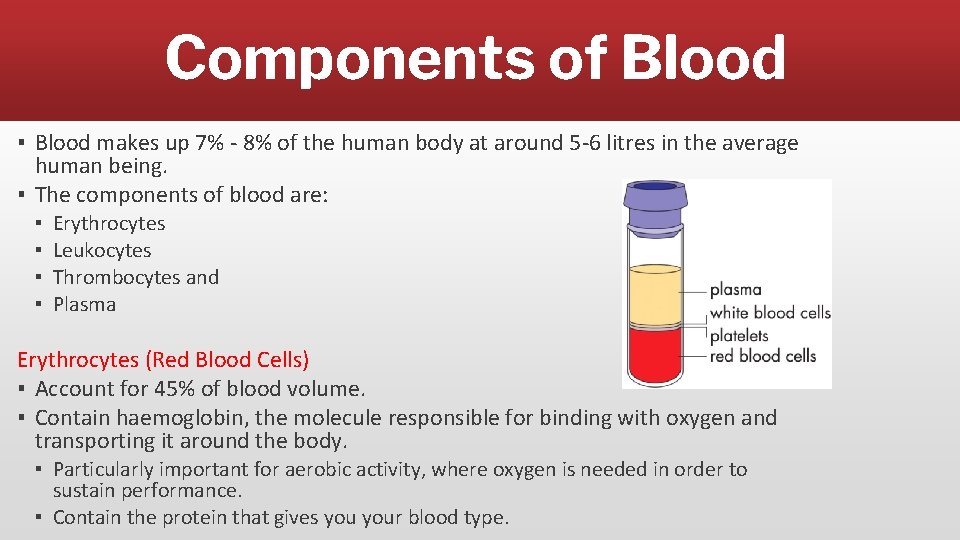
Components of Blood ▪ Blood makes up 7% - 8% of the human body at around 5 -6 litres in the average human being. ▪ The components of blood are: ▪ ▪ Erythrocytes Leukocytes Thrombocytes and Plasma Erythrocytes (Red Blood Cells) ▪ Account for 45% of blood volume. ▪ Contain haemoglobin, the molecule responsible for binding with oxygen and transporting it around the body. ▪ Particularly important for aerobic activity, where oxygen is needed in order to sustain performance. ▪ Contain the protein that gives your blood type.
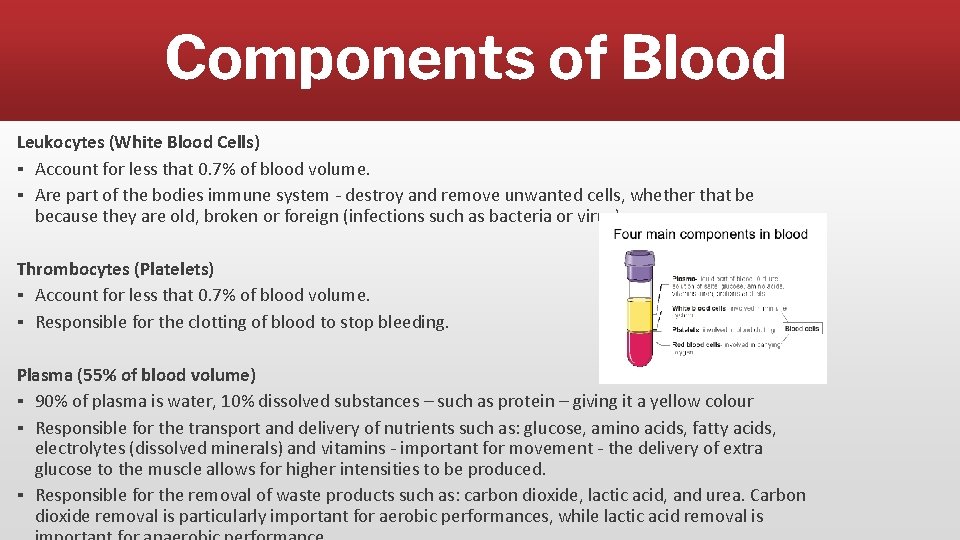
Components of Blood Leukocytes (White Blood Cells) ▪ Account for less that 0. 7% of blood volume. ▪ Are part of the bodies immune system - destroy and remove unwanted cells, whether that be because they are old, broken or foreign (infections such as bacteria or virus) Thrombocytes (Platelets) ▪ Account for less that 0. 7% of blood volume. ▪ Responsible for the clotting of blood to stop bleeding. Plasma (55% of blood volume) ▪ 90% of plasma is water, 10% dissolved substances – such as protein – giving it a yellow colour ▪ Responsible for the transport and delivery of nutrients such as: glucose, amino acids, fatty acids, electrolytes (dissolved minerals) and vitamins - important for movement - the delivery of extra glucose to the muscle allows for higher intensities to be produced. ▪ Responsible for the removal of waste products such as: carbon dioxide, lactic acid, and urea. Carbon dioxide removal is particularly important for aerobic performances, while lactic acid removal is
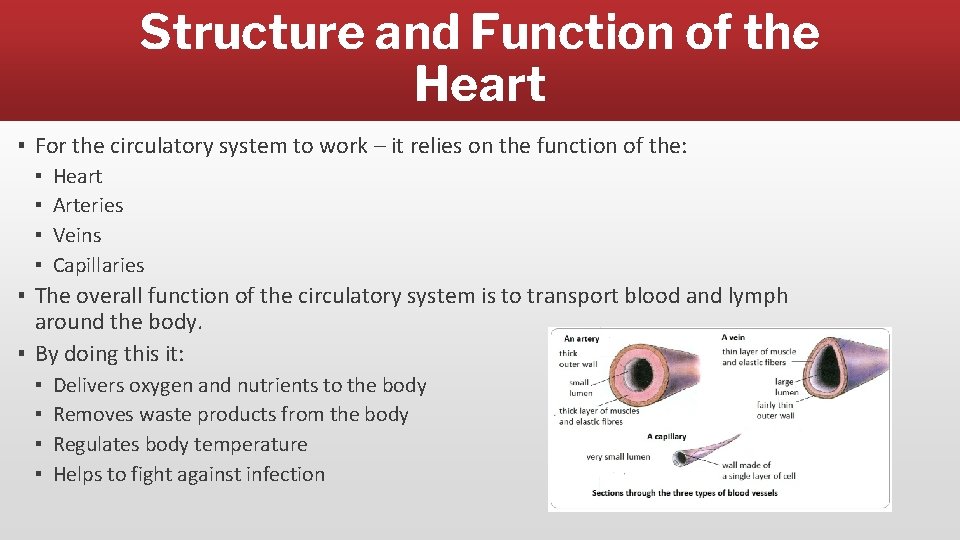
Structure and Function of the Heart ▪ For the circulatory system to work – it relies on the function of the: ▪ ▪ Heart Arteries Veins Capillaries ▪ The overall function of the circulatory system is to transport blood and lymph around the body. ▪ By doing this it: ▪ ▪ Delivers oxygen and nutrients to the body Removes waste products from the body Regulates body temperature Helps to fight against infection
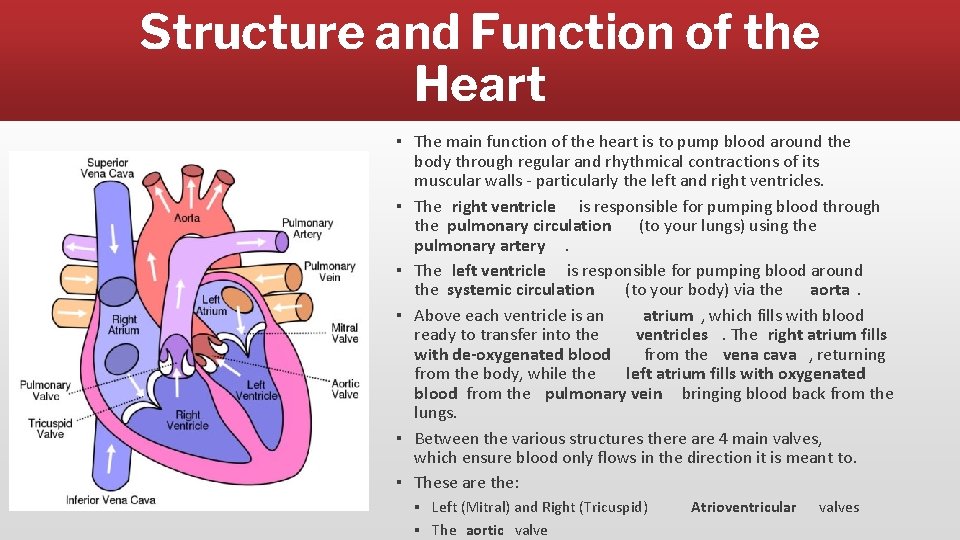
Structure and Function of the Heart ▪ The main function of the heart is to pump blood around the body through regular and rhythmical contractions of its muscular walls - particularly the left and right ventricles. ▪ The right ventricle is responsible for pumping blood through the pulmonary circulation (to your lungs) using the pulmonary artery. ▪ The left ventricle is responsible for pumping blood around the systemic circulation (to your body) via the aorta. ▪ Above each ventricle is an atrium , which fills with blood ready to transfer into the ventricles. The right atrium fills with de-oxygenated blood from the vena cava , returning from the body, while the left atrium fills with oxygenated blood from the pulmonary vein bringing blood back from the lungs. ▪ Between the various structures there are 4 main valves, which ensure blood only flows in the direction it is meant to. ▪ These are the: ▪ Left (Mitral) and Right (Tricuspid) ▪ The aortic valve Atrioventricular valves
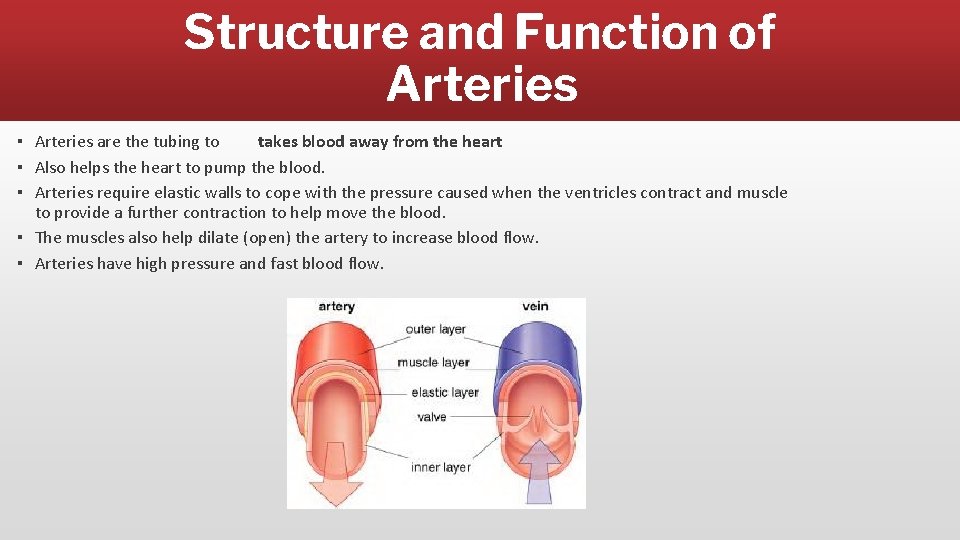
Structure and Function of Arteries ▪ Arteries are the tubing to takes blood away from the heart ▪ Also helps the heart to pump the blood. ▪ Arteries require elastic walls to cope with the pressure caused when the ventricles contract and muscle to provide a further contraction to help move the blood. ▪ The muscles also help dilate (open) the artery to increase blood flow. ▪ Arteries have high pressure and fast blood flow.
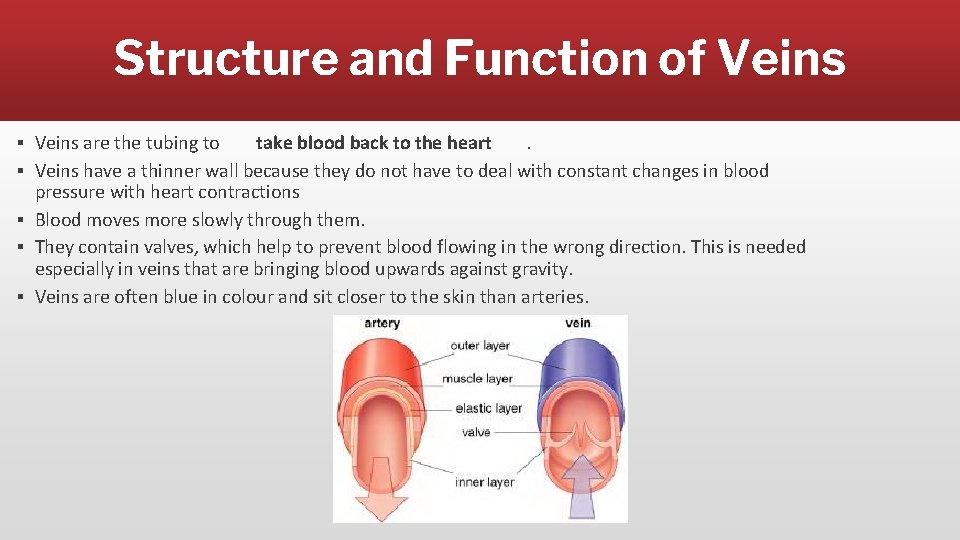
Structure and Function of Veins ▪ Veins are the tubing to take blood back to the heart. ▪ Veins have a thinner wall because they do not have to deal with constant changes in blood pressure with heart contractions ▪ Blood moves more slowly through them. ▪ They contain valves, which help to prevent blood flowing in the wrong direction. This is needed especially in veins that are bringing blood upwards against gravity. ▪ Veins are often blue in colour and sit closer to the skin than arteries.
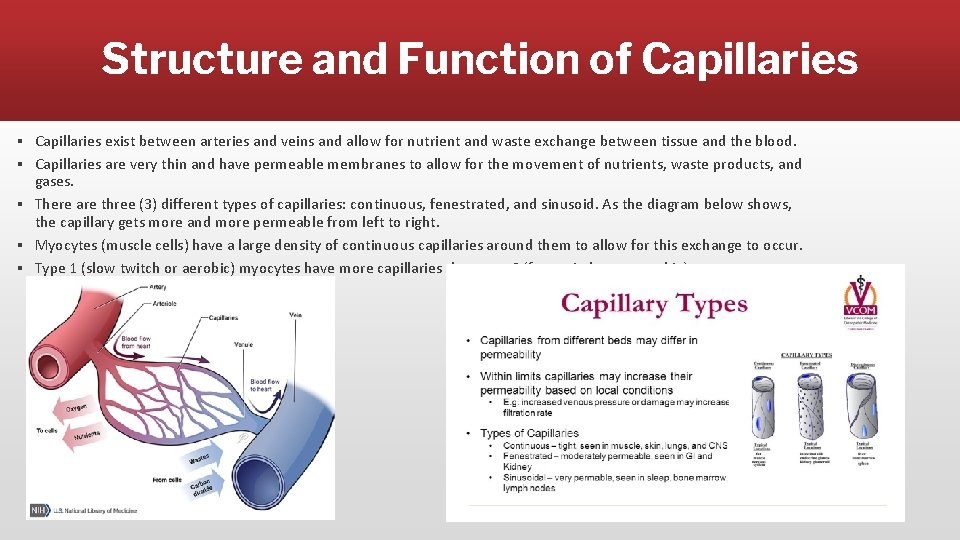
Structure and Function of Capillaries ▪ Capillaries exist between arteries and veins and allow for nutrient and waste exchange between tissue and the blood. ▪ Capillaries are very thin and have permeable membranes to allow for the movement of nutrients, waste products, and gases. ▪ There are three (3) different types of capillaries: continuous, fenestrated, and sinusoid. As the diagram below shows, the capillary gets more and more permeable from left to right. ▪ Myocytes (muscle cells) have a large density of continuous capillaries around them to allow for this exchange to occur. ▪ Type 1 (slow twitch or aerobic) myocytes have more capillaries than type 2 (fast twitch or anaerobic) myocytes.
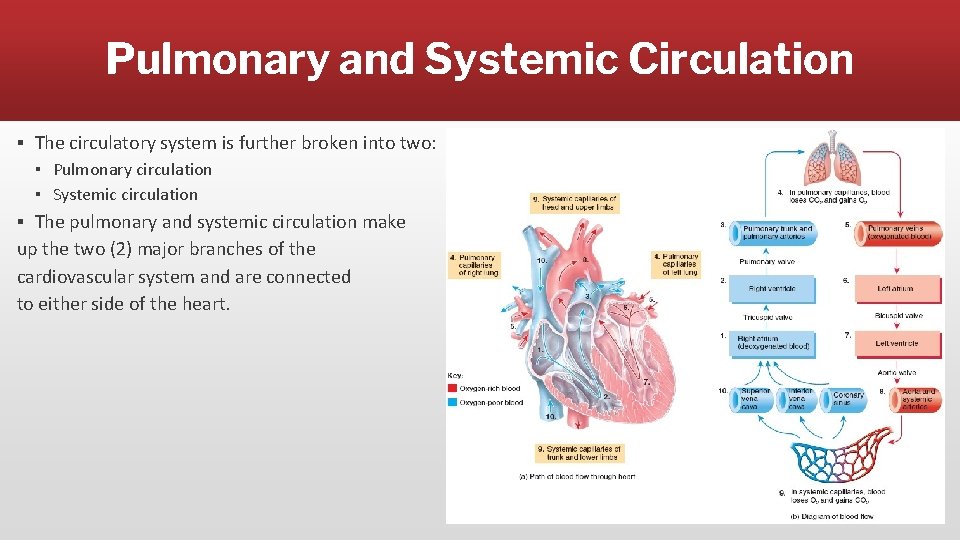
Pulmonary and Systemic Circulation ▪ The circulatory system is further broken into two: ▪ Pulmonary circulation ▪ Systemic circulation ▪ The pulmonary and systemic circulation make up the two (2) major branches of the cardiovascular system and are connected to either side of the heart.
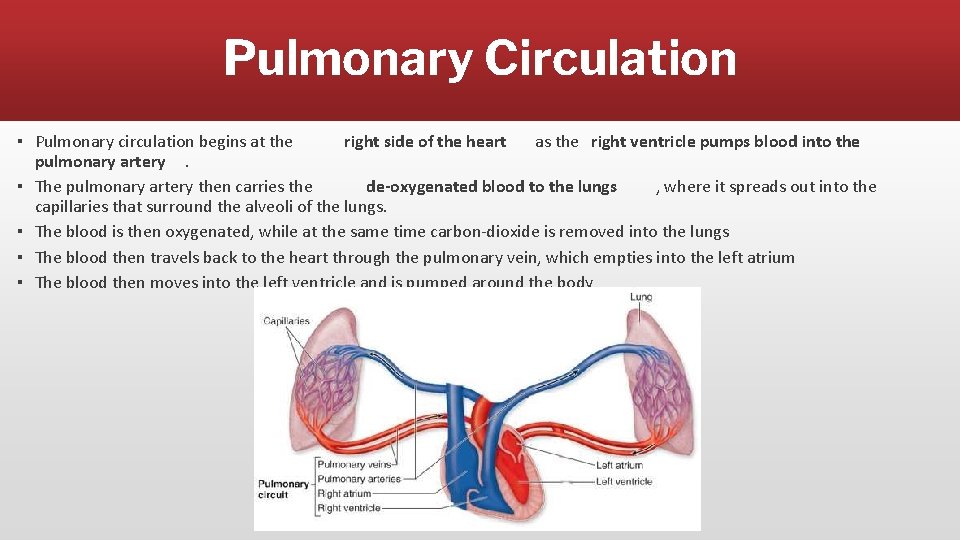
Pulmonary Circulation ▪ Pulmonary circulation begins at the right side of the heart as the right ventricle pumps blood into the pulmonary artery. ▪ The pulmonary artery then carries the de-oxygenated blood to the lungs , where it spreads out into the capillaries that surround the alveoli of the lungs. ▪ The blood is then oxygenated, while at the same time carbon-dioxide is removed into the lungs ▪ The blood then travels back to the heart through the pulmonary vein, which empties into the left atrium ▪ The blood then moves into the left ventricle and is pumped around the body
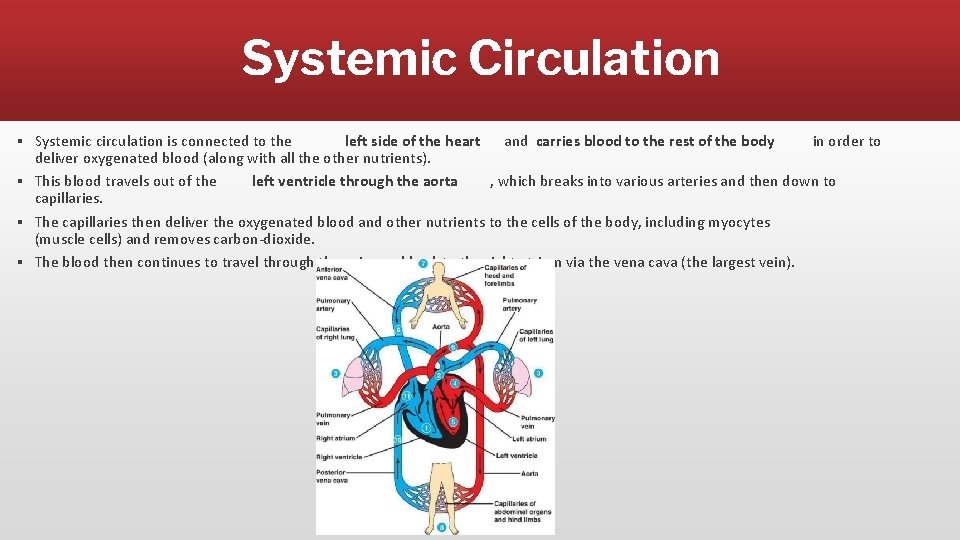
Systemic Circulation ▪ Systemic circulation is connected to the left side of the heart and carries blood to the rest of the body in order to deliver oxygenated blood (along with all the other nutrients). ▪ This blood travels out of the left ventricle through the aorta , which breaks into various arteries and then down to capillaries. ▪ The capillaries then deliver the oxygenated blood and other nutrients to the cells of the body, including myocytes (muscle cells) and removes carbon-dioxide. ▪ The blood then continues to travel through the veins and back to the right atrium via the vena cava (the largest vein).
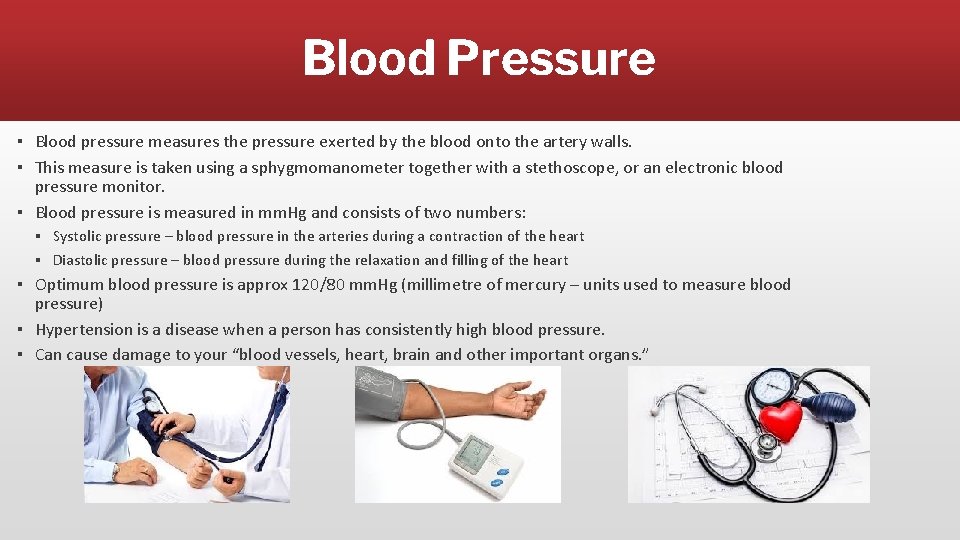
Blood Pressure ▪ Blood pressure measures the pressure exerted by the blood onto the artery walls. ▪ This measure is taken using a sphygmomanometer together with a stethoscope, or an electronic blood pressure monitor. ▪ Blood pressure is measured in mm. Hg and consists of two numbers: ▪ Systolic pressure – blood pressure in the arteries during a contraction of the heart ▪ Diastolic pressure – blood pressure during the relaxation and filling of the heart ▪ Optimum blood pressure is approx 120/80 mm. Hg (millimetre of mercury – units used to measure blood pressure) ▪ Hypertension is a disease when a person has consistently high blood pressure. ▪ Can cause damage to your “blood vessels, heart, brain and other important organs. ”
QUESTIONS ▪ Describe the movement of blood through the body. 3 marks ▪ How does the respiratory system influence performance? 5 marks ▪ Analyse how the cardiorespiratory system influences movement efficiency and performance. 8 marks
- Slides: 14