
Circulatory System o Ensures the exchange of substances
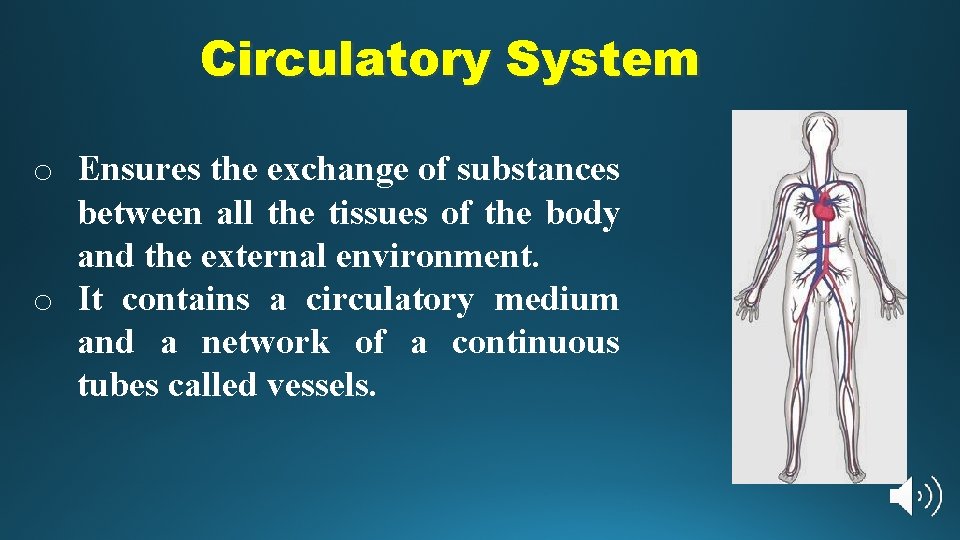
Circulatory System o Ensures the exchange of substances between all the tissues of the body and the external environment. o It contains a circulatory medium and a network of a continuous tubes called vessels.
Functions of Circulatory system: o It provides essential chemical substances to body cells which are needed for their metabolism. o Transport chemical waste products to be excreted outside body. o Prevention and defense against invasion of infectious micro-organisms. o Maintenance of normal body temperature and homeostasis of tissue fluids.
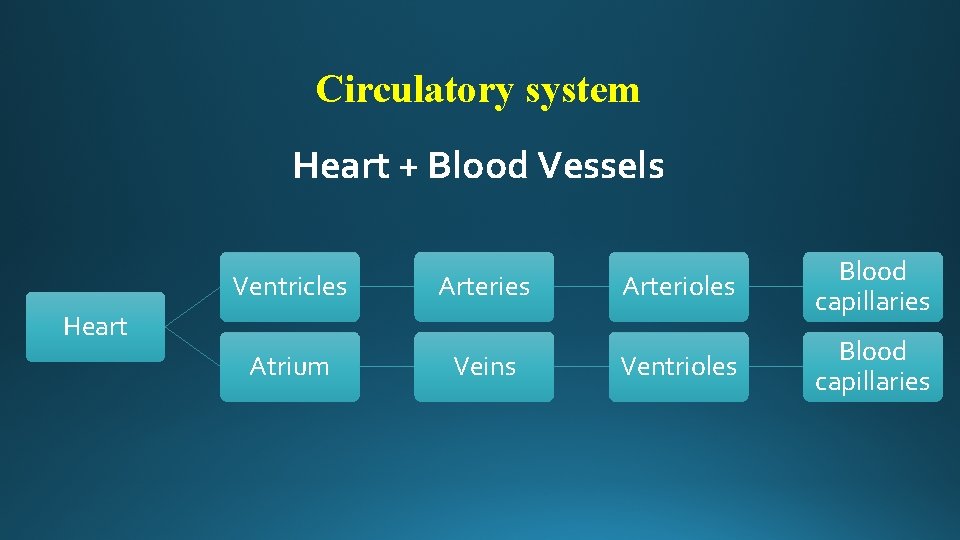
Circulatory system Heart + Blood Vessels Ventricles Arterioles Blood capillaries Atrium Veins Ventrioles Blood capillaries Heart
Heart

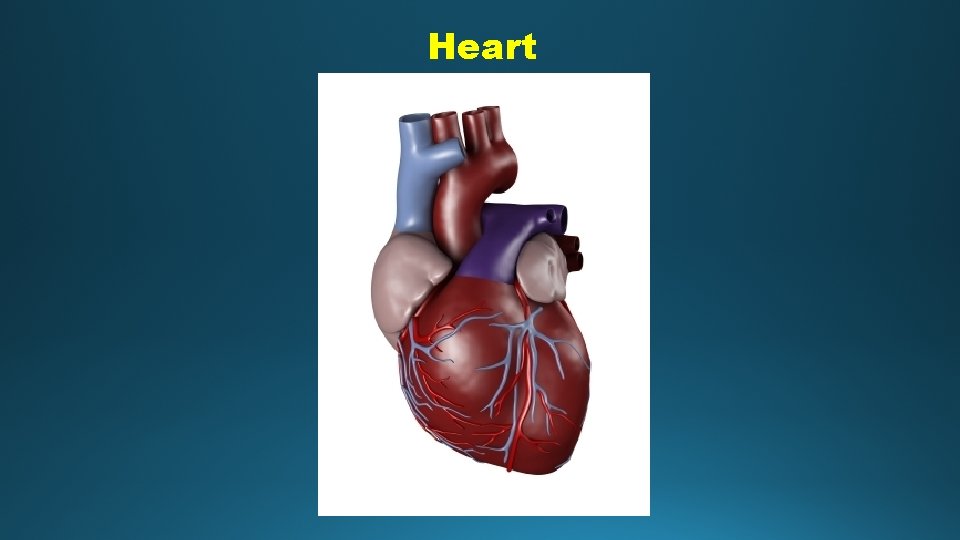
Heart o Contract periodically (pulsate) in order to pump either hemolymph or blood to various body parts. o It pumps the blood at one end and receive it at the other end by the returning veins. o To keep the blood circulating. It is provided with valves which prevent the backward flow of the blood. o The rhythmic contraction of heart may be triggered through a myogenic mechanism regulates by neurogenic impulses. In contrast, Invertebrates >>>> myogenic type.

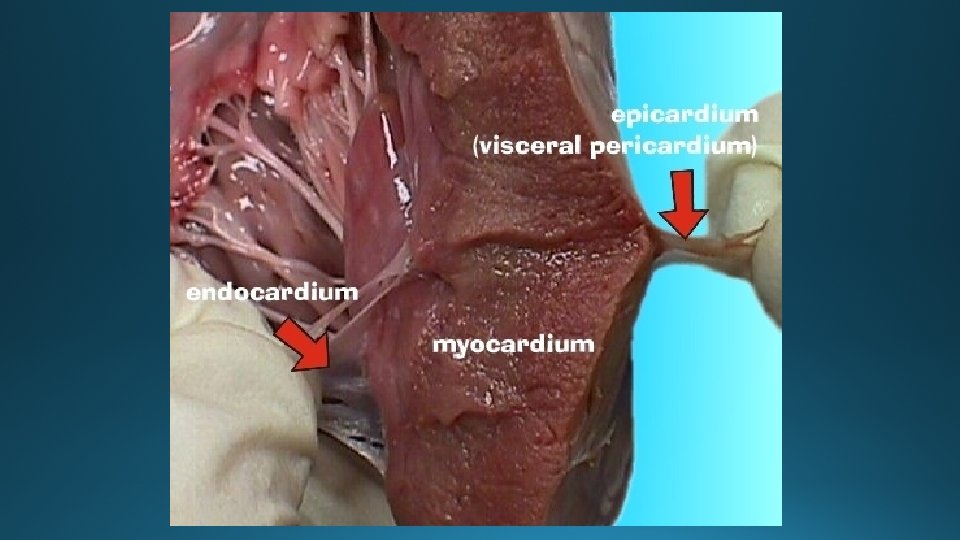
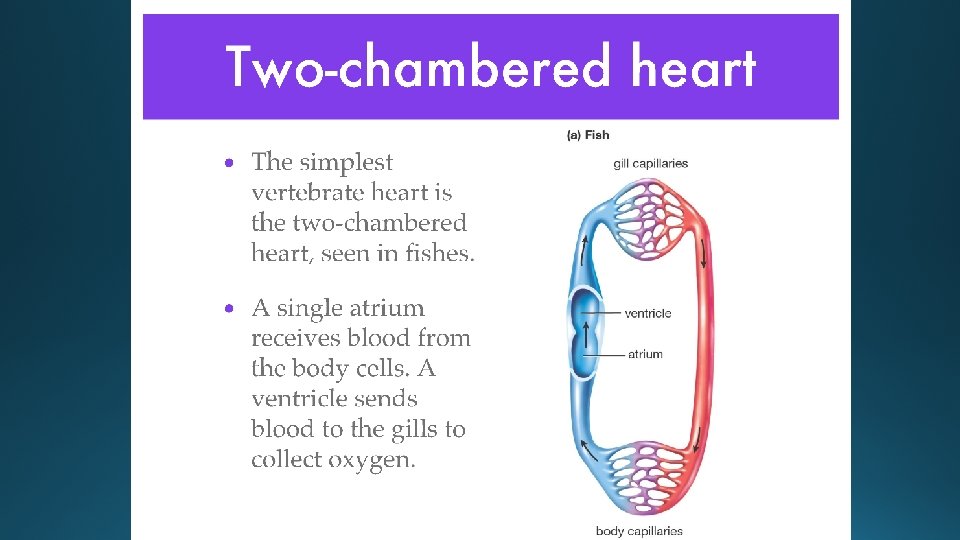
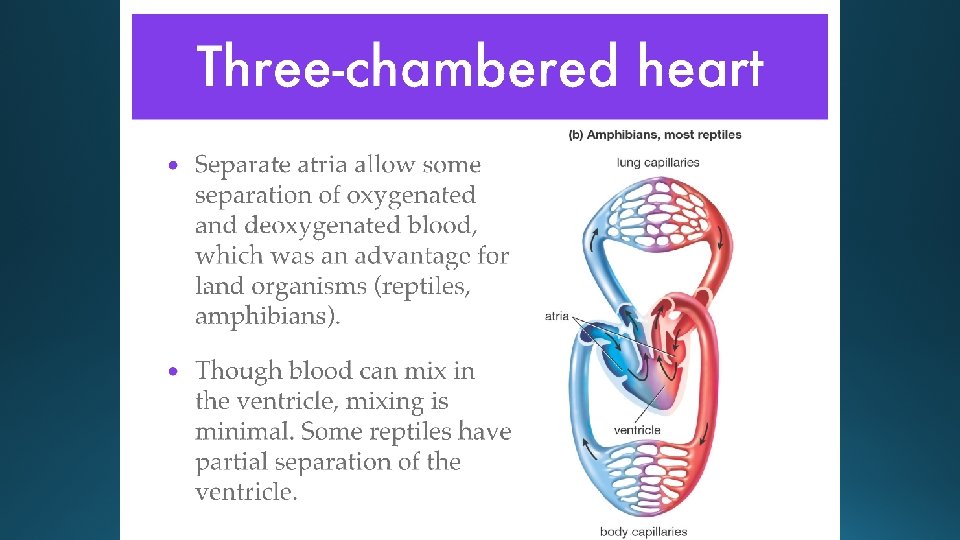
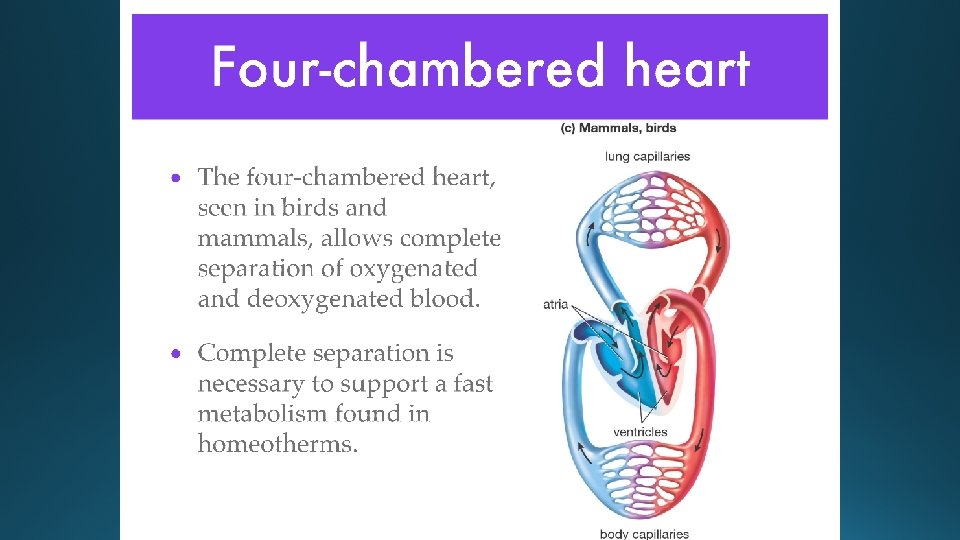
Heart of Vertebrates o In its embryogeny the vertebrate heart consist of two chambers, atrium and ventricle. o In adult fishes, 2 antechambers, sinus venosus >>> atrium, conus arteriosus >>> ventricle. o In amphibians, the atrium divides and antechambers persist. o Reptiles, the ventricle in completely divided. o The ventricle is completely divided in birds & mammals. o The 4 -chambered heart >>> 2 atria 8 upper) & 2 ventricles (lower). o The wall of the heart is composed of 3 layers: endocardium, myocardium and epicardium.
Layers of the Heart • Endocardium • Myocardium • Pericardium
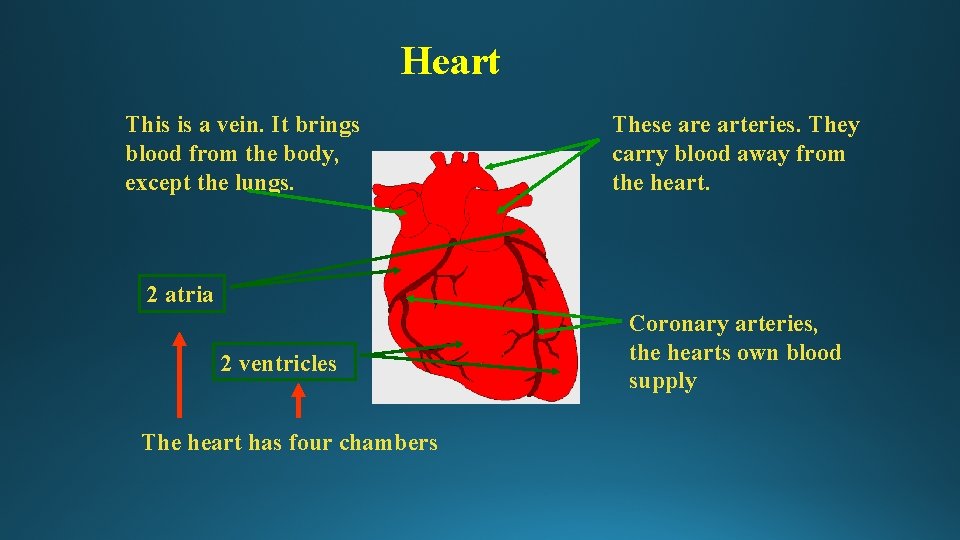
Heart This is a vein. It brings blood from the body, except the lungs. These arteries. They carry blood away from the heart. 2 atria 2 ventricles The heart has four chambers Coronary arteries, the hearts own blood supply

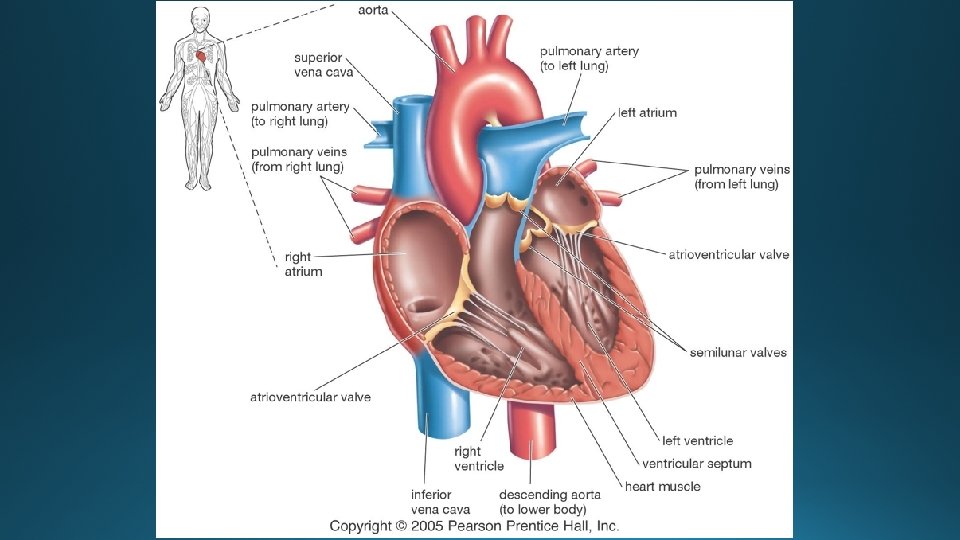
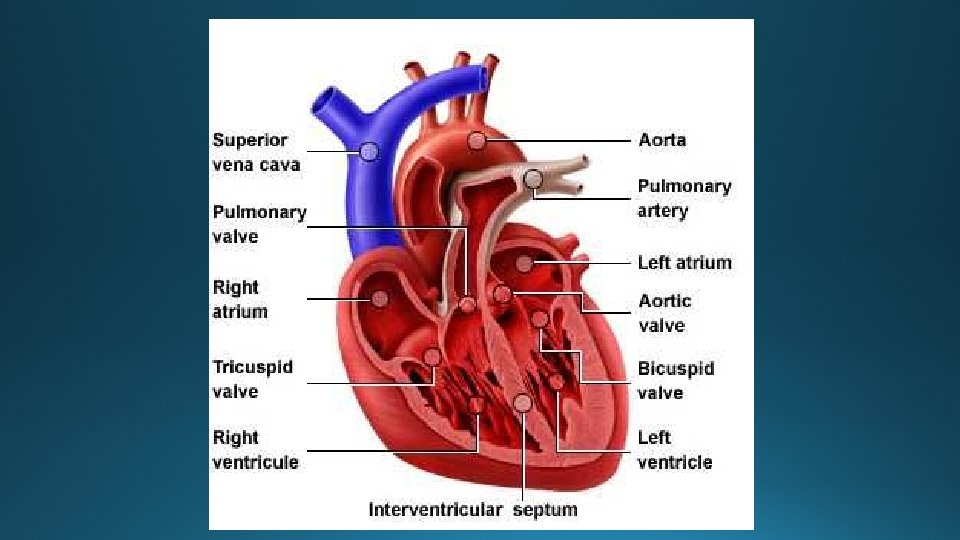
Structure of Cardiac chambers o o 4 -chambers. 2 -thin walled atria separated by interatrial septum. 2 -thick walled ventricles separated by interventricular septum. Atria and ventricles are connected by a fibrous ring.
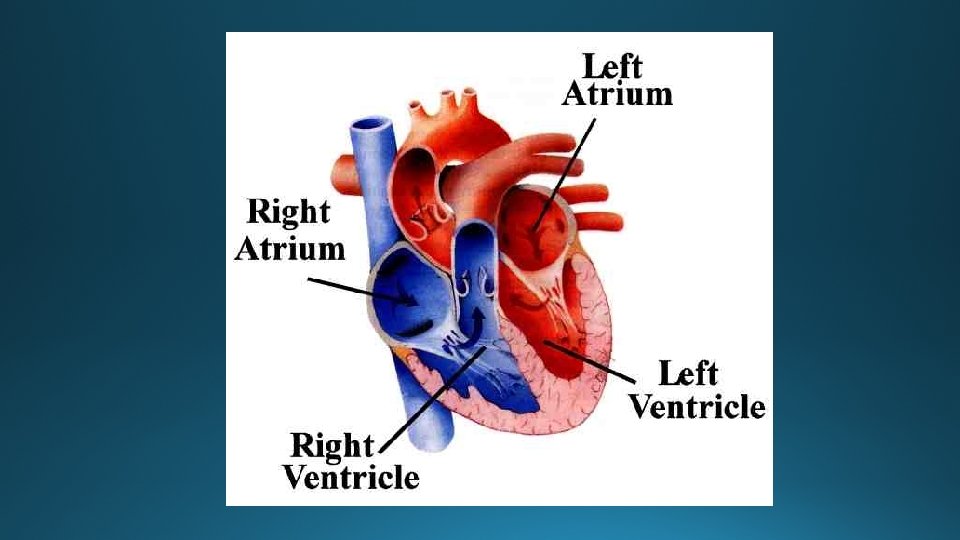
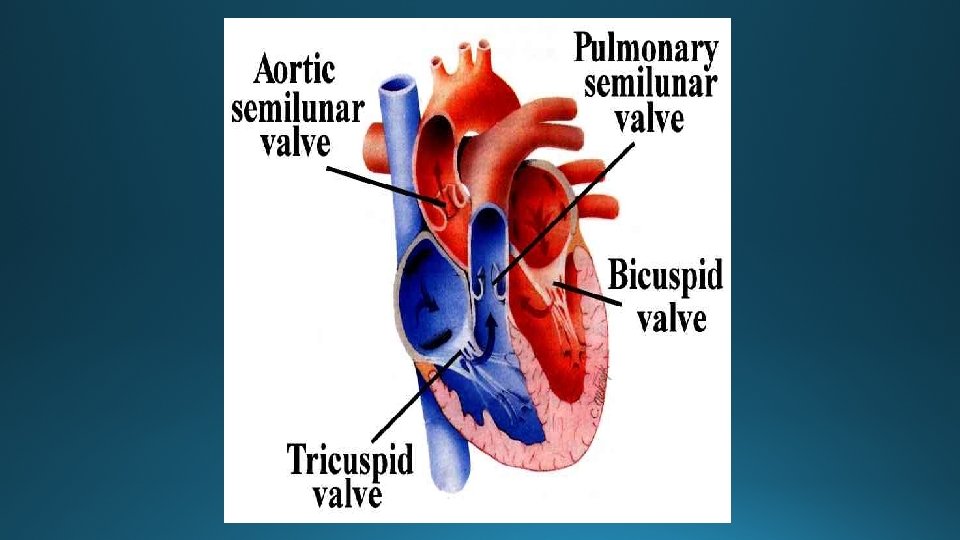
Valves of the Heart o 2 sets of valves. o Atrioventricular valves, separates the ventricles from atria. Prevent the blood in the ventricles from entering atria. o Composed of leaf like portion called cusps. o On the right side of heart 3 cusps are present form tricuspid. o The bicuspid valve (mitral) is on the left side. o Semilunar valves, separates the aorta and pulmonary trunk from the left and right ventricles, respectively.

Heart Action o The work of heart consists of rhythmic contractions and relaxations of the auricles and ventricles. o Contraction called > systole, Relaxation >> diastole. o Contraction & Relaxation take place in a different order. o The auricle & ventricle never contract simultaneously. o Auricle contract first. o Followed by ventricular systole. o Followed by ventricular diastole. And so on. o This sequence called cardiac cycle. o Lasts eight tenth of a second.
- Slides: 20