
CIRCULATORY SYSTEM Karen Lancour National Bio Rules Committee

CIRCULATORY SYSTEM Karen Lancour National Bio Rules Committee Chairman karenlancour@charter. net Patty Palmietto National Event Supervisor – Health Science
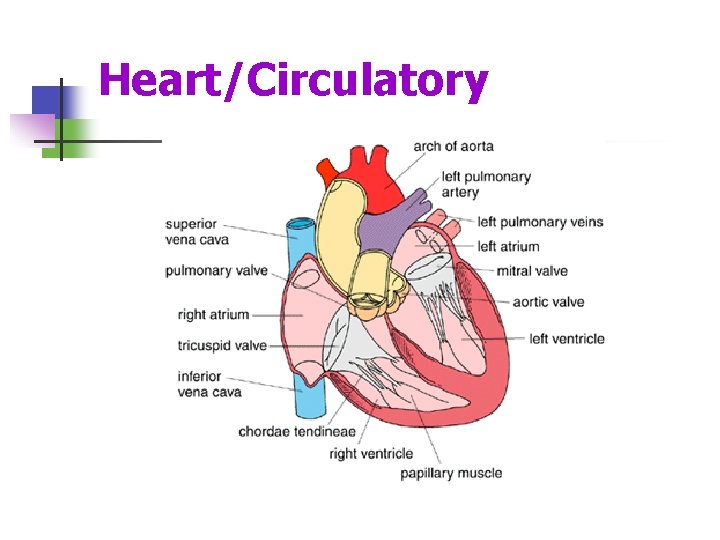
Heart/Circulatory
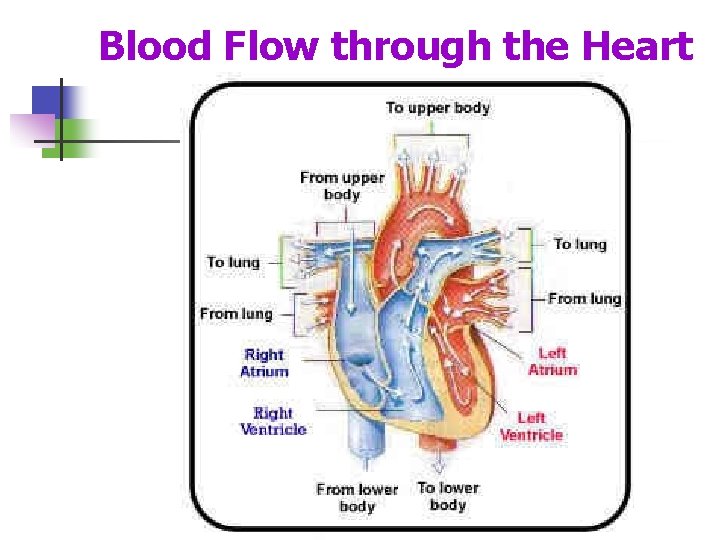
Blood Flow through the Heart
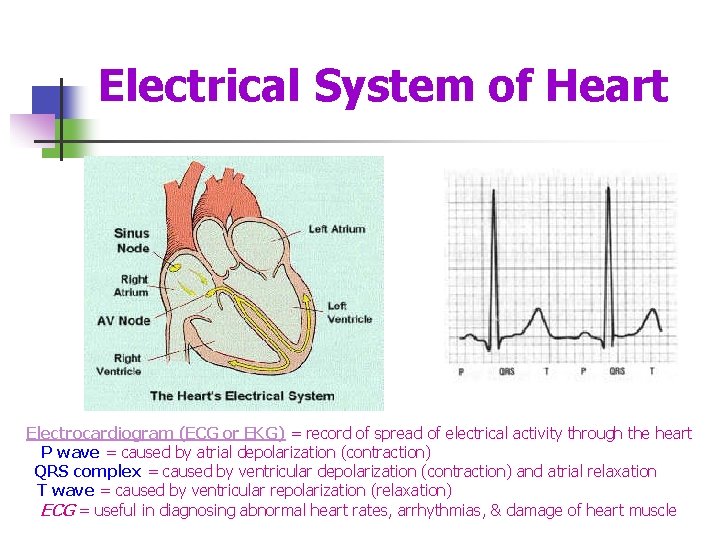
Electrical System of Heart Electrocardiogram (ECG or EKG) = record of spread of electrical activity through the heart P wave = caused by atrial depolarization (contraction) QRS complex = caused by ventricular depolarization (contraction) and atrial relaxation T wave = caused by ventricular repolarization (relaxation) ECG = useful in diagnosing abnormal heart rates, arrhythmias, & damage of heart muscle
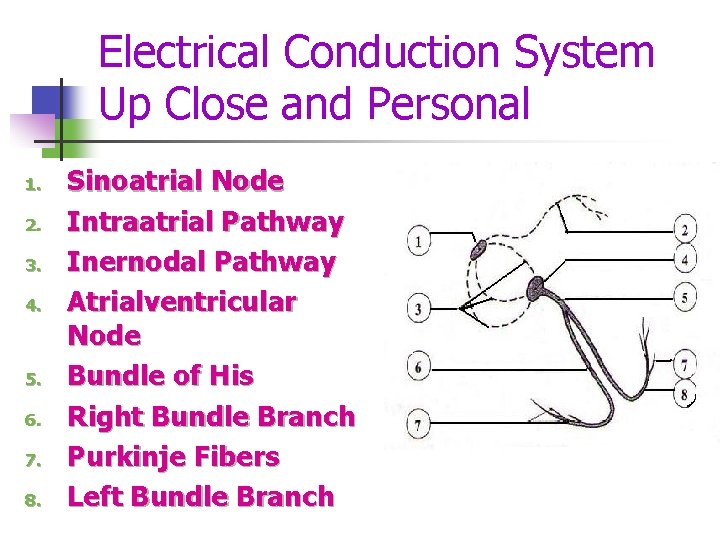
Electrical Conduction System Up Close and Personal 1. 2. 3. 4. 5. 6. 7. 8. Sinoatrial Node Intraatrial Pathway Inernodal Pathway Atrialventricular Node Bundle of His Right Bundle Branch Purkinje Fibers Left Bundle Branch
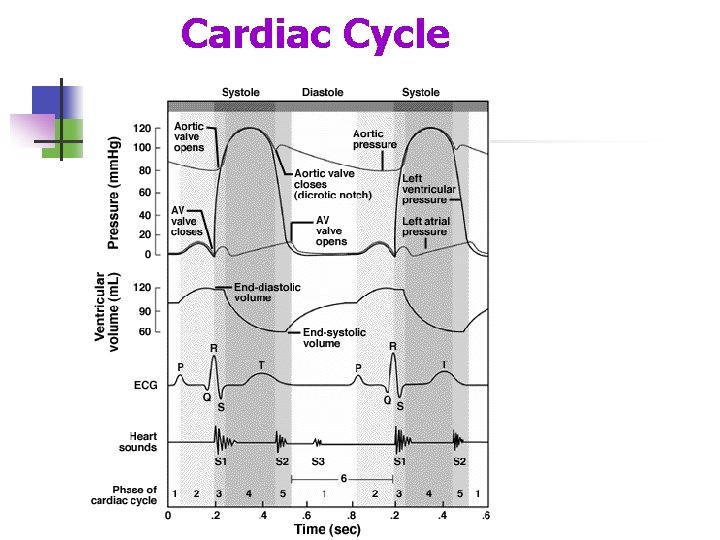
Cardiac Cycle
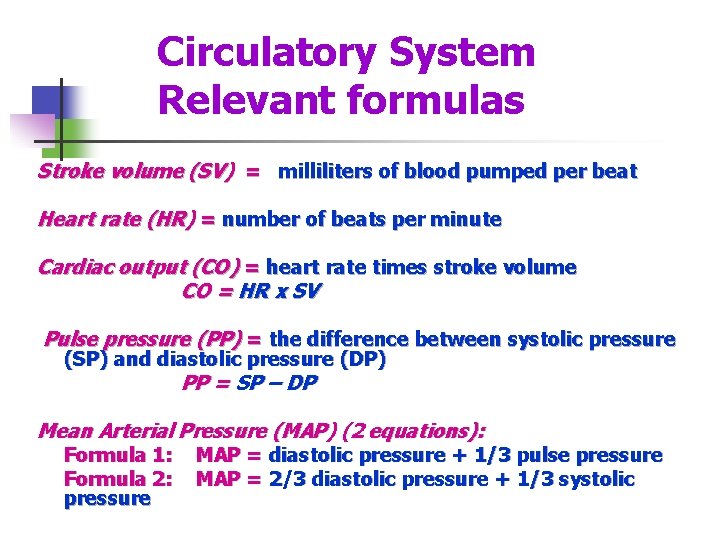
Circulatory System Relevant formulas Stroke volume (SV) = milliliters of blood pumped per beat Heart rate (HR) = number of beats per minute Cardiac output (CO) = heart rate times stroke volume CO = HR x SV Pulse pressure (PP) = the difference between systolic pressure (SP) and diastolic pressure (DP) PP = SP – DP Mean Arterial Pressure (MAP) (2 equations): Formula 1: Formula 2: pressure MAP = diastolic pressure + 1/3 pulse pressure MAP = 2/3 diastolic pressure + 1/3 systolic
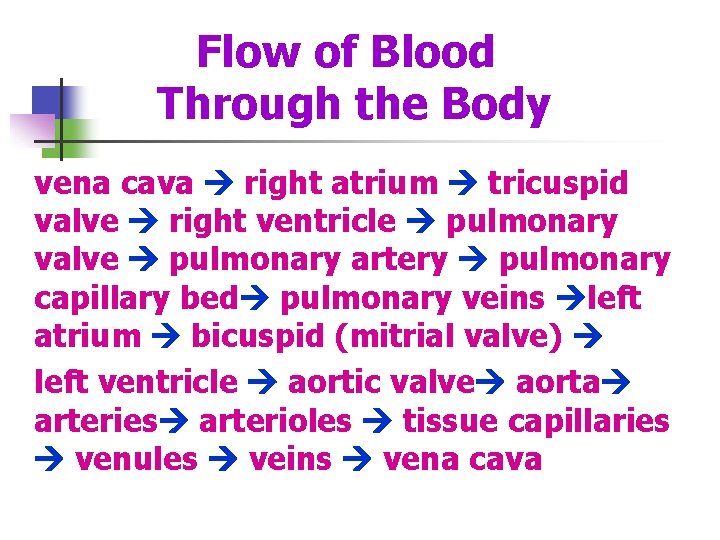
Flow of Blood Through the Body vena cava right atrium tricuspid valve right ventricle pulmonary valve pulmonary artery pulmonary capillary bed pulmonary veins left atrium bicuspid (mitrial valve) left ventricle aortic valve aorta arteries arterioles tissue capillaries venules veins vena cava
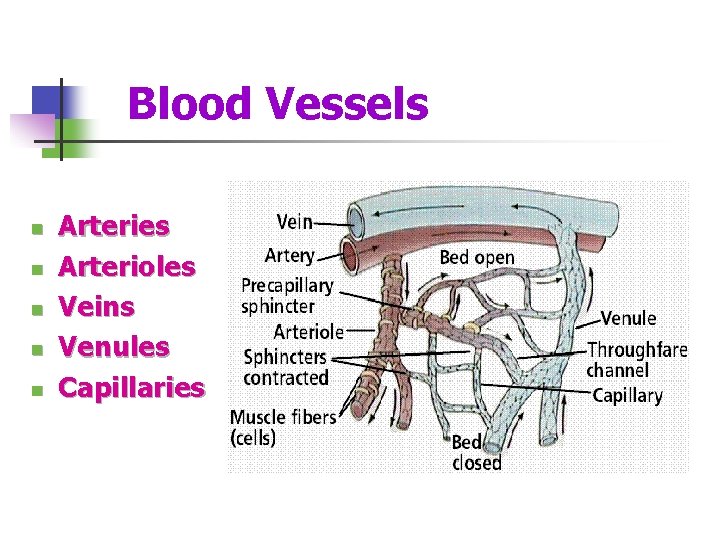
Blood Vessels n n n Arteries Arterioles Veins Venules Capillaries
Functions of Blood n Transportation: n n n oxygen & carbon dioxide nutrients waste products (metabolic wastes, excessive water, & ions) Regulation - hormones & heat (to regulate body temperature) Protection - clotting mechanism protects against blood loss & leucocytes provide immunity against many disease-causing agents
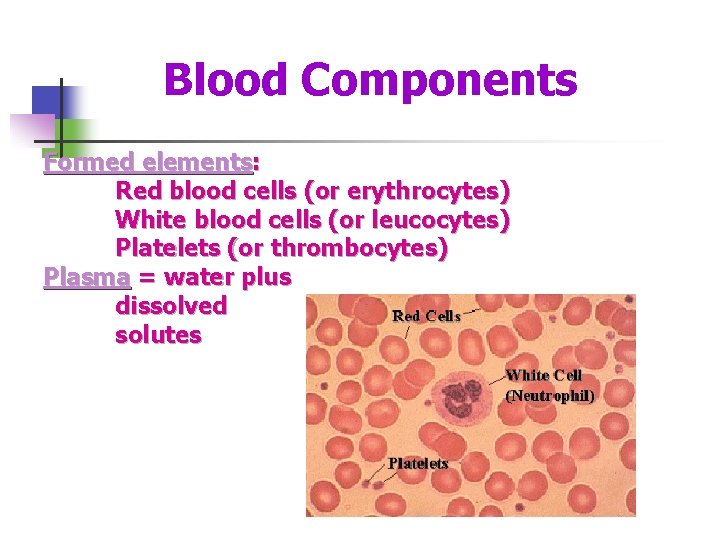
Blood Components Formed elements: Red blood cells (or erythrocytes) White blood cells (or leucocytes) Platelets (or thrombocytes) Plasma = water plus dissolved solutes
Lymph Vessels n n Lymph vessels are thin walled, valved structures that carry lymph Lymph is not under pressure and is propelled in a passive fashion Fluid that leaks from the vascular system is returned to general circulation via lymphatic vessels. Lymph vessels act as a reservoir for plasma and other substances including cells that leaked from the vascular system
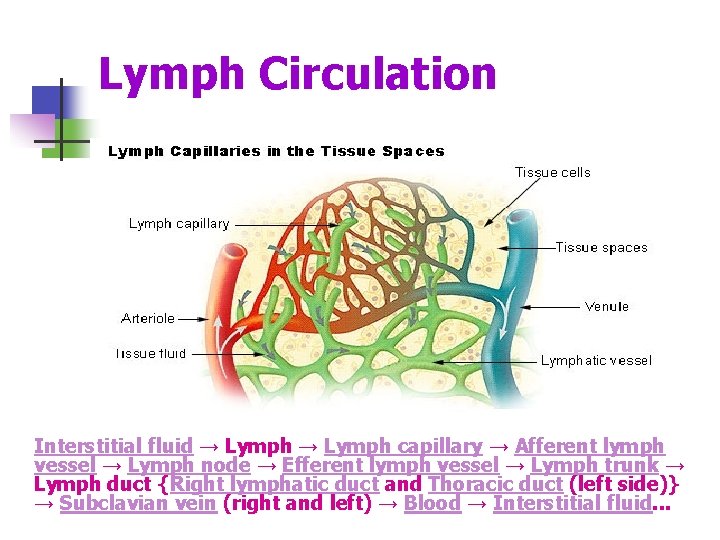
Lymph Circulation Interstitial fluid → Lymph capillary → Afferent lymph vessel → Lymph node → Efferent lymph vessel → Lymph trunk → Lymph duct {Right lymphatic duct and Thoracic duct (left side)} → Subclavian vein (right and left) → Blood → Interstitial fluid. . .
Effects of Exercise Circulatory System n Exercise decreases the risk of atherosclerosis; it decreases BP or causes a slower rise in BP Exercise decreases LDLs, decreases cholesterol, and increases HDLs Skeletal System n Exercise slows decline in minerals and maintains joint mobility
Major diseases of the Circulatory System n n n Arteriosclerosis, atherosclerosis, high blood pressure, high cholesterol, stroke, and mycardial infarction Symptoms of disorders Treatments and prevention
- Slides: 15