
Circulatory System in Animals Regents Biology 2008 2009
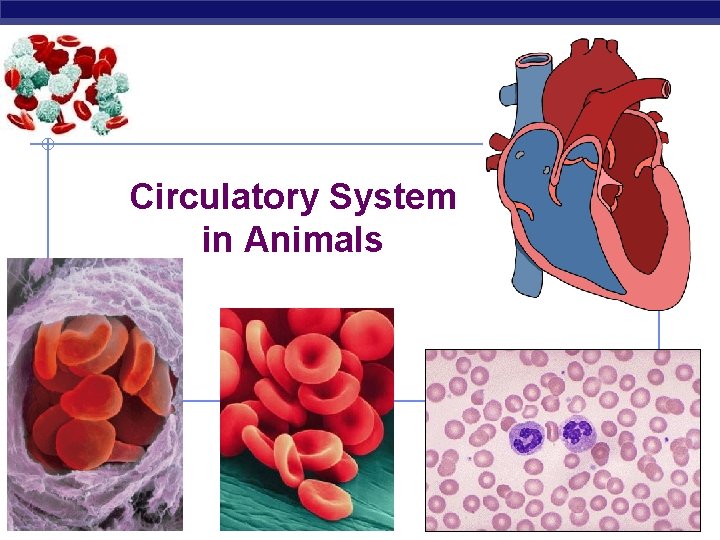
Circulatory System in Animals Regents Biology 2008 -2009
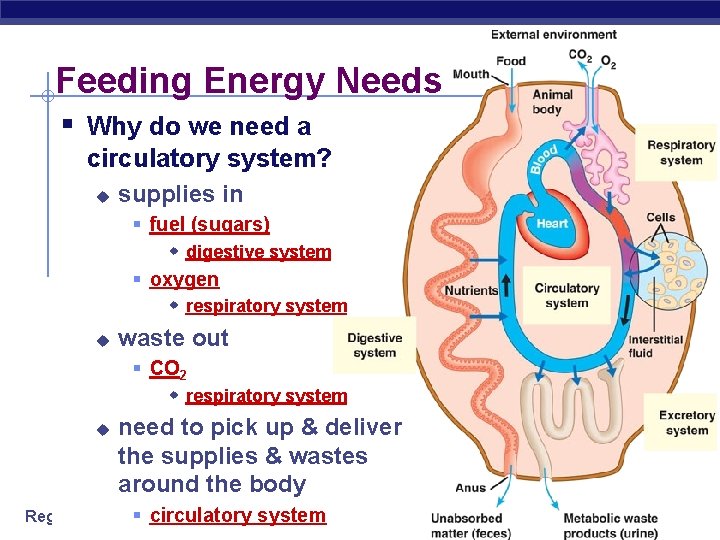
Feeding Energy Needs § Why do we need a circulatory system? u supplies in § fuel (sugars) w digestive system § oxygen w respiratory system u waste out § CO 2 w respiratory system u need to pick up & deliver the supplies & wastes around the body Regents Biology § circulatory system
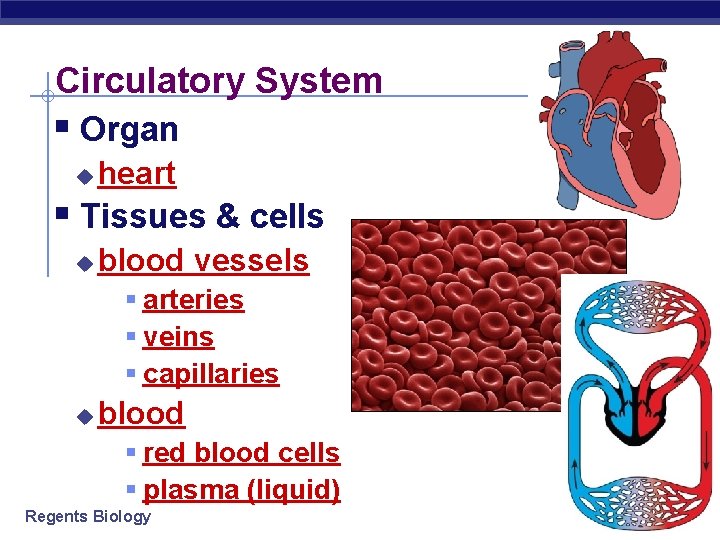
Circulatory System § Organ u heart § Tissues & cells u blood vessels § arteries § veins § capillaries u blood § red blood cells § plasma (liquid) Regents Biology
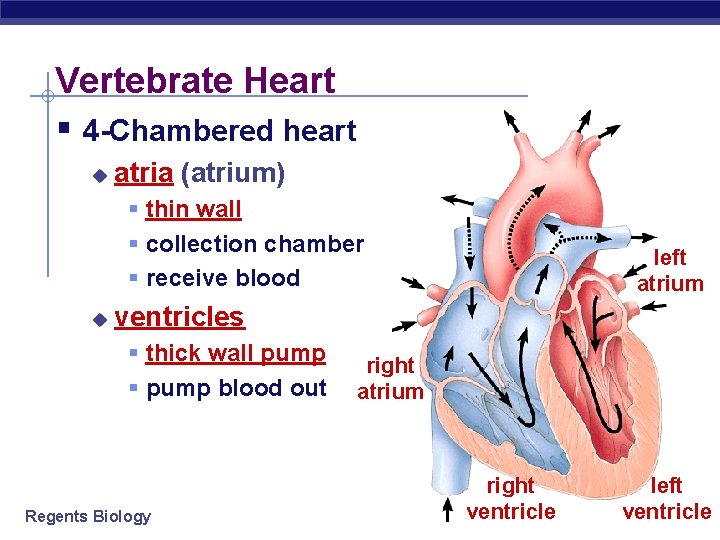
Vertebrate Heart § 4 -Chambered heart u atria (atrium) § thin wall § collection chamber § receive blood u left atrium ventricles § thick wall pump § pump blood out Regents Biology right atrium right ventricle left ventricle
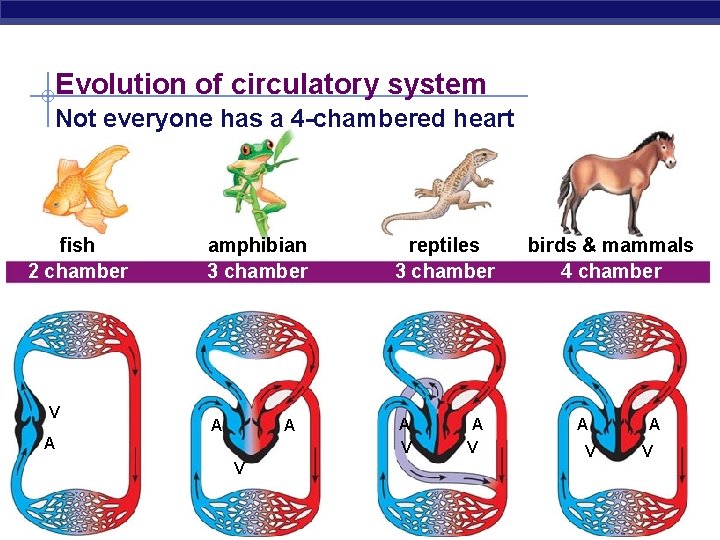
Evolution of circulatory system Not everyone has a 4 -chambered heart fish 2 chamber V amphibian 3 chamber reptiles 3 chamber A A V Regents Biology A V birds & mammals 4 chamber A V
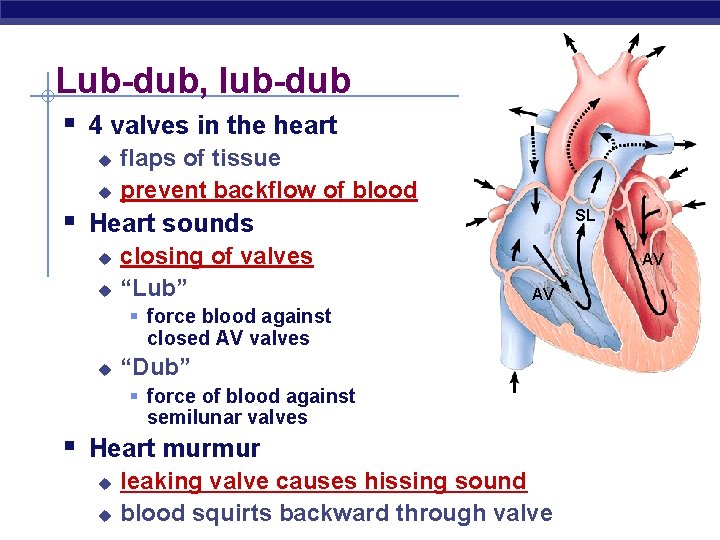
Lub-dub, lub-dub § 4 valves in the heart u u flaps of tissue prevent backflow of blood § Heart sounds u u closing of valves “Lub” SL AV AV § force blood against closed AV valves u “Dub” § force of blood against semilunar valves § Heart murmur leaking valve causes hissing sound u blood squirts backward through valve Regents Biology u
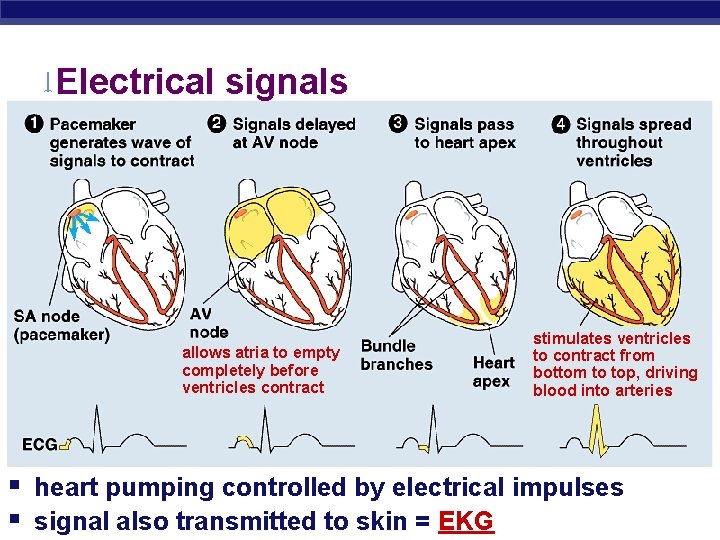
Electrical signals allows atria to empty completely before ventricles contract stimulates ventricles to contract from bottom to top, driving blood into arteries § heart pumping controlled by electrical impulses Biology § Regents signal also transmitted to skin = EKG
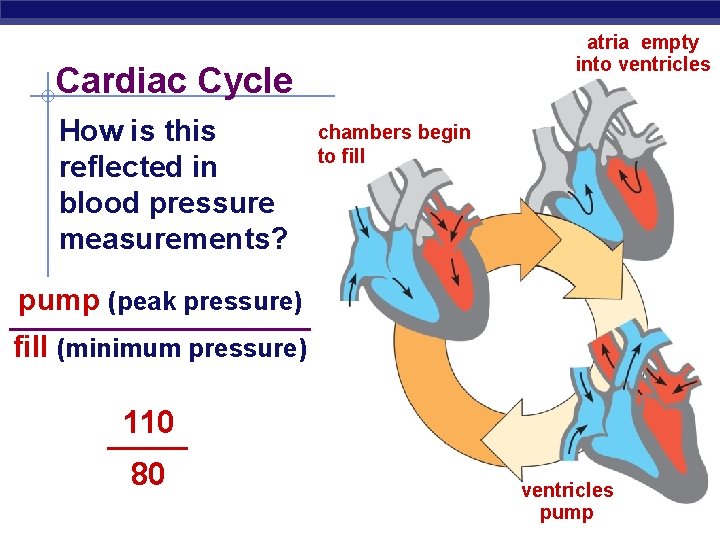
atria empty into ventricles Cardiac Cycle How is this reflected in blood pressure measurements? chambers begin to fill pump (peak pressure) _________ fill (minimum pressure) 110 ______ 80 Regents Biology ventricles pump
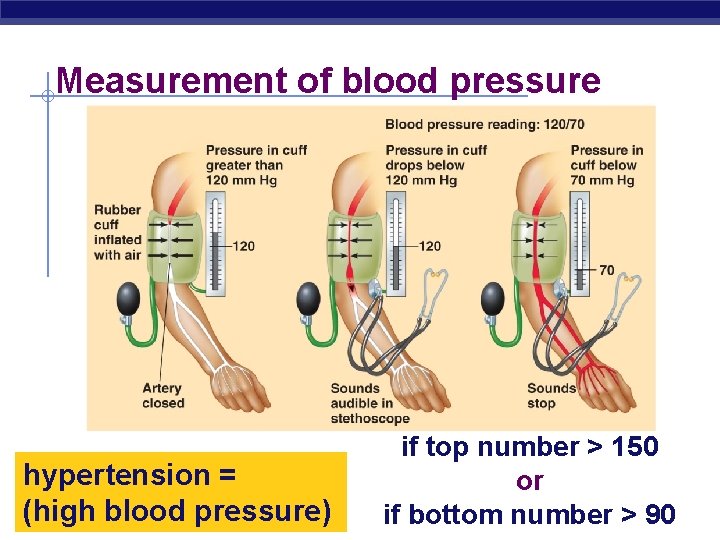
Measurement of blood pressure hypertension = (high blood pressure) Regents Biology if top number > 150 or if bottom number > 90
Have a heart? Ask Questions!! Regents Biology 2008 -2009
Circulatory System Blood Vessels Regents Biology 2008 -2009
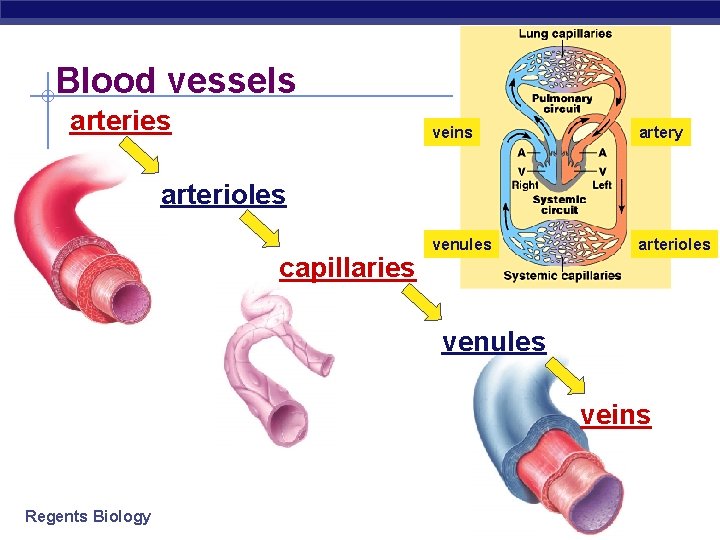
Blood vessels arteries veins artery venules arterioles capillaries venules veins Regents Biology
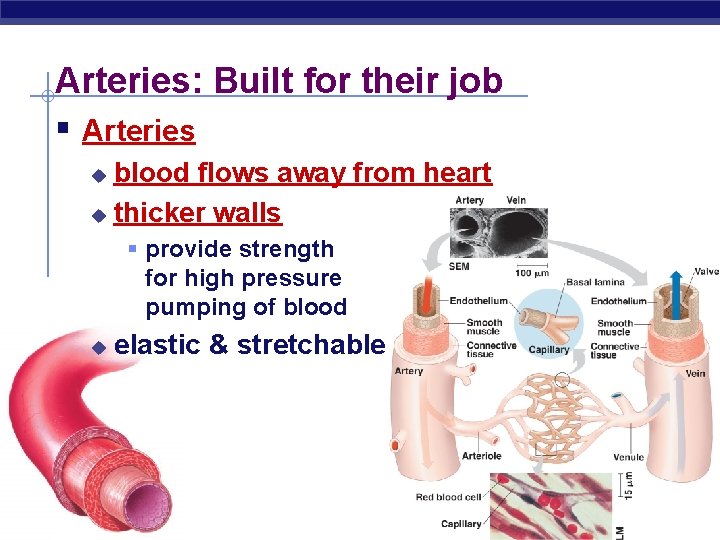
Arteries: Built for their job § Arteries blood flows away from heart u thicker walls u § provide strength for high pressure pumping of blood u elastic & stretchable Regents Biology
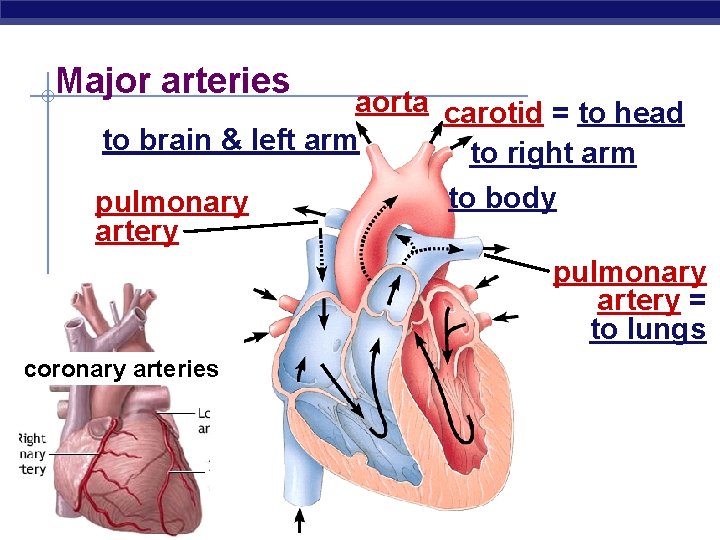
Major arteries aorta carotid = to head to brain & left arm to right arm to body pulmonary artery = to lungs coronary arteries Regents Biology
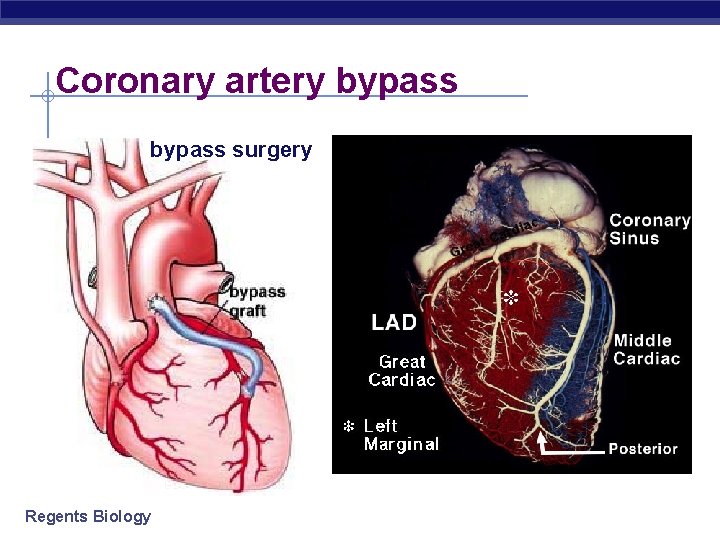
Coronary artery bypass surgery Regents Biology
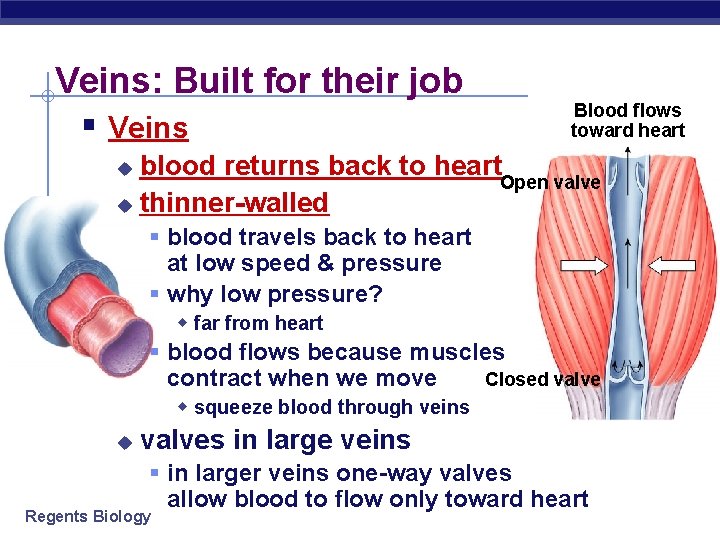
Veins: Built for their job § Veins Blood flows toward heart blood returns back to heart. Open valve u thinner-walled u § blood travels back to heart at low speed & pressure § why low pressure? w far from heart § blood flows because muscles contract when we move Closed valve w squeeze blood through veins u valves in large veins § in larger veins one-way valves allow blood to flow only toward heart Regents Biology
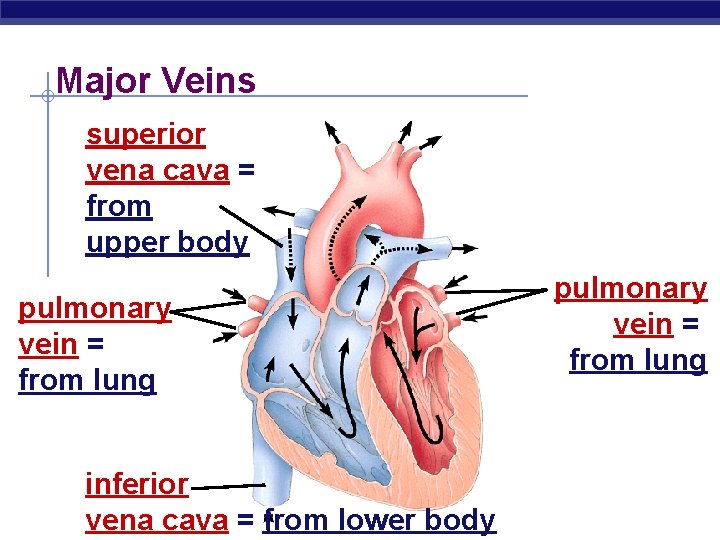
Major Veins superior vena cava = from upper body pulmonary vein = from lung inferior Regentsvena Biology cava = from lower body pulmonary vein = from lung
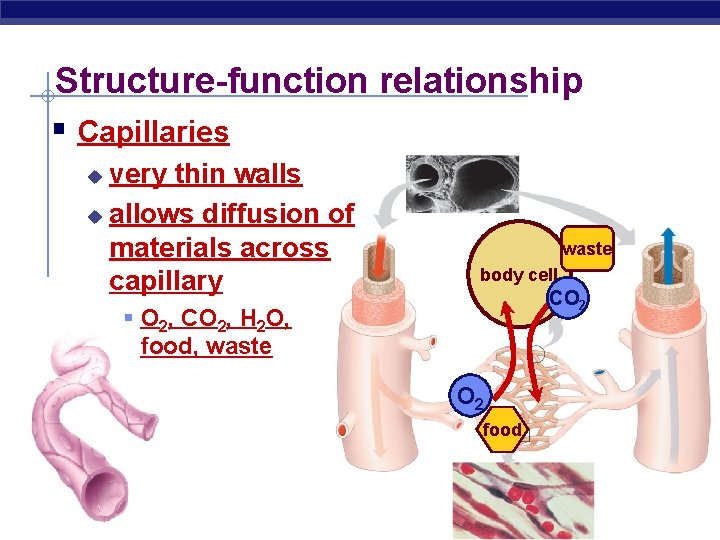
Structure-function relationship § Capillaries very thin walls u allows diffusion of materials across capillary u waste body cell CO 2 § O 2, CO 2, H 2 O, food, waste O 2 food Regents Biology
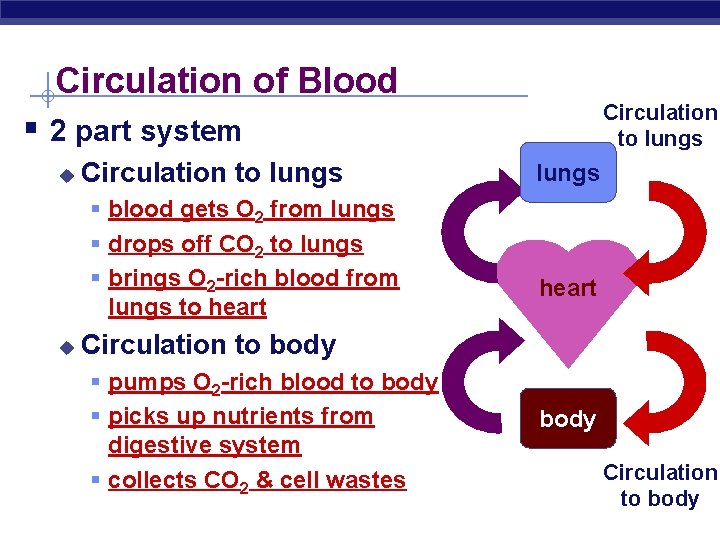
Circulation of Blood Circulation to lungs § 2 part system u Circulation to lungs § blood gets O 2 from lungs § drops off CO 2 to lungs § brings O 2 -rich blood from lungs to heart u lungs heart Circulation to body § pumps O 2 -rich blood to body § picks up nutrients from digestive system § collects CO 2 & cell wastes Regents Biology body Circulation to body
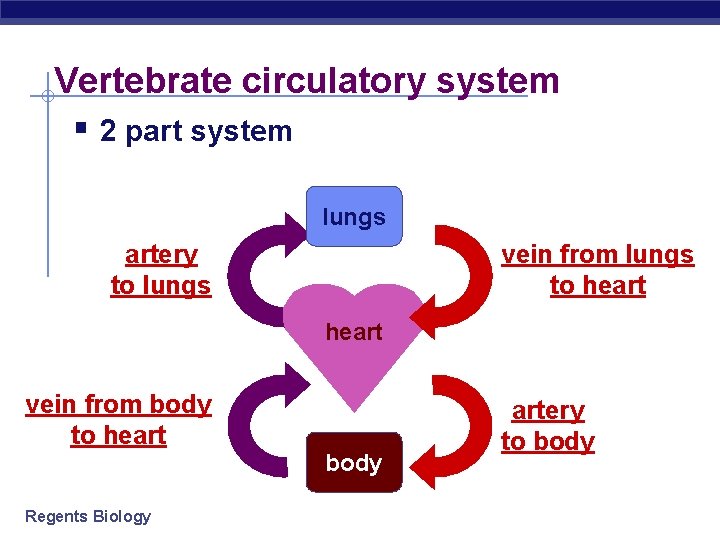
Vertebrate circulatory system § 2 part system lungs artery to lungs vein from lungs to heart vein from body to heart Regents Biology body artery to body
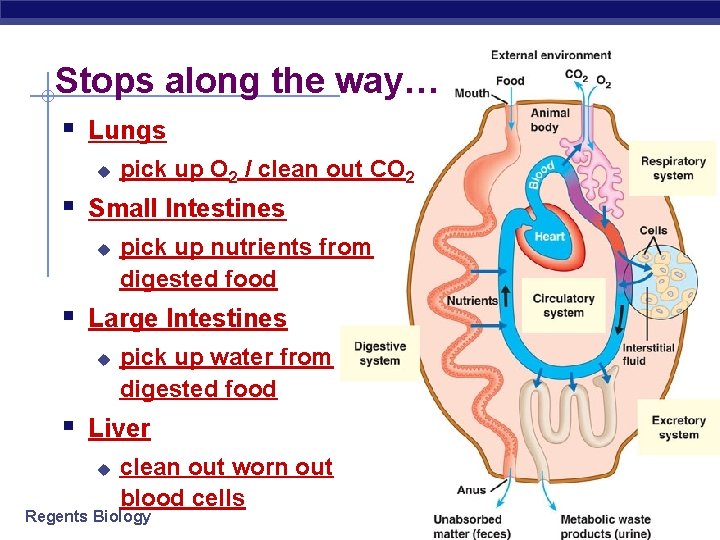
Stops along the way… § Lungs u pick up O 2 / clean out CO 2 § Small Intestines u pick up nutrients from digested food § Large Intestines u pick up water from digested food § Liver u clean out worn out blood cells Regents Biology
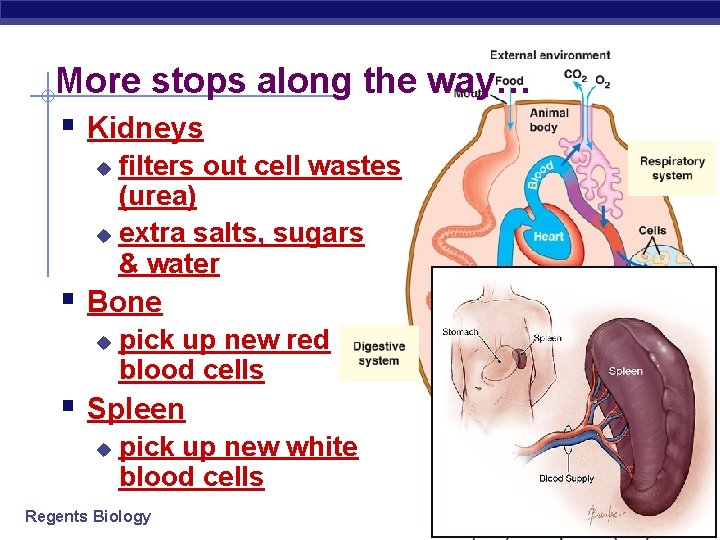
More stops along the way… § Kidneys filters out cell wastes (urea) u extra salts, sugars & water u § Bone u pick up new red blood cells § Spleen u pick up new white blood cells Regents Biology
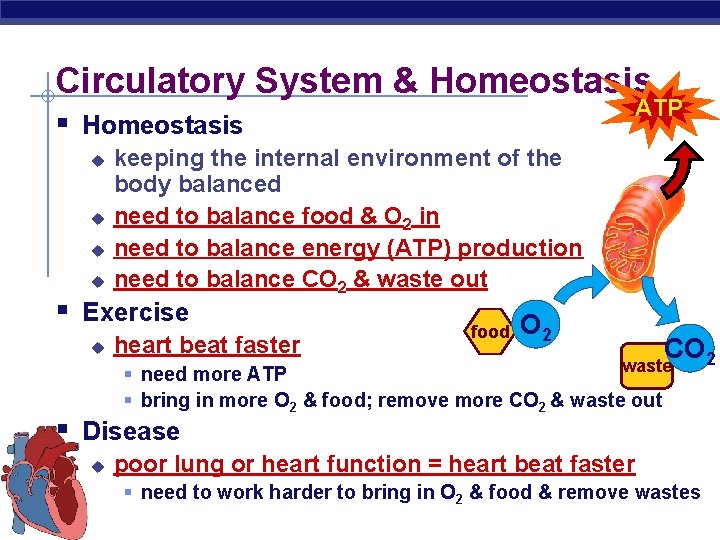
Circulatory System & Homeostasis ATP § Homeostasis u u keeping the internal environment of the body balanced need to balance food & O 2 in need to balance energy (ATP) production need to balance CO 2 & waste out § Exercise u heart beat faster food O 2 CO 2 waste § need more ATP § bring in more O 2 & food; remove more CO 2 & waste out § Disease u poor lung or heart function = heart beat faster § need to work harder to bring in O 2 & food & remove wastes Regents Biology
Have a heart? Ask Questions!! Regents Biology 2008 -2009
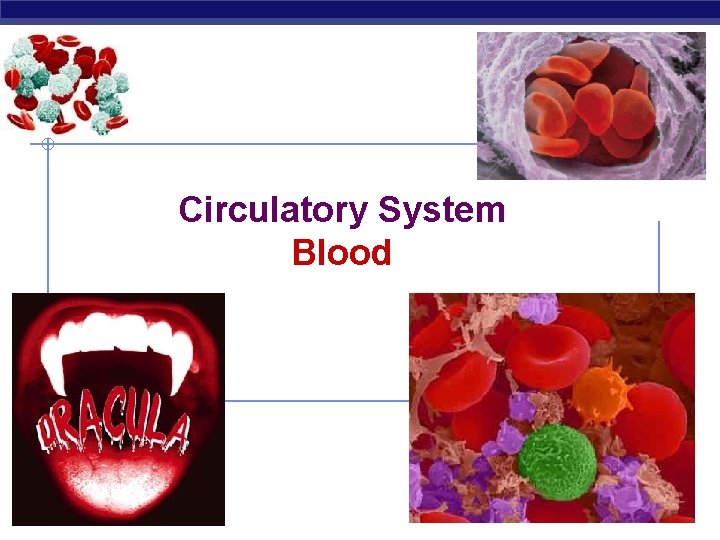
Circulatory System Blood Regents Biology 2008 -2009
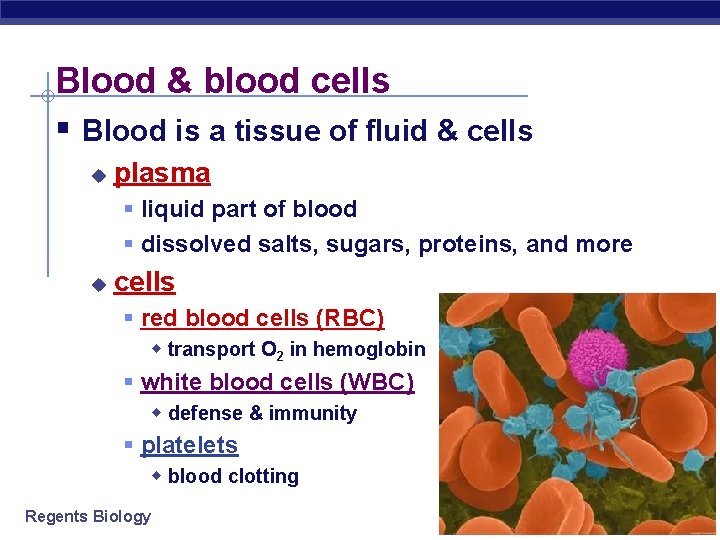
Blood & blood cells § Blood is a tissue of fluid & cells u plasma § liquid part of blood § dissolved salts, sugars, proteins, and more u cells § red blood cells (RBC) w transport O 2 in hemoglobin § white blood cells (WBC) w defense & immunity § platelets w blood clotting Regents Biology
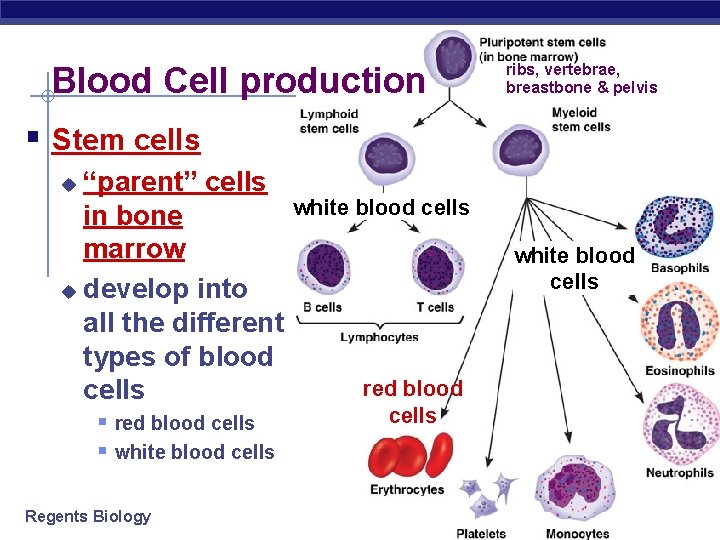
Blood Cell production ribs, vertebrae, breastbone & pelvis § Stem cells “parent” cells in bone marrow u develop into all the different types of blood cells u § red blood cells § white blood cells Regents Biology white blood cells red blood cells
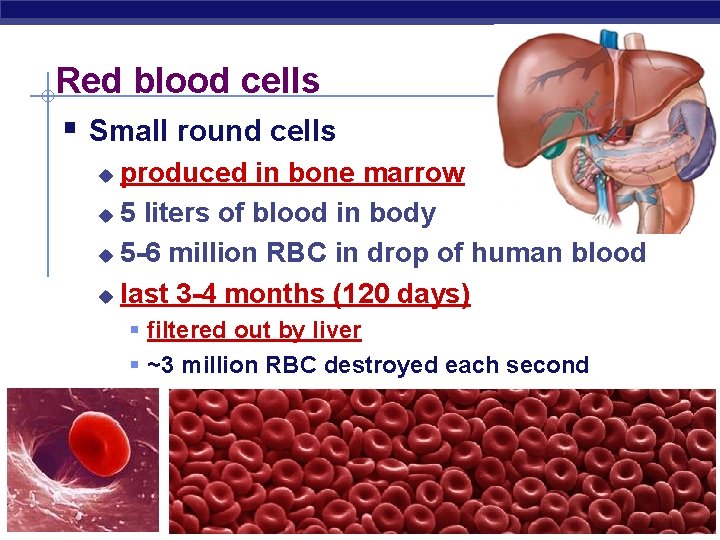
Red blood cells § Small round cells produced in bone marrow u 5 liters of blood in body u 5 -6 million RBC in drop of human blood u last 3 -4 months (120 days) u § filtered out by liver § ~3 million RBC destroyed each second Regents Biology
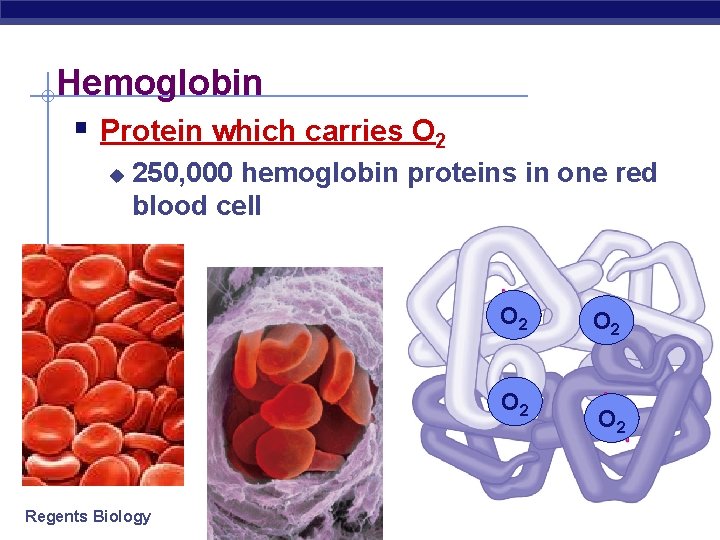
Hemoglobin § Protein which carries O 2 u 250, 000 hemoglobin proteins in one red blood cell O 2 Regents Biology O 2
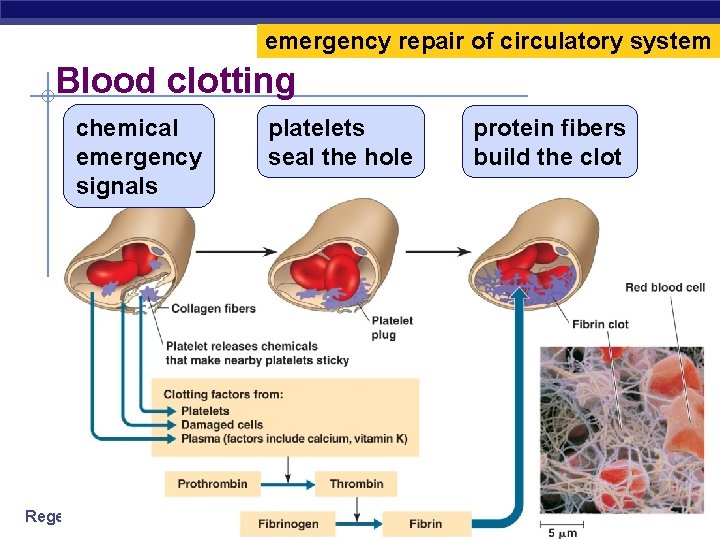
emergency repair of circulatory system Blood clotting chemical emergency signals Regents Biology platelets seal the hole protein fibers build the clot
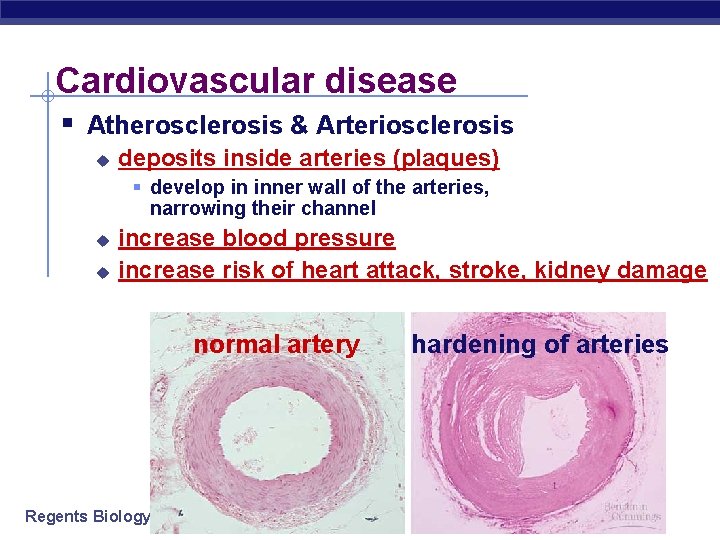
Cardiovascular disease § Atherosclerosis & Arteriosclerosis u deposits inside arteries (plaques) § develop in inner wall of the arteries, narrowing their channel u u increase blood pressure increase risk of heart attack, stroke, kidney damage normal artery Regents Biology hardening of arteries
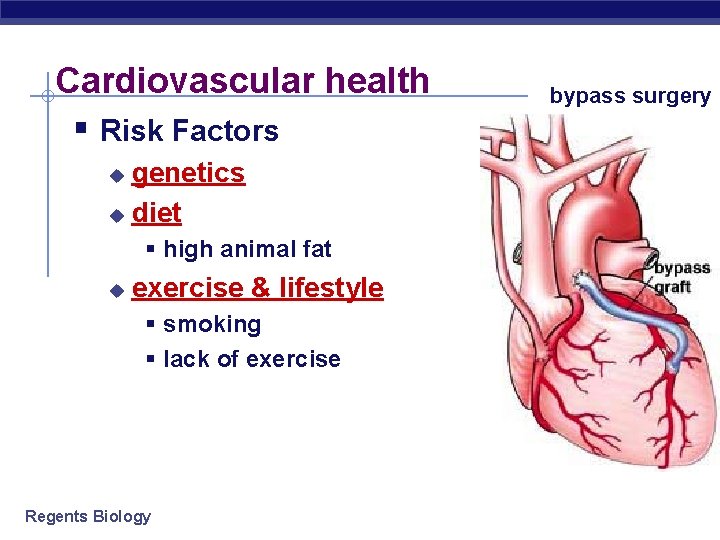
Cardiovascular health § Risk Factors genetics u diet u § high animal fat u exercise & lifestyle § smoking § lack of exercise Regents Biology bypass surgery
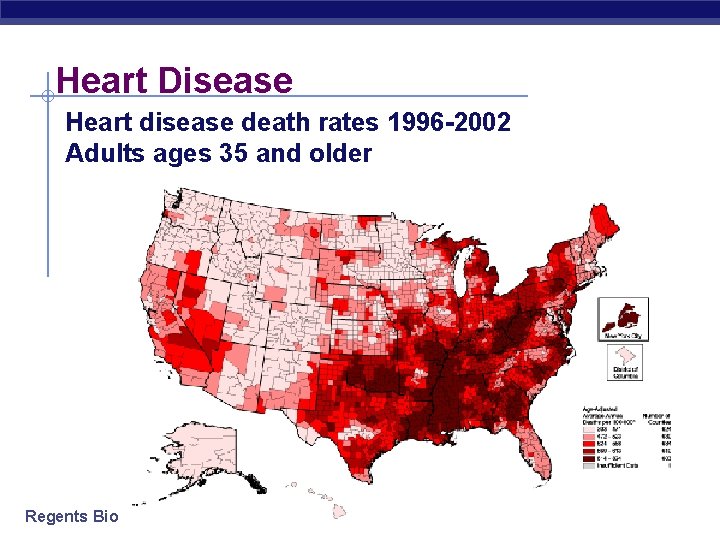
Heart Disease Heart disease death rates 1996 -2002 Adults ages 35 and older Regents Biology
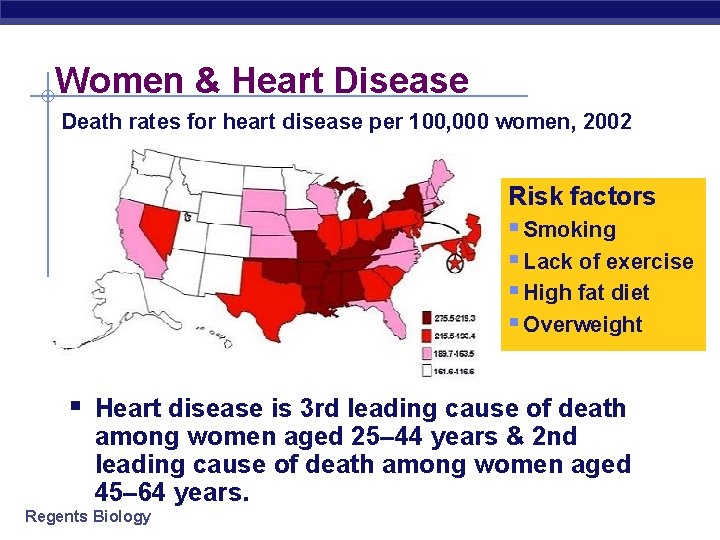
Women & Heart Disease Death rates for heart disease per 100, 000 women, 2002 Risk factors § Smoking § Lack of exercise § High fat diet § Overweight § Heart disease is 3 rd leading cause of death among women aged 25– 44 years & 2 nd leading cause of death among women aged 45– 64 years. Regents Biology
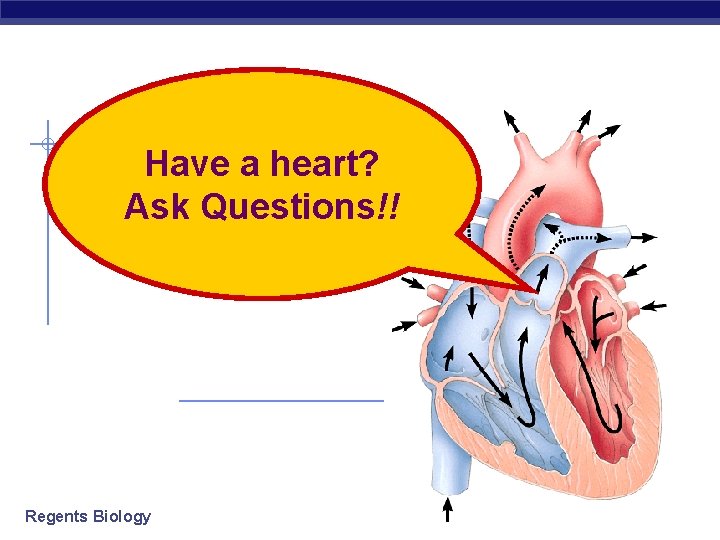
Have a heart? Ask Questions!! Regents Biology 2008 -2009
- Slides: 35