
Circulatory System Heart Attack and Stroke Brendan Weibel
Circulatory System Heart Attack and Stroke Brendan Weibel, Jarrett Bachelor, & Jesse Rodriguez
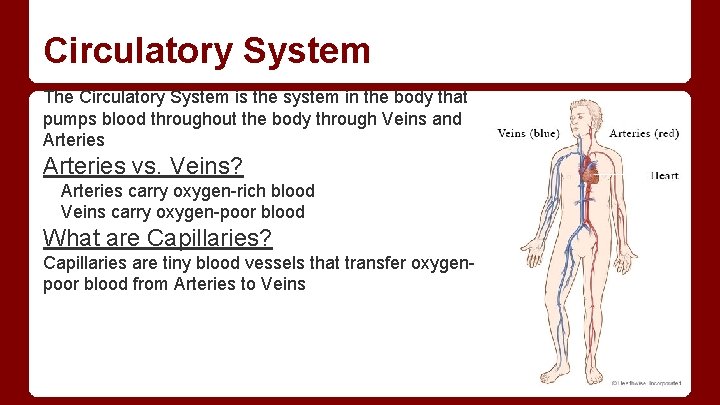
Circulatory System The Circulatory System is the system in the body that pumps blood throughout the body through Veins and Arteries vs. Veins? Arteries carry oxygen-rich blood Veins carry oxygen-poor blood What are Capillaries? Capillaries are tiny blood vessels that transfer oxygenpoor blood from Arteries to Veins
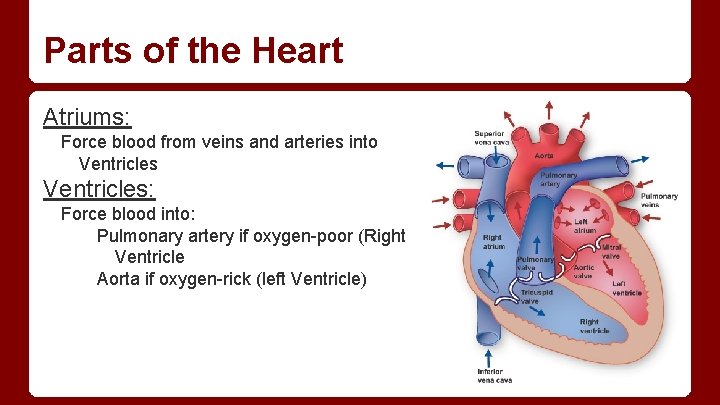
Parts of the Heart Atriums: Force blood from veins and arteries into Ventricles: Force blood into: Pulmonary artery if oxygen-poor (Right Ventricle Aorta if oxygen-rick (left Ventricle)
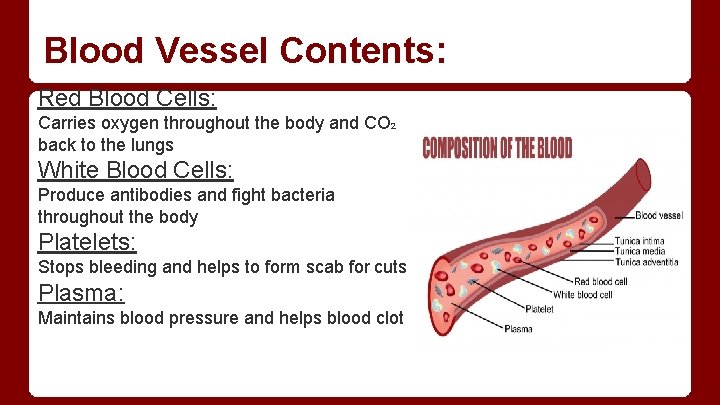
Blood Vessel Contents: Red Blood Cells: Carries oxygen throughout the body and CO 2 back to the lungs White Blood Cells: Produce antibodies and fight bacteria throughout the body Platelets: Stops bleeding and helps to form scab for cuts Plasma: Maintains blood pressure and helps blood clot
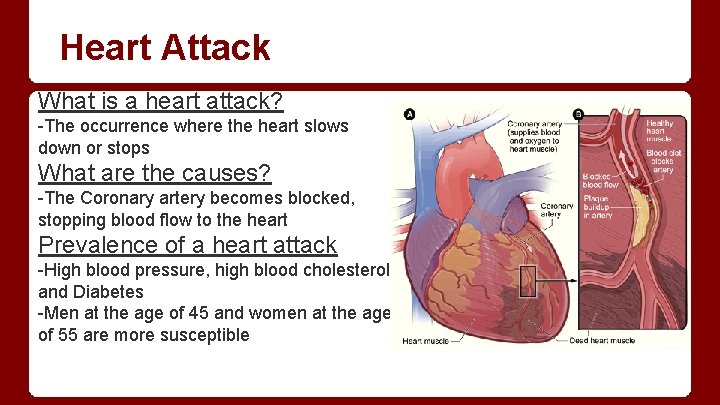
Heart Attack What is a heart attack? -The occurrence where the heart slows down or stops What are the causes? -The Coronary artery becomes blocked, stopping blood flow to the heart Prevalence of a heart attack -High blood pressure, high blood cholesterol, and Diabetes -Men at the age of 45 and women at the age of 55 are more susceptible
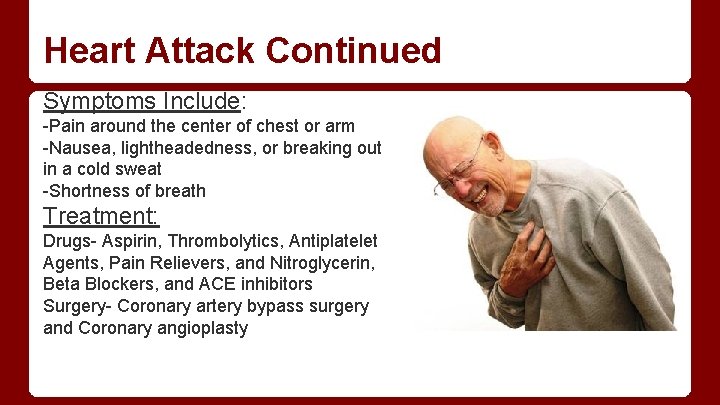
Heart Attack Continued Symptoms Include: -Pain around the center of chest or arm -Nausea, lightheadedness, or breaking out in a cold sweat -Shortness of breath Treatment: Drugs- Aspirin, Thrombolytics, Antiplatelet Agents, Pain Relievers, and Nitroglycerin, Beta Blockers, and ACE inhibitors Surgery- Coronary artery bypass surgery and Coronary angioplasty
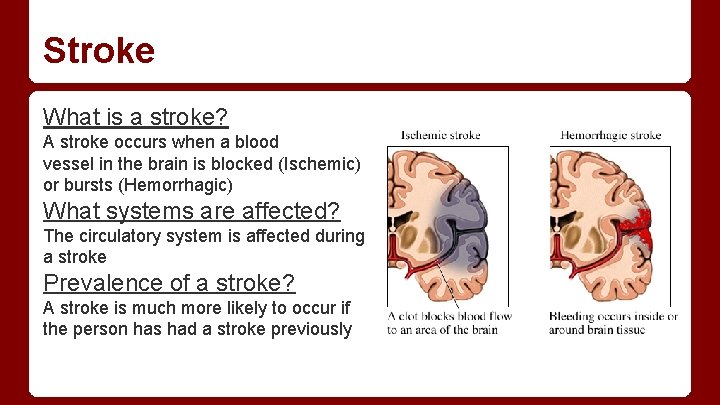
Stroke What is a stroke? A stroke occurs when a blood vessel in the brain is blocked (Ischemic) or bursts (Hemorrhagic) What systems are affected? The circulatory system is affected during a stroke Prevalence of a stroke? A stroke is much more likely to occur if the person has had a stroke previously
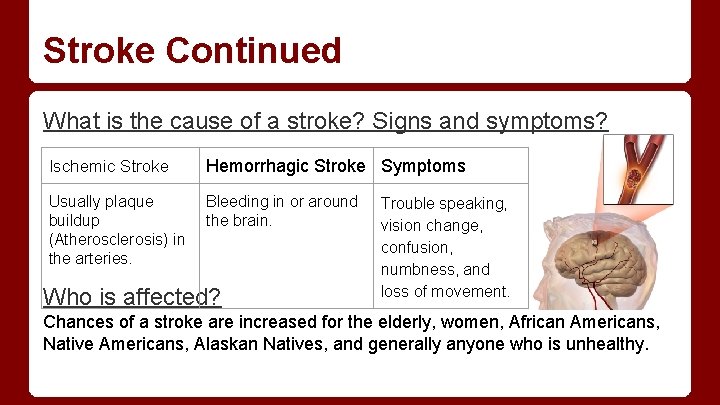
Stroke Continued What is the cause of a stroke? Signs and symptoms? Ischemic Stroke Hemorrhagic Stroke Symptoms Usually plaque buildup (Atherosclerosis) in the arteries. Bleeding in or around the brain. Who is affected? Trouble speaking, vision change, confusion, numbness, and loss of movement. Chances of a stroke are increased for the elderly, women, African Americans, Native Americans, Alaskan Natives, and generally anyone who is unhealthy.
Stroke Continued What prevention or treatment is available? ● Control risk factors (high blood pressure, high cholesterol, smoking, etc. ) ● Treat medical conditions that can lead to a stroke ● If diagnosed soon enough, medicine can stabilize the vital systems Important Facts ● Stroke kills almost 130, 000 Americans each year ● Every year, more than 795, 000 people in the United States have a stroke ● About 87% of all strokes are ischemic strokes, when blood flow to the brain is blocked
Works Cited ● http: //www. webmd. com/heart/cardiovascular-system ● http: //www. texasheart. org/HIC/Anatomy/anatomy 2. cfm ● http: //www. strokeassociation. org/STROKEORG/About. Stroke/Typesof. Strok e/Types-of-Stroke_UCM_308531_Sub. Home. Page. jsp ● http: //www. webmd. com/stroke/tc/stroke-topic-overview ● http: //www. cdc. gov/stroke/ ● http: //www. wisegeek. org/what-is-the-difference-arteries-veins-bloodvessels-and-capillaries. htm ● http: //www. mayoclinic. org/diseases-conditions/heartattack/basics/treatment/con-20019520
- Slides: 10