
Circulatory System Headings Vocabulary Important Info Functions of
Circulatory System Headings Vocabulary Important Info
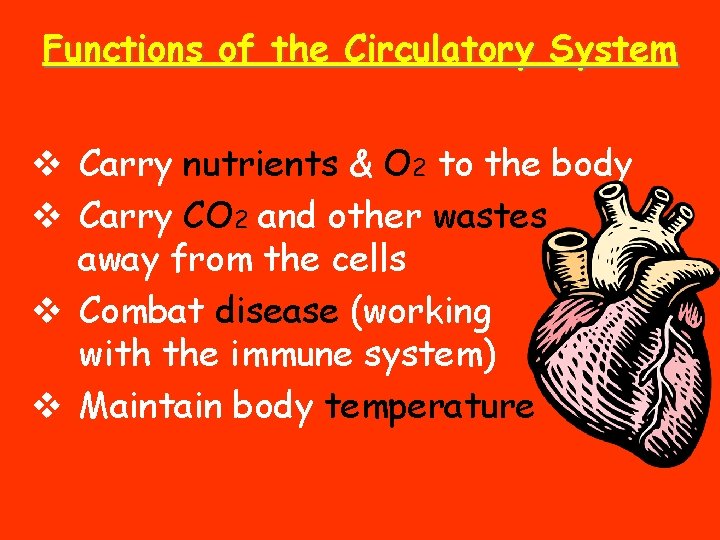
Functions of the Circulatory System v Carry nutrients & O 2 to the body v Carry CO 2 and other wastes away from the cells v Combat disease (working with the immune system) v Maintain body temperature
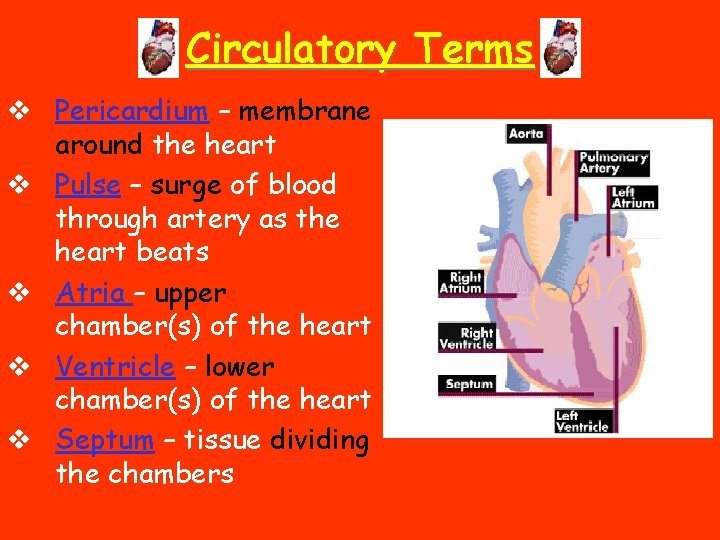
Circulatory Terms v Pericardium – membrane around the heart v Pulse – surge of blood through artery as the heart beats v Atria – upper chamber(s) of the heart v Ventricle – lower chamber(s) of the heart v Septum – tissue dividing the chambers
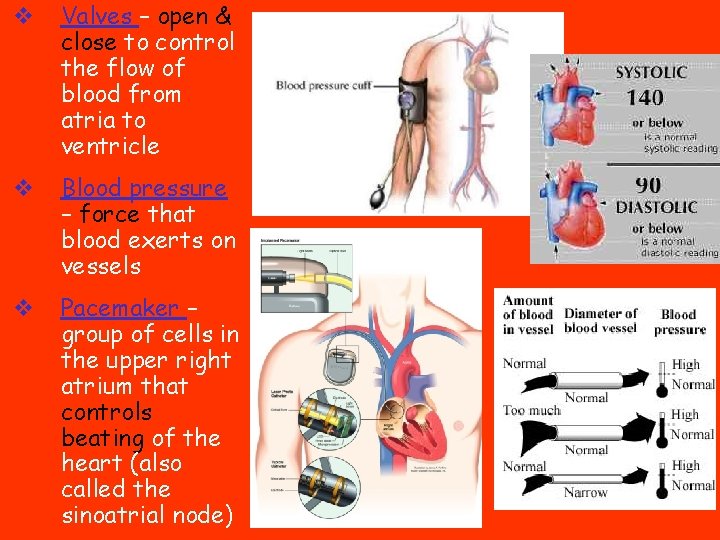
v Valves – open & close to control the flow of blood from atria to ventricle v Blood pressure – force that blood exerts on vessels v Pacemaker – group of cells in the upper right atrium that controls beating of the heart (also called the sinoatrial node)
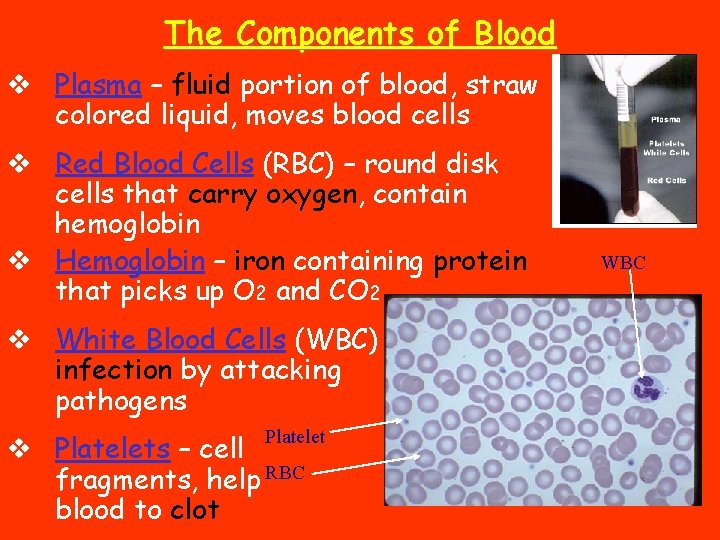
The Components of Blood v Plasma – fluid portion of blood, straw colored liquid, moves blood cells v Red Blood Cells (RBC) – round disk cells that carry oxygen, contain hemoglobin v Hemoglobin – iron containing protein that picks up O 2 and CO 2 v White Blood Cells (WBC) – infection by attacking pathogens Platelet v Platelets – cell fragments, help RBC blood to clot WBC
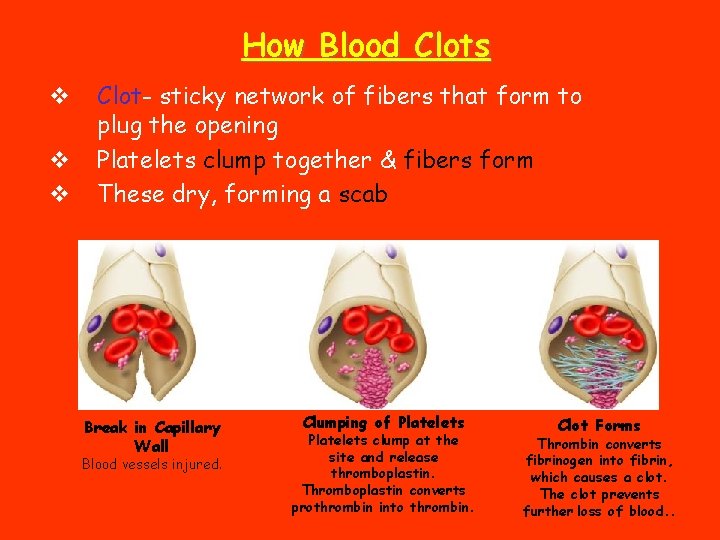
How Blood Clots v v v Clot- sticky network of fibers that form to plug the opening Platelets clump together & fibers form These dry, forming a scab Break in Capillary Wall Blood vessels injured. Clumping of Platelets clump at the site and release thromboplastin. Thromboplastin converts prothrombin into thrombin. Clot Forms Thrombin converts fibrinogen into fibrin, which causes a clot. The clot prevents further loss of blood. .
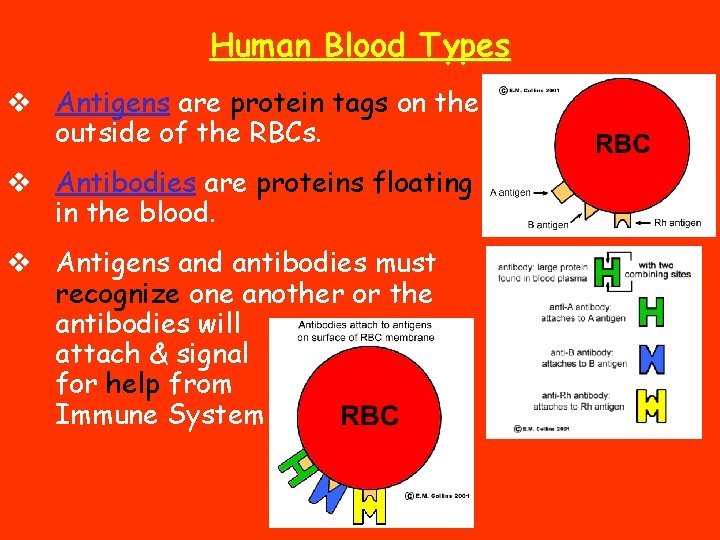
Human Blood Types v Antigens are protein tags on the outside of the RBCs. v Antibodies are proteins floating in the blood. v Antigens and antibodies must recognize one another or the antibodies will attach & signal for help from Immune System
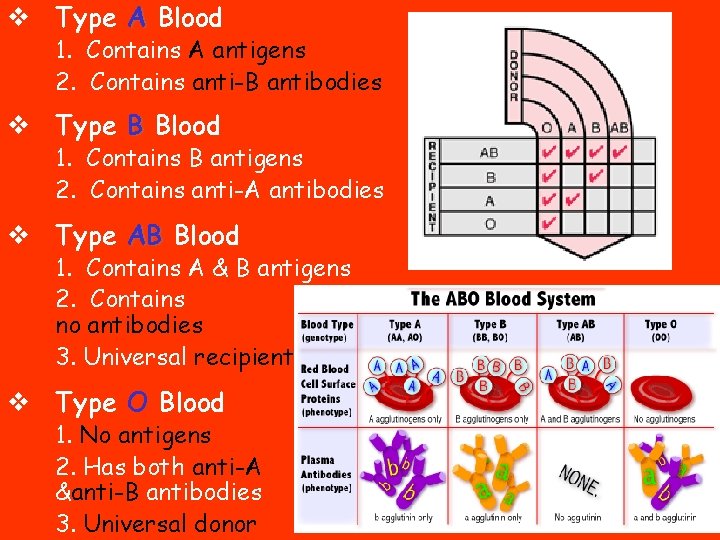
v Type A Blood 1. Contains A antigens 2. Contains anti-B antibodies v Type B Blood 1. Contains B antigens 2. Contains anti-A antibodies v Type AB Blood 1. Contains A & B antigens 2. Contains no antibodies 3. Universal recipient v Type O Blood 1. No antigens 2. Has both anti-A &anti-B antibodies 3. Universal donor
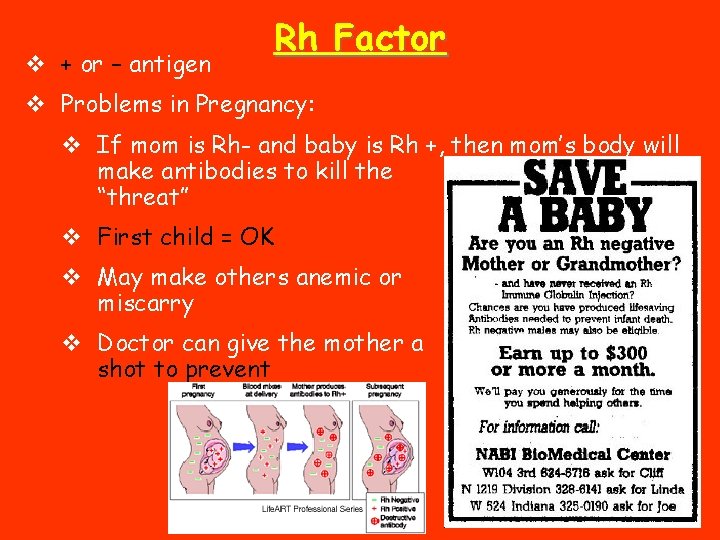
v + or – antigen Rh Factor v Problems in Pregnancy: v If mom is Rh- and baby is Rh +, then mom’s body will make antibodies to kill the “threat” v First child = OK v May make others anemic or miscarry v Doctor can give the mother a shot to prevent
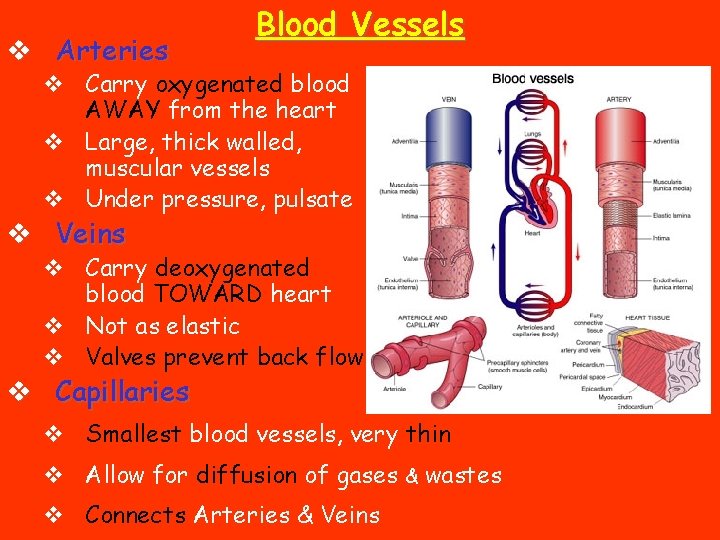
v Arteries Blood Vessels v Carry oxygenated blood AWAY from the heart v Large, thick walled, muscular vessels v Under pressure, pulsate v Veins v Carry deoxygenated blood TOWARD heart v Not as elastic v Valves prevent back flow v Capillaries v Smallest blood vessels, very thin v Allow for diffusion of gases & wastes v Connects Arteries & Veins

Fish v 2 chambered heart v 1 atria receives deoxygenated blood from the body and sends it to the 1 ventricle which sends it to the gills and the body v Slow blood flow vall energy pushes blood through the gills v Path: Atria Ventricle Gills Body

Tadpoles Amphibians v Have a 2 chambered heart v Tadpole has gills like a fish Adults v Have 3 chambered heart v 2 atria & 1 ventricle v One atrium receives oxygen-rich blood from the skin & lungs v A second atrium receives oxygen-poor blood from the body v Both feed into the single ventricle that pumps blood back to the body
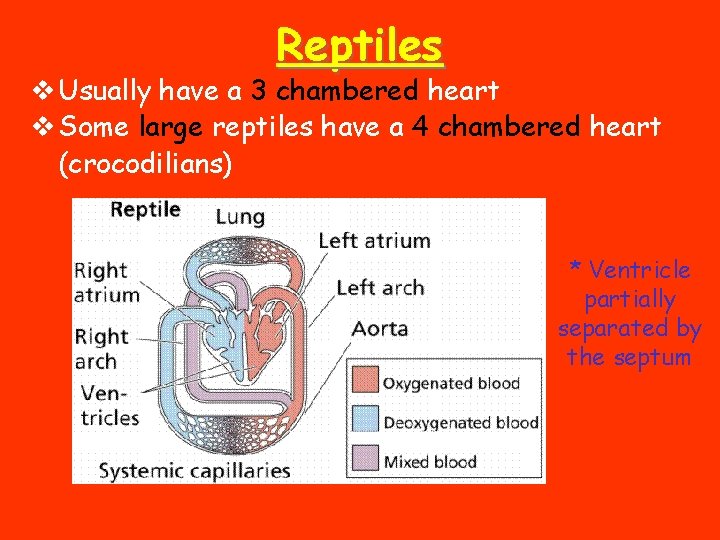
Reptiles v Usually have a 3 chambered heart v Some large reptiles have a 4 chambered heart (crocodilians) * Ventricle partially separated by the septum
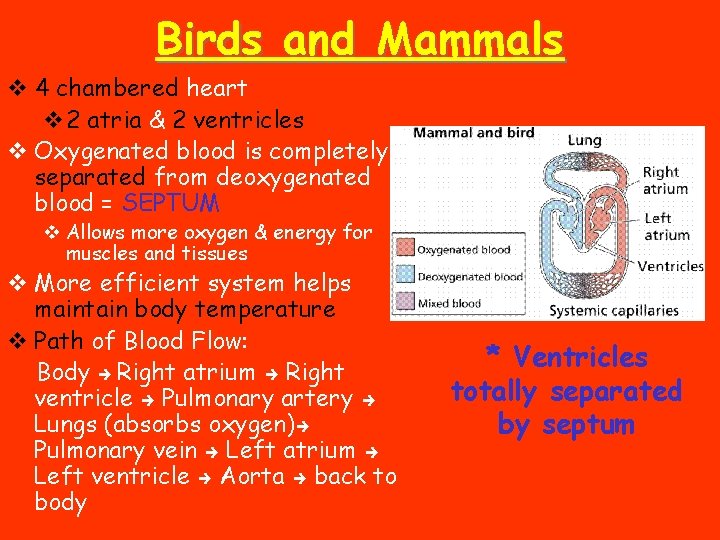
Birds and Mammals v 4 chambered heart v 2 atria & 2 ventricles v Oxygenated blood is completely separated from deoxygenated blood = SEPTUM v Allows more oxygen & energy for muscles and tissues v More efficient system helps maintain body temperature v Path of Blood Flow: Body Right atrium Right ventricle Pulmonary artery Lungs (absorbs oxygen) Pulmonary vein Left atrium Left ventricle Aorta back to body * Ventricles totally separated by septum
- Slides: 14