
Circulatory System Gas Exchange in Animals Gas Exchange
- Slides: 12
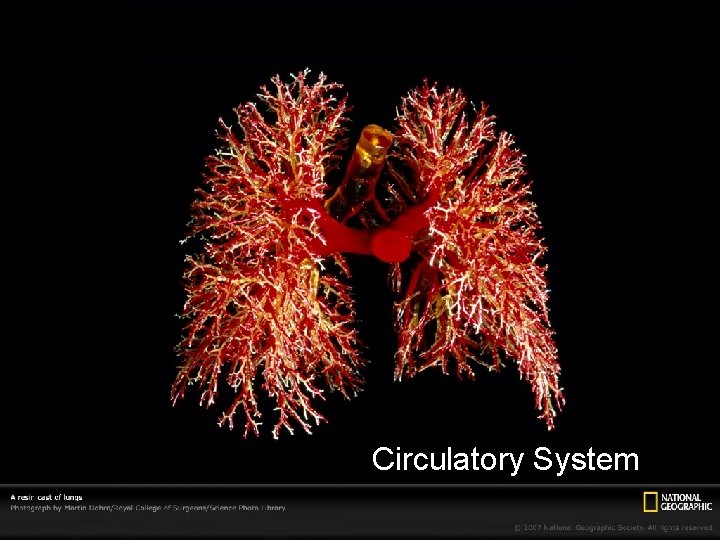
Circulatory System
Gas Exchange in Animals
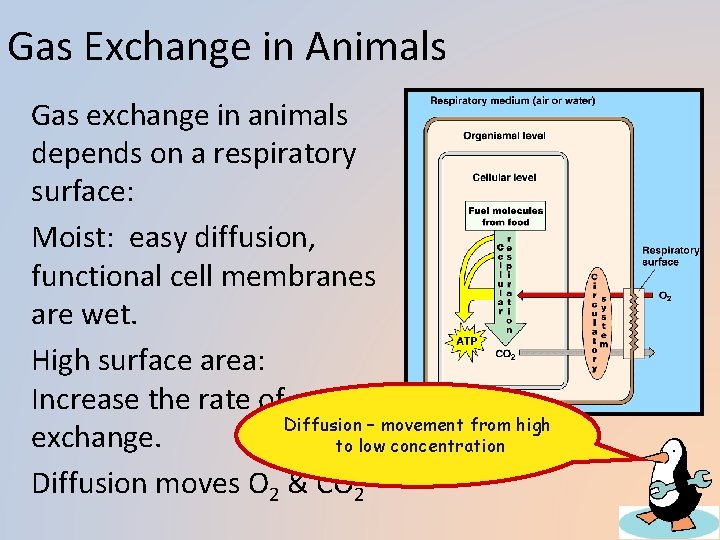
Gas Exchange in Animals Gas exchange in animals depends on a respiratory surface: Moist: easy diffusion, functional cell membranes are wet. High surface area: Increase the rate of gas Diffusion – movement from high exchange. to low concentration Diffusion moves O 2 & CO 2
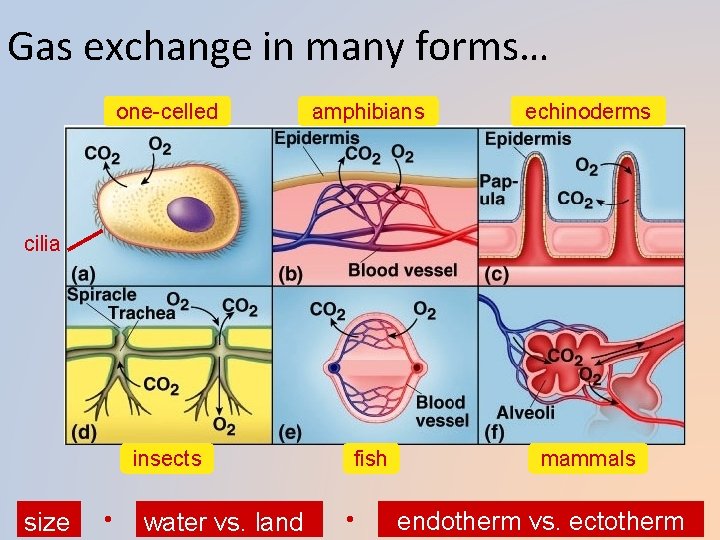
Gas exchange in many forms… one-celled amphibians echinoderms insects fish mammals cilia size • water vs. land • endotherm vs. ectotherm
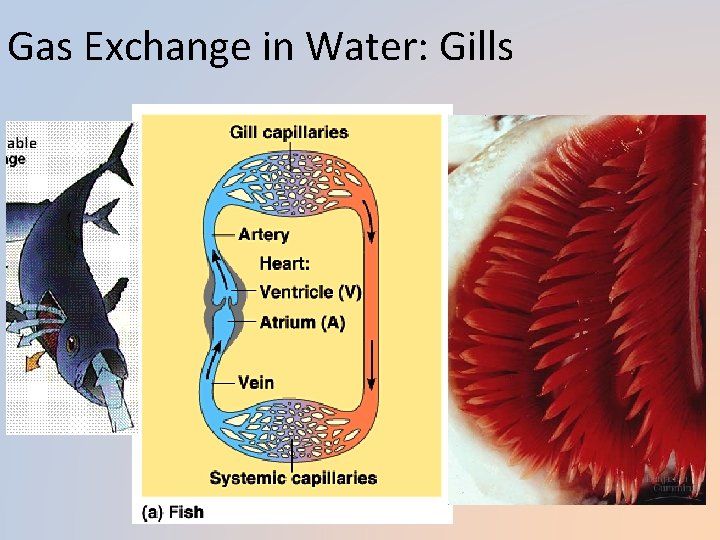
Gas Exchange in Water: Gills
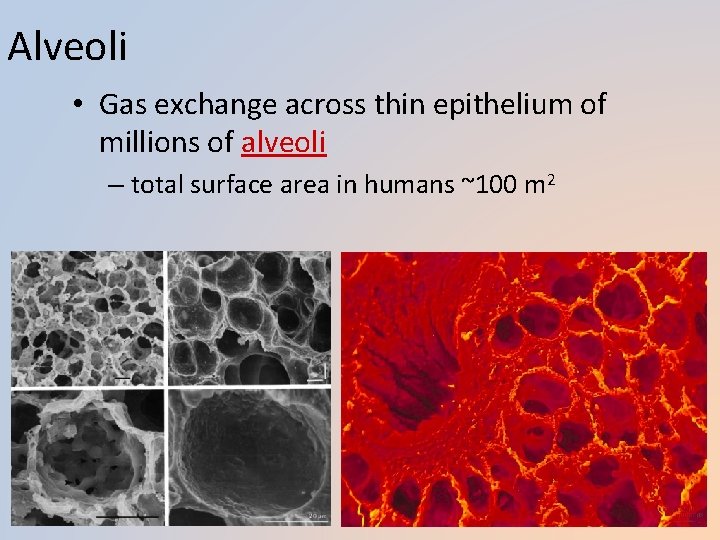
Alveoli • Gas exchange across thin epithelium of millions of alveoli – total surface area in humans ~100 m 2
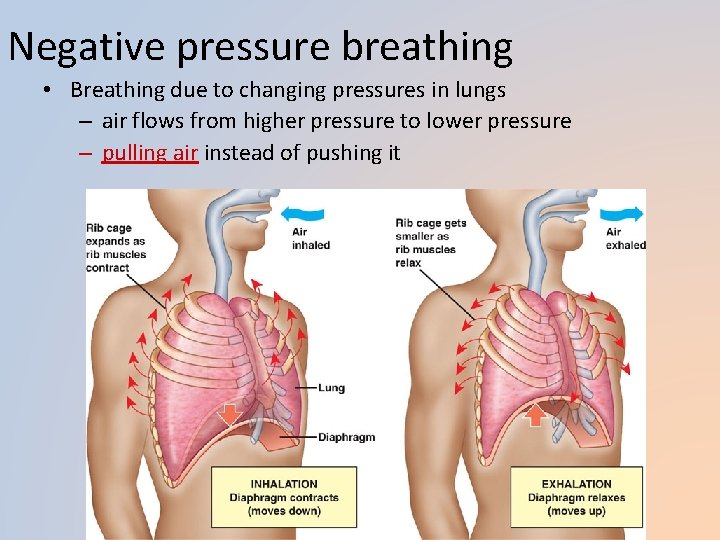
Negative pressure breathing • Breathing due to changing pressures in lungs – air flows from higher pressure to lower pressure – pulling air instead of pushing it
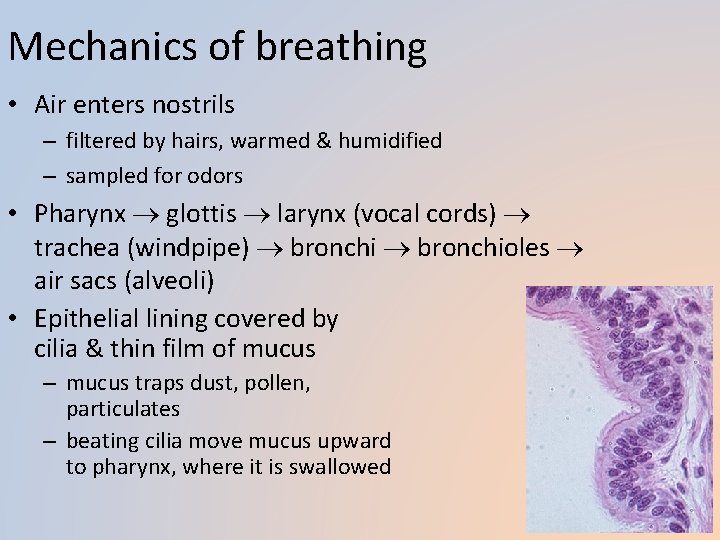
Mechanics of breathing • Air enters nostrils – filtered by hairs, warmed & humidified – sampled for odors • Pharynx glottis larynx (vocal cords) trachea (windpipe) bronchioles air sacs (alveoli) • Epithelial lining covered by cilia & thin film of mucus – mucus traps dust, pollen, particulates – beating cilia move mucus upward to pharynx, where it is swallowed
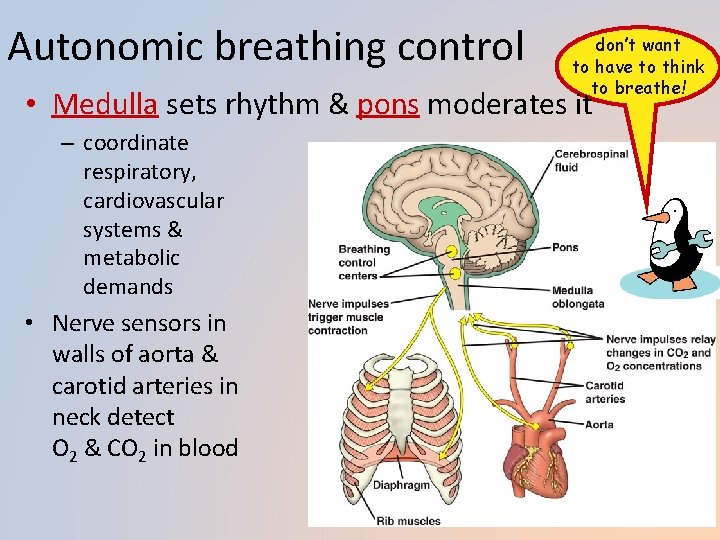
Autonomic breathing control don’t want to have to think to breathe! • Medulla sets rhythm & pons moderates it – coordinate respiratory, cardiovascular systems & metabolic demands • Nerve sensors in walls of aorta & carotid arteries in neck detect O 2 & CO 2 in blood
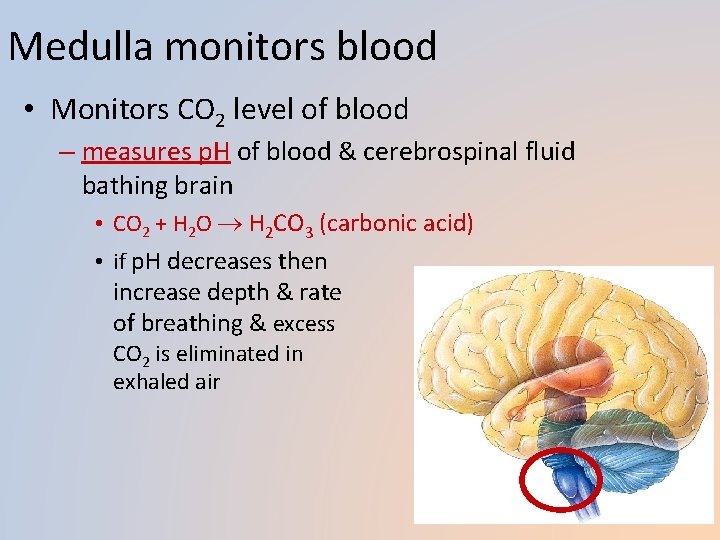
Medulla monitors blood • Monitors CO 2 level of blood – measures p. H of blood & cerebrospinal fluid bathing brain • CO 2 + H 2 O H 2 CO 3 (carbonic acid) • if p. H decreases then increase depth & rate of breathing & excess CO 2 is eliminated in exhaled air
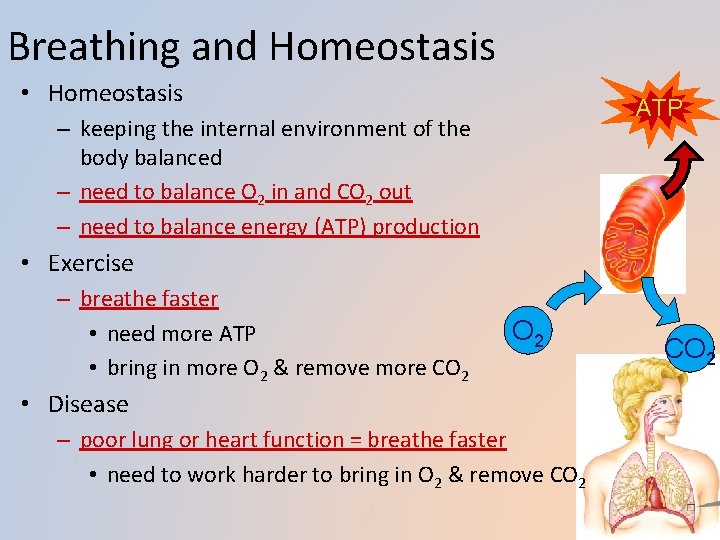
Breathing and Homeostasis • Homeostasis ATP – keeping the internal environment of the body balanced – need to balance O 2 in and CO 2 out – need to balance energy (ATP) production • Exercise – breathe faster • need more ATP • bring in more O 2 & remove more CO 2 • Disease – poor lung or heart function = breathe faster • need to work harder to bring in O 2 & remove CO 2
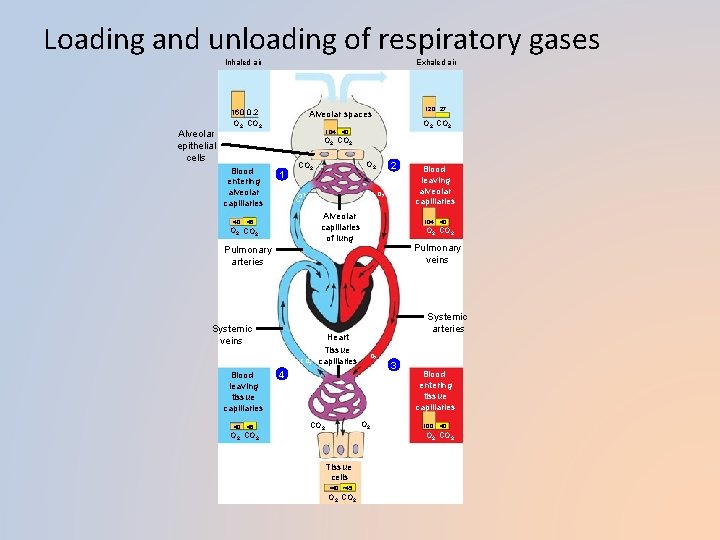
Loading and unloading of respiratory gases Inhaled air 160 0. 2 O 2 CO 2 120 27 Alveolar spaces 104 O 2 CO 2 40 1 O 2 CO 2 2 Blood entering alveolar capillaries CO Alveolar epithelial cells Exhaled air Alveolar capillaries of lung 45 O 2 CO 2 104 CO 2 Blood leaving tissue capillaries 40 45 O 2 CO 2 Heart Tissue capillaries Pulmonary veins Systemic arteries O 2 4 O 2 CO 2 Tissue cells <40 >45 O 2 CO 2 40 O 2 CO 2 Pulmonary arteries Systemic veins Blood leaving alveolar capillaries 3 Blood entering tissue capillaries 100 40 O 2 CO 2