
Circulatory System BLOOD PAGES 482 486 Blood What
Circulatory System BLOOD PAGES 482 - 486
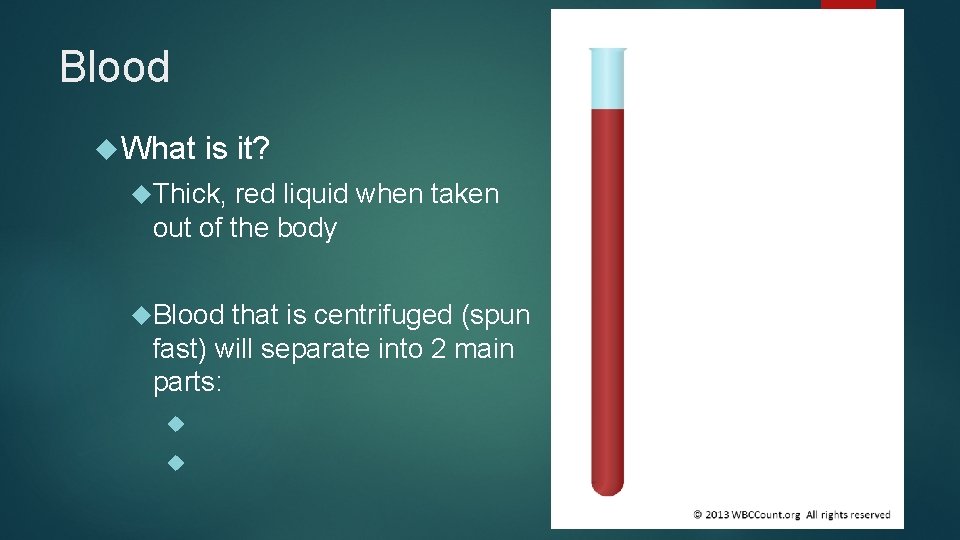
Blood What is it? Thick, red liquid when taken out of the body Blood that is centrifuged (spun fast) will separate into 2 main parts:
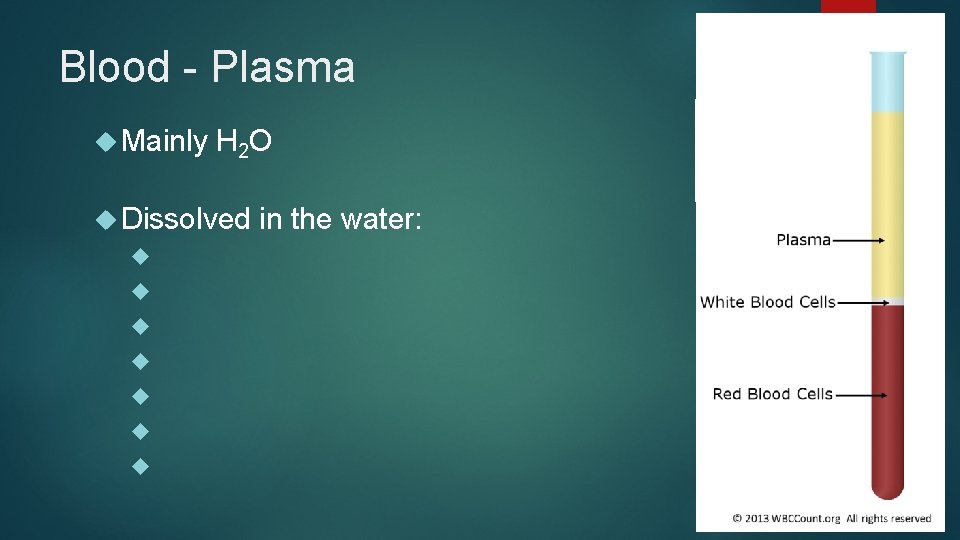
Blood - Plasma Mainly H 2 O Dissolved in the water:
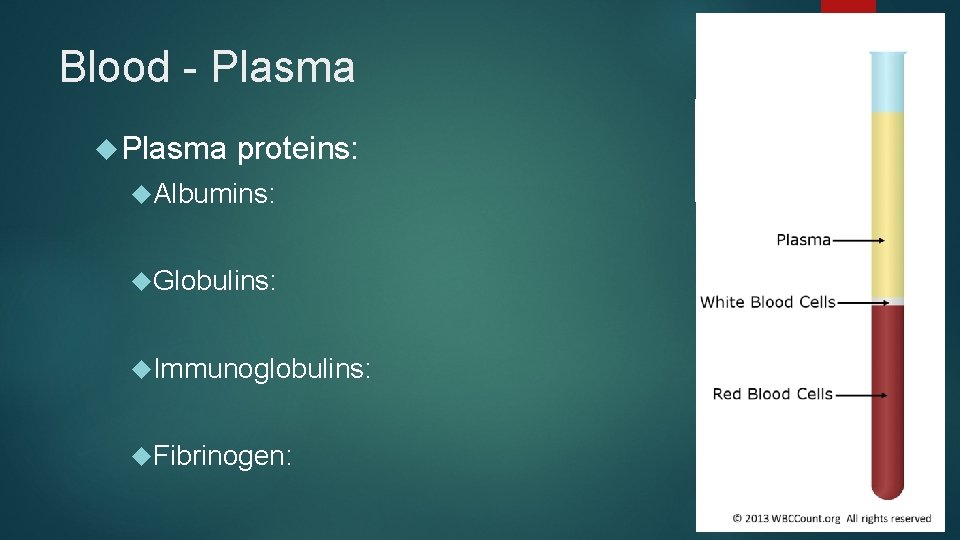
Blood - Plasma proteins: Albumins: Globulins: Immunoglobulins: Fibrinogen:
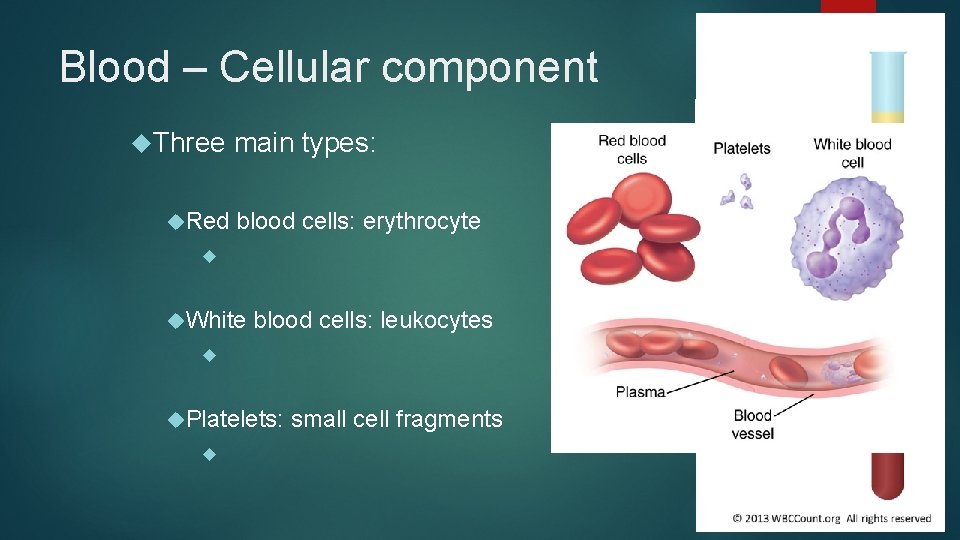
Blood – Cellular component Three Red main types: blood cells: erythrocyte White blood cells: leukocytes Platelets: small cell fragments
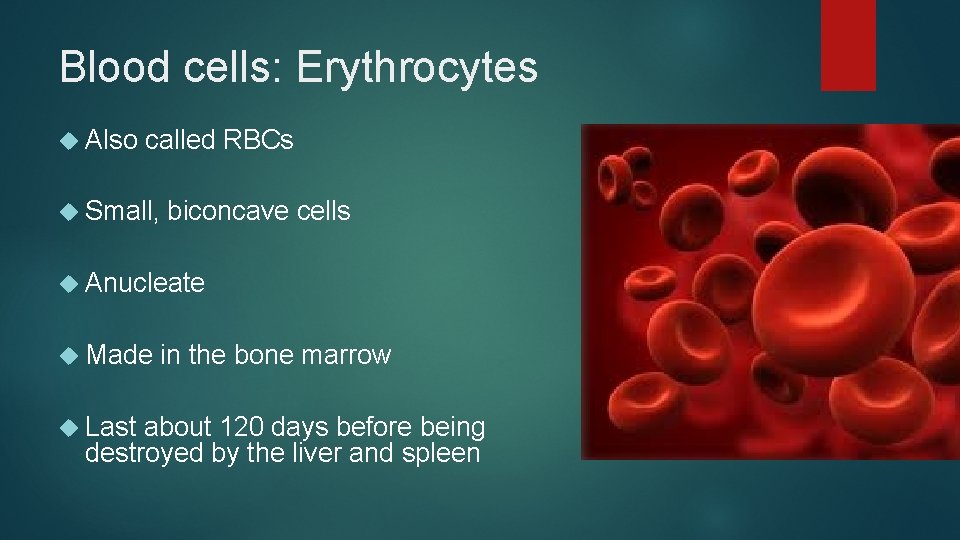
Blood cells: Erythrocytes Also called RBCs Small, biconcave cells Anucleate Made Last in the bone marrow about 120 days before being destroyed by the liver and spleen
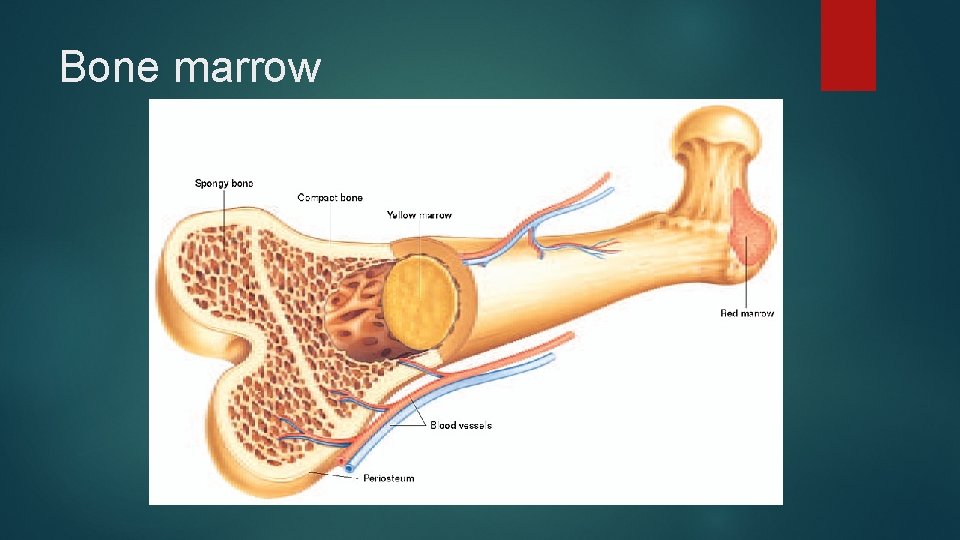
Bone marrow
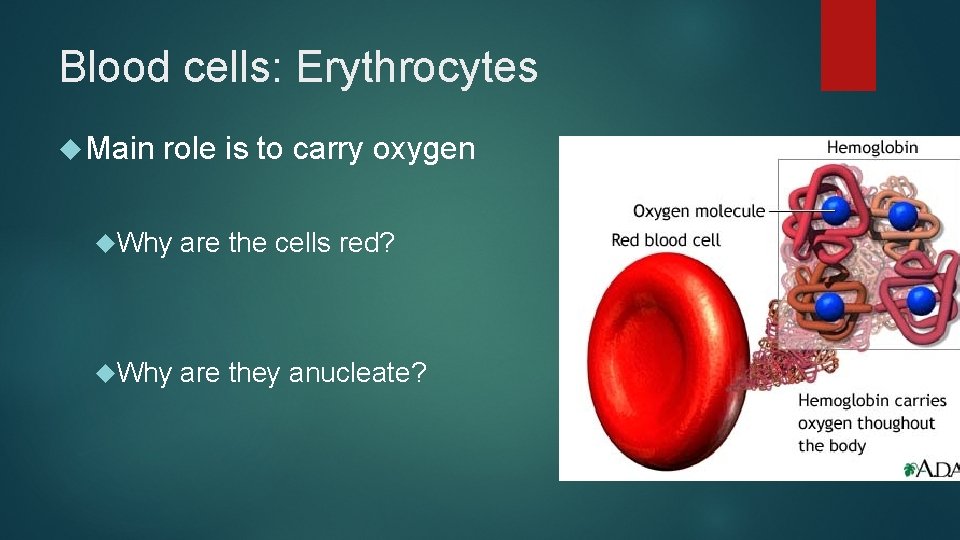
Blood cells: Erythrocytes Main role is to carry oxygen Why are the cells red? Why are they anucleate?
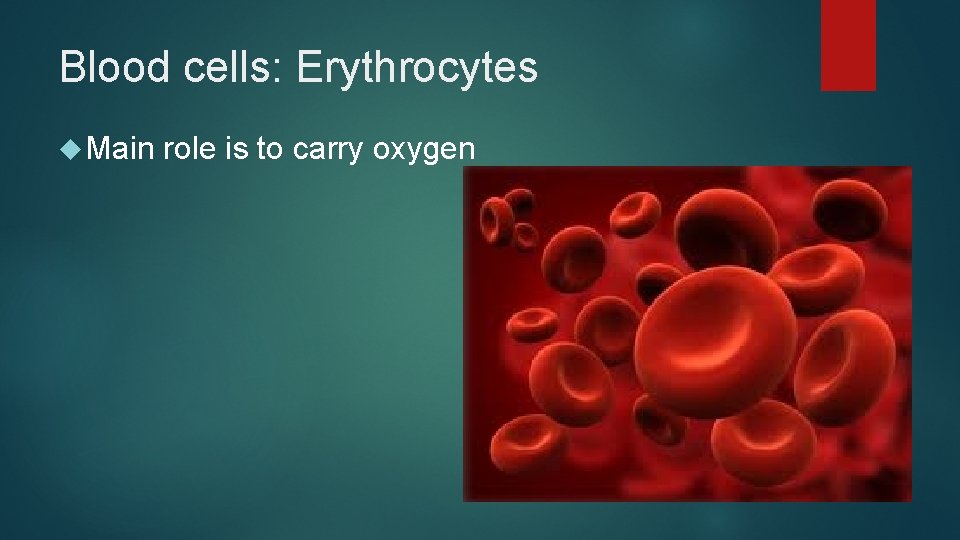
Blood cells: Erythrocytes Main role is to carry oxygen
Blood cells: Leukocytes Also called WBCs Much Two larger cells that contain a nucleus major types: Granular Agranular
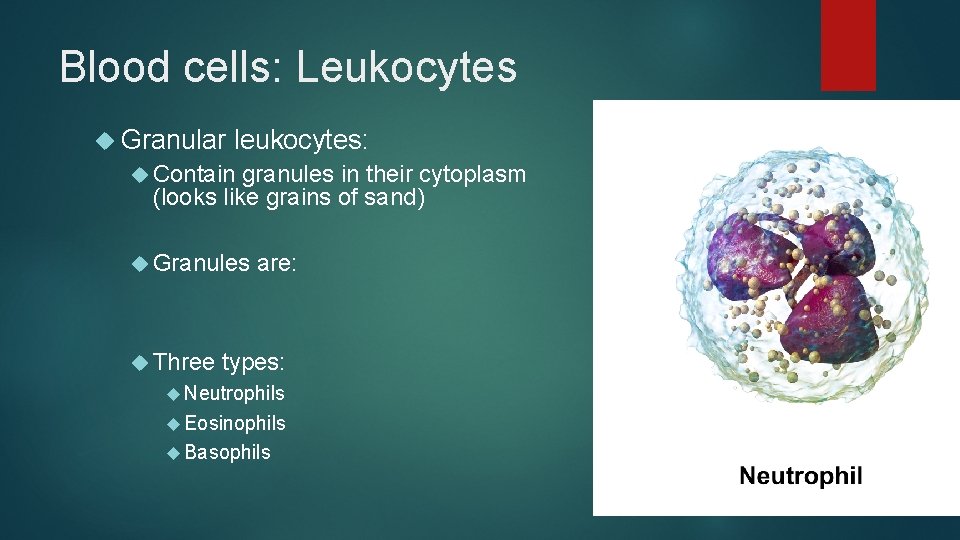
Blood cells: Leukocytes Granular leukocytes: Contain granules in their cytoplasm (looks like grains of sand) Granules Three are: types: Neutrophils Eosinophils Basophils
Blood cells: Leukocytes Agranular Two leukocytes types: Lymphocytes Monocytes What (macrophages) is their role?
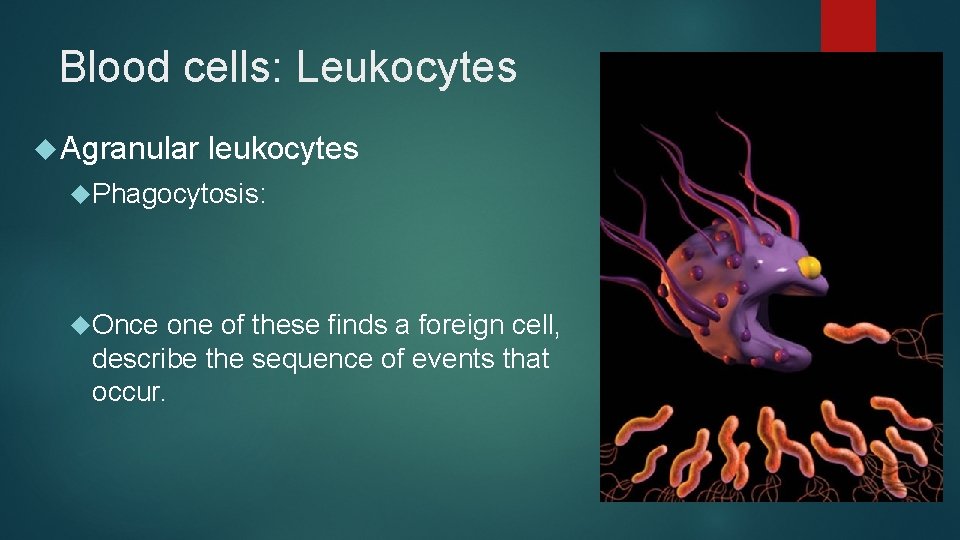
Blood cells: Leukocytes Agranular leukocytes Phagocytosis: Once one of these finds a foreign cell, describe the sequence of events that occur.
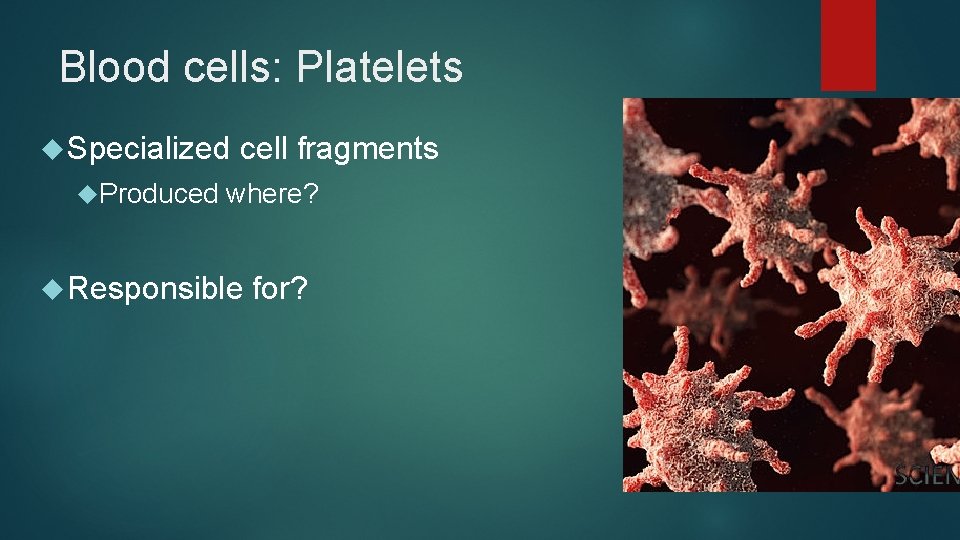
Blood cells: Platelets Specialized Produced cell fragments where? Responsible for?
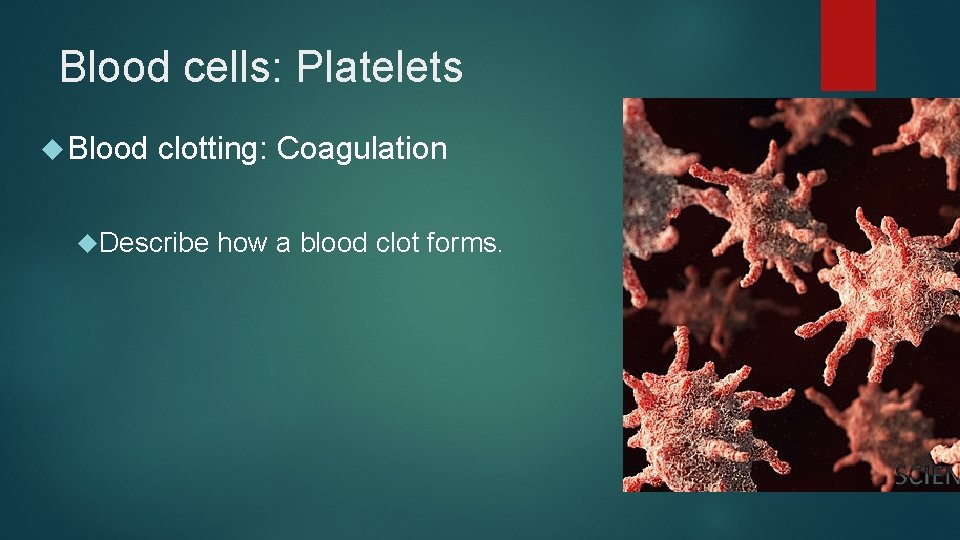
Blood cells: Platelets Blood clotting: Coagulation Describe how a blood clot forms.
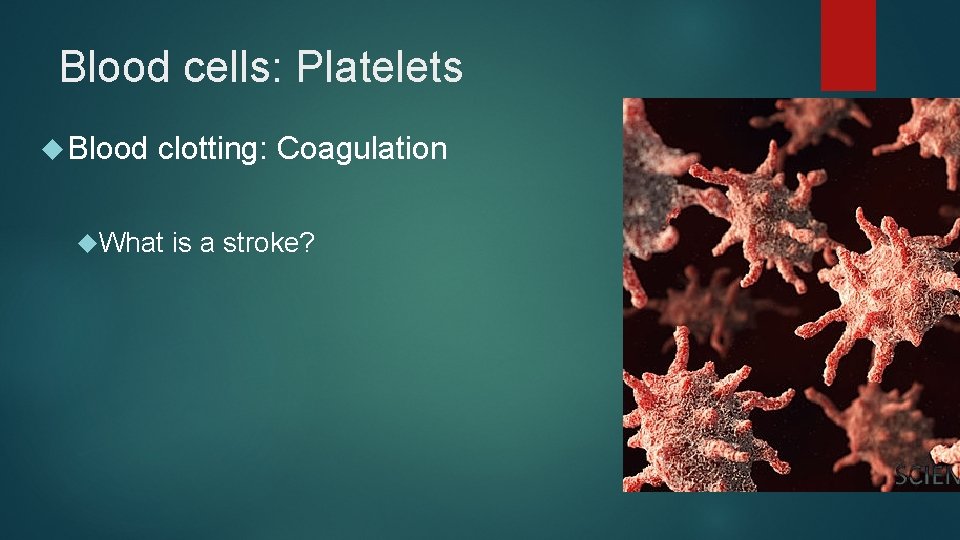
Blood cells: Platelets Blood clotting: Coagulation What is a stroke?
What you need to know! Figure 6 on page 484 and the section “Counting Blood Cells” Don’t need to know exact numbers but relative amounts Also, since we already covered this, the Blood Type section on pages 484 -485, are considered fair game for the Quest
- Slides: 17