
Circulatory Respiratory Digestive 1 What is the function


- Slides: 36
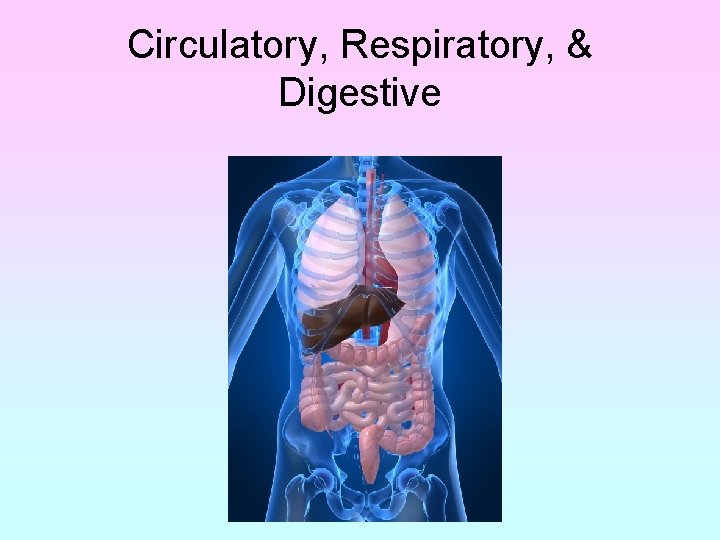
Circulatory, Respiratory, & Digestive
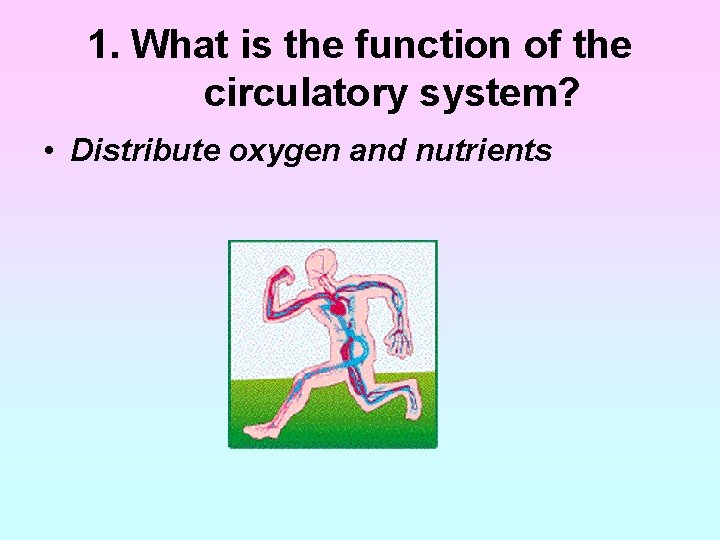
1. What is the function of the circulatory system? • Distribute oxygen and nutrients
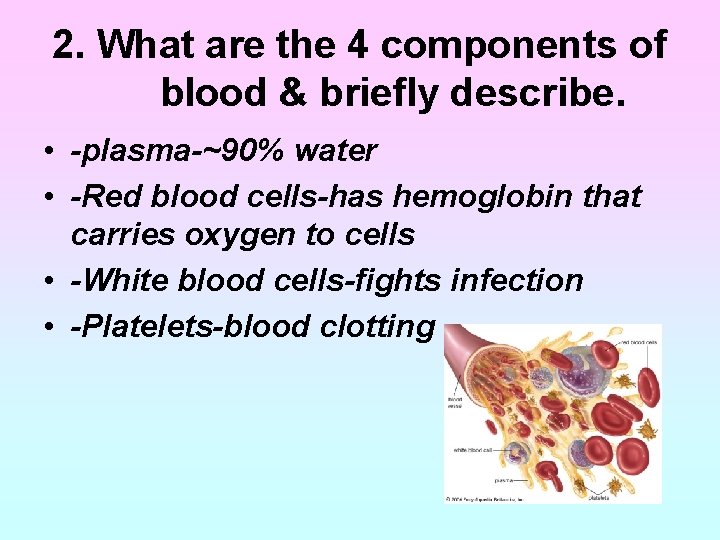
2. What are the 4 components of blood & briefly describe. • -plasma-~90% water • -Red blood cells-has hemoglobin that carries oxygen to cells • -White blood cells-fights infection • -Platelets-blood clotting
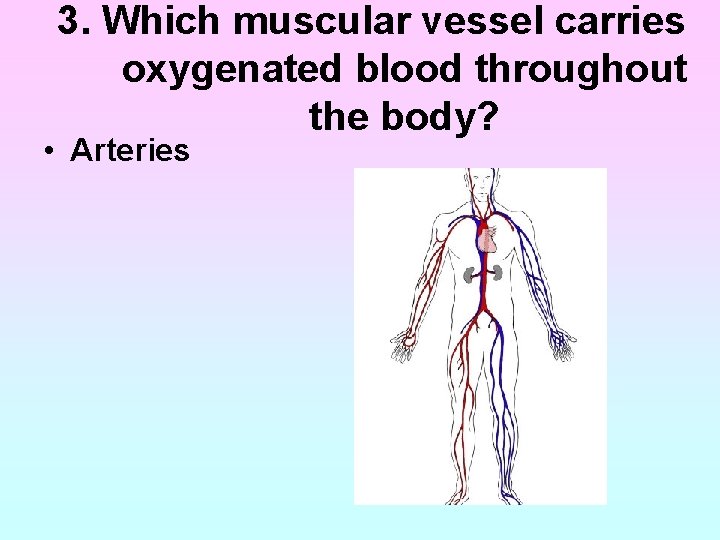
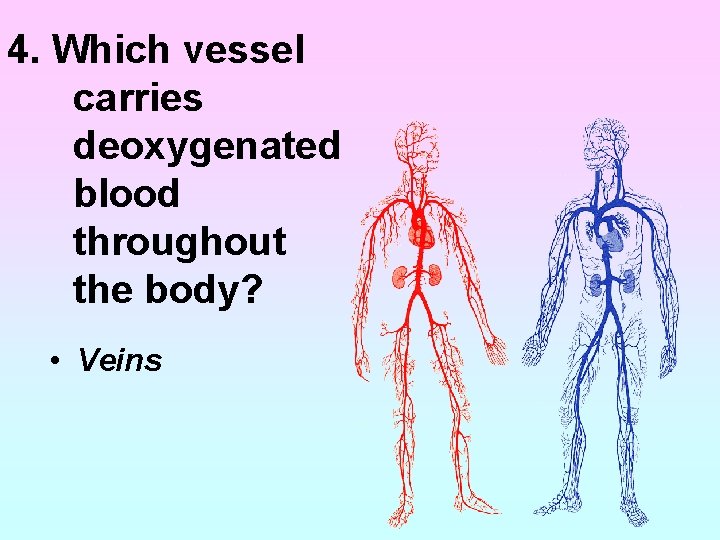
3. Which muscular vessel carries oxygenated blood throughout the body? • Arteries
4. Which vessel carries deoxygenated blood throughout the body? • Veins
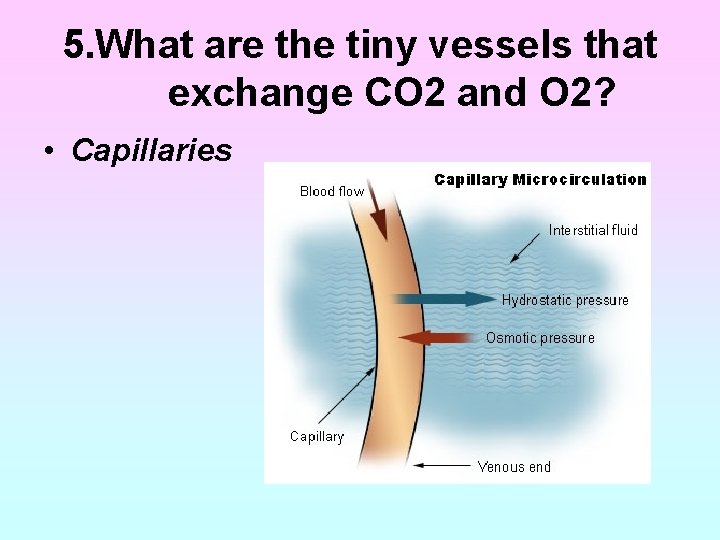
5. What are the tiny vessels that exchange CO 2 and O 2? • Capillaries
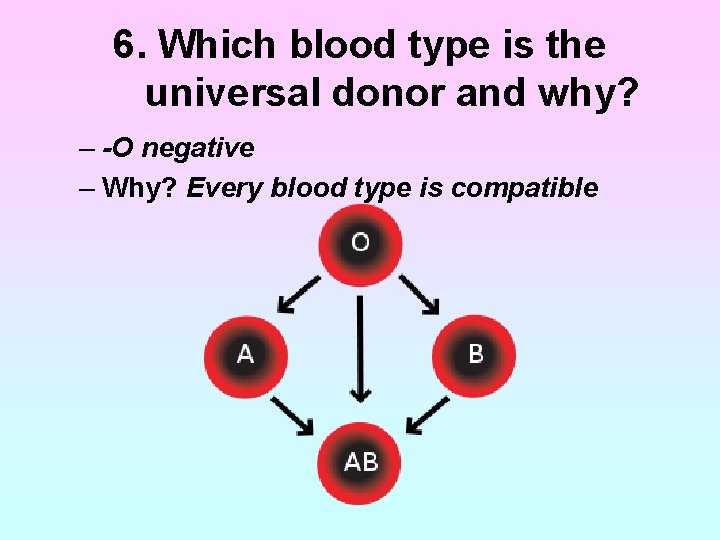
6. Which blood type is the universal donor and why? – -O negative – Why? Every blood type is compatible
7. Which blood type is the universal recipient and why? • AB positive • Why? It is compatible with every blood type
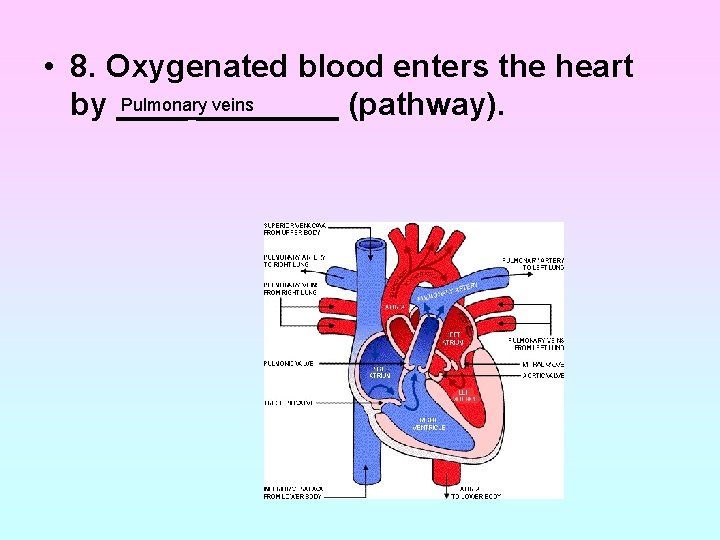
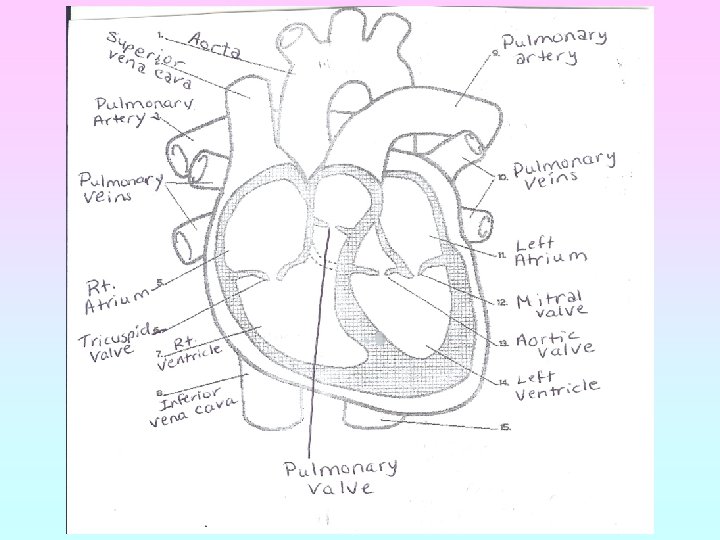
• 8. Oxygenated blood enters the heart Pulmonary veins by ________ (pathway).
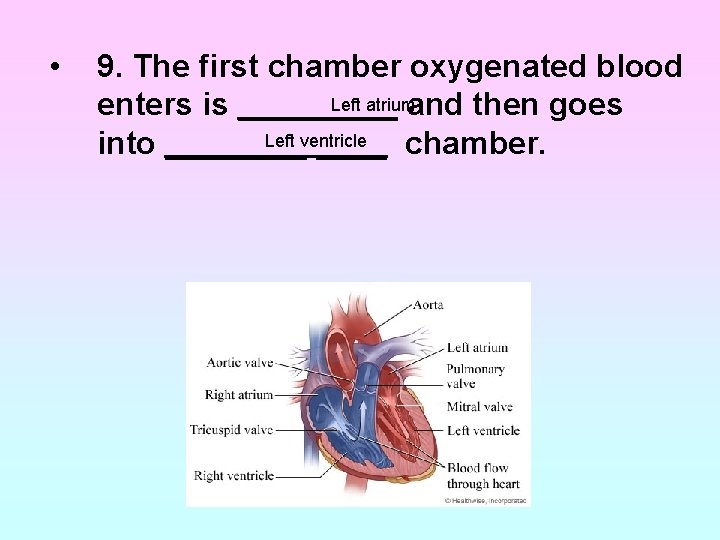
• 9. The first chamber oxygenated blood Left atrium enters is _____ and then goes Left ventricle into ____ chamber.
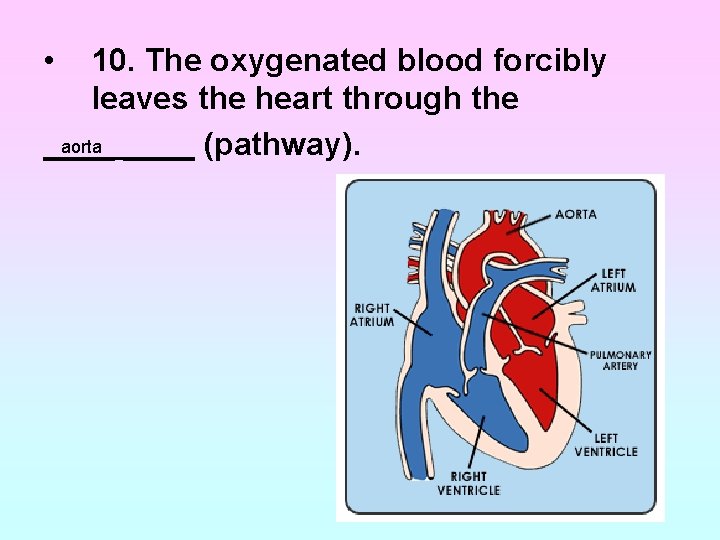
• 10. The oxygenated blood forcibly leaves the heart through the aorta ____ (pathway). ____
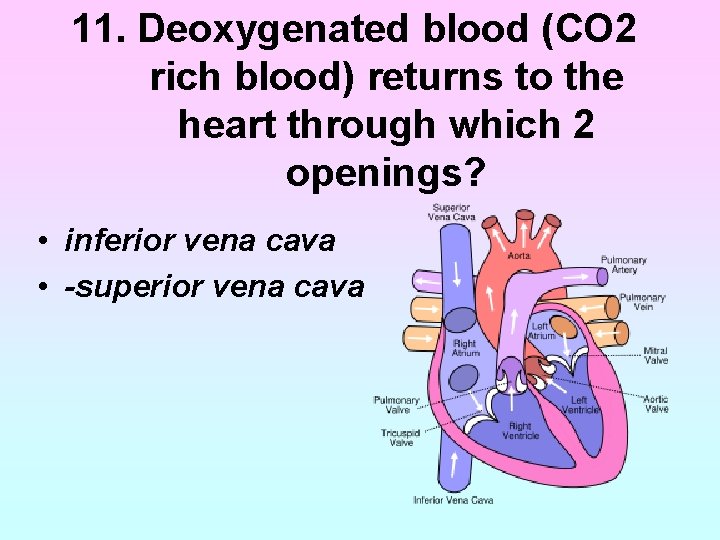
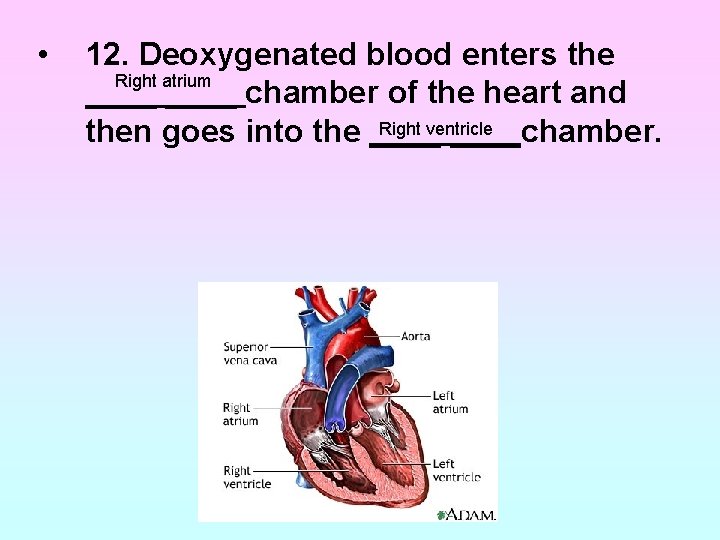
11. Deoxygenated blood (CO 2 rich blood) returns to the heart through which 2 openings? • inferior vena cava • -superior vena cava
• 12. Deoxygenated blood enters the Right atrium ____ chamber of the heart and Right ventricle then goes into the ____chamber.
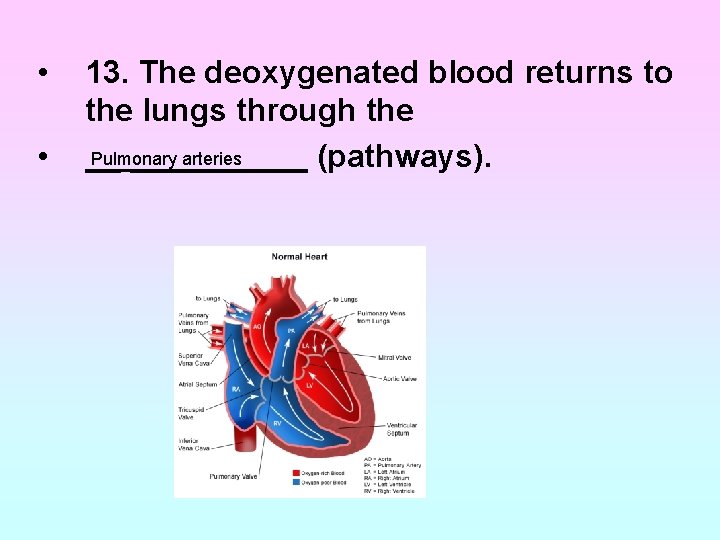
• • 13. The deoxygenated blood returns to the lungs through the Pulmonary arteries __ _____ (pathways).
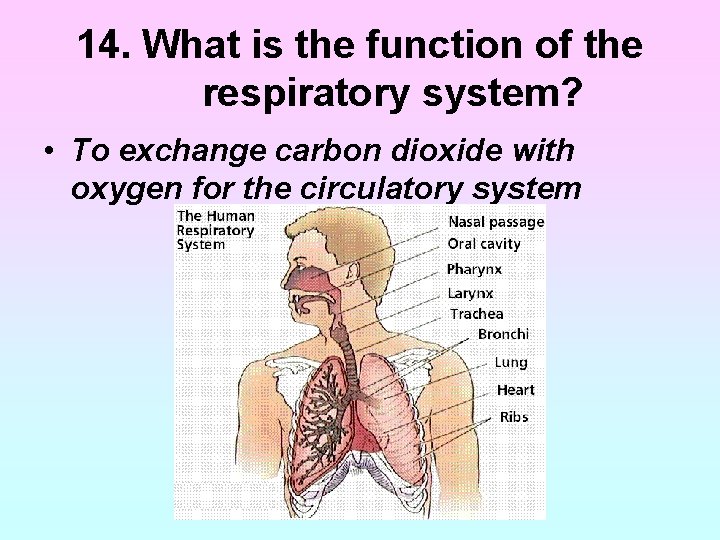
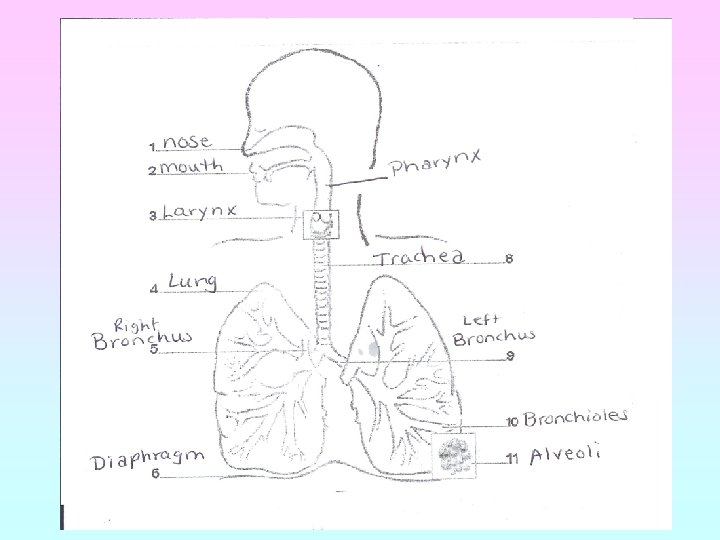
14. What is the function of the respiratory system? • To exchange carbon dioxide with oxygen for the circulatory system
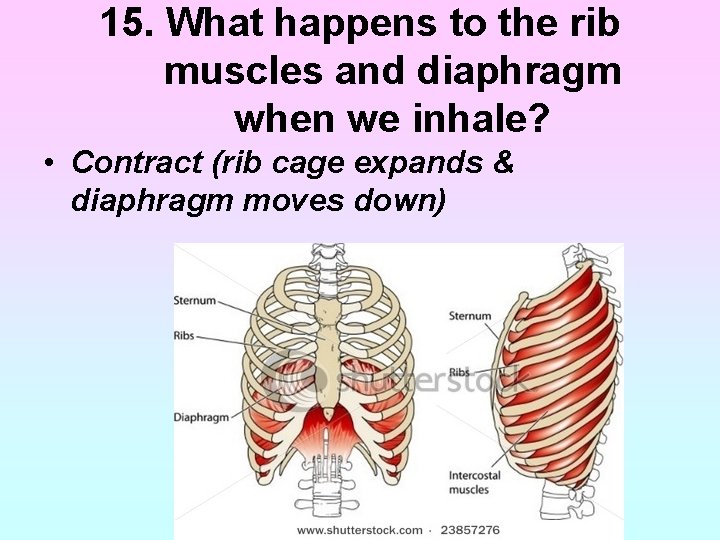
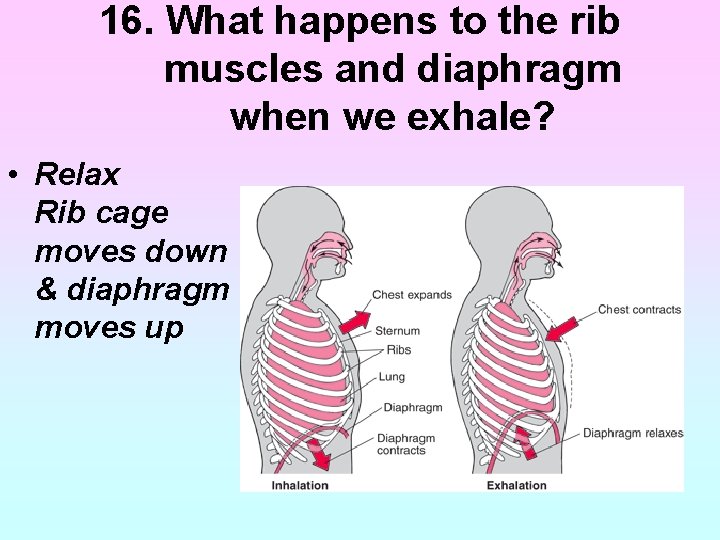
15. What happens to the rib muscles and diaphragm when we inhale? • Contract (rib cage expands & diaphragm moves down)
16. What happens to the rib muscles and diaphragm when we exhale? • Relax Rib cage moves down & diaphragm moves up
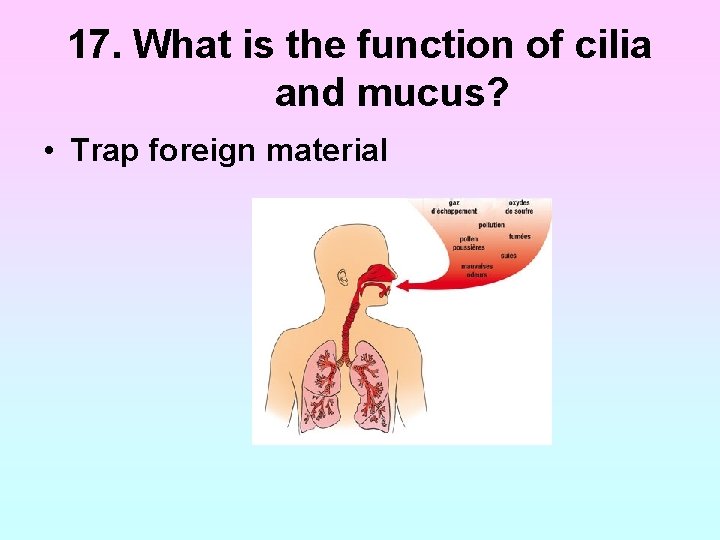
17. What is the function of cilia and mucus? • Trap foreign material
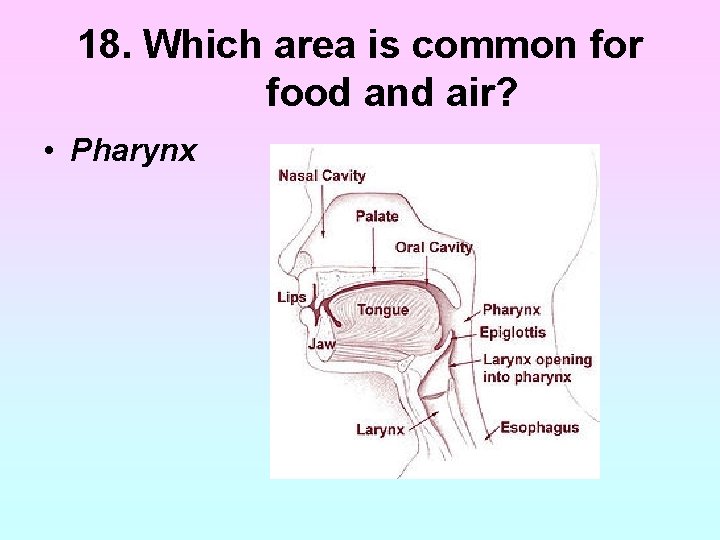
18. Which area is common for food and air? • Pharynx
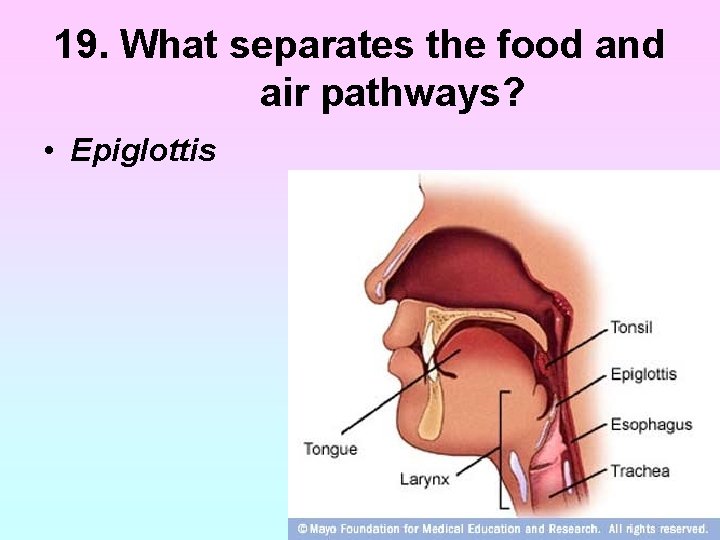
19. What separates the food and air pathways? • Epiglottis
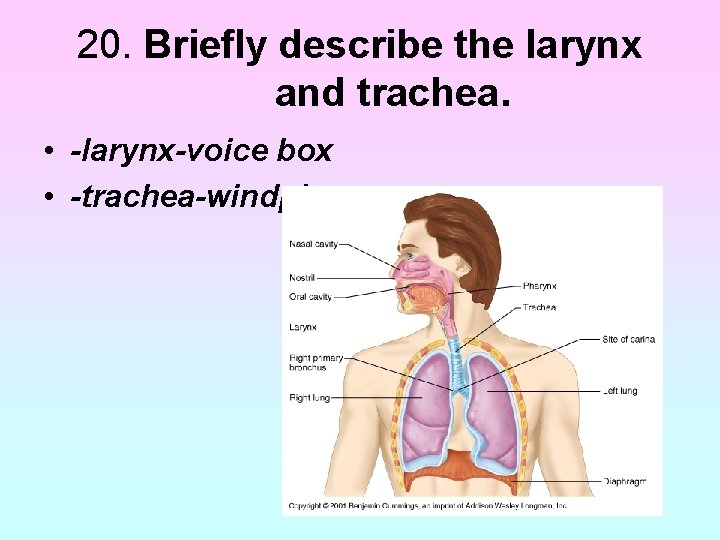
20. Briefly describe the larynx and trachea. • -larynx-voice box • -trachea-windpipe
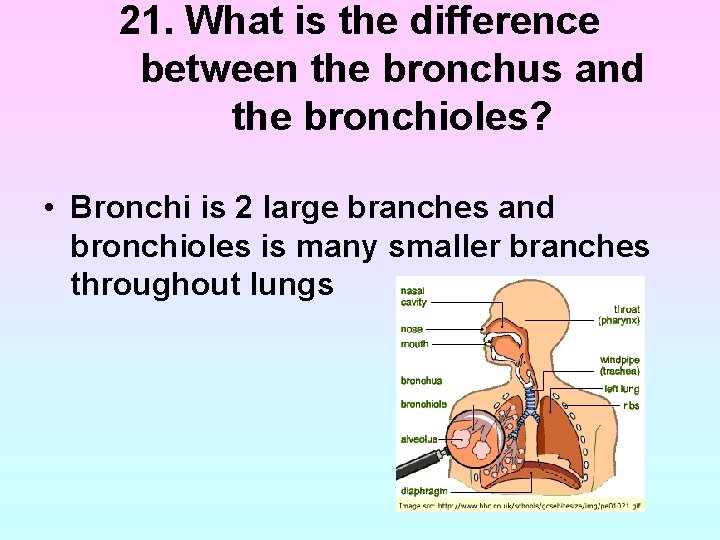
21. What is the difference between the bronchus and the bronchioles? • Bronchi is 2 large branches and bronchioles is many smaller branches throughout lungs
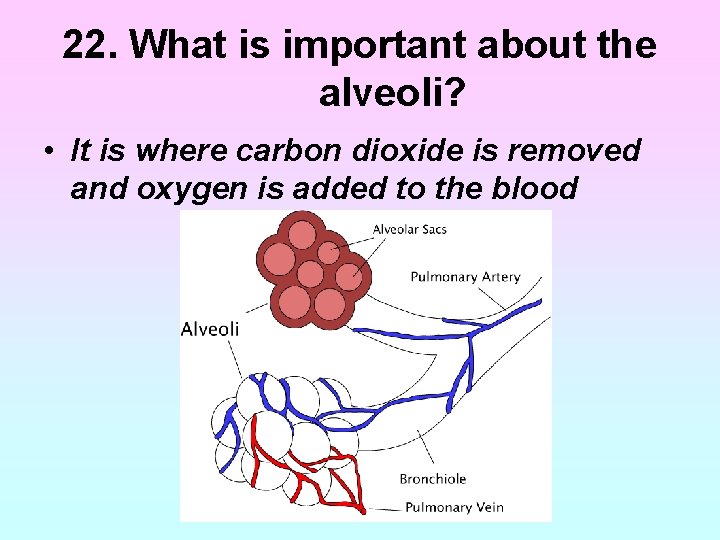
22. What is important about the alveoli? • It is where carbon dioxide is removed and oxygen is added to the blood
23. What is the mechanical digestion in the mouth? • Chewing
24. What is the chemical digestion in the mouth? • Amylase enzyme in saliva
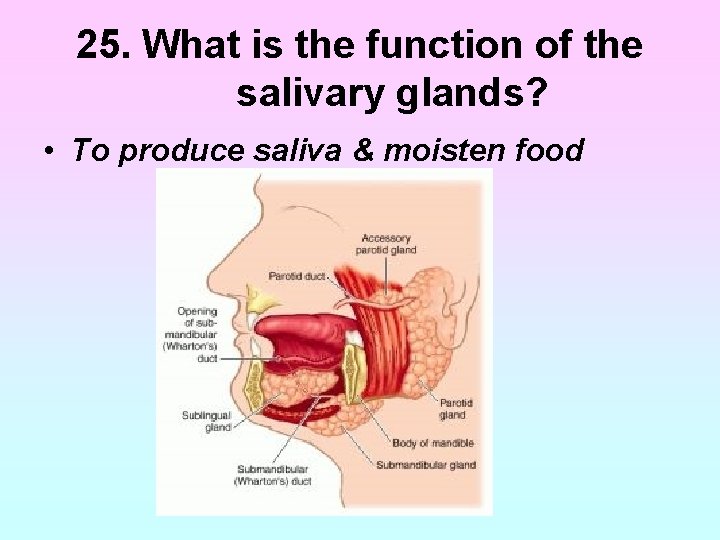
25. What is the function of the salivary glands? • To produce saliva & moisten food
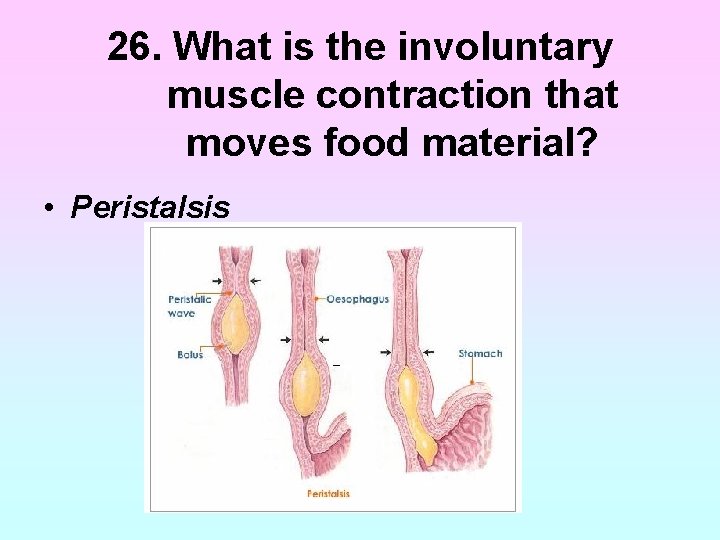
26. What is the involuntary muscle contraction that moves food material? • Peristalsis
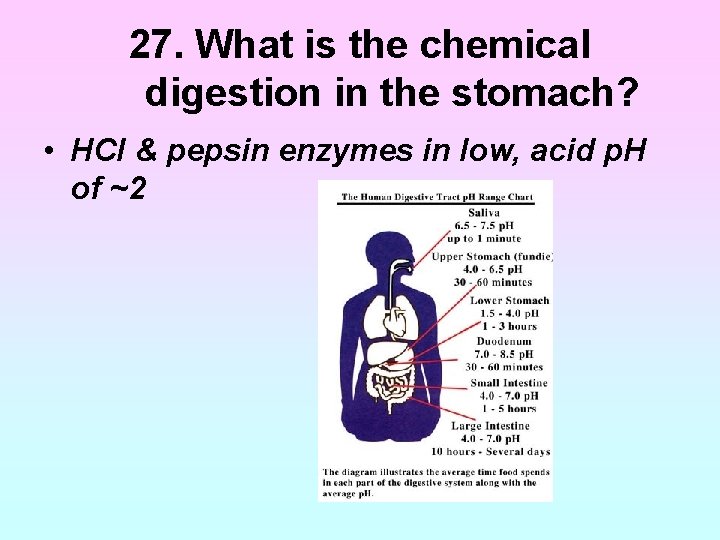
27. What is the chemical digestion in the stomach? • HCI & pepsin enzymes in low, acid p. H of ~2
28. What is the mechanical digestion in the stomach? • Churning
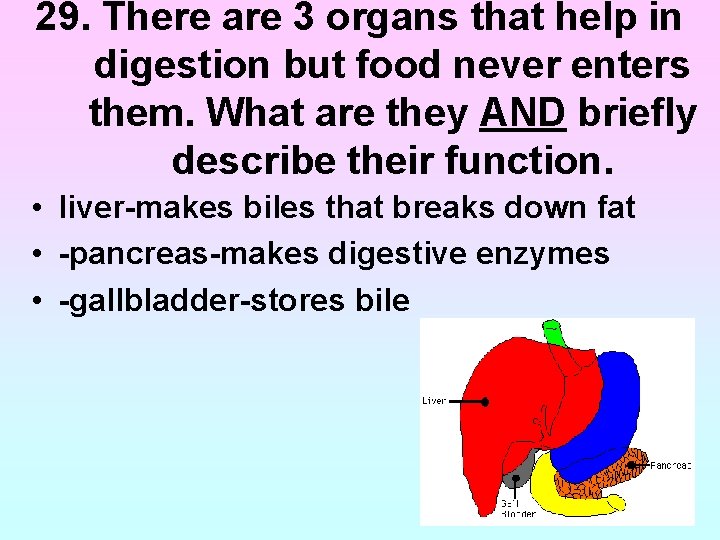
29. There are 3 organs that help in digestion but food never enters them. What are they AND briefly describe their function. • liver-makes biles that breaks down fat • -pancreas-makes digestive enzymes • -gallbladder-stores bile
30. What is the length AND importance of the small intestine? • ~6 m long-most of the digestion occurs there
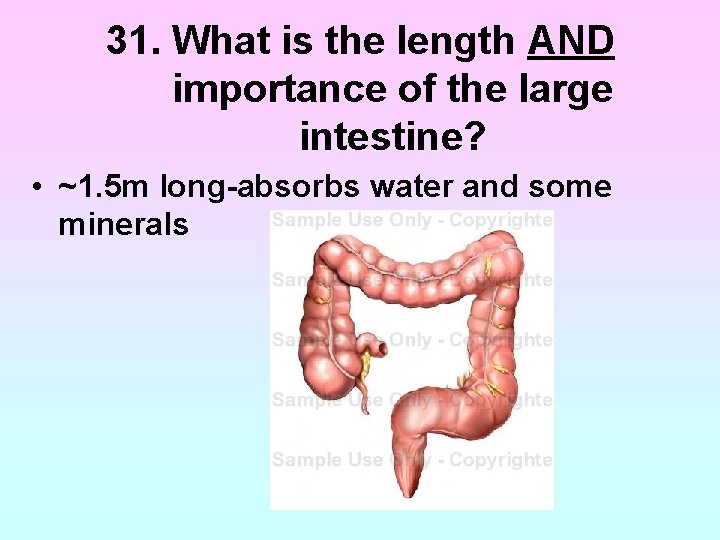
31. What is the length AND importance of the large intestine? • ~1. 5 m long-absorbs water and some minerals
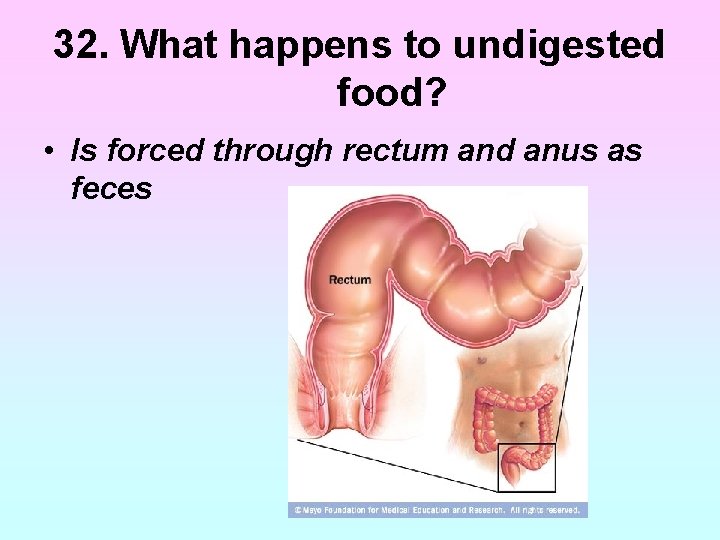
32. What happens to undigested food? • Is forced through rectum and anus as feces