
Circulatory Disorders Arteriosclerosis blood vessels become thick and
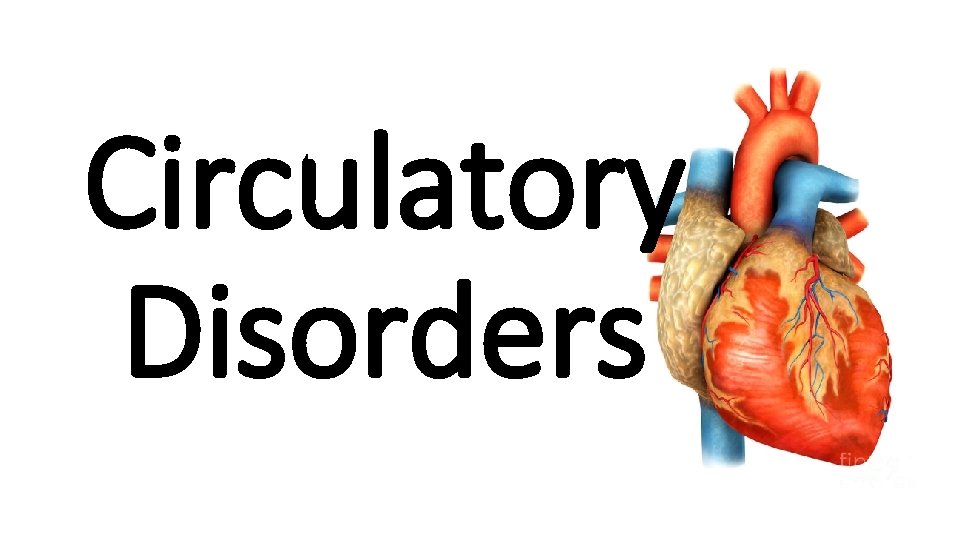
Circulatory Disorders
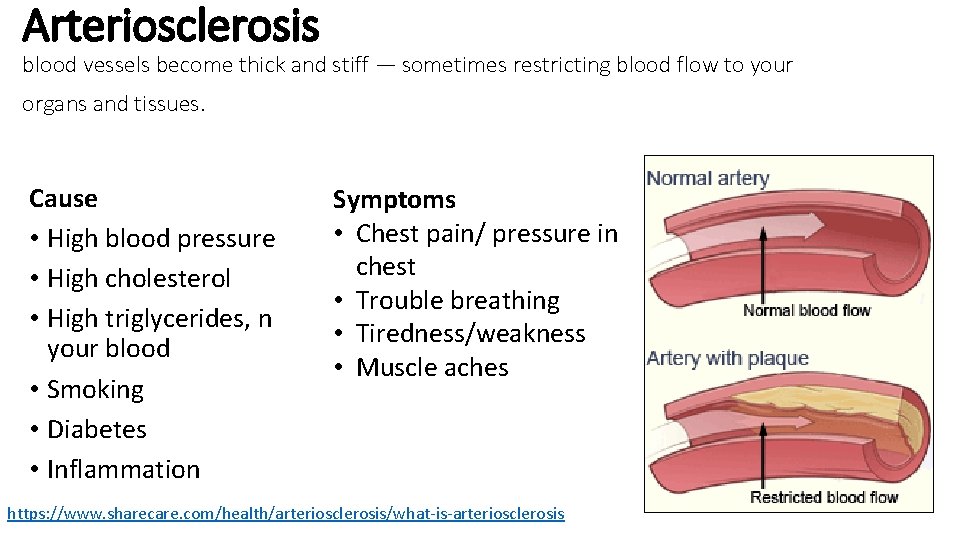
Arteriosclerosis blood vessels become thick and stiff — sometimes restricting blood flow to your organs and tissues. Cause • High blood pressure • High cholesterol • High triglycerides, n your blood • Smoking • Diabetes • Inflammation Symptoms • Chest pain/ pressure in chest • Trouble breathing • Tiredness/weakness • Muscle aches https: //www. sharecare. com/health/arteriosclerosis/what-is-arteriosclerosis
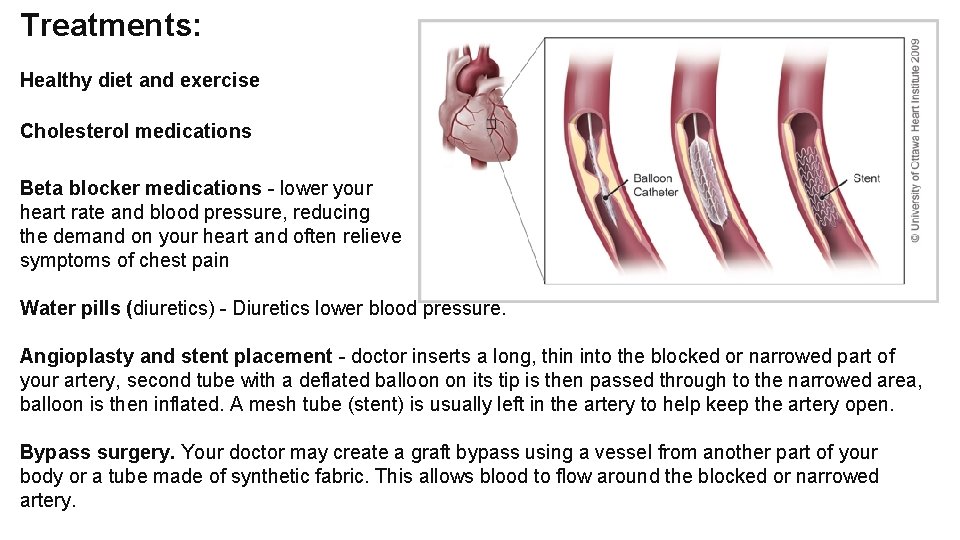
Treatments: Healthy diet and exercise Cholesterol medications Beta blocker medications - lower your heart rate and blood pressure, reducing the demand on your heart and often relieve symptoms of chest pain Water pills (diuretics) - Diuretics lower blood pressure. Angioplasty and stent placement - doctor inserts a long, thin into the blocked or narrowed part of your artery, second tube with a deflated balloon on its tip is then passed through to the narrowed area, balloon is then inflated. A mesh tube (stent) is usually left in the artery to help keep the artery open. Bypass surgery. Your doctor may create a graft bypass using a vessel from another part of your body or a tube made of synthetic fabric. This allows blood to flow around the blocked or narrowed artery.
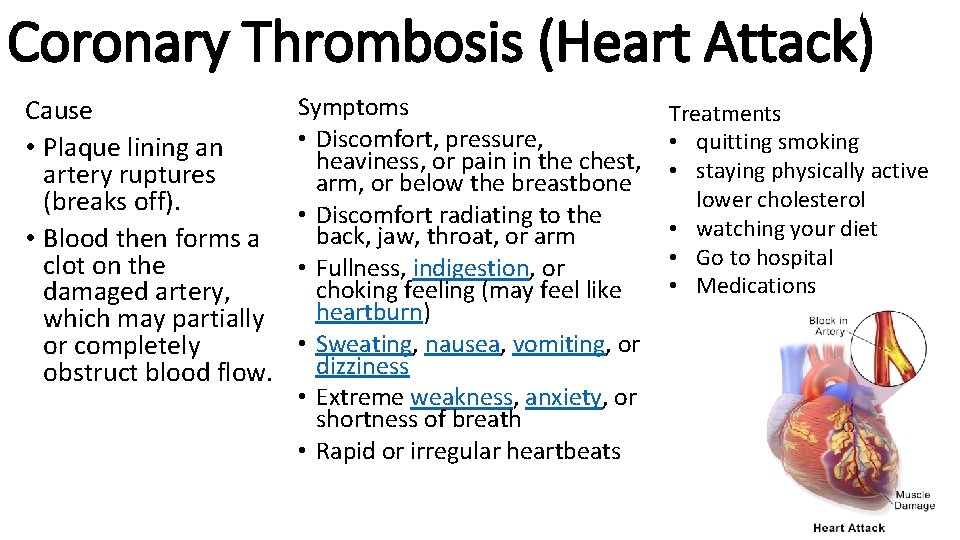
Coronary Thrombosis (Heart Attack) Cause • Plaque lining an artery ruptures (breaks off). • Blood then forms a clot on the damaged artery, which may partially or completely obstruct blood flow. Symptoms • Discomfort, pressure, heaviness, or pain in the chest, arm, or below the breastbone • Discomfort radiating to the back, jaw, throat, or arm • Fullness, indigestion, or choking feeling (may feel like heartburn) • Sweating, nausea, vomiting, or dizziness • Extreme weakness, anxiety, or shortness of breath • Rapid or irregular heartbeats Treatments • quitting smoking • staying physically active lower cholesterol • watching your diet • Go to hospital • Medications
Cerebral Thrombosis (Stroke) Cause • Poor blood flow to the brain results in cell death. • There are two main types of stroke: - ischemic due to lack of blood flow and - hemorrhagic due to bleeding. • They result in part of the brain not functioning properly Symptoms Numbness altered smell, taste, hearing, or vision (total or partial) drooping of eyelid (ptosis) and weakness of ocular muscles decreased reflexes: gag, swallow, pupil reactivity to light decreased sensation and muscle weakness of the face balance problems and nystagmus altered breathing and heart rate weakness in sternocleidomastoid muscle with inability to turn head to one side weakness in tongue (inability to stick out the tongue and/or move it from side to side)
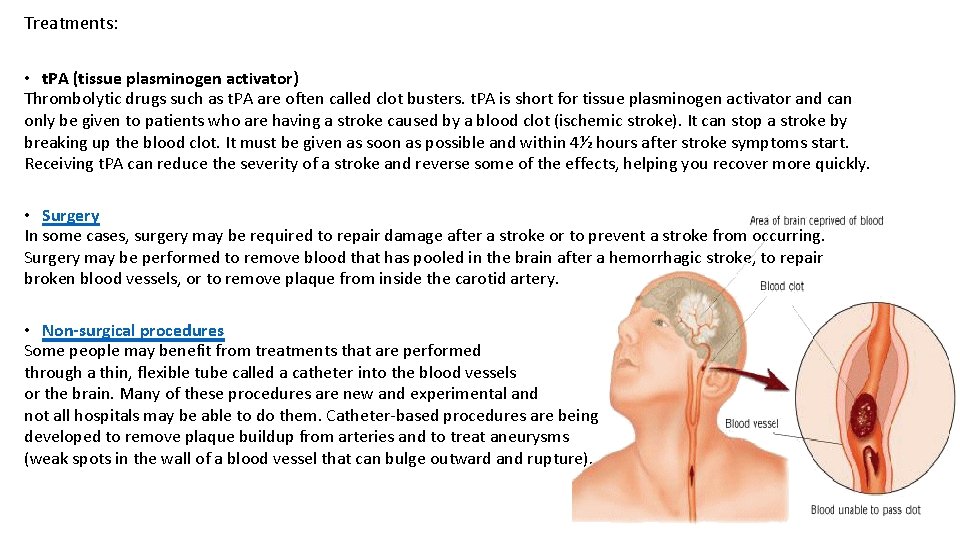
Treatments: • t. PA (tissue plasminogen activator) Thrombolytic drugs such as t. PA are often called clot busters. t. PA is short for tissue plasminogen activator and can only be given to patients who are having a stroke caused by a blood clot (ischemic stroke). It can stop a stroke by breaking up the blood clot. It must be given as soon as possible and within 4½ hours after stroke symptoms start. Receiving t. PA can reduce the severity of a stroke and reverse some of the effects, helping you recover more quickly. • Surgery In some cases, surgery may be required to repair damage after a stroke or to prevent a stroke from occurring. Surgery may be performed to remove blood that has pooled in the brain after a hemorrhagic stroke, to repair broken blood vessels, or to remove plaque from inside the carotid artery. • Non-surgical procedures Some people may benefit from treatments that are performed through a thin, flexible tube called a catheter into the blood vessels or the brain. Many of these procedures are new and experimental and not all hospitals may be able to do them. Catheter-based procedures are being developed to remove plaque buildup from arteries and to treat aneurysms (weak spots in the wall of a blood vessel that can bulge outward and rupture).
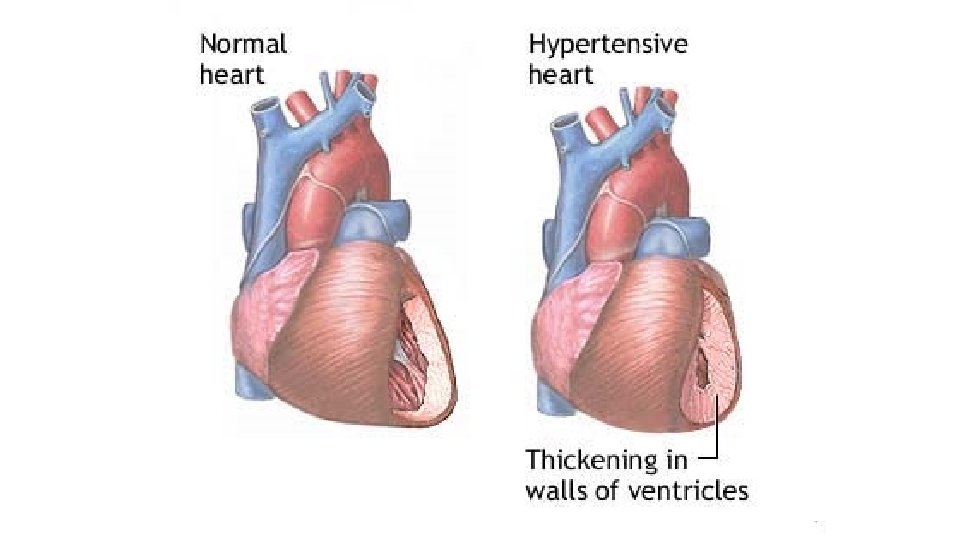
Hypertension (high blood pressure) Cause • age (blood pressure usually increases with age) • diet • excessive alcohol consumption • lack of exercise • obesity • sleep apnea • stress Symptoms Treatments • headaches, • lifestyle changes • vision problems, • dizziness, or • shortness of breath, • but most people with hypertension have no symptoms “silent killer” • medications. • diuretics (e. g. , hydrochlorothiazide*), betablockers (e. g. , atenolol, metoprolol), ACE inhibitors (e. g. , ramipril, enalapril, lisinopril), calcium channel blockers (e. g. , nifedipine, amlodipine), angiotensin II receptor blockers (e. g. , losartan, valsartan), and direct renin inhibitors (e. g. , aliskiren).
Heart Murmur Cause Treatments Symptoms • Skin that appears blue, especially on • Medicines to prevent blood clots, • Anemia control irregular heartbeat or your fingertips and lips palpitations, and lower blood pressure • High blood pressure • Swelling or sudden weight gain • Diuretics to remove excess salt and • Shortness of breath • Overactive thyroid • Chronic cough water from the body, making it easier for your heart to pump • Enlarged liver • Fever • Surgery to correct heart defects • Enlarged neck veins https: //www. yo utube. com/wat ch? v=v 0 j. QJ 448 Y x. A https: //www. yout ube. com/watch? v= d. Bwr 2 GZCm. QM • Poor appetite and failure to grow normally (in infants) • Heavy sweating with minimal or no exertion • Chest pain • Dizziness • Fainting someone is born with • Surgery to correct certain types of heart valve disease • It's not common, but doctors sometimes ask people to take antibiotics to help prevent heart infection before dental work or some kinds of surgery.
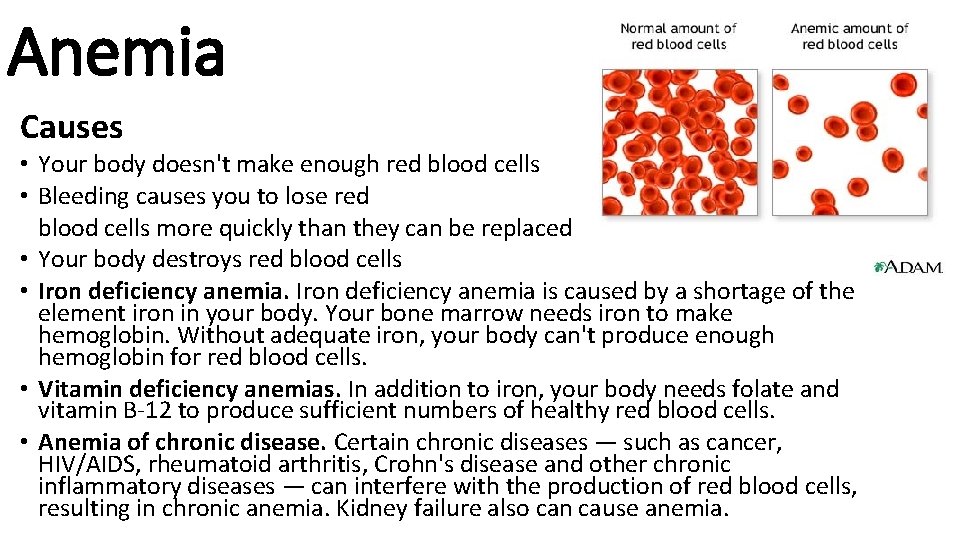
Anemia Causes • Your body doesn't make enough red blood cells • Bleeding causes you to lose red blood cells more quickly than they can be replaced • Your body destroys red blood cells • Iron deficiency anemia is caused by a shortage of the element iron in your body. Your bone marrow needs iron to make hemoglobin. Without adequate iron, your body can't produce enough hemoglobin for red blood cells. • Vitamin deficiency anemias. In addition to iron, your body needs folate and vitamin B-12 to produce sufficient numbers of healthy red blood cells. • Anemia of chronic disease. Certain chronic diseases — such as cancer, HIV/AIDS, rheumatoid arthritis, Crohn's disease and other chronic inflammatory diseases — can interfere with the production of red blood cells, resulting in chronic anemia. Kidney failure also can cause anemia.
Treatments (depends on the cause of the anemia): • Fatigue - Iron supplements • Weakness - More iron in diet (red meat) • Pale skin - Folic acid and vitamin C • A fast or irregular heartbeat - Vitamin B-12 injections - Blood transfusion • Shortness of breath Injections of synthetic • Chest pain erythropoietin (stimulates • Dizziness kidneys to aid in red blood • Cognitive problems cell production) Symptoms • Cold hands and feet • Headache
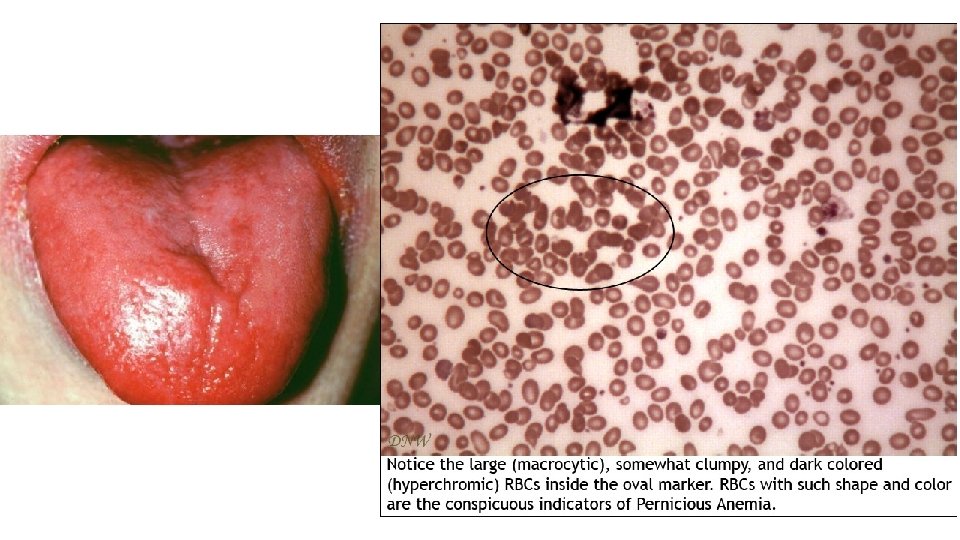
Pernicious Anemia Cause • autoimmune disease, in which the body's own immune system mistakenly damages its own tissues. • decreased absorption of vitamin B-12 from the gastrointestinal tract Symptoms • Feelings of numbness, tingling, weakness, • lack of coordination, • clumsiness, • impaired memory, • personality changes • Shortness of breath, • fatigue, • dizziness, • pale skin Treatment Vitamin B-12 is typically given as an intramuscular injection (shot). An injection of 1000 micrograms (1 mg) of vitamin B-12 is generally given every day for one week, followed by 1 mg every week for four weeks and then 1 mg every month thereafter.
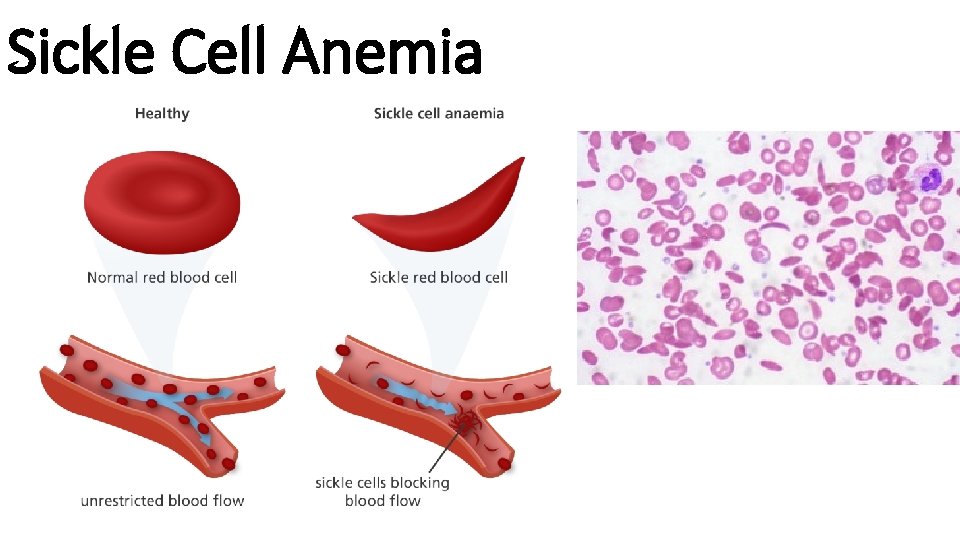
Sickle Cell Anemia
Cause • genetic abnormality in the gene for hemoglobin, which results in the production of sickle hemoglobin. • When oxygen is released from sickle hemoglobin, it sticks together and forms long rods, which damage and change the shape of the red blood cell. Symptoms • Severe pain • Anemia • Chest pain and difficulty breathing • Strokes • Joint pain and arthritis and bone infarctions • Blockage of blood flow in the spleen or liver • Severe infections Treatments • Opioid pain medications (for example, morphine) • Anti-inflammatory medications (for example, ibuprofen) • Antibiotics for infection • Oxygen • Intravenous or oral fluids • Blood Transfusion
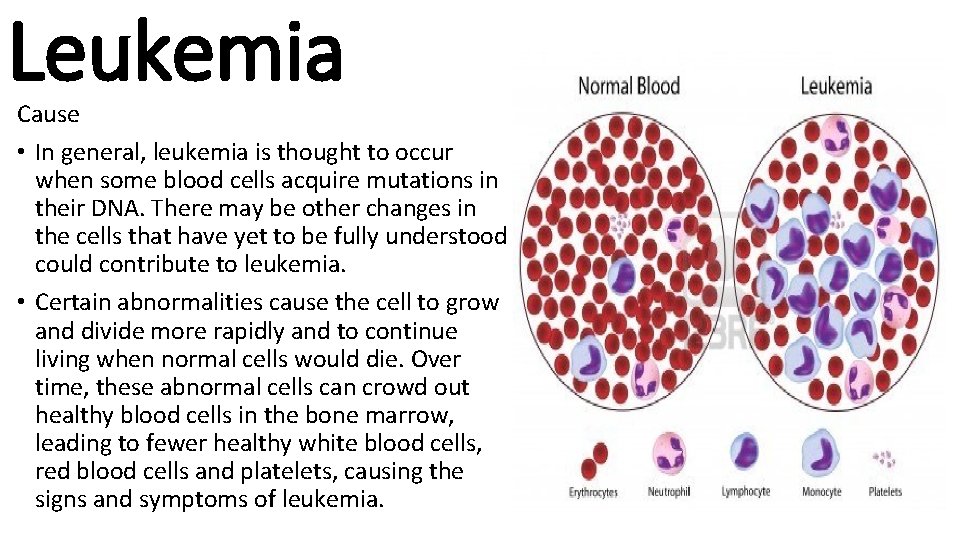
Leukemia Cause • In general, leukemia is thought to occur when some blood cells acquire mutations in their DNA. There may be other changes in the cells that have yet to be fully understood could contribute to leukemia. • Certain abnormalities cause the cell to grow and divide more rapidly and to continue living when normal cells would die. Over time, these abnormal cells can crowd out healthy blood cells in the bone marrow, leading to fewer healthy white blood cells, red blood cells and platelets, causing the signs and symptoms of leukemia.
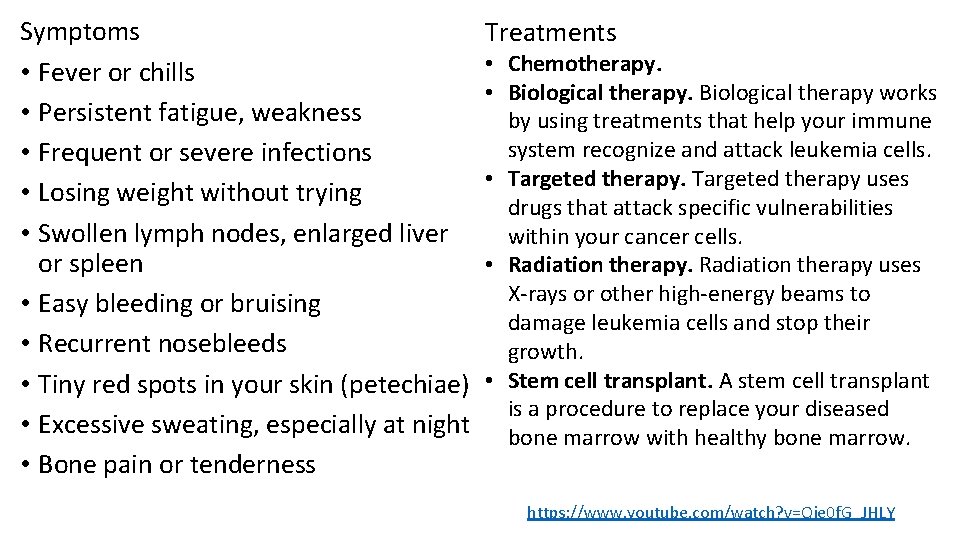
Symptoms • Fever or chills • Persistent fatigue, weakness • Frequent or severe infections • Losing weight without trying • Swollen lymph nodes, enlarged liver or spleen • Easy bleeding or bruising • Recurrent nosebleeds • Tiny red spots in your skin (petechiae) • Excessive sweating, especially at night • Bone pain or tenderness Treatments • Chemotherapy. • Biological therapy works by using treatments that help your immune system recognize and attack leukemia cells. • Targeted therapy uses drugs that attack specific vulnerabilities within your cancer cells. • Radiation therapy uses X-rays or other high-energy beams to damage leukemia cells and stop their growth. • Stem cell transplant. A stem cell transplant is a procedure to replace your diseased bone marrow with healthy bone marrow. https: //www. youtube. com/watch? v=Qje 0 f. G_JHLY
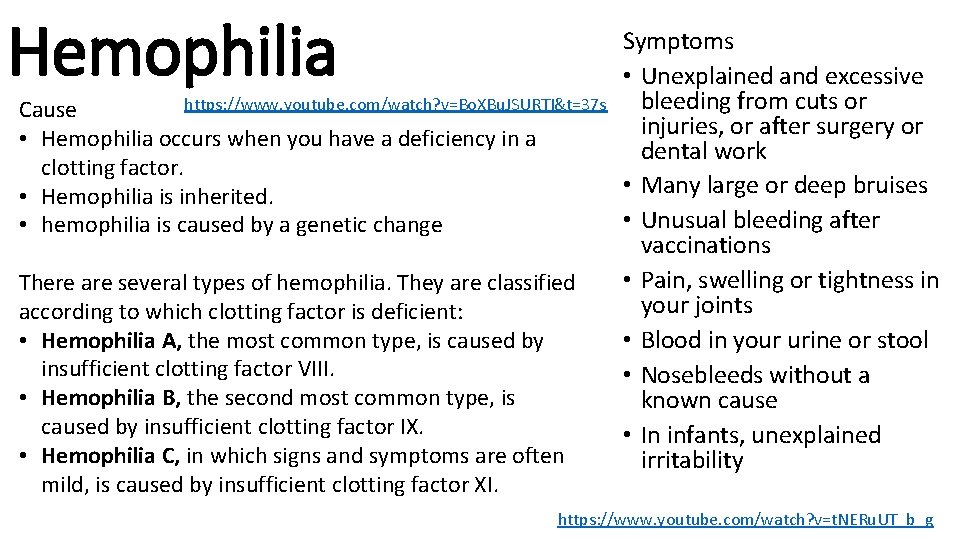
Hemophilia https: //www. youtube. com/watch? v=Bo. XBu. JSURTI&t=37 s Cause • Hemophilia occurs when you have a deficiency in a clotting factor. • Hemophilia is inherited. • hemophilia is caused by a genetic change There are several types of hemophilia. They are classified according to which clotting factor is deficient: • Hemophilia A, the most common type, is caused by insufficient clotting factor VIII. • Hemophilia B, the second most common type, is caused by insufficient clotting factor IX. • Hemophilia C, in which signs and symptoms are often mild, is caused by insufficient clotting factor XI. Symptoms • Unexplained and excessive bleeding from cuts or injuries, or after surgery or dental work • Many large or deep bruises • Unusual bleeding after vaccinations • Pain, swelling or tightness in your joints • Blood in your urine or stool • Nosebleeds without a known cause • In infants, unexplained irritability https: //www. youtube. com/watch? v=t. NERu. UT_b_g
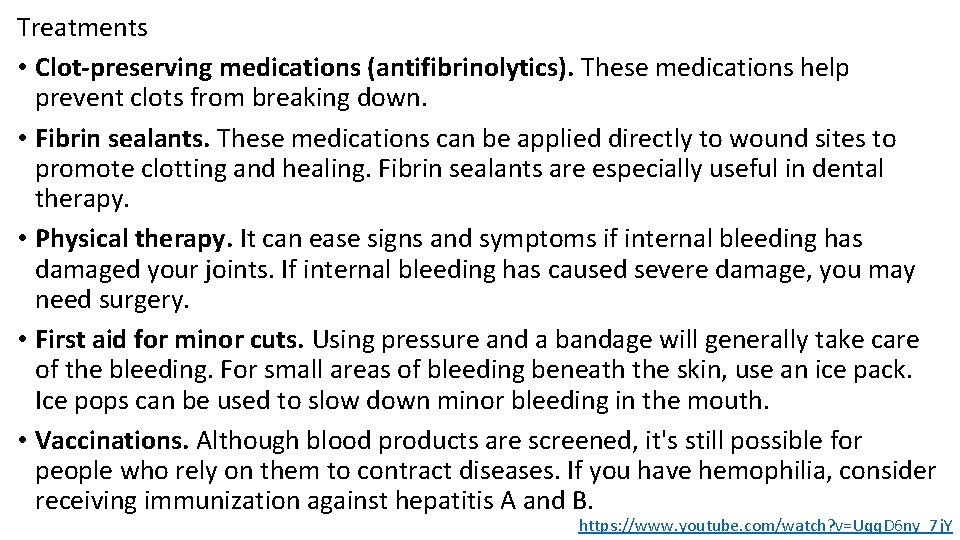
Treatments • Clot-preserving medications (antifibrinolytics). These medications help prevent clots from breaking down. • Fibrin sealants. These medications can be applied directly to wound sites to promote clotting and healing. Fibrin sealants are especially useful in dental therapy. • Physical therapy. It can ease signs and symptoms if internal bleeding has damaged your joints. If internal bleeding has caused severe damage, you may need surgery. • First aid for minor cuts. Using pressure and a bandage will generally take care of the bleeding. For small areas of bleeding beneath the skin, use an ice pack. Ice pops can be used to slow down minor bleeding in the mouth. • Vaccinations. Although blood products are screened, it's still possible for people who rely on them to contract diseases. If you have hemophilia, consider receiving immunization against hepatitis A and B. https: //www. youtube. com/watch? v=Uqq. D 6 ny_7 j. Y
- Slides: 19