
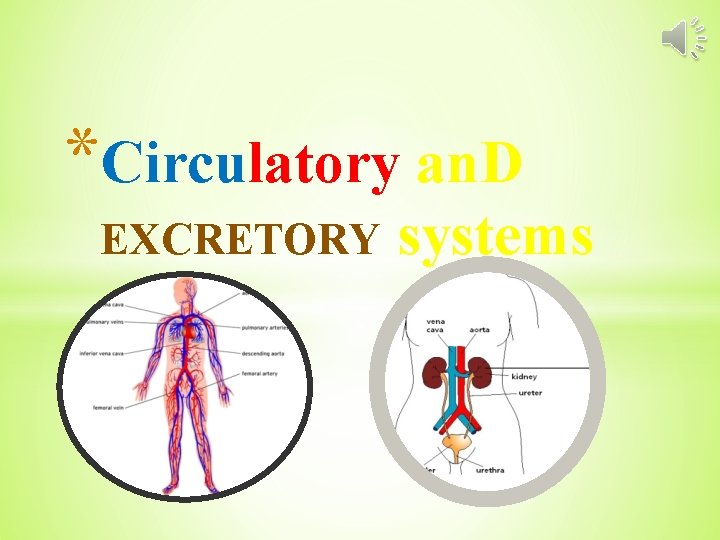
Circulatory an D EXCRETORY systems The circulatory system


- Slides: 17
*Circulatory an. D EXCRETORY systems
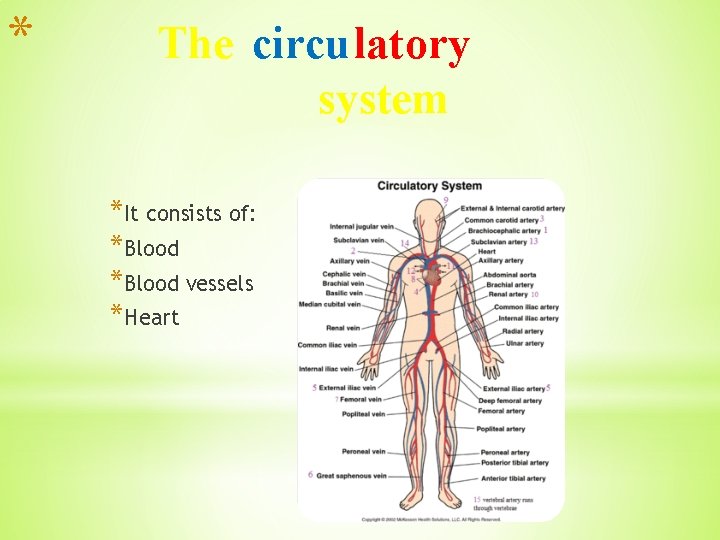
* The circulatory system *It consists of: *Blood vessels *Heart
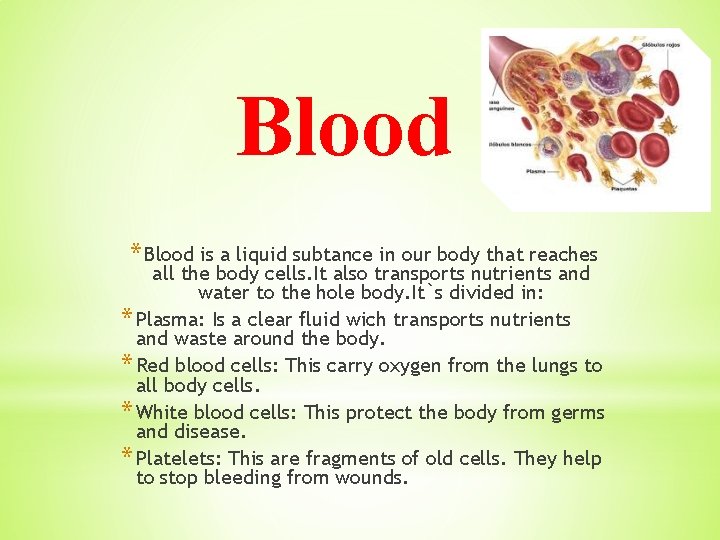
Blood * Blood is a liquid subtance in our body that reaches all the body cells. It also transports nutrients and water to the hole body. It`s divided in: * Plasma: Is a clear fluid wich transports nutrients and waste around the body. * Red blood cells: This carry oxygen from the lungs to all body cells. * White blood cells: This protect the body from germs and disease. * Platelets: This are fragments of old cells. They help to stop bleeding from wounds.
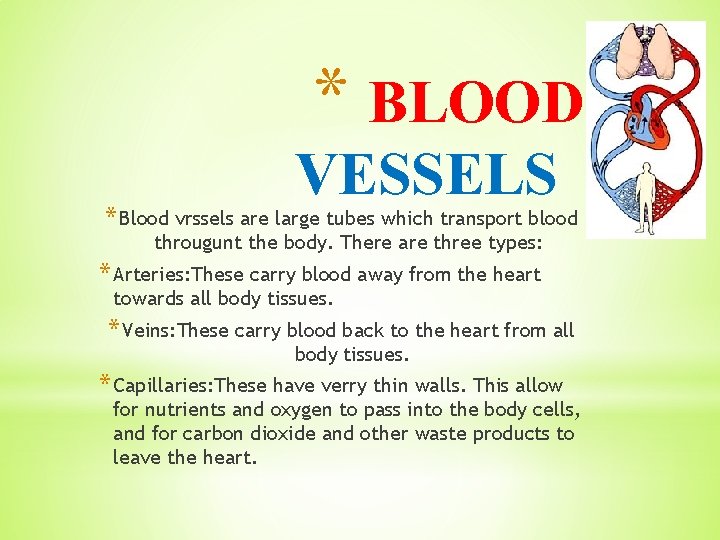
* BLOOD VESSELS * Blood vrssels are large tubes which transport blood througunt the body. There are three types: * Arteries: These carry blood away from the heart towards all body tissues. * Veins: These carry blood back to the heart from all body tissues. * Capillaries: These have verry thin walls. This allow for nutrients and oxygen to pass into the body cells, and for carbon dioxide and other waste products to leave the heart.
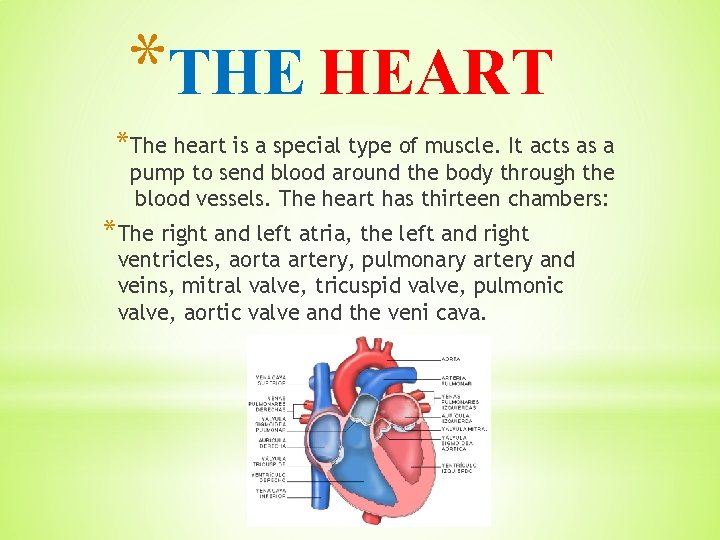
*THE HEART *The heart is a special type of muscle. It acts as a pump to send blood around the body through the blood vessels. The heart has thirteen chambers: *The right and left atria, the left and right ventricles, aorta artery, pulmonary artery and veins, mitral valve, tricuspid valve, pulmonic valve, aortic valve and the veni cava.
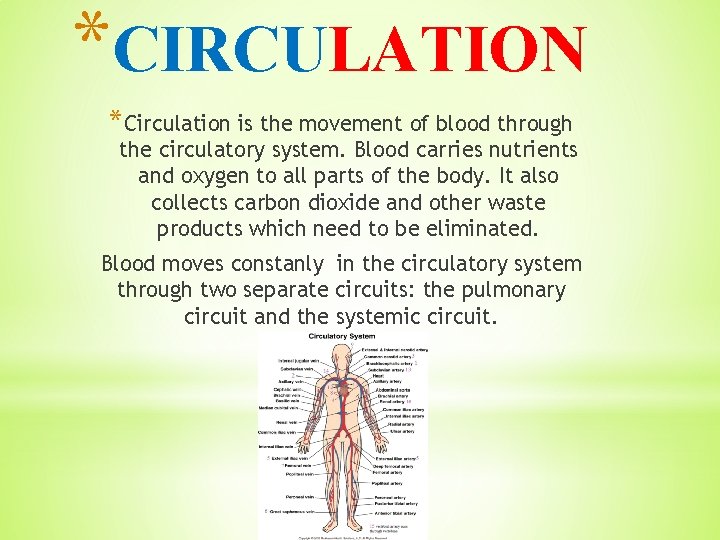
*CIRCULATION *Circulation is the movement of blood through the circulatory system. Blood carries nutrients and oxygen to all parts of the body. It also collects carbon dioxide and other waste products which need to be eliminated. Blood moves constanly in the circulatory system through two separate circuits: the pulmonary circuit and the systemic circuit.
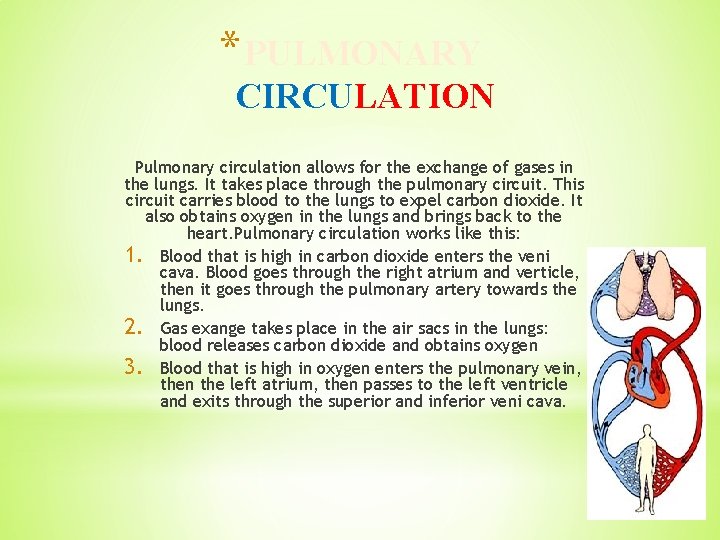
* PULMONARY CIRCULATION Pulmonary circulation allows for the exchange of gases in the lungs. It takes place through the pulmonary circuit. This circuit carries blood to the lungs to expel carbon dioxide. It also obtains oxygen in the lungs and brings back to the heart. Pulmonary circulation works like this: 1. Blood that is high in carbon dioxide enters the veni cava. Blood goes through the right atrium and verticle, then it goes through the pulmonary artery towards the lungs. 2. Gas exange takes place in the air sacs in the lungs: blood releases carbon dioxide and obtains oxygen 3. Blood that is high in oxygen enters the pulmonary vein, then the left atrium, then passes to the left ventricle and exits through the superior and inferior veni cava.
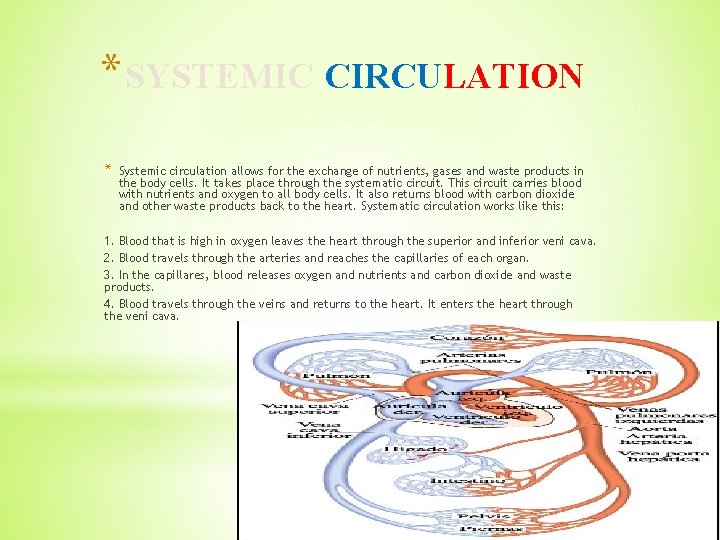
* SYSTEMIC CIRCULATION * Systemic circulation allows for the exchange of nutrients, gases and waste products in the body cells. It takes place through the systematic circuit. This circuit carries blood with nutrients and oxygen to all body cells. It also returns blood with carbon dioxide and other waste products back to the heart. Systematic circulation works like this: 1. Blood that is high in oxygen leaves the heart through the superior and inferior veni cava. 2. Blood travels through the arteries and reaches the capillaries of each organ. 3. In the capillares, blood releases oxygen and nutrients and carbon dioxide and waste products. 4. Blood travels through the veins and returns to the heart. It enters the heart through the veni cava.
* CIRCULATIONAND HEALTH *In order to look after our circulatory system, we should follow this suggestions: *Eat a healthy diet. Consume vegetable fats, like olive oil, and foods that are high in iron, like pulses. *Avoid eating to many carbohydrates and fats.
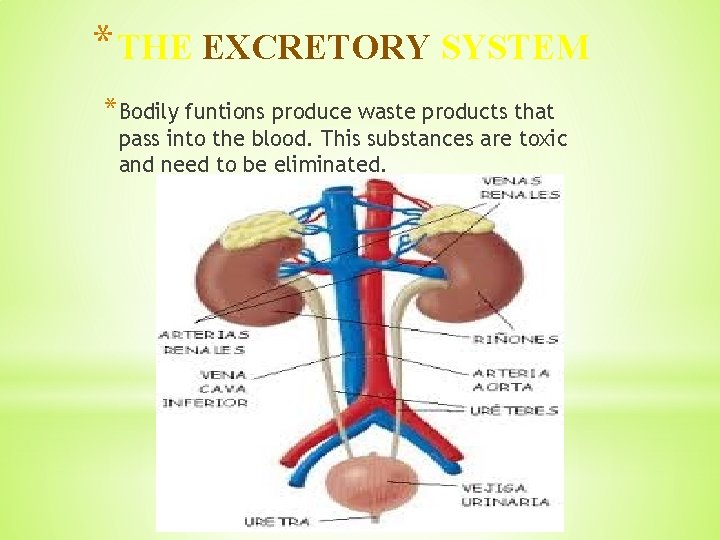
* THE EXCRETORY SYSTEM *Bodily funtions produce waste products that pass into the blood. This substances are toxic and need to be eliminated.
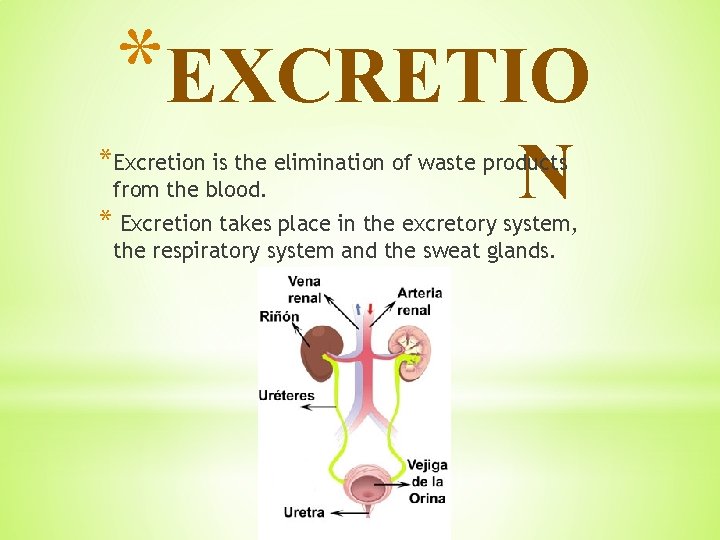
*EXCRETIO N *Excretion is the elimination of waste products from the blood. * Excretion takes place in the excretory system, the respiratory system and the sweat glands.
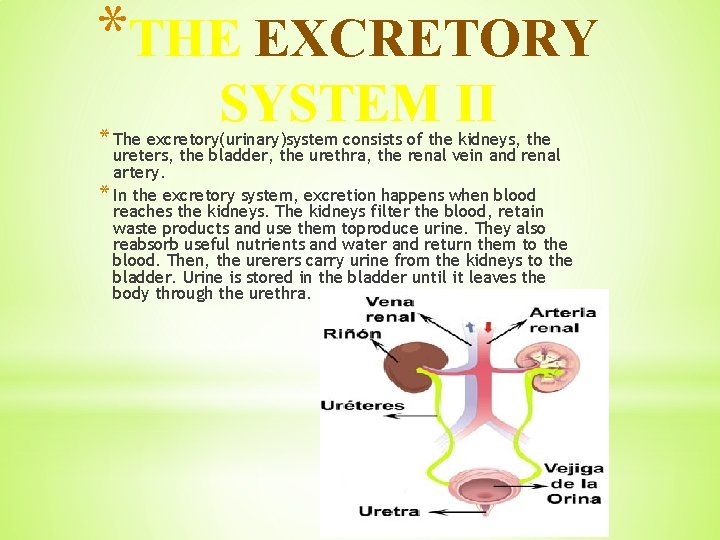
*THE EXCRETORY SYSTEM II * The excretory(urinary)system consists of the kidneys, the ureters, the bladder, the urethra, the renal vein and renal artery. * In the excretory system, excretion happens when blood reaches the kidneys. The kidneys filter the blood, retain waste products and use them toproduce urine. They also reabsorb useful nutrients and water and return them to the blood. Then, the urerers carry urine from the kidneys to the bladder. Urine is stored in the bladder until it leaves the body through the urethra.
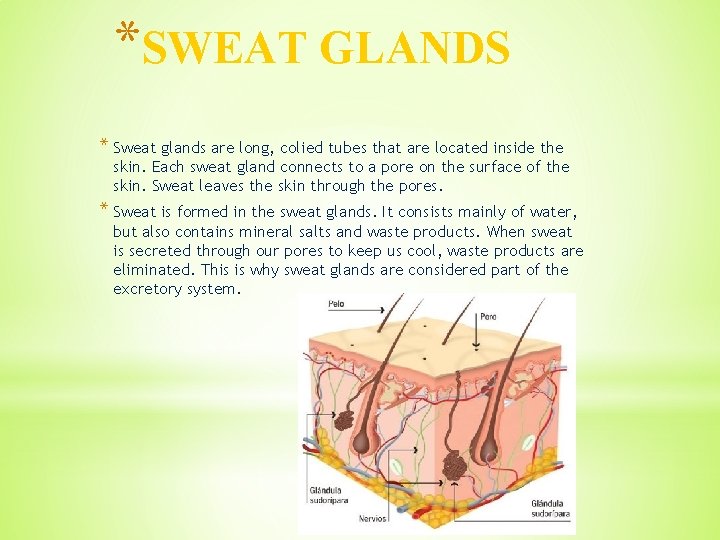
*SWEAT GLANDS * Sweat glands are long, colied tubes that are located inside the skin. Each sweat gland connects to a pore on the surface of the skin. Sweat leaves the skin through the pores. * Sweat is formed in the sweat glands. It consists mainly of water, but also contains mineral salts and waste products. When sweat is secreted through our pores to keep us cool, waste products are eliminated. This is why sweat glands are considered part of the excretory system.
*EXCRETION AND HEALTH * Our body constantly eliminates water through urine and sweat. In order to compensate for this loss, we should drink plenty of water. It´s recommended that we drink 1. 5 l of water per day, wich is about 6 glasses. * Keeping our skin clean is also very important for a healthy excretory system. The best way to remove sweat and dirt from our skin is to shower every day with warm water and mild soap. This will also help to prevent intentions.
* *THE CIRCULATORY SYSTEM *ONCE UPON A TIME. . . THE LIFE(THE CIRCULATORY SYSTEM) *ONCE UPON A TIME. . . THE LIFE(EXCRETORY SYSTEM) *THE EXCRETORY SYSTEM *THE THEORY OF A RED BLOOD CELL
* *GAMES ABOUT THE CIRCULATORY SYSTEM *http: //ACTIVITIES ABOUT THEEXCRETORY SYSTEM-
*THE END *I HOPE YOU`D LIKED IT. *BY JAVIER GARCÍA 6ºA