
CIRCULATION Blood and Blood Vessels The 3 Main

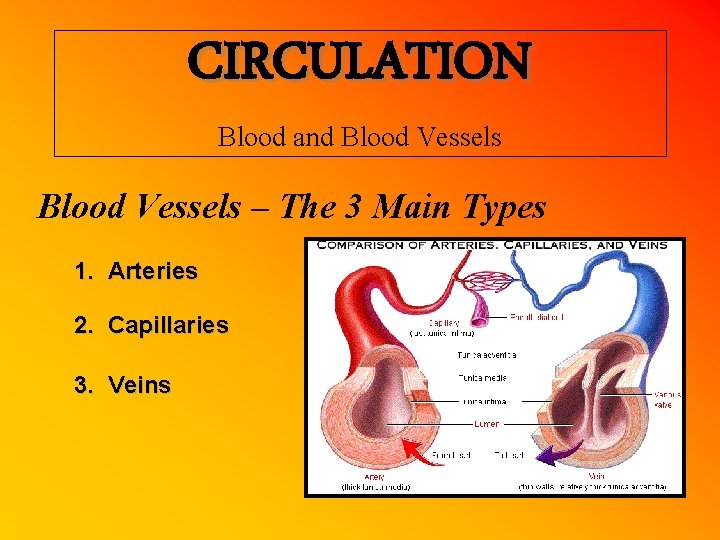
CIRCULATION Blood and Blood Vessels – The 3 Main Types 1. Arteries 2. Capillaries 3. Veins
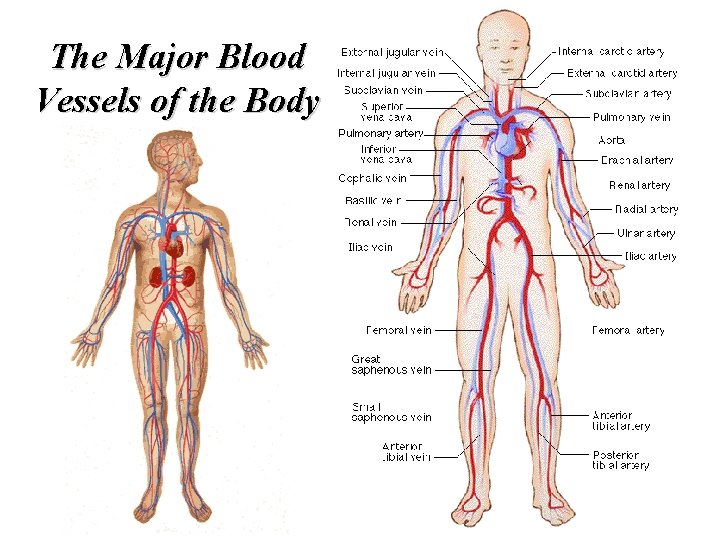
The Major Blood Vessels of the Body
• The aorta, the largest artery in the body, is almost the diameter of a garden hose. • The aorta in a blue whale is so big, you could swim down it!!! • Capillaries, on the other hand, are so small that it takes ten of them to equal the thickness of a human hair. • One pound of excess fat adds approximately 200 miles of extra capillaries. This increases BP! • If you stretched your veins out, and hooked them all together, they would go around the world 2 times!!
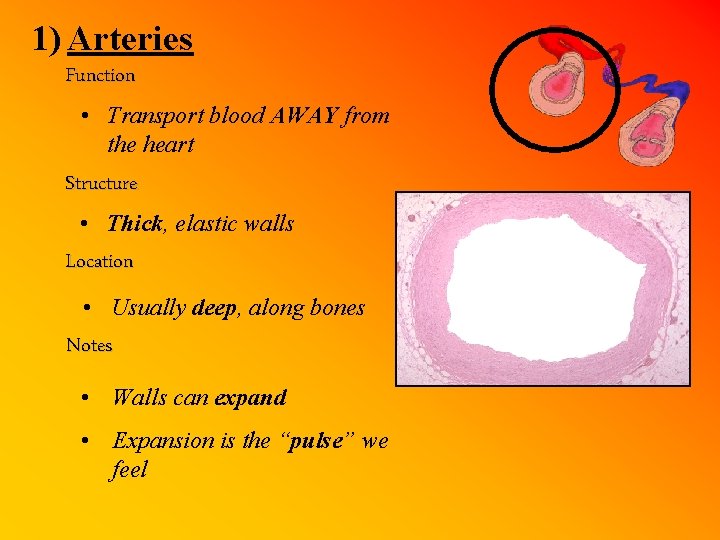
1) Arteries Function • Transport blood AWAY from the heart Structure • Thick, elastic walls Location • Usually deep, along bones Notes • Walls can expand • Expansion is the “pulse” we feel
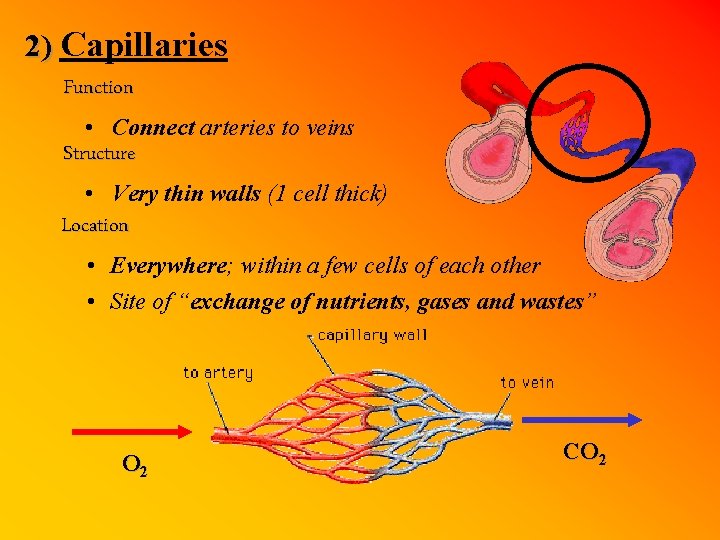
2) Capillaries Function • Connect arteries to veins Structure • Very thin walls (1 cell thick) Location • Everywhere; within a few cells of each other • Site of “exchange of nutrients, gases and wastes” O 2 CO 2
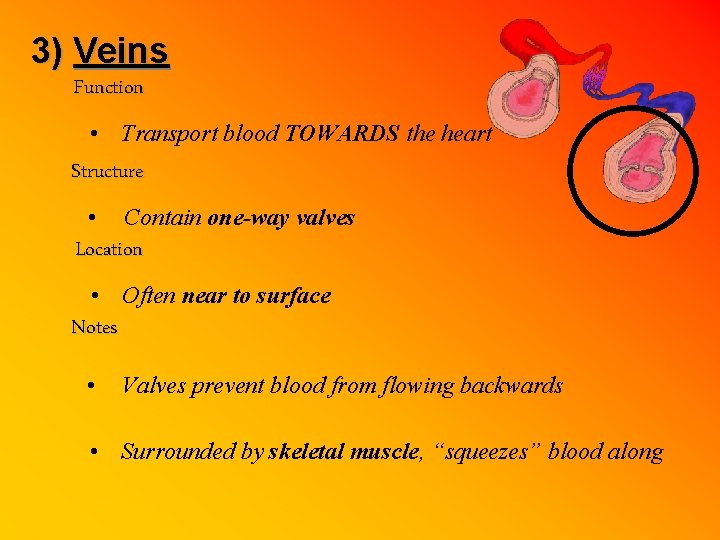
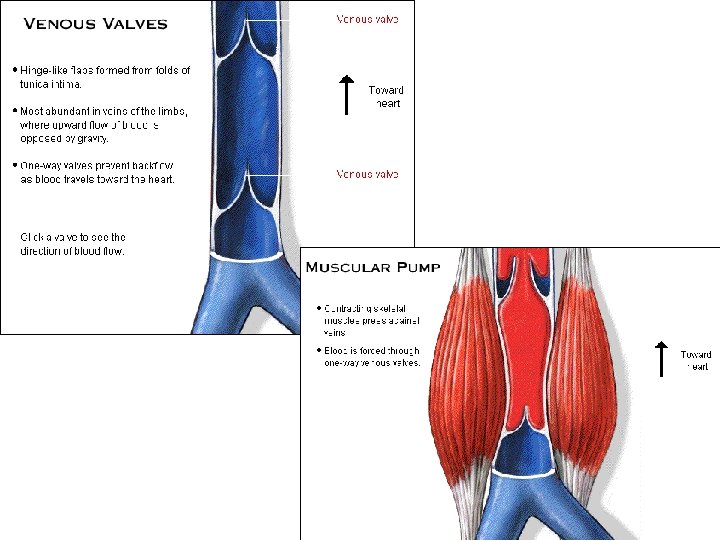
3) Veins Function • Transport blood TOWARDS the heart Structure • Contain one-way valves Location • Often near to surface Notes • Valves prevent blood from flowing backwards • Surrounded by skeletal muscle, “squeezes” blood along
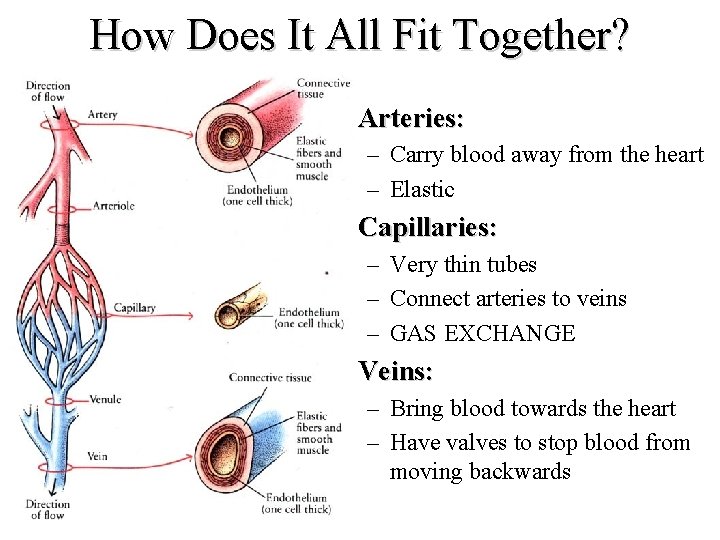
How Does It All Fit Together? • Arteries: – Carry blood away from the heart – Elastic • Capillaries: – Very thin tubes – Connect arteries to veins – GAS EXCHANGE • Veins: – Bring blood towards the heart – Have valves to stop blood from moving backwards
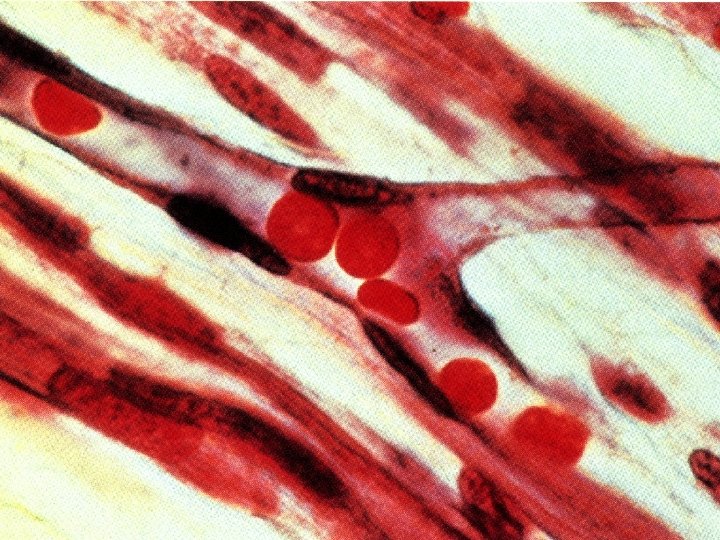
What is Blood? • Blood is more than just a red liquid that leaks onto your best white shirt when you cut yourself!
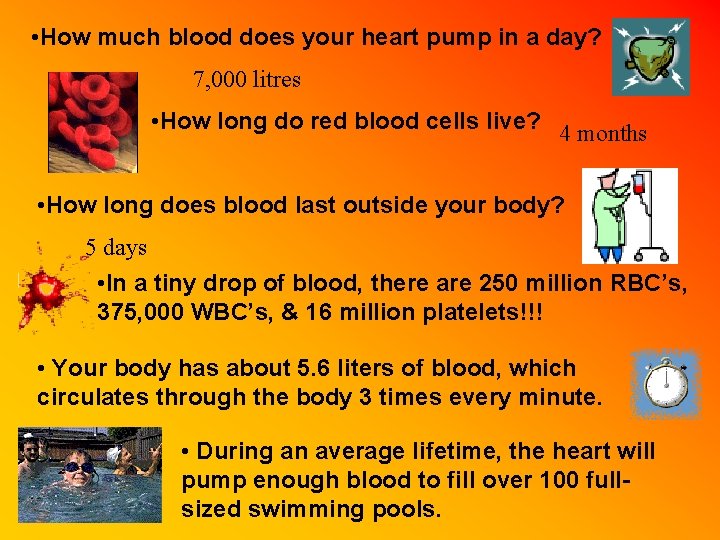
• How much blood does your heart pump in a day? 7, 000 litres • How long do red blood cells live? 4 months • How long does blood last outside your body? 5 days • In a tiny drop of blood, there are 250 million RBC’s, 375, 000 WBC’s, & 16 million platelets!!! • Your body has about 5. 6 liters of blood, which circulates through the body 3 times every minute. • During an average lifetime, the heart will pump enough blood to fill over 100 fullsized swimming pools.
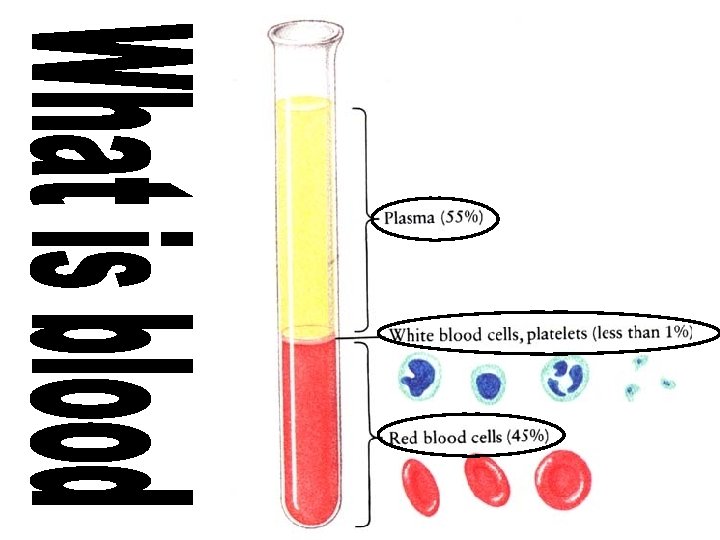
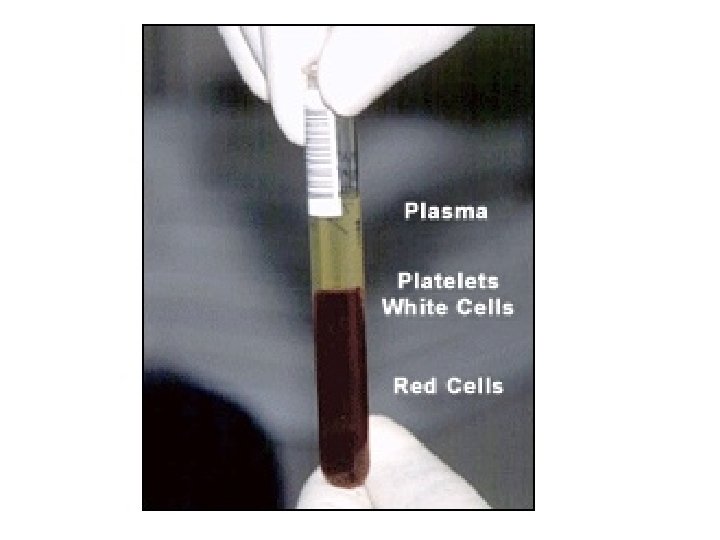
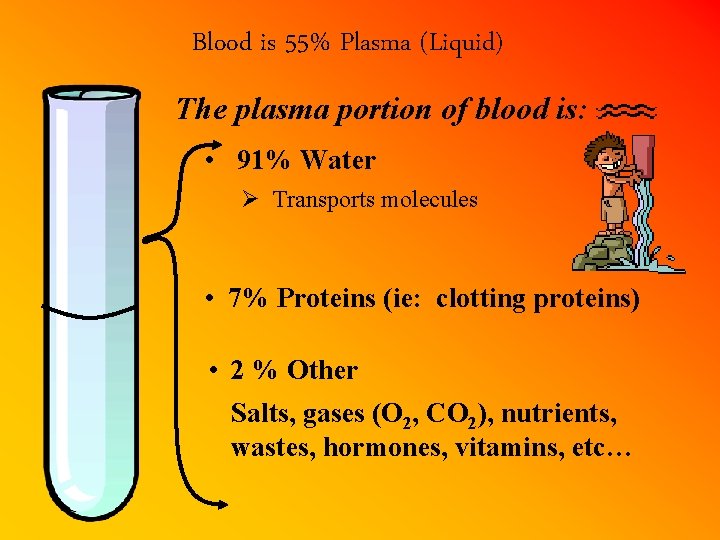
Blood is 55% Plasma (Liquid) The plasma portion of blood is: • 91% Water Ø Transports molecules • 7% Proteins (ie: clotting proteins) • 2 % Other Salts, gases (O 2, CO 2), nutrients, wastes, hormones, vitamins, etc…
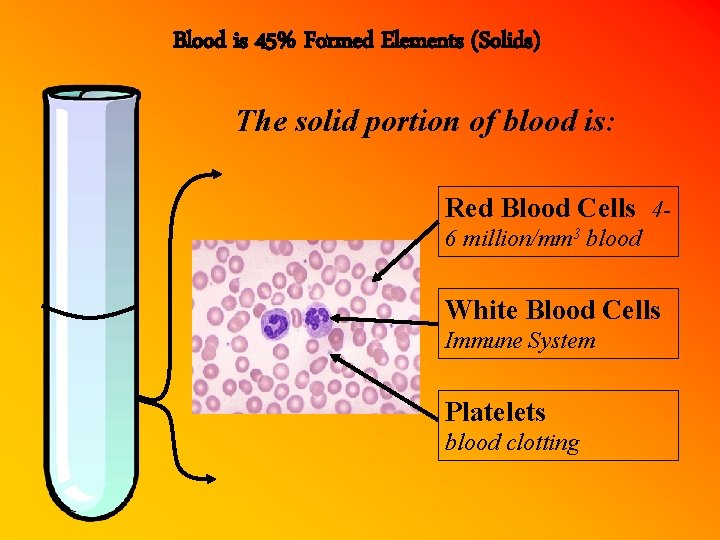
Blood is 45% Formed Elements (Solids) The solid portion of blood is: Red Blood Cells 46 million/mm 3 blood White Blood Cells Immune System Platelets blood clotting
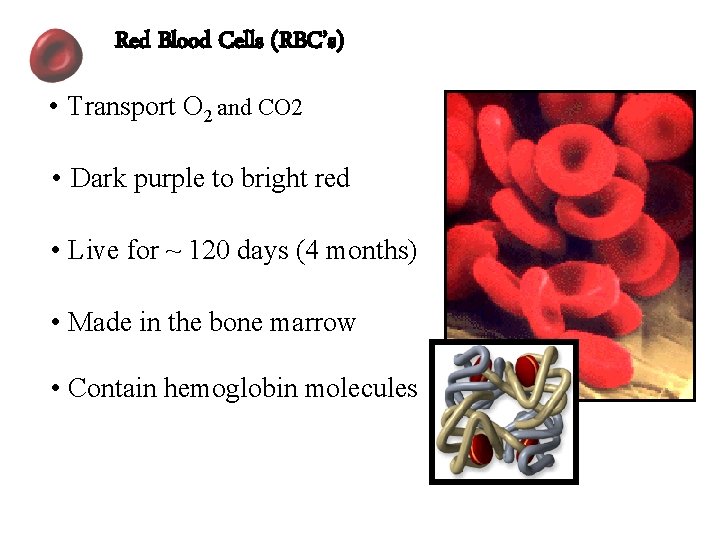
Red Blood Cells (RBC’s) • Transport O 2 and CO 2 • Dark purple to bright red • Live for ~ 120 days (4 months) • Made in the bone marrow • Contain hemoglobin molecules
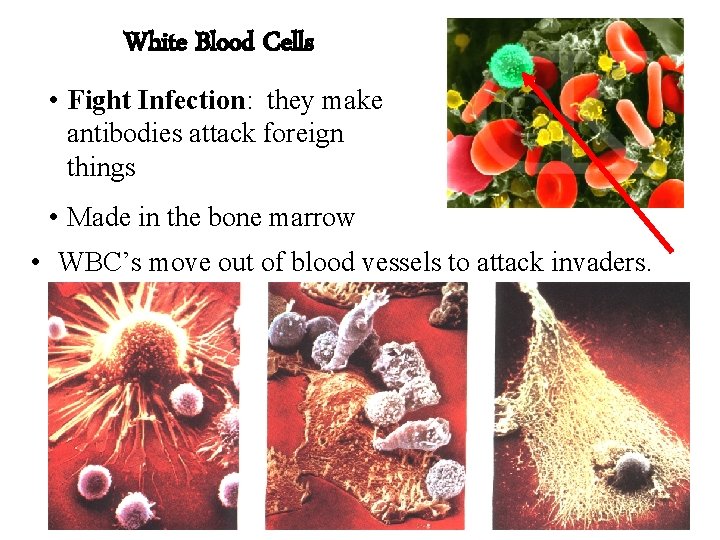
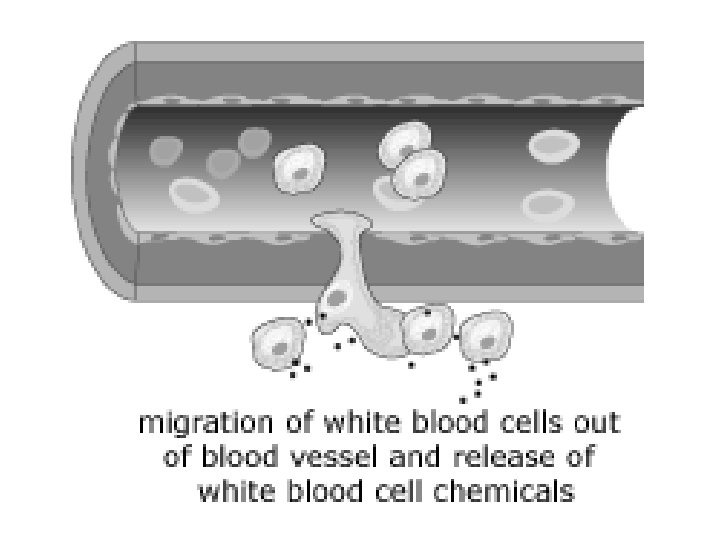
White Blood Cells • Fight Infection: they make antibodies attack foreign things • Made in the bone marrow • WBC’s move out of blood vessels to attack invaders.
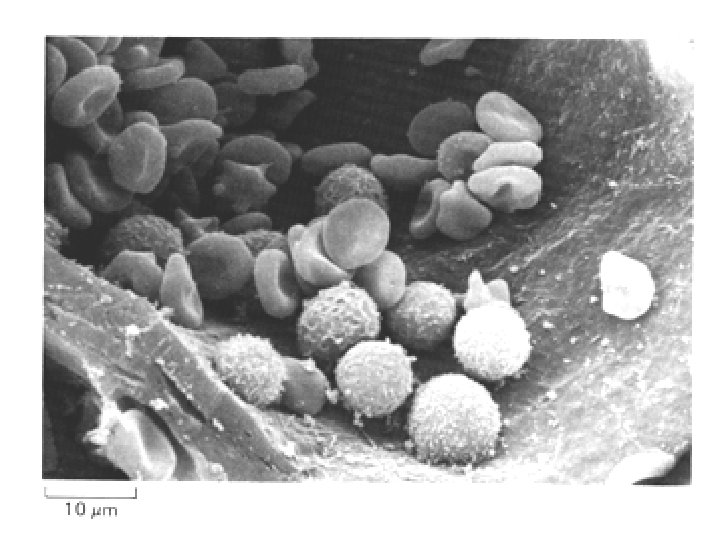
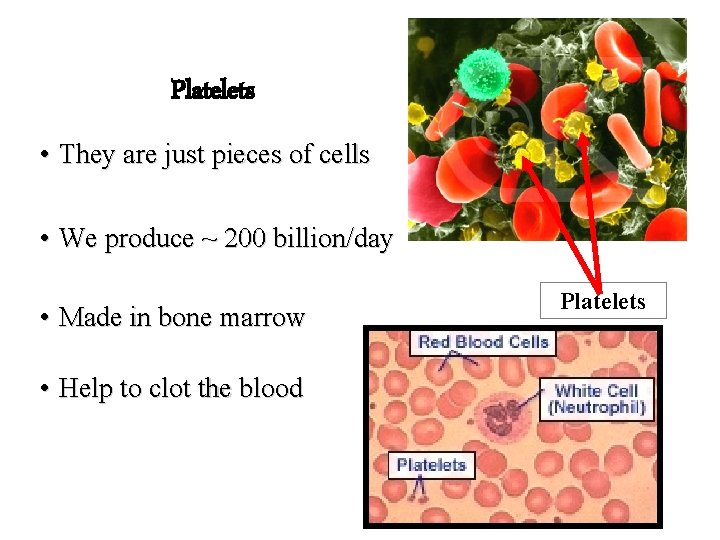
Platelets • They are just pieces of cells • We produce ~ 200 billion/day • Made in bone marrow • Help to clot the blood Platelets
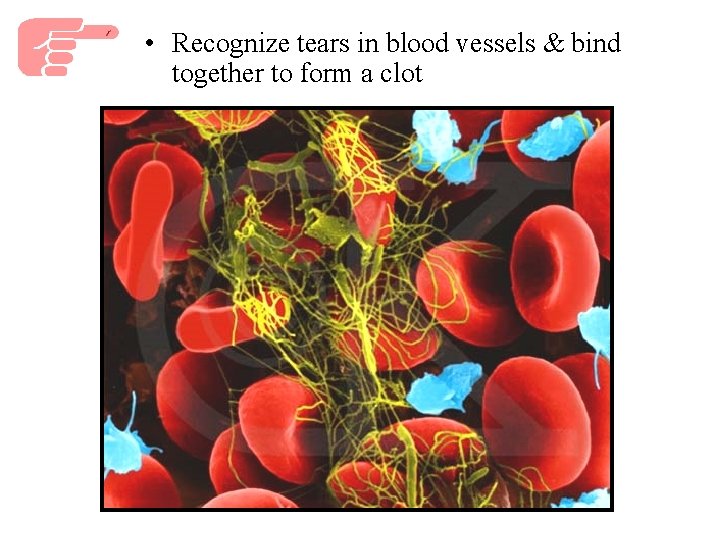
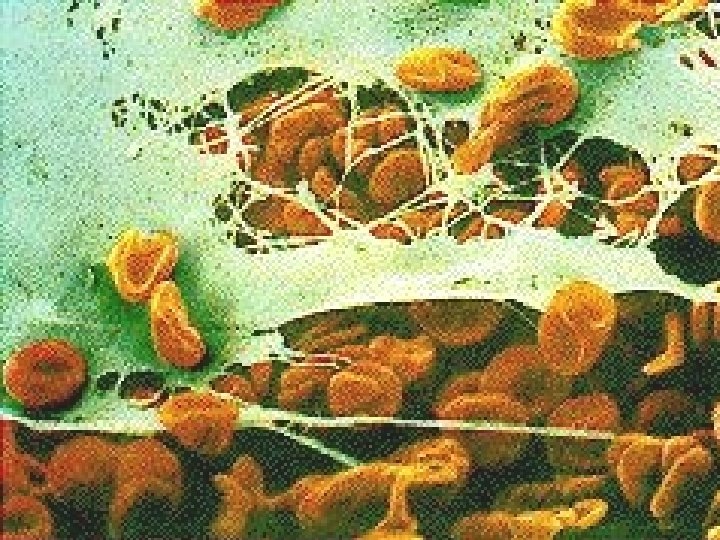
• Recognize tears in blood vessels & bind together to form a clot
• Feel your pulse by placing two fingers at pulse points on your neck or wrists. Now count the beats for 15 seconds & multiply by 4. • As a kid, your resting pulse might range from 90 to 120 beats per minute. • As an adult, your pulse rate slows to an average of 72 beats per minute. What is YOUR pulse rate at rest? After exercise?
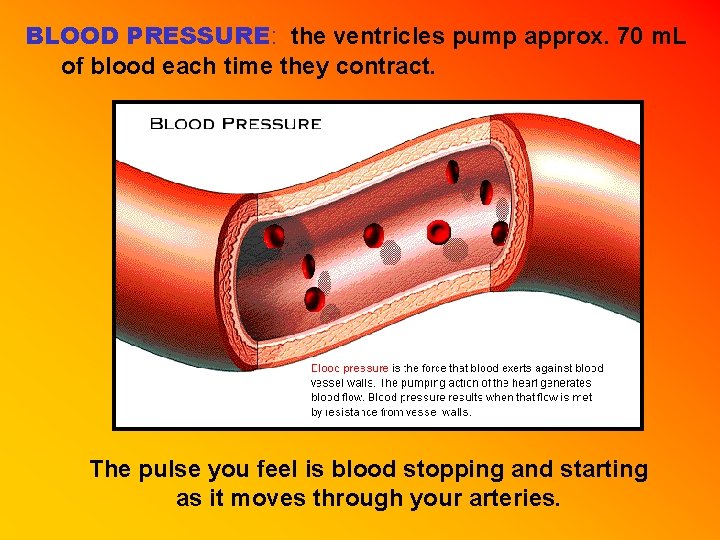
BLOOD PRESSURE: the ventricles pump approx. 70 m. L of blood each time they contract. The pulse you feel is blood stopping and starting as it moves through your arteries.
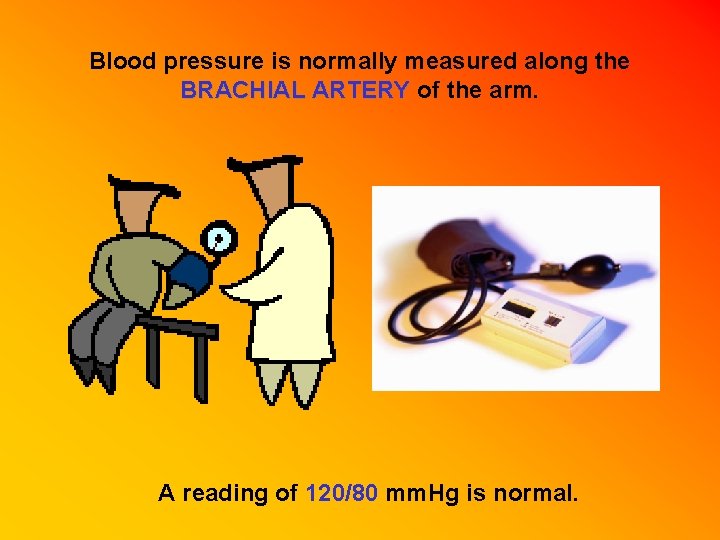
Blood pressure is normally measured along the BRACHIAL ARTERY of the arm. A reading of 120/80 mm. Hg is normal.
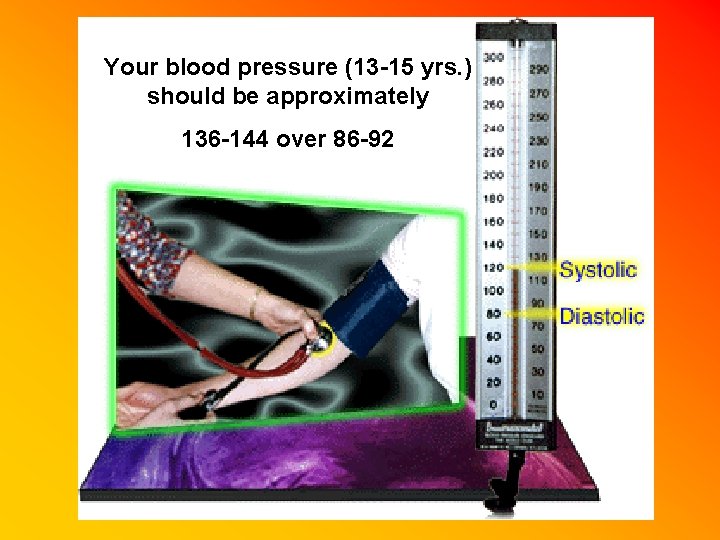
Your blood pressure (13 -15 yrs. ) should be approximately 136 -144 over 86 -92
- Slides: 29