
Circulation and haemorrhage control MASTER BASICS Education March
Circulation and haemorrhage control MASTER © BASICS Education March 2019
Aims • To understand the place of circulatory assessment in emergency care • To list the causes of circulatory failure • To understand the methods of assessing circulation • To understand the management of circulatory problems
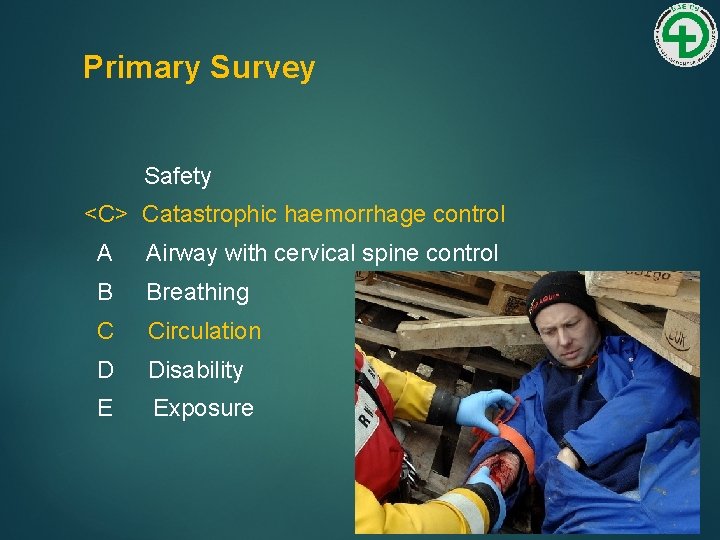
Primary Survey Safety <C> Catastrophic haemorrhage control A Airway with cervical spine control B Breathing C Circulation D Disability E Exposure
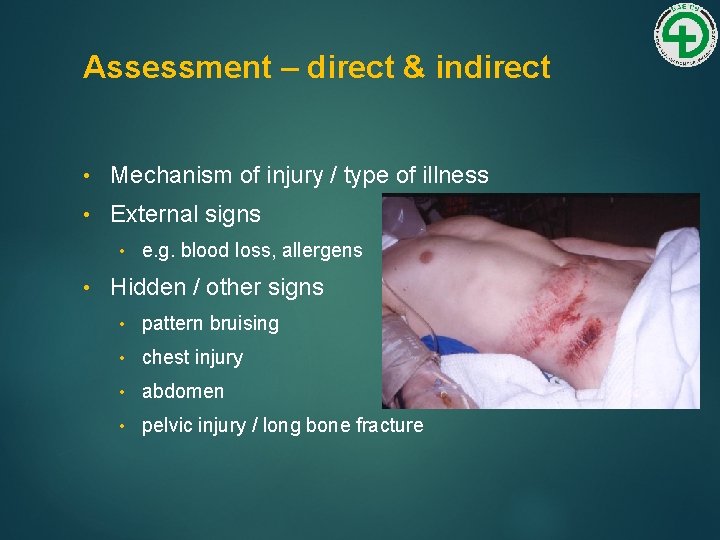
Assessment – direct & indirect • Mechanism of injury / type of illness • External signs • • e. g. blood loss, allergens Hidden / other signs • pattern bruising • chest injury • abdomen • pelvic injury / long bone fracture

Assessment of circulation • Respiratory rate • Pulse rate and presence of radial pulse • Blood pressure • Skin temperature, colour and sweating • Central capillary refill time • Level of consciousness, agitation, confusion Does this all fit with the clinical picture?
Circulatory failure • Results in SHOCK • Inadequate delivery of oxygen and nutrients to the tissues • Inadequate removal of waste products • Leads to cell damage, loss of function and eventually death
Causes of shock in trauma • Hypovolaemia • Tension pneumothorax • Cardiac tamponade • Spinal cord injury
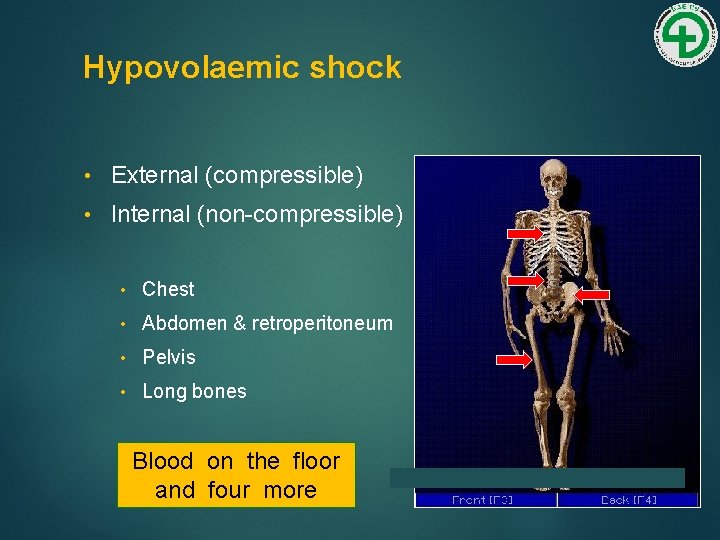
Hypovolaemic shock • External (compressible) • Internal (non-compressible) • Chest • Abdomen & retroperitoneum • Pelvis • Long bones Blood on the floor and four more
Shock - indicators of cause • • • Tension pneumothorax • Reduced chest movement • Increased percussion note • Unilateral absent breath sounds • Deviated trachea Cardiac tamponade • Muffled heart sounds • Distended neck veins Spinal • Warm skin • Slow pulse • Neurological signs
Management of shock • Oxygen • Stop haemorrhage • Seek out occult causes • Titrate IV 0. 9% saline to maintain a radial pulse (NICE 2019)
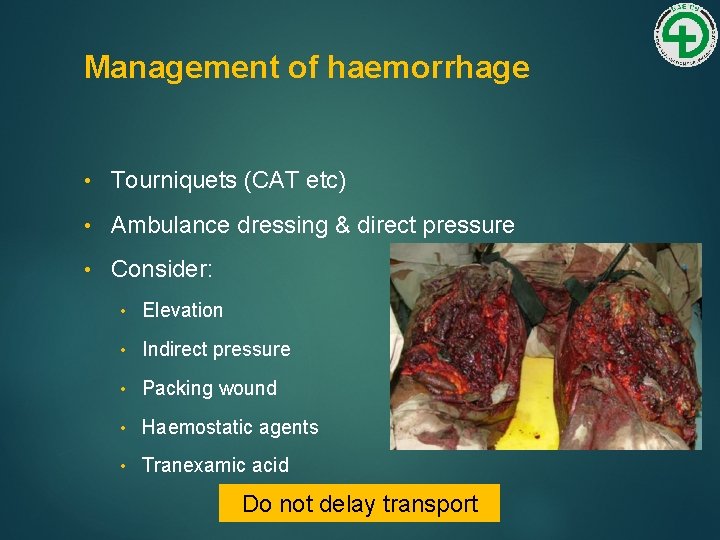
Management of haemorrhage • Tourniquets (CAT etc) • Ambulance dressing & direct pressure • Consider: • Elevation • Indirect pressure • Packing wound • Haemostatic agents • Tranexamic acid Do not delay transport
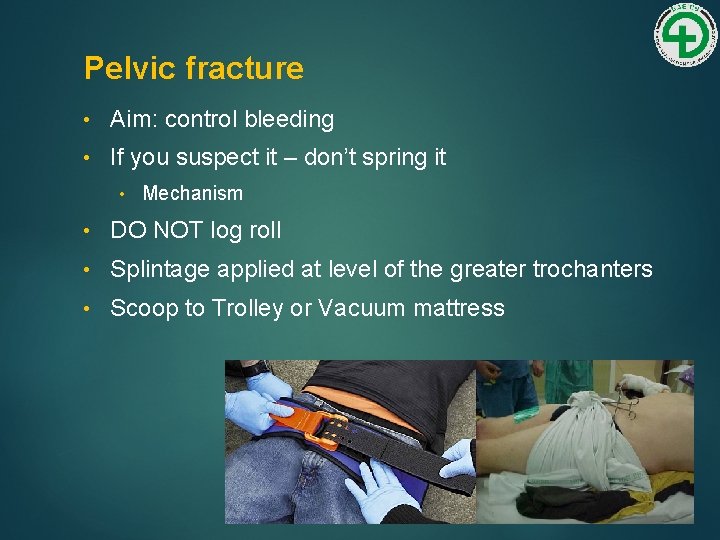
Pelvic fracture • Aim: control bleeding • If you suspect it – don’t spring it • Mechanism • DO NOT log roll • Splintage applied at level of the greater trochanters • Scoop to Trolley or Vacuum mattress
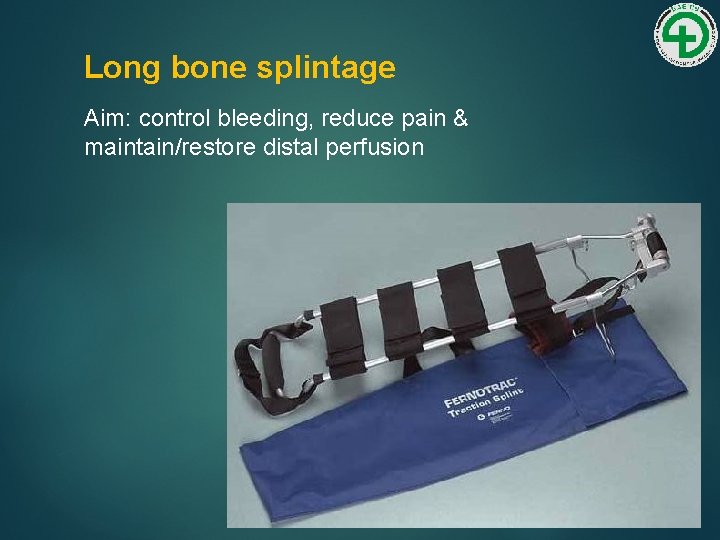
Long bone splintage Aim: control bleeding, reduce pain & maintain/restore distal perfusion
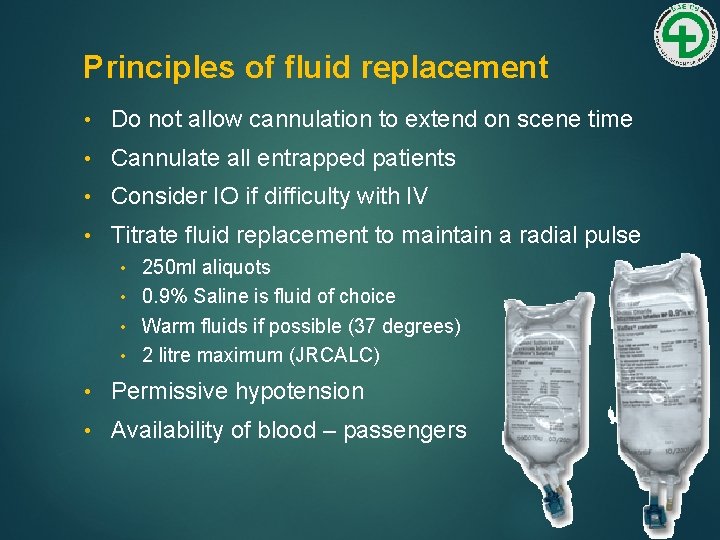
Principles of fluid replacement • Do not allow cannulation to extend on scene time • Cannulate all entrapped patients • Consider IO if difficulty with IV • Titrate fluid replacement to maintain a radial pulse 250 ml aliquots • 0. 9% Saline is fluid of choice • Warm fluids if possible (37 degrees) • 2 litre maximum (JRCALC) • • Permissive hypotension • Availability of blood – passengers
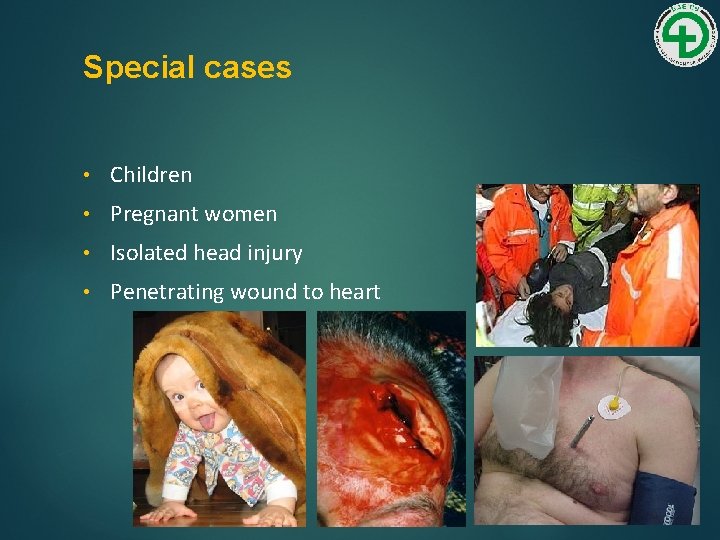
Special cases • Children • Pregnant women • Isolated head injury • Penetrating wound to heart
Circulation and Haemorrhage Questions?
Summary • Circulatory failure causes cell hypoxia • Blood loss needs to be stopped • Look for internal bleeding and get to definitive care ASAP • Cannulation / IV fluids should not delay time to definitive care • Assess and re-assess

Carnival UK Immediate Care Course
- Slides: 18