
Circular Motion Particles moving in a circular path
- Slides: 11
Circular Motion * Particles moving in a circular path with a constant velocity.
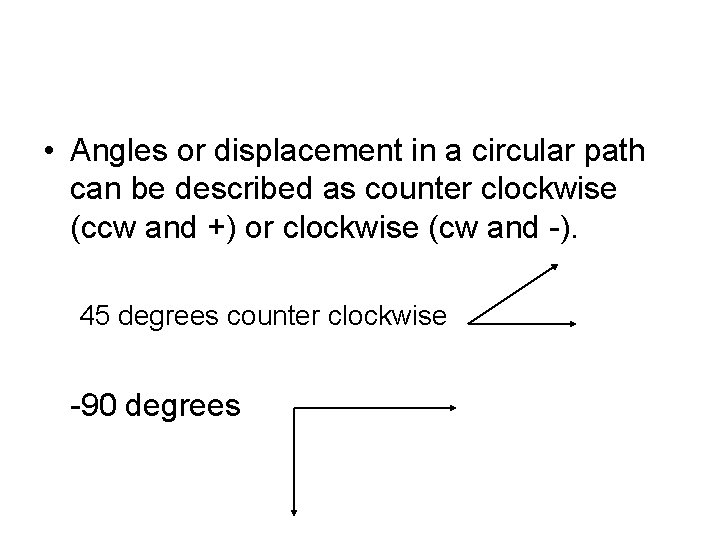
• Angles or displacement in a circular path can be described as counter clockwise (ccw and +) or clockwise (cw and -). 45 degrees counter clockwise -90 degrees
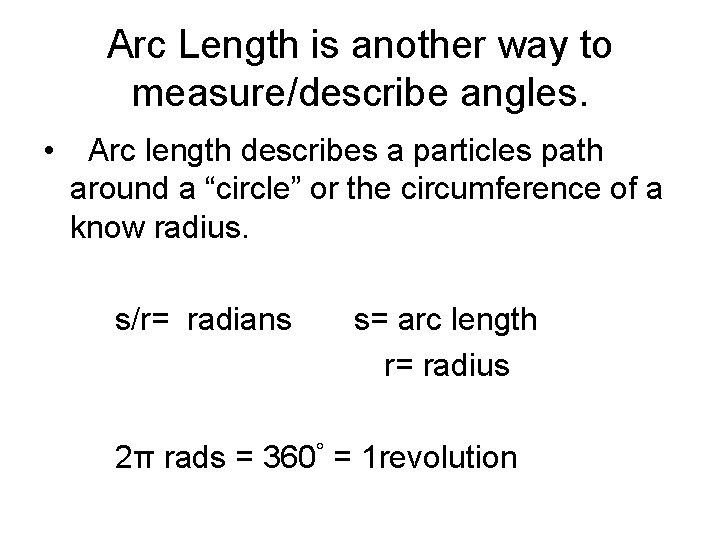
Arc Length is another way to measure/describe angles. • Arc length describes a particles path around a “circle” or the circumference of a know radius. s/r= radians s= arc length r= radius 2π rads = 360° = 1 revolution
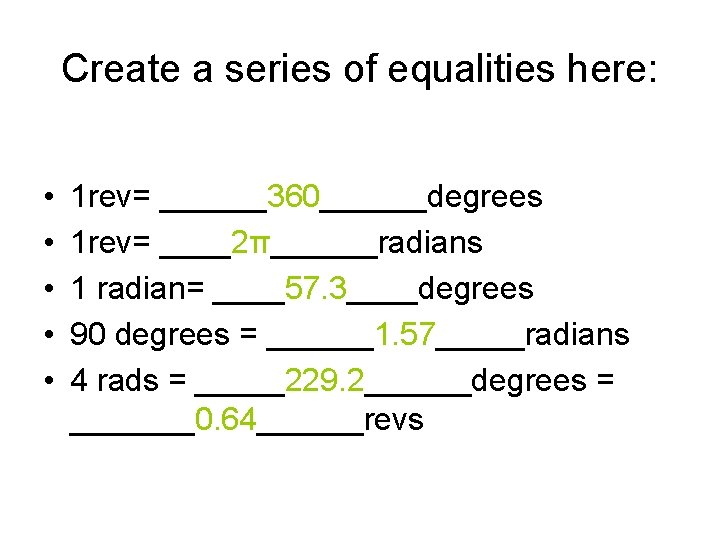
Create a series of equalities here: • • • 1 rev= ______360______degrees 1 rev= ____2π______radians 1 radian= ____57. 3____degrees 90 degrees = ______1. 57_____radians 4 rads = _____229. 2______degrees = _______0. 64______revs
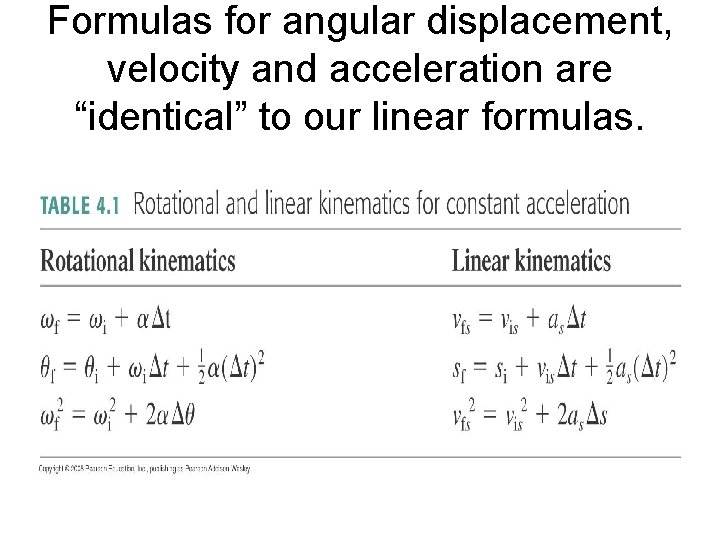
Formulas for angular displacement, velocity and acceleration are “identical” to our linear formulas.
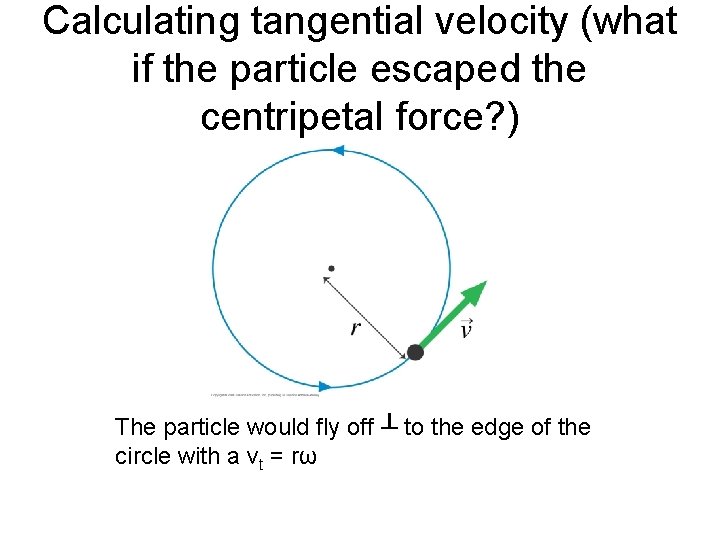
Calculating tangential velocity (what if the particle escaped the centripetal force? ) The particle would fly off ┴ to the edge of the circle with a vt = rω
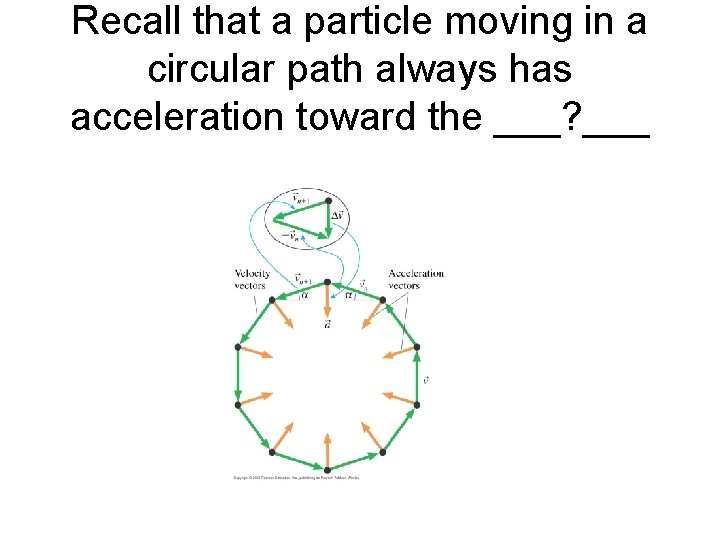
Recall that a particle moving in a circular path always has acceleration toward the ___? ___
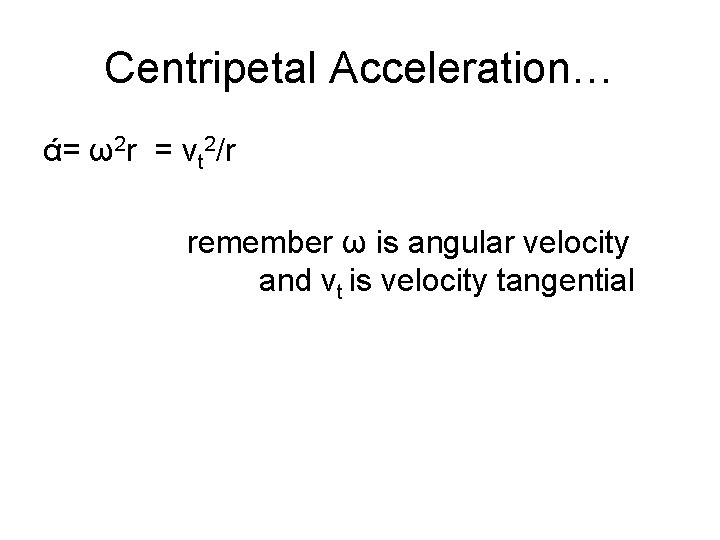
Centripetal Acceleration… ά= ω2 r = vt 2/r remember ω is angular velocity and vt is velocity tangential
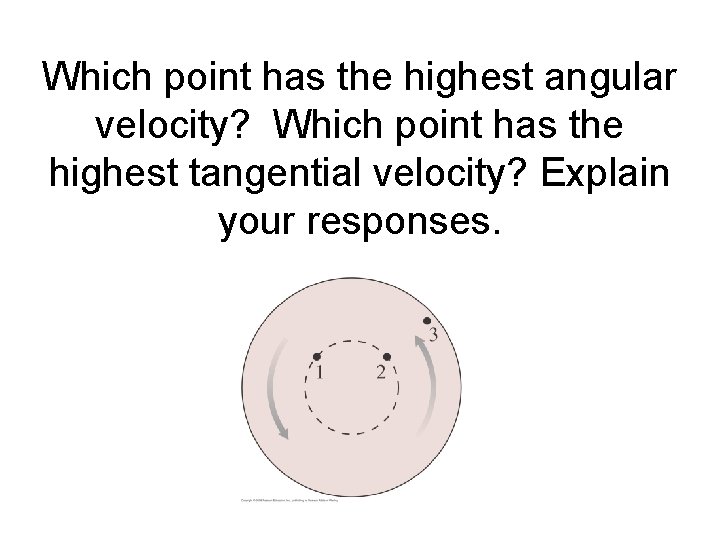
Which point has the highest angular velocity? Which point has the highest tangential velocity? Explain your responses.
Does the top of the empire state building move faster, slower or at the same speed as the bottom of the building? Explain.
Homework: • Page 206 #7 -11 • Page 211 # 1 -14 (Focus on Concepts)