
Circular Flow Model What is the Circular Flow
- Slides: 18
Circular Flow Model
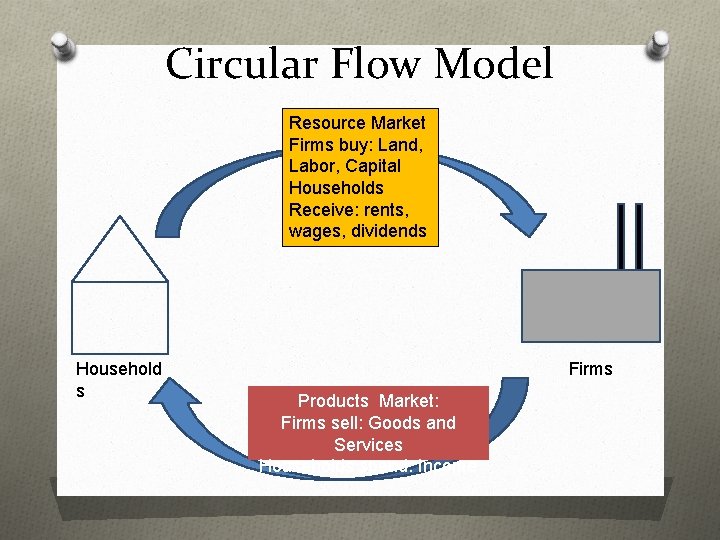
What is the Circular Flow Model O The circular flow model is a visual representation of the inter-relationships of households and firms. O It can include the role of government and the international market place.
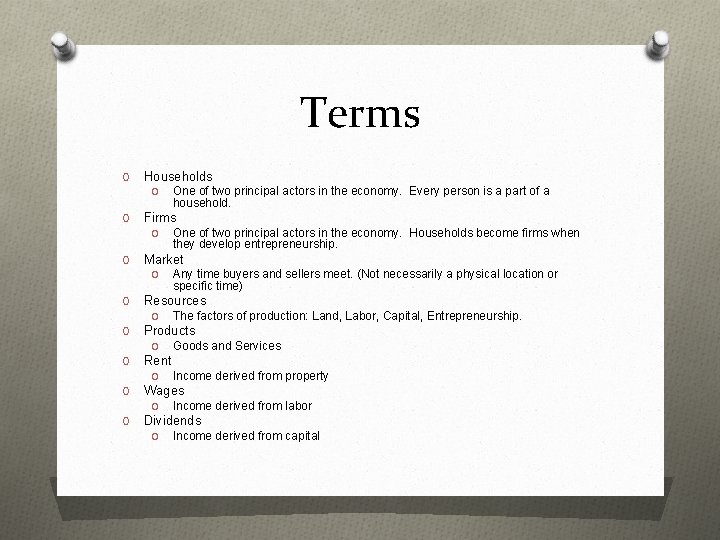
Terms O Households O O Firms O O Income derived from property Wages O O Goods and Services Rent O O The factors of production: Land, Labor, Capital, Entrepreneurship. Products O O Any time buyers and sellers meet. (Not necessarily a physical location or specific time) Resources O O One of two principal actors in the economy. Households become firms when they develop entrepreneurship. Market O O One of two principal actors in the economy. Every person is a part of a household. Income derived from labor Dividends O Income derived from capital
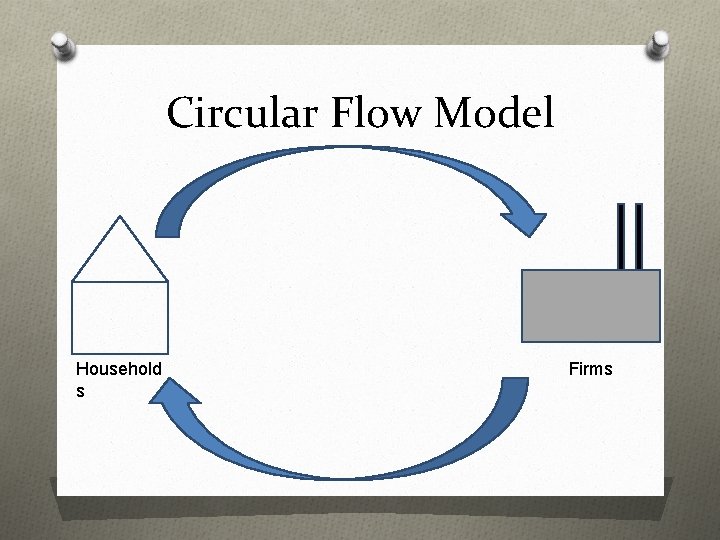
Circular Flow Model Household s Firms
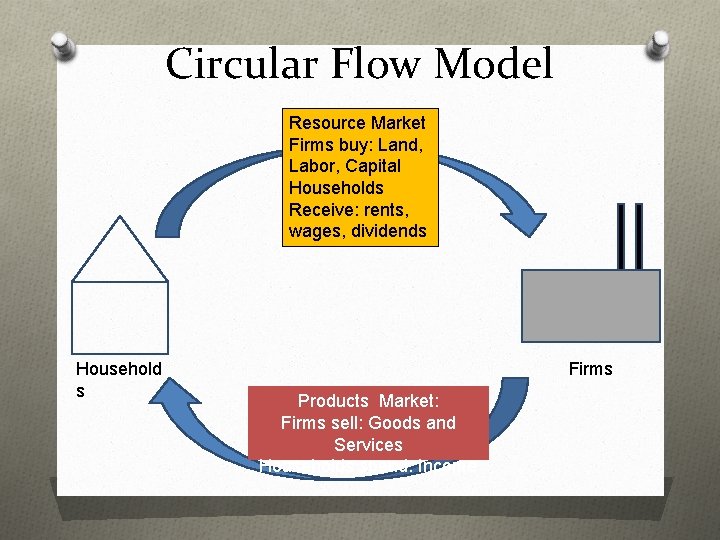
Circular Flow Model Resource Market Firms buy: Land, Labor, Capital Households Receive: rents, wages, dividends Household s Firms Products Market: Firms sell: Goods and Services Households spend: Income
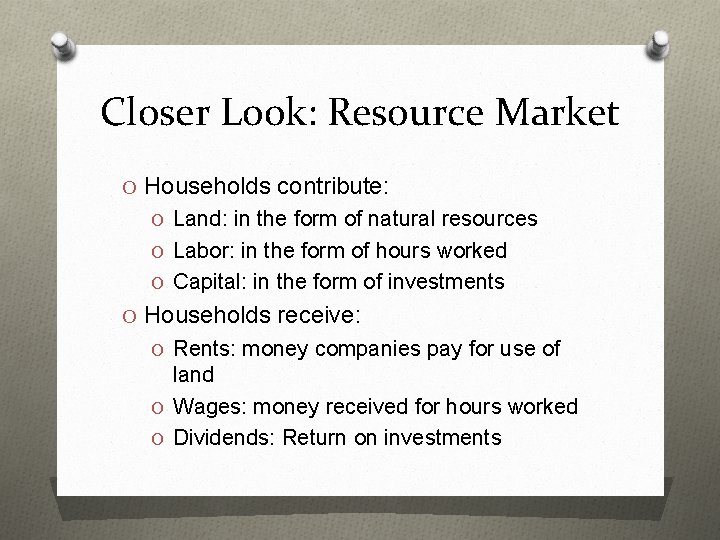
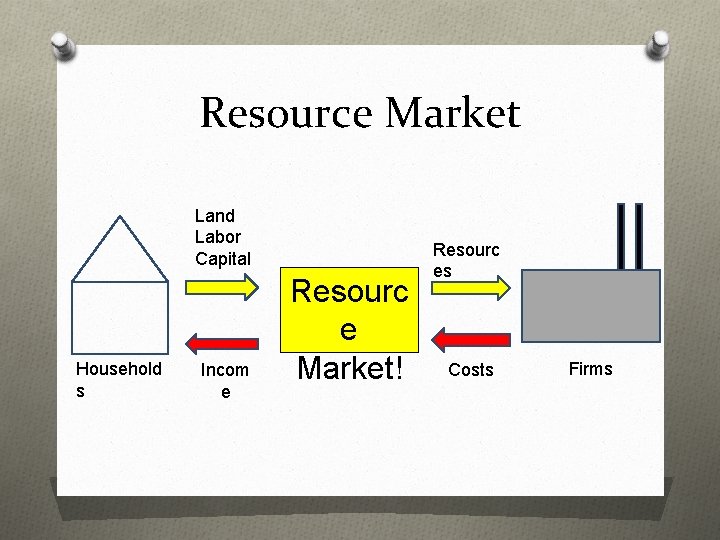
Closer Look: Resource Market O Households contribute: O Land: in the form of natural resources O Labor: in the form of hours worked O Capital: in the form of investments O Households receive: O Rents: money companies pay for use of land O Wages: money received for hours worked O Dividends: Return on investments
Resource Market Land Labor Capital Household s Incom e Resourc e Market! Resourc es Costs Firms
Circular Flow Model Resource Market Firms buy: Land, Labor, Capital Households Receive: rents, wages, dividends Household s Firms Products Market: Firms sell: Goods and Services Households spend: Income
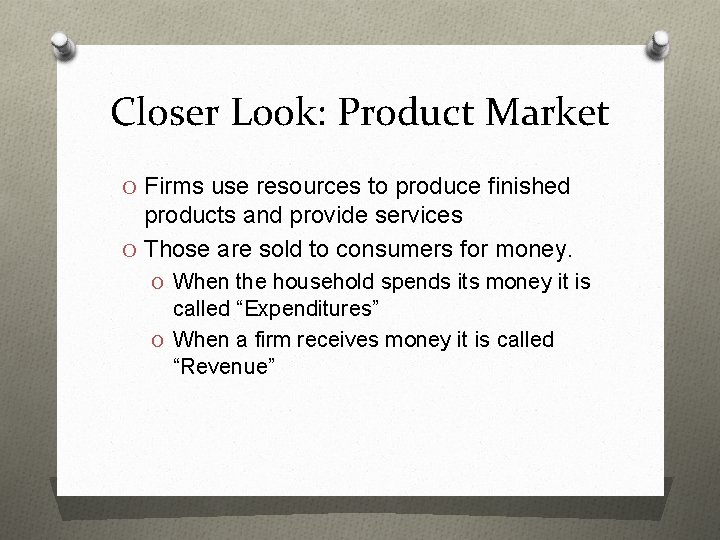
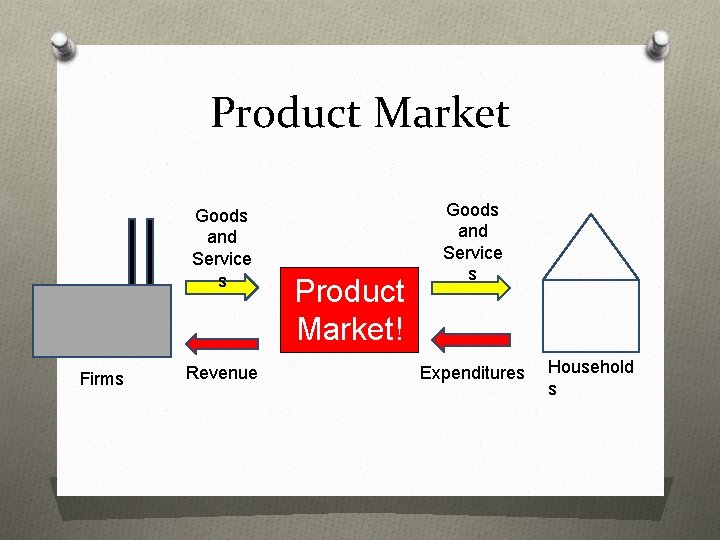
Closer Look: Product Market O Firms use resources to produce finished products and provide services O Those are sold to consumers for money. O When the household spends its money it is called “Expenditures” O When a firm receives money it is called “Revenue”
Product Market Goods and Service s Firms Revenue Product Market! Goods and Service s Expenditures Household s
What is this all about? O How does the circular flow model change your understanding of businesses hiring tactics O Price takers price makers O What would happen if consumers stopped producing a resource?
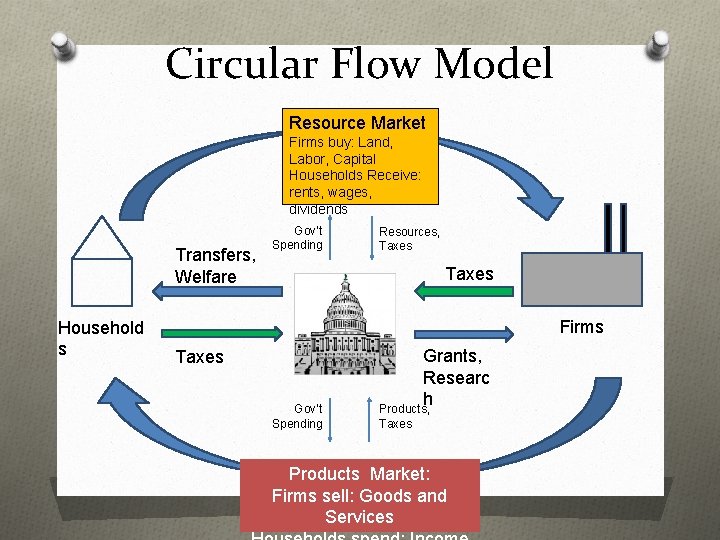
Circular Flow Model Resource Market Firms buy: Land, Labor, Capital Households Receive: rents, wages, dividends Transfers, Welfare Household s Gov’t Spending Resources, Taxes Firms Taxes Gov’t Spending Grants, Researc h Products, Taxes Products Market: Firms sell: Goods and Services
Closer Look: Government Spending O The government makes all its revenue from taxation and takes it from every sector of the economy O In return, firms receive grants and benefit from government research (i. e. military technology) O In return, households receive transfers (i. e. social programs)
John Maynard Keynes O British Economist O Ideas are known as Keynesian Economics O Ideas helped relieve the Great Depression O “Demand Makes its Own Supply”
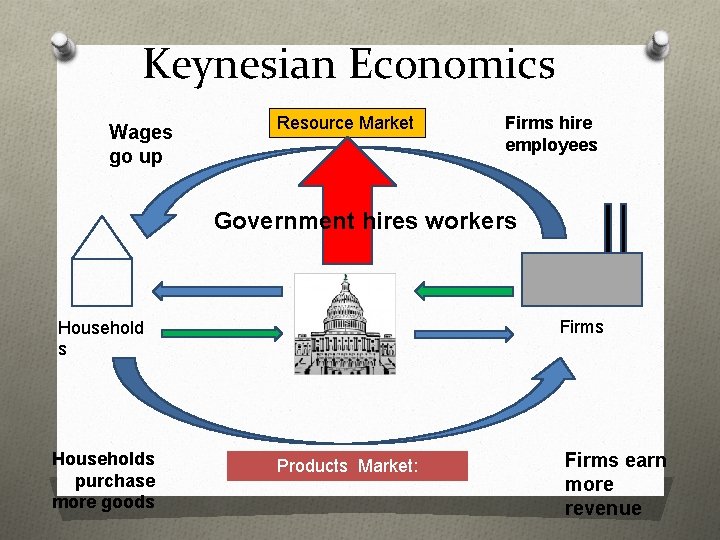
Keynesian Economics Wages go up Resource Market Firms hire employees Government hires workers Firms Households purchase more goods Products Market: Firms earn more revenue
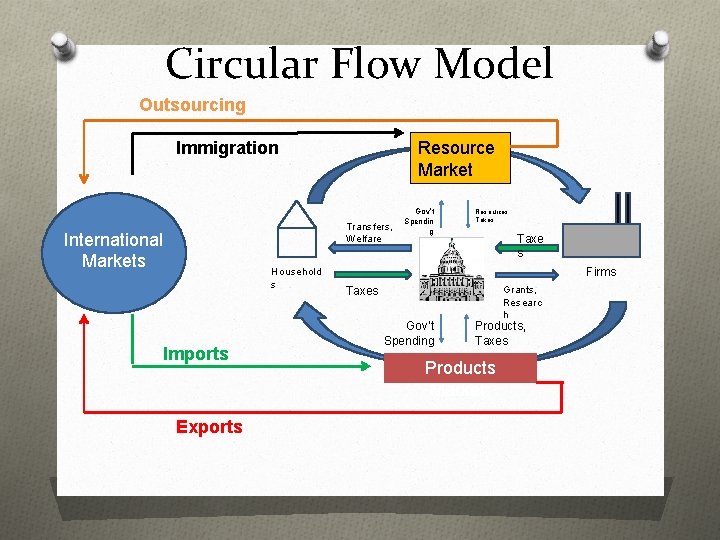
Circular Flow Model Outsourcing Resource Market Immigration Transfers, Welfare International Markets Household s Imports Exports Gov’t Spendin g Resources, Taxes Taxe s Firms Taxes Gov’t Spending Grants, Researc h Products, Taxes Products Market:
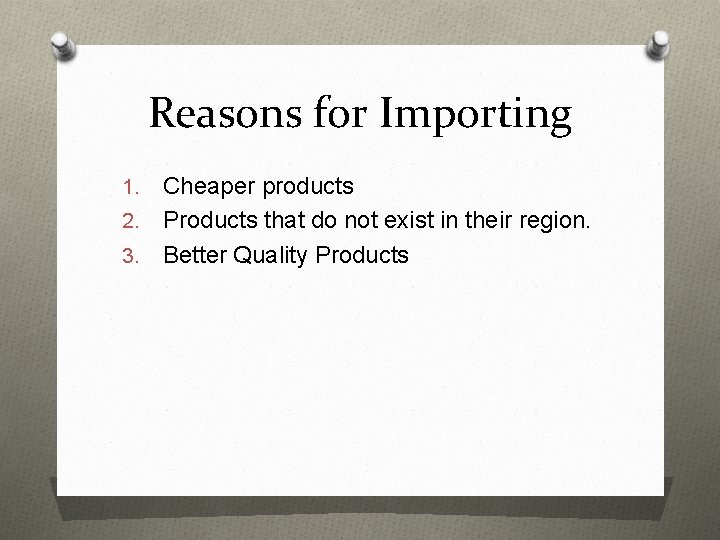
Reasons for Importing Cheaper products 2. Products that do not exist in their region. 3. Better Quality Products 1.
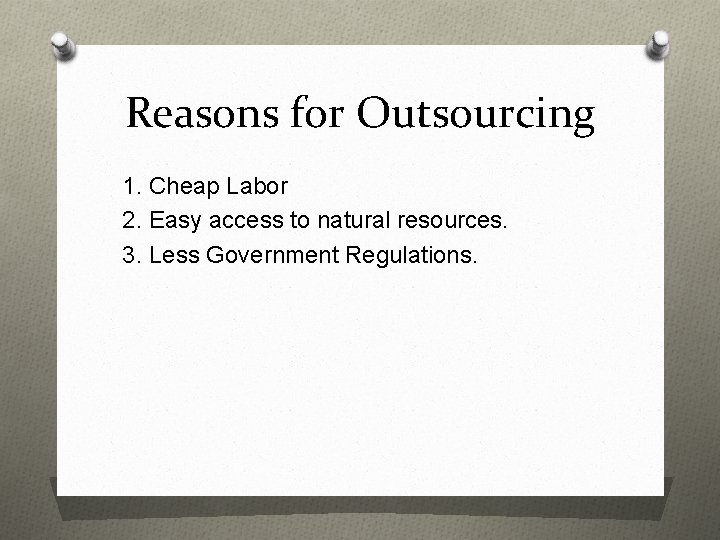
Reasons for Outsourcing 1. Cheap Labor 2. Easy access to natural resources. 3. Less Government Regulations.