
Circuits Lecture 3 Mesh Analysis Hungyi Lee Mesh


- Slides: 26
Circuits Lecture 3: Mesh Analysis 李宏毅 Hung-yi Lee
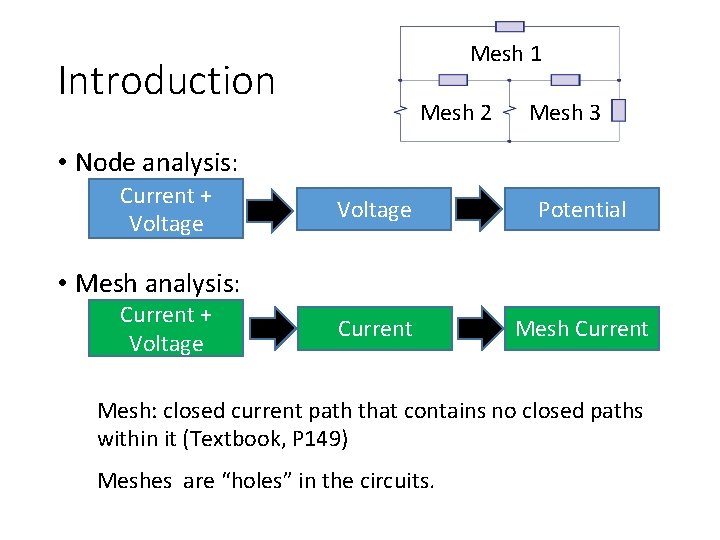
Mesh 1 Introduction Mesh 2 Mesh 3 • Node analysis: Current + Voltage Potential Current Mesh Current • Mesh analysis: Current + Voltage Mesh: closed current path that contains no closed paths within it (Textbook, P 149) Meshes are “holes” in the circuits.
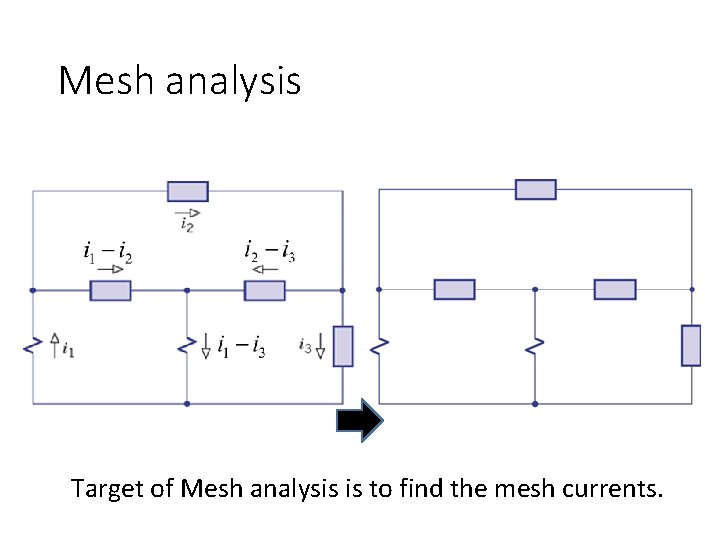
Mesh analysis Target of Mesh analysis is to find the mesh currents.
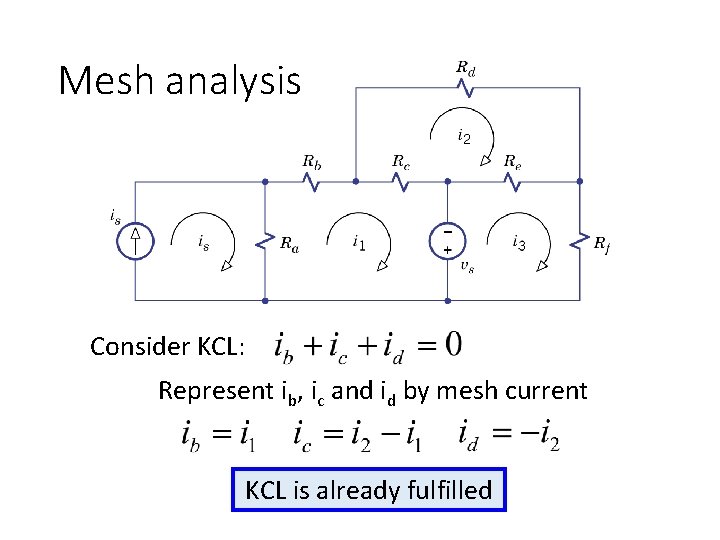
Mesh analysis Consider KCL: Represent ib, ic and id by mesh current KCL is already fulfilled
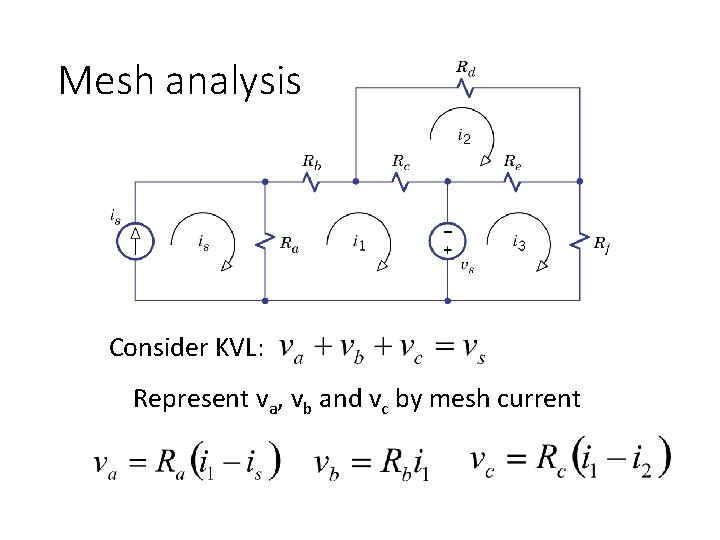
Mesh analysis Consider KVL: Represent va, vb and vc by mesh current
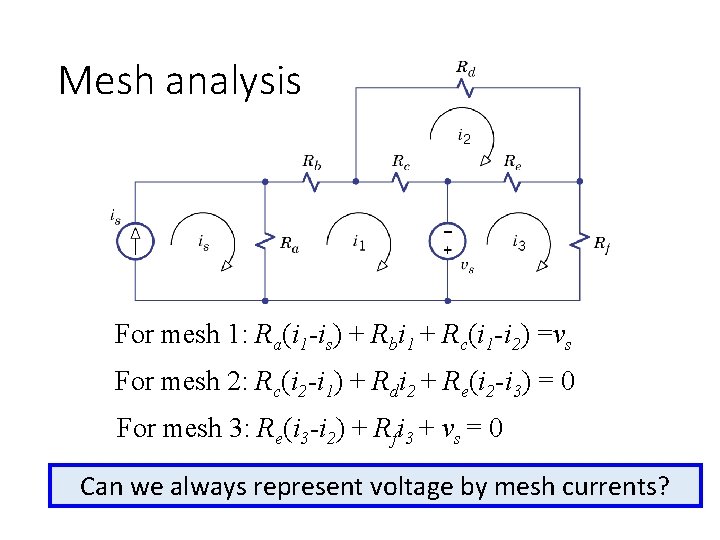
Mesh analysis For mesh 1: Ra(i 1 -is) + Rbi 1 + Rc(i 1 -i 2) =vs For mesh 2: Rc(i 2 -i 1) + Rdi 2 + Re(i 2 -i 3) = 0 For mesh 3: Re(i 3 -i 2) + Rfi 3 + vs = 0 Can we always represent voltage by mesh currents?
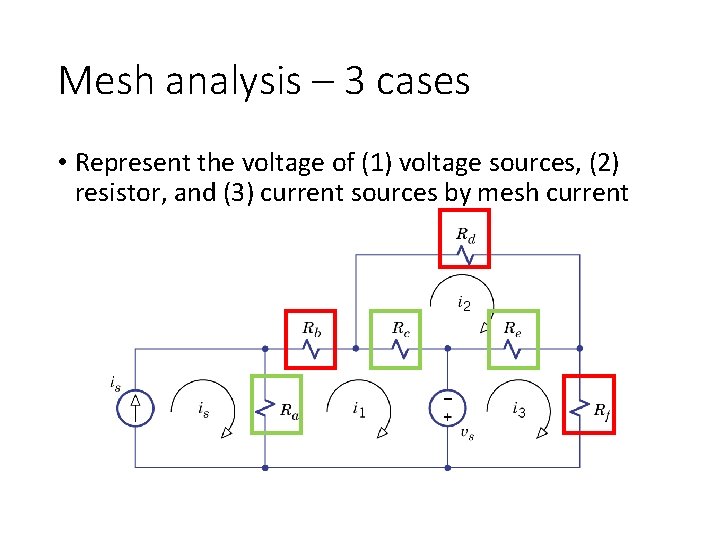
Mesh analysis – 3 cases • Represent the voltage of (1) voltage sources, (2) resistor, and (3) current sources by mesh current
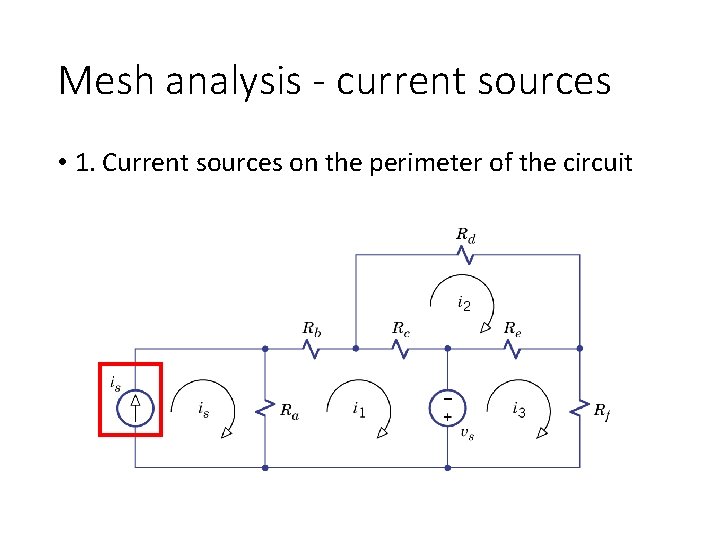
Mesh analysis - current sources • 1. Current sources on the perimeter of the circuit
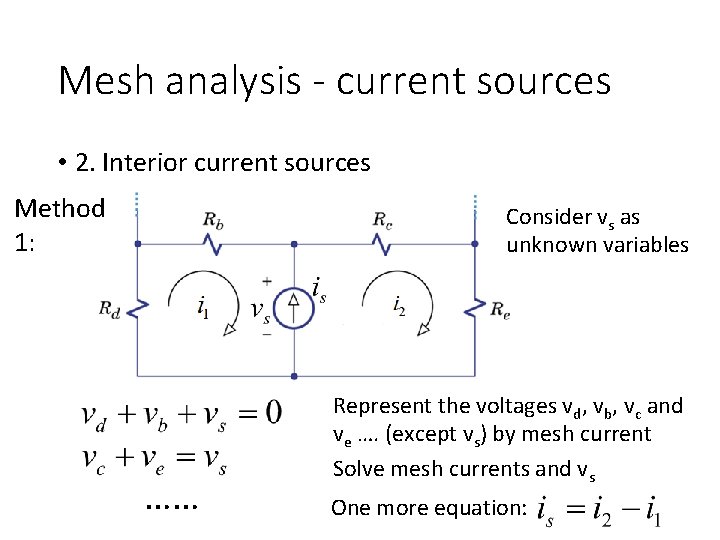
Mesh analysis - current sources • 2. Interior current sources Method 1: Consider vs as unknown variables …… Represent the voltages vd, vb, vc and ve …. (except vs) by mesh current Solve mesh currents and vs One more equation:
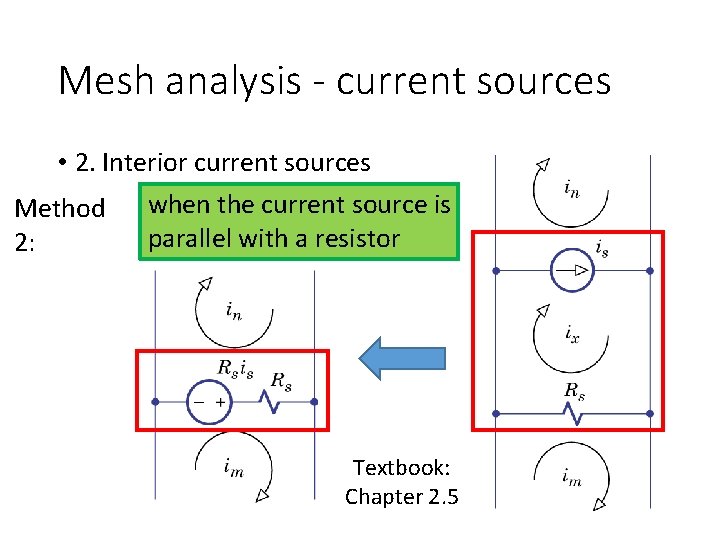
Mesh analysis - current sources • 2. Interior current sources when the current source is Method parallel with a resistor 2: Textbook: Chapter 2. 5
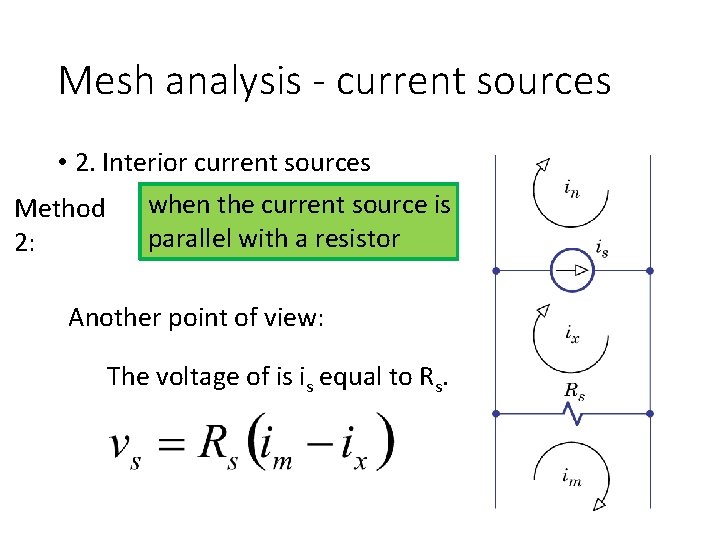
Mesh analysis - current sources • 2. Interior current sources when the current source is Method parallel with a resistor 2: Another point of view: The voltage of is is equal to Rs.
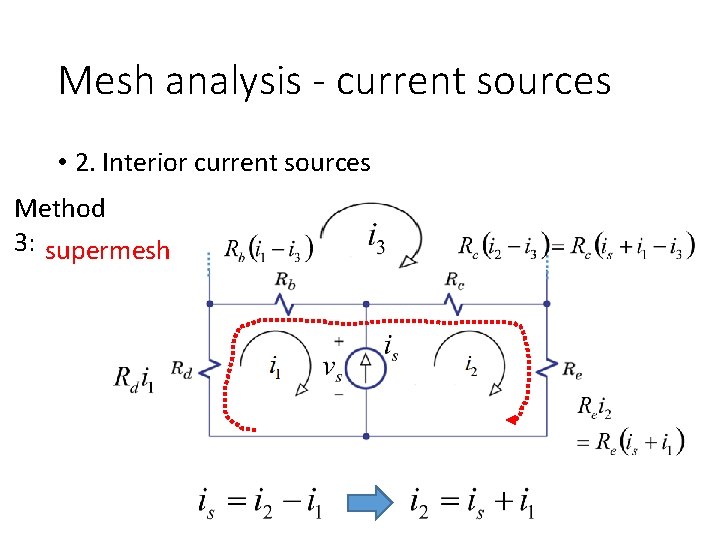
Mesh analysis - current sources • 2. Interior current sources Method 3: supermesh
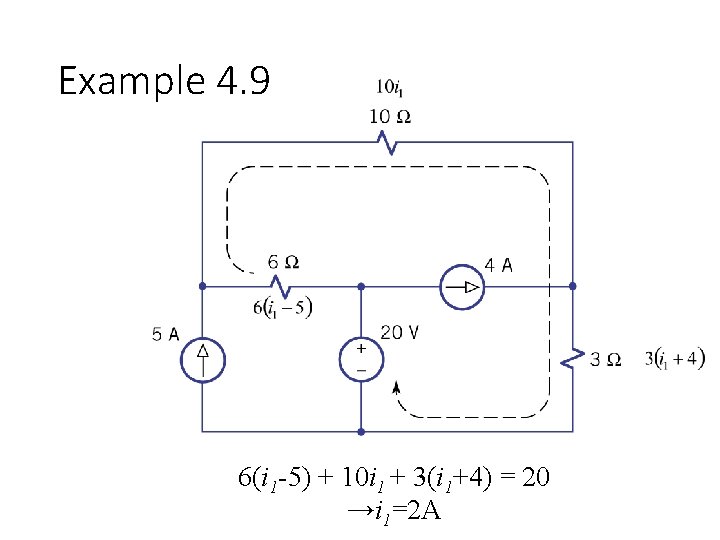
Example 4. 9 6(i 1 -5) + 10 i 1 + 3(i 1+4) = 20 →i 1=2 A
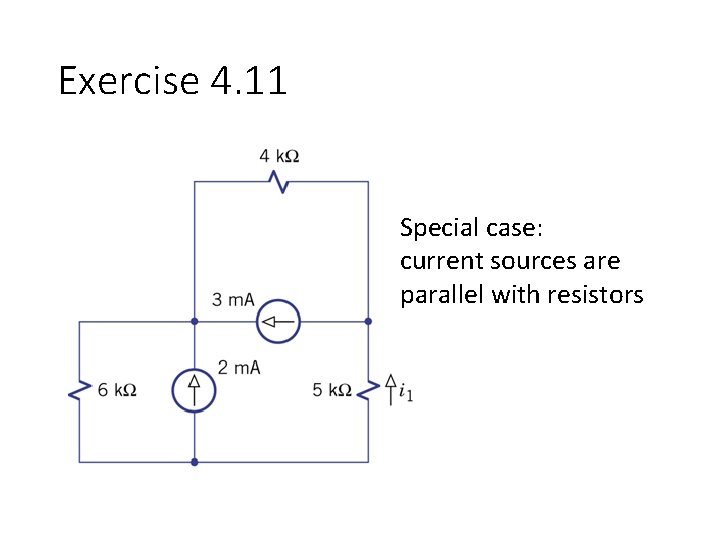
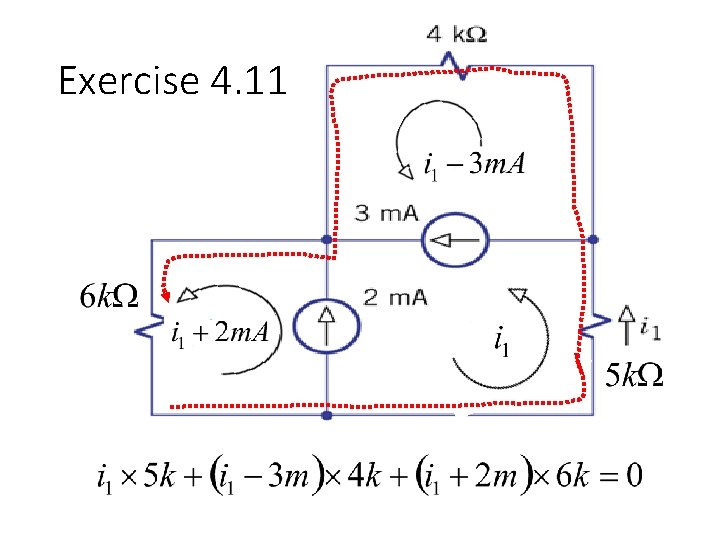
Exercise 4. 11 Special case: current sources are parallel with resistors
Exercise 4. 11
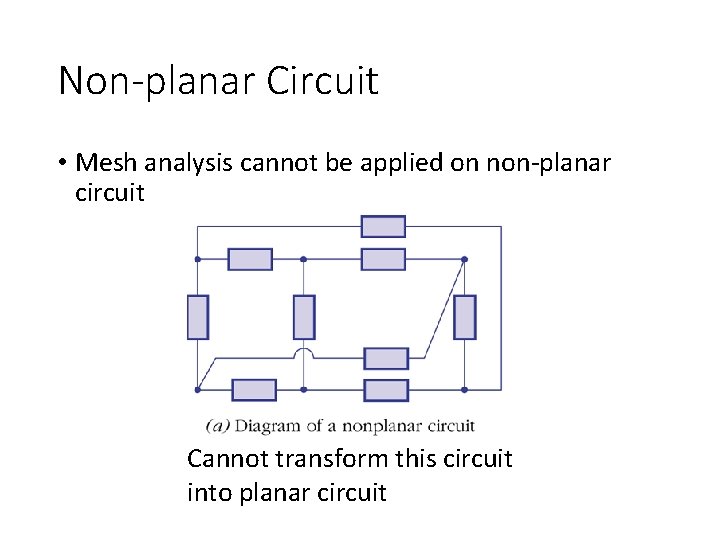
Non-planar Circuit • Mesh analysis cannot be applied on non-planar circuit Cannot transform this circuit into planar circuit
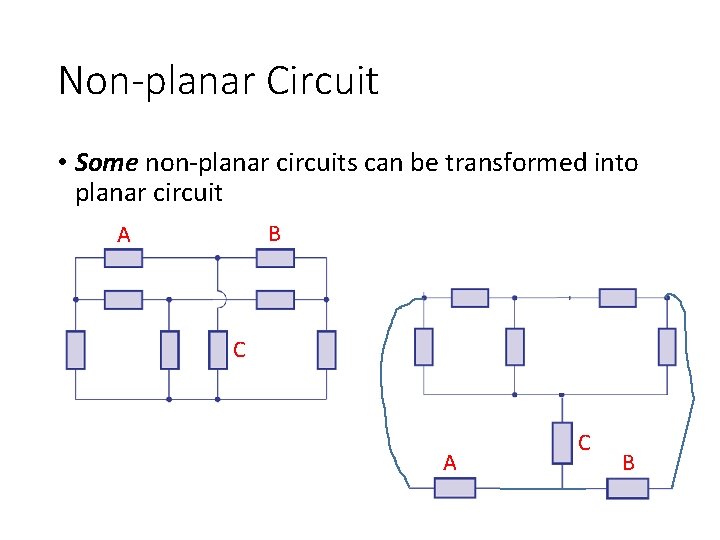
Non-planar Circuit • Some non-planar circuits can be transformed into planar circuit B A C B
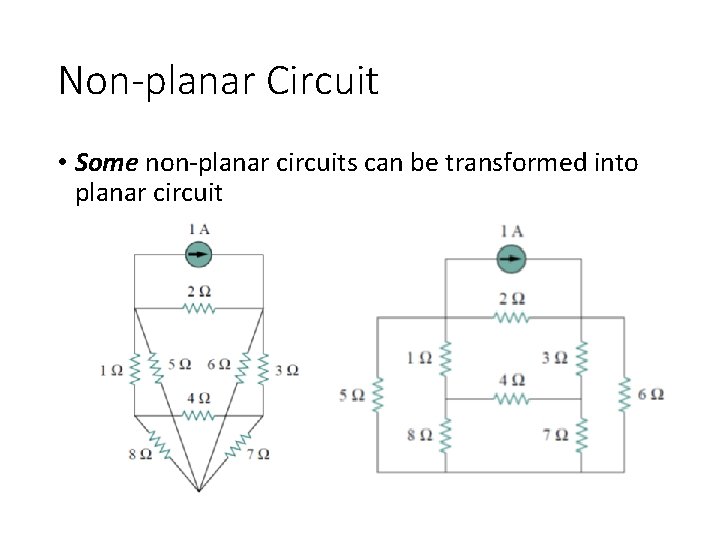
Non-planar Circuit • Some non-planar circuits can be transformed into planar circuit
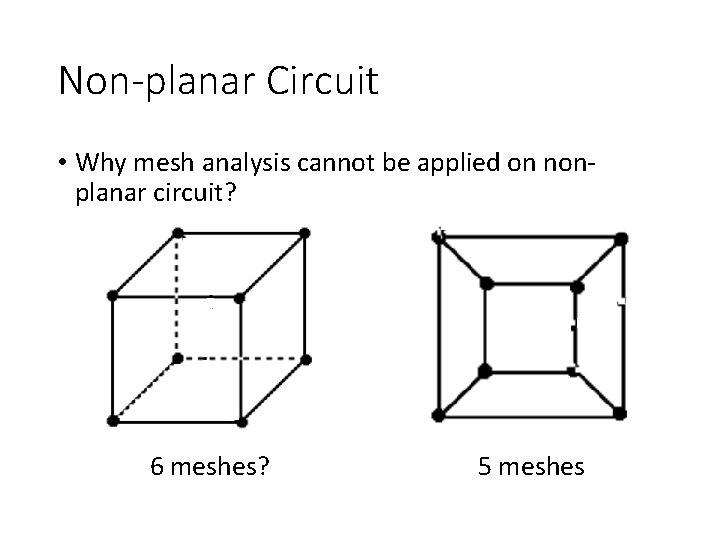
Non-planar Circuit • Why mesh analysis cannot be applied on nonplanar circuit? 6 meshes? 5 meshes
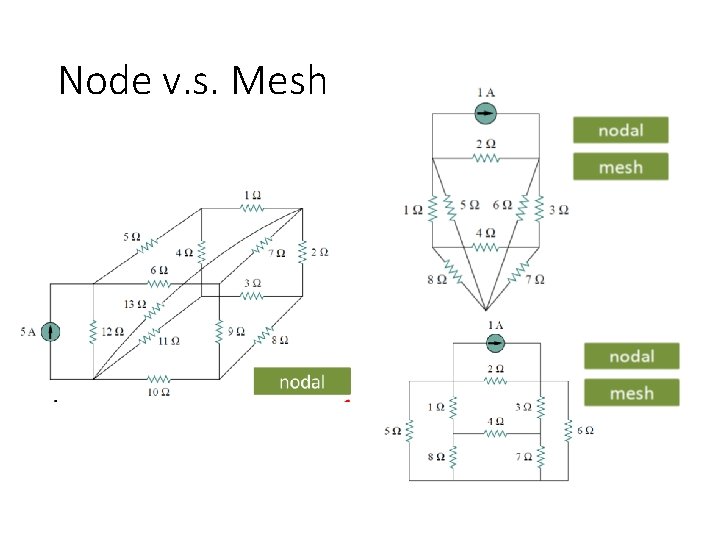
Node v. s. Mesh
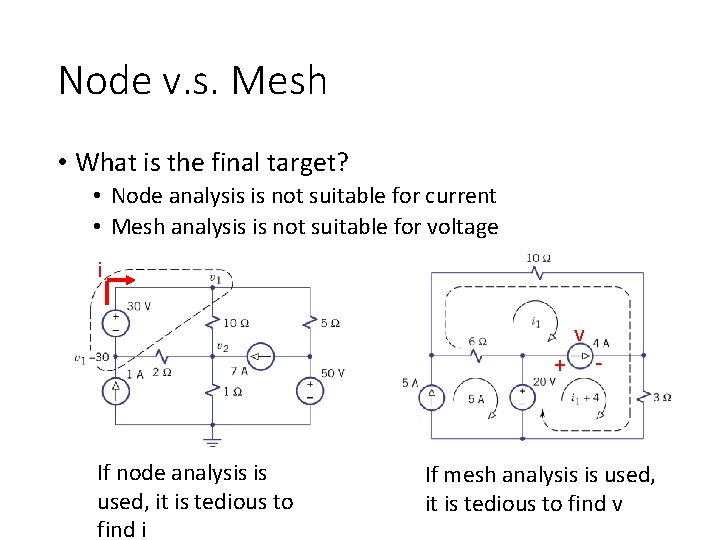
Node v. s. Mesh • What is the final target? • Node analysis is not suitable for current • Mesh analysis is not suitable for voltage i v + If node analysis is used, it is tedious to find i - If mesh analysis is used, it is tedious to find v
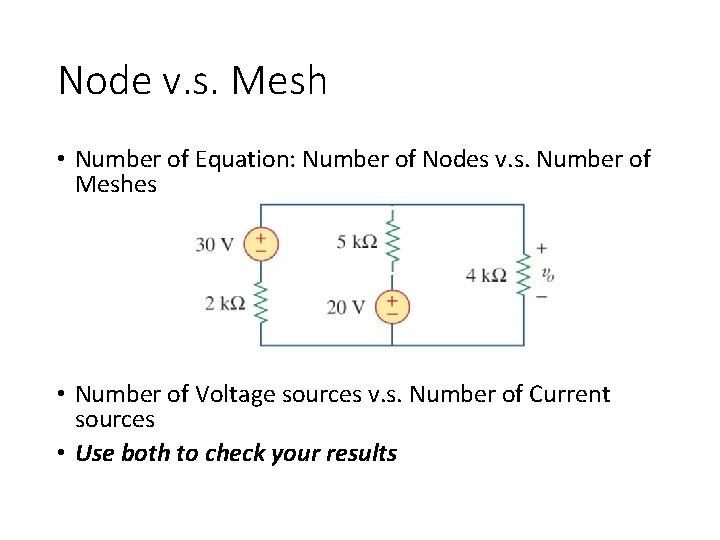
Node v. s. Mesh • Number of Equation: Number of Nodes v. s. Number of Meshes • Number of Voltage sources v. s. Number of Current sources • Use both to check your results
Homework • 4. 38 • 4. 42
Thank you!
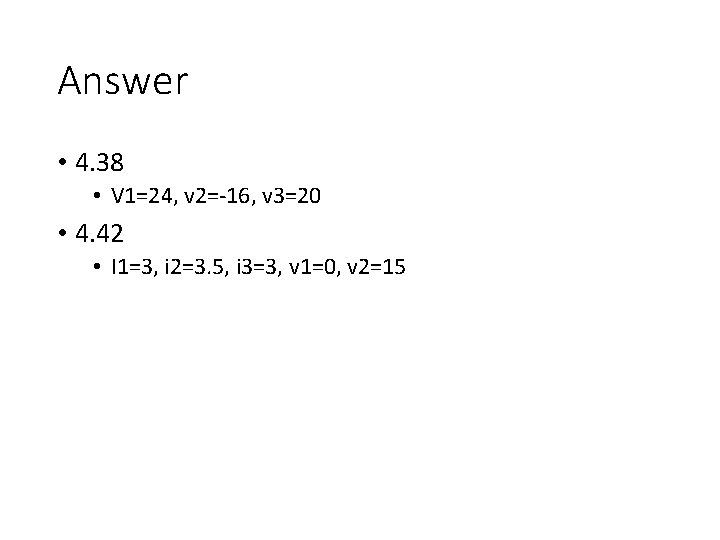
Answer • 4. 38 • V 1=24, v 2=-16, v 3=20 • 4. 42 • I 1=3, i 2=3. 5, i 3=3, v 1=0, v 2=15