
Circuits An electrical circuit is any continuous path
- Slides: 12
Circuits
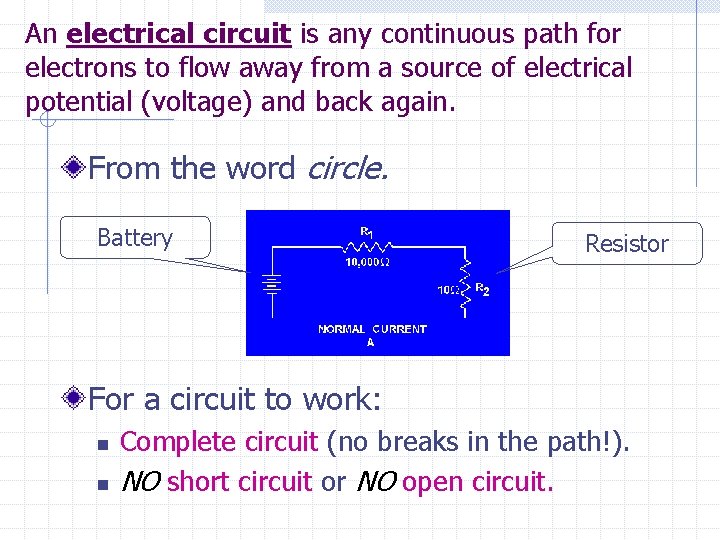
An electrical circuit is any continuous path for electrons to flow away from a source of electrical potential (voltage) and back again. From the word circle. Battery Resistor For a circuit to work: n n Complete circuit (no breaks in the path!). NO short circuit or NO open circuit.
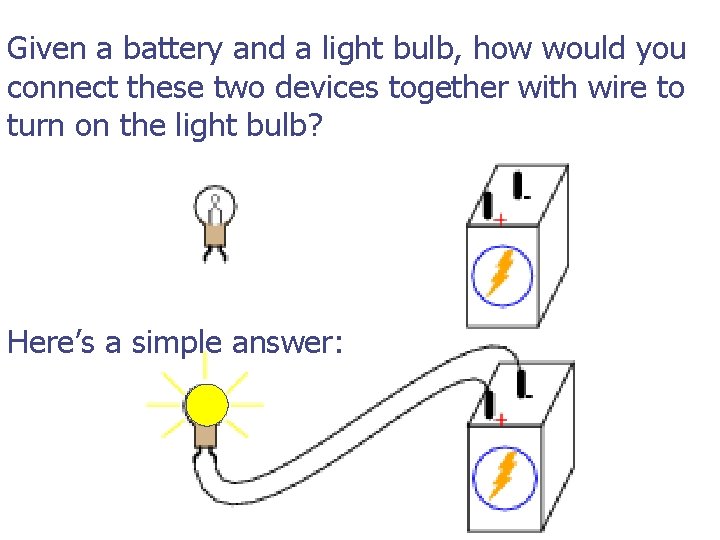
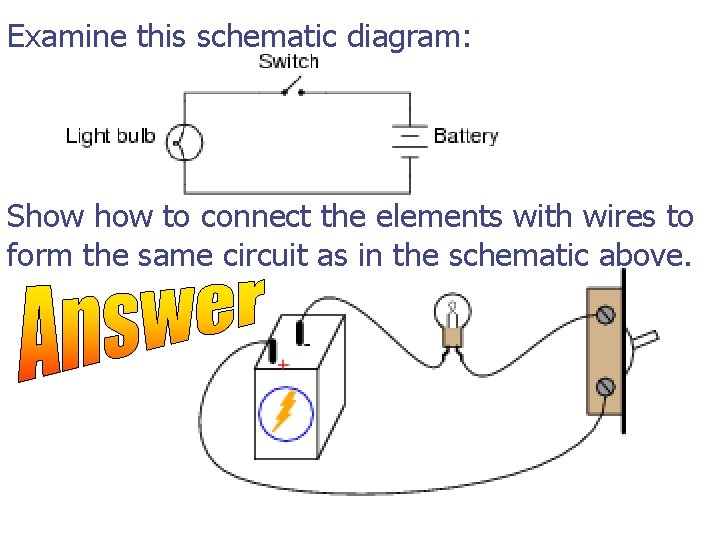
Given a battery and a light bulb, how would you connect these two devices together with wire to turn on the light bulb? Here’s a simple answer:
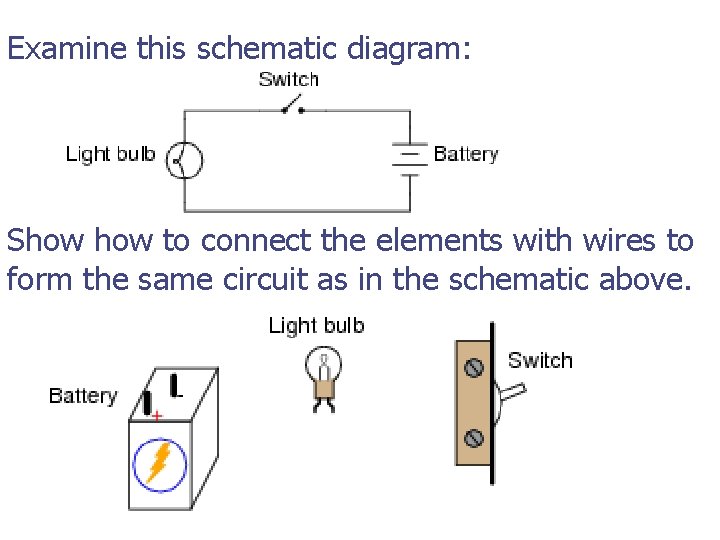
Examine this schematic diagram: Show to connect the elements with wires to form the same circuit as in the schematic above.
Examine this schematic diagram: Show to connect the elements with wires to form the same circuit as in the schematic above.
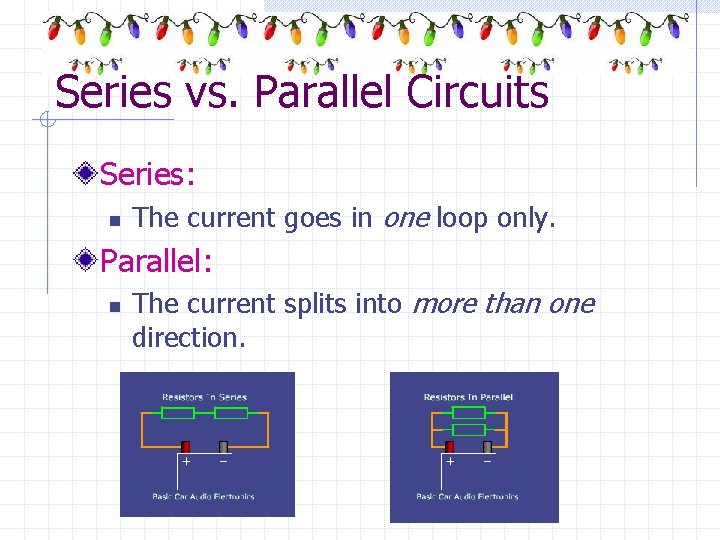
Series vs. Parallel Circuits Series: n The current goes in one loop only. Parallel: n The current splits into more than one direction.
Resistors “Resist” the flow of electricity. Resistance depends on the type of material, its cross-sectional area, & its temperature. Conductors have low resistance – many free electrons flow easily silver, copper, gold, aluminum, iron Insulators have very high resistance – few or no electrons flow glass, rubber, oil
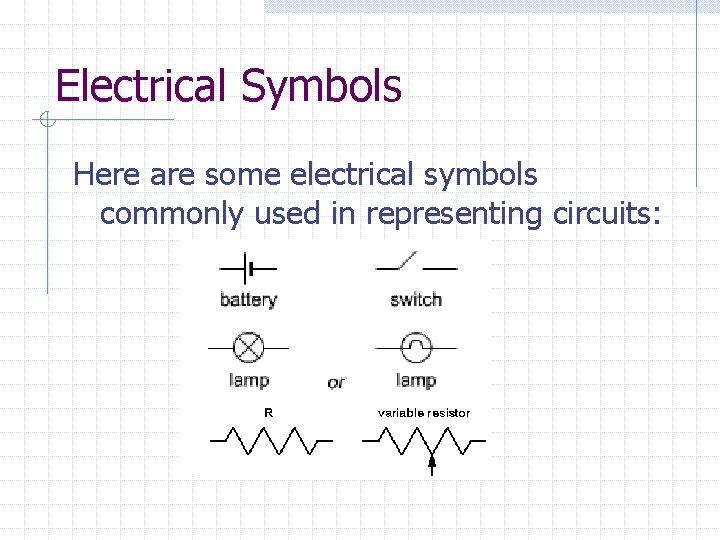
Electrical Symbols Here are some electrical symbols commonly used in representing circuits:
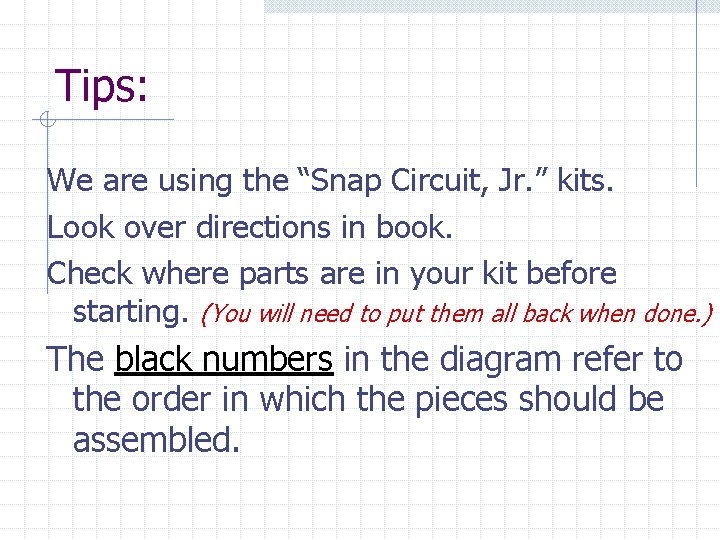
Tips: We are using the “Snap Circuit, Jr. ” kits. Look over directions in book. Check where parts are in your kit before starting. (You will need to put them all back when done. ) The black numbers in the diagram refer to the order in which the pieces should be assembled.
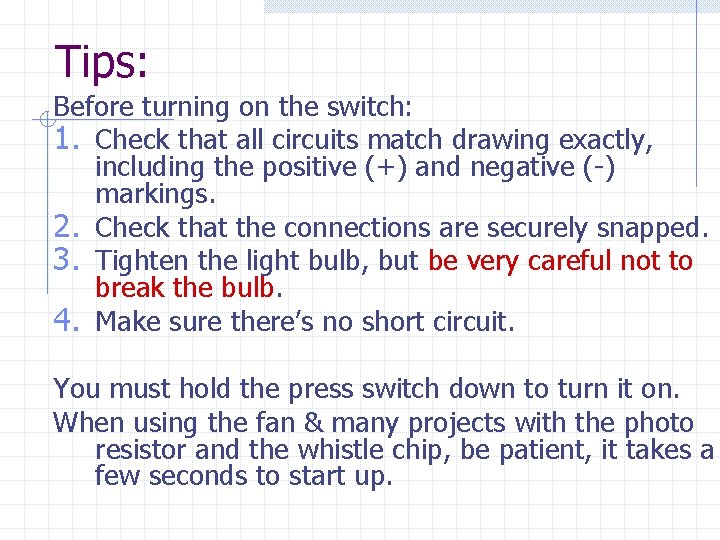
Tips: Before turning on the switch: 1. Check that all circuits match drawing exactly, including the positive (+) and negative (-) markings. 2. Check that the connections are securely snapped. 3. Tighten the light bulb, but be very careful not to break the bulb. 4. Make sure there’s no short circuit. You must hold the press switch down to turn it on. When using the fan & many projects with the photo resistor and the whistle chip, be patient, it takes a few seconds to start up.
Tips: Be careful when fan motor is running. Do not put your face in front of it. Do not let a whirling part launch into your eyes!
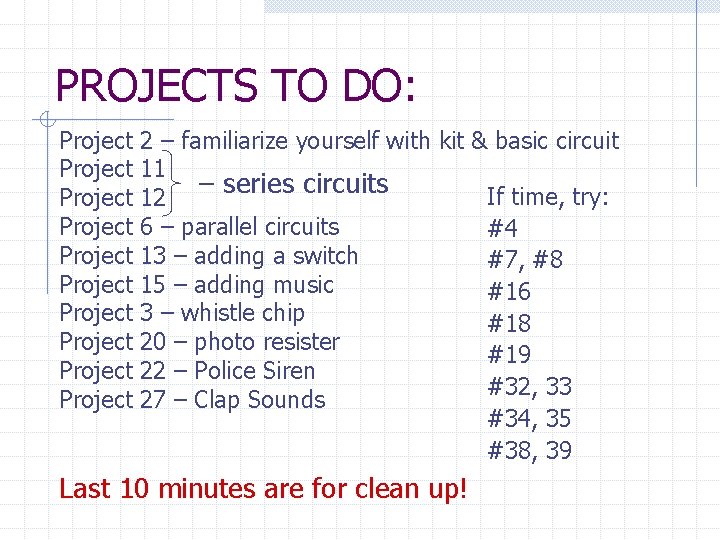
PROJECTS TO DO: Project Project Project 2 – familiarize yourself with kit & basic circuit 11 – series circuits If time, try: 12 6 – parallel circuits #4 13 – adding a switch #7, #8 15 – adding music #16 3 – whistle chip #18 20 – photo resister #19 22 – Police Siren #32, 33 27 – Clap Sounds #34, 35 #38, 39 Last 10 minutes are for clean up!