
Circuit Principles 1 Kirchhoffs Current Law KCL Conservation

- Slides: 19
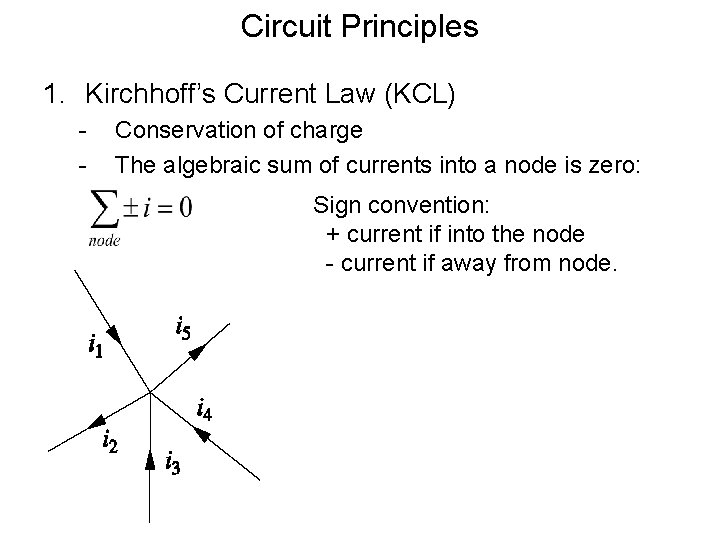
Circuit Principles 1. Kirchhoff’s Current Law (KCL) - Conservation of charge The algebraic sum of currents into a node is zero: Sign convention: + current if into the node - current if away from node.
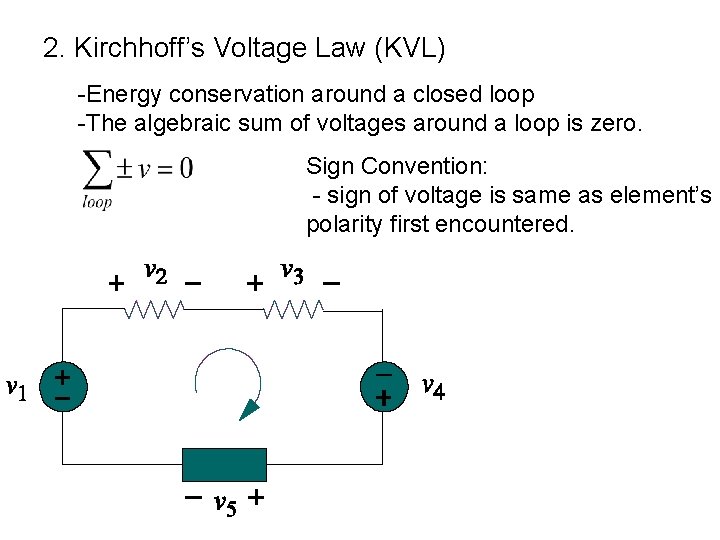
2. Kirchhoff’s Voltage Law (KVL) -Energy conservation around a closed loop -The algebraic sum of voltages around a loop is zero. Sign Convention: - sign of voltage is same as element’s polarity first encountered.
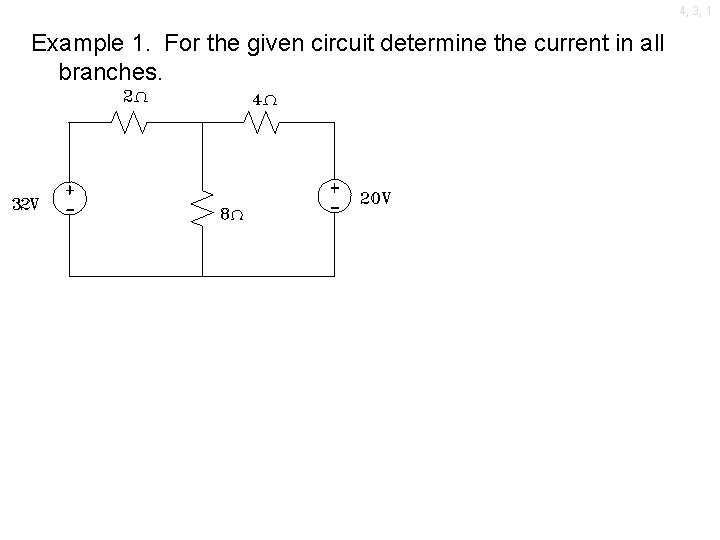
4, 3, 1 Example 1. For the given circuit determine the current in all branches.
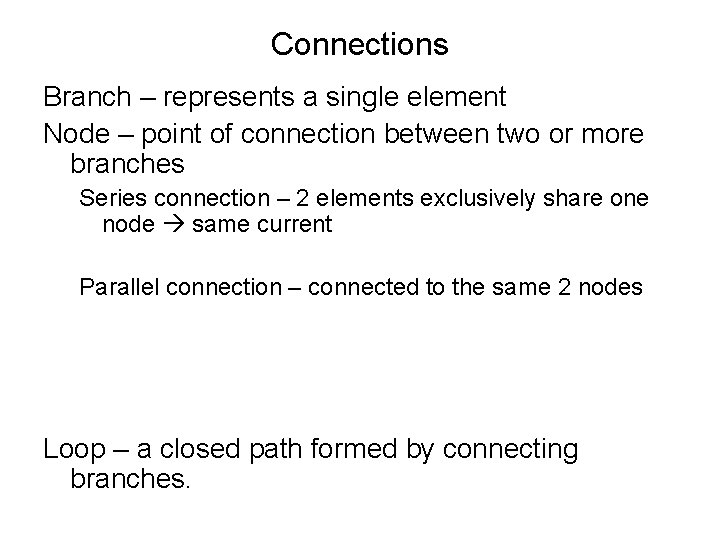
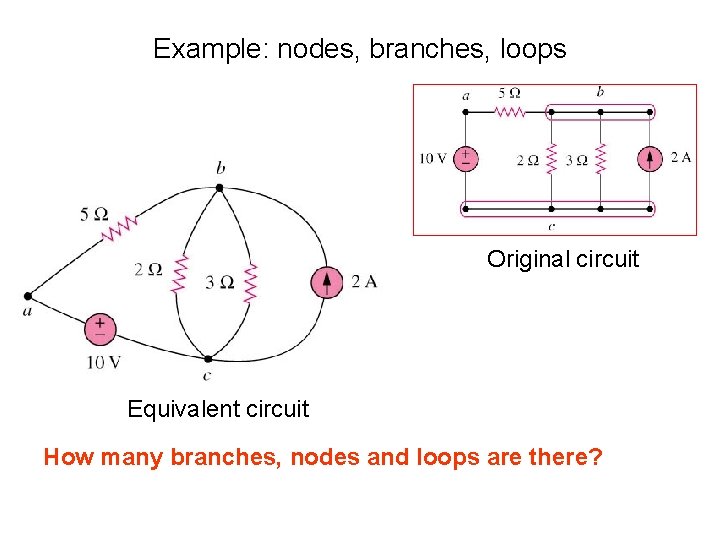
Connections Branch – represents a single element Node – point of connection between two or more branches Series connection – 2 elements exclusively share one node same current Parallel connection – connected to the same 2 nodes Loop – a closed path formed by connecting branches.
Example: nodes, branches, loops Original circuit Equivalent circuit How many branches, nodes and loops are there?
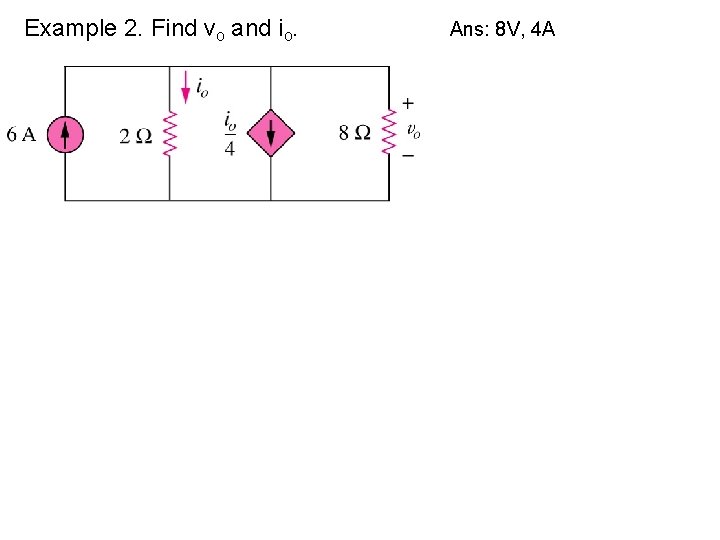
Example 2. Find vo and io. Ans: 8 V, 4 A
3. Network Reduction A. n Resistors in Series:
Voltage-Divider Equation
B. n Resistors in parallel
Current-Divider Equation
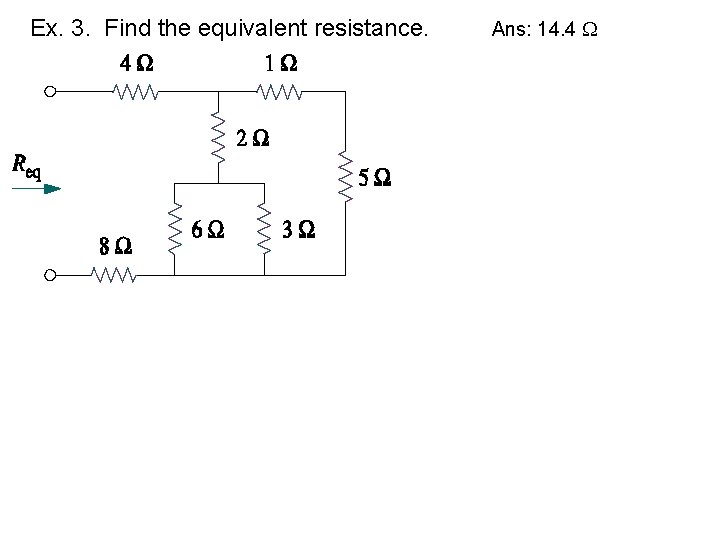
Ex. 3. Find the equivalent resistance. Ans: 14. 4
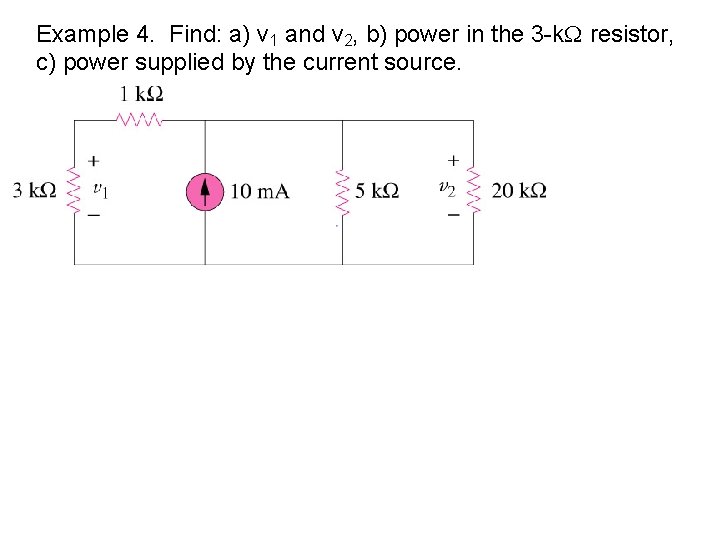
Example 4. Find: a) v 1 and v 2, b) power in the 3 -k resistor, c) power supplied by the current source.
Ans: 15 V, 20 V, 75 m. W, 200 m. W
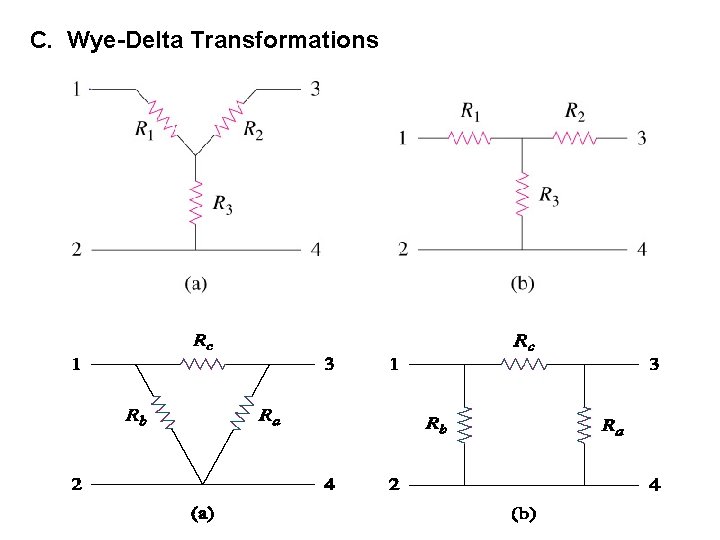
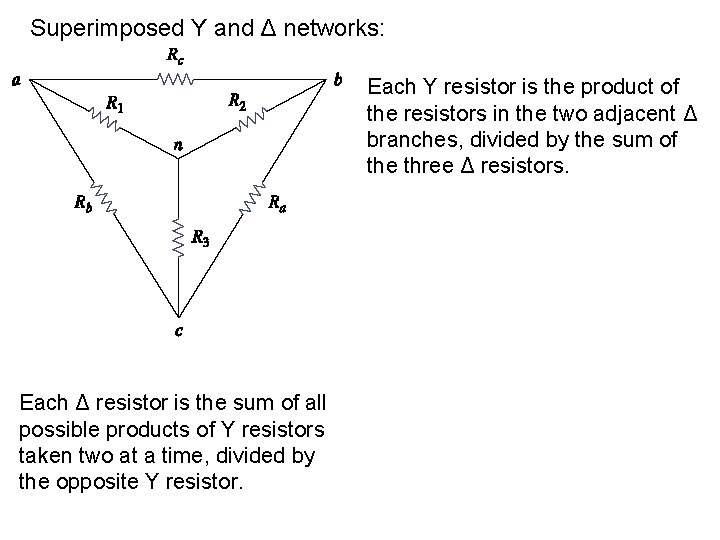
C. Wye-Delta Transformations
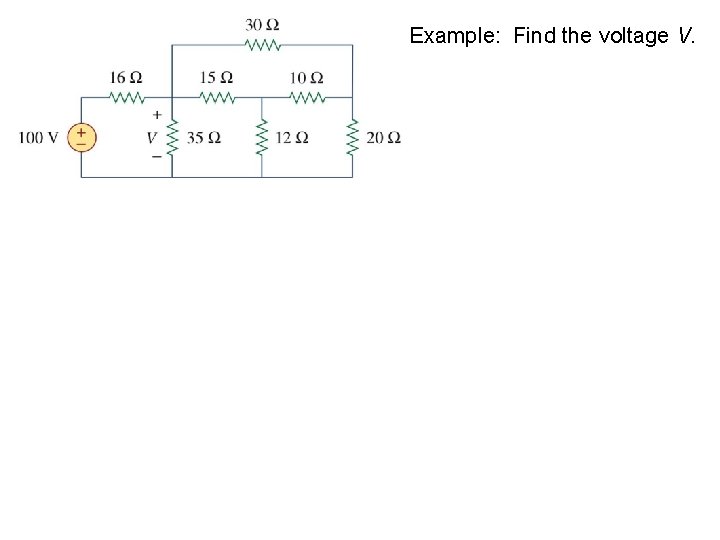
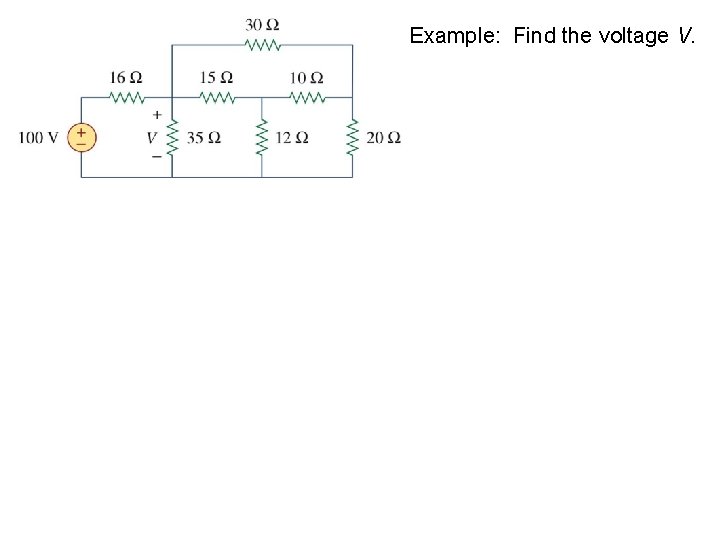
Example: Find the voltage V.
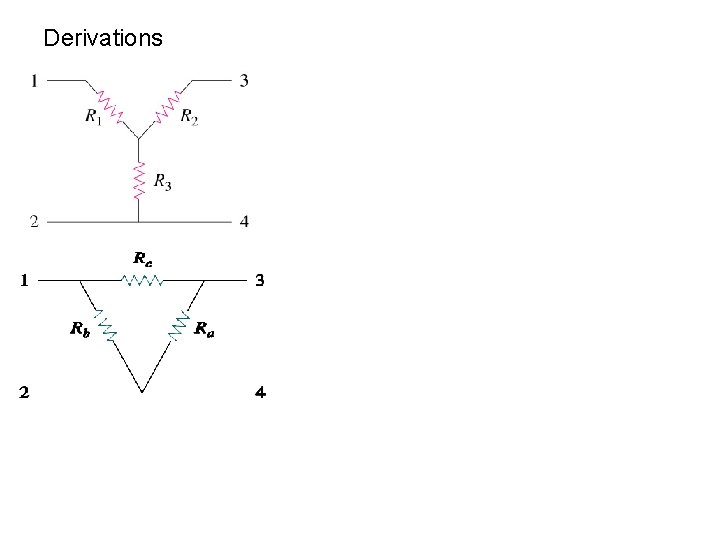
Derivations
Superimposed Y and Δ networks: Each Y resistor is the product of the resistors in the two adjacent Δ branches, divided by the sum of the three Δ resistors. Each Δ resistor is the sum of all possible products of Y resistors taken two at a time, divided by the opposite Y resistor.
Example: Find the voltage V.