
Circuit Elements Resistance Conventional current Widely known as
- Slides: 36
Circuit Elements
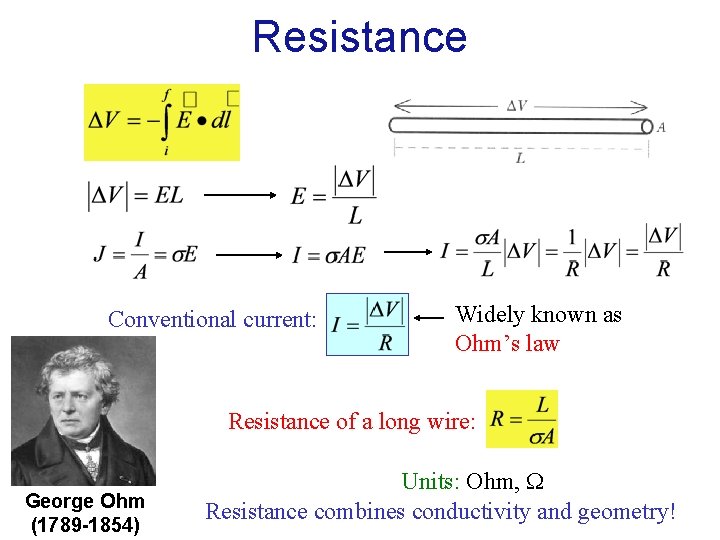
Resistance Conventional current: Widely known as Ohm’s law Resistance of a long wire: George Ohm (1789 -1854) Units: Ohm, Resistance combines conductivity and geometry!
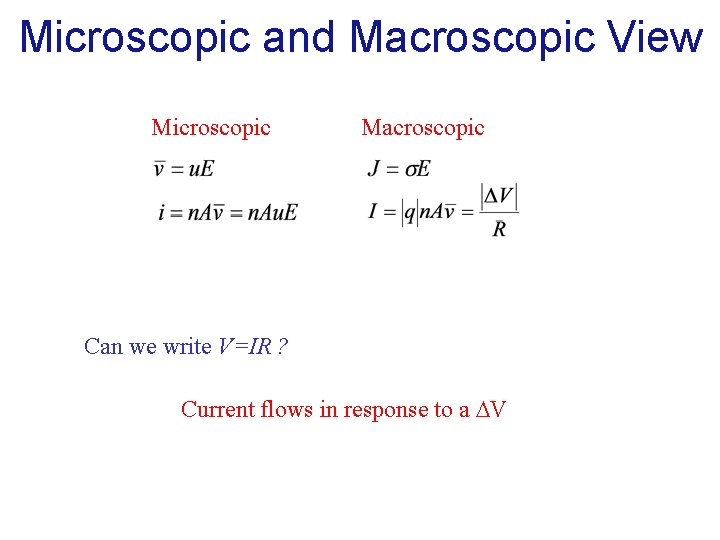
Microscopic and Macroscopic View Microscopic Macroscopic Can we write V=IR ? Current flows in response to a V
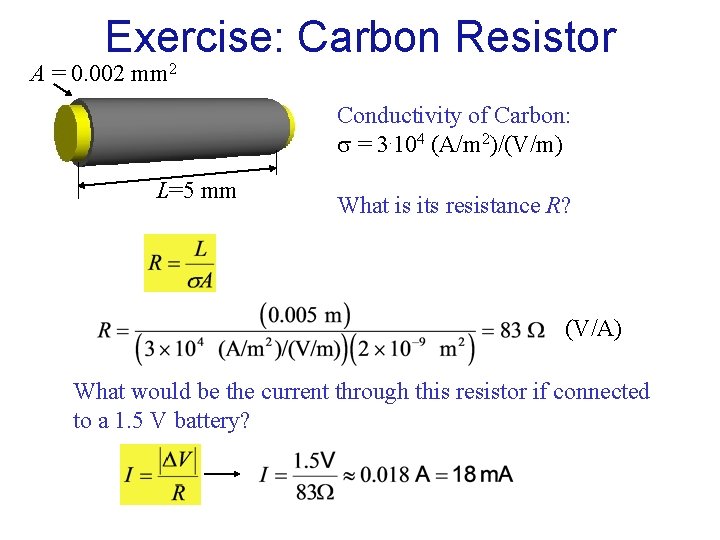
Exercise: Carbon Resistor A = 0. 002 mm 2 Conductivity of Carbon: = 3. 104 (A/m 2)/(V/m) L=5 mm What is its resistance R? (V/A) What would be the current through this resistor if connected to a 1. 5 V battery?
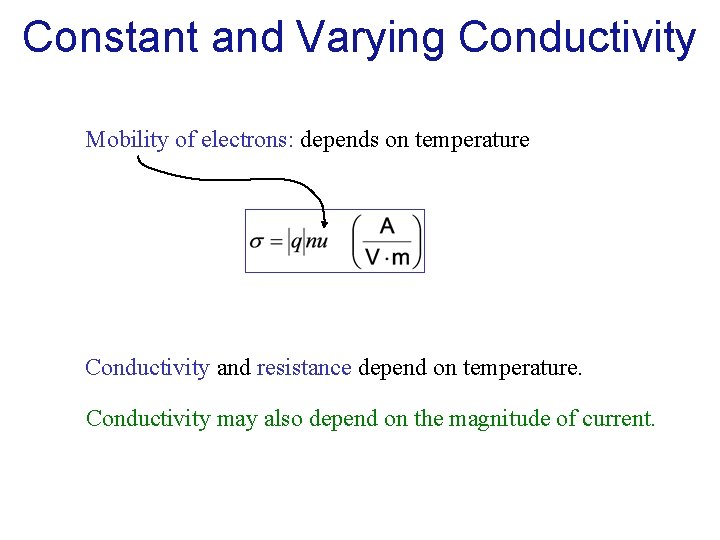
Constant and Varying Conductivity Mobility of electrons: depends on temperature Conductivity and resistance depend on temperature. Conductivity may also depend on the magnitude of current.
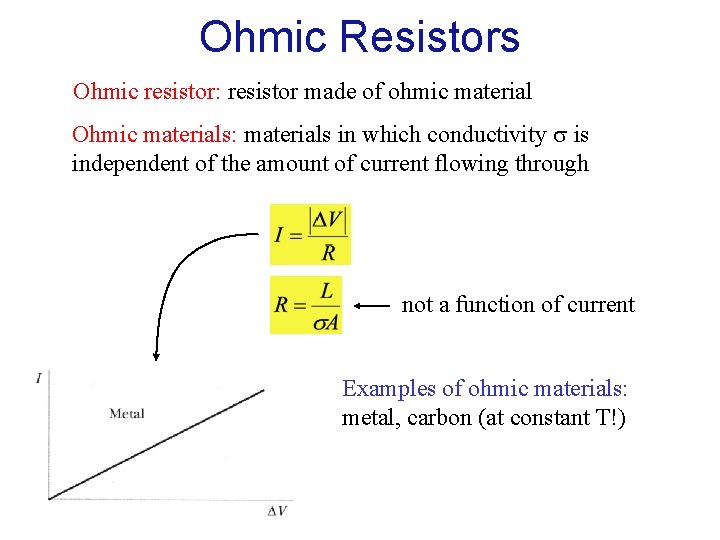
Ohmic Resistors Ohmic resistor: resistor made of ohmic material Ohmic materials: materials in which conductivity is independent of the amount of current flowing through not a function of current Examples of ohmic materials: metal, carbon (at constant T!)
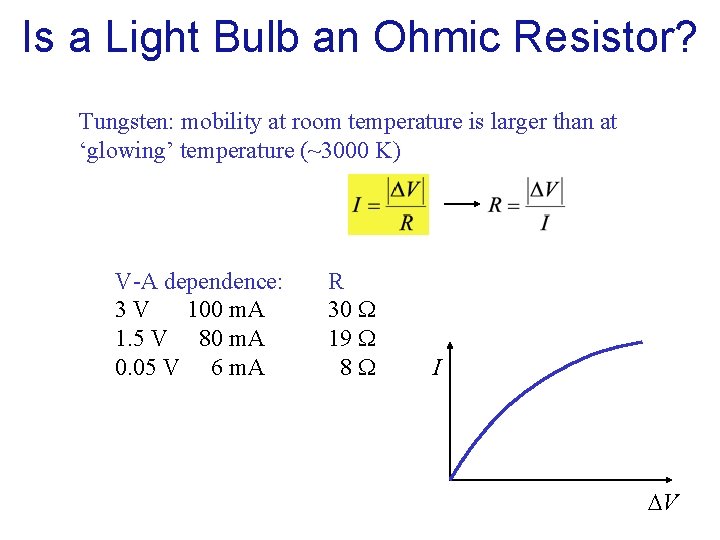
Is a Light Bulb an Ohmic Resistor? Tungsten: mobility at room temperature is larger than at ‘glowing’ temperature (~3000 K) V-A dependence: 3 V 100 m. A 1. 5 V 80 m. A 0. 05 V 6 m. A R 30 19 8 I V
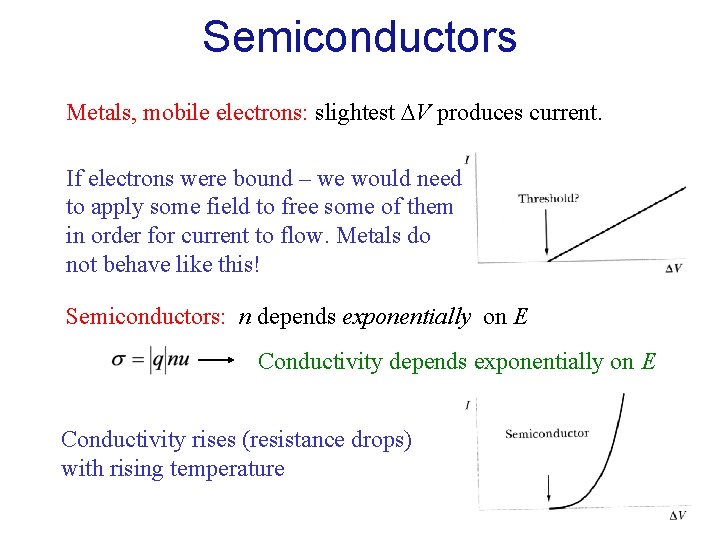
Semiconductors Metals, mobile electrons: slightest V produces current. If electrons were bound – we would need to apply some field to free some of them in order for current to flow. Metals do not behave like this! Semiconductors: n depends exponentially on E Conductivity rises (resistance drops) with rising temperature
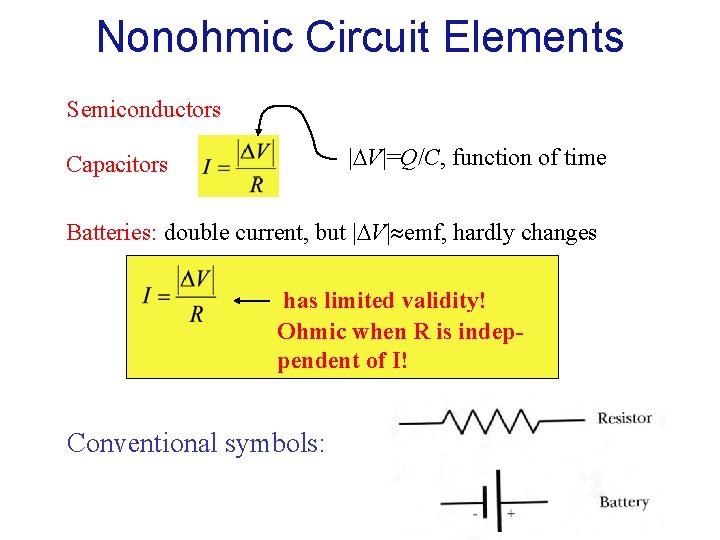
Nonohmic Circuit Elements Semiconductors | V|=Q/C, function of time Capacitors Batteries: double current, but | V| emf, hardly changes has limited validity! Ohmic when R is indeppendent of I! Conventional symbols:
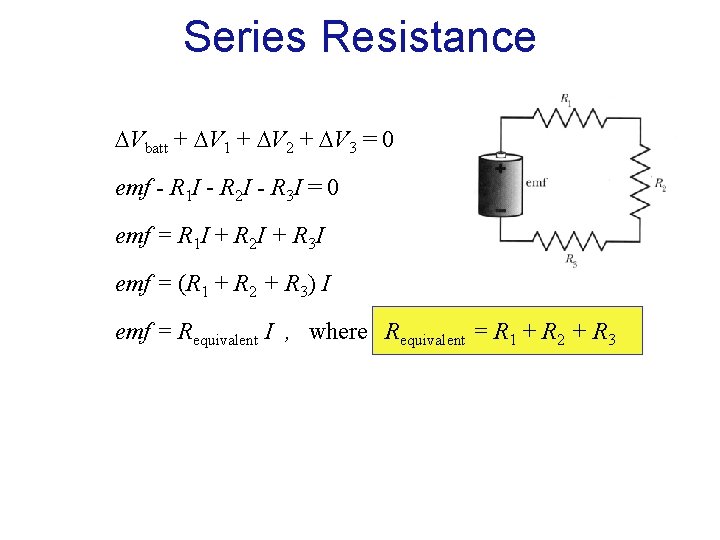
Series Resistance Vbatt + V 1 + V 2 + V 3 = 0 emf - R 1 I - R 2 I - R 3 I = 0 emf = R 1 I + R 2 I + R 3 I emf = (R 1 + R 2 + R 3) I emf = Requivalent I , where Requivalent = R 1 + R 2 + R 3
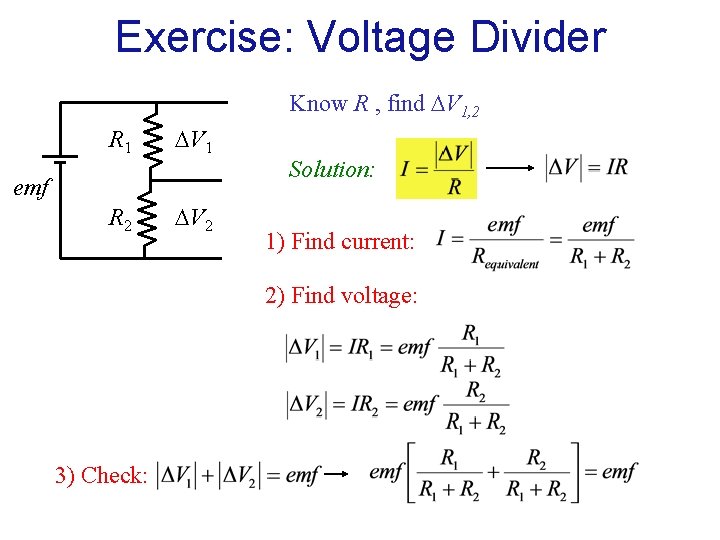
Exercise: Voltage Divider Know R , find V 1, 2 R 1 V 1 R 2 V 2 emf Solution: 1) Find current: 2) Find voltage: 3) Check:
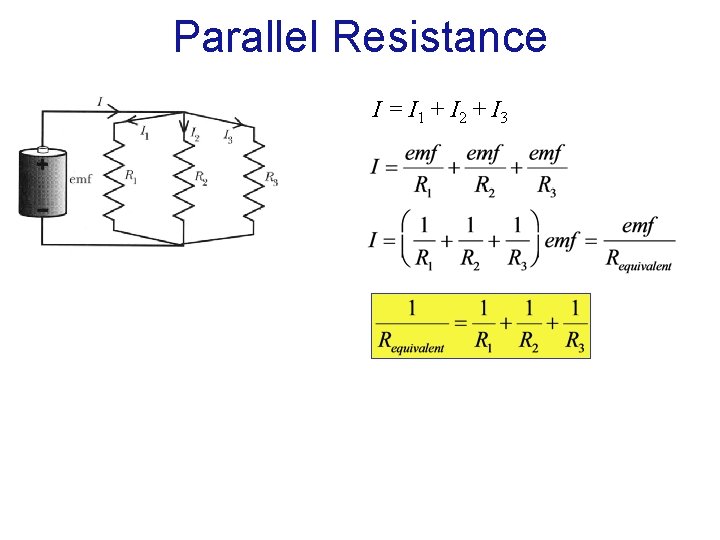
Parallel Resistance I = I 1 + I 2 + I 3
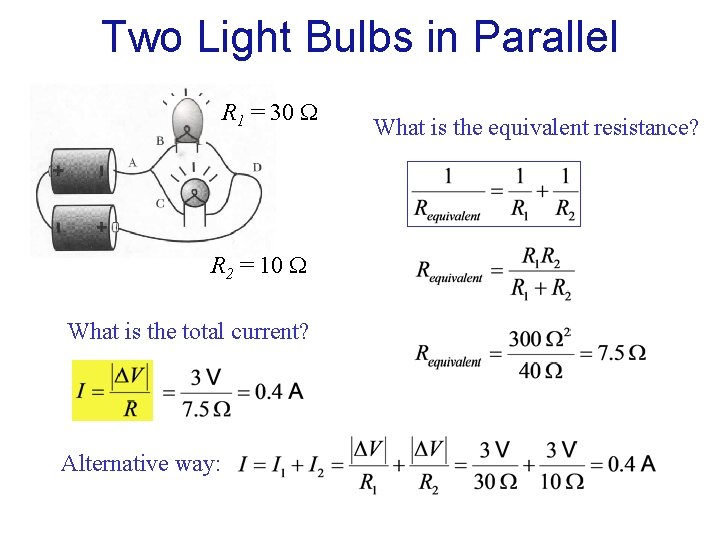
Two Light Bulbs in Parallel R 1 = 30 R 2 = 10 What is the total current? Alternative way: What is the equivalent resistance?
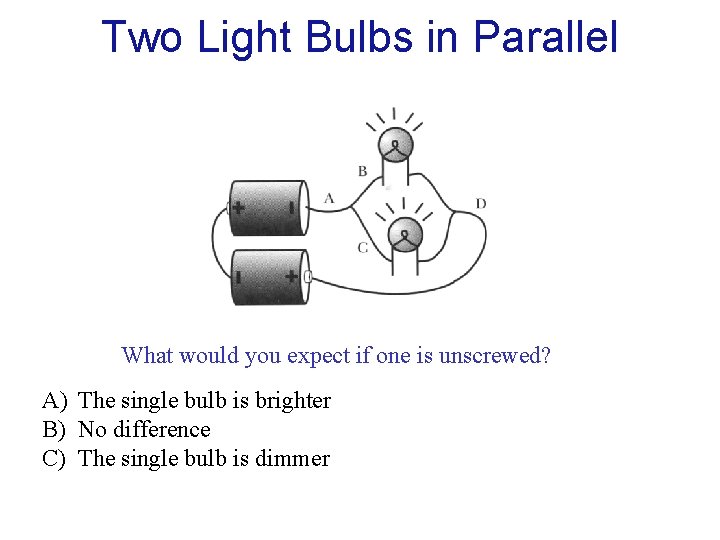
Two Light Bulbs in Parallel What would you expect if one is unscrewed? A) The single bulb is brighter B) No difference C) The single bulb is dimmer
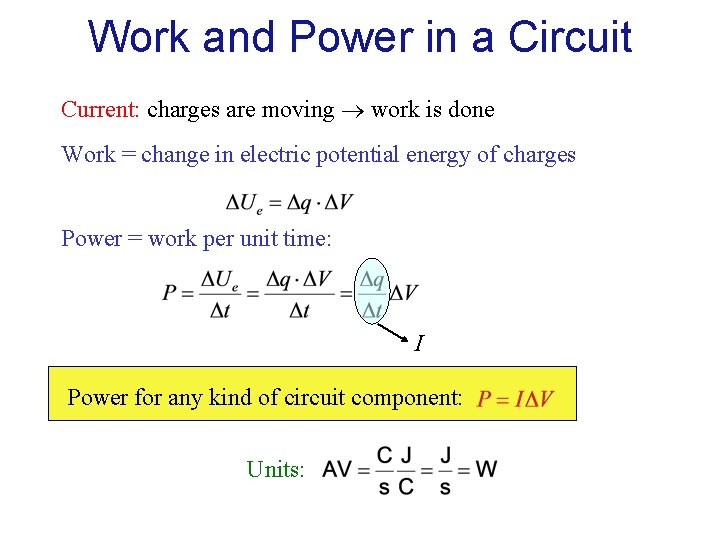
Work and Power in a Circuit Current: charges are moving work is done Work = change in electric potential energy of charges Power = work per unit time: I Power for any kind of circuit component: Units:
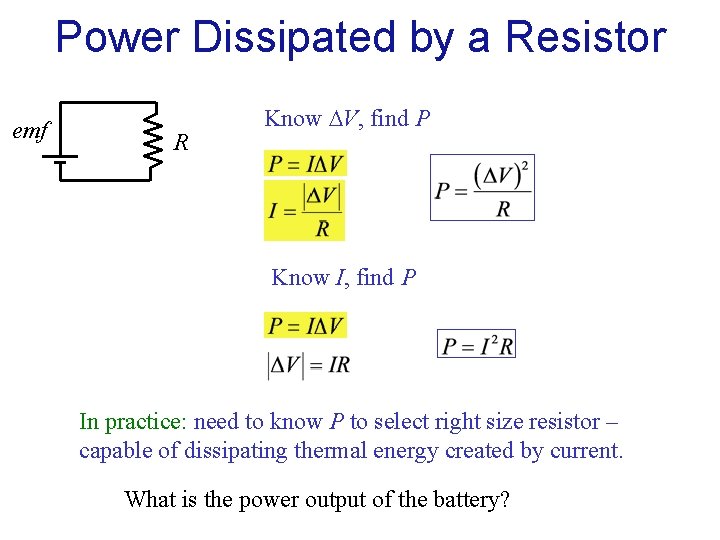
Power Dissipated by a Resistor emf R Know V, find P Know I, find P In practice: need to know P to select right size resistor – capable of dissipating thermal energy created by current. What is the power output of the battery?
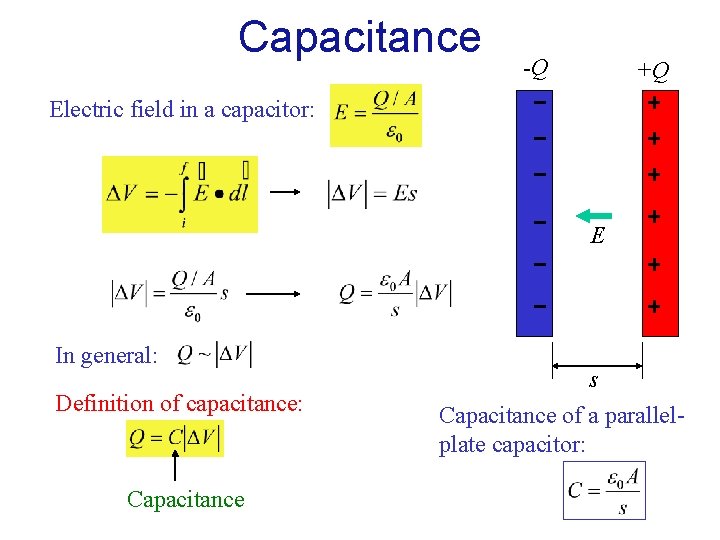
Capacitance -Q +Q Electric field in a capacitor: E In general: Definition of capacitance: Capacitance s Capacitance of a parallelplate capacitor:
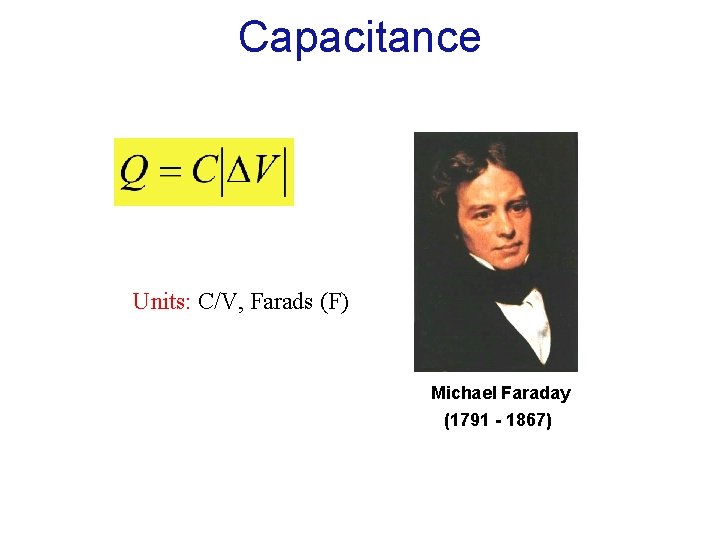
Capacitance Units: C/V, Farads (F) Michael Faraday (1791 - 1867)
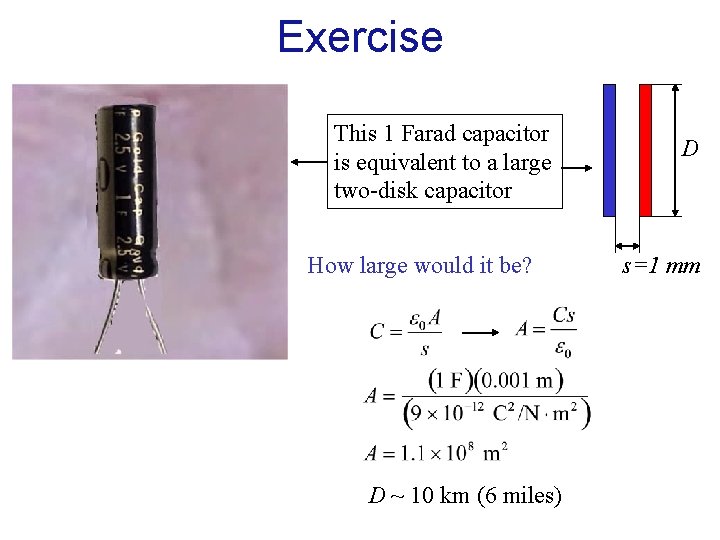
Exercise This 1 Farad capacitor is equivalent to a large two-disk capacitor How large would it be? D ~ 10 km (6 miles) D s=1 mm
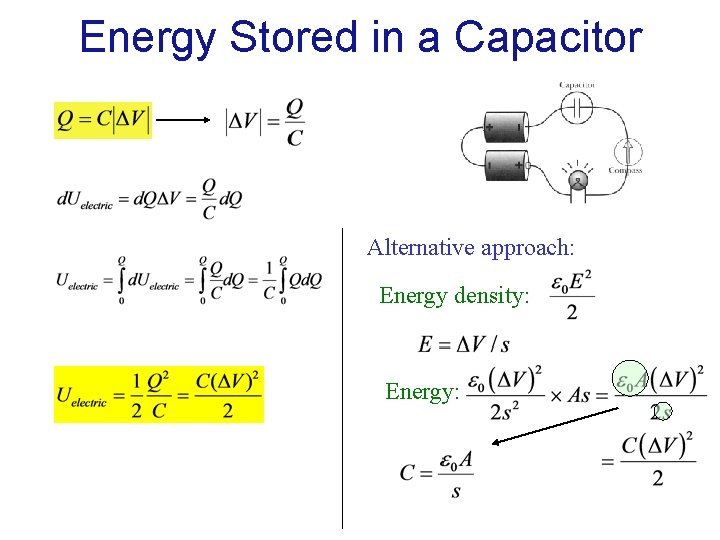
Energy Stored in a Capacitor Alternative approach: Energy density: Energy:
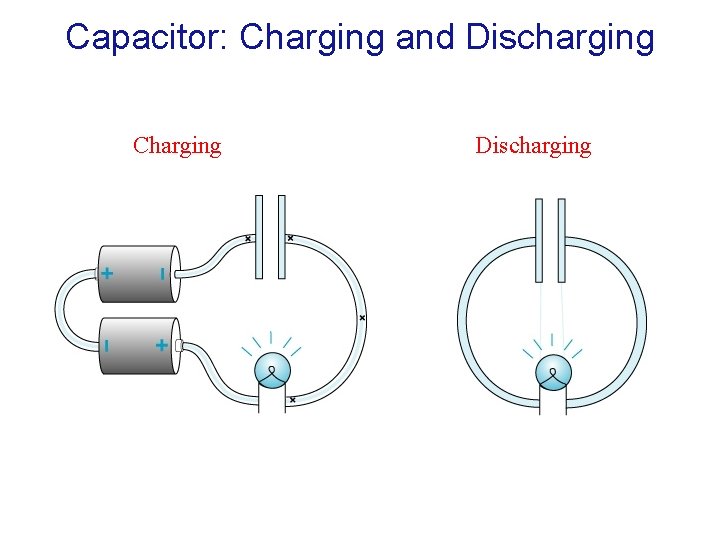
Capacitor: Charging and Discharging Charging Discharging
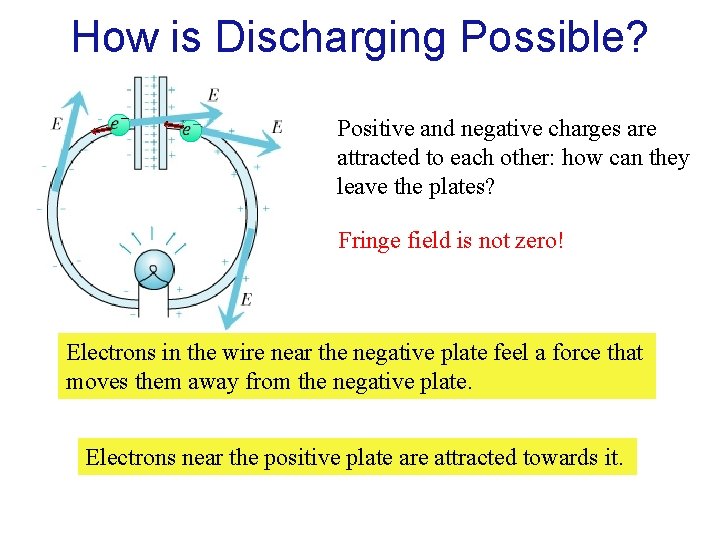
How is Discharging Possible? Positive and negative charges are attracted to each other: how can they leave the plates? Fringe field is not zero! Electrons in the wire near the negative plate feel a force that moves them away from the negative plate. Electrons near the positive plate are attracted towards it.
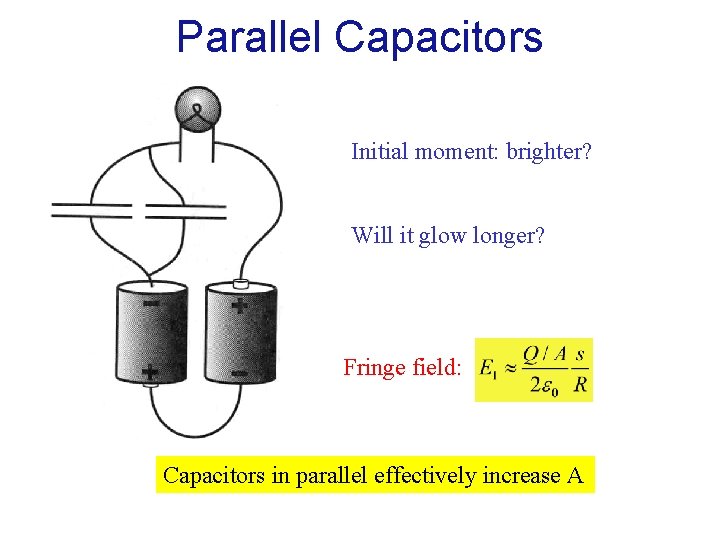
Parallel Capacitors Initial moment: brighter? Will it glow longer? Fringe field: Capacitors in parallel effectively increase A
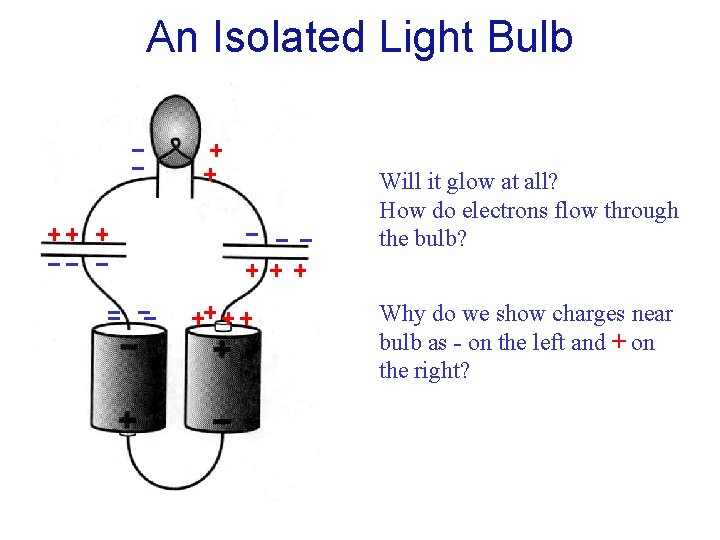
An Isolated Light Bulb Will it glow at all? How do electrons flow through the bulb? Why do we show charges near bulb as - on the left and + on the right?
Ammeters, Voltmeters and Ohmmeters Ammeter: measures current I Voltmeter: measures voltage difference V Ohmmeter: measures resistance R
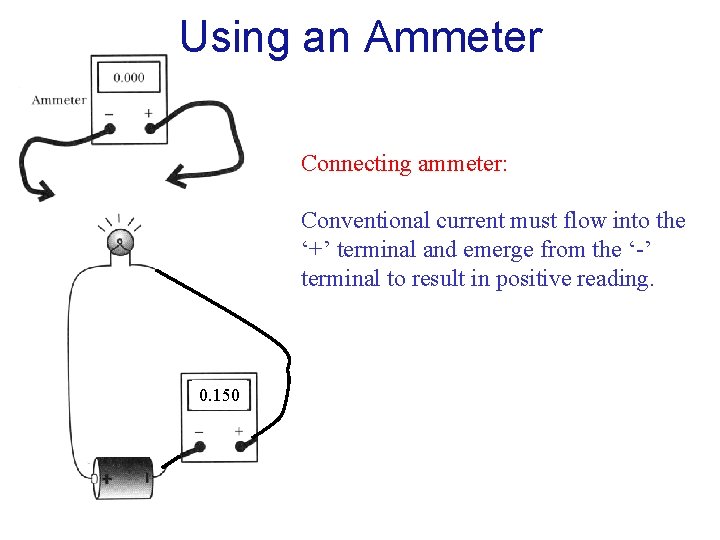
Using an Ammeter Connecting ammeter: Conventional current must flow into the ‘+’ terminal and emerge from the ‘-’ terminal to result in positive reading. 0. 150
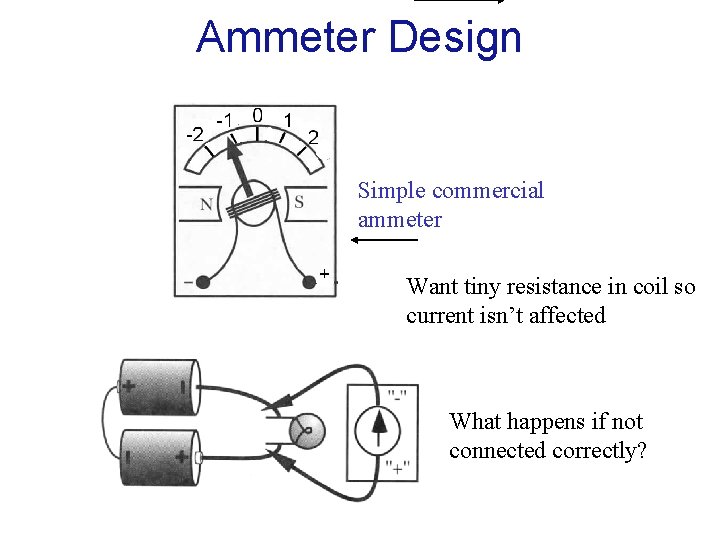
Ammeter Design Simple commercial ammeter Want tiny resistance in coil so current isn’t affected What happens if not connected correctly?
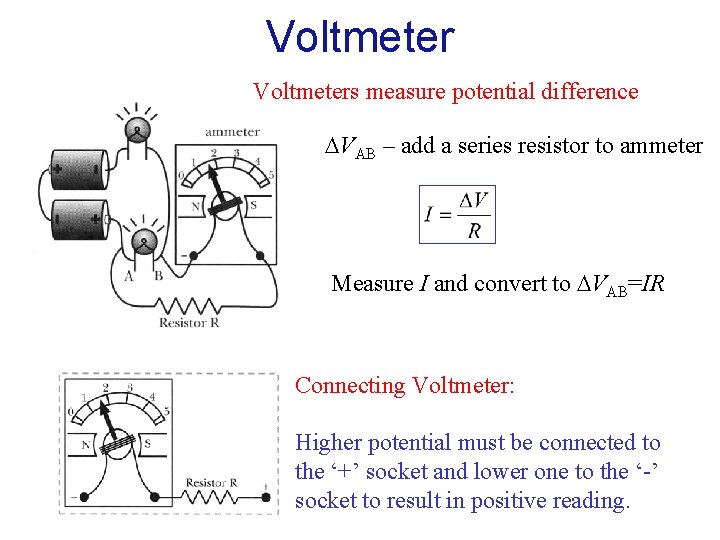
Voltmeters measure potential difference VAB – add a series resistor to ammeter Measure I and convert to VAB=IR Connecting Voltmeter: Higher potential must be connected to the ‘+’ socket and lower one to the ‘-’ socket to result in positive reading.
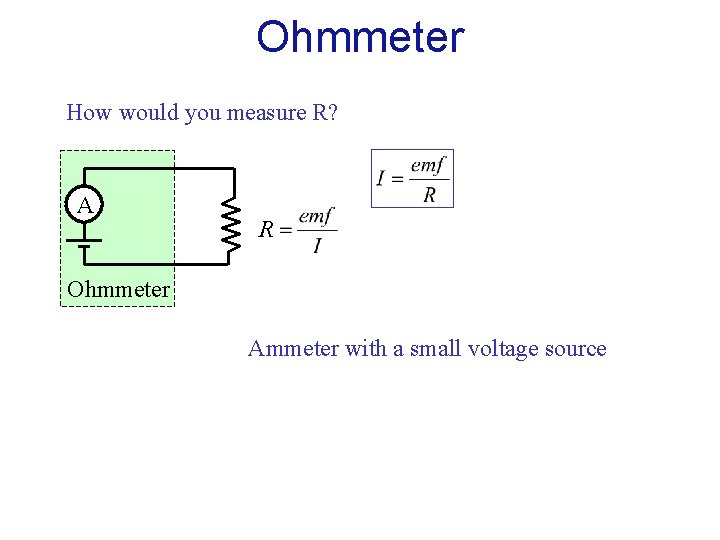
Ohmmeter How would you measure R? A R Ohmmeter Ammeter with a small voltage source
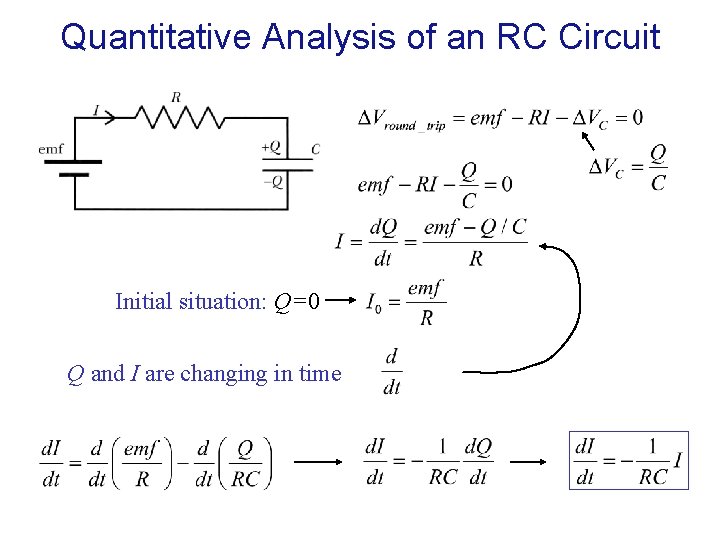
Quantitative Analysis of an RC Circuit Initial situation: Q=0 Q and I are changing in time
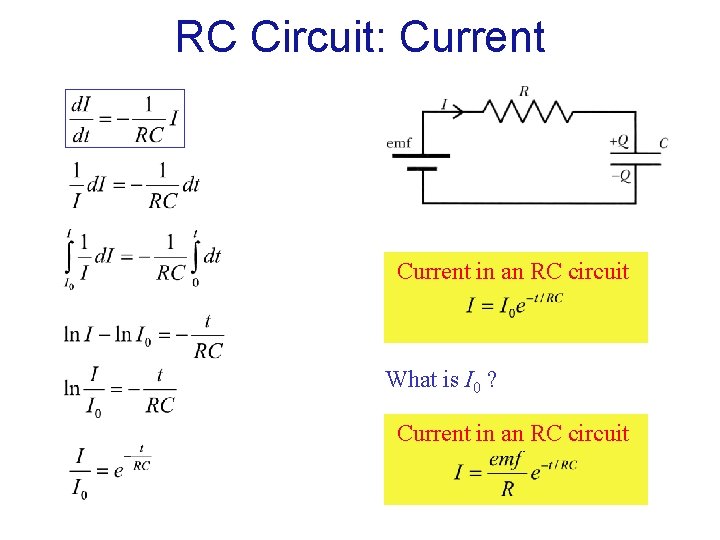
RC Circuit: Current in an RC circuit What is I 0 ? Current in an RC circuit
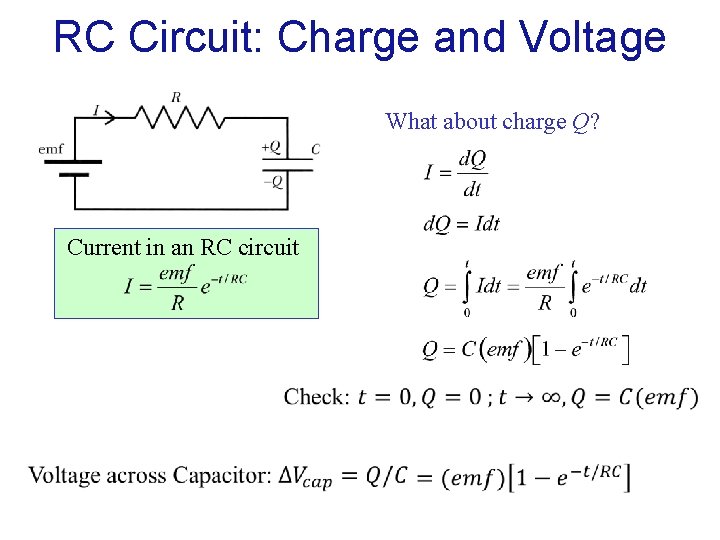
RC Circuit: Charge and Voltage What about charge Q? Current in an RC circuit
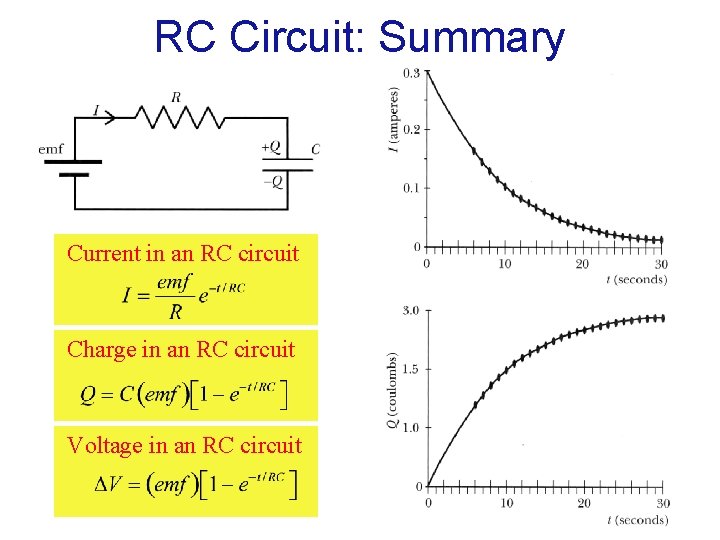
RC Circuit: Summary Current in an RC circuit Charge in an RC circuit Voltage in an RC circuit
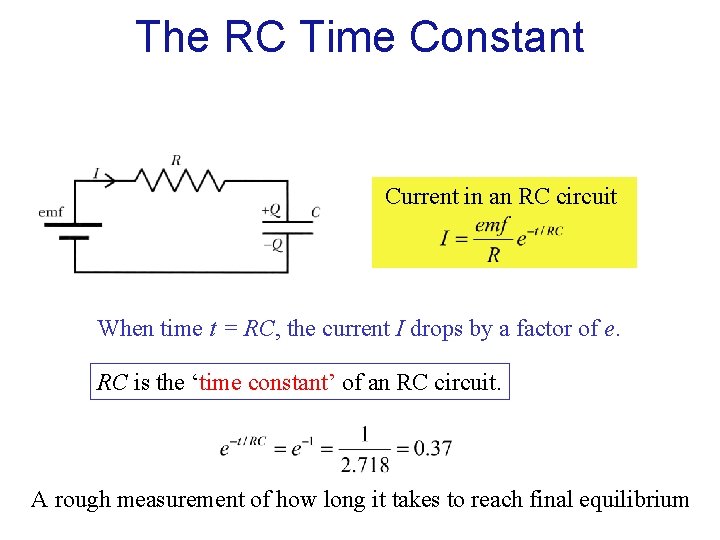
The RC Time Constant Current in an RC circuit When time t = RC, the current I drops by a factor of e. RC is the ‘time constant’ of an RC circuit. A rough measurement of how long it takes to reach final equilibrium
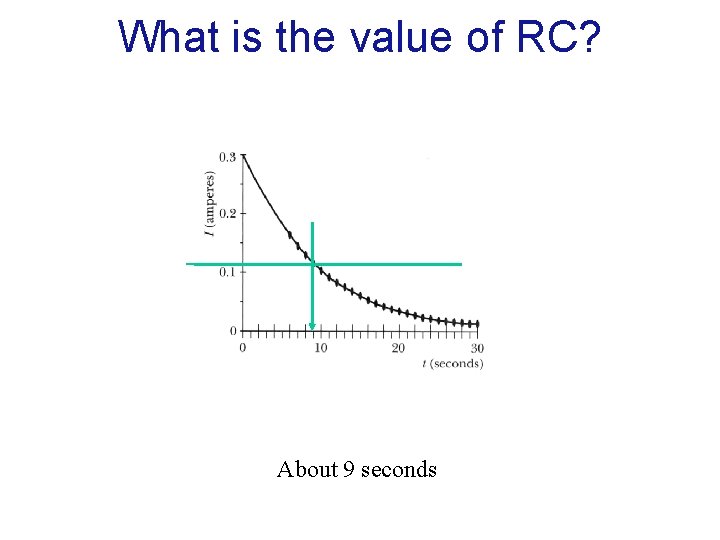
What is the value of RC? About 9 seconds
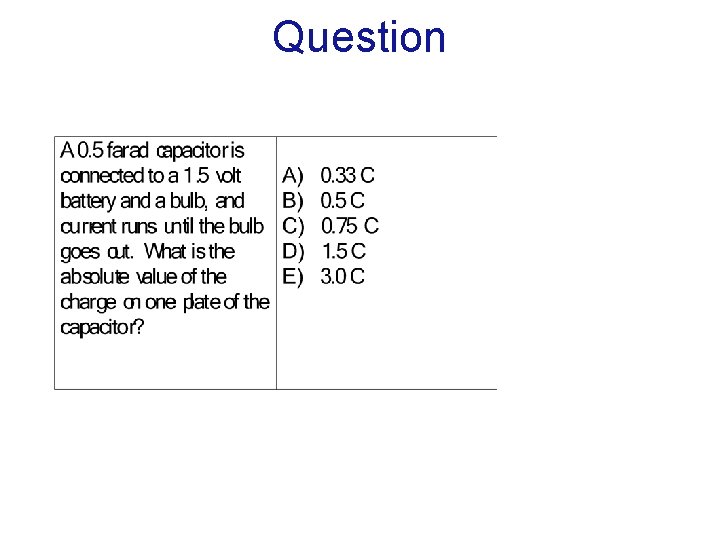
Question