
CIRCUIT BREAKER FAILURE ANALYSIS SYSTEM Marlie Norbrun Advisor
CIRCUIT BREAKER FAILURE ANALYSIS SYSTEM Marlie Norbrun Advisor: Professor James Hedrick ECE 499: Senior Capstone Union College, ECBE Department
Problem Definition ■ Electrical malfunctions are one of the leading causes of household fires in the U. S. ■ Between 2012 -2016: a) $1. 3 billion in property damage b) 450 civilian deaths c) 1250 civilian injuries Source: Campbell, Richard. Home Electrical Fires. March 2019
Project Goal ■ To design a computer-controlled power supply that automatically adjusts the test current provided to the circuit breaker being tested in order to evaluate its trip performance. ■ Each circuit breaker under test requires its own power supply. ■ The circuit breakers being tested are thermal domestic breakers.

UL 489 Test Procedure 1. The circuit breaker is rated at 20 A and a computer applies a 100% of the rated current. 2. If the breaker fails to trip within the first hour, the applied current is linearly increased to 135% of the rated current and held constant. Figure 1. Correct operation Figure 2. Marginal Operation 3. If the breaker fails to trip within the second hour, the applied current is linearly increased to 150% of the rated current and held constant. 4. If the breaker fails to trip within a three-hour margin, then it is classified as a jammed circuit breaker. Figure 3. Calibration Failure Figure 4. Jammed circuit breaker Source: Jesse Aronstein, Richard Lowry, Estimating Fire Losses Associated With FPE Stab. Lok® Circuit Breaker Malfunction. Jan/Feb 2012.
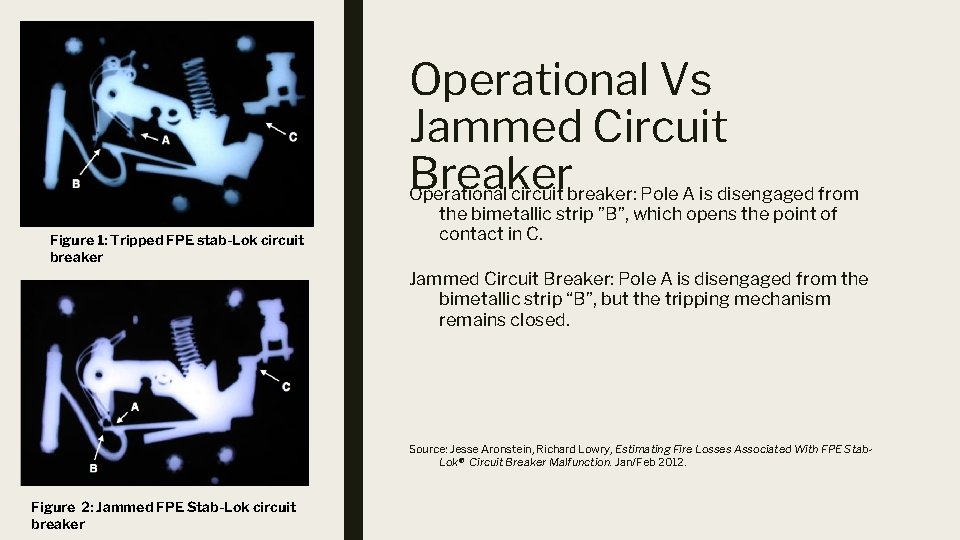
Operational Vs Jammed Circuit Breaker Operational circuit breaker: Pole A is disengaged from Figure 1: Tripped FPE stab-Lok circuit breaker the bimetallic strip ”B”, which opens the point of contact in C. Jammed Circuit Breaker: Pole A is disengaged from the bimetallic strip “B”, but the tripping mechanism remains closed. Source: Jesse Aronstein, Richard Lowry, Estimating Fire Losses Associated With FPE Stab. Lok® Circuit Breaker Malfunction. Jan/Feb 2012. Figure 2: Jammed FPE Stab-Lok circuit breaker
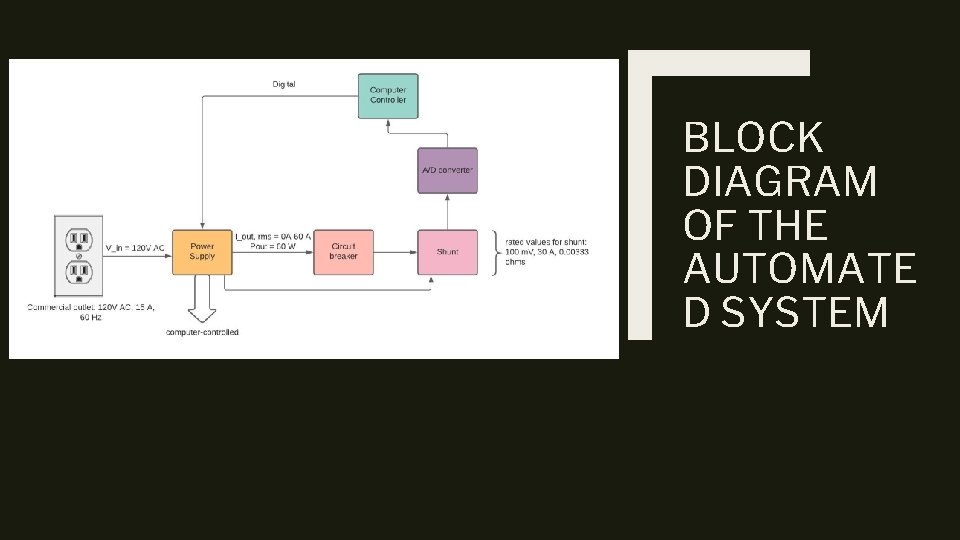
BLOCK DIAGRAM OF THE AUTOMATE D SYSTEM
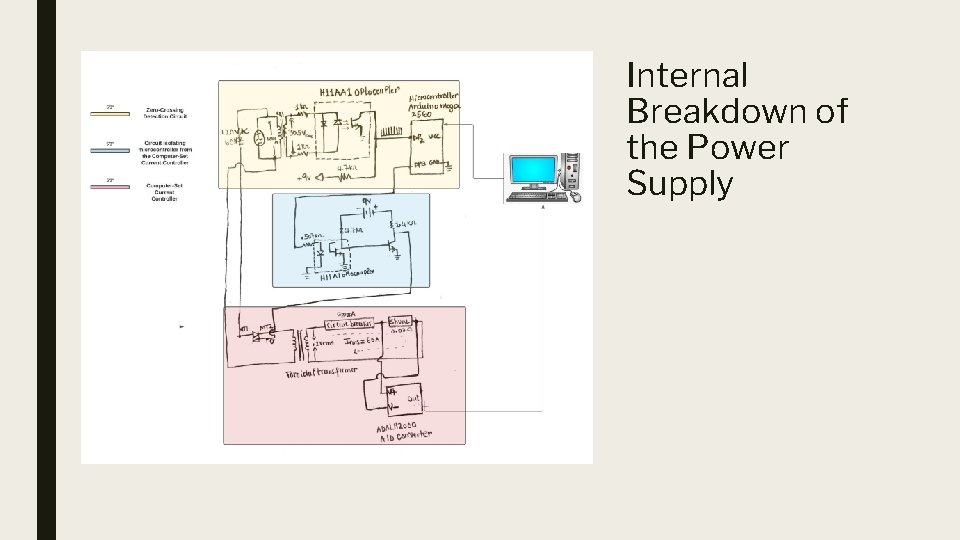
Internal Breakdown of the Power Supply
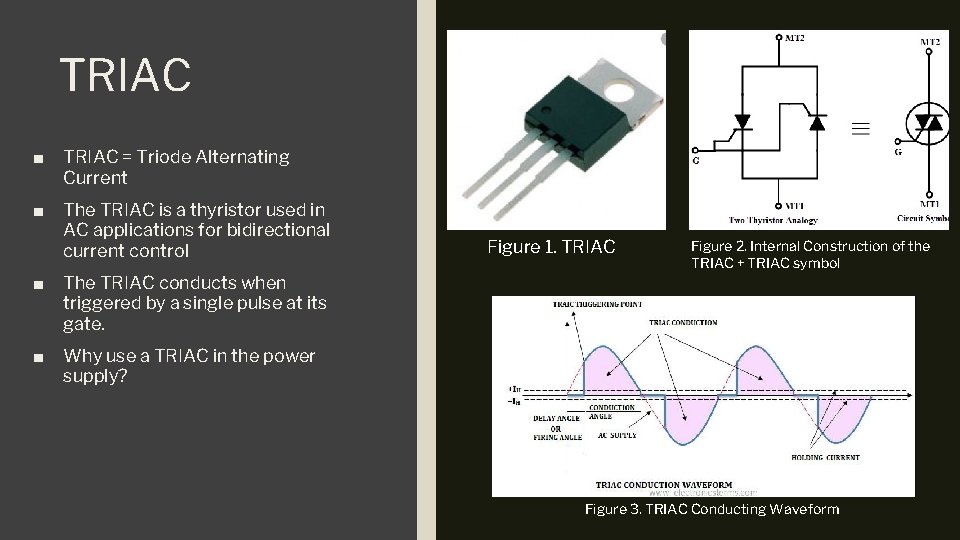
TRIAC ■ TRIAC = Triode Alternating Current ■ The TRIAC is a thyristor used in AC applications for bidirectional current control ■ The TRIAC conducts when triggered by a single pulse at its gate. ■ Why use a TRIAC in the power supply? Figure 1. TRIAC Figure 2. Internal Construction of the TRIAC + TRIAC symbol Figure 3. TRIAC Conducting Waveform

Zero-Crossing Detection ■ Zero Crossing is the point where the sinusoidal waveform crosses the time axis. Figure 1. Zero Crossing Figure 2: Input rms waveform stepped-down from 120 V AC to 30. 5 V rms
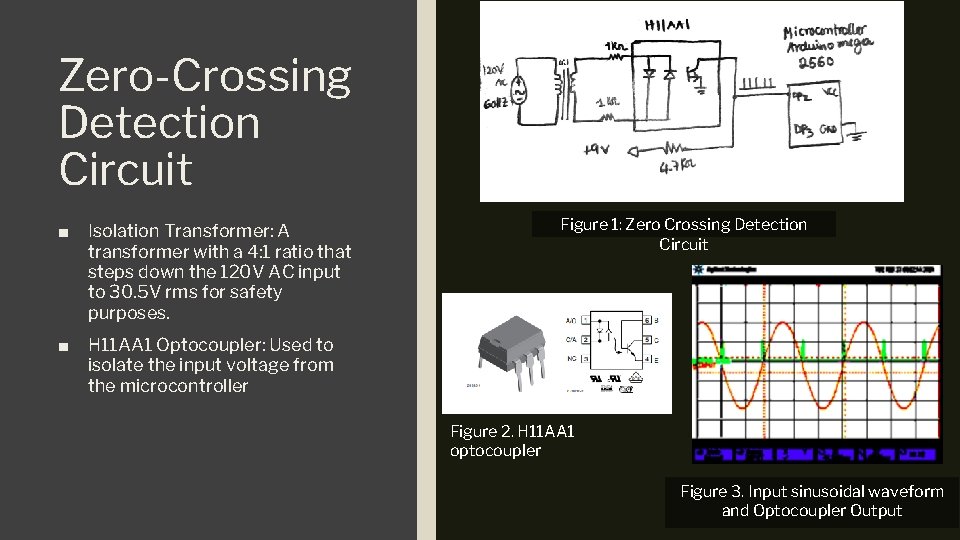
Zero-Crossing Detection Circuit ■ Isolation Transformer: A transformer with a 4: 1 ratio that steps down the 120 V AC input to 30. 5 V rms for safety purposes. ■ H 11 AA 1 Optocoupler: Used to isolate the input voltage from the microcontroller Figure 1: Zero Crossing Detection Circuit Figure 2. H 11 AA 1 optocoupler Figure 3. Input sinusoidal waveform and Optocoupler Output
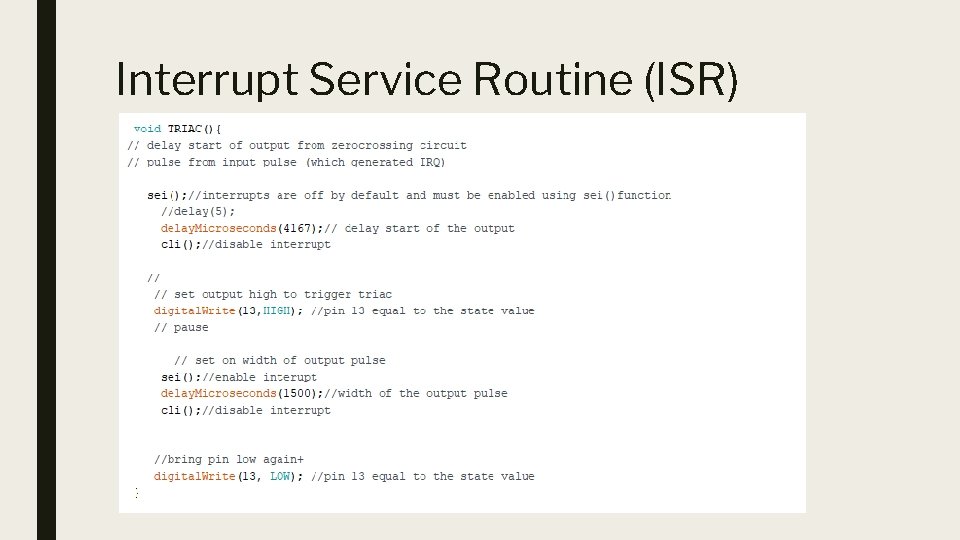
Interrupt Service Routine (ISR)

TRIAC OUTPUT CIRCUIT & TESTING RESULTS Figure 1. Schematic of TRIAC circuit Figure 2. TRIAC conducting waveform and output pulse Figure 3: Load voltage at TRIAC’s outpu
Next Steps ■ Finalize the output circuit by adding the toroidal transformer and shunt. ■ Test the circuit breaker and shunt to evaluate the trip performance of the circuit breaker. ■ Conduct more experiments with the A/D converter and develop a MATLAB code for initiating a test cycle and plotting the current measurements across the shunt in real time

Acknowledgment ■ A special thanks to: Professor Hedrick for his continued support and patience The SRG committee for granting me the funds to purchase the parts needed for the project
- Slides: 14