
Circling Back To Littles Law Now that we

Circling Back To Little’s Law Now that we have tools to gather information
Latency – A measure of time delay experienced in a system, the precise definition of which depends on the system and the time being measured. In storage, latency is generally referred to as response time, in ms. Throughput – The amount of material or items passing through a system or process. In storage, IO/s in units of 4 k 2
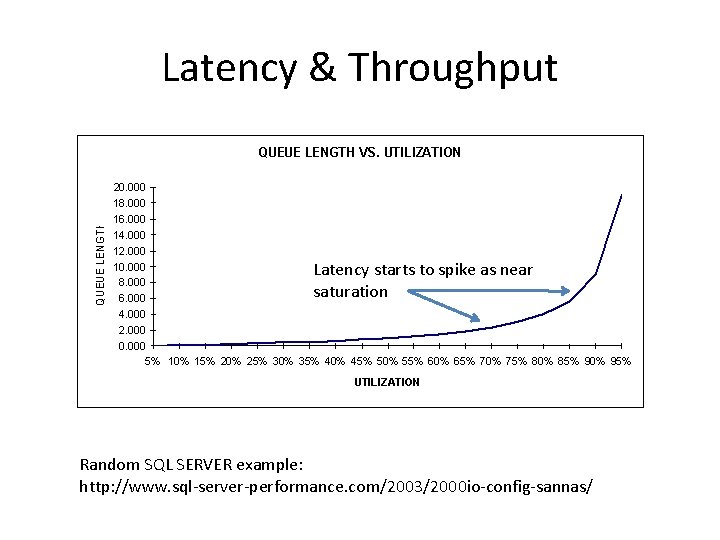
Latency & Throughput Latency starts to spike as near saturation Random SQL SERVER example: http: //www. sql-server-performance. com/2003/2000 io-config-sannas/
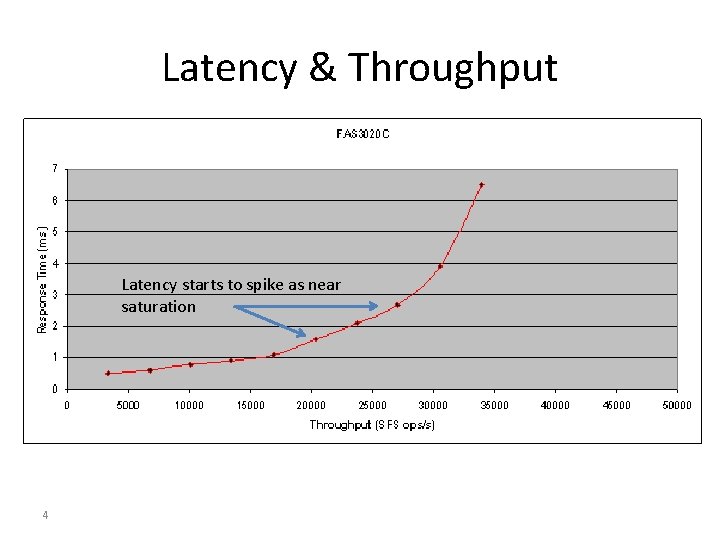
Latency & Throughput Latency starts to spike as near saturation 4
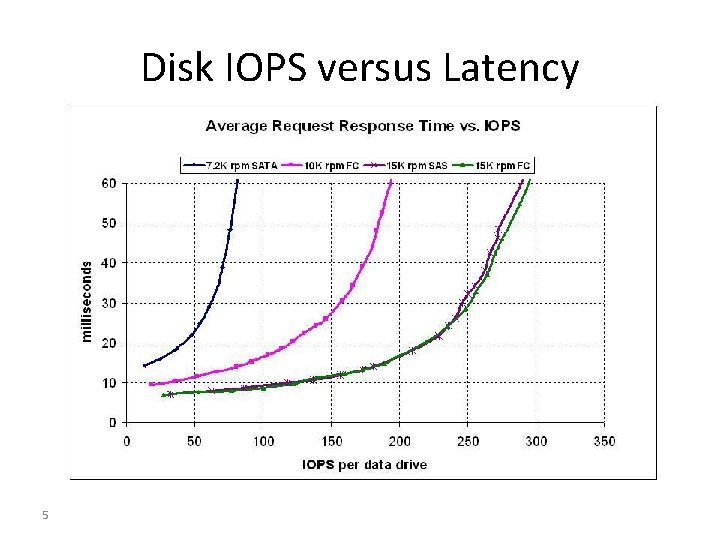
Disk IOPS versus Latency 5

True in Real Life Too A LA LA TE NC Y CY B o pu h g u h t ug o r h thr t u p t

Little’s Law Review & Example • Little’s Law: • Restated: N = L * W N = # Cars in Jam T = Lanes (Throughput) Wait = time from A->B • Assume 4 cars arrive every second (lanes) • A->B is 30 seconds • N = 4*30 = 120
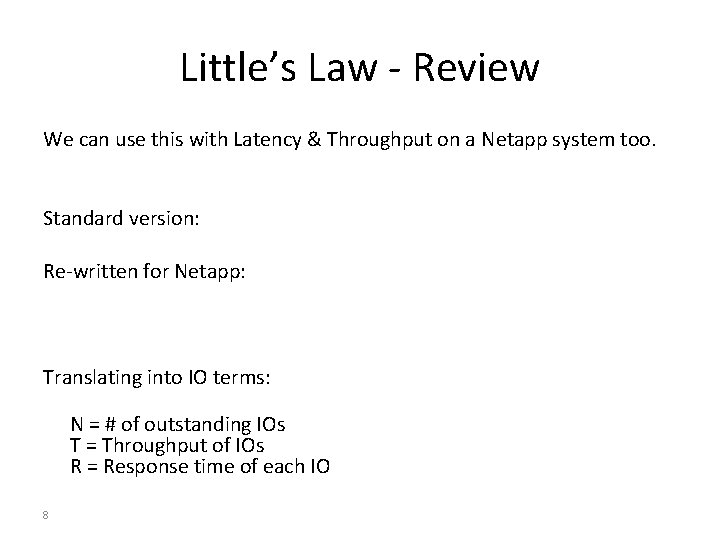
Little’s Law - Review We can use this with Latency & Throughput on a Netapp system too. Standard version: Re-written for Netapp: Translating into IO terms: N = # of outstanding IOs T = Throughput of IOs R = Response time of each IO 8
Little’s Law - An Example • Typical situation: – An user complains of poor performance: My dd/cp/tar/Oracle query (for example: full table scan) etc. process isn’t fast enough – A casual look at sysstat shows the filer is not very busy – Net. App Service returns with a statement of “thread-limited” • What does this mean? 9
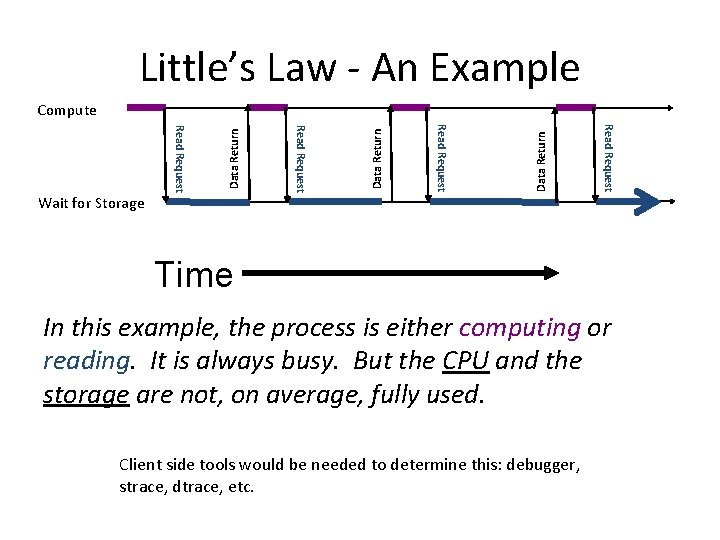
Little’s Law - An Example Data Return Read Request Wait for Storage Data Return Compute Time In this example, the process is either computing or reading. It is always busy. But the CPU and the storage are not, on average, fully used. Client side tools would be needed to determine this: debugger, strace, dtrace, etc.
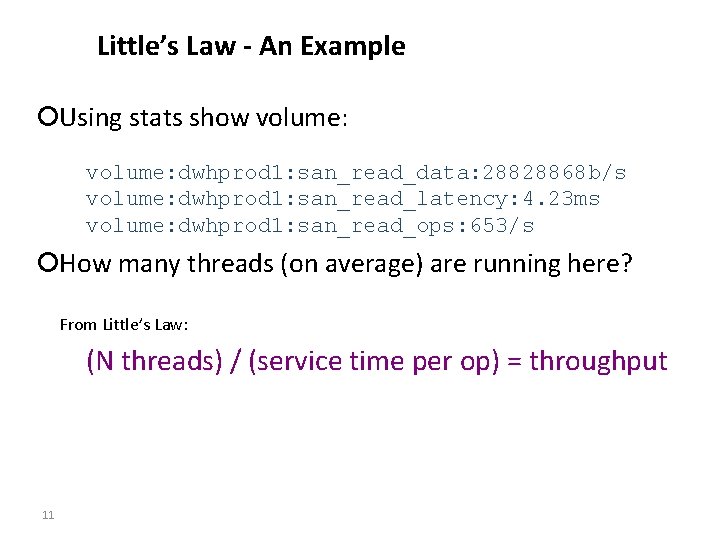
Little’s Law - An Example ¡Using stats show volume: dwhprod 1: san_read_data: 28828868 b/s volume: dwhprod 1: san_read_latency: 4. 23 ms volume: dwhprod 1: san_read_ops: 653/s ¡How many threads (on average) are running here? From Little’s Law: (N threads) / (service time per op) = throughput 11
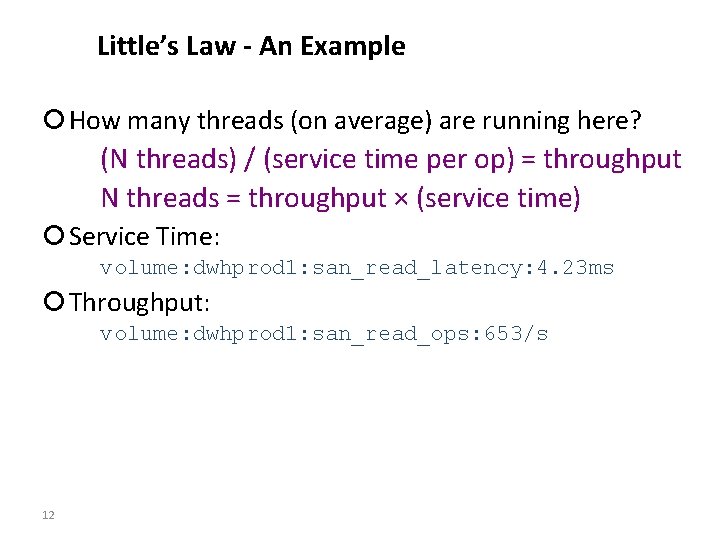
Little’s Law - An Example ¡ How many threads (on average) are running here? (N threads) / (service time per op) = throughput N threads = throughput × (service time) ¡ Service Time: volume: dwhprod 1: san_read_latency: 4. 23 ms ¡ Throughput: volume: dwhprod 1: san_read_ops: 653/s 12
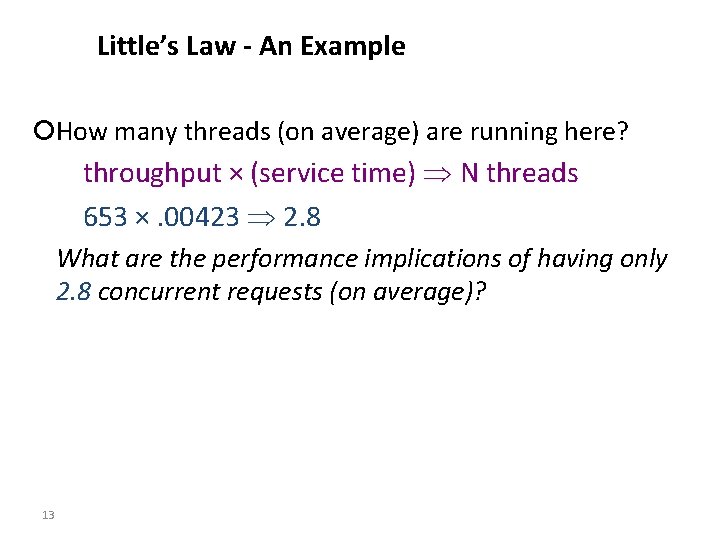
Little’s Law - An Example ¡How many threads (on average) are running here? throughput × (service time) N threads 653 ×. 00423 2. 8 What are the performance implications of having only 2. 8 concurrent requests (on average)? 13
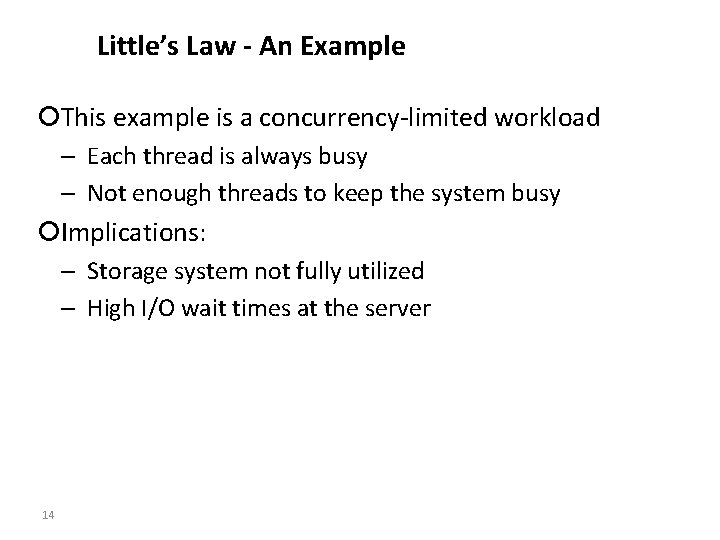
Little’s Law - An Example ¡This example is a concurrency-limited workload – Each thread is always busy – Not enough threads to keep the system busy ¡Implications: – Storage system not fully utilized – High I/O wait times at the server 14
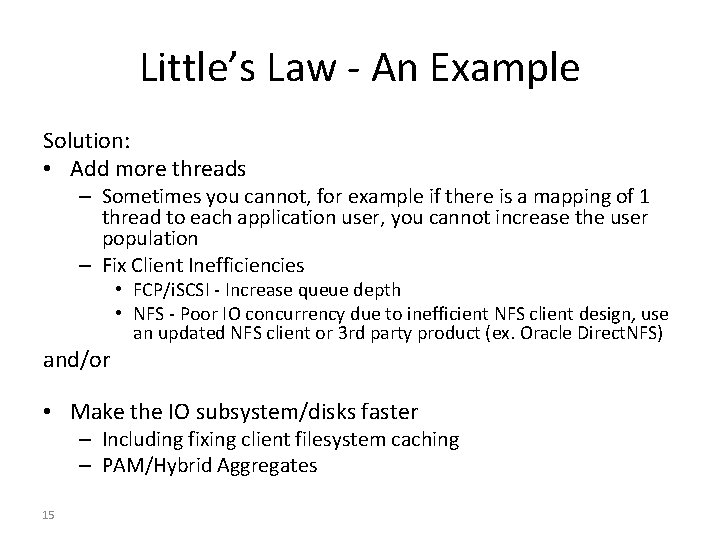
Little’s Law - An Example Solution: • Add more threads – Sometimes you cannot, for example if there is a mapping of 1 thread to each application user, you cannot increase the user population – Fix Client Inefficiencies and/or • FCP/i. SCSI - Increase queue depth • NFS - Poor IO concurrency due to inefficient NFS client design, use an updated NFS client or 3 rd party product (ex. Oracle Direct. NFS) • Make the IO subsystem/disks faster – Including fixing client filesystem caching – PAM/Hybrid Aggregates 15
- Slides: 15