
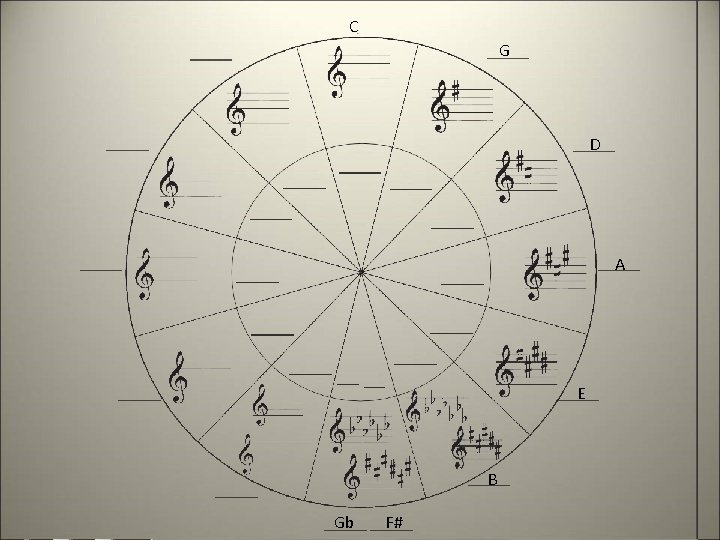
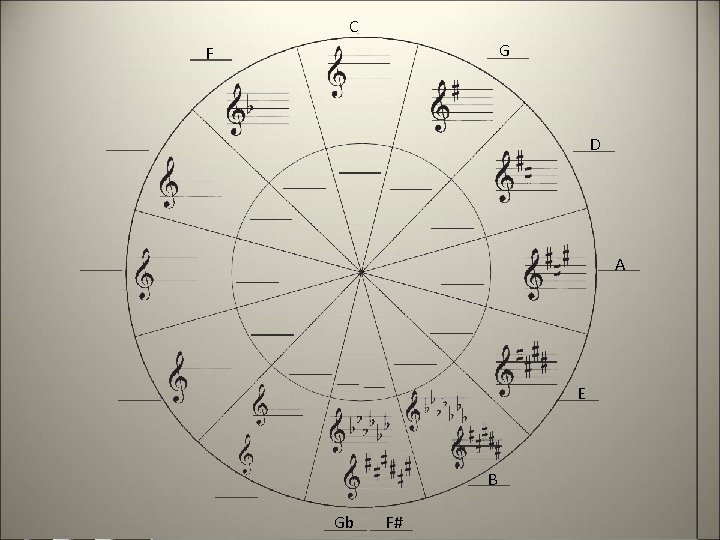
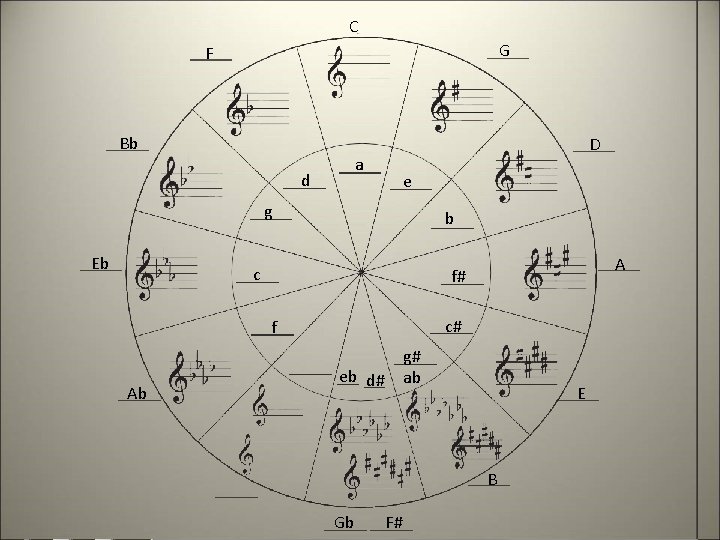
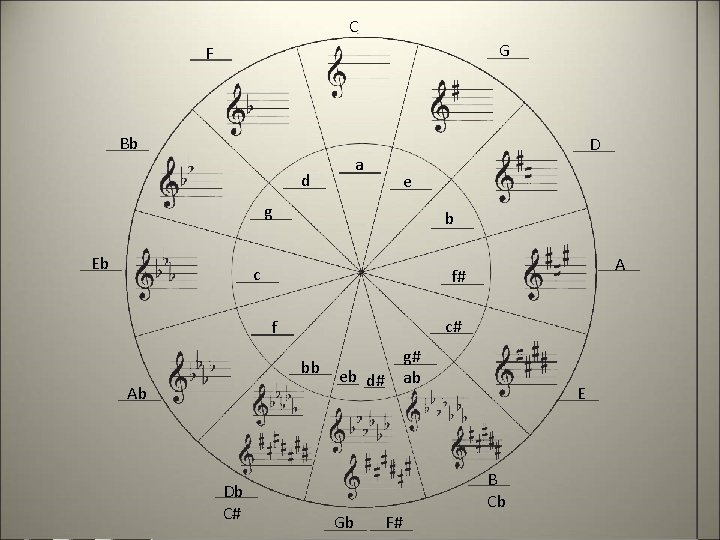
Circle of 5 ths This is a tool

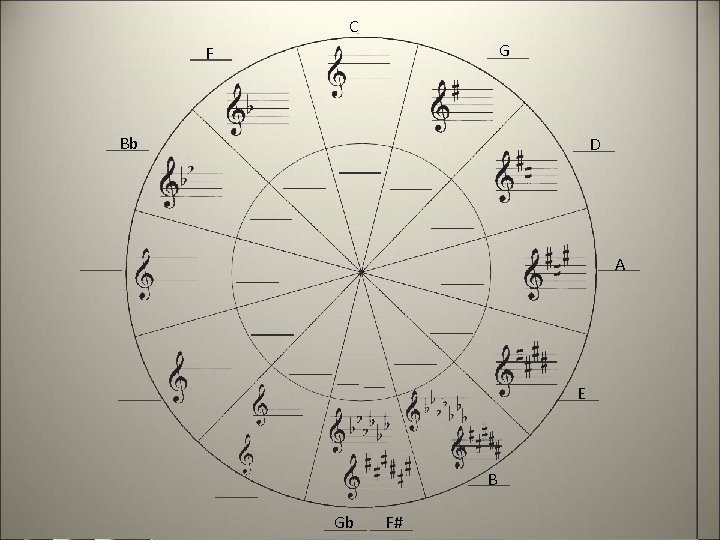
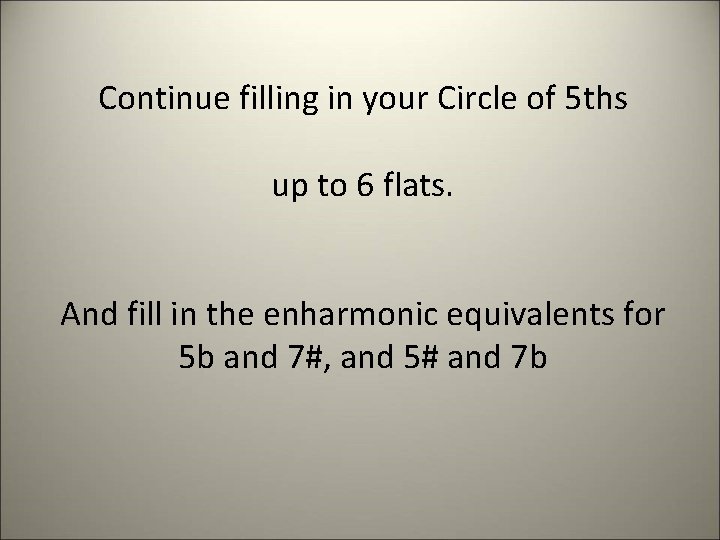
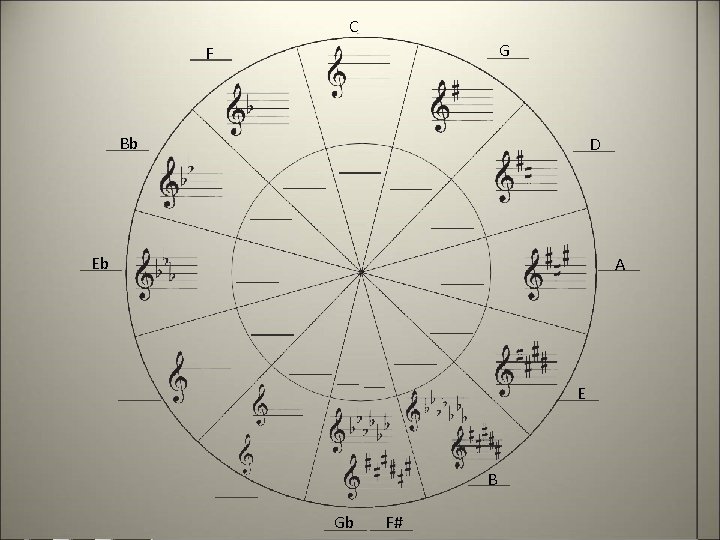
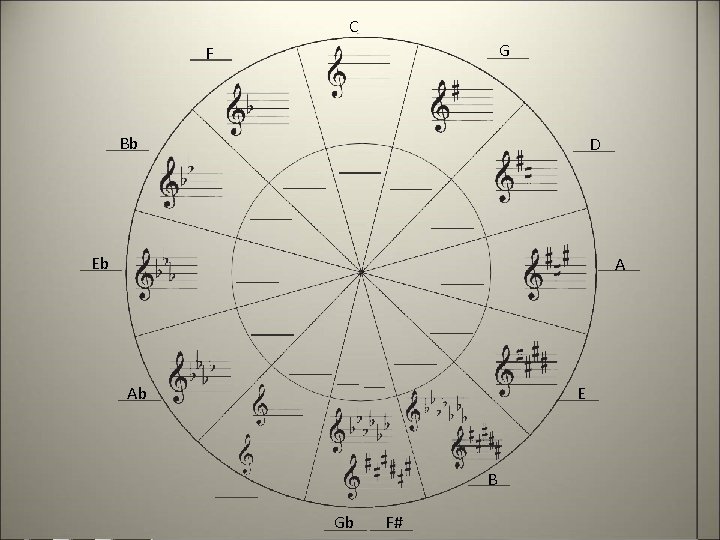
- Slides: 49
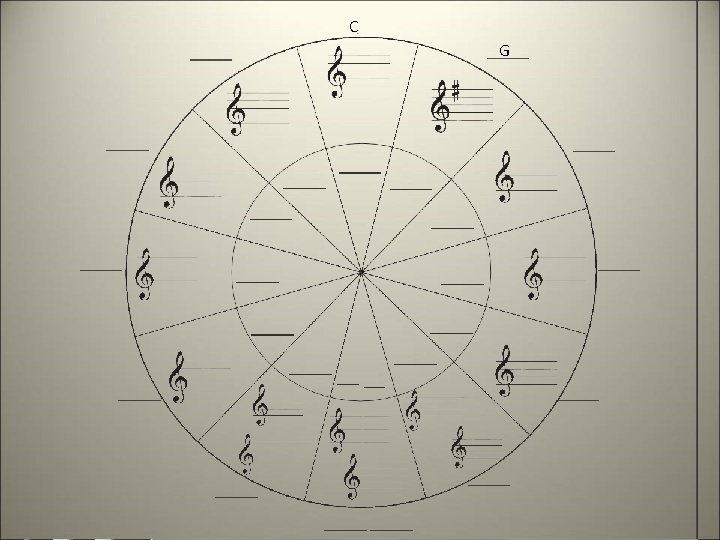
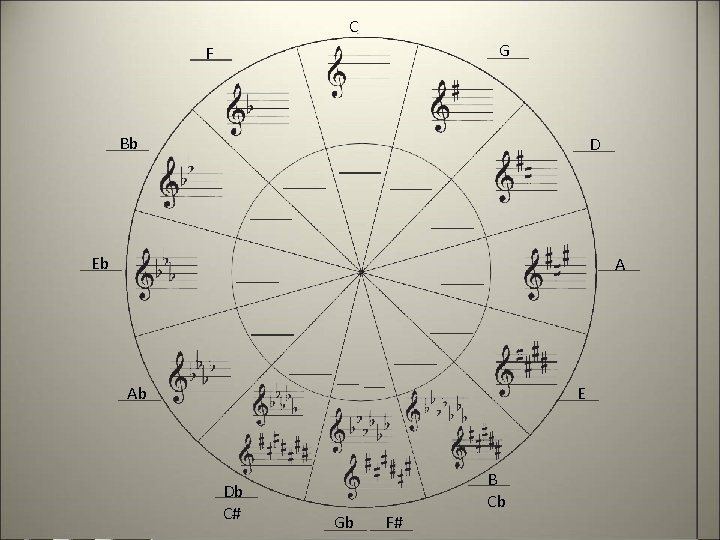
Circle of 5 ths This is a tool to help you remember all the major and minor key signatures 2 Important things to know: Formula of whole steps and half steps Major: WWHWWWH Minor (pure): WHWWHWW
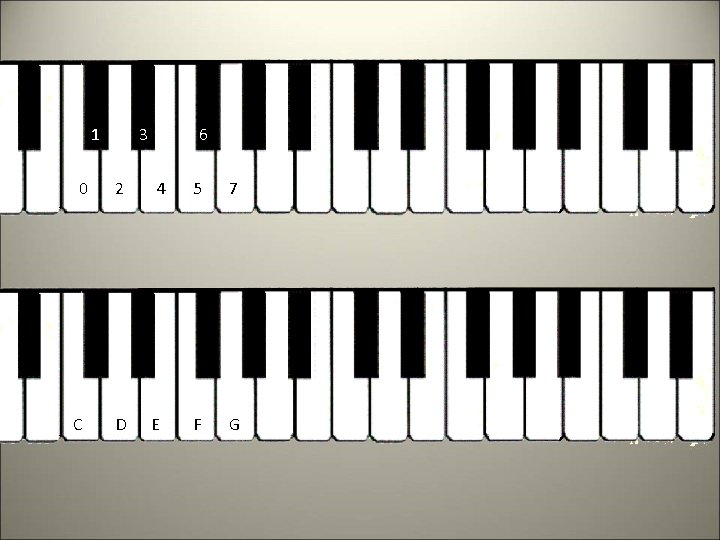
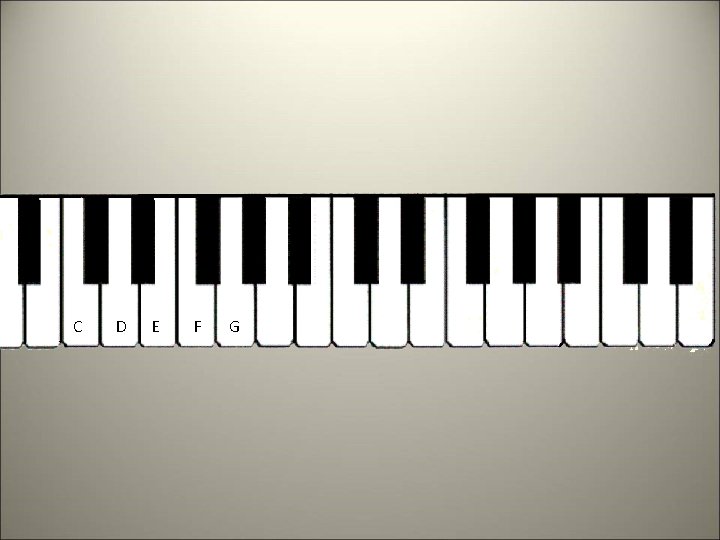
What is a 5 th? More specifically a Perfect 5 th. (P 5) 1. 7 half steps or 2. start counting on the first note, count up to 5, keeping to the key signature of the first note.
1 0 C 3 2 D 6 4 E 5 7 F G
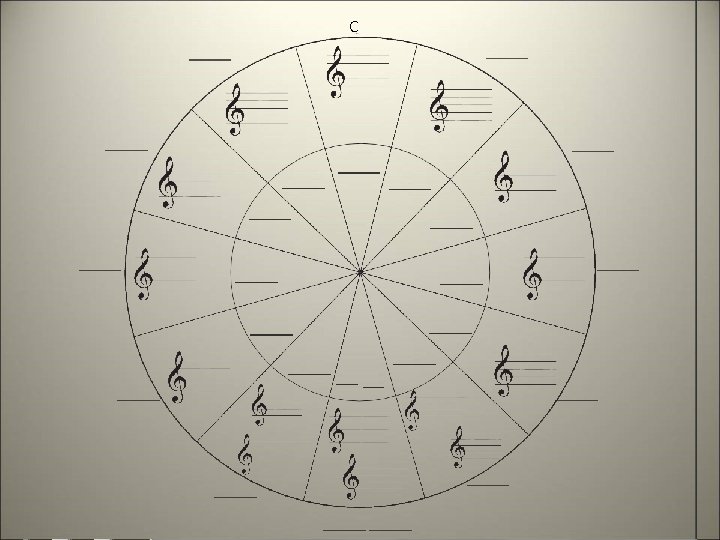
C
Using your “keyboard” Starting on C, count up: CDEFG. C to G is a Perfect 5 th.
C D E F G
The next key signature is G Add 1 # to the key signature, which note (scale degree) of the new scale is it? (hint: you can use the scale formula to figure it out)
7 th In the key of G this is F, so we add an F# Going clockwise, fill in the name and key signature of this new key.
C G
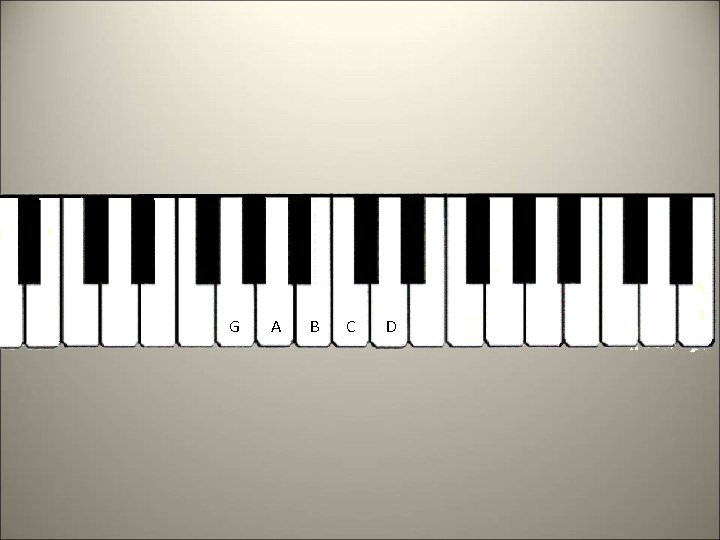
Continue from G GABCD G to D is a Perfect 5 th
G A B C D
Add 1# to the key signature 7 th scale degree is C#.
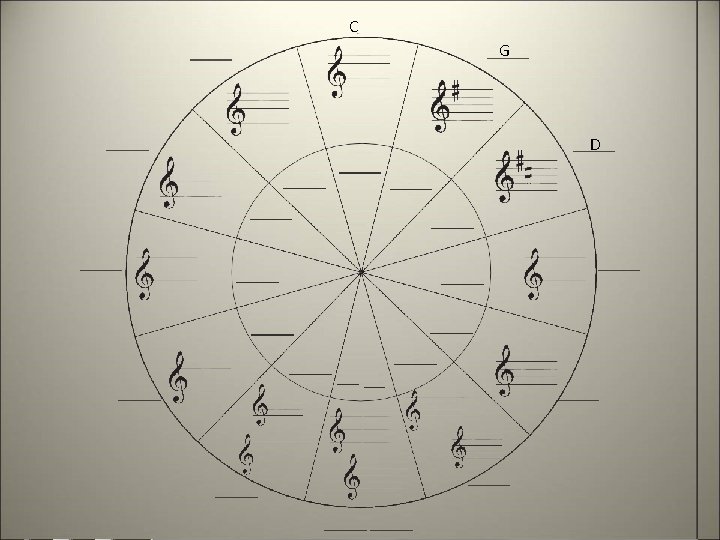
C G D
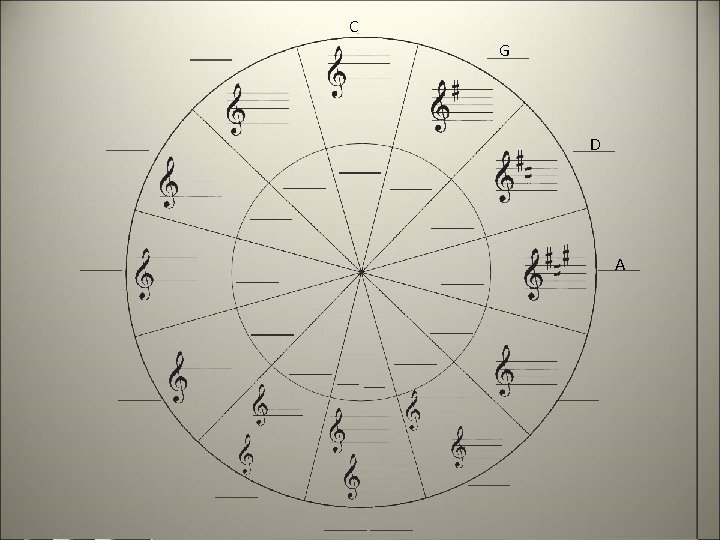
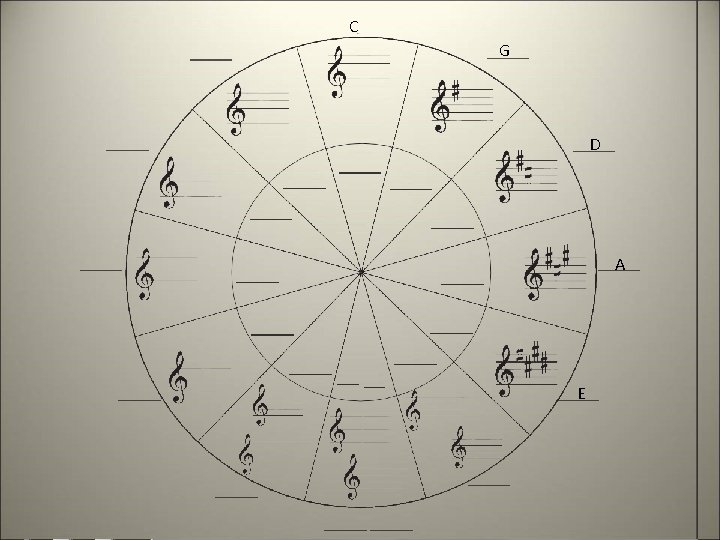
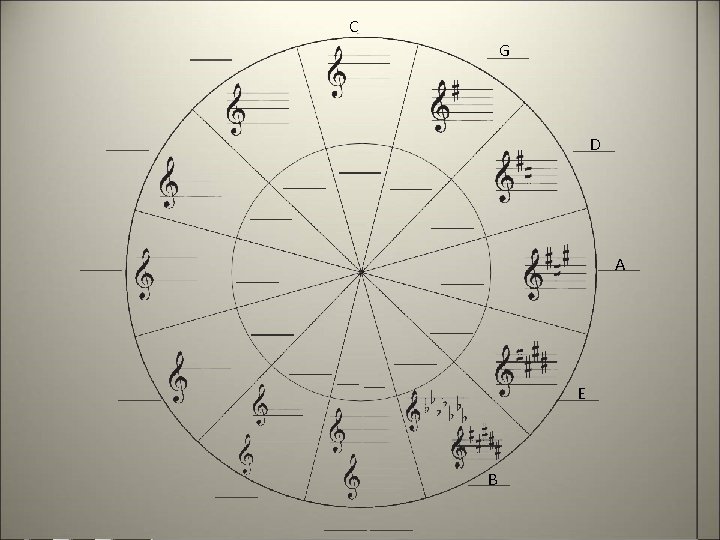
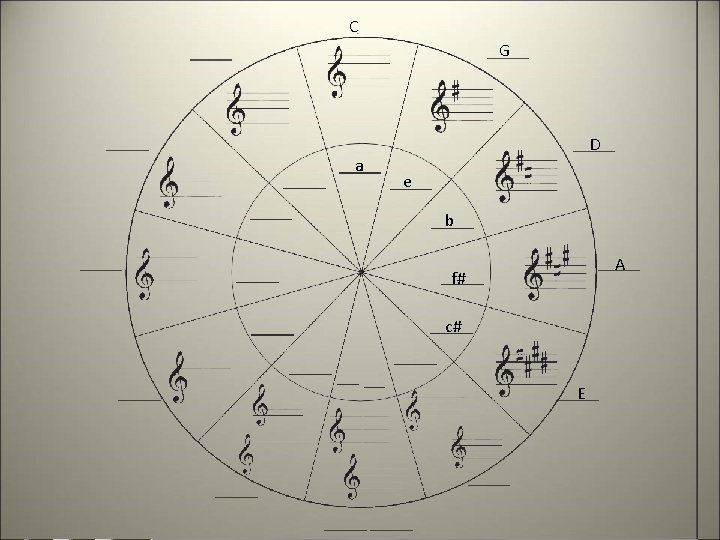
Continue and complete your circle of fifths up to 6#s.
C G D A
C G D A E
C G D A E B
C G D A E B Gb F#
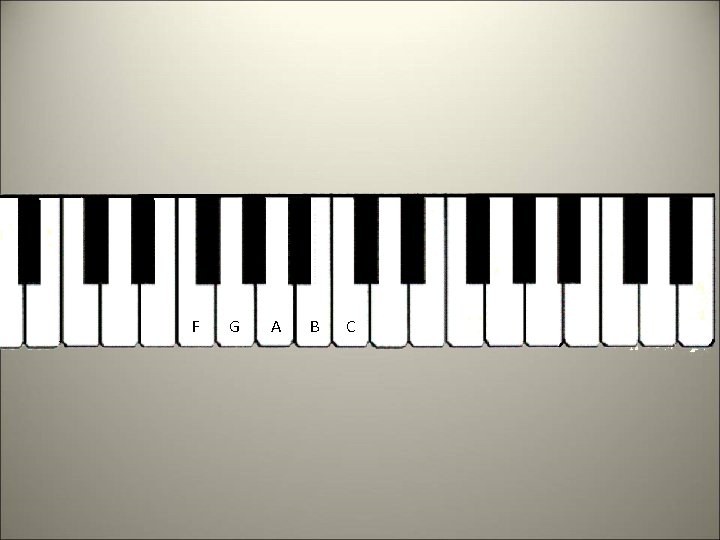
Now we will look at the keys that go counter clockwise. We will be adding flats this time. Starting at C, count down 5 notes: CBAGF C down to F is a Perfect 5 th
F G A B C
Add 1 b to the key signature on the 4 th scale degree of the new scale. FGAB so B is the 4 th. We make it Bb.
C G F D A E B Gb F#
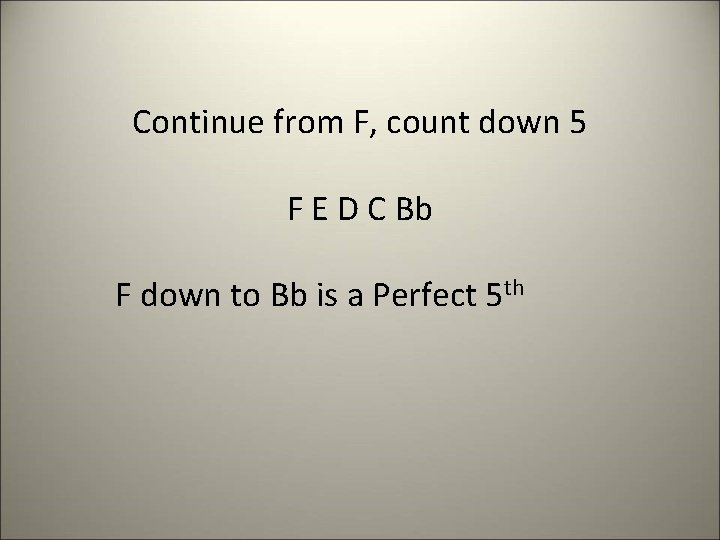
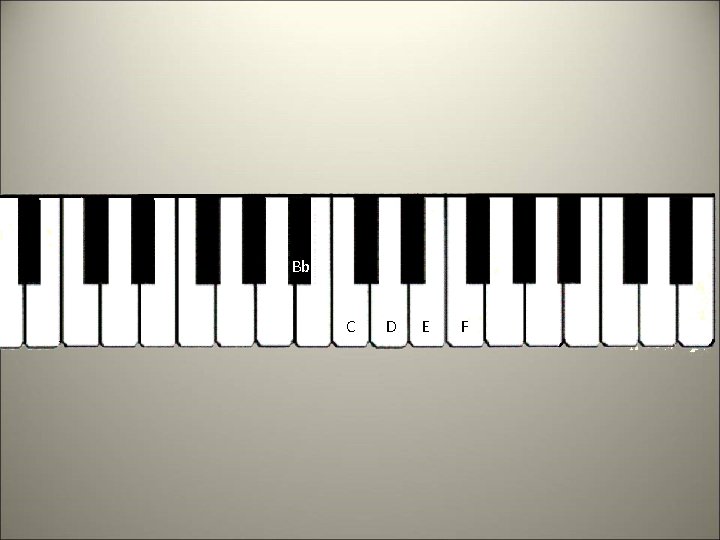
Continue from F, count down 5 F E D C Bb F down to Bb is a Perfect 5 th
Bb C D E F
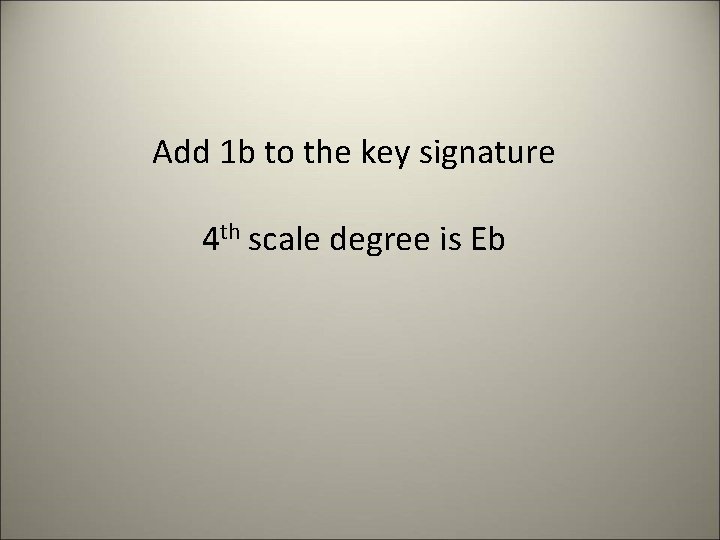
Add 1 b to the key signature 4 th scale degree is Eb
C G F Bb D A E B Gb F#
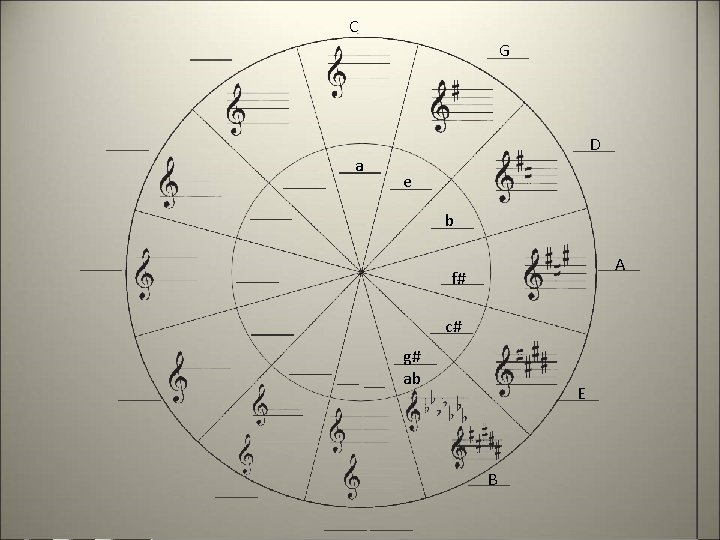
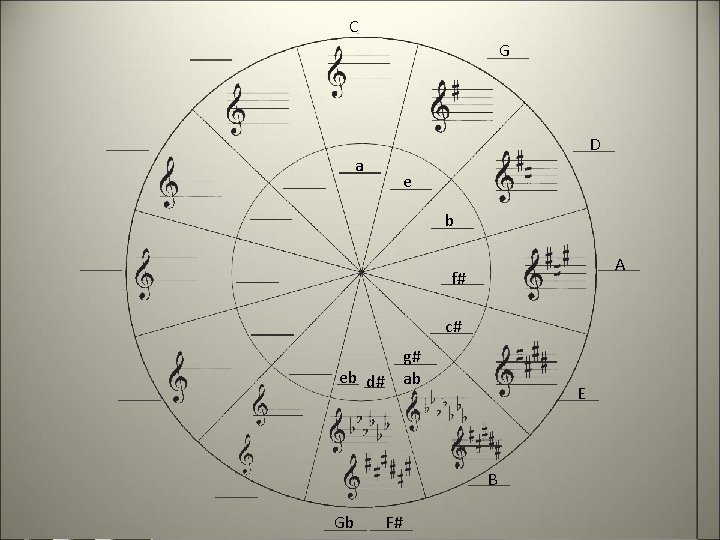
Continue filling in your Circle of 5 ths up to 6 flats. And fill in the enharmonic equivalents for 5 b and 7#, and 5# and 7 b
C G F Bb D Eb A E B Gb F#
C G F Bb D Eb A Ab E B Gb F#
C G F Bb D Eb A Ab E Db C# Gb F# B Cb
That takes care of all the major keys. Now on to minor. Review the half step/whole step formula of the minor scale. WHWWHWW
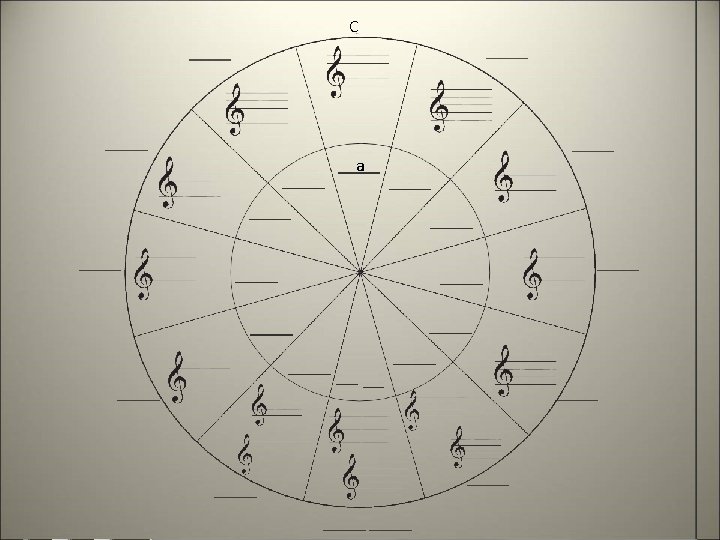
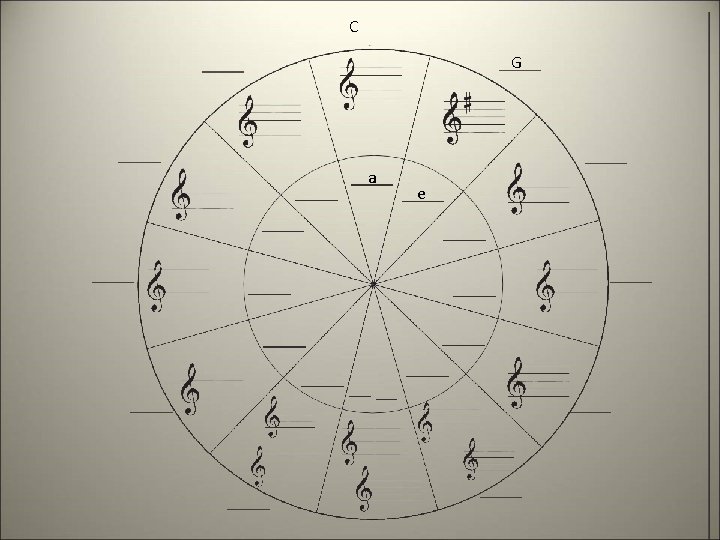
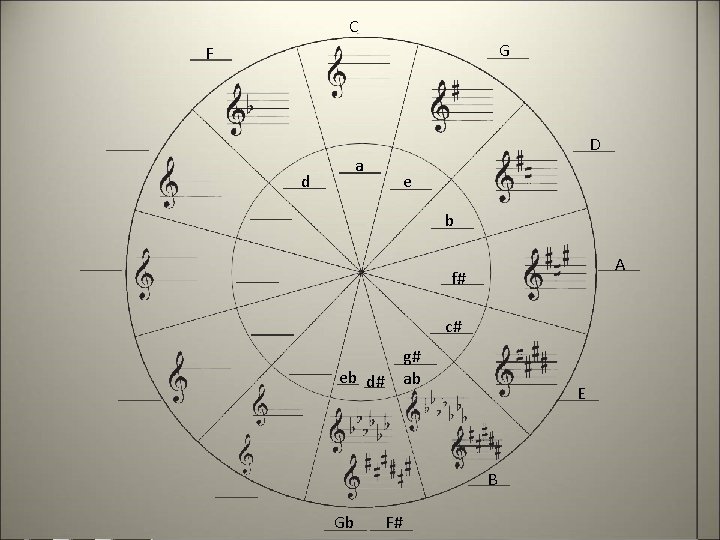
C a
Using your keyboard. Starting on A, count up: ABCDE. A to E is a Perfect 5 th. Add 1 # to the key signature, which note (scale degree) of the new scale is it? (hint: use the scale formula to figure it out)
2 nd In the key of E minor this is F, so we add an F# Going clockwise, fill in the name and key signature of this new key. Continue filling in minor keys up to 6#
C G a e
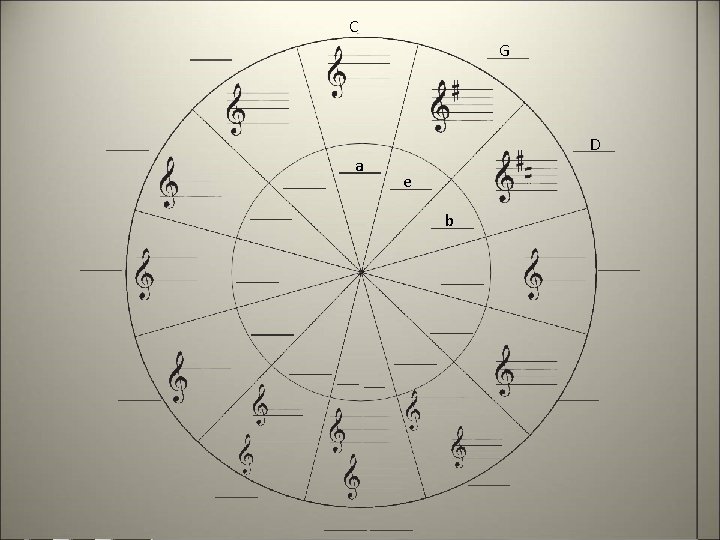
C G a D e b
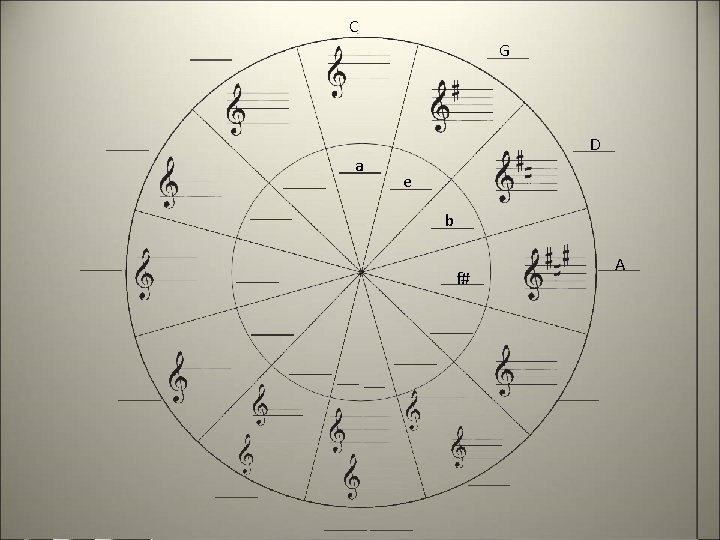
C G a D e b f# A
C G a D e b A f# c# E
C G a D e b A f# c# g# ab E B
C G D a e b A f# c# g# ab eb d# E B Gb F#
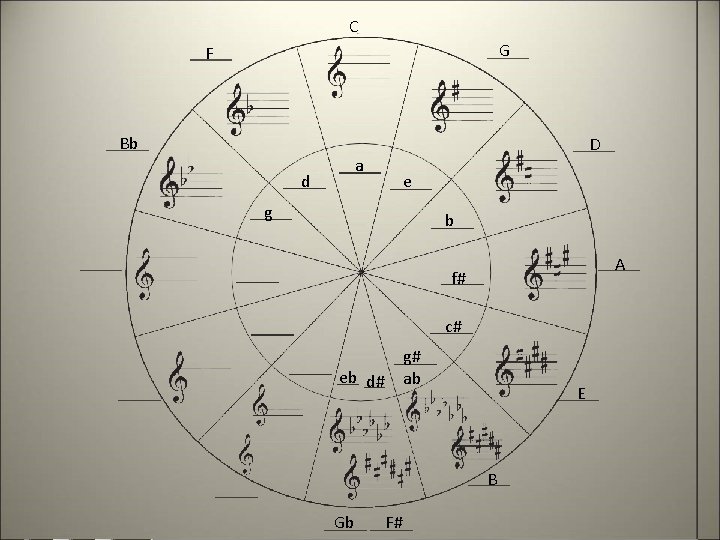
Now for the flats. Starting at A, count down 5 notes: AGFED A down to D is a Perfect 5 th Add 1 b to the key signature on the 6 th scale degree of the new scale. D E F G A B, so B is the 6 th. We make it Bb.
C G F D a d e b A f# c# g# ab eb d# E B Gb F#
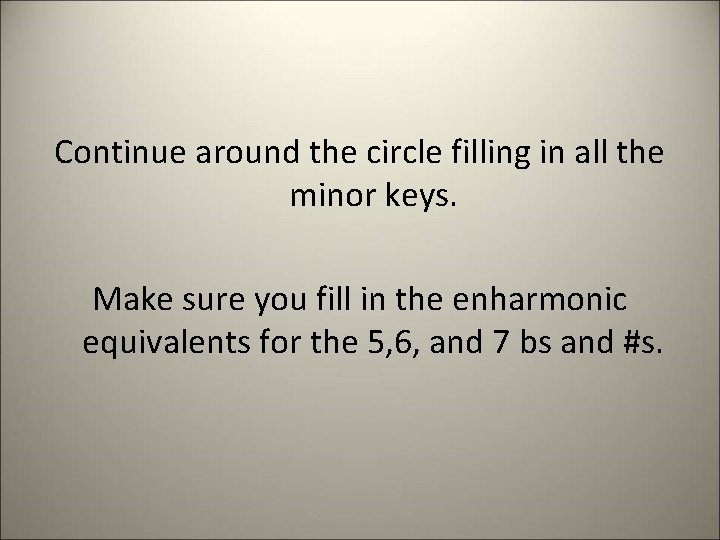
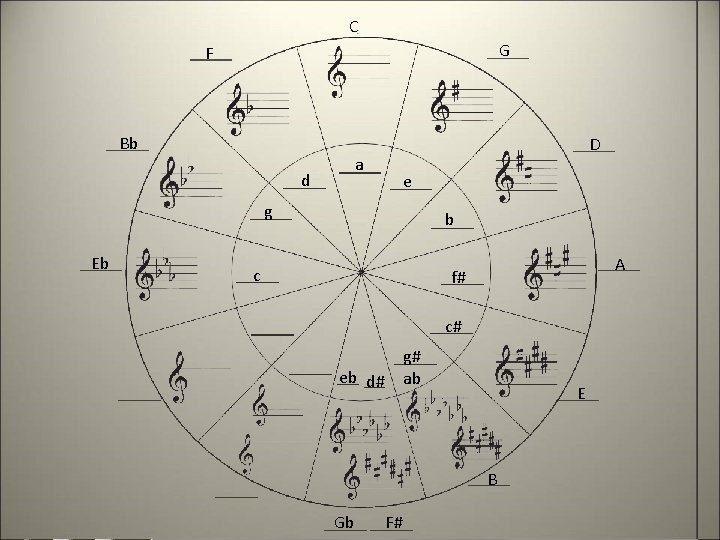
Continue around the circle filling in all the minor keys. Make sure you fill in the enharmonic equivalents for the 5, 6, and 7 bs and #s.
C G F Bb D a d e g b A f# c# g# ab eb d# E B Gb F#
C G F Bb D a d e g Eb b c A f# c# g# ab eb d# E B Gb F#
C G F Bb D a d e g Eb b c c# f Ab A f# g# ab eb d# E B Gb F#
C G F Bb D a d e g Eb b c c# f bb Ab Db C# A f# g# ab eb d# Gb F# E B Cb
Now try it again on a new blank worksheet. Can you remember all the steps?
Just to make things more complicated, there are 3 different ways to play minor scales: 1. Pure 2. Harmonic: Raised 7 th scale degree 3. Melodic: ascending, raised 6 th and 7 th descending, same as pure. Listen to them as I play them on the piano. Let’s see if you can recognize them as I play. Indicate on your paper which one I am playing.