
Cilia and Flagella By Peyton OHara Cilia Flagella
Cilia and Flagella By Peyton O’Hara
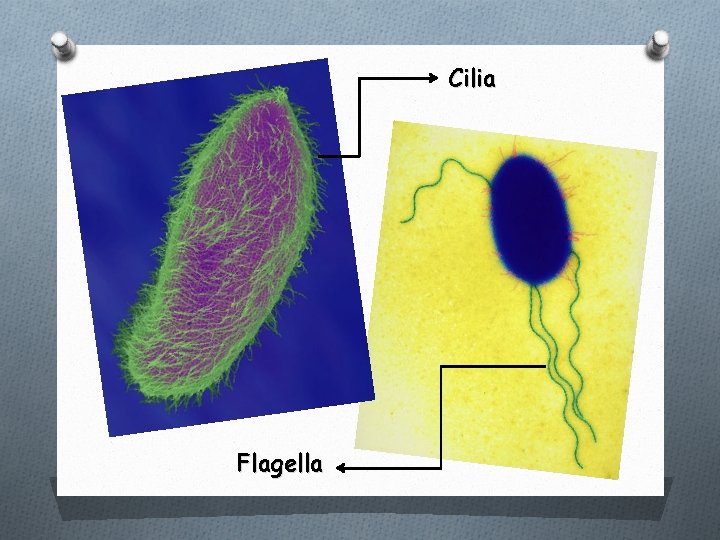
Cilia Flagella
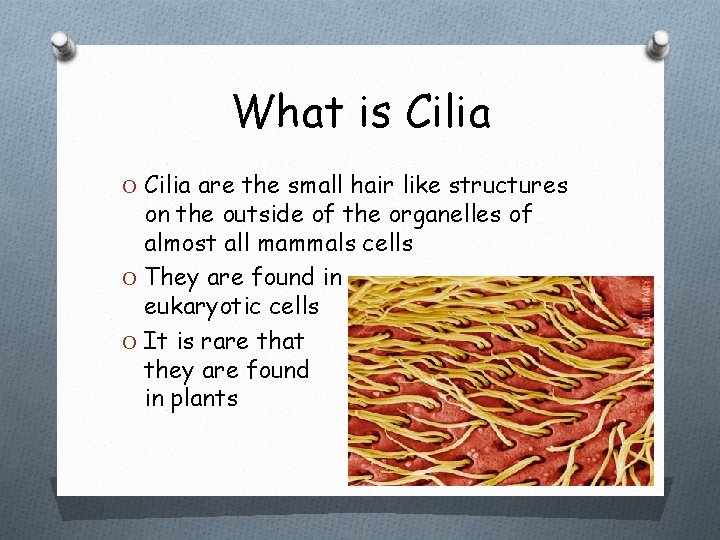
What is Cilia O Cilia are the small hair like structures on the outside of the organelles of almost all mammals cells O They are found in eukaryotic cells O It is rare that they are found in plants
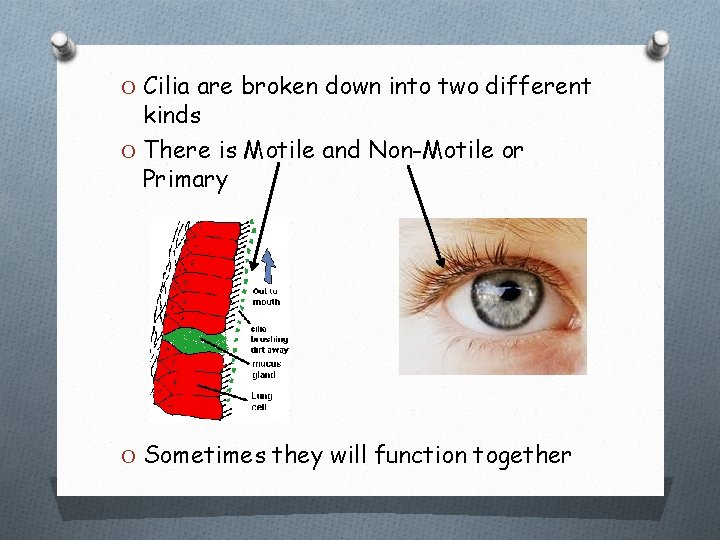
O Cilia are broken down into two different kinds O There is Motile and Non-Motile or Primary O Sometimes they will function together
Motile (moving) Structure O They usually have a wave like motion O They are mostly found in larger eukaryotes (mammals) Function O They are mostly used to move things along in the body O Ex. To move dirt and mucus along in the airways
Places they are found O Lungs O Middle ear O Respiratory tract O Fallopian tubes of females
Non-Motile or Primary Structure O They are on almost every cell in the body O They look like a spike O They is usually one per cell but some have multiple (specialized primary) Function O They can act as sensory antenna for the cell by sending and receiving data
Places they are found O Nose (multiple) O Eye (multiple) O Kidney
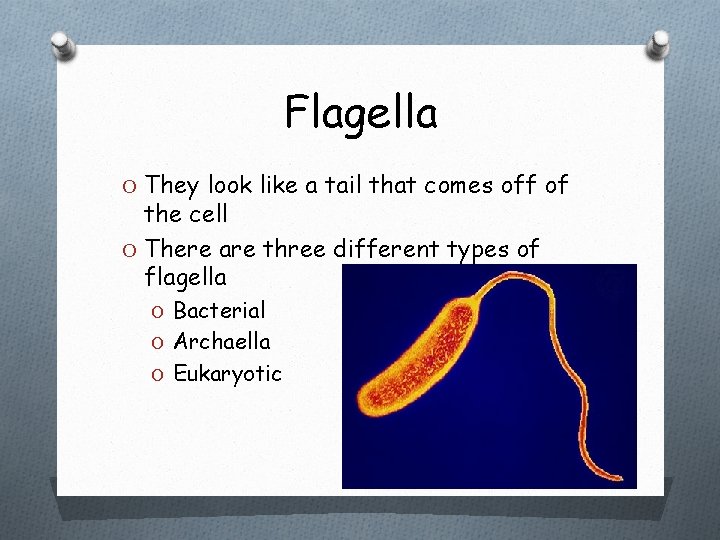
Flagella O They look like a tail that comes off of the cell O There are three different types of flagella O Bacterial O Archaella O Eukaryotic
Structure Bacterial O Has a rotary Archaella O Almost the Eukaryotic O Plant, animal and protist same as motor at the bacterial cells base that can turn it clockwise O There are O They are many of similar to or motile cilia in counterclockwise them and they rotate the ways that O If there is more as a single they move and than one they all unit function rotate separately
Function O A flagella is used to get a cell from place to another O If they are on a stationary cell then they are found in masses and move the fluid along the surface O Ex. A sperm swims by the use of the flagella and the collar cell in a sponge will move water through it by the beating of its flagella
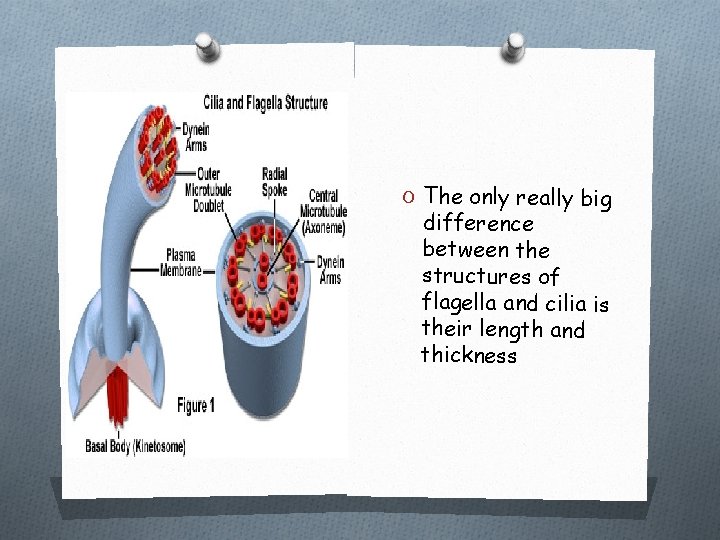
O The only really big difference between the structures of flagella and cilia is their length and thickness
Extra Information O Cilia make water currents that carry food and oxygen past the gills of clams and transport food through the digestive systems of snails. O Flagella can also create the water currents necessary for respiration and circulation in sponges and coelenterates as well.
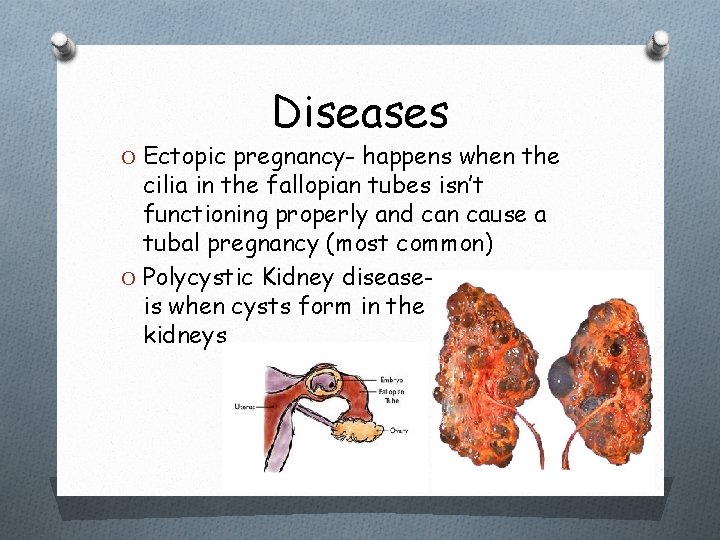
Diseases O Ectopic pregnancy- happens when the cilia in the fallopian tubes isn’t functioning properly and can cause a tubal pregnancy (most common) O Polycystic Kidney diseaseis when cysts form in the kidneys
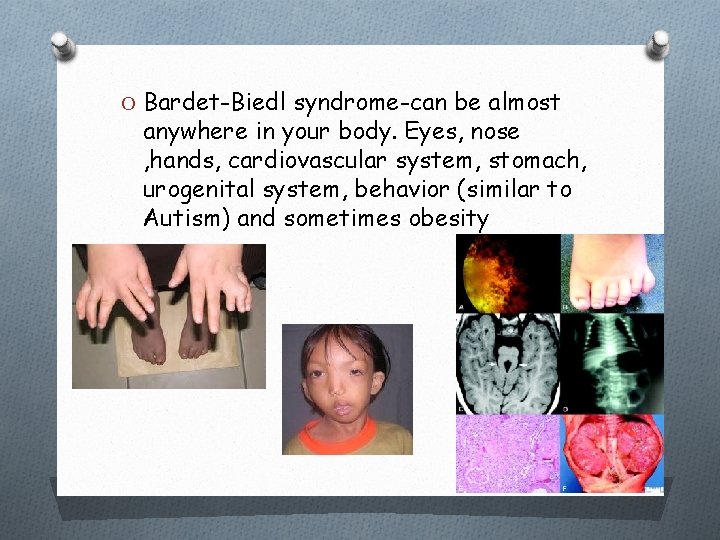
O Bardet-Biedl syndrome-can be almost anywhere in your body. Eyes, nose , hands, cardiovascular system, stomach, urogenital system, behavior (similar to Autism) and sometimes obesity
- Slides: 15