
CHURCH HISTORY LESSON 2 PERIODS OF CHURCH HISTORY

- Slides: 12
CHURCH HISTORY LESSON 2
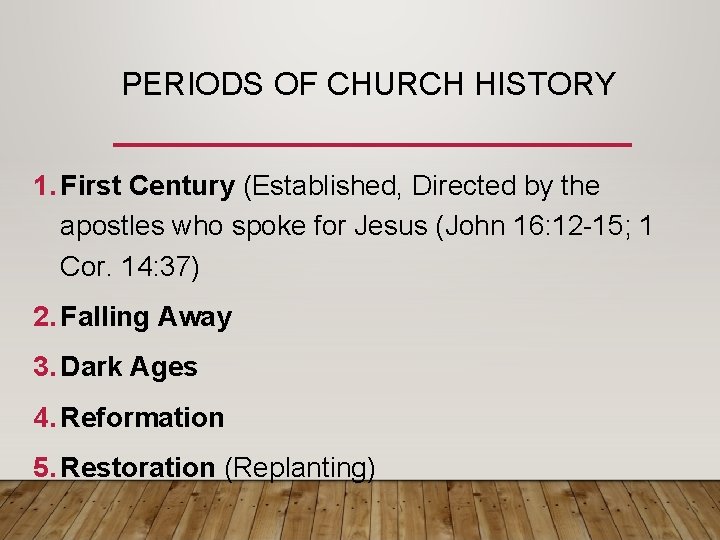
PERIODS OF CHURCH HISTORY 1. First Century (Established, Directed by the apostles who spoke for Jesus (John 16: 12 -15; 1 Cor. 14: 37) 2. Falling Away 3. Dark Ages 4. Reformation 5. Restoration (Replanting)
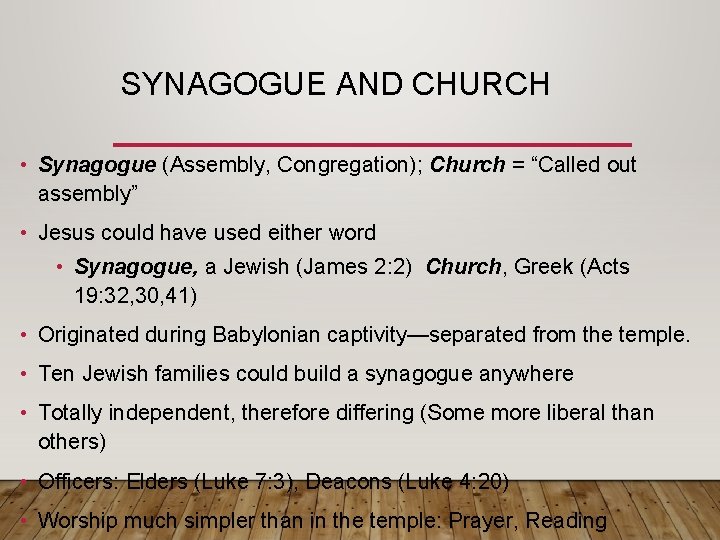
SYNAGOGUE AND CHURCH • Synagogue (Assembly, Congregation); Church = “Called out assembly” • Jesus could have used either word • Synagogue, a Jewish (James 2: 2) Church, Greek (Acts 19: 32, 30, 41) • Originated during Babylonian captivity—separated from the temple. • Ten Jewish families could build a synagogue anywhere • Totally independent, therefore differing (Some more liberal than others) • Officers: Elders (Luke 7: 3), Deacons (Luke 4: 20) • Worship much simpler than in the temple: Prayer, Reading
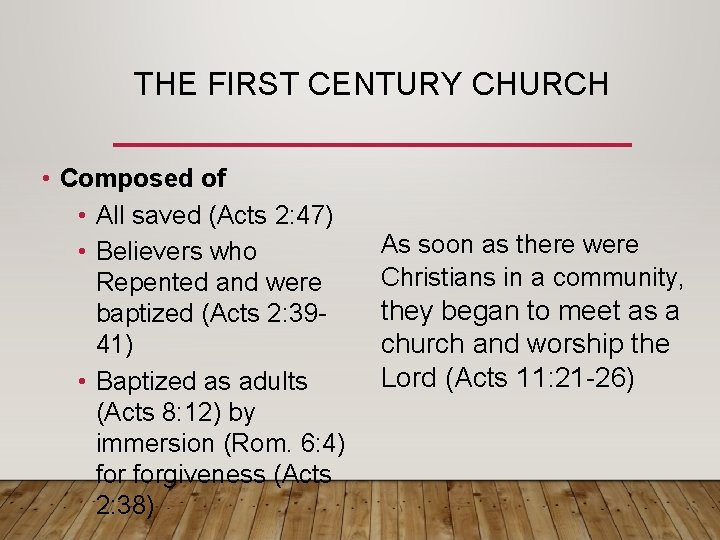
THE FIRST CENTURY CHURCH • Composed of • All saved (Acts 2: 47) • Believers who Repented and were baptized (Acts 2: 3941) • Baptized as adults (Acts 8: 12) by immersion (Rom. 6: 4) forgiveness (Acts 2: 38) As soon as there were Christians in a community, they began to meet as a church and worship the Lord (Acts 11: 21 -26)
THE FIRST CENTURY CHURCH • Organization • Jesus the only head and heaven the only headquarters (Colossians 1: 18) • Local independent, autonomous assemblies • Ruled by plurality of male elders (shepherds, overseers) • Assisted by plurality of male deacons (servants)
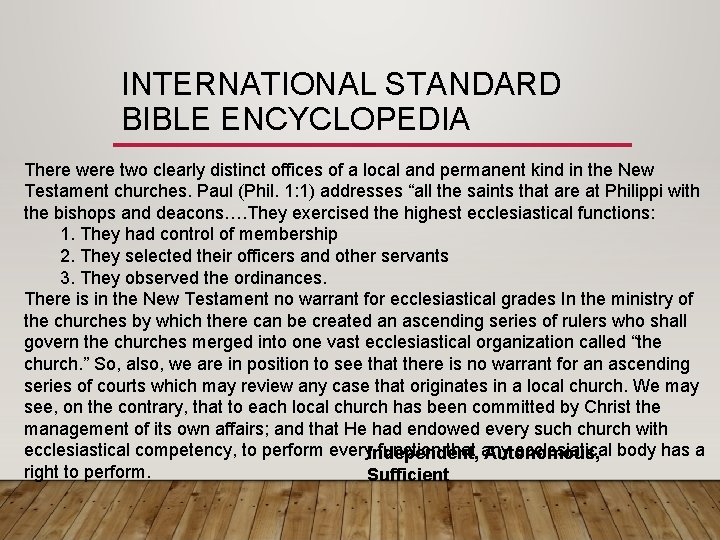
INTERNATIONAL STANDARD BIBLE ENCYCLOPEDIA There were two clearly distinct offices of a local and permanent kind in the New Testament churches. Paul (Phil. 1: 1) addresses “all the saints that are at Philippi with the bishops and deacons…. They exercised the highest ecclesiastical functions: 1. They had control of membership 2. They selected their officers and other servants 3. They observed the ordinances. There is in the New Testament no warrant for ecclesiastical grades In the ministry of the churches by which there can be created an ascending series of rulers who shall govern the churches merged into one vast ecclesiastical organization called “the church. ” So, also, we are in position to see that there is no warrant for an ascending series of courts which may review any case that originates in a local church. We may see, on the contrary, that to each local church has been committed by Christ the management of its own affairs; and that He had endowed every such church with ecclesiastical competency, to perform every. Independent, function that any ecclesiatical body has a Autonomous, right to perform. Sufficient
THE FIRST CENTURY CHURCH • Worship • Singing (Ephesians 5: 19) • Prayer (Acts 2: 42) • Giving (1 Corinthians 16: 1 -2) • Lord’s Supper on 1 st of 20: 7) • Teaching (Acts 20: 7) week (Acts 2: 42;
THE FIRST CENTURY CHURCH • Work • Perfecting (equipping) the Saints (Ephesians 4: 12) • Preaching the gospel (Philippians 1: 5; 4: 16) • Care of their needy (Acts 4: 34 -35; 11: 2930)
TENDENCY TO LEAVE TRUTH OLD TESTAMENT EXAMPLES • Adam and Eve • Tower of Babel after flood • Golden Calf still at Sinai • Joshua 2: 7 -10 • 1 Kings 11: 4 -6
TENDENCY TO LEAVE TRUTH NEW TESTAMENT PREDICTIONS • Acts 20: 29 -32 • 2 Thessalonians 2: 1 -4 • 1 Timothy 4: 1 -3 • 2 Timothy 4: 1 -4
EVIDENCE OF EARLY DEPARTURE • Galatians 1: 6 -9 • 2 John 7 -11 • 1 Timothy 1: 1820 • Jude 3 -4 • 2 Timothy 2: 1718 • Revelation 2: 1415 • 1 John 2: 18 -19 • Revelation 2: 20 • 1 John 4: 1 • Revelation 2: 2
WHY WOULD GOD ALLOW SUCH DEPARTURES? 1 Corinthians 11: 19