
CHS ESAFETY Why esafety Keeping yourself safe online

- Slides: 15
CHS E-SAFETY
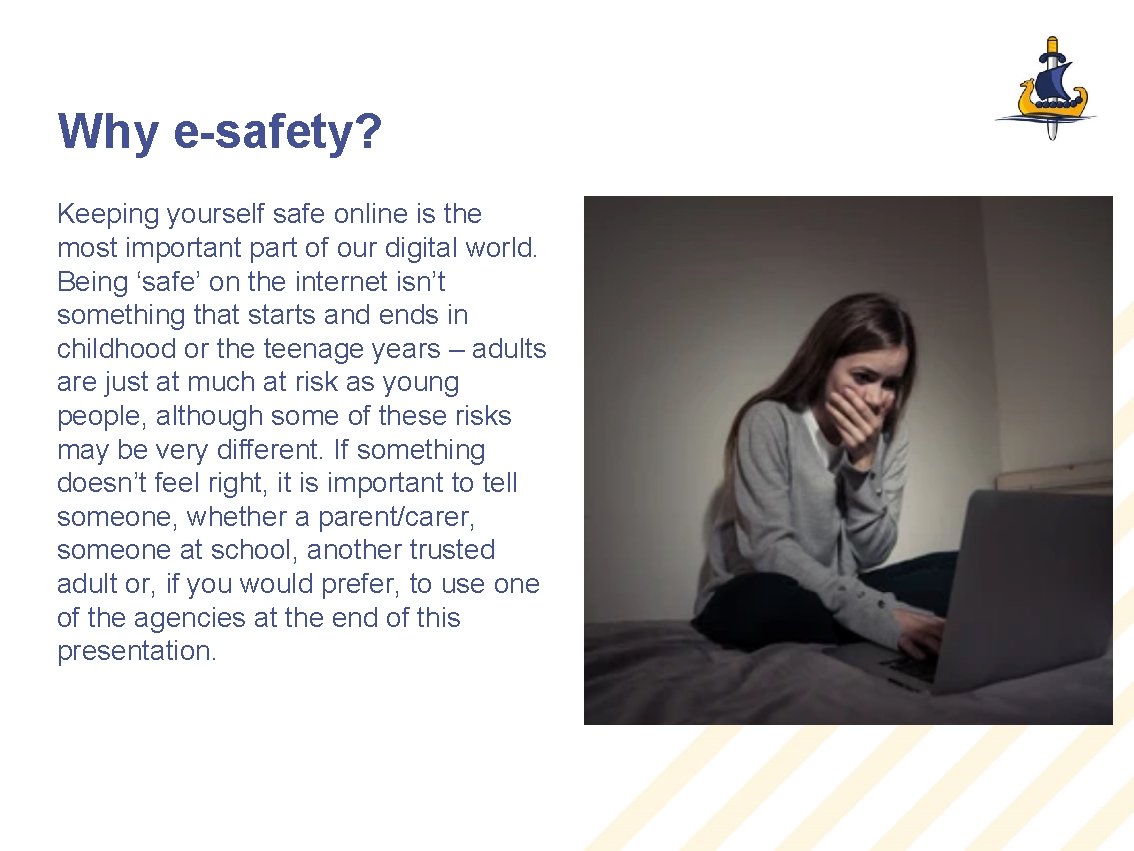
Why e-safety? Keeping yourself safe online is the most important part of our digital world. Being ‘safe’ on the internet isn’t something that starts and ends in childhood or the teenage years – adults are just at much at risk as young people, although some of these risks may be very different. If something doesn’t feel right, it is important to tell someone, whether a parent/carer, someone at school, another trusted adult or, if you would prefer, to use one of the agencies at the end of this presentation.
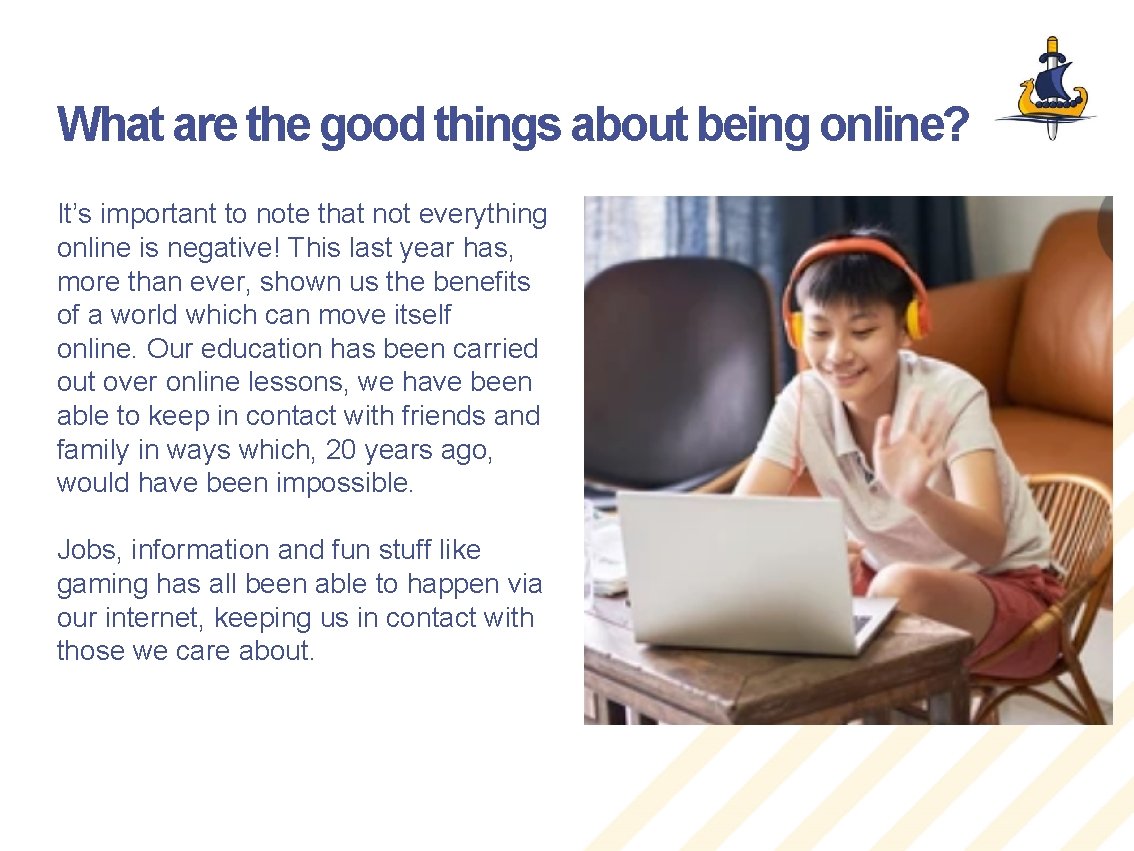
What are the good things about being online? It’s important to note that not everything online is negative! This last year has, more than ever, shown us the benefits of a world which can move itself online. Our education has been carried out over online lessons, we have been able to keep in contact with friends and family in ways which, 20 years ago, would have been impossible. Jobs, information and fun stuff like gaming has all been able to happen via our internet, keeping us in contact with those we care about.
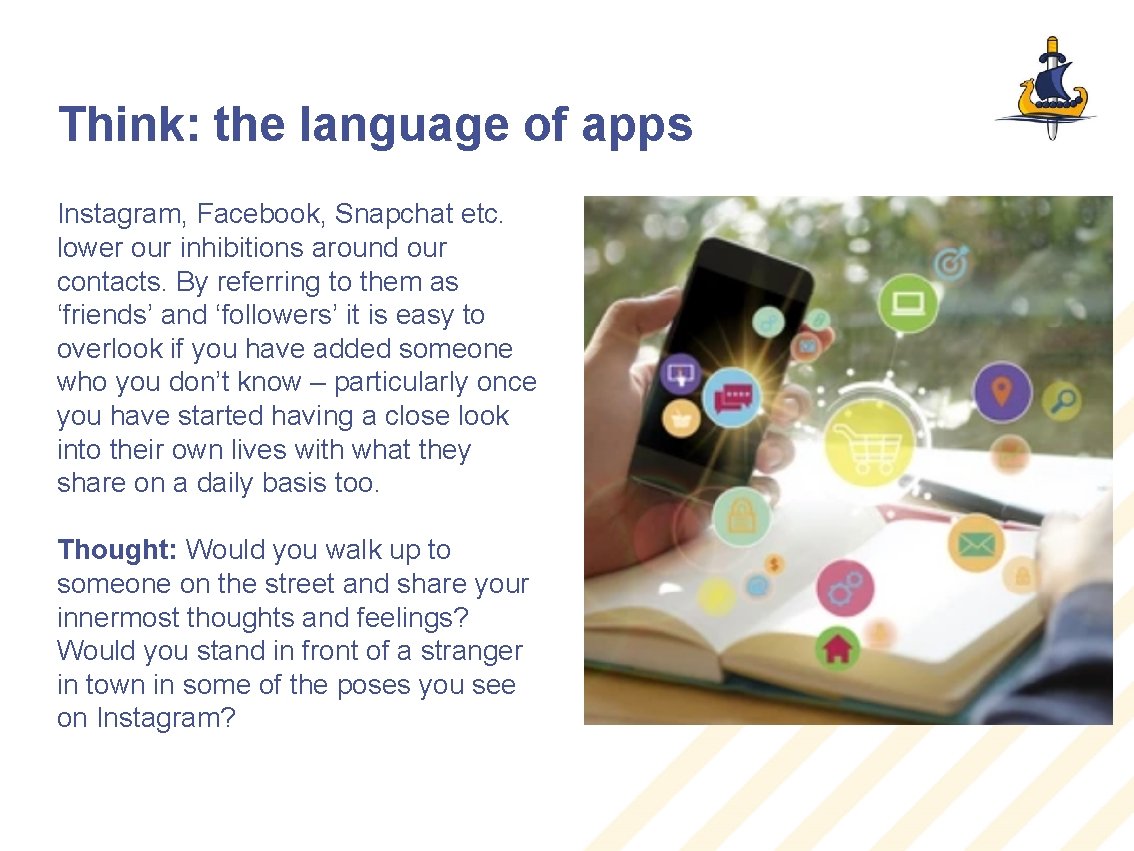
Think: the language of apps Instagram, Facebook, Snapchat etc. lower our inhibitions around our contacts. By referring to them as ‘friends’ and ‘followers’ it is easy to overlook if you have added someone who you don’t know – particularly once you have started having a close look into their own lives with what they share on a daily basis too. Thought: Would you walk up to someone on the street and share your innermost thoughts and feelings? Would you stand in front of a stranger in town in some of the poses you see on Instagram?
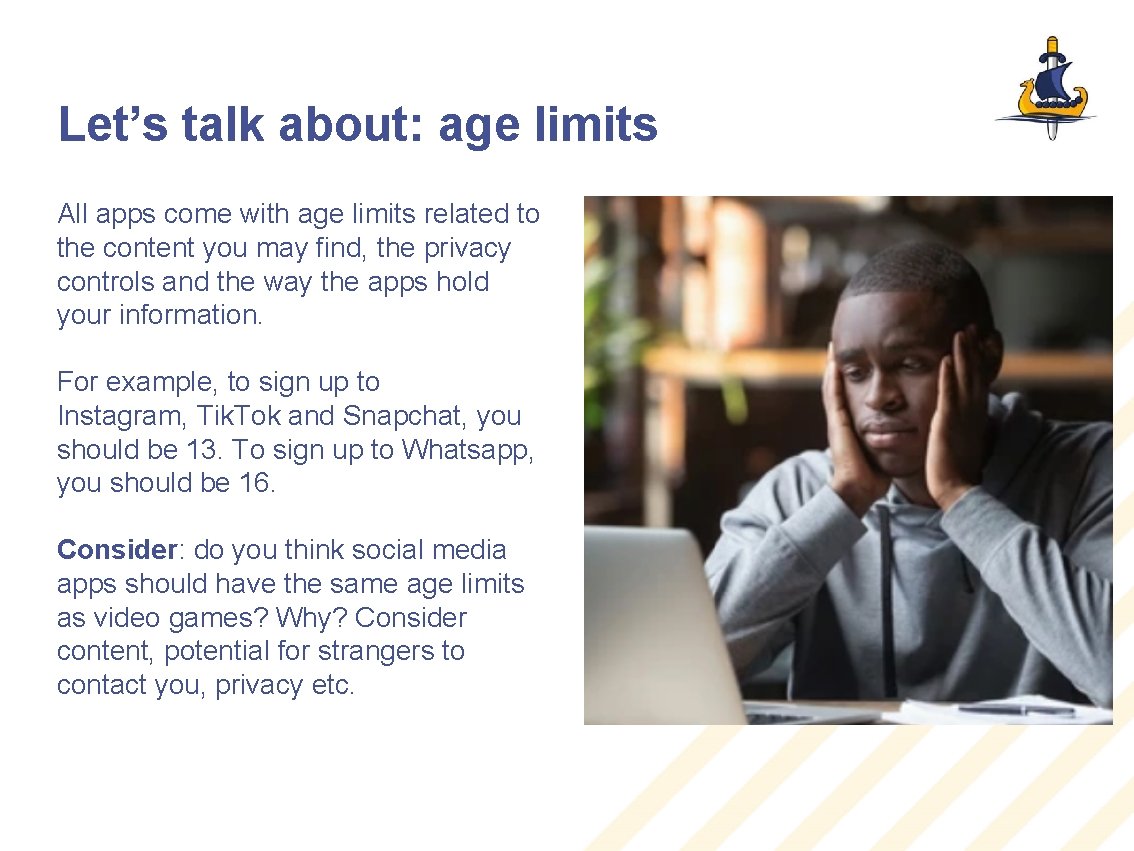
Let’s talk about: age limits All apps come with age limits related to the content you may find, the privacy controls and the way the apps hold your information. For example, to sign up to Instagram, Tik. Tok and Snapchat, you should be 13. To sign up to Whatsapp, you should be 16. Consider: do you think social media apps should have the same age limits as video games? Why? Consider content, potential for strangers to contact you, privacy etc.
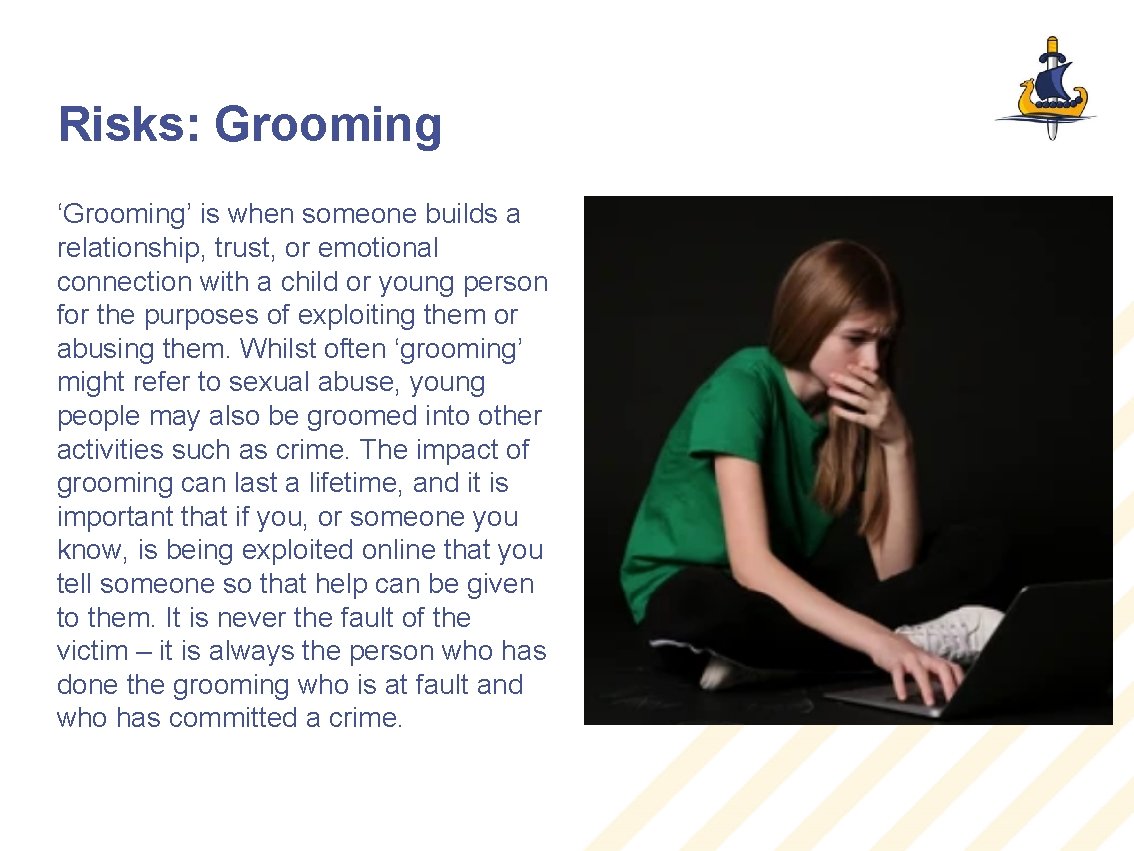
Risks: Grooming ‘Grooming’ is when someone builds a relationship, trust, or emotional connection with a child or young person for the purposes of exploiting them or abusing them. Whilst often ‘grooming’ might refer to sexual abuse, young people may also be groomed into other activities such as crime. The impact of grooming can last a lifetime, and it is important that if you, or someone you know, is being exploited online that you tell someone so that help can be given to them. It is never the fault of the victim – it is always the person who has done the grooming who is at fault and who has committed a crime.
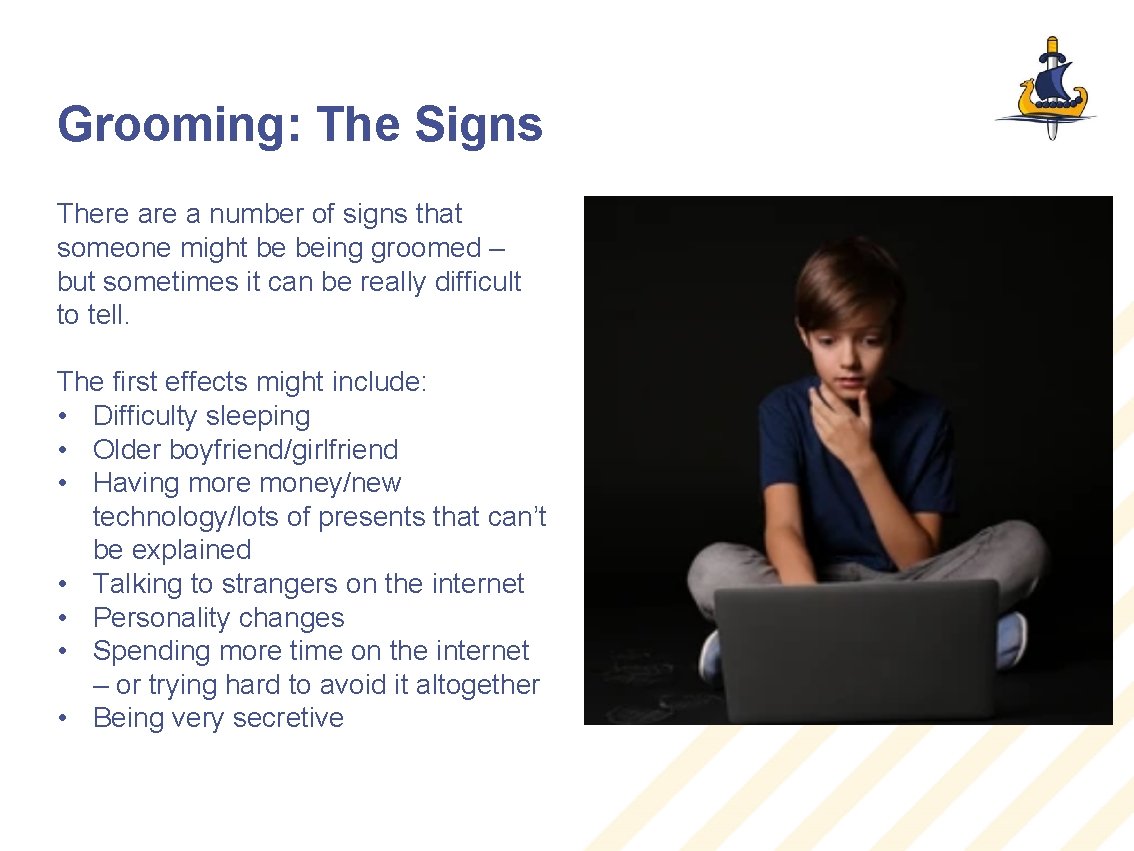
Grooming: The Signs There a number of signs that someone might be being groomed – but sometimes it can be really difficult to tell. The first effects might include: • Difficulty sleeping • Older boyfriend/girlfriend • Having more money/new technology/lots of presents that can’t be explained • Talking to strangers on the internet • Personality changes • Spending more time on the internet – or trying hard to avoid it altogether • Being very secretive
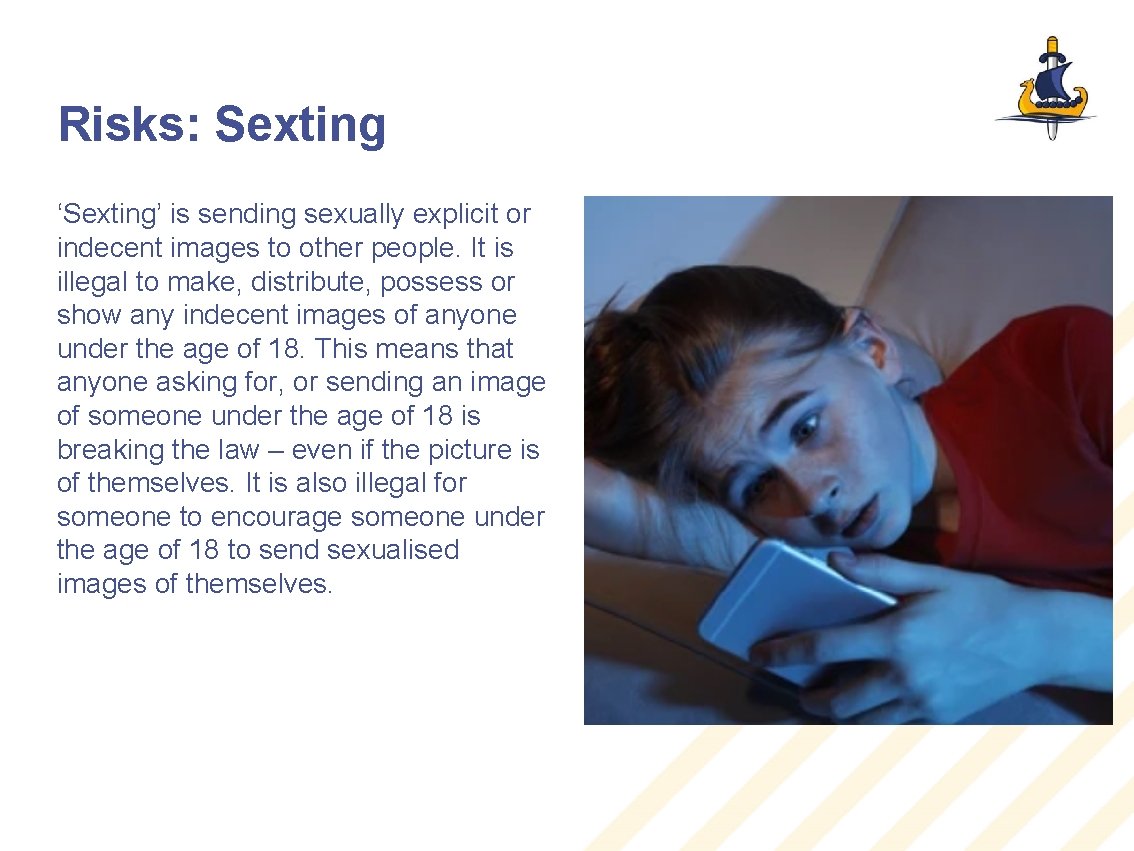
Risks: Sexting ‘Sexting’ is sending sexually explicit or indecent images to other people. It is illegal to make, distribute, possess or show any indecent images of anyone under the age of 18. This means that anyone asking for, or sending an image of someone under the age of 18 is breaking the law – even if the picture is of themselves. It is also illegal for someone to encourage someone under the age of 18 to send sexualised images of themselves.
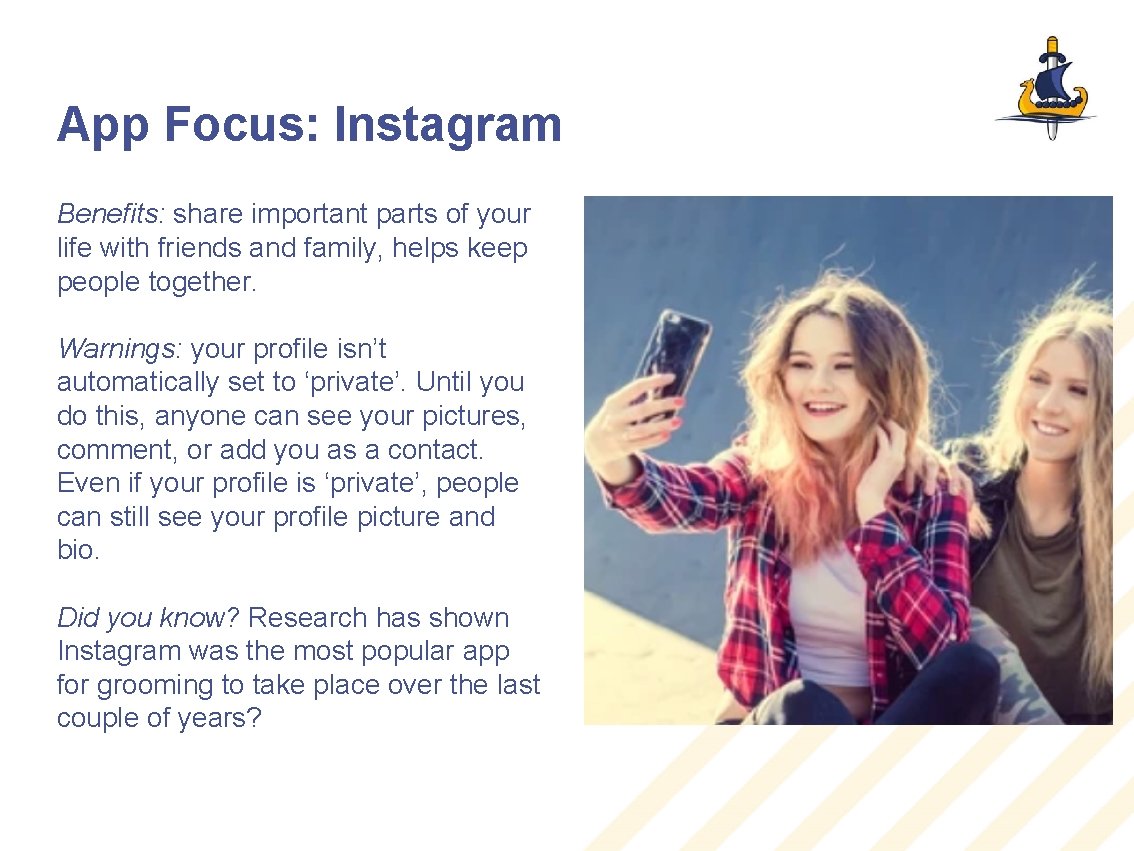
App Focus: Instagram Benefits: share important parts of your life with friends and family, helps keep people together. Warnings: your profile isn’t automatically set to ‘private’. Until you do this, anyone can see your pictures, comment, or add you as a contact. Even if your profile is ‘private’, people can still see your profile picture and bio. Did you know? Research has shown Instagram was the most popular app for grooming to take place over the last couple of years?
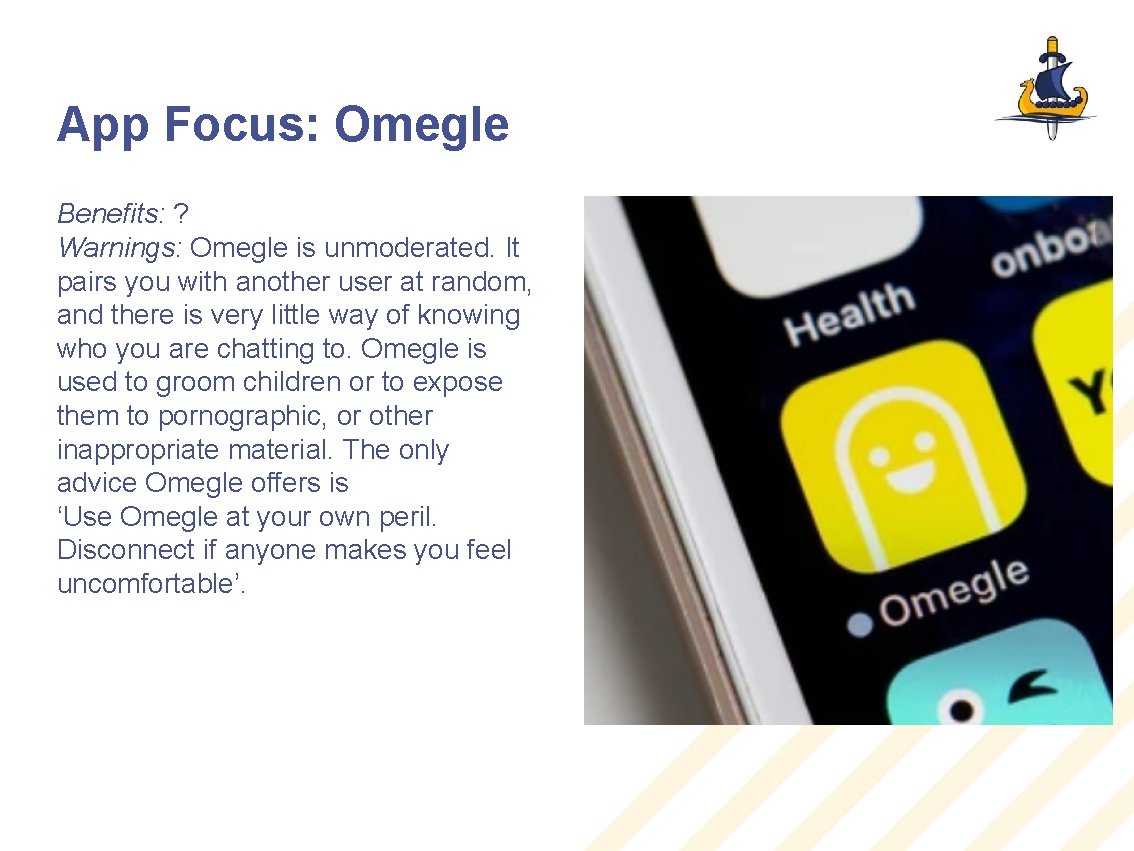
App Focus: Omegle Benefits: ? Warnings: Omegle is unmoderated. It pairs you with another user at random, and there is very little way of knowing who you are chatting to. Omegle is used to groom children or to expose them to pornographic, or other inappropriate material. The only advice Omegle offers is ‘Use Omegle at your own peril. Disconnect if anyone makes you feel uncomfortable’.
The law: online bullying If you are being bullied, or receiving other messages which make you feel uncomfortable, upset or distressed, please speak to a trusted adult or access www. childline. org. uk/getsupport It is important that, if you receive these sort of messages, that you do not delete them – they will provide evidence. Do not reply, but do block the sender immediately. Sending bullying messages online is a crime under the Malicious Communications Act 2003.
Key Stage 3 Video Internet Safety / Online Predators - You. Tube
Key Stage 4 Video Question: when we think about grooming and controlling relationships, do we expect victims to be male or female? Breck's Last Game - You. Tube
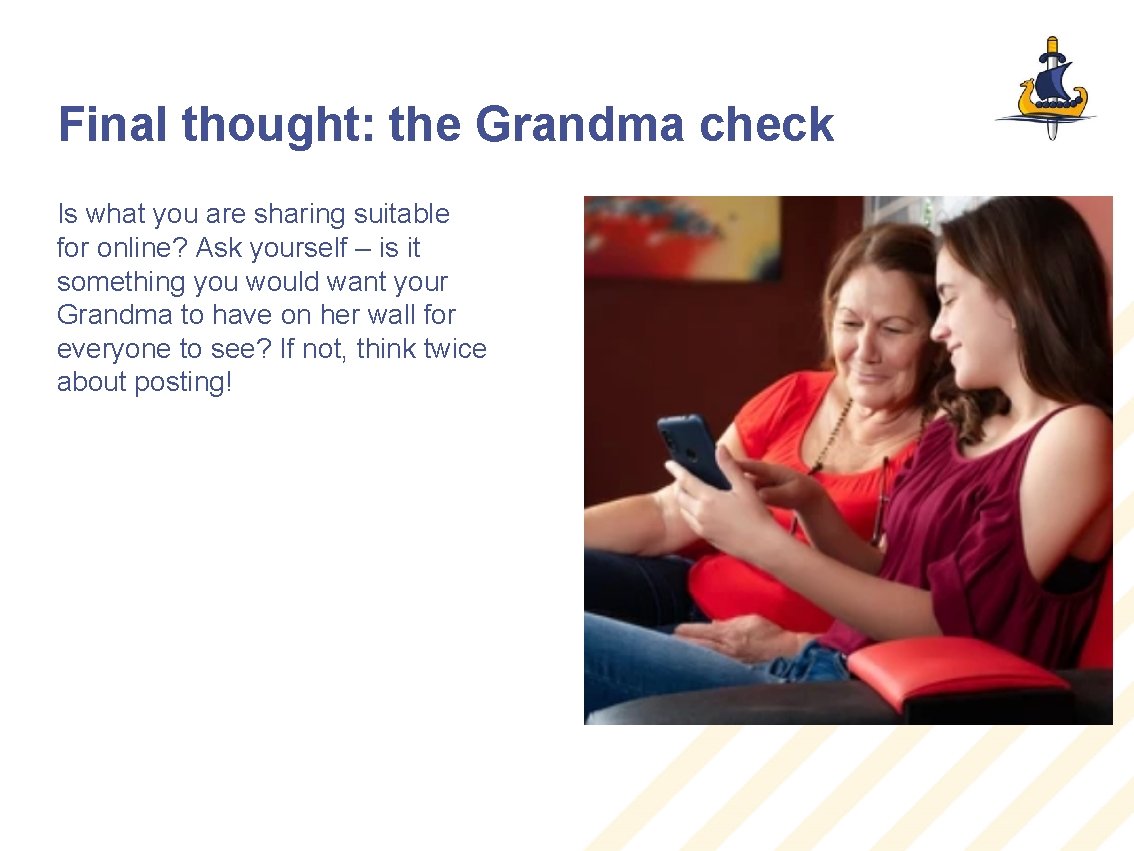
Final thought: the Grandma check Is what you are sharing suitable for online? Ask yourself – is it something you would want your Grandma to have on her wall for everyone to see? If not, think twice about posting!
How can I get support? Speak to your Head of Year, or another trusted member of staff in school if you have been affected by any of the issues in this assembly. www. childline. co. uk also has the facility for you to report online bullying, grooming, if photographs of you have been shared without your consent, or for many other issues that you may face online.