
Chronology A sequence of events in time Example

- Slides: 16
Chronology • A sequence of events in time. • Example: In 1492, Columbus sailed the ocean blue. Then conquistadors, like Cortez and Pizarro, came to the Americas.
Opinion • A belief not based on absolute certainty or positive knowledge, but rather on what seems true, valid or probable in one’s own mind; what one thinks; judgment. • Example: High school is much better than middle school.
Source • The place of origin of information. • Example: The World History 9 Textbook; The New York Times Anne Frank’s Diary
Primary Source • First-hand accounts of historical events, eras, et cetera. • Example: A letter written by your Great-Great Aunt Melba to your Great-Great Uncle Herman about her work in an airplane factory during World War II.
Secondary Source • Information gained second-hand (the person who record it was not present to witness the event, and may not have been living at the time. ) • Example: Your essay explaining the ideas that Italian writer Niccolo Machiavelli discusses in his book, The Prince.
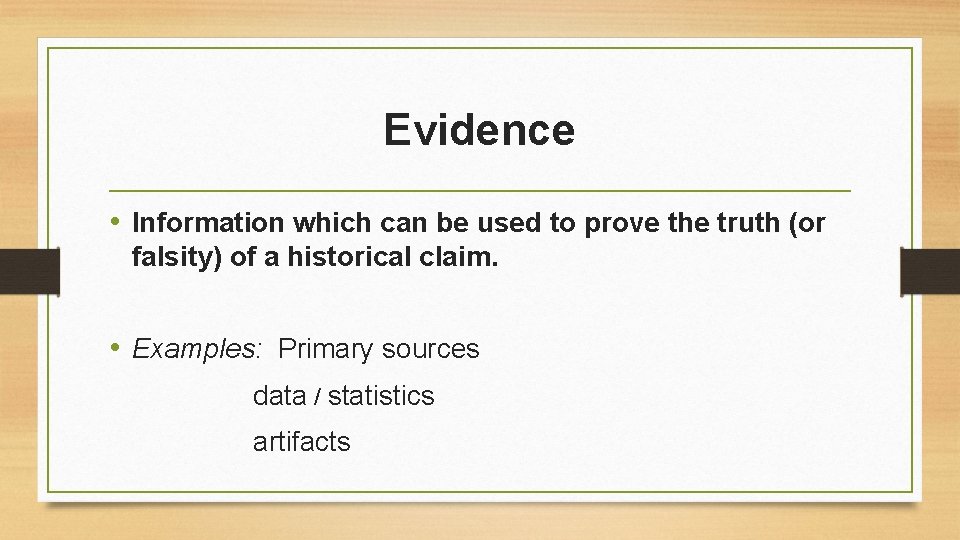
Evidence • Information which can be used to prove the truth (or falsity) of a historical claim. • Examples: Primary sources data / statistics artifacts
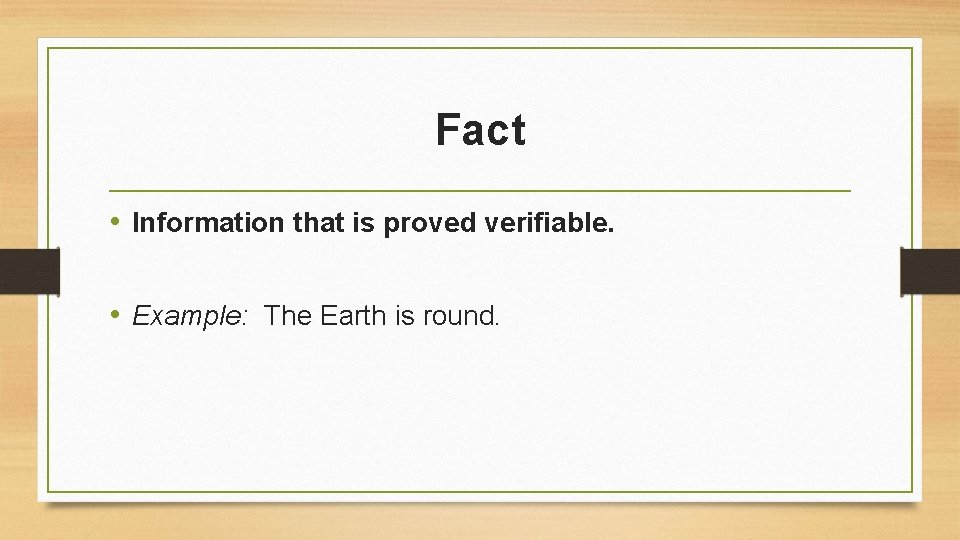
Fact • Information that is proved verifiable. • Example: The Earth is round.
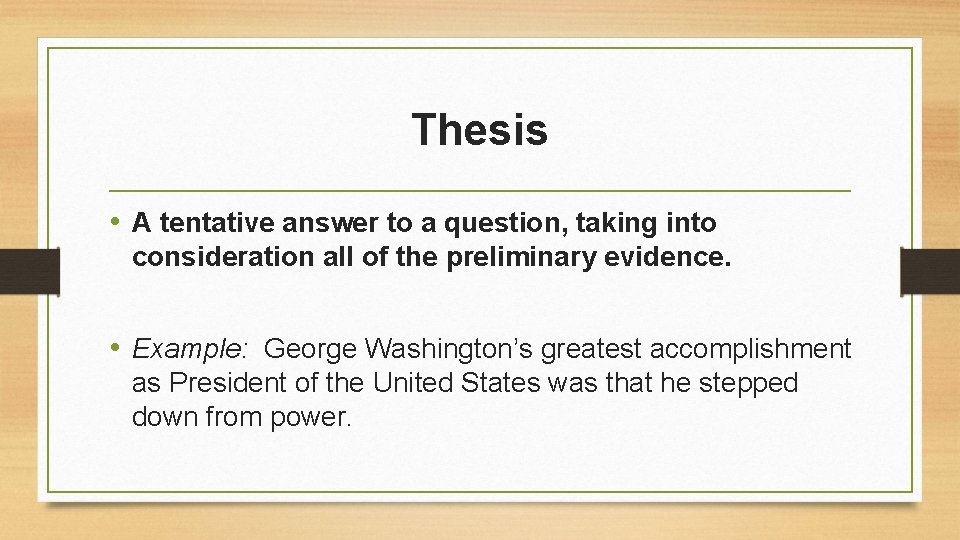
Thesis • A tentative answer to a question, taking into consideration all of the preliminary evidence. • Example: George Washington’s greatest accomplishment as President of the United States was that he stepped down from power.
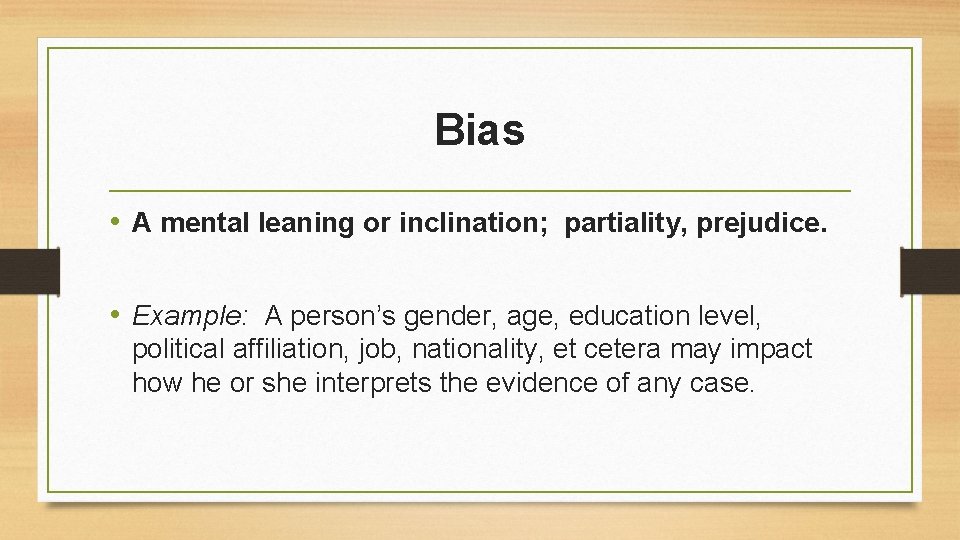
Bias • A mental leaning or inclination; partiality, prejudice. • Example: A person’s gender, age, education level, political affiliation, job, nationality, et cetera may impact how he or she interprets the evidence of any case.
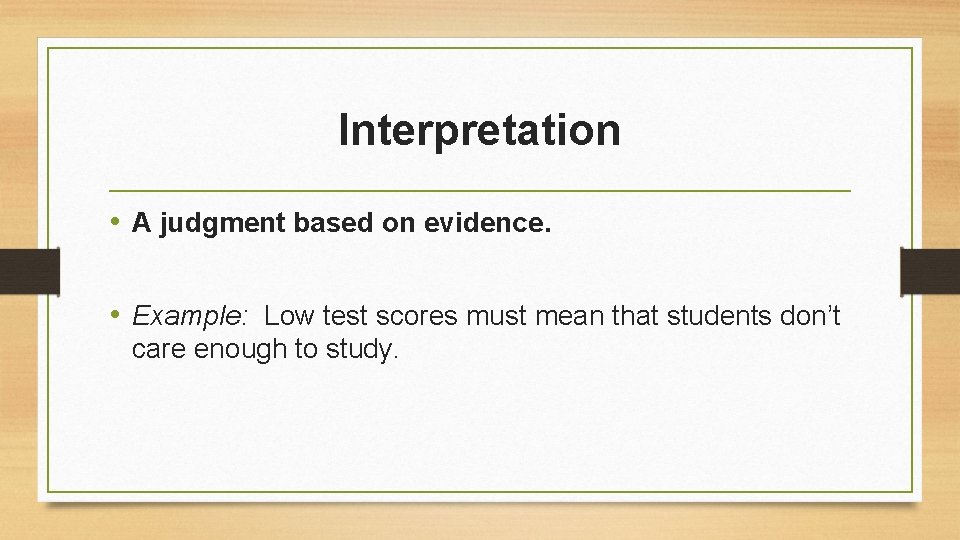
Interpretation • A judgment based on evidence. • Example: Low test scores must mean that students don’t care enough to study.
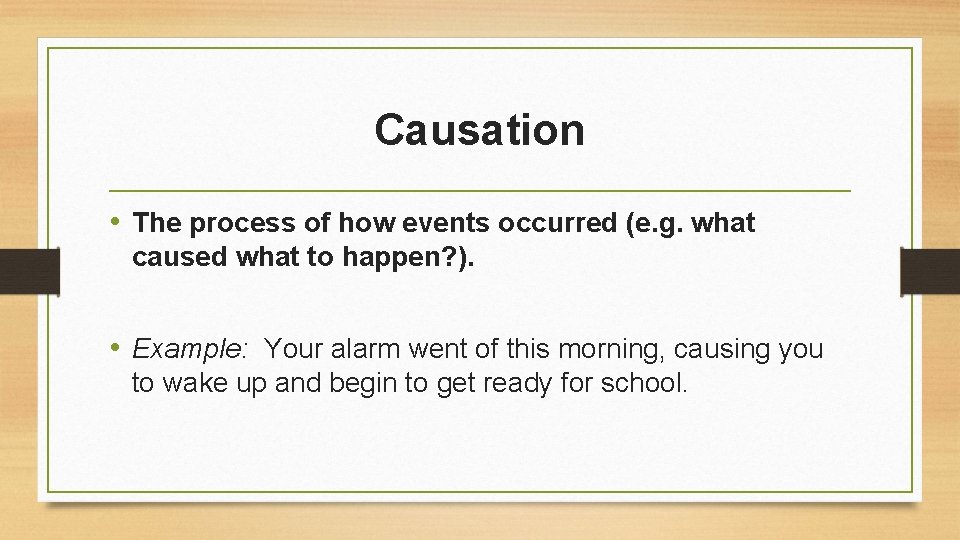
Causation • The process of how events occurred (e. g. what caused what to happen? ). • Example: Your alarm went of this morning, causing you to wake up and begin to get ready for school.
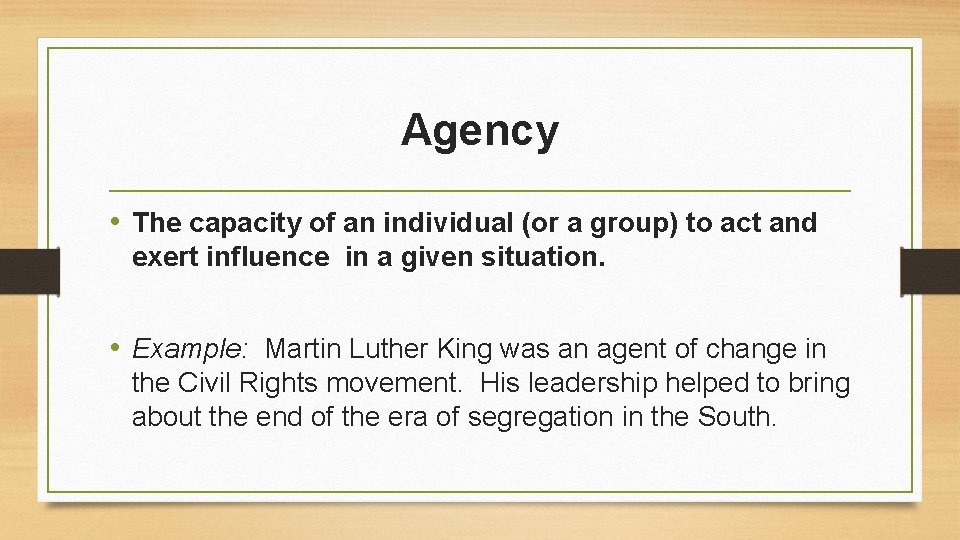
Agency • The capacity of an individual (or a group) to act and exert influence in a given situation. • Example: Martin Luther King was an agent of change in the Civil Rights movement. His leadership helped to bring about the end of the era of segregation in the South.
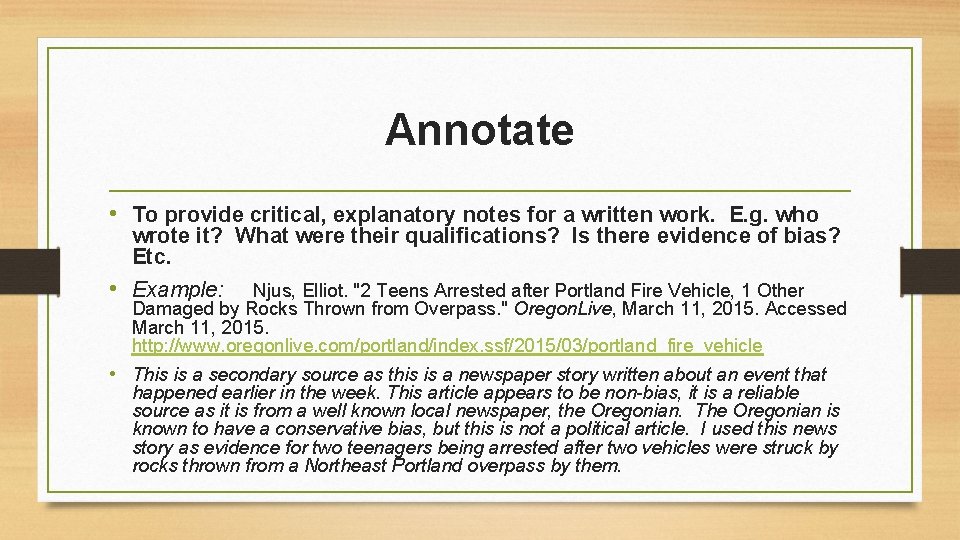
Annotate • To provide critical, explanatory notes for a written work. E. g. who wrote it? What were their qualifications? Is there evidence of bias? Etc. • Example: Njus, Elliot. "2 Teens Arrested after Portland Fire Vehicle, 1 Other Damaged by Rocks Thrown from Overpass. " Oregon. Live, March 11, 2015. Accessed March 11, 2015. http: //www. oregonlive. com/portland/index. ssf/2015/03/portland_fire_vehicle • This is a secondary source as this is a newspaper story written about an event that happened earlier in the week. This article appears to be non-bias, it is a reliable source as it is from a well known local newspaper, the Oregonian. The Oregonian is known to have a conservative bias, but this is not a political article. I used this news story as evidence for two teenagers being arrested after two vehicles were struck by rocks thrown from a Northeast Portland overpass by them.
Context • The whole situation, background, or environment relevant to a particular event, person, creation, etc. • Example: In order to understand why Thomas Jefferson penned the Declaration of Independence, one must first understand that he was writing during the historical era known as the Enlightenment.
Citation • Documentation of a source to which you have referred. • Example: In history classes, we cite our sources using a style called Chicago. It hails from the University of Chicago. In English classes, you cite your sources using MLA.
Partner Assignment • With your partner craft a story that uses AT MINIMUM 10 of your intro vocab words. • Yes, your story must use the words as they are defined in your notes. • Yes, you may modify their form (e. g. cause instead of causation) if it works better for your paragraph. • Yes, your story must MAKE SENSE! • Yes, a good story tends to be around 2/3 of a page long. • Yes, your story may be fiction or non-fiction.