
CHRONIC VISUAL LOSS DR ESSAM OSMAN ASSISTANT PROFESSOR




- Slides: 34
CHRONIC VISUAL LOSS DR ESSAM OSMAN ASSISTANT PROFESSOR GLAUCOMA CONSULTANT Email: essamosman@hotmail. com www. ksu. edu. sa/68905
CHRONIC VISUAL LOSS Causes of slowly progressive visual loss in an adult patient 1. Glaucoma. 2. Cataract. 3. Macular degeneration. 4. Diabetic retinopathy.
CHRONIC VISUAL LOSS 1. Measure intraocular pressure with a tonometer 2. Evaluate the nerve head, classifying it as normal, or abnormal 3. Evaluate the clarity of the lens 4. Evaluate the function and appearance of the macula.
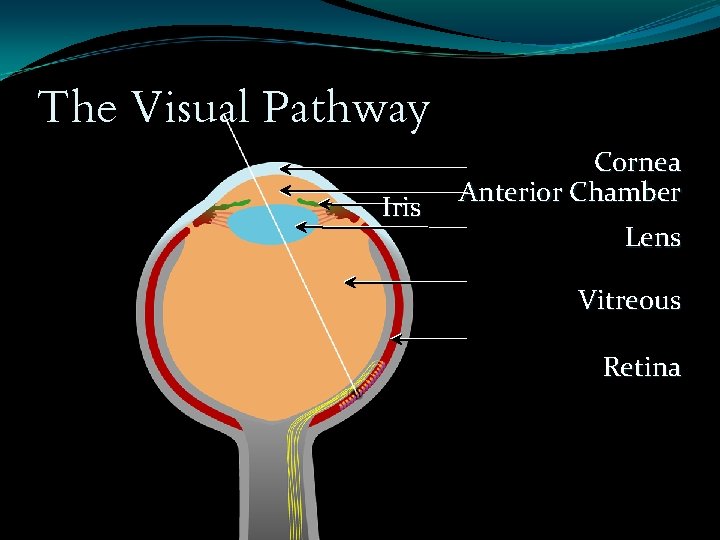
The Visual Pathway Iris Cornea Anterior Chamber Lens Vitreous Retina
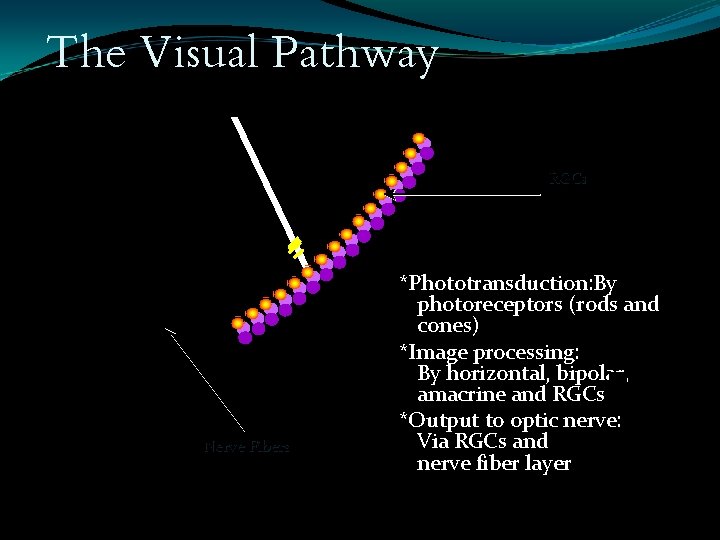
The Visual Pathway RGCs Nerve Fibers *Phototransduction: By photoreceptors (rods and cones) *Image processing: By horizontal, bipolar, amacrine and RGCs *Output to optic nerve: Via RGCs and nerve fiber layer
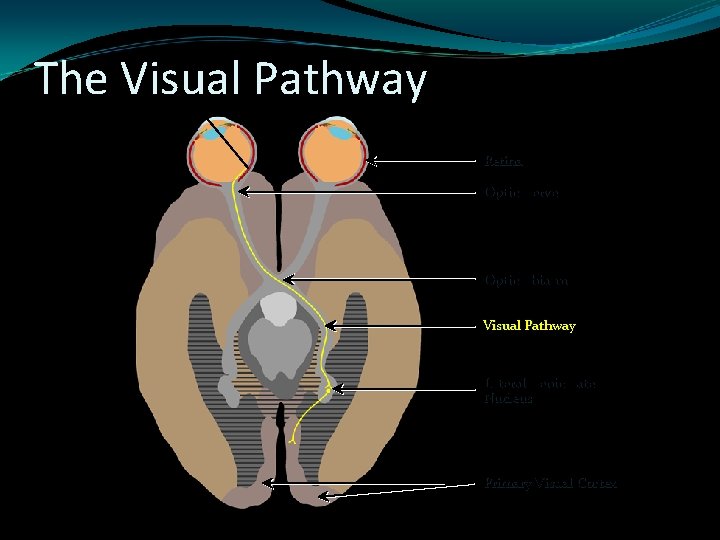
The Visual Pathway Retina Optic Nerve Optic Chiasm Visual Pathway Lateral Geniculate Nucleus Primary Visual Cortex
GLAUCOMA *A major cause of blindness. *Often A symptomatic; in early stage. *Damage is irreversible. *Effective treatment is available.
TYPES OF GLAUCOMA Acute glaucoma Chronic glaucoma Congenital glaucoma
GLAUCOMA EGS definition: progressive optic neuropathies, that have in common characteristic morphological changes at the optic nerve head and retinal fiber layer in the absence of other ocular disease or congenital anomalies. Progressive retinal ganglion cell death and visual field loss are associated with these changes. ” — EGS, Terminology and Guidelines for Glaucoma, 2 nd Edition, 2003
GLAUCOMA RELEVANCE ØGlaucoma is the second most important cause of blindness in the United States and the single most important cause of blindness in African Americans. ØIf glaucoma is detected early and treated medically or surgically, blindness can be prevented. Most patients with early glaucoma are asymptomatic.
GLAUCOMA ØThe great majority of patients lack pain, ocular inflammation. ØMuch peripheral vision can be lost before the patient notices visual impairment.
GLAUCOMA ØBecause glaucoma involves elevated pressure in the eye, routine measurement of Intraocular pressure is a valuable means of screening for glaucoma. Øelevation of intraocular pressure can lead to optic nerve damage; therefore, examination of the optic nerve is another way to detect glaucoma.
Email: essamosman@hotmail. com www. ksu. edu. sa/68905
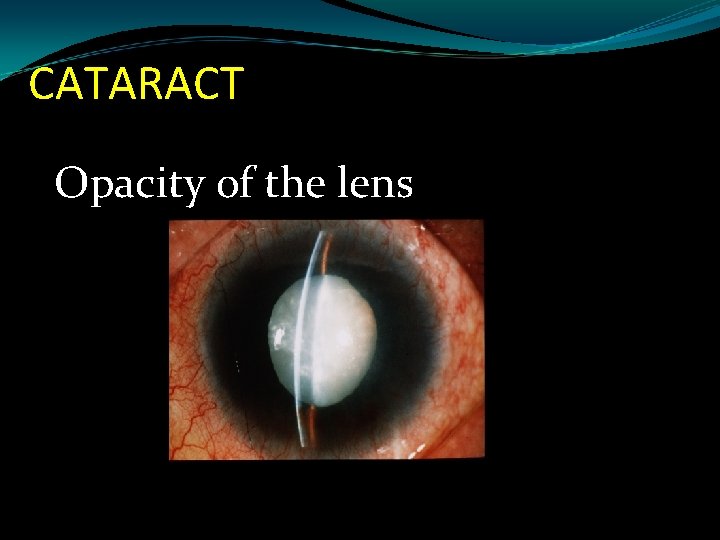
CATARACT Opacity of the lens
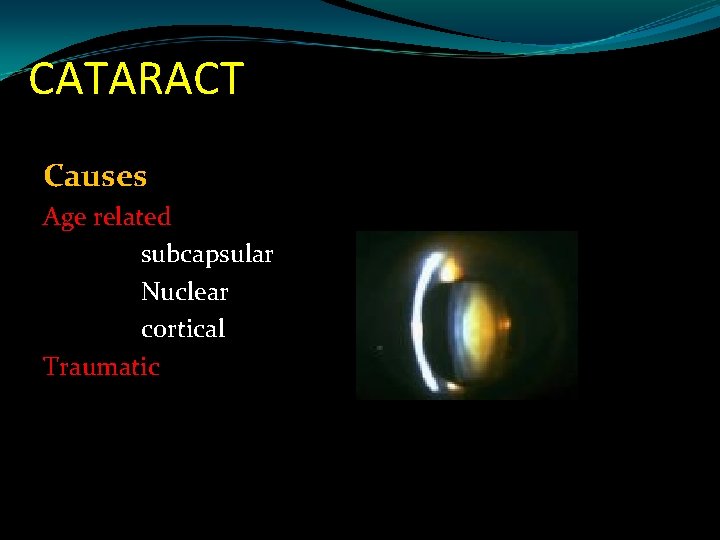
CATARACT Causes Age related subcapsular Nuclear cortical Traumatic
CATARACT Metabolic diabetic galactosemia Glacokinase defiency Mannosidosis Fabrys disease Lowes syndrome Hypocacemic syndrome
CATARACT Cataratogenic drugs Chlorpromazine Miotics Myleran Amiodarone gold
CATARACT Complicated cataract Uveitis Retinal dystrophy, retinitis pigmentosa High myopia Acute glaucoma Intrauterine causes rubellatoxo, cmv Syndroms dowen syndrome, wernerrothman Heredetary 1/3
CATARACT Classification 1 -morphologic nuclear, subcapsular, cortical 2 -maturity immature, itumescent, hypermature 3 -age of onset cong, infantile, presenile
CATARACT Management Congenital lens aspiration±IOL Aquired ICCE ECCE IOL PHACO IOL
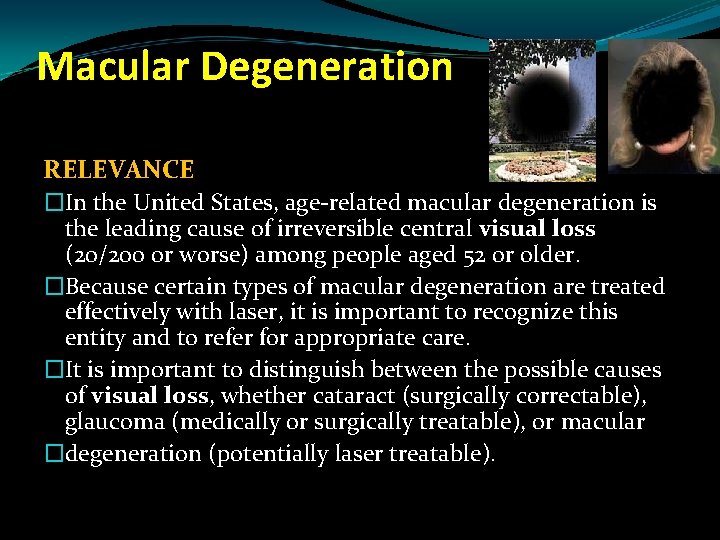
Macular Degeneration RELEVANCE �In the United States, age-related macular degeneration is the leading cause of irreversible central visual loss (20/200 or worse) among people aged 52 or older. �Because certain types of macular degeneration are treated effectively with laser, it is important to recognize this entity and to refer for appropriate care. �It is important to distinguish between the possible causes of visual loss, whether cataract (surgically correctable), glaucoma (medically or surgically treatable), or macular �degeneration (potentially laser treatable).
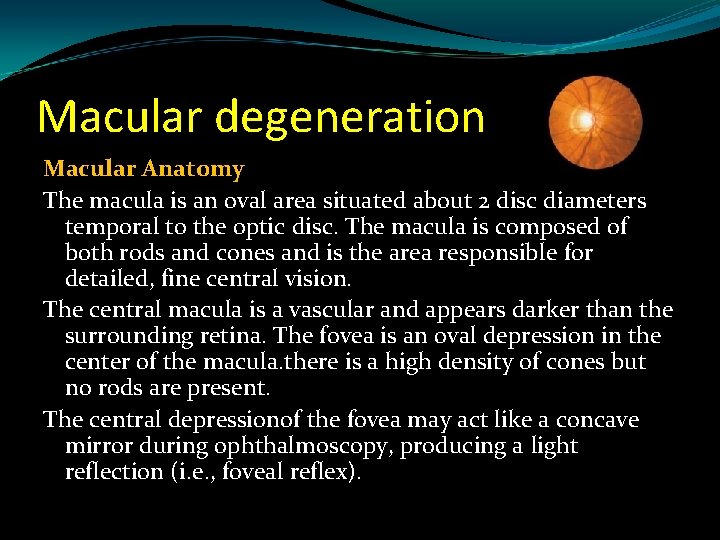
Macular degeneration Macular Anatomy The macula is an oval area situated about 2 disc diameters temporal to the optic disc. The macula is composed of both rods and cones and is the area responsible for detailed, fine central vision. The central macula is a vascular and appears darker than the surrounding retina. The fovea is an oval depression in the center of the macula. there is a high density of cones but no rods are present. The central depressionof the fovea may act like a concave mirror during ophthalmoscopy, producing a light reflection (i. e. , foveal reflex).
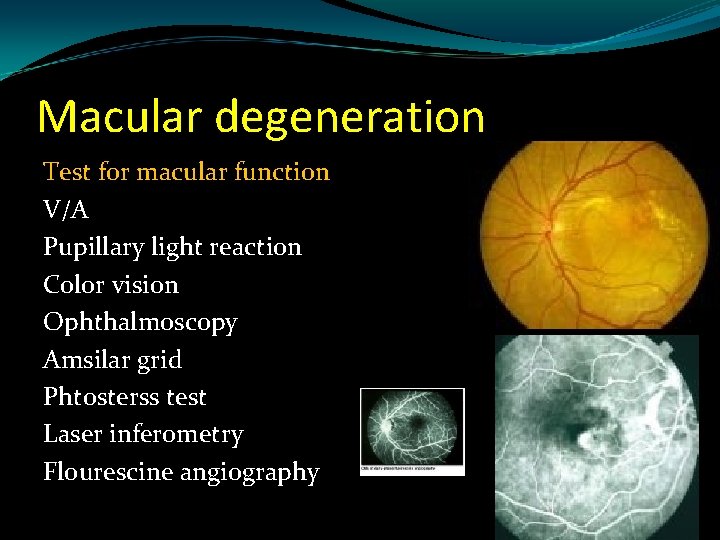
Macular degeneration Test for macular function V/A Pupillary light reaction Color vision Ophthalmoscopy Amsilar grid Phtosterss test Laser inferometry Flourescine angiography
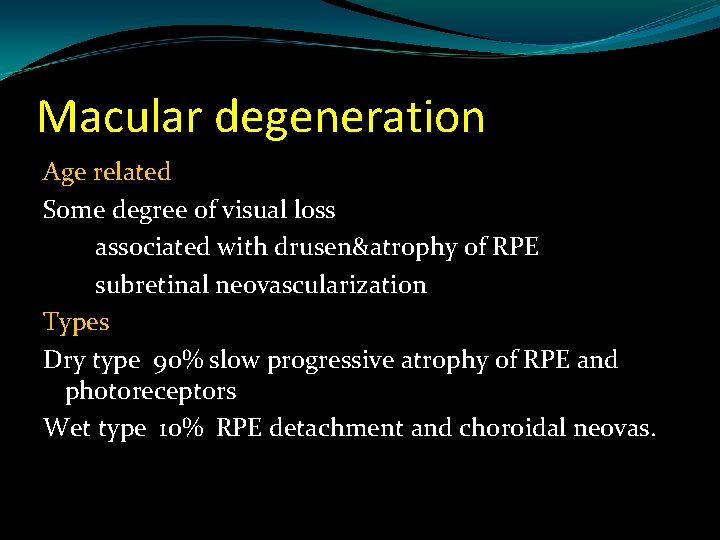
Macular degeneration Age related Some degree of visual loss associated with drusen&atrophy of RPE subretinal neovascularization Types Dry type 90% slow progressive atrophy of RPE and photoreceptors Wet type 10% RPE detachment and choroidal neovas.
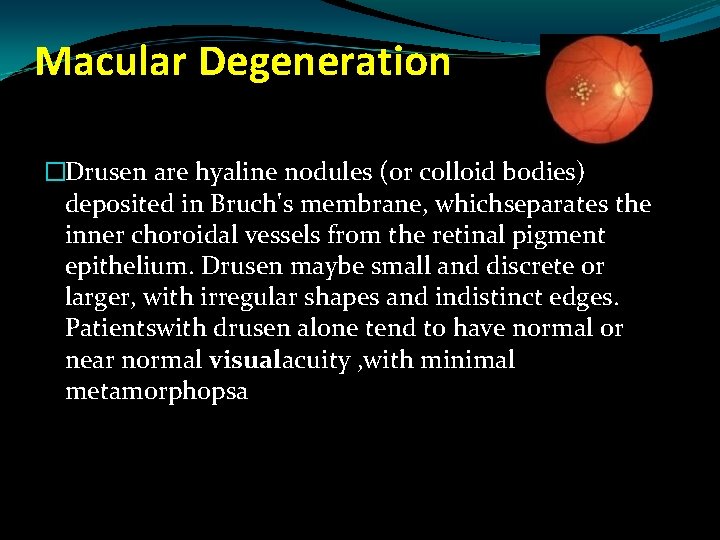
Macular Degeneration �Drusen are hyaline nodules (or colloid bodies) deposited in Bruch's membrane, whichseparates the inner choroidal vessels from the retinal pigment epithelium. Drusen maybe small and discrete or larger, with irregular shapes and indistinct edges. Patientswith drusen alone tend to have normal or near normal visualacuity , with minimal metamorphopsa
Macular degeneration As the most common cause of vision loss among people over the age of 60, macular degeneration impacts millions of older adults every year. The disease affects central vision and can sometimes make it difficult to read, drive or perform other activities requiring fine, detailed vision.
macular degeneration � What Risk Factors You Can't Control �Age �Race �Gender �Genetics
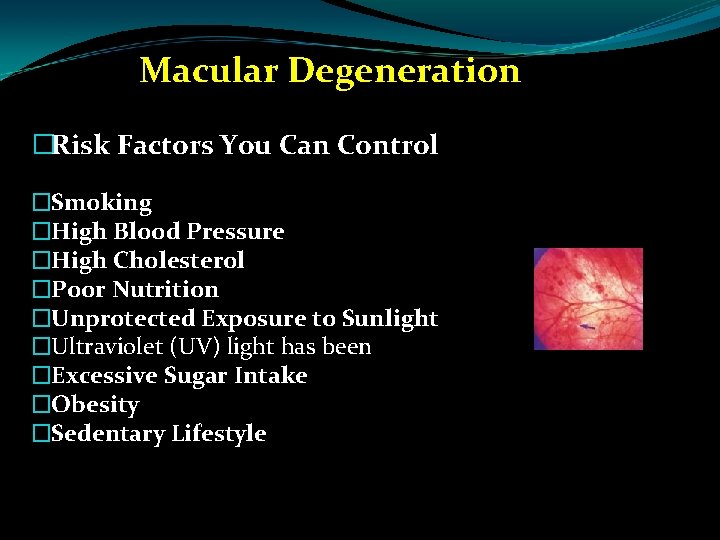
Macular Degeneration �Risk Factors You Can Control �Smoking �High Blood Pressure �High Cholesterol �Poor Nutrition �Unprotected Exposure to Sunlight �Ultraviolet (UV) light has been �Excessive Sugar Intake �Obesity �Sedentary Lifestyle
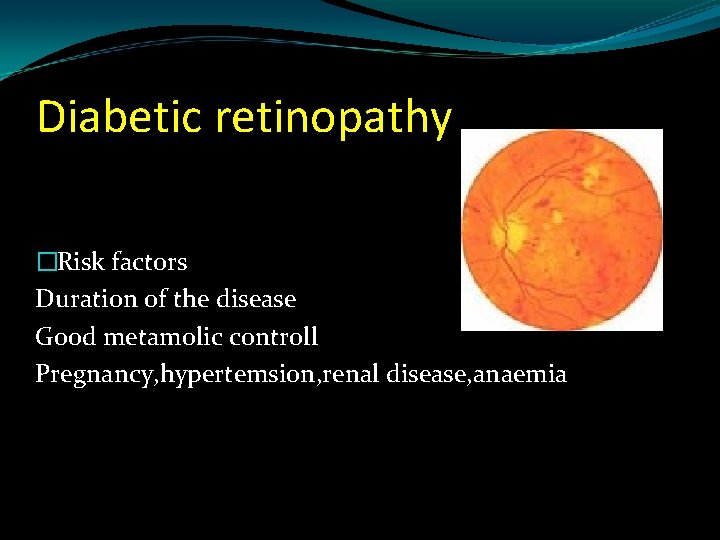
Diabetic retinopathy �Risk factors Duration of the disease Good metamolic controll Pregnancy, hypertemsion, renal disease, anaemia
Diabetic retinopathy �Pathogenesis Microvascular occlusion Microvascular leakage
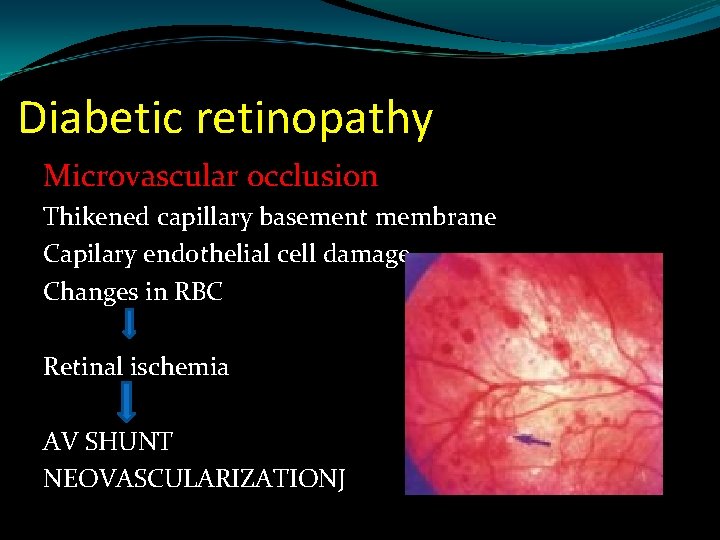
Diabetic retinopathy Microvascular occlusion Thikened capillary basement membrane Capilary endothelial cell damage Changes in RBC Retinal ischemia AV SHUNT NEOVASCULARIZATIONJ
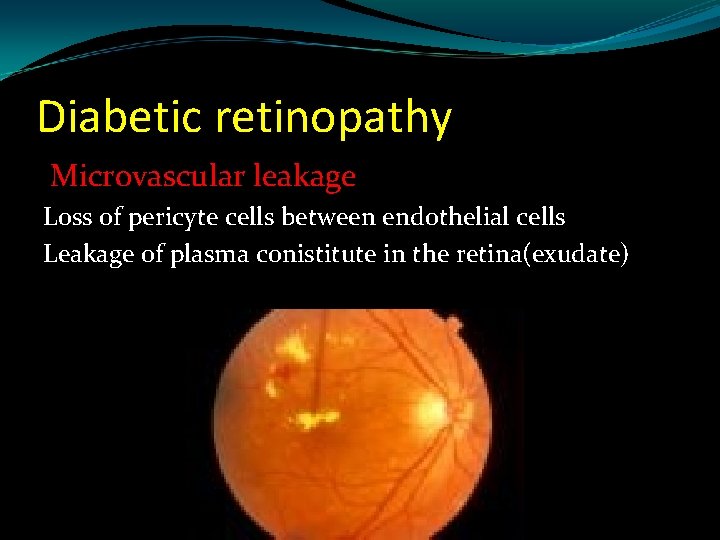
Diabetic retinopathy Microvascular leakage Loss of pericyte cells between endothelial cells Leakage of plasma conistitute in the retina(exudate)
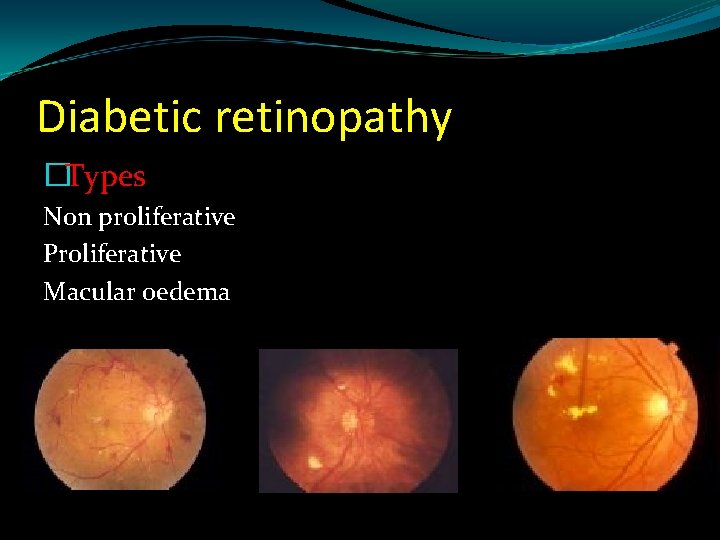
Diabetic retinopathy �Types Non proliferative Proliferative Macular oedema
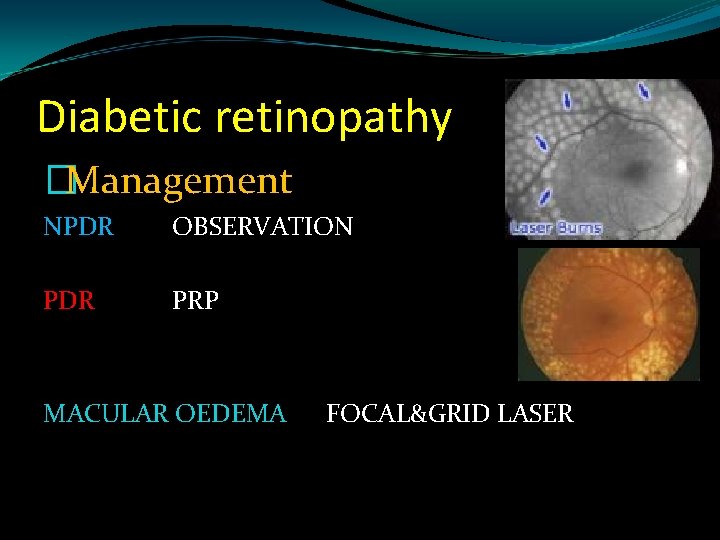
Diabetic retinopathy �Management NPDR OBSERVATION PDR PRP MACULAR OEDEMA FOCAL&GRID LASER