
Chronic Superficial Keratitis Pannus Pannussuperficial corneal vascularizationscar tissue
- Slides: 29
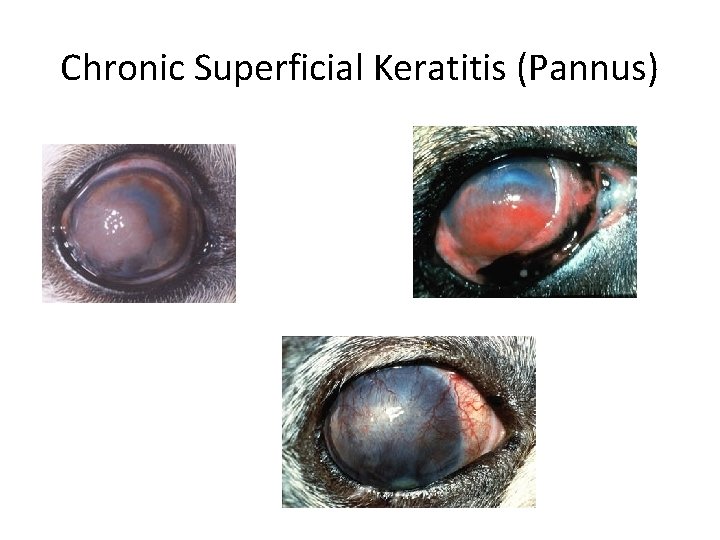
Chronic Superficial Keratitis (Pannus) Pannus—superficial corneal vascularization/scar tissue Progressive, bilateral, can result in blindness • Cause – Thought to be immune-mediated (Infiltration of cornea with lymphocytes, plasma cells) – Increased ultraviolet light/high altitudes increases incidence • Signs – Opaque lesions that begin at limbus and extend into cornea • Milky, pink, or tan
Chronic Superficial Keratitis (Pannus)
Chronic Superficial Keratitis (Pannus) • Breeds – Ger. Shep, B. Collie, greyhound, Sib. Husky • Dx – r/o KCS, corneal ulcers • Rx – Corticosteroids often lifelong – Cyclosporine often lifelong – Antibiotic eye ointment • Client info – No cure – If Rx is stopped, disease will return and progress – High altitudes and ↑sun predispose animals
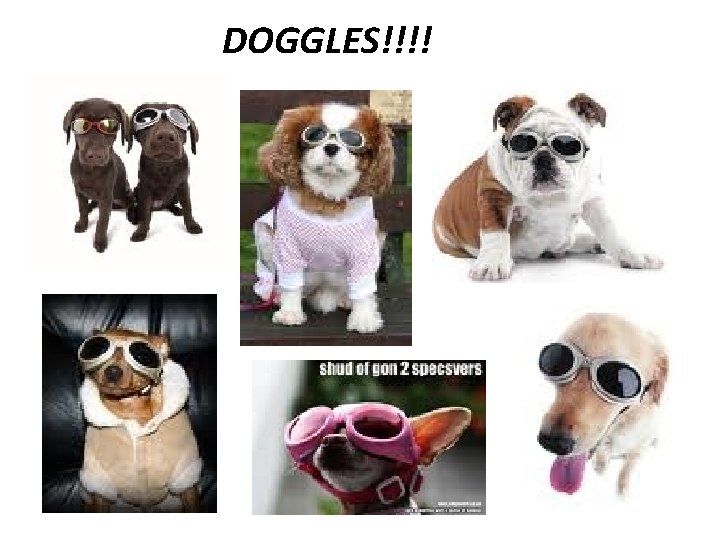
DOGGLES!!!!
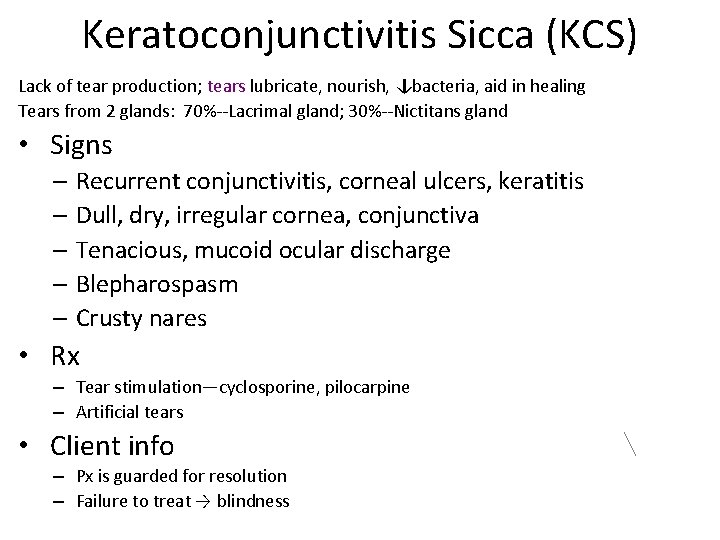
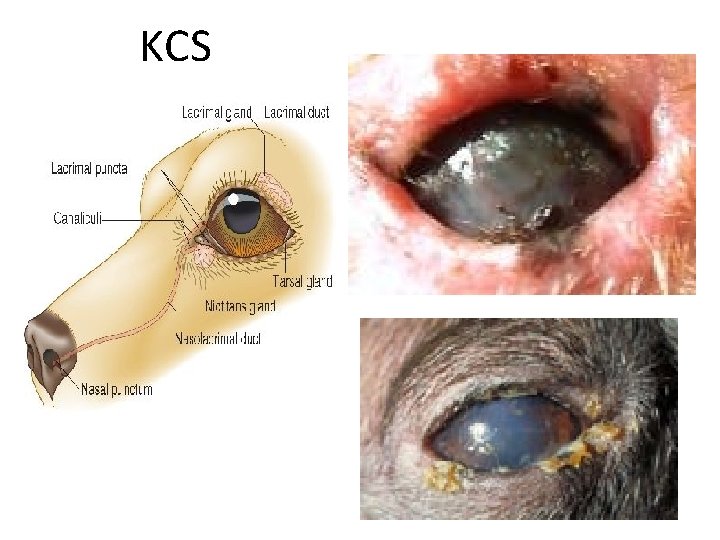
Keratoconjunctivitis Sicca (KCS) Lack of tear production; tears lubricate, nourish, ↓bacteria, aid in healing Tears from 2 glands: 70%--Lacrimal gland; 30%--Nictitans gland • Signs – Recurrent conjunctivitis, corneal ulcers, keratitis – Dull, dry, irregular cornea, conjunctiva – Tenacious, mucoid ocular discharge – Blepharospasm – Crusty nares • Rx – Tear stimulation—cyclosporine, pilocarpine – Artificial tears • Client info – Px is guarded for resolution – Failure to treat → blindness
KCS
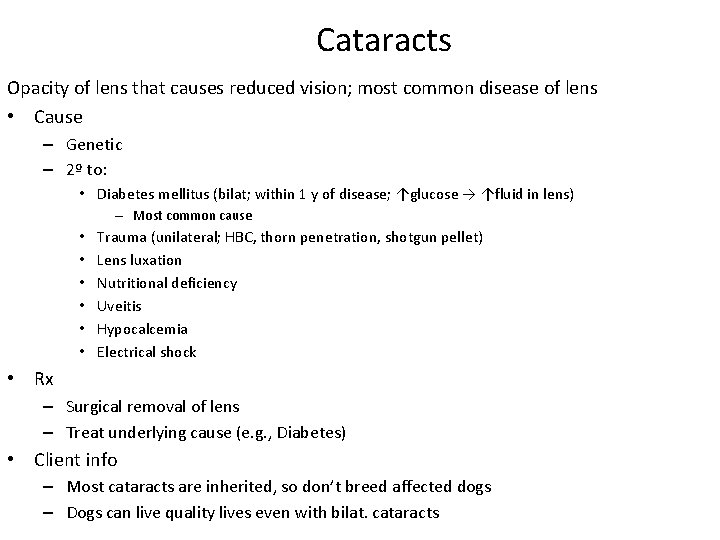
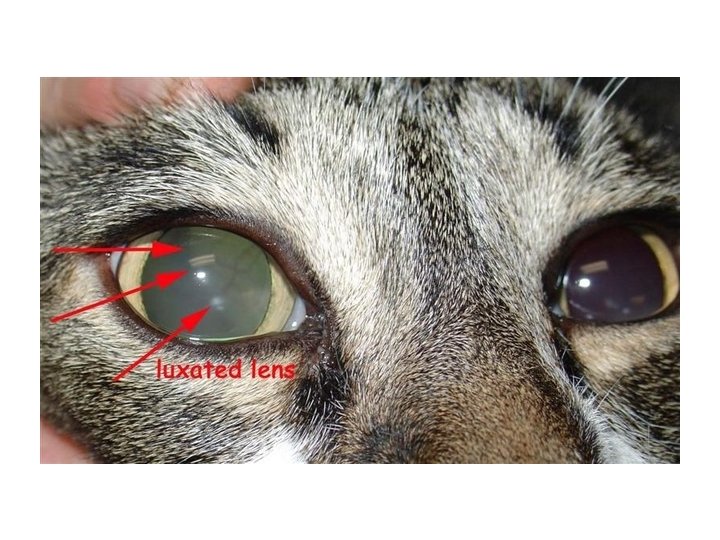
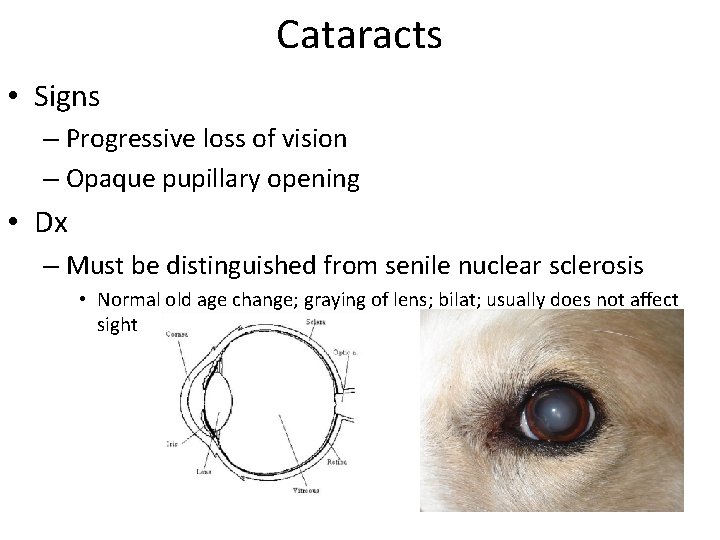
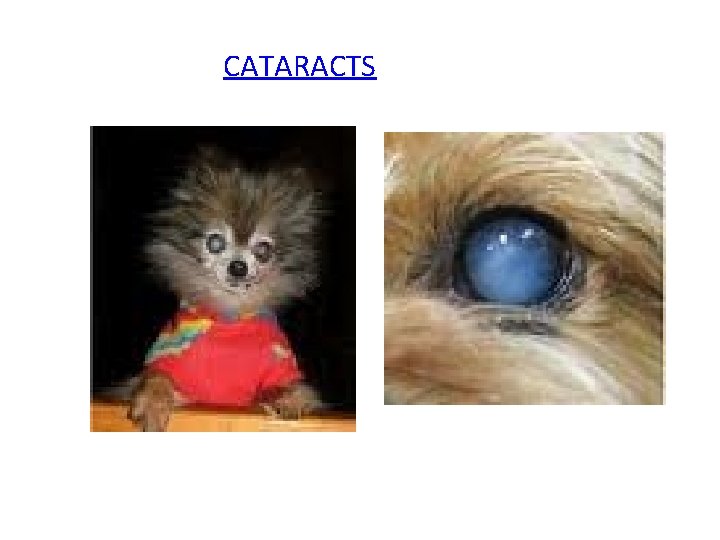
Cataracts Opacity of lens that causes reduced vision; most common disease of lens • Cause – Genetic – 2º to: • Diabetes mellitus (bilat; within 1 y of disease; ↑glucose → ↑fluid in lens) – Most common cause • • • Trauma (unilateral; HBC, thorn penetration, shotgun pellet) Lens luxation Nutritional deficiency Uveitis Hypocalcemia Electrical shock • Rx – Surgical removal of lens – Treat underlying cause (e. g. , Diabetes) • Client info – Most cataracts are inherited, so don’t breed affected dogs – Dogs can live quality lives even with bilat. cataracts
Cataracts • Signs – Progressive loss of vision – Opaque pupillary opening • Dx – Must be distinguished from senile nuclear sclerosis • Normal old age change; graying of lens; bilat; usually does not affect sight
CATARACTS
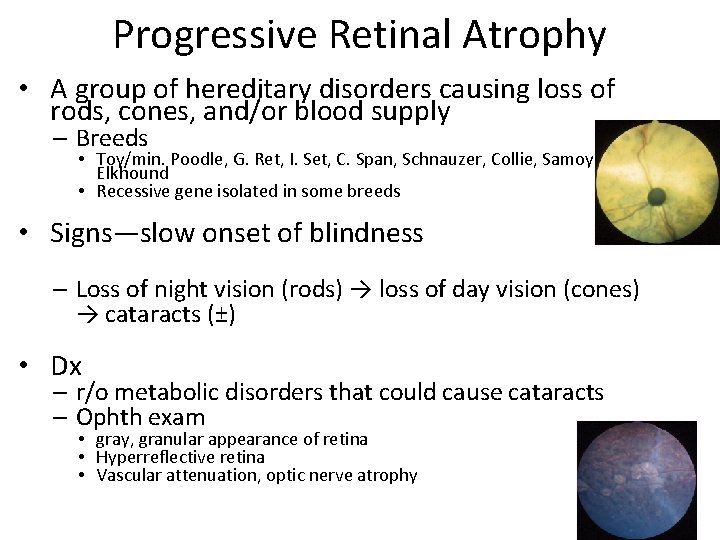
Progressive Retinal Atrophy • A group of hereditary disorders causing loss of rods, cones, and/or blood supply – Breeds • Toy/min. Poodle, G. Ret, I. Set, C. Span, Schnauzer, Collie, Samoyed, N. Elkhound • Recessive gene isolated in some breeds • Signs—slow onset of blindness – Loss of night vision (rods) → loss of day vision (cones) → cataracts (±) • Dx – r/o metabolic disorders that could cause cataracts – Ophth exam • gray, granular appearance of retina • Hyperreflective retina • Vascular attenuation, optic nerve atrophy
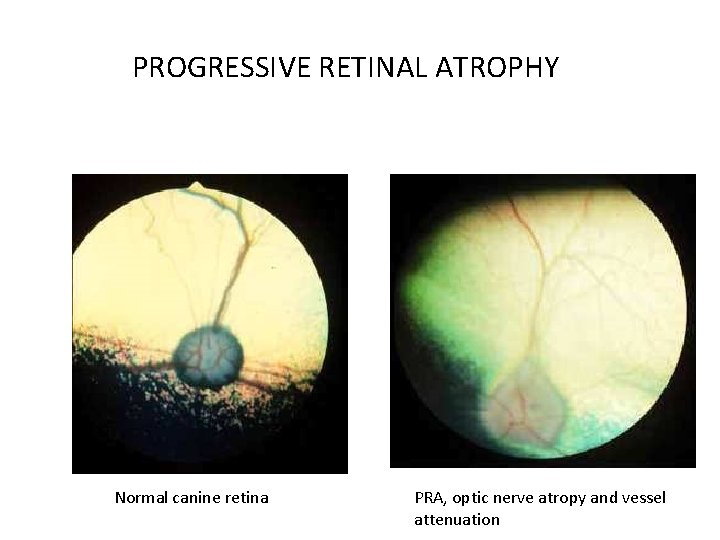
PROGRESSIVE RETINAL ATROPHY Normal canine retina PRA, optic nerve atropy and vessel attenuation
Progressive Retinal Atrophy • Rx – None • Client info – This is an inherited disease – Avoid buying affected breeds • Have ophth exam by board certified ophth to r/o PRA – Blind animals adapt well • Have trouble in strange surroundings – Cats need well balanced diet • Taurine deficiency can lead to PRA
Anterior Uveitis • Inflammation of uvea: ciliary body, iris, choroid • Causes – Inflammation/infection – Fe. LV/FIP, fungal, bacterial – Neoplasia – Trauma
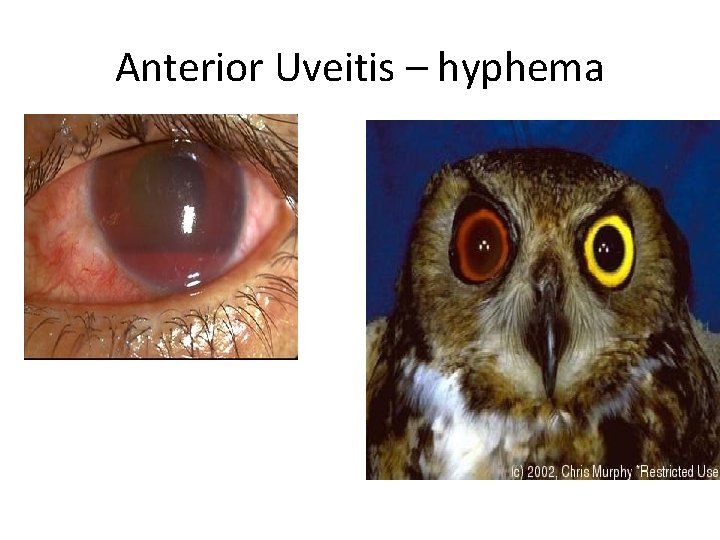
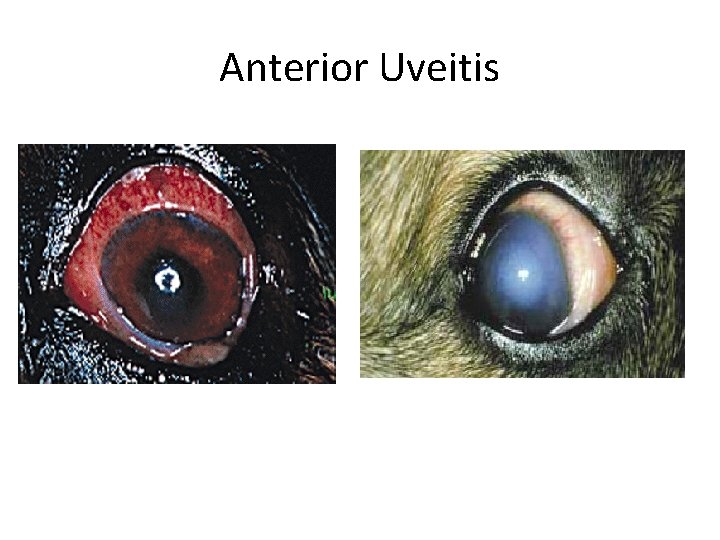
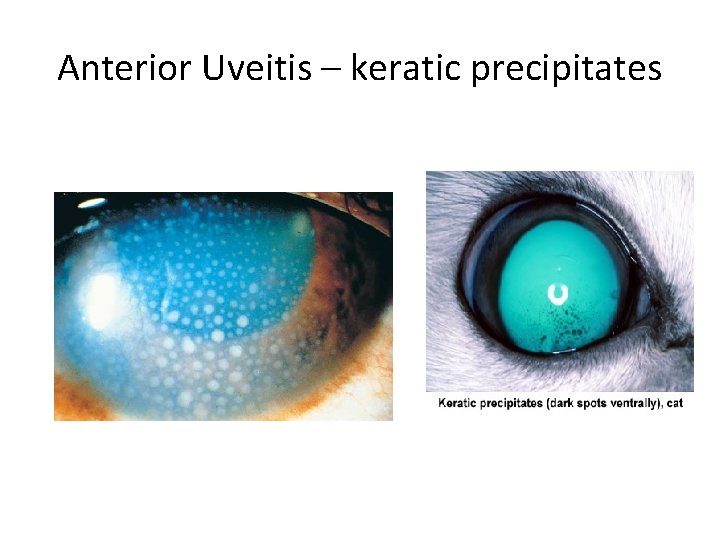
Uveitis – Clinical Signs • Blepharospasm • Aqueous flare – increased turbidity of aqueous humor • Miosis of affected eye • Iridal swelling or congestion • Keratic precipitates • Ciliary flush in limbal region • +/- Corneal edema • +/- hyphema
Anterior Uveitis – hyphema
Anterior Uveitis
Anterior Uveitis – keratic precipitates
Anterior Uveitis – Treatment • • • Topical steroids or Topical Anti-inflmmatory drugs (ocufen) Or systemic steroids Atropine – dilates eye, decreases pain Antibiotics – topically +/- systemically
Anterior Uveitis – Client Info • • Recheck within 3 days Secondary glaucoma is frequent complication Prognosis depends on cause Treat for 2 months regardless of cause – blood -aqueous barrier disrupted for 6 weeks
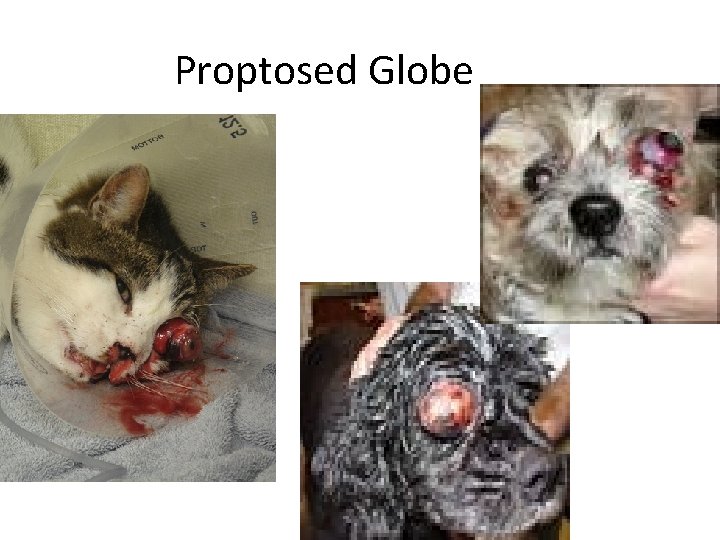
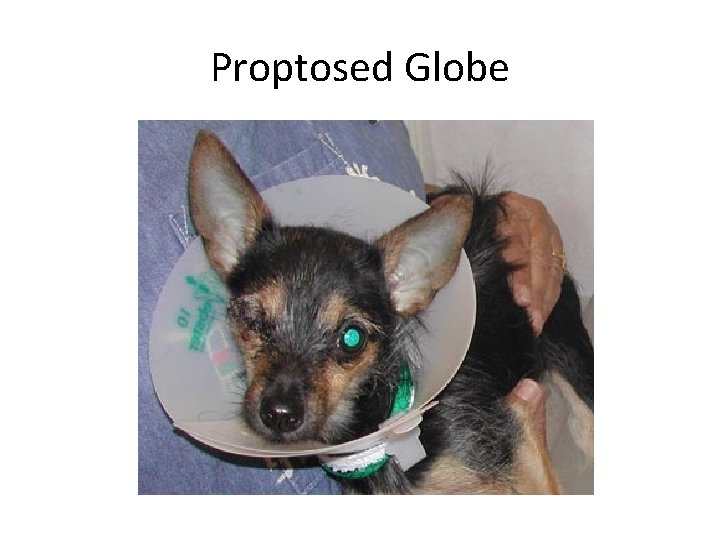
Proptosed Globe • Cause – Trauma – Conformation – Retrobulbar abscess or neoplasia • Clinical Signs – Protrusion of the globe, – Eyelids unable to close, may be trapped behind globe
Prognosis • Favorable – brachycephalic dog, – positive direct or consensual pupillary light response – normal findings on posterior segment exam – proptosed eye with vision on initial presentation • Unfavorable indicators – – – non-brachycephalic cat breed hyphema, no visible pupil facial fractures optic nerve damage and avulsion of 3 or more extraocular muscles
Proptosed Globe
Proptosed Globe – Treatment • Lubricate immediately • Reduce the globe into the socket ASAP to reduce trauma to optic nerve • Enucleation if optic nerve severed • Systemic and topical antibitics • +/- Steroids
Proptosed Globe
References http: //www. vetmed. ucdavis. edu/courses/ve t_eyes/ http: //vanat. cvm. umn. edu/carn. Labs/Lab 24/ Lab 24. html Alleice Summers, Common Diseases of Companion Animals http: //www. vetmed. wisc. edu/Data/Course. M aterial/Miller/Emergencies. pdf