
CHRONIC PELVIC PAIN Robert Spaczynski Div of Infertility
CHRONIC PELVIC PAIN Robert Spaczynski Div of Infertility and Reproductive Endocrinology Dept of Gynecology and Obstetrics
Chronic Pelvic Pain (CPP) • pain > 6 months • not solely associated with menstruation • 10% all outpatient gynecologic consultations • 20% laparoscopies • 12% hysterectomies
Visceral Pain IN RESPONSE TO: distention, stretching, chemical irritation, hypoxia, inflammation • no specialized pain receptors • no high threshold nerve endings • small diameter A and C primary afferent nerves • only 1 -2% afferent nerves are visceral
Pain Pathways • upper Mullerian structures (uterus, medial fallopian tubes, broad ligaments) : predominantly sympathetic • lower Mullerian structures (upper vagina, cervix, lower uterine segment) : sympathetic + parasympathetic nervi erigentes • ovary, distal fallopian tube : directly -> sympathetic nerve trunk T 9 -T 10
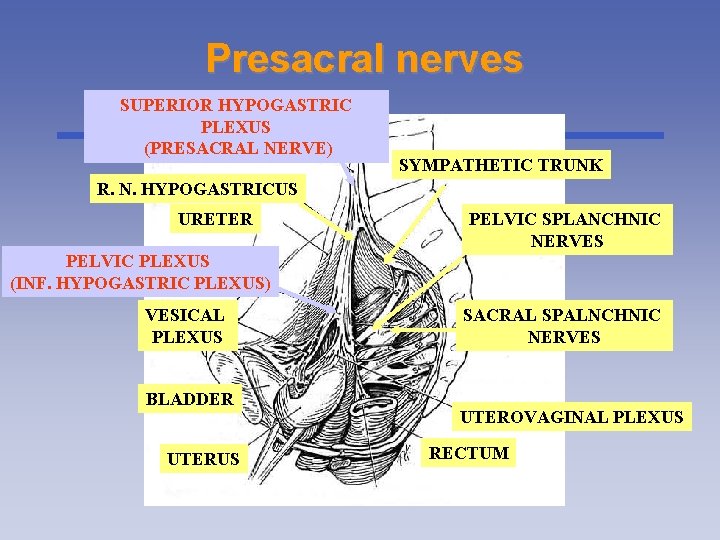
Presacral nerves SUPERIOR HYPOGASTRIC PLEXUS (PRESACRAL NERVE) SYMPATHETIC TRUNK R. N. HYPOGASTRICUS URETER PELVIC SPLANCHNIC NERVES PELVIC PLEXUS (INF. HYPOGASTRIC PLEXUS) VESICAL PLEXUS BLADDER UTERUS SACRAL SPALNCHNIC NERVES UTEROVAGINAL PLEXUS RECTUM
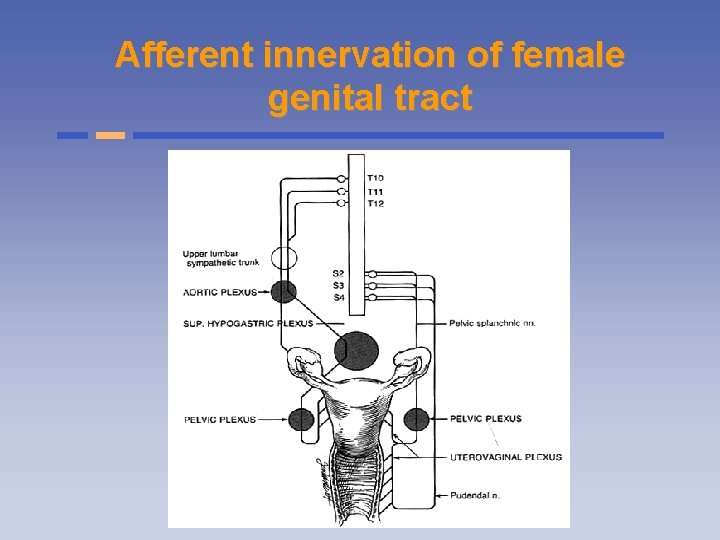
Afferent innervation of female genital tract
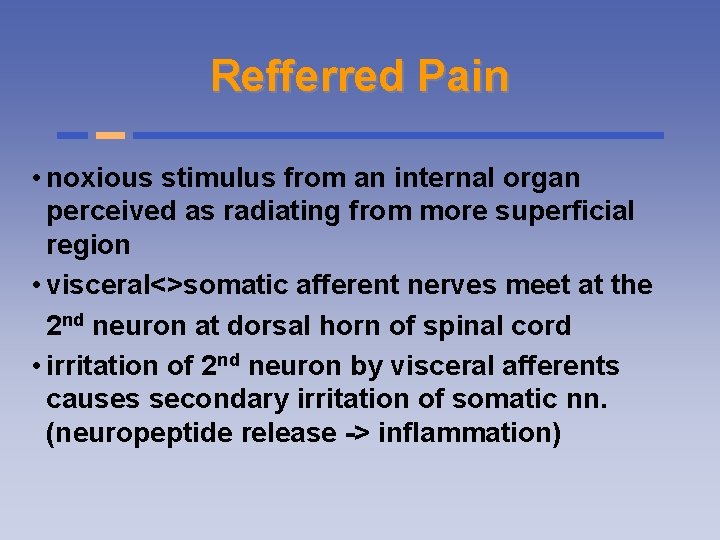
Refferred Pain • noxious stimulus from an internal organ perceived as radiating from more superficial region • visceral<>somatic afferent nerves meet at the 2 nd neuron at dorsal horn of spinal cord • irritation of 2 nd neuron by visceral afferents causes secondary irritation of somatic nn. (neuropeptide release -> inflammation)
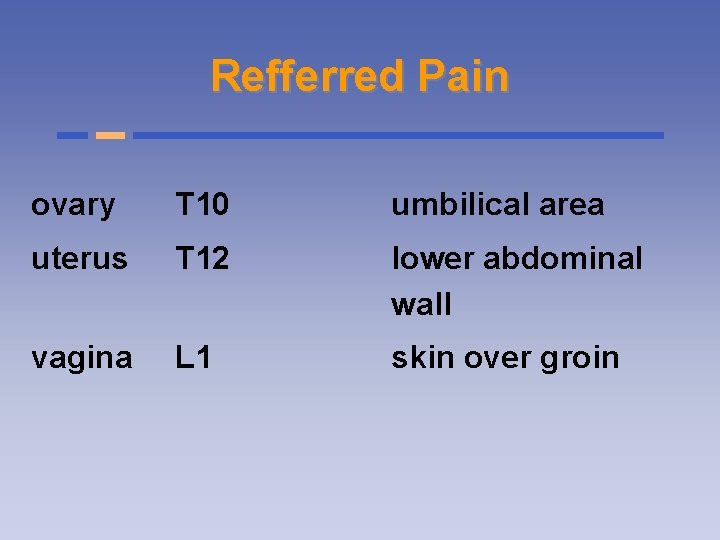
Refferred Pain ovary T 10 umbilical area uterus T 12 lower abdominal wall vagina L 1 skin over groin
Pain Cycle • perception : mood and attention • psychosocial stress -> vicious pain cycle
Causes of CPP Episodic - cycle related • periovulatory pain (unilateral, sudden, episodic) • primary dysmenorrhoea • secondary dysmenorrhoea (endometriosis, adenomyosis) • dyspareunia (superficial, vaginal, deep)
Causes of CPP Continous - non-cycle related • chronic PID • endometriosis, adenomyosis • adhesive disease • pelvic congestion symdrome • degenerating fibroids
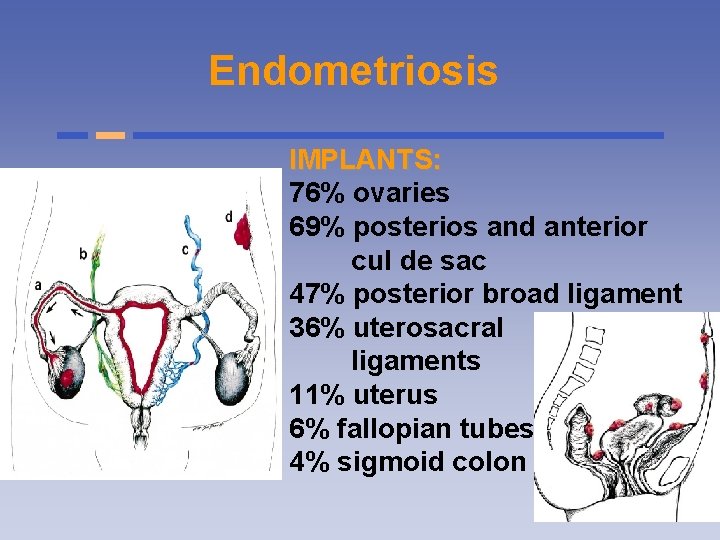
Endometriosis IMPLANTS: 76% ovaries 69% posterios and anterior cul de sac 47% posterior broad ligament 36% uterosacral ligaments 11% uterus 6% fallopian tubes 4% sigmoid colon
Endometriosis- symptoms Dysmenorrhea: esp. secondary, worsening, extending to premenstrual and/or postmenstrual phases of the cycle Pelvic pain outside menses, pain often dull, aching, radiating to back and/or thighs Dyspareunia: especially on deep penetration, positional, cyclic aggravation Cyclic symptoms including dyschesia, hematochesia, hematuria, hemoptysis Infertility
Endometriosis physical exam Abdomen: Diffuse or focal tenderness, rarely tender masses (e. g. in post CS scar) Uterus: Retroverted, fixed/with decreased mobility, tender Adnexae: Enlarged, fixed/with decreased mobility, tender Other findings: Nodularity or focal tenderness in the cul-de-sac, recto-vaginal septum, or over utero-sacral ligaments
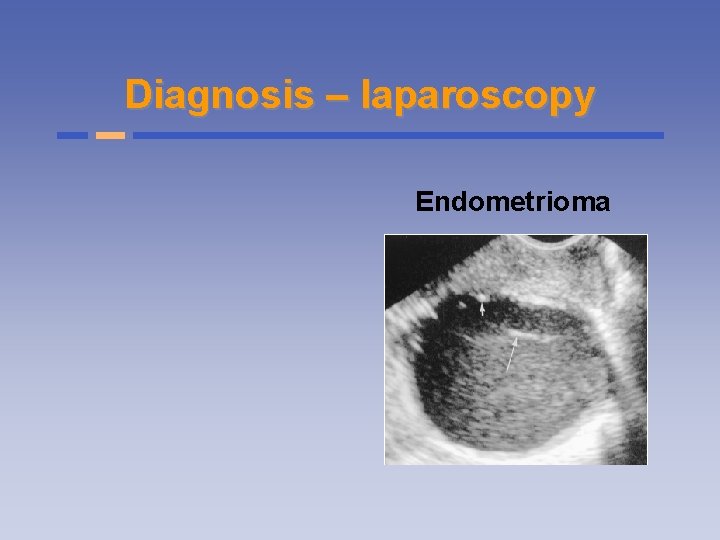
Diagnosis – laparoscopy • Laparoscopy is generally used to confirm diagnosis – hallmarks of the disease are peritoneal or retroperitoneal implants, adhesions and endometriomas • Lesions may be: – typical: pigmented, dark, powder-burn nodules – atypical: non-pigmented, clear, white, red flame-like, yellow-brown nodules
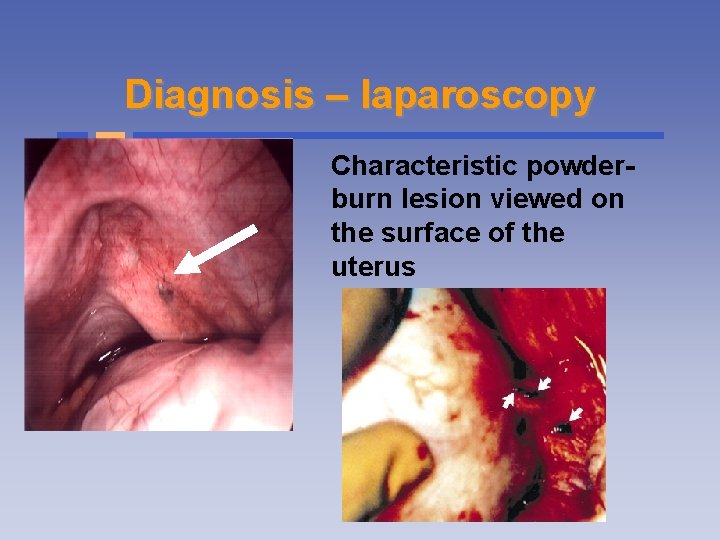
Diagnosis – laparoscopy Characteristic powderburn lesion viewed on the surface of the uterus
Diagnosis – laparoscopy Endometrioma
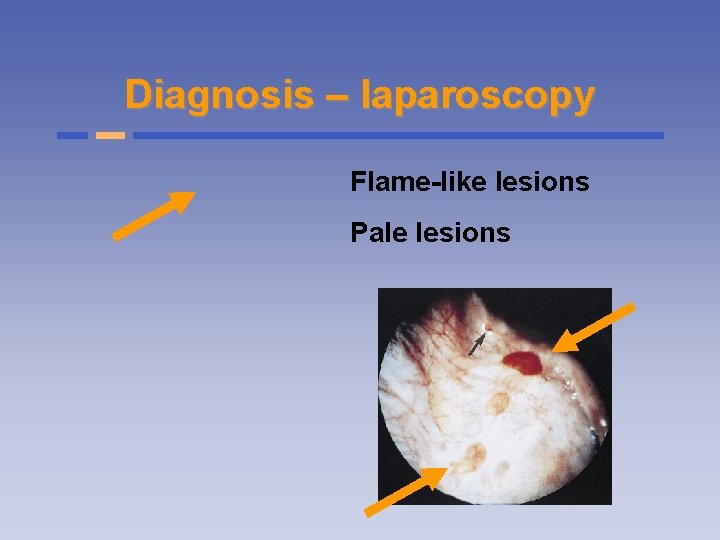
Diagnosis – laparoscopy Flame-like lesions Pale lesions
Causes of CPP Non-gynecologic • urinary tract (infection, calculi, tumors) • GI tract (inflammation, mechanical) • orthopedic conditions Psychosomatic pelvic pain (MMPI)
Mechanisms of Pelvic Pain Dysmenorrhoea: • PGs, LTs, vasopressin: · vasoconstriction, smooth muscle contraction · uterine tone -> hypoxia • mechanical obstruction: stenosis, fibroids Endometriosis: • inflammatory reaction, secretion of PGs and LTs • adhesions • endometrioma: stretch of ovarian capsule
Mechanisms of Pelvic Pain Adhesions: • distortion of normal of nerve/blood supply • decreased mobility of organs/hypoxia Pelvic inflammatory disease (PID): • inflammatory reaction • secretion of PGs • adhesions
Therapeutic options - CPP Pharmacological • primary dysmenorrhoea : OC, NSAIDs (mefenamic acid, ibuprofen, diclofenac , ketoprofen) - in 90% significant relief • endometriosis: Gn. RH analogs, Gn. RH antagonists, danazol, DMPA, OC, miscellanous - opioids
Oral contraceptives OC (continuous use): • mimicking pregnancy may cause endometrial regression and subjective improvement • side-effects include nausea, vomiting, breakthrough bleeding, weight gain, water retention, breast tenderness, acne
NSAIDs: • reduce prostaglandin levels providing an analgesic/anti-inflammatory effect • side-effects may include nausea and dizziness • commence treatment the day before period is due
Progestogenic androgenic drugs Progestogens: • oral and depot formulations provide effective pain relief for mild to moderate disease • side-effects include: breast tenderness, breakthrough bleeding, mood changes and depression Androgenic drugs: • derivatives of testosterone inhibit production of oestrogen and progestogen • effective relief for mild/moderate disease • side-effects include: acne, oily skin, cramps, breast reduction, weight gain, hot flushes, libido changes
Gn. RHa therapy Effective treatment for endometriosis: • 75– 92% of patients see improvement in their symptoms • depending on disease extent, growth of the disease may be arrested, diminished or eliminated completely • symptomatic relief for < 12 months after treatment cessation • rates of improvement are equal to androgenic therapies Damewood, 1993
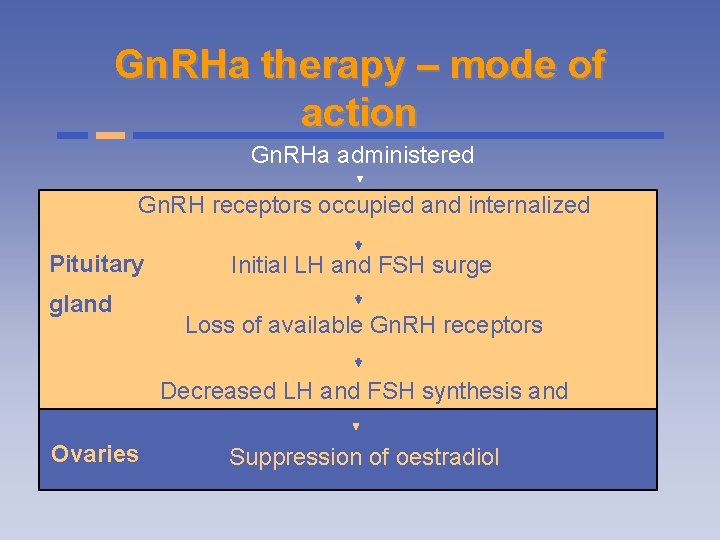
Gn. RHa therapy – mode of action Gn. RHa administered Gn. RH receptors occupied and internalized Pituitary gland Initial LH and FSH surge Loss of available Gn. RH receptors Decreased LH and FSH synthesis and release Ovaries Suppression of oestradiol
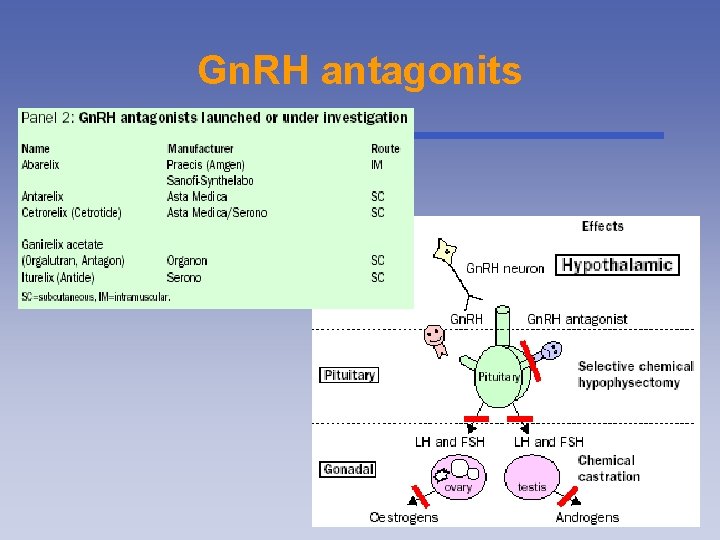
Gn. RH antagonits
Surgical treatment - CPP • resection/ablation of lesions • lysis of adhesions • interruption of neural pathways: – ablation of uterosacral ligament (LUNA laparoscopic uterine nerve ablation) – presacral neurectomy : resection of superior hypogastric plexus
Other treatment - CPP • Trigger-point therapy • Transcutaneous Electrical Nerve Stimulation (TENS)
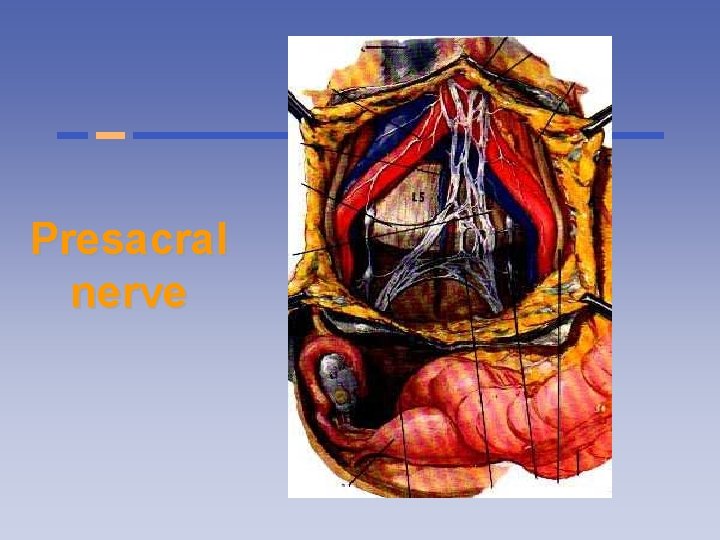
Presacral nerve
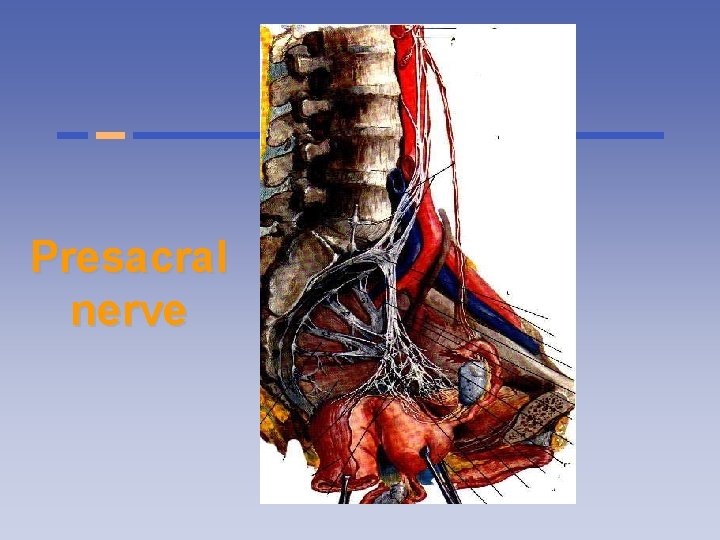
Presacral nerve
- Slides: 32