
Chronic Obstructive Pulmonary Disease COPD Chapter 30 Iggy

Chronic Obstructive Pulmonary Disease COPD Chapter 30 Iggy
Chronic Obstructive Pulmonary Disease (COPD) • Includes: • Emphysema • Chronic bronchitis • Characterized by bronchospasm and dyspnea • Tissue damage not reversible; increases in severity, eventually leads to respiratory failure 2
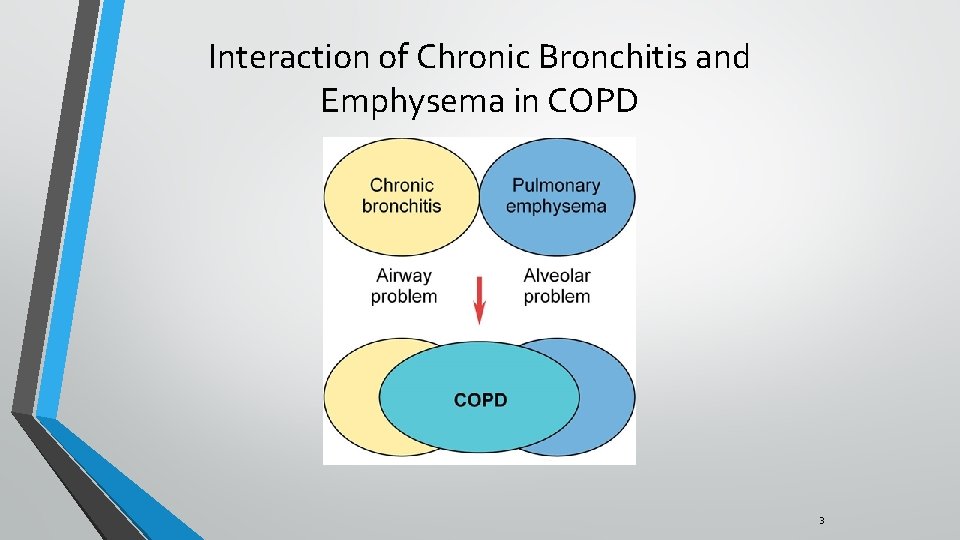
Interaction of Chronic Bronchitis and Emphysema in COPD 3
Emphysema • Loss of lung elasticity and hyperinflation of lung • Dyspnea; need for increased respiratory rate • Air trapping caused by loss of elastic recoil in alveolar walls, overstretching and enlargement of alveoli into bullae, collapse of small airways (bronchioles) 4
Chronic Bronchitis • Inflammation of bronchi and bronchioles caused by chronic exposure to irritants, especially cigarette smoke • Inflammation, vasodilation, congestion, mucosal edema, bronchospasm • Affects only airways, not alveoli • Production of large amounts of thick mucus 5
Risk Factors • Risk factors • Cigarette smoking • Occupational chemicals and dust • Air pollution • Infection • Heredity • Aging
• Effects of nicotine • COPD Cigarette Smoking Stimulates sympathetic nervous system • • • Increases HR Causes peripheral vasoconstriction Increases BP and cardiac workload • Effects of nicotine • • • ↓ Amount of functional hemoglobin ↑ Platelet aggregation Compounds problems in CAD Copyright © 2014 by Mosby, an imprint of Elsevier Inc.
COPD Cigarette Smoking • Effects on respiratory tract • • Increased production of mucus Hyperplasia of goblet cells • • • Increased production of mucus Lost or decreased ciliary activity Chronic, enhanced inflammation Copyright © 2014 by Mosby, an imprint of Elsevier Inc.
• Carbon monoxide • COPD Cigarette Smoking ↓ O 2 carrying capacity • • ↑ Heart rate Impaired psychomotor performance and judgment • Passive smoking (secondhand smoke) • • • ↓ Pulmonary function ↑ Risk of lung cancer ↑ Respiratory symptoms Copyright © 2014 by Mosby, an imprint of Elsevier Inc.
COPD Occupational & Environmental • COPD can develop with intense or prolonged exposure to • Dusts, vapors, irritants, or fumes • High levels of air pollution • Fumes from indoor heating or cooking with fossil fuels. Copyright © 2014 by Mosby, an imprint of Elsevier Inc.
COPD Infection • Recurring infections impair normal defense mechanisms • HIV • Tuberculosis Copyright © 2014 by Mosby, an imprint of Elsevier Inc.
COPD Heredity • -Antitrypsin (AAT) deficiency • Genetic risk factor for COPD • Accounts for 3% of COPD • AAT is an autosomal recessive disorder. Copyright © 2014 by Mosby, an imprint of Elsevier Inc.
COPD Aging • Some degree of emphysema is common because of physiologic changes of aging lung tissue. Copyright © 2014 by Mosby, an imprint of Elsevier Inc.
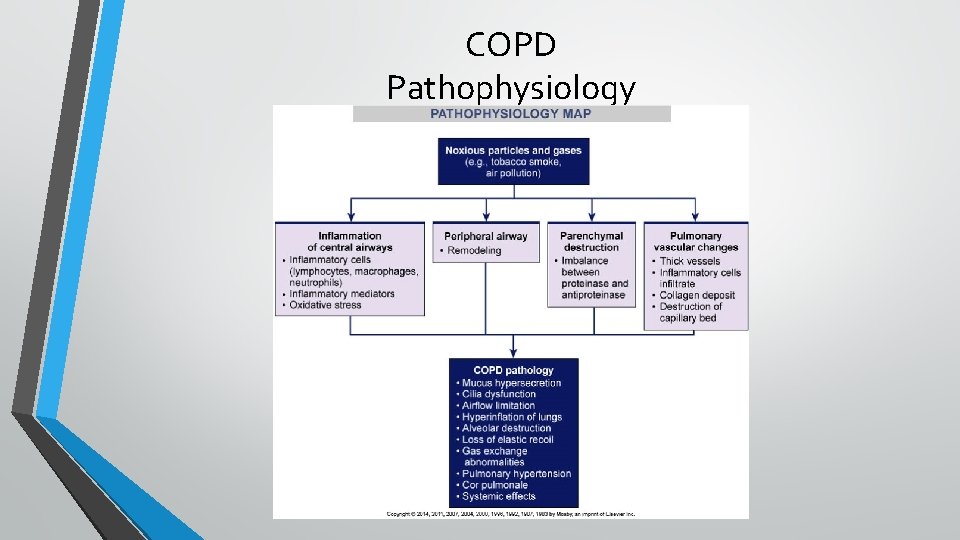
COPD Pathophysiology Copyright © 2014 by Mosby, an imprint of Elsevier Inc.
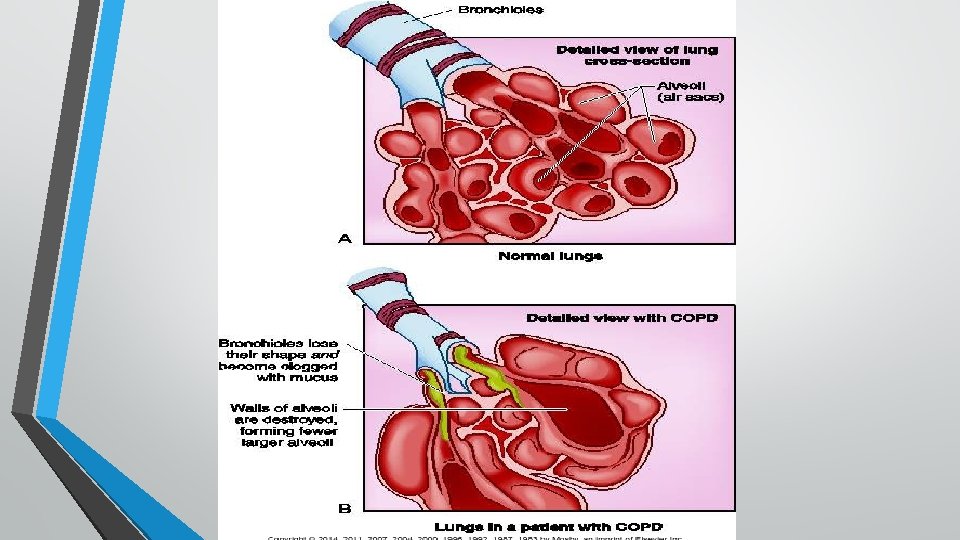
Copyright © 2014 by Mosby, an imprint of Elsevier Inc.
Complications of COPD • Hypoxemia/tissue anoxia • Acidosis • Respiratory infections • Cardiac failure, especially cor pulmonale • Cardiac dysrhythmias 16
Physical Assessment & Clinical Manifestations • History • General appearance • Respiratory changes • Cardiac changes 17
COPD Clinical Manifestations • Physical examination findings • Prolonged expiratory phase • Wheezes • Decreased breath sounds • ↑ Anterior-posterior diameter (barrel chest) • Tripod position • Pursed lip breathing Copyright © 2014 by Mosby, an imprint of Elsevier Inc.
COPD Exacerbations • Signaled by change in usual • Dyspnea • Cough • Sputum Copyright © 2014 by Mosby, an imprint of Elsevier Inc.
Interventions • Improve oxygenation and reduce carbon dioxide retention • Prevent weight loss • Minimize anxiety • Improve activity tolerance • Prevent respiratory infection 20
COPD Collaborative Care • Nutritional therapy • Weight loss and malnutrition are common. • Pressure on diaphragm from a full stomach causes dyspnea. • Difficulty breathing while eating leads to inadequate consumption. Copyright © 2014 by Mosby, an imprint of Elsevier Inc.
COPD Collaborative Care • Nutritional therapy • To decrease dyspnea and conserve energy • Rest at least 30 minutes before eating. • Use bronchodilator. Copyright © 2014 by Mosby, an imprint of Elsevier Inc.
COPD Collaborative Care • Nutritional therapy • Supplemental O 2 may be helpful. • Eat five to six small meals to avoid bloating and early satiety. Copyright © 2014 by Mosby, an imprint of Elsevier Inc.
COPD Collaborative Care • Nutritional therapy • Avoid • Foods that require a great deal of chewing • Exercises and treatments 1 hour before and after eating • Gas-forming foods Copyright © 2014 by Mosby, an imprint of Elsevier Inc.
COPD Collaborative Care • Nutritional therapy • High-calorie, high-protein diet is recommended. • Fluids (intake of 3 L/day) should be taken between meals. Copyright © 2014 by Mosby, an imprint of Elsevier Inc.
Drug Therapy • Beta-adrenergic agents • Cholinergic antagonists • Methylxanthines • Corticosteroids • NSAIDs • Mucolytics 26
Surgical Management • Lung reduction surgery • Preoperative care and testing • Operative procedure by median sternotomy or VATS • Postoperative care and close monitoring for complications 27
COPD Collaborative Care • Surgical therapy • Lung volume reduction surgery • Remove diseased lung to enhance performance of remaining tissue Copyright © 2014 by Mosby, an imprint of Elsevier Inc.
COPD Collaborative Care • Surgical therapy • Bullectomy • • Used for emphysema Large bullae are resected to improve lung function. Copyright © 2014 by Mosby, an imprint of Elsevier Inc.
COPD Collaborative Care • Surgical therapy • Lung transplantation • Single lung—Most common because of donor shortages • Prolongs life • Improves functional capacity • Enhances quality of life Copyright © 2014 by Mosby, an imprint of Elsevier Inc.
COPD Collaborative Care • Minimally invasive treatment • Airway bypass • Bronchoscopic procedure • Used to reduce hyperinflation Copyright © 2014 by Mosby, an imprint of Elsevier Inc.
Community-Based Care • Home care management • Long-term use of oxygen • Pulmonary rehabilitation program • Teaching for self-management • Drug therapy • Manifestations of infection • Breathing techniques • Relaxation therapy 32
- Slides: 32