
Chronic Leukaemias Heterogeneous group of hematopoietic neoplasms Uncontrolled

- Slides: 23
Chronic Leukaemias • Heterogeneous group of hematopoietic neoplasms • Uncontrolled proliferation and decreased apoptotic activity with variable degrees of differentiation • Composed of relatively mature cells • Indolent. (If untreated, the course is in months or years) • Occurs mainly in adults
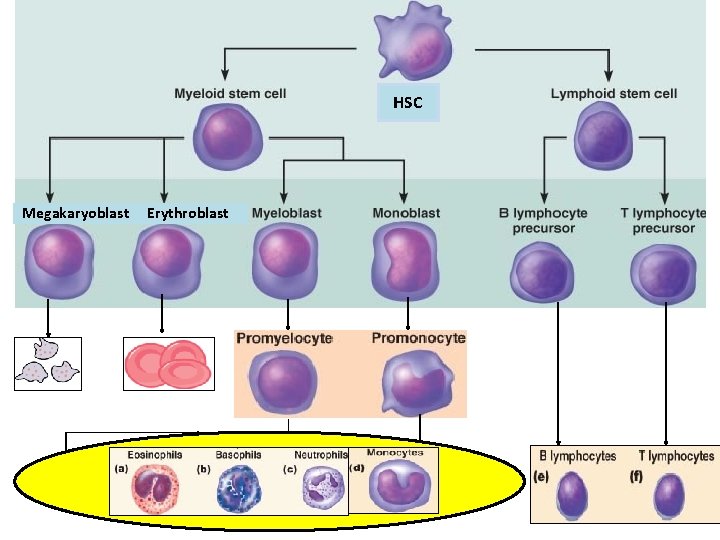
HSC Megakaryoblast Erythroblast
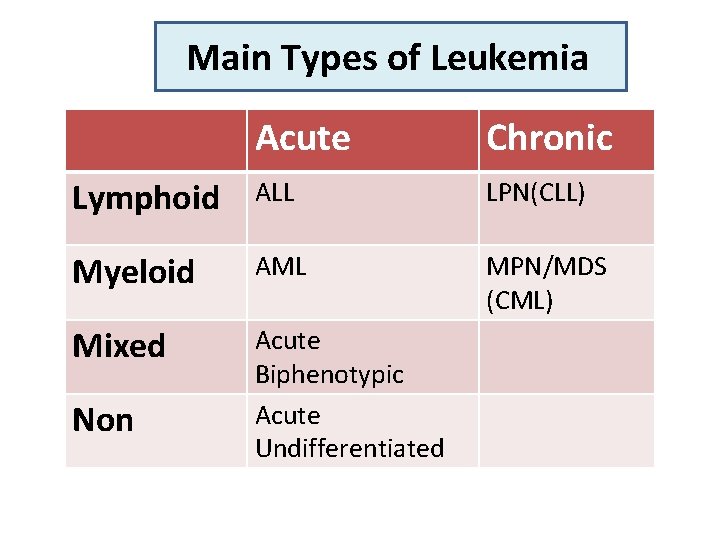
Main Types of Leukemia Acute Chronic Lymphoid ALL LPN(CLL) Myeloid AML MPN/MDS (CML) Mixed Acute Biphenotypic Acute Undifferentiated Non
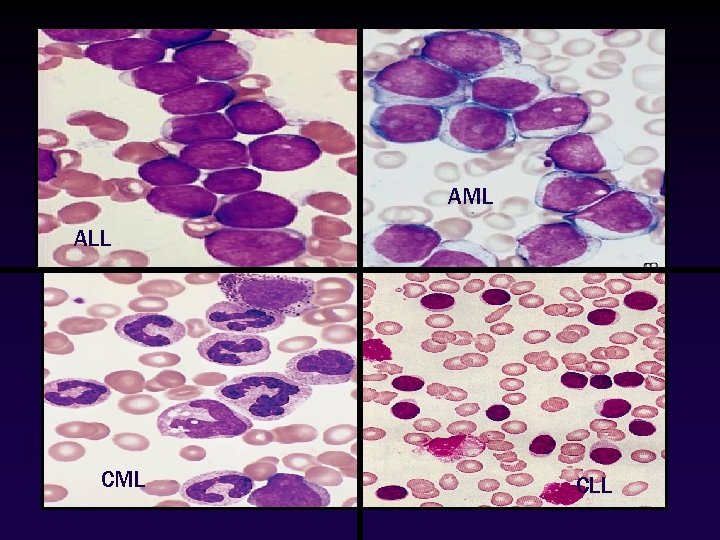
AML ALL CML CLL 4
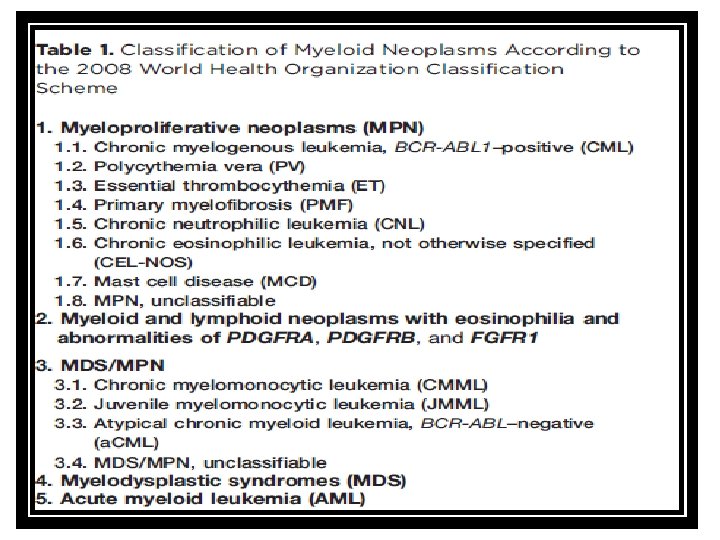
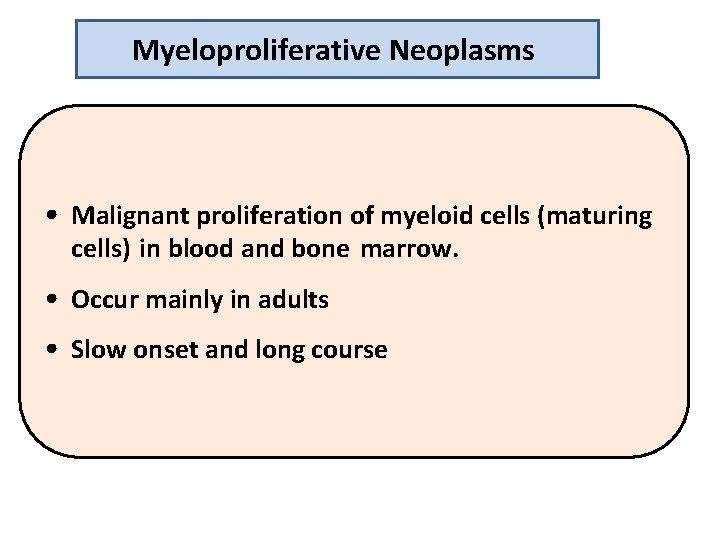
Myeloproliferative Neoplasms • Malignant proliferation of myeloid cells (maturing cells) in blood and bone marrow. • Occur mainly in adults • Slow onset and long course
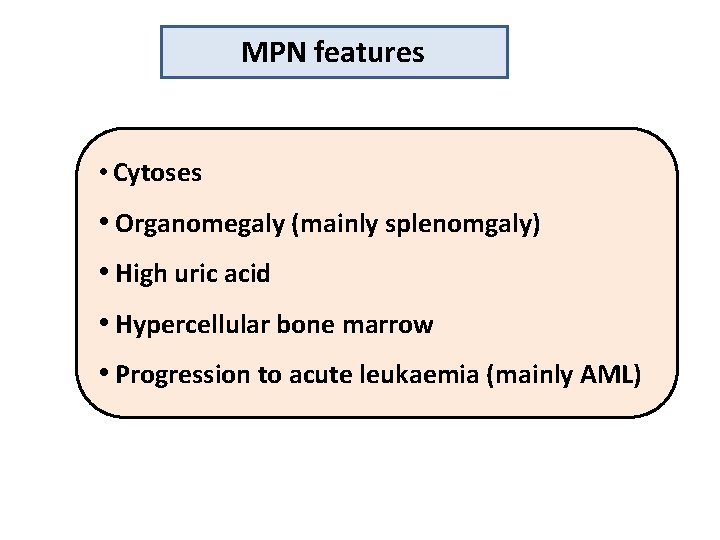
MPN features • Cytoses • Organomegaly (mainly splenomgaly) • High uric acid • Hypercellular bone marrow • Progression to acute leukaemia (mainly AML)
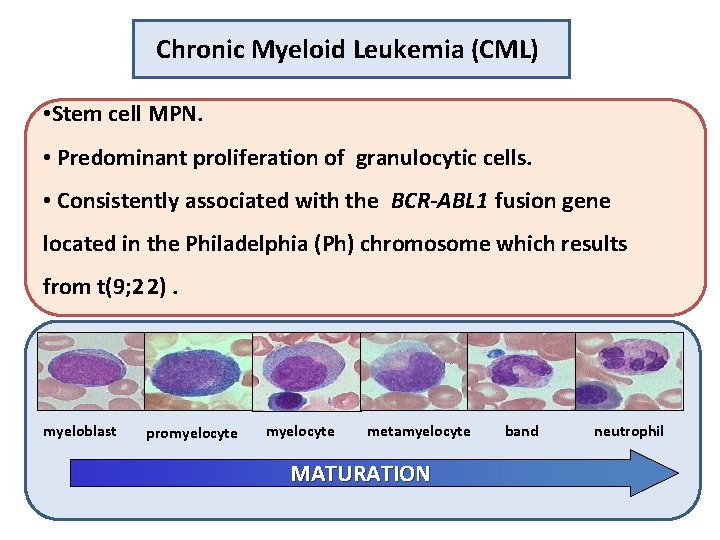
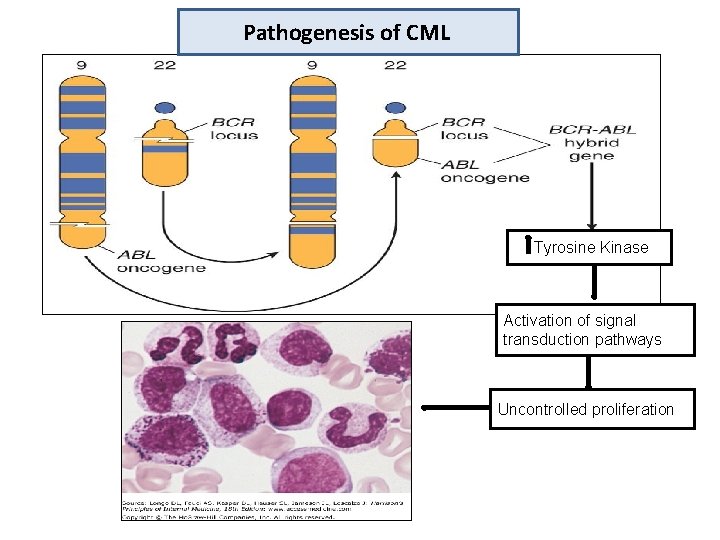
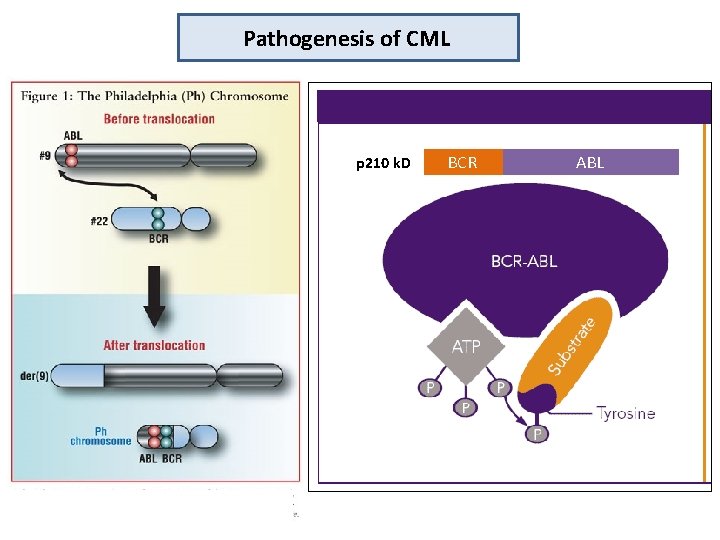
Chronic Myeloid Leukemia (CML) • Stem cell MPN. • Predominant proliferation of granulocytic cells. • Consistently associated with the BCR-ABL 1 fusion gene located in the Philadelphia (Ph) chromosome which results from t(9; 2 2). myeloblast promyelocyte metamyelocyte MATURATION 8 band neutrophil
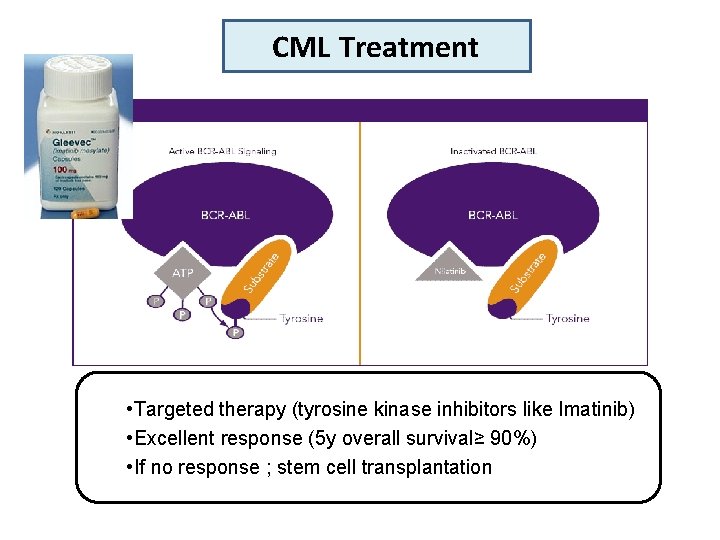
Pathogenesis of CML Tyrosine Kinase Activation of signal transduction pathways Uncontrolled proliferation
Pathogenesis of CML p 210 k. D BCR ABL
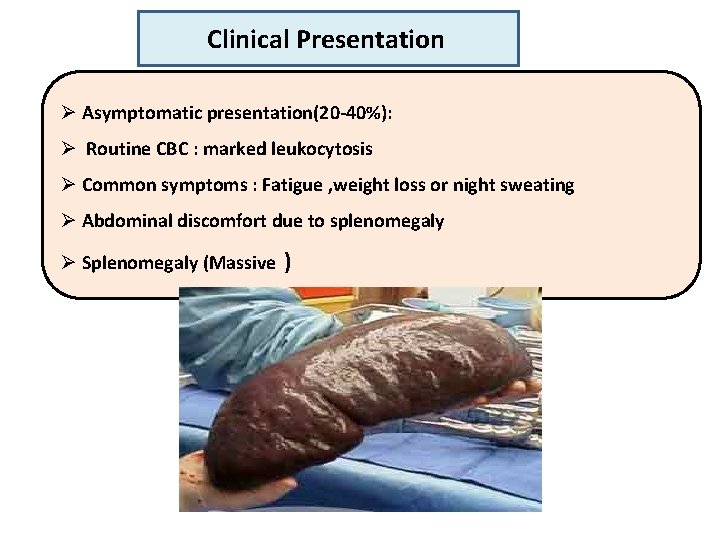
Clinical Presentation Ø Asymptomatic presentation(20 -40%): Ø Routine CBC : marked leukocytosis Ø Common symptoms : Fatigue , weight loss or night sweating Ø Abdominal discomfort due to splenomegaly Ø Splenomegaly (Massive )
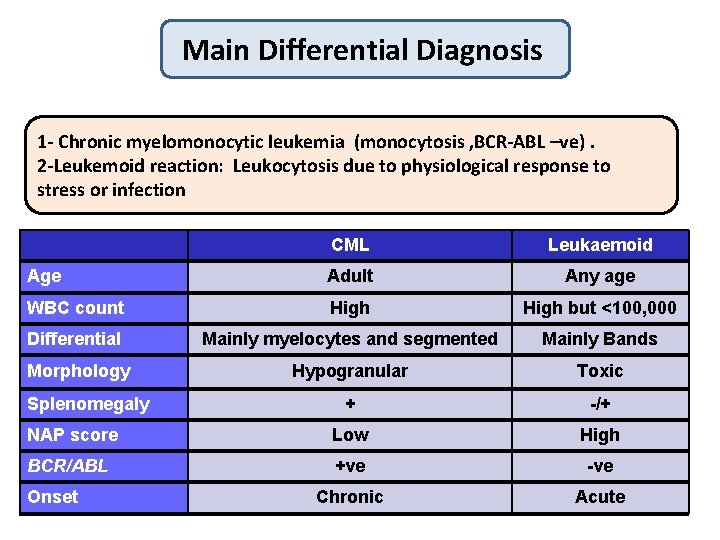
Main Differential Diagnosis 1 - Chronic myelomonocytic leukemia (monocytosis , BCR-ABL –ve). 2 -Leukemoid reaction: Leukocytosis due to physiological response to stress or infection CML Leukaemoid Age Adult Any age WBC count High but <100, 000 Differential Mainly myelocytes and segmented Mainly Bands Morphology Hypogranular Toxic + -/+ NAP score Low High BCR/ABL +ve -ve Chronic Acute Splenomegaly Onset
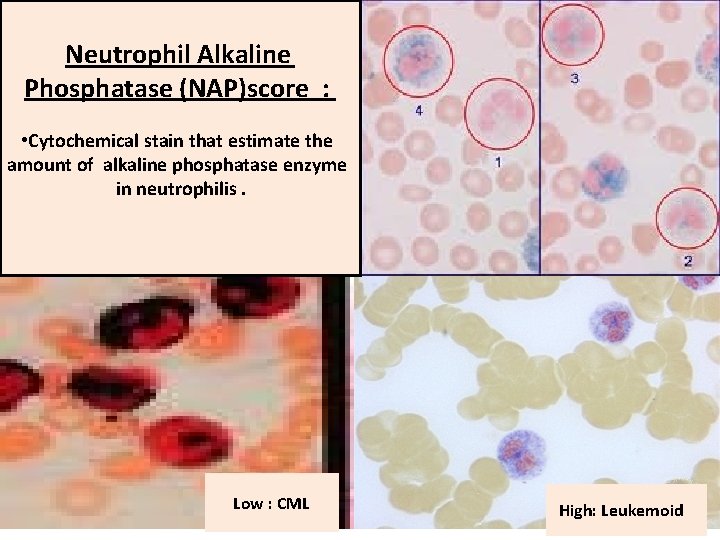
Neutrophil Alkaline Phosphatase (NAP)score : • Cytochemical stain that estimate the amount of alkaline phosphatase enzyme in neutrophilis. Low : CML High: Leukemoid
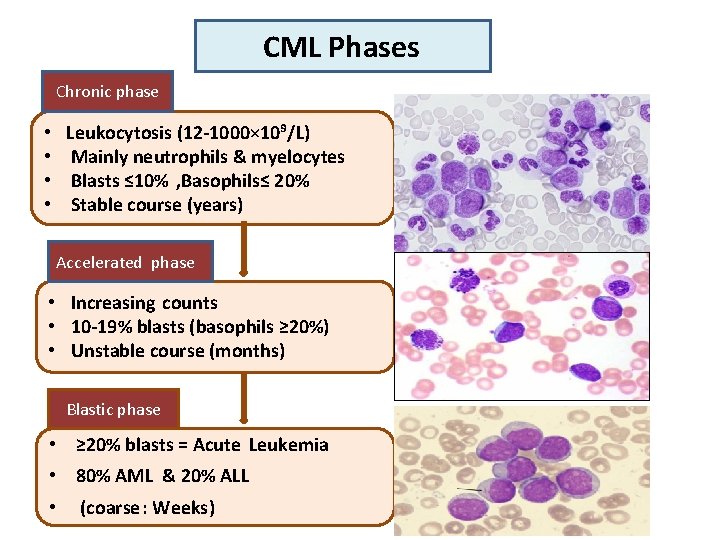
CML Phases Chronic phase • • Leukocytosis (12 -1000× 10⁹/L) Mainly neutrophils & myelocytes Blasts ≤ 10% , Basophils≤ 20% Stable course (years) Accelerated phase • Increasing counts • 10 -19% blasts (basophils ≥ 20%) • Unstable course (months) Blastic phase • ≥ 20% blasts = Acute Leukemia • 80% AML & 20% ALL • (coarse: Weeks)
CML Treatment • Targeted therapy (tyrosine kinase inhibitors like Imatinib) • Excellent response (5 y overall survival≥ 90%) • If no response ; stem cell transplantation
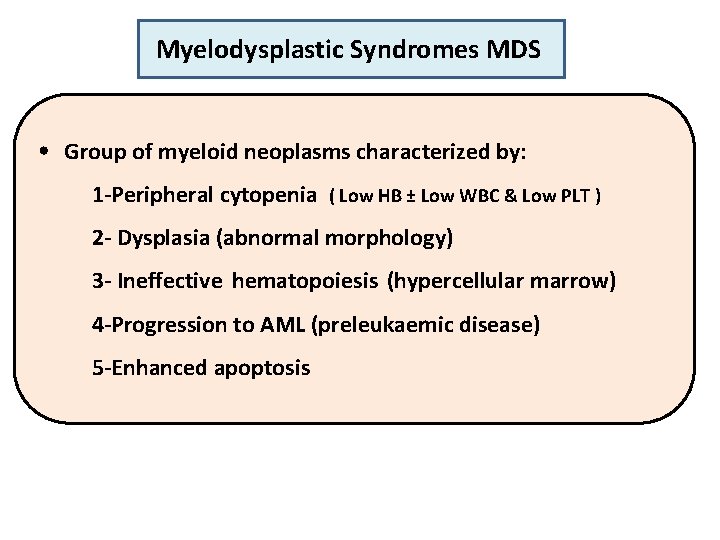
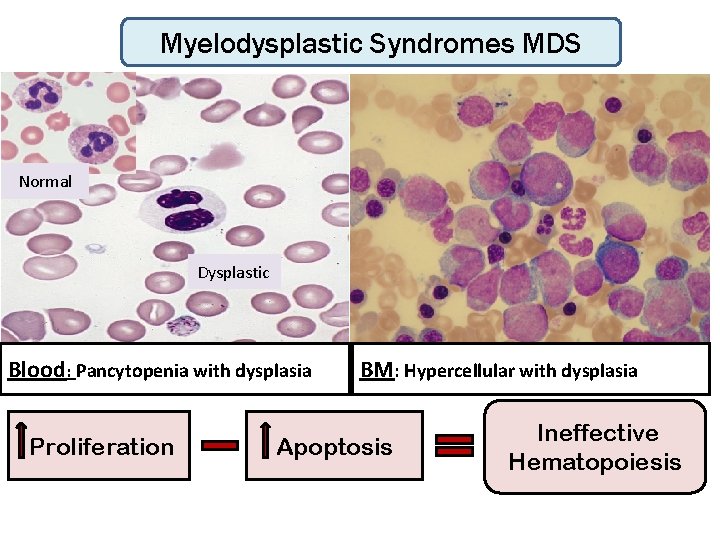
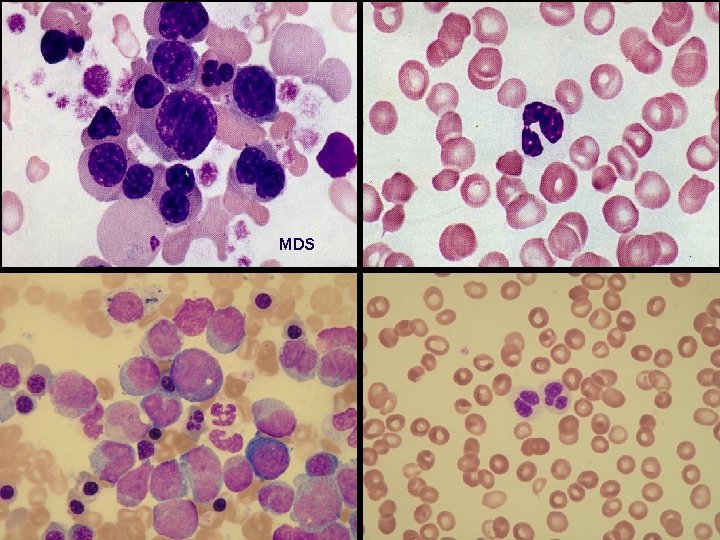
Myelodysplastic Syndromes MDS • Group of myeloid neoplasms characterized by: 1 -Peripheral cytopenia ( Low HB ± Low WBC & Low PLT ) 2 - Dysplasia (abnormal morphology) 3 - Ineffective hematopoiesis (hypercellular marrow) 4 -Progression to AML (preleukaemic disease) 5 -Enhanced apoptosis
Myelodysplastic Syndromes MDS Normal Dysplastic Blood : Pancytopenia with dysplasia Proliferation BM: Hypercellular with dysplasia Apoptosis Ineffective Hematopoiesis
MDS 18
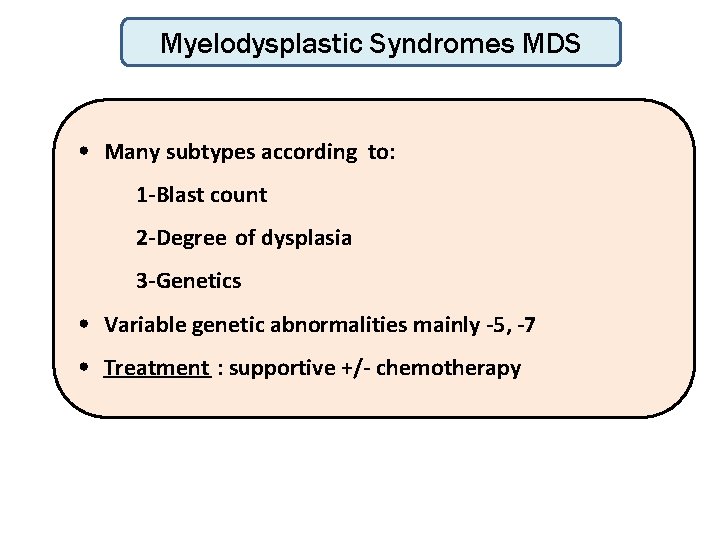
Myelodysplastic Syndromes MDS • Many subtypes according to: 1 -Blast count 2 -Degree of dysplasia 3 -Genetics • Variable genetic abnormalities mainly -5, -7 • Treatment : supportive +/- chemotherapy
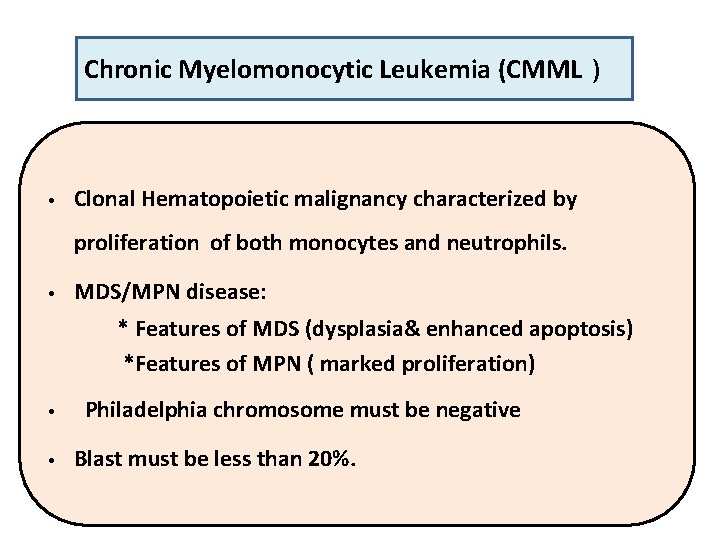
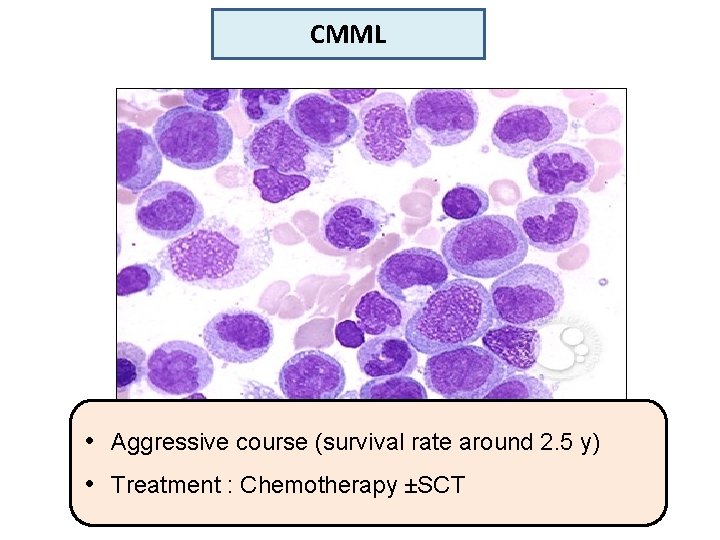
Chronic Myelomonocytic Leukemia (CMML ) • Clonal Hematopoietic malignancy characterized by proliferation of both monocytes and neutrophils. • MDS/MPN disease: * Features of MDS (dysplasia& enhanced apoptosis) *Features of MPN ( marked proliferation) • Philadelphia chromosome must be negative • Blast must be less than 20%.
CMML • Aggressive course (survival rate around 2. 5 y) • Treatment : Chemotherapy ±SCT
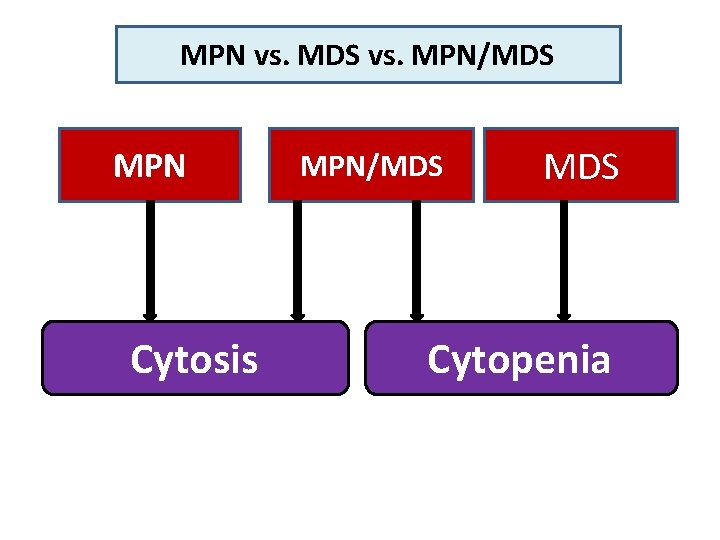
MPN vs. MDS vs. MPN/MDS MPN Cytosis MPN/MDS Cytopenia