
Chronic Kidney Disease NICE Guidelines 2008 Dr Jennifer



- Slides: 14
Chronic Kidney Disease NICE Guidelines 2008 Dr Jennifer Kuo Dr Naeema Rashid Dr Shamita Das
Aims • To summarise latest NICE guidelines • To cover • Early identification • Management In chronic kidney disease in both diabetic and non diabetic adults in primary and secondary care
NICE recommends that… (for non diabetics…) We offer testing to the people with the following risk factors • Hypertension • Cardiovascular disease • Structural renal disease • renal calculi • prostatic hypertrophy • Multisystem disease with potential kidney involvement eg SLE • Family history of stage 5 CKD or hereditary kidney disease If non of the above, NICE recommends that we do not use age gender or ethnicity as a marker
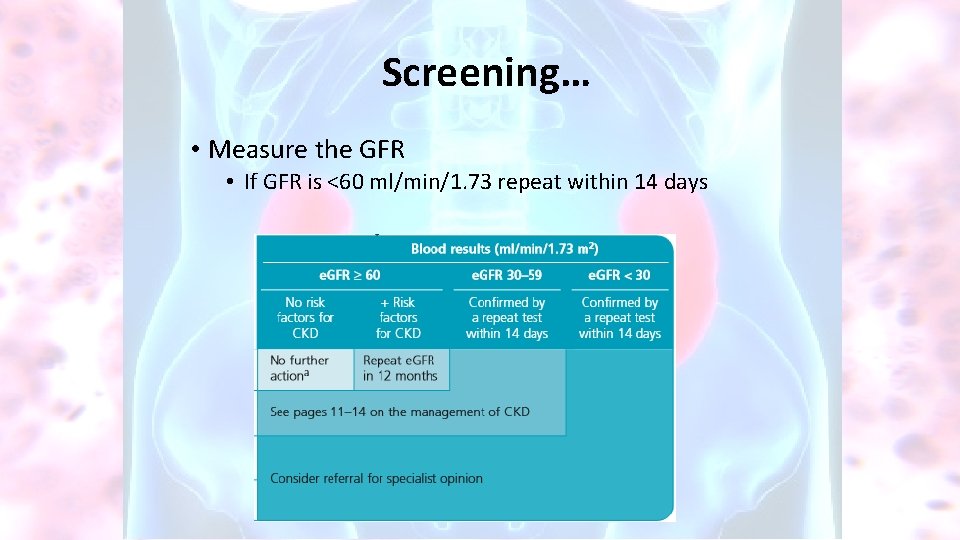
Screening… • Measure the GFR • If GFR is <60 ml/min/1. 73 repeat within 14 days
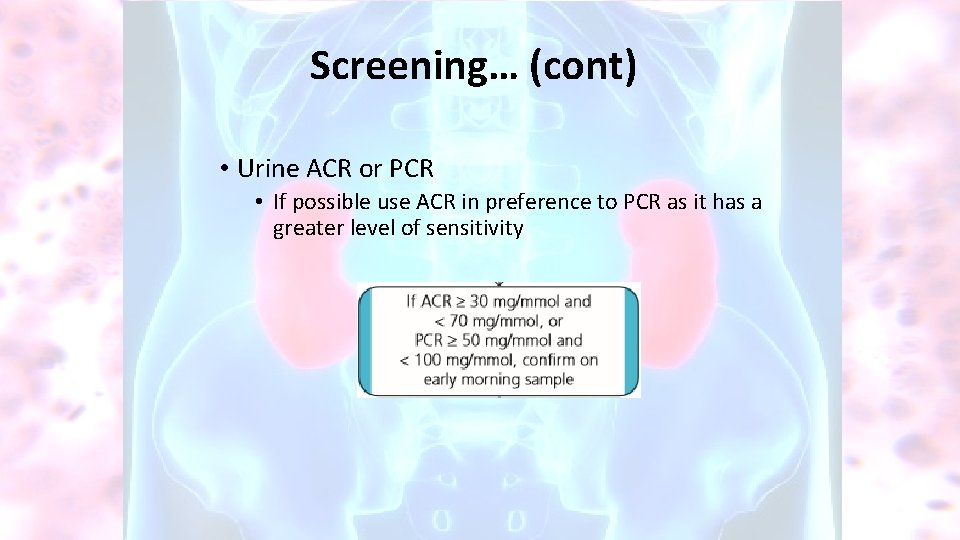
Screening… (cont) • Urine ACR or PCR • If possible use ACR in preference to PCR as it has a greater level of sensitivity
NICE recommends that… (in the diabetic…) • We assess these patients annually • If e. GFR is >60 continue annual screening • If e. GFR 30 -59 manage in community • If <30 refer to specialist
Management • Information and education • Lifestyle advice • Dietary (protein potassium phosphate calories and salt) • Encourage exercise • stop smoking • Renal USS if • • • Progessive CKD Visible/persistent haematuria Symptoms of UTI FH of polycystic kidney disease Stage 4 – 5 CKD
Progressive CKD… Definition = Decline of e. GFR >5 ml/min/1. 73 within 1 yr Decline of e. GFR >10 ml/min/1. 72 within 5 yr Confirmed by = x 3 readings over 90 days Management of Progressive CKD • Optimise health of patients with risk factors • Consider need for renal replacement therapy
When to refer… • CKD 4 -5 • High proteinuria • Proteinuria with haematuria • Rapidly declining e. GFR • Poorly controlled HTN • Suspected rare or genetic causes of CKD • Suspected renal artery stenosis
Other complications…. • Control BP • Reduce CVD risk eg statin antiplatelet • Manage bone conditions (Mg Phos PTH) • Test for anaemia • There is no medical treatment of CKD however need to optimise medication eg stop nephrotoxic drugs and offer ACEi/ARB in diabetics or non diabetics with HTN.
Thank you
Question 1 • Which one of the following is NOT a risk factor for CKD • Hypertension • Cardiovascular disease • SLE • Asian Origin • Prostate hypertrophy
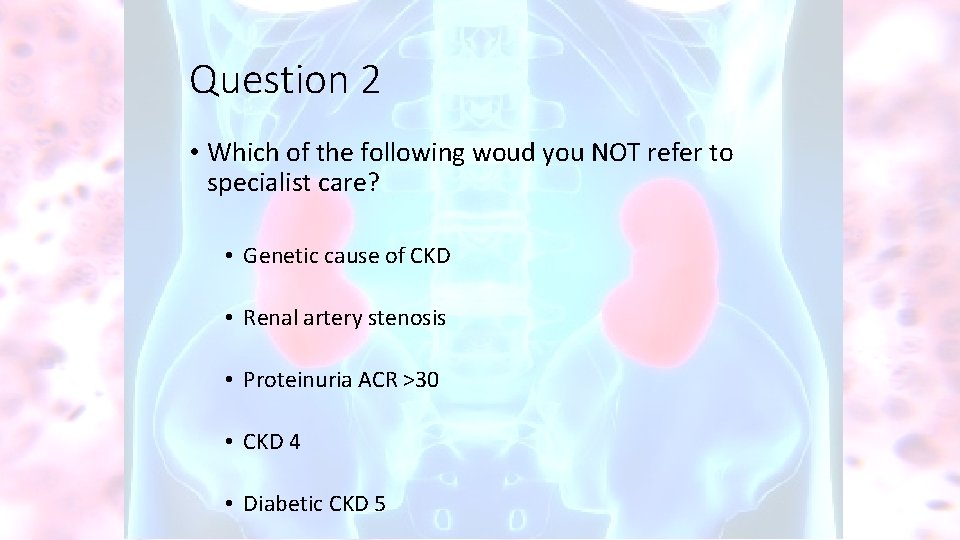
Question 2 • Which of the following woud you NOT refer to specialist care? • Genetic cause of CKD • Renal artery stenosis • Proteinuria ACR >30 • CKD 4 • Diabetic CKD 5
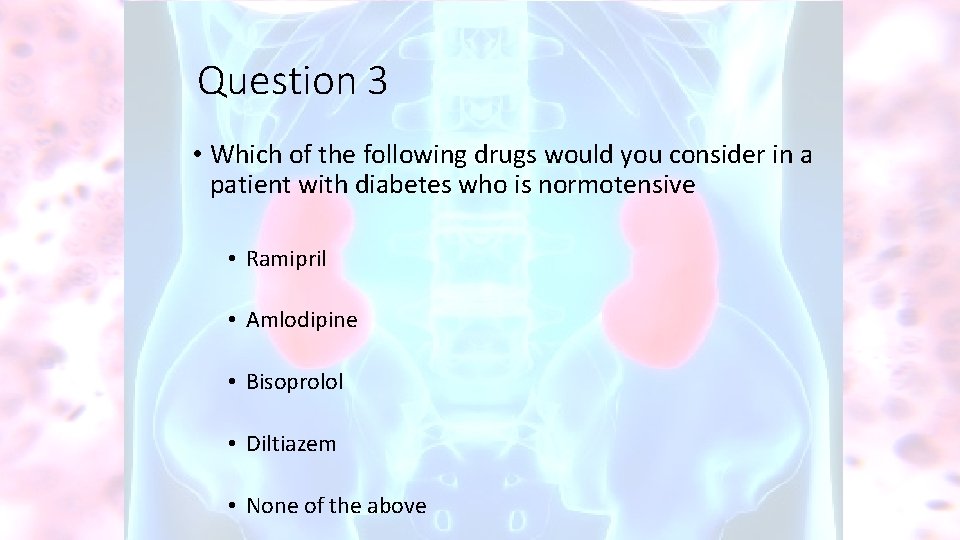
Question 3 • Which of the following drugs would you consider in a patient with diabetes who is normotensive • Ramipril • Amlodipine • Bisoprolol • Diltiazem • None of the above